PhiloBiblon 2025 n. 1 (enero): Final de una época

La semana pasada colgué las versiones últimas y finales de BETABITECA BITAGAP en la web de PhiloBiblon de la Universitat Pompeu Fabra. Desde este momento no habrá más cambios en los datos presentados allí. Dentro de unos meses, un PhiloBiblon nuevo y renovado aparecerá en FactGrid:PhiloBiblon en la universidad alemana de Jena, donde compartirá espacio virtual con otros cuarenta proyectos históricos, desde los estudios cuneiformes hasta la época nazi en Alemania.

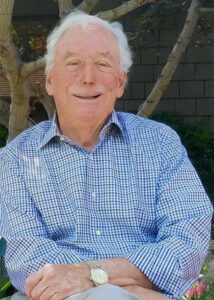
Es el final de un largo periplo que empezó en 1975 con el proyecto Dictionary of the Old Spanish Language de la University of Wisconsin, encabezado por Lloyd Kasten, con quien había estudiado yo ecdótica unos diez años antes. Fue el primer proyecto de humanidades digitales en el ámbito hispanico. Kasten fue secundado por su joven colega John Nitti, el arquitecto del entorno informático del proyecto. Para garantizar la autenticidad del corpus de español antiguo, se necesitaba un repertorio de manuscritos españoles escritos antes de 1501. Tal repertorio no existió y pusieron a ayudantes de investigación a vaciar dos obras, el Catálogo de los manuscritos castellanos de la Real Biblioteca de El Escorial, del benemérito, y martirizado, padre Julián Zarco Cuevas; y la Bibliografía de la literatura hispánica del igualmente benemérito José Simón Díaz. Identificaron 966 obras y Kasten y Nitti imprimieron el resultado como Bibliography of Old Spanish Texts en 1975. Siguió una segunda edición en 1977, con 1869 fichas. Al año siguiente yo me encontraba en la Hispanic Society, redactando su catálogo de manuscritos medievales y enviando adiciones y correcciones a BOOST. En 1981 Kasten y Nitti me ofrecieron la dirección de BOOST como proyecto autónomo, y lo demás, como dicen, es historia.

Pronto tuve un colaborador, un jovencísimo Ángel Gómez Moreno (UCM), que acababa de pasar un año de estudios de posgrado en Wisconsin. Al volver a España se lanzó con entusiasmo a la tarea de repasar los ficheros y catálogos (en papel, por supuesto), de la BNE, la Biblioteca de Palacio, la RAE y la RAH, siempre en busca de nuevos manuscritos para BOOST. En los años 80 estudiantes de carrera y posgrado sirvieron como ayudantes de investigación, primero María Morrás (UPF), y en los 90 Ángela Moll Dexeus y Antonio Cortijo (UC Santa Barbara), durante su paso por las aulas de Berkeley.  Ya desde 1993 BOOST era BETA, la Bibliografía Española de Textos Antiguos en CD-ROM y en la red en 1997. En 2000 Ángel me mandó como becario por dos años a Óscar Perea Rodríguez; y desde entonces Óscar ha sido mi mano derecha en el proyecto, organizando los seminarios de PhiloBiblon, primero en San Millán de la Cogolla y luego en Madrid. Más recientemente ha trabajado como ayudante en Berkeley Heather Bamford (George Washington University), mientras que, en España, en la UCM, Álvaro Bustos ha participado en varias campañas de investigación conmigo y ha reclutado nuevos miembros del equipo de BETA.

Kasten y Nitti fueron responsables también de la Bibliography of Old Catalan Texts (BOOCT, 1985), base de datos gemela a BOOST, compilada por Beatrice Concheff (†), antigua alumna de la University of Wisconsin y que, en aquel tiempo, ejercía como profesora de inglés en una escuela de lenguas de Barcelona. Era una aficionada a la literatura catalana, pero no era experta en ella en términos académicos; por ello, la inmensa mayoría de sus citas a obras y manuscritos medievales provenía de fuentes secundarias. Y además, en el año de 1989, por desgracia, Concheff se encontraba con una salud muy delicada y era consciente de que no podría dedicarse a la compilación de una segunda edición de BOOCT.

En una de las sesiones de trabajo del congreso de la Asociación Internacional de Hispanistas de Barcelona de 1989, mi amigo Francisco Marcos Marín me presentó a Vicenç Beltrán. Expuesto el caso a Vicenç, vio inmediatamente la importancia de seguir adelante con BOOCT. En seguida Vicenç embarcó en el proyecto a su jovencísima alumna, doctoranda en aquel entonces, Gemma Avenoza i Vera (†). Fue Gemma la que enseguida quedó al cargo del mismo. Era ya una codicóloga consumada, como se puede comprobar en su tesis doctoral, Repertori dels manuscrits en llengües romàniques conservats a biblioteques barcelonines. Además, Gemma era de los escasos expertos en filología de la época que sabía manejar un ordenador, habilidad absolutamente necesaria para trabajar con PhiloBiblon. Ambos, Gemma y Vicenç, romanistas al estilo antiguo y expertos no sólo en las literaturas medievales ibéricas, sino también en las de Francia e Italia, comprobaron la utilidad del (entonces recién bautizado) PhiloBiblon,  pues podría facilitar la tarea de catalogación y descripción de los textos y testimonios del corpus de literatura medieval ibérica en lenguas castellana, catalana, portuguesa y gallego-portuguesa.

A los pocos meses de ese primer encuentro en Barcelona, en el otoño de 1989 Gemma ya pudo visitarme en Berkeley para adentrarse en el arcano mundo de PhiloBiblon y encargarse, junto con Vicenç, de BOOCT, que pronto cambiaría su nombre en BITECA (Bibliografia de Textos Catalans Antics), de forma paralela a BETA. Desde entonces hasta su demasiado temprana muerte en 2021, Gemma fue la mano directriz de BITECA, pronto secundada por Lourdes Soriano, alumna tanto de Gemma como de Vicenç. Durante casi 20 años, pues, Gemma, Lourdes y yo estuvimos en contacto constante. Las dos supieron atraer a más de medio centenar de colaboradores y ayudantes de investigacíon. Los miembros actuales del equipo de BITECA son Joan Mahiques Climent (Universitat Jaume I),  Joan M. Perujo  (Universitat d’Alacant), Helena Rovira Cerdà (Universidad de Murcia), Glòria Sabaté (Universitat de Barcelona) y Ferran Triadó Sales, (Universitat de Barcelona), todos ellos alumnos o antiguos alumnos de Gemma y Lourdes.

Ya por la misma época, en 1988, entablé discusiones con mi querido colega y vis-à-vis (literalmente) en el departamento de español y portugués de Berkeley, Arthur Askins, sobre la posibilidad de crear una base de datos paralalela a BOOST y BOOCT. Se llamaría Bibliography of Old Portuguese Texts (BOOPT) y formaría un nuevo tomo en la “Bibliographic Series” de la Hispanic Seminary of Medieval Studies. Pero ya la época de publicación en papel había pasado. Con una subvención de la Sociedad Estatal del Quinto Centenario, BETA, BITECA y el recien bautizado BITAP (Bibliografia de Textos Antigos Portugueses) saldría en disco CD-ROM en 1993. Más tarde, el nombre BITAP se cambiaría en BITAGAP (Bibliografia de Textos Antigos Galegos e Portugueses).

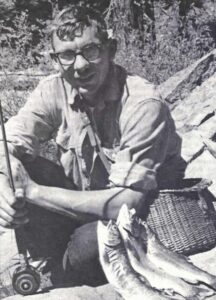
Arthur había sido testigo ocular de mis investigaciones con BOOST desde 1981 y se había dado cuenta de la utilidad de las bases de datos en sus propias investigaciones sobre la biblioteca de Fernando Colón. Estaba intrigado, pero se dio cuenta desde el principio que esto tendría que ser un proyecto de equipo. Reclutó a sus amigos y antiguos compañeros de estudios de Berkeley, Harvey Sharrer (†), profesor en la University of California, Santa Bárbara,  y Martha E. Schaffer, en aquel entonces profesora la University of Chicago y actualmente en la University of San Francisco.

Iniciados sus viajes de investigación anuales en Portugal, muy pronto los tres persuadieron a Aida Fernanda Dias (†), profesora de la Universidade de Coimbra, que se uniera al equipo. Luego, comenzando en 2008, se incorporaron Pedro Pinto (Universidade Nova de Lisboa), con su olfato extraordinario para encontrar manuscritos de interés, Cristina Sobral (Universidade de Lisboa), Filipe Alves Moreira (Universidade do Porto, actualmente Universidade Aberta), Maria de Lurdes Rosa (Universidade Nova de Lisboa),  Ricardo Pichel Gotérrez (Universidade de Santiago y actualmente Universidad de Educación a Distancia), Mariña  Arbor (Universidade de Santiago y Diana Fontão (Universidade de Porto / Universidad de Salamanca).

Como en los casos de BETA y BITECA, el equipo de BITAGAP ha contado con al menos una centena de buenos colaboradores, entre estudiantes y colegas del mundo entero.

PhiloBiblon no sólo ha sido creación de las personas mencionadas aquí, sino de todos aquellos colegas que nos han escrito pidiendo u ofreciendo información sobre tal o cual texto, manuscrito o persona. Por y para ellos hemos dedicado tanto esfuerzo durante más de cuarenta años, el mismo esfuerzo precisamente que todos los miembros del equipo vamos a continuar haciendo en esta nueva etapa que se abre ante nosotros.

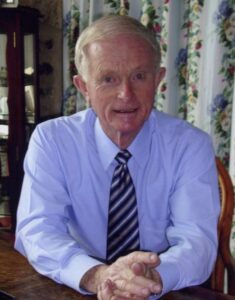
Charles B. Faulhaber
University of California, Berkeley

Referencias:

Faulhaber, Charles B., PhiloBiblon, pasado, presente, futuro: Historia de un proyecto de investigación, San Millán de la Cogolla: Congreso Internacional. Códices literarios españoles (Edad media) 2007-11-29

_____, PhiloBiblon: Pasado y futuro, (Incipit 29 2009: pp. 191-200)

_____, PhiloBiblon, Information Technology, and Medieval Spanish Literature: A Balance Sheet, Bern: Humanitats a la Xarxa: Món Medieval – Humanities on the Web: The Medieval World 2014: pp. 15-43

_____, PhiloBiblon and the Semantic Web. Notes for a Future History, València: La Literatura Medieval Hispánica en la Imprenta (1475-1600) 2016: pp. 75-93

____. Harvey L. Sharrer (1940-2024). PhiloBiblon blog 2024-10-10

Dias, Aida Fernanda, Arthur Lee-Francis Askins, Harvey L. Sharrer, A ‘Bibliografia de Textos Antigos Galegos e Portugueses’ na Internet, Lisboa: Revista Portuguesa de História do Livro 1 n. 2 1998: pp. 173-80)

Martín Molares, Mónica PhiloBiblon 2020 n. 1 (febrero): Crónica del V Seminario Internacional PhiloBiblon-BNE-UCM (Madrid, junio de 2019), (PhiloBiblon Blog 2020-02-28)

Perea Rodríguez, Óscar, y Charles B. Faulhaber, Esbozos sobre la evolución y el futuro de un pionero de las humanidades digitales hispánicas: el proyecto de PhiloBiblon, Revista Digital Universitaria 18 n. 1 2017

Schaffer, Martha E. Homenagem a Aida Fernanda Dias oferecida pelos seus colegas de Philobiblon, eHumanista 31 2015: pp. i-v, 1-275) 

Sharrer, Harvey L., BITAGAP (Bibliografia de Textos Antigos Galegos e Portugueses): um armazém da memória histórica, Madrid: (Tenh’eu que mi fez el i mui gran ben. Estudos sobre cultura escrita medieval dedicados a Harvey L. Sharrer 2022: pp. 39-67)

_____, A BITAGAP no seu 30o aniversário: a expansão de dados e expectativas para o futuro, Berlin: O Medievalismo no século XXI 2020: pp. 157-68) 

_____, The BITAGAP project since 1988 – Expansion of the corpus of texts and important discoveries, Bern: Humanitats a la Xarxa: Món Medieval – Humanities on the Web: The Medieval World 2014: pp. 169-83
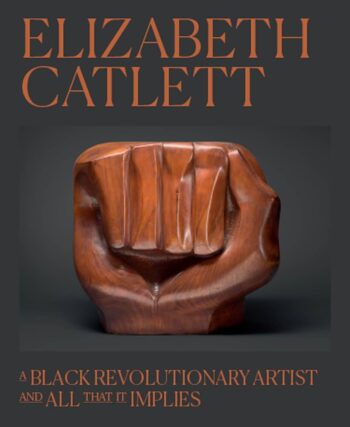
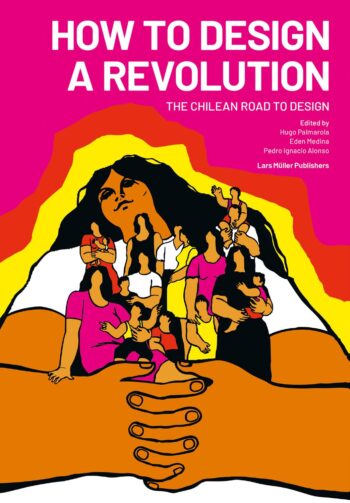
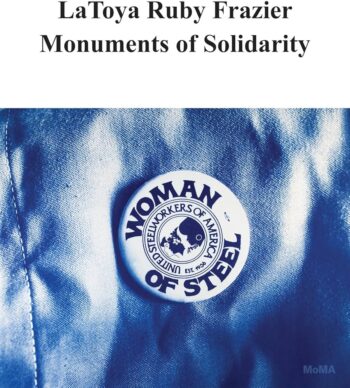
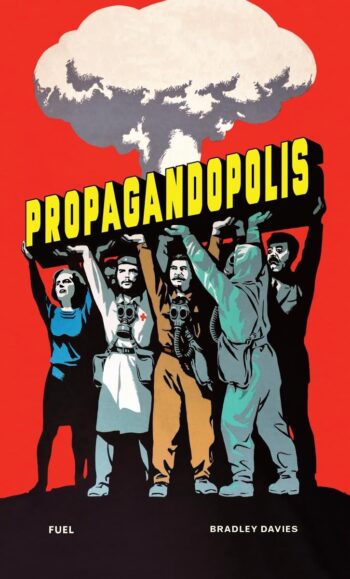
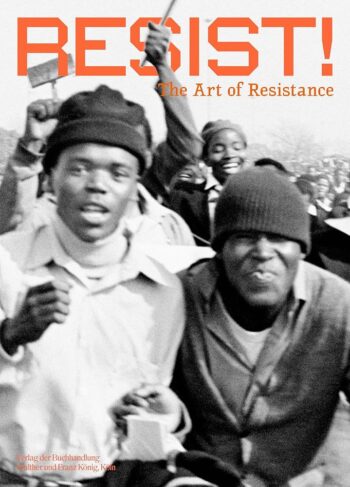
Art as Resistance

Check out these, and other books that explore and represent the use of art as social and political resistance, currently on display in the Art History/Classics Library.

Elizabeth Catlett                                                 How to Design a Revolution                            LaToya Ruby Frazier

Propagandopolis                                          Resist! The Art of Resistance                                             Showing Resistance


Library Trial: Muslim in Russia Online (Brill Database)

UC Berkeley Library has set up a trial of Brill’s Muslim in Russia Online Database. The database trial will continue until February 1, 2025. You can access the trial here.

This collection examines the varied Russian Muslim population during the period of 1861-1918. It includes works by and about Muslims, highlighting the significance of this heritage as the history and spirituality of Muslims in Russia are being reexamined. A word of caution: Most of the periodicals in this database have been digitized from microfilms; thus, digitization quality is problematic. The OCR seems unchecked and automated “dirty,” so one has to look at the images.

Please access the database here: https://shorturl.at/M4IyT

Please see the screenshot below:

Title: V mīri͡e musulʹmanstva:ezhenedelʹnai͡a, literaturnai͡a, politicheskai͡a i obshchestvennai͡a gazeta.<br />Date: 1911<br />
Date in Source: [1911-1912]
Title: V mīri͡e musulʹmanstva:ezhenedelʹnai͡a, literaturnai͡a, politicheskai͡a i obshchestvennai͡a gazeta.
Date: 1911
Date in Source: [1911-1912]
 

Here are the key points about this database are highlighted below:

  • Role in Russian State: Muslims played a crucial role in the creation of the multinational Russian state, completed with the annexation of Central Asia in the 1860s. By 1897, Muslims made up almost 11% of Imperial Russia’s population (14 million).
  • Russian State Policy: Russian policy towards Muslims varied. Initially, there was forced Russification and Christianization. From Ekaterina II onwards, the policy shifted towards legitimizing Muslims. Under Alexander III, discrimination against non-Christians, including Muslims, increased.
  • Early 20th Century: The early 1900s saw a rise in Muslim nationalism, fueled by religious reformism and liberal ideas. The First Russian Revolution (1905-1907) led to significant political changes, including creating the State Duma and civil freedoms.
  • Union of Muslims of Russia: Formed in 1905-1906, this organization became the most powerful political body for Muslims until 1917, with branches across various regions.
  • Intellectual and National Identity: Early 20th century saw more Muslim intellectuals and interest in national identity, heritage, and traditions.
  • 1917 Revolutions: Muslim nationalist movements grew during the February and October Revolutions of 1917. Post-1917, Bolshevik policies negatively impacted Muslims’ religious freedoms.
  • Muslim Press: Until 1905-1907, Muslim issues were poorly reported. The 1905 revolution led to a surge in Muslim publications. These periodicals covered a range of ideological perspectives and helped address Muslim problems.
  • Unique Publications: Publications from 1861-1918 provide insights into Muslim life in the Russian Empire and their leaders’ perspectives. These works are valuable for understanding Muslims’ historical and spiritual heritage in Russia.

Library Book Talk (Webinar): On Savage Shores: How Indigenous Americans Discovered Europe

Please save the date on your calendars for an exciting upcoming conversation-book talk (On Savage Shores : How Indigenous Americans Discovered Europe) for our community of UC Berkeley Library and affiliated staff and librarians.
Date: February 6, 2024
Day: Thursday, Time: 12-1 pm (Pacific Time) 8 pm-9 pm UK Time

Zoom Webinar Link: https://berkeley.zoom.us/webinar/register/WN_LGoU0V9ZQXegc5fHxlF_WA

Registration: https://ucberk.li/3GW

Free and Open to All with prior registration. If you need special assistance or accommodation, please contact Dr. Liladhar R Pendse, the event organizer.

About the Webinar: In this webinar, Professor Caroline Dodds Pennock (She/her) will discuss her book, On Savage Shores: How Indigenous Americans Discovered Europe. This book challenges the traditional Eurocentric view of the Age of Discovery by focusing on the Indigenous Americans who crossed the Atlantic to Europe after 1492. For centuries, history has taught that global history began when the “Old World” met the “New World” with Columbus’ arrival in the Americas. However, Caroline Dodds Pennock’s research reveals that, for many Indigenous people—Aztecs, Maya, Totonacs, Inuit, and others—Europe was the “New World.”

A Collage of pages of Codex Mendoza. The Codex Mendoza is an Aztec codex, believed to have been created around the year 1541.[1] It contains a history of both the Aztec rulers and their conquests as well as a description of the daily life of pre-conquest Aztec society. The codex is written using traditional Aztec pictograms with a translation and explanation of the text provided in Spanish. It is named after Don Antonio de Mendoza (1495-1552), the viceroy of New Spain, who supervised its creation and who was a leading patron of native artists.
Collaged pages of Codex Mendoza. The Codex Mendoza is an Aztec codex, believed to have been created around the year 1541.
These individuals, including enslaved people, diplomats, explorers, servants, and traders, saw Europe as a land of both wonder and cruelty, filled with vast wealth inequality, and strange customs. Their experiences, marked by abduction, cultural clashes, and loss, have been largely excluded from mainstream historical narratives. This book tells the untold stories of the Indigenous Americans who traveled to Europe, such as the Brazilian king who met Henry VIII, the Aztecs at the court of Charles V, or the Inuit displayed in London pubs. Pennock uses their stories and European accounts to reveal how these Indigenous people, though marginalized, left a lasting impact on European culture and society.

About the author

Professor Caroline Dodds Pennock (She/her) has been at the University of Sheffield since 2010, where they are known as one of the few British historians specializing in Aztec studies. Their current research, however, has expanded to include Indigenous histories in a global context, with a particular focus on the Atlantic world. Dr. Caroline Dodds Pennock recently published On Savage Shores: How Indigenous Americans Discovered Europe, which tells the stories of Indigenous Americans who traveled to Europe in the sixteenth century. These accounts, often involving abduction, loss, and cultural appropriation, have largely been overlooked in mainstream history.

Professor Caroline Dodds Pennock (she/her)B.A., M.St., D.Phil. (Oxon), FRHistS School of History, Philosophy and Digital Humanities Professor in International History Department Director of One University, University of Sheffield
Professor Caroline Dodds Pennock, University of Sheffield. Image Credit: University of Sheffield

Dodds Pennock, Caroline. On Savage Shores : How Indigenous Americans Discovered Europe / Caroline Dodds Pennock. First American edition. New York: Alfred A. Knopf, 2023.

https://search.library.berkeley.edu/permalink/01UCS_BER/1thfj9n/alma991086032106106532

Event Sponsors:  Social Sciences Division. Library’s Equity and Inclusion CommitteeInstitute for European Studies, UC Berkeley and Center for Latin American and Caribbean Studies (CLACS), UC Berkeley


Library event: Que vlo-ve? and Le Mot

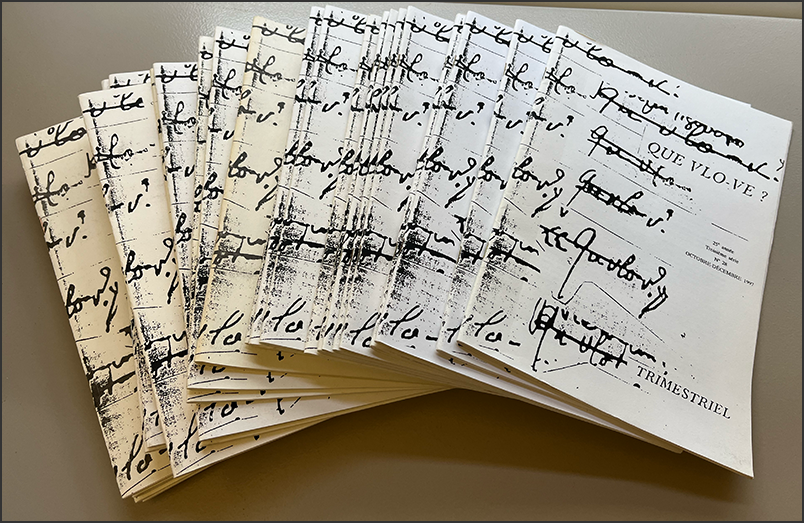
Que vlo-ve ?
Various issues of the third series of Que vlo-ve ?

In these austere times where both financial resources and shelving space are limited, it has become a rare occasion when we are able to pursue full-runs of older periodicals. However, the recent acquisition of these two—one from France and the other from Belgium—in more or less the same time period has sparked the idea of hosting a hands-on journal presentation for those interested in interacting with the journals before the issues are processed, cataloged, bound, and stored in their distinct library locations.

Que vlo-ve?: bulletin de l’Association internationale des amis de Guillaume Apollinaire was published from January 1973 to 2004. Centered on the work of the celebrated 20th century French poet, playwright, short story writer, novelist and art critic of Polish descent, its intention was not to duplicate articles published in the annual Guillaume Apollinaire series by Lettres Modernes. Instead, it was meant to welcome articles that could not easily find a place, news of the association and of the museum as well as news that members of the scholarly society wished to disseminate internationally.

Le Mot
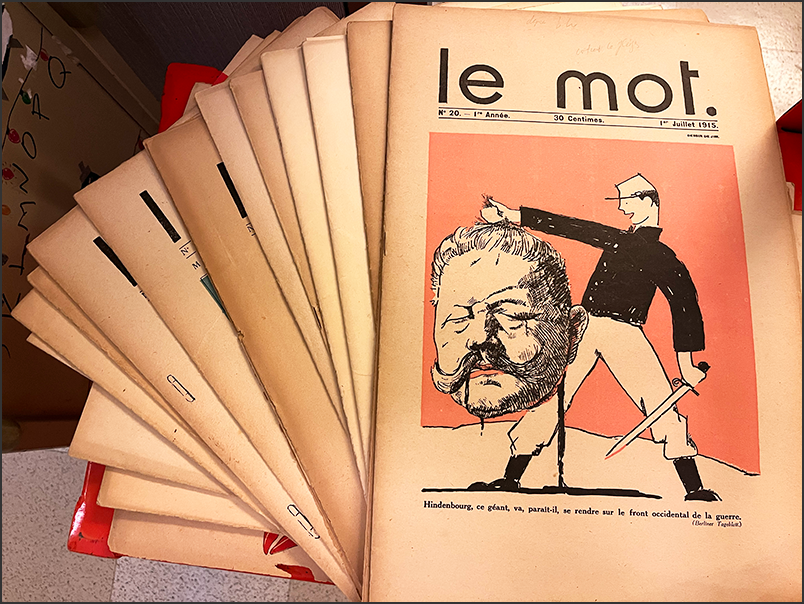
Issue number 20 (July 1, 1915) of Le Mot

Le Mot (1914-1915)

Sardonic and visually rich, this wartime French literary and artistic journal published by Jean Cocteau and Paul Iribe, was characterized by a restrained modernism and a fiercely nationalistic, anti-German perspective. Le Mot (The Word) was a wartime sequel to François Bernouard’s Schéhérazade: Album Mensuel d’Oeuvres Inédites d’Art et de Littérature (1909-11). Its primary purpose was to establish an entirely French artistic style and taste—anti-bourgeois and uninfluenced by German modernism.

Reports of the brutal treatment of noncombatants (such as mass executions that included women, small children, and the elderly) and damage to towns and cultural centers shocked the public, leading to a characterization, particularly within France, of the German soldiers as destructive and uncivilized “huns” particularly within wartime propaganda. The bi-monthly periodical included cover designs by not only Iribe and Cocteau but also Sem, Raoul Dufy, Léon Bakst, André Lhote, Albert Gleizes, and Pierre-Emile Legrain. Cocteau signed his drawings as Jim, the name of his dog. In August 1914, when war was declared with Germany, he was twenty-five years old. Like many patriotic young Frenchmen, Cocteau tried to enlist but was turned down because of his health. Looking for other ways to serve his country and the war effort, he collaborated with Iribe to launch Le Mot. As a teenager, Iribe drew illustrations for the popular caricature journal L’Assiette au Beurre (The Butter Plate), which ran from 1902 to 1912. He also freelanced for Le Témoin, Rire, Sourire and other periodicals and was enthusiastic about starting a satirical journal of his own.

Please join us for an interactive show and tell with special guest Willard Bohn, alumnus of the Department of French and Professor Emeritus of French and Comparative Literature at Illinois State University.

Thursday, February 6
4-5:30 pm
223 Doe Library (accessible through south end of the Heyns Reading Room)

No rsvp required.

—-
Claude H. Potts (he/him)
Librarian for Romance Language Collections


Meeting of Library’s Global & Area Studies Interest Group

United Nations: For all children a safe tomorrow-IF you do your part
United Nations: For All Children a Safe Tomorrow-IF You Do Your Part. Issued by United Nations, Department of Public Information. United Nations poster collection, circa 1940s. The Bancroft Library. University of California, Berkeley. BANC PIC 2005.010:002–D

On Wednesday, January 15, members of the newly formed Global & Area Studies Interest Group (GASIG) convened via Zoom to discuss new directions and topics of interest for librarians and staff working on international issues and themes at UC Berkeley. The knowledge sharing group provides a forum for Library employees to address issues related to supporting teaching, learning and research about specific world regions and countries, as well as international and global studies broadly. Relevant topics include, but are not limited to: collection development, collection management, digitization, metadata and discovery issues, campus partnerships, and fundraising.

Since its founding in 1868, students and faculty at UC Berkeley have concerned themselves with a breathtaking range of languages. In support of teaching and research, the University Library, which collects and preserves materials in all languages, now boasts a collection of nearly fourteen million volumes. It is among the largest academic libraries in the U.S. with more than one third of its print resources in more than 400 non-English languages, and even more in digital formats. Over a dozen Berkeley departments offer instruction in more than sixty languages.

The group will meet once or twice per semester, communicate via a group email list, and endeavors to host a series of educational events such as a library resource showcase featuring both hidden and well-known collections. Membership is open to all interested UC Berkeley Library employees across units, functions, and classifications. José Adrián Barragán-Álvarez (Bancroft Library) and Claude Potts (Arts & Humanities Division) are co-facilitators for the first two years. For more information or to join the group, please either one of us directly.


Spring 2025 open access publishing workshops with the Scholarly Communication & Information Policy office

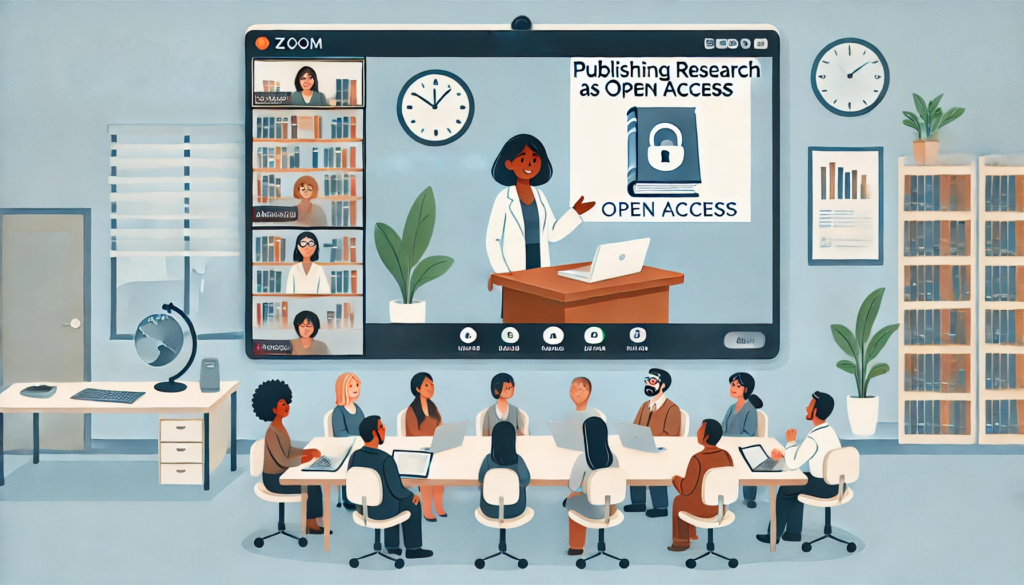
A hybrid meeting setup showcasing a presentation on "Publishing Research as Open Access." The central screen displays a presenter in a white lab coat delivering a talk via Zoom, with a slide showing a padlock icon over a book labeled "Open Access." Below, a diverse group of individuals sits around a conference table with laptops and notepads. The room features bookshelves, plants, a globe on a desk, and clocks on the wall, creating a professional and collaborative atmosphere.

With the spring semester kicking off, the Library’s Scholarly Communication & Information Policy office is here to help faculty, students, and staff understand copyright and scholarly publishing with online resources, Zoom workshops, and consultations. Read on below for a quick update.

Workshops

Publish Digital Books & Open Educational Resources with Pressbooks

Date/Time: Tuesday, March 11, 2025, 11:00am–12:00pm
RSVP to get the Zoom link

If you’re looking to self-publish work of any length and want an easy-to-use tool that offers a high degree of customization, allows flexibility with publishing formats (EPUB, PDF), and provides web-hosting options, Pressbooks may be great for you. Pressbooks is often the tool of choice for academics creating digital books, open textbooks, and open educational resources, since you can license your materials for reuse however you desire. Learn why and how to use Pressbooks for publishing your original books or course materials. You’ll leave the workshop with a project already under way.

How to Publish Open Access at UC Berkeley

Date/Time: Tuesday, April 8, 2025, 11:00am–12:00pm
RSVP to get the Zoom link

Are you wondering what processes, platforms, and funding are available at UC Berkeley to publish your research open access (OA)? This workshop will provide practical guidance and walk you through all of the OA publishing options and funding sources you have on campus. We’ll explain: the difference between (and mechanisms for) self-depositing your research in the UC’s institutional repository vs. choosing publisher-provided OA; what funding is available to put toward your article or book charges if you choose a publisher-provided option; and the difference between funding coverage under the UC’s systemwide OA agreements vs. the Library’s funding program (Berkeley Research Impact Initiative). We’ll also give you practical tips and tricks to maximize your retention of rights and readership in the publishing process.

Other ways we can help you

In addition to the workshops, we’re here to help answer a variety of questions you might have on intellectual property, digital publishing, and information policy.

  • Have a question about copyright and artificial intelligence (AI) in relation to research and scholarship? Or your rights and responsibilities in using library-licensed materials for AI use? View the AI page on our website for guidance.
  • Interested in publishing your research open access? UCB Library can help defray the costs of an article processing charge (up to $2,500) or book processing charge (up to $10,000). See the Berkeley Research Impact Initiative (BRII) for more information. And explore the various UC-wide open access agreements and discounts that can help UC corresponding authors publish their scholarship open access.
  • Do you want to create an open digital textbook? Take a look at UC Berkeley’s Open Book Publishing platform (anyone with a @berkeley.edu email can sign up for a free account), and get in touch with us about our Open Educational Resources (OER) grant program.
  • Keep an eye on the Library’s events calendar for more workshops and trainings.

Want help or more information? Send us an email at schol-comm@berkeley.edu. We can provide individualized support and personal consultations, online class instruction, presentations and workshops for small or large groups & classes, and customized support and training for departments and disciplines.


New Publication from Art History Faculty Todd Olson

Ribera's Repititions

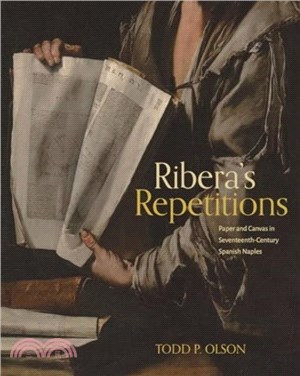
Check out Professor Todd Olson’s newest publication, Ribera’s Repetitions: Paper and Canvas in Seventeenth-Century Spanish Naples

“Todd Olson carefully considers the diverse contexts for Ribera’s artistic practice, such as empire-building, materiality, and myth, and thus assesses the complexity of Ribera’s creativity through the lenses of repetition, rotation, and experimentation. This novel, interdisciplinary study reexamines the originality of Ribera’s praxis as engaged in a visual culture shaped by science, history, and belief in early modern Naples.”—Lisandra Estevez, editor of Collecting Early Modern Art (1400–1800) in the U.S. South

“Much more than a mere study on Jusepe de Ribera, Olson’s book is an essay on materiality, technique, and their meanings; on imperial circulation and its discontents; and on knowledge, memory, and loss. This piece of cultural history, never losing touch with the artworks and their visual particularities, is beautifully written and at times moving, reminding us of the potentialities of art history as a literary and philosophical genre.”—Itay Sapir, author of Ténèbres sans leçons: Esthétique et épistémologie de la peinture ténébriste romaine, 1595-1610

-From Penn State University Press


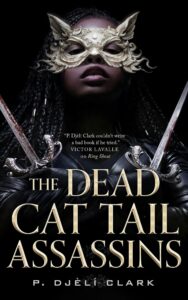
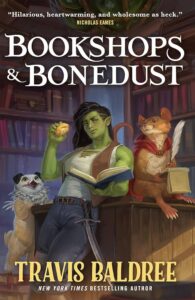
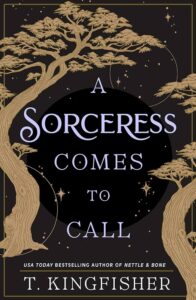
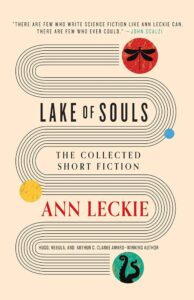
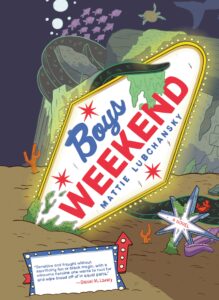
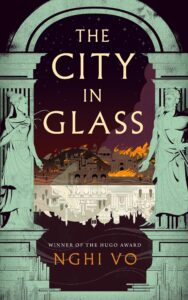
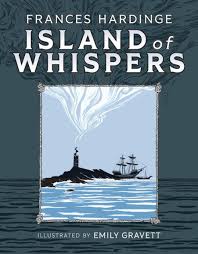
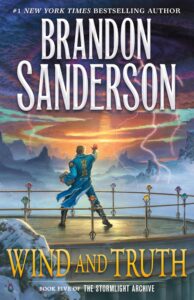
2024 Speculative Fiction Read and Enjoyed

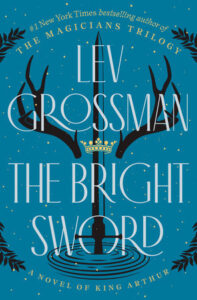
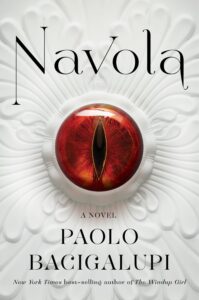
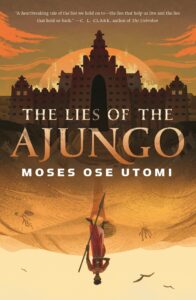
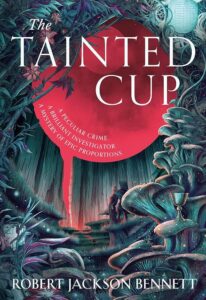
Some of you know that I (Bee, the Lit Librarian) read heavily in speculative fiction. For our mutual enjoyed, I’ve compiled a list of some of my colleagues and my favorite 2024 reads in the genre. Please note that most of these books are from 2024, but a few were published earlier. Please note that this list is far from comprehensive.

Here they are!


Nuclear Complexity and Oral History: Brianna Iswono’s Undergraduate Research, Fall 2024

a young woman smiling
Brianna Iswono at UC Berkeley, 2024.

by Brianna Iswono

Brianna Iswono is a third-year undergraduate student at UC Berkeley majoring in chemical engineering. Throughout the Fall 2024 semester, Brianna worked with Roger Eardley-Pryor of the Oral History Center to earn academic credits through Berkeley’s Undergraduate Research Apprentice Program (URAP). URAP provides opportunities for undergraduates to work closely with Berkeley scholars on cutting edge research projects for which Berkeley is world-renowned.  In this post, Brianna reflects on her research about nuclear power as it appeared in the Oral History Center archives.

As a chemical engineering student at UC Berkeley, my coursework only briefly touches on topics of nuclear power and energy. I wanted to learn more and my curiosity deepened as I saw more and more headlines about nuclear energy in news articles and social media. To dive deeper, in the fall of 2024 I joined Berkeley’s URAP (Undergraduate Research Apprenticeship Program) under the mentorship of historian Roger Eardley-Pryor at the Oral History Center, where I analyzed various oral histories and technical reports about nuclear energy. Through this experience, what I discovered was not only a stronger interest in nuclear power, but a field marked by polarizing perspectives and profound complexity—one where simple answers do not exist. 

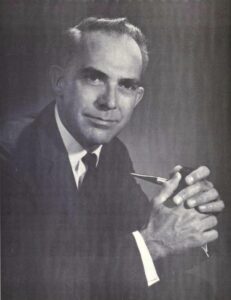
A man in a suit and tie holding a smoking pipe
William E. Siri, environmentalist and biophysicist, 1964

Nuclear power stands as one of the most reliable carbon-free energy sources available today. Unlike fossil fuels, it produces no carbon dioxide during electricity generation, which makes nuclear power a critical tool in the fight against climate change and reducing greenhouse gas emissions. Given the growing urgency for energy facilities to reduce their overall emissions, nuclear power offers a viable option for large-scale, reliable energy production. As former Sierra Club president, mountaineer, biophysicist, and Berkeley Lab energy analyst William E. Siri noted in his oral history in the late 1970s, “Coal is a very dirty fuel… That leaves nuclear as one clean energy source until solar and other energy sources are fully developed.” Today, solar and wind are more developed, but the energy they generate drops when the sun sets or when winds cease. By providing steady, continuous power, nuclear energy complements intermittent renewable sources like wind and solar, ensuring grid stability. This reliability reduces the need for fossil fuel-based backup systems and thus helps mitigate climate change.

a smiling man with white hair
David Brower, environmental activist and first executive director of the Sierra Club (undated).

However, nuclear power is not without its environmental challenges. The construction and operation of plants can disrupt local ecosystems, particularly since they are often built in rural areas rich in biodiversity and ecological value. Habitat disruption, deforestation, and the high demand for water used in reactor cooling all remain significant concerns. The presence of nuclear plants places an increased strain on local water resources, particularly in underserved regions already facing water scarcity. In the first of his two archived oral history interviews, David Brower, the former executive director of the Sierra Club, the nation’s largest environmental organization, explained about the Club’s consideration of nuclear power, “You certainly haven’t helped the poor by degrading the environment, the working place, by not getting into the battles to protect them from the chemicals that they’re exposed to.”

a smiling young man wearing glasses and a suit and tie
Laurence I. Moss, nuclear engineer and former Sierra Club president, 1973.

Also, the visual impact of large nuclear facilities can dramatically alter the character of scenic areas. At least in California, public opposition was fueled historically by concern that industrial structures for nuclear power detracts from the natural beauty and environment of rural areas, making them appear stark and out of place. Laurence I. Moss, former Sierra Club president and nuclear engineer, worked directly on construction of nuclear reactors. Moss shared in his oral history, “In my mind it was always a location issue. That was not the right place to put a nuclear power plant, or any industrial facility. I would not want to put a residential development there, anything that would alter the natural environment for the worse.” Moss’s perspective highlights the tension between technological advancement and environmental preservation, underscoring the importance of careful site selection to balance progress with respect for natural landscapes.

an older man seated and wearing a baseball cap
Professor Thomas H. Pigford, founding chair of UC Berkeley’s Department of Nuclear Engineering, 2001.

Another major challenge, and perhaps the most pressing, is the management of nuclear waste. Nuclear reactors generate long-lived radioactive waste that requires secure, long-term storage, and even the most advanced waste repositories carry the risk of leakage or contamination over the thousands of years that spent nuclear fuel remains toxic. Efforts to manage nuclear waste have included ambitious ideas such as deep-sea disposal or even launching the waste into the sun. However, these approaches fail to fully eliminate the risk of leakage, especially given the exceptionally long timescales over which the waste must remain secure, and they often introduce additional challenges. As Thomas H. Pigford, the founding chair of UC Berkeley’s Department of Nuclear Engineering, explained in his oral history from the late 1990s,“Another more attractive approach is to shoot the radioactive waste into the sun, which would require concentrating it to reduce the weight. And that’s where it belongs, because the sun is so radioactive. But there, the technical challenge or problem is the abort rate of missiles, of space vessels, and so when consulting the people in NASA, we concluded that that was just untenable.” Such unresolved issues remain a central concern for environmental advocates, highlighting the ongoing tension between the potential of nuclear power as a clean energy source and the ecological risks it poses.

Economically, nuclear power presents both opportunities and challenges. Once operational, nuclear reactors have relatively low fuel and operating costs compared to many other energy sources. Uranium, the main fuel used, is highly energy-dense, requiring only small amounts to generate large quantities of energy. This efficiency makes nuclear power a cost-effective solution to meet large-scale energy demands, providing a reliable supply of energy at a lower long-term cost while still delivering the high output needed to sustain industrial and societal needs. After working directly with the economic analysis of nuclear plant construction in the 1960s, Moss shared, “we were able to show that other alternatives, specifically a nuclear power alternative, built in those years could provide power at lower cost than the dams.” Nuclear power also has an extensive reach that goes far beyond reactors, influencing a wide range of industries and technologies. The advancements and expertise gained through working with radiation and the advanced technologies required for waste facilities have helped with the development of new medical technologies used to measure radiation. Professor Pigford was directly involved in establishing the nuclear engineering curriculum at Berkeley and saw its expansion into related medical technologies. In his oral history, Pigford shared “Yes, well, there are plenty of jobs in waste disposal. And they are emphasizing more and more the interaction with the bioengineering program, which, as you probably know, is a new push on the campus. There’s a new department, and they’ve even gone into the field of tomography, which is doing scans on the brain and on the rest of the body. These involve nuclear reactions and so the development of instrumentation for that, techniques of sensing the nuclear radiations and interpreting them, is occupying more and more time.” Pigford’s insight highlights how nuclear engineering graduates have the opportunity to apply their expertise to innovations in health-related technologies, such as medical imaging.

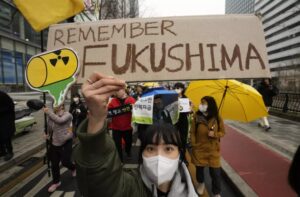
a young woman wearing a face mask holding a handmade sign
Environmental activist in Seoul, Korea, at a rally marking the 12th anniversary in 2023 of Japan’s Fukushima nuclear disaster (photograph by Ahn Young-joon of Associated Press).

Yet, a major economic challenge of nuclear power is the huge initial investment needed to build a plant. Designing, constructing, and meeting regulatory standards for a single nuclear plant can cost billions of dollars. While the long-term operating costs are lower, the upfront costs to begin production are much higher than those of other energy sources.This creates a significant barrier, particularly for developing countries that may also lack the technical expertise or regulatory infrastructure needed to operate plants safely. In his oral history, Siri captured the economic trade-off and complexity of nuclear power. Siri noted, “The more countries that have nuclear power plants, particularly the less advanced countries, the more likelihood there will be of meltdowns, simply because many such countries don’t have the technical base on which to maintain such an industry.” For these countries, nuclear power offers a chance to advance economically, but it also comes with the greater risk of catastrophic failure.

an older man wearing a tie
Roy Woodall, Australian geologist (undated).

On the global stage, nuclear technology carries a sense of prestige. Non-nuclear nations often see other nations with advanced nuclear developments as leaders in innovation, which enhances their national pride and elevates their international status. The high demand for uranium to fuel nuclear reactors has led various countries to form alliances or joint ventures, employing any means necessary to secure a share of the advancements in nuclear technology. Roy Woodall, an Australian geologist known for his contributions to the mining and exploration industries, directly engaged with the mining sector to meet the growing global demand for uranium. In his oral history from the early 2000s, Woodall shared, “There was quite a lot of interest from other overseas companies in looking for uranium in Australia, so we formed a joint venture to look for conglomerate-type uranium deposits in Northern Western Australia.” His experience highlights the global scramble for uranium resources, reflecting how the race for nuclear technology has spurred both national and international collaboration. 

a seated man with white hair
Michael R. Peevey, an energy entrepreneur and regulator (undated).

However, the social risks associated with nuclear power are significant. Public fear of radiation exposure, which can lead to various health risks, has been intensified by past large-scale nuclear accidents like Fukushima and Three Mile Island, along with the media frenzy surrounding them. When reflecting on nuclear concerns during his oral history in 2019, Michael R. Peevey, a UC Berkeley alumnus, former electric utility executive, and previous president of the California Public Utilities Commission, recalled “But we had Chernobyl in Russia, which was a disaster; it’s a lingering disaster today.” Such concern has resulted in widespread resistance to the construction of new nuclear reactors and calls to shutdown existing ones. Grassroots movements and anti-nuclear campaigns have further fueled this opposition, creating a broad social aversion to nuclear power.

a young man crouching by three fish he caught using a fly rod
David Pesonen, attorney and environmentalist, 1963.

David E. Pesonen is a UC Berkeley alumnus, attorney, and environmental activist best known for his leadership role in the battle to defeat a PG&E nuclear power plant at Bodega Bay in the early 1960s. In his oral history recorded in the late 1990s, Pesonen explained his motivation for spreading the anti-nuclear power agenda. “Mainly because of the waste disposal problem. I don’t know the answer to that. I don’t know that anybody does. And also because I think the design of the generation of plants that we are involved with is inherently unsafe.” Despite the advanced safety features of modern plants, the widespread fear and skepticism continue to challenge the nuclear industry, highlighting the complex intersection of technological progress, environmental concerns, and public perception.

After conducting this oral history research and diving into the different aspects of nuclear power, I have come to realize that this field is inherently complex. I am still unsure where I stand in these debates, but one thing is clear: nuclear energy shouldn’t be dismissed outright. A recent LA Times article notes that, as energy-demanding technologies like AI continue developing rapidly, the demand for energy will only increase and all carbon-free options must be considered, especially in light of climate change. At the same time, we cannot ignore the risks that nuclear power poses. I think that the best approach is to carefully consider all non-fossil energy sources, such as nuclear or renewable, to make informed choices. Nuclear power is neither entirely good nor entirely bad; it is a complex and multifaceted technology with the potential for significant benefits and serious risks. Attitudes will likely continue to shift back and forth, but embracing the complexities of nuclear power is important to making wise decisions about its future role in meeting global energy needs. Reflecting on my semester of oral history research, I am grateful to have taken this URAP opportunity, as it gave me valuable insight and a new understanding of nuclear power that I always hoped to explore. Nuclear power is a complicated yet astonishing field, and I hope others can be informed on it to formulate their own stance on how to create a greener future. 

Works Cited: 

Siri, William E. “William E. Siri: Reflections on the Sierra Club, the Environment, and Mountaineering, 1950s-1970s.” Interview by Ann Lage in 1975, 1976 and 1977. Oral History Center, The Bancroft Library, University of California, Berkeley, 1979.

Brower, David. “David Brower: Environmental Activist, Publicist, and Prophet.” Interview by Susan Schrepfer in 1974, 1975, 1976, 1977 and 1978. Oral History Center, The Bancroft Library, University of California, Berkeley, 1980.

Moss, Laurance I. “Laurance I. Moss: Sierra Club President, 1973-1974, Nuclear Engineer: Energy and Environmental Policy.” Interview by Ann Lage in 1992. Oral History Center, The Bancroft Library, University of California, Berkeley, 2014.

Pigford, Thomas H. “Thomas H. Pigford: Building the Fields of Nuclear Energy and Nuclear Waste Management, 1950-1999.” Interview by Carl Wilmsen in 1999. Oral History Center, The Bancroft Library, University of California, Berkeley, 2001.

Woodall, Roy. “Roy Woodall: Australian Geologist, 1953 to 1995: Success in Exploration for Gold, Nickel, Copper, Uranium, and Petroleum.” Interview by Eleanor Swent in 2004. Oral History Center, The Bancroft Library, University of California, Berkeley, 2006. 

Peevey, Michael R, “Michael R. Peevey: An Entrepreneur in Business, Energy, Labor, and Politics” conducted by Roger Eardley-Pryor in 2019, Oral History Center, The Bancroft Library, University of California, Berkeley, 2019.

Pesonen, David E. “Attorney and activist for the environment, 1962-1992 :opposing nuclear power at Bodega Bay and Point Arena, managing California forests and East Bay regional parks” Interviews conducted by Ann Lage, 1991 & 1992. Oral History Center, The Bancroft Library, University of California, Berkeley, 1996.

Haggerty, Noah. “Has Nuclear Power Entered a New Era of Acceptance Amid Global Warming?” Los Angeles Times, November 18, 2024. https://www.latimes.com/environment/story/2024-11-18/a-new-generation-finds-promise-in-nuclear-energy.

ABOUT THE ORAL HISTORY CENTER

The Oral History Center of The Bancroft Library preserves voices of people from all walks of life, with varying political perspectives, national origins, and ethnic backgrounds. We are committed to open access and our oral histories and interpretive materials are available online at no cost to scholars and the public. You can find our oral histories from the search feature on our home page. Search by name, keyword, and several other criteria. Sign up for our monthly newsletter  featuring think pieces, new releases, podcasts, Q&As, and everything oral history. Access the most recent articles from our home page or go straight to our blog home.

Please consider making a tax-deductible donation to the Oral History Center if you’d like to see more work like this conducted and made freely available online. As a soft-money research unit of The Bancroft Library, the Oral History Center must raise outside funding to cover its operational costs for conducting, processing, and preserving its oral history work, including the salaries of its interviewers and staff, which are not covered by the university. You can give online, or contact us at ohc@berkeley.edu for more information about our funding needs for present and future projects.