Primary Sources: New content from ProQuest

Through an arrangement with the California Digital Library and ProQuest, the Library has access to additional historical digital archives, including:

The historical newspaper holdings have also been expanded to include:


Native-American Heritage Month

Native American Heritage Month 2023

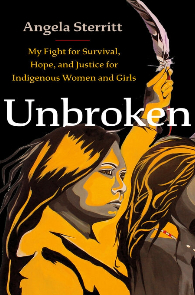
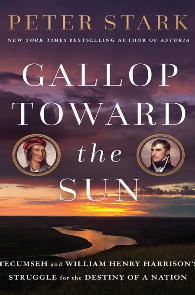
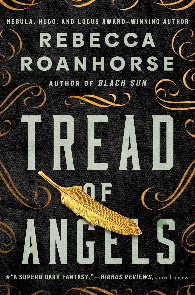
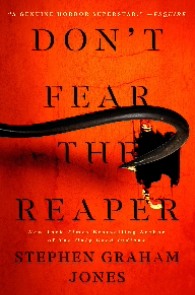
Celebrate National Native American Heritage Month in November with us! We’ve put together a collection of fiction and non-fiction for you to explore. Find more information and discover live events on the Native American Heritage Month website.


Bancroft Quarterly Processing News

The archivists of The Bancroft Library are pleased to announce that in the past quarter (July-September 2023) we opened the following Bancroft archival collections to researchers.

General and UARC Collections:

Michael Paul Rogin papers (processed by Marjorie Bryer) 

Acción Latina records and El Tecolote newspaper archive (processed by Marjorie Bryer)

Pam Levinson papers (processed by Presley Hubschmitt)

William Moore journals and other papers (processed by Lara Michels)

Renee Gregorio papers (processed by Simi Best)

Howard A. Brett collection of Panama Canal materials (processed by Lara Michels)

C. (Walter Clay) Lowdermilk papers (processed by Presley Hubschmitt)

Mosaic Law Congregation records (processed by Presley Hubschmitt)

Daniel Holmes collection of Sierra Club burro trips and Yosemite National Park backcountry research (processed by Jaime Henderson)

Triangle Gallery records (processed by Dean Smith)

Western Jewish History Center records (processed by Presley Hubschmitt)

Bransten and Rothmann family papers (processed by Presley Hubschmitt)

Friends of the River collection (transfer from UC Riverside; additional processing work by Lara Michels and Jaime Henderson)

George W. Barlow papers (processed by Jessica Tai)

Streetfare Journal records (processed by Lara Michels and student processing assistant Malayna Chang)

Roger Parodi collection of art museum and gallery announcements (processed by Lara Michels and student processing assistant David Eick)

Israel Louis Greenblat papers (processed by Presley Hubschmitt)

American Cultures Center records (processed by Jessica Tai)

Larry Orman archive of The Friends of the Stanislaus River materials (processed by Jaime Henderson)

Hamilton Boswell papers (digital materials processed by Christina Velazquez Fidler)

Pictorial Collections: 

130 small collections and single items (approximately 6,650 items, total)

William F. Knowland’s gubernatorial campaign of 1958 photographs (and miscellaneous subjects added in Series 4 of the Lonnie Wilson archive)

3,155 new scans from Thérèse Bonney’s WWII era photographs from Finland, 1939, and France, Portugal, Belgium 1940

Collections Currently in Process:

Elizabeth A. Rauscher papers (Jessica Tai)

Associated Students of the University of California, Berkeley, records (Jessica Tai)

California Faience archive (Jaime Henderson) 

Jan Kerouac papers (Marjorie Bryer)

Sister Makinya Sibeko-Kouate papers (Marjorie Bryer)

Nathan and Julia Hare papers (Marjorie Bryer)

Morris M. Goldstein papers (Presley Hubschmitt)

Hertzmann and Koshland family papers (Presley Hubschmitt)

Bush Street Synagogue Cultural Center records (Presley Hubschmitt and student processing assistant Malayna Chang)

Charles Muscatine papers–digital component (Christina Velazquez Fidler)

ruth weiss papers (Simi Best)


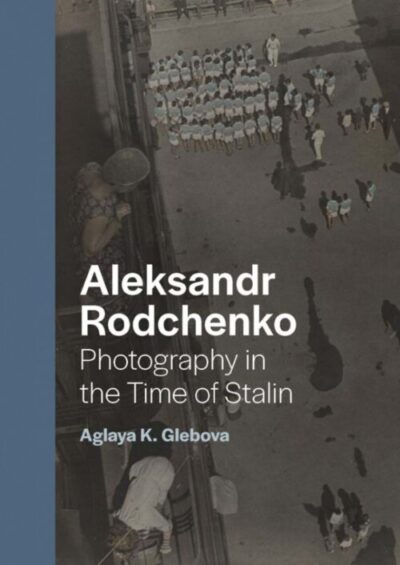
Townsend Berkeley Books Chat with Aglaya Glebova

Aleksandr Rodchenko: Photography in the Time of Stalin

with Aglaya Glebova
BERKELEY BOOK CHATS
Wednesday, Nov 8, 2023 12:00 pm – 1:00 pm
For more information, see the Townsend Website.

Aleksandr Rodchenko: Photography in the time of Stalin

Through the lens of Aleksandr Rodchenko’s photography, Aglaya Glebova (History of Art) charts a new and provocative understanding of the troubled relationship between technology, modernism, and state power in Stalin’s Soviet Union.

Aleksandr Rodchenko: Photography in the Time of Stalin (Yale, 2023) traces the shifting meanings of photography in the early Soviet Union, as it reconsiders the relationship between art and politics during what is usually considered the end of the critical avant-garde. Aleksandr Rodchenko (1891–1956), a versatile Russian artist and one of Constructivism’s founders, embraced photography as a medium of revolutionary modernity. Yet his photographic work between the late 1920s and the end of the 1930s exhibits an expansive search for a different pictorial language.

In the context of the extreme transformations carried out under the first Five-Year Plans, Rodchenko’s photography questioned his own modernist commitments. At the heart of this book is Rodchenko’s infamous 1933 photo-essay on the White Sea-Baltic Canal, site of one of the first gulags. Glebova’s careful reading of Rodchenko’s photography reveals a surprisingly heterodox practice and brings to light experiments in adjacent media, including the collaborative design work Rodchenko undertook with Varvara Stepanova, his partner in art and life.

Glebova is joined by Harsha Ram (Slavic Languages & Literatures and Comparative Literature). After a brief discussion, they respond to questions from the audience.

Registration Requested


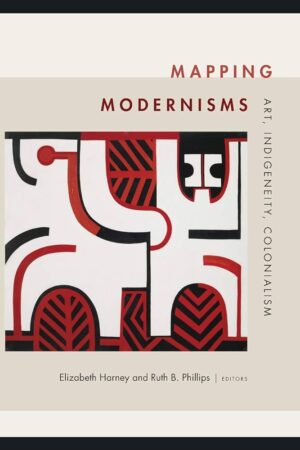
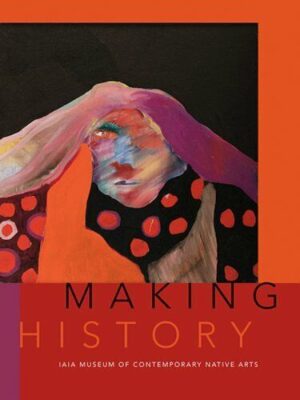
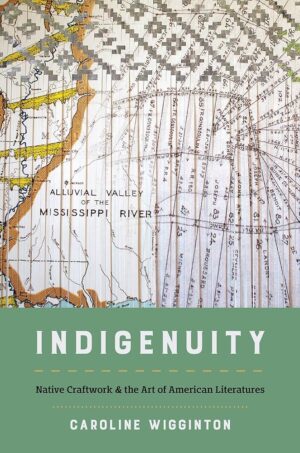
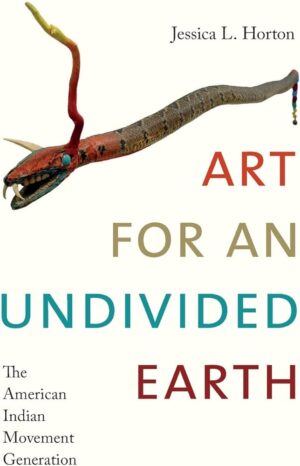
Native American Heritage Month Art Resources

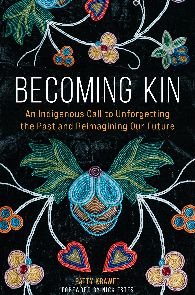
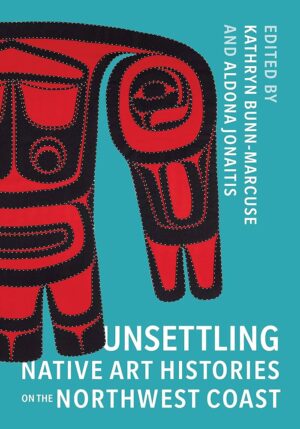
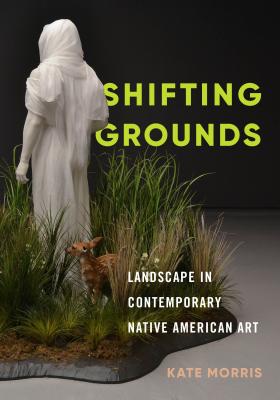
November is National Native American Heritage Month. Check out these online resources about Native American Art.  Come see additional titles on display in the Art History/ Classics Library.

The Sweet Smell of Home                                 Unsettling Native Art Histories…                                Women and Ledger Art


Shifting Grounds                                        Mapping Modernisms                                                  Making History


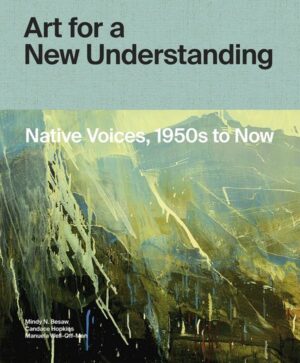
Indigenuity                                       Art for an Undivided Earth                                         Art for a New Understanding


New Publication from Faculty Lisa Pieraccini

Consumption, Ritual, Art, and Society Interpretive Approaches and Recent Discoveries of Food and Drink in Etruria

Art History Faculty Lisa Pieraccini has a new publication out titled Consumption, Ritual, Art and Society: Interpretive Approaches and Recent Discoveries of Food and Drink in Etruria (2023)

It will soon be available from UC Berkeley Library for loan.

From the Publisher:

Food determines who we are. We are what we eat, but also how we eat, with whom we eat, where we eat and, in some cases, even why we eat. Food production and consumption in the ancient world can express multiple dimensions of identity and negotiate belonging to, or exclusion from, cultural groups. It can bind through religious praxis, express wealth, manifest cultural identity, reveal differentiation in age or gender, and define status. As a prism through which to investigate the past, its utility is manifold. The chapters gathered together in this ground-breaking book explore the intersections between food, consumption, and ritual within Etruscan society through a purposeful cross-disciplinary approach. It offers a unique and innovative selection of up-to-date analysis from a variety of Etruscan food-related topics. From banqueting, feasting, fish rites, and symbolic consumption to bio-archaeological data, this volume explores a new and exciting field in ancient Italian archaeology.


PhiloBiblon 2023 n. 6 (octubre): PhiloBiblon White Paper

A requirement of the NEH Foundation grant for PhiloBiblon, “PhiloBiblon: From Siloed Databases to Linked Open Data via Wikibase: Proof of Concept” (PW-277550-21) was the preparation of a White Paper to summarize its results and provide advice and suggestions for other projects that have enthusiastic volunteers but little money:

White Paper
NEH Grant PW-277550-21
October 10, 2023

The proposal for this grant, “PhiloBiblon: From Siloed Databases to Linked Open Data via Wikibase: Proof of Concept,” submitted to NEH under the Humanities Collections and Reference Resources Foundations grant program, set forth the following goals:

This project will explore the use of the FactGrid: database for Historians Wikibase platform to prototype a low-cost light-weight development model for PhiloBiblon:

(1) show how to map PhiloBiblon’s complex data model to Linked Open Data (LD) / Resource Description Framework (RDF) as instantiated in Wikibase;
(2) evaluate the Wikibase data entry module and create prototype query modules based on the FactGrid Query Service;
(3) study Wikibase’s LD access points to and from libraries and archives;
(4) test the Wikibase data export module for JSON-LD, RDF, and XML on PhiloBiblon data,
(5) train PhiloBiblon staff in the use of the platform;
(6) place the resulting software and documentation on GitHub as the basis for a final “White Paper” and follow-on implementation project.

A Wikibase platform would position PhiloBiblon to take advantage of current and future semantic web developments and decrease long-term sustainability costs. Moreover, we hope to demonstrate that this project can serve as a model for low-cost light-weight database development for similar academic projects with limited resources.

PhiloBiblon is a free internet-based bio-bibliographical database of texts written in the various Romance vernaculars of the Iberian Peninsula during the Middle Ages and the early Renaissance. It does not contain the texts themselves; rather it attempts to catalog all their primary sources, both manuscript and printed, the texts they contain, the individuals involved with the production and transmission of those sources and texts, and the libraries holding them, along with relevant secondary references and authority files for persons, places, and institutions.

It is one of the oldest digital humanities projects in existence, and the oldest in the Hispanic world, starting out as an in-house database for the Dictionary of the Old Spanish Language project (DOSL) at the University of Wisconsin, Madison, in 1972, funded by NEH. Its initial purpose was to locate manuscripts and printed texts physically produced before 1501 to provide a corpus of authentic lexicographical material for DOSL. It soon became evident that the database would also be of interest to scholars elsewhere; and a photo-offset edition of computer printout was published in 1975 as the Bibliography of Old Spanish Texts (BOOST). It contained 977 records, each one listing a given text in a given manuscript or printed edition. A second edition followed in 1977 and a third in 1984.

PhiloBiblon was published in 1992 on CD-ROM, incorporating not only the materials in Spanish but also those in Portuguese and Catalan. By this time BOOST had been re-baptized as BETA (Bibliografía Española de Textos Antiguos), while the Portuguese corpus became BITAGAP (Bibliografia de Textos Antigos Galegos e Portugueses) and the Catalan corpus BITECA (Bibliografia de Textos Antics Catalans, Valencians i Balears). PhiloBiblon was ported to the web in 1997; and the web version was substantially re-designed in 2015. PhiloBiblon’s three databases currently hold over 240,000 records.

All of this data has been input manually by dozens of volunteer staff in the U.S., Spain, and Portugal, either by keyboarding or by cutting-and-pasting, thousands of hours of unpaid labor. That unpaid labor has been key to expanding the databases, but just as important, and much more difficult to achieve, has been the effort to keep up with the display and database technology. The initial database management system (DBMS) was FAMULUS running on the Univac 1110 at Madison, a flat-file DBMS originally developed at Berkeley in 1964. In 1985 the database was mapped to SPIRES (Stanford Public Information Retrieval System) and then, in 1987, to a proprietary relational DBMS, Revelation G, running on an IBM PC.

Today we continue to use Revelation Technology’s OpenInsight on Windows, the lineal descendent of Revelation G. We periodically export data from the Windows database in XML format and upload it to a server at Berkeley, where the XTF (eXtensible Text Framework) program suite parses it into individual records, indexes it, and serves it up on the fly in HTML format in response to queries from users around the world. The California Digital Library developed XTF as open source software ca. 2010, but it is now in the process of being phased out and is no longer supported by the UC Berkeley Library.

The need to find a substitute for XTF caused us to rethink our entire approach to the technologies that make PhiloBiblon possible. Major upgrades to the display and DBMS technology, either triggered by technological change or by a desire to enhance web access, have required significant grant support, primarily from NEH, eleven NEH grants from 1989 to 2021. We applied for the current grant in the hope that it would show us how to get off the technology merry-go-round. Instead of seeking major grant support every five to seven years for bespoke technology, this pilot project was designed to demonstrate that we could solve our technology problems for the foreseeable future by moving PhiloBiblon to Wikibase, the technology underlying Wikipedia and Wikidata. Maintained by Wikimedia Deutschland, the software development arm of the Wikimedia Foundation, Wikibase is made available for free. With Wikibase,we would no longer have to raise money to support our software infrastructure.

We have achieved all of the goals of the pilot project under this current grant and placed all of our software development work on GitHub (see below). We received a follow-on two-year implementation grant from NEH and on 1 July 2023 began work to map all of the PhiloBiblon data from the Windows DBMS to FactGrid.

  ❧  ❧  ❧

For the purposes of this White Paper, I shall focus on the PhiloBiblon pilot project as a model for institutions with limited resources for technology but dedicated volunteer staff. There are thousands of such institutions in the United States alone, in every part of the country, joined in national and regional associations, e.g., the American Association for State and Local History, Association of African American Museums, Popular Culture Association, Asian / Pacific / American Archives Survey Project, Southeastern Museums Conference. Many of their members are small institutions that depend on volunteer staff and could use the PhiloBiblon model to develop light-weight low-cost databases for their own projects. In the San Francisco Bay Area alone, for example there are dozens of such small cultural heritage institutions (e.g., The Beat Museum, GLBT Historical Society Archives, Holocaust Center Library and Archives, Berkeley Architectural History Association.


To begin at the beginning: What is Linked Open Data and why is it important?
What is Wikibase, why use it, and how does it work?

Linked Open Data (LOD) is the defining principle of the semantic web: “globally accessible and linked data on the internet based on the standards of the World Wide Web Consortium (W3C), an open environment where data can be created, connected and consumed on internet scale.”

Why use it? Simply, data has more value if it can be connected to other data, if it does not exist in a silo.

Wikibase in turn is the “free software for open data projects. It connects the knowledge of people and organizations and enables them to open their linked data to the world.” It is one of the backbone technologies of the LOD world.

Why use it? The primary reason to use Wikibase is precisely to make local or specialized knowledge easily available to the rest of the world by taking advantage of LOD, the semantic web. Conversely, the semantic web makes it easier for local institutions to take advantage of LOD.

How does Wikibase work? The Wikibase data model is deceptively simple. Each record has a “fingerprint” consisting of a Label, a Description, and an optional Alias. This fingerprint uniquely identifies the record. It can be repeated in multiple languages, although in every case the Label and the Description in the other languages must also be unique. Following the fingerprint header comes a series of three-part statements (triples, triplestores) that link a (1) subject Q to an (2) object Q by means of a (3) property P. The new record itself is the subject, to which Wikibase assigns automatically a unique Q#. There is no limit, except that of practicality, to the number of statements that a record can contain. They can be input in any order, and new statements are simply appended at the end of the record. No formal ontology is necessary, although having one is certainly useful, as librarians have discovered over the past sixty years. Must records start with a statement of identity, e.g.: Jack Keraouc (Q160534)  [is an] Instance of (P31)  Human (Q5).[1] Each statement can be qualified with sub-statements and footnoted with references. Because Wikibase is part of the LOD world, each record can be linked to the existing rich world of LOD identifiers: Jack Keraouc (Q160534) in the Union List of Artist Names ID (P245)  is ID 500290917.

Another important reason for using Wikibase is the flexibility that it allows in tailoring Q items and P properties to the needs of the individual institution. There is no need to develop an ontology or schema ahead of time; it can be developed on the fly, so to speak. There is no need to establish a hierarchy of subject headings, for example, like that of the Library of Congress as set forth in the Library of Congress Subject Headings (LCSH). LC subject headings can be extended as necessary or entirely ignored. Other kinds of data can also be added:

New P properties to establish categories: nicknames, associates (e.g., other members of a rock band), musical or artistic styles);
New Q items related to the new P properties (e.g., the other members of the band).

There is no need to learn the Resource Description Access (RDA) rules necessary for highly structured data, such as MARC or its eventual replacement, BIBFRAME. This in turn means that data input does not need persons trained in librarianship.

How would adoption of Wikibase to catalog collections, whether of books, archival materials, or physical objects, work in practice? What decisions must be made? The first decision is simply whether (1) to join Wikidata or (2) set up a separate Wikibase instance (like FactGrid).[2] The former is far simpler. It requires no programming experience at all and very little knowledge of data science. Joining Wikidata simply means mapping the institution’s current database to Wikidata through a careful analysis of the database in comparison with Wikidata. For example, a local music history organization, like the SF Music Hall of Fame, might want to organize an archive of significant San Francisco musicians.

The first statement in the record of rock icon Jerry García might be Instance of (P31)  Human (Q5); a second statement might be Sex or Gender (P21)  Male (Q6581097); and a third, Occupation (P106) Guitarist (Q855091).

Once the institutional database properties have been matched to the corresponding Wikidata properties, the original database must be exported as a CSV (comma separated values) file. Its data must then be compared systematically to Wikidata through a process known as reconciliation, using the open source OpenRefine  tool. This same reconciliation process can be used to compare the institutional database to a large number of other LOD services through Mix n Match, which lists hundreds of external databases in fields ranging alphabetically from Art to Video games. Thus the putative SF Music Hall of Fame database might be reconciled against the large Grammy Awards (5700 records) database of the Recording Academy.

Reconciliation is important because it establishes links between records in the institutional database and existing records in the LOD world. If there are no such records, the reconciliation process creates new records that automatically become part of the LOD world.

One issue to consider is that, like Wikipedia, anyone can edit Wikidata. This has both advantages and disadvantages. The advantage is that outside users can correct or expand records created by the institution. The disadvantage is that a malicious user or simply a well-intentioned but poorly informed one can also damage records by the addition of incorrect information.

In the implementation of the new NEH grant (2023-2025), we hope to have it both ways. Our new user interface will allow, let us say, a graduate student looking at a medieval Spanish manuscript in a library in Poland to add information about that manuscript through a template. However, before that information can be integrated into the master database, it would have to be vetted by a PhiloBiblon editorial committee.

The second option, to set up a separate Wikibase instance, is straightforward but not simple. The Wikibase documentation  is a good place to start, but it assumes a fair amount of technical expertise. Matt Miller (currently at the Library of Congress) has provided a useful tutorial, Wikibase for Research Infrastructure , explaining how to set up a Wikibase instance and the steps required to go about it. Our programmer, Josep Formentí, has made this more conveniently available on a public GitHub repository, Wikibase Suite on Docker, which installs a standard collection of Wikibase services via Docker Compose V:

Wikibase
Query Service
QuickStatements
OpenRefine
Reconcile Service

The end result is a local Wikibase instance, like the one created by Formentí on a server at UC Berkeley as part of the new PhiloBiblon implementation grant: PhiloBiblon Wikibase instance. He used as his basis the suite of programs at Wikibase Release Pipeline. Formentí has also made available on GitHub his work on the PhiloBiblon user interface mentioned above. This would serve PhiloBiblon as an alternative to the standard Wikibase interface.

Once the local Wikibase instance has been created, it is essentially a tabula rasa. It has no Properties and no Items. The properties would then have to be created manually, based on the structure of the existing database or on Wikidata. By definition, the first property will be P1. Typically it will be “Instance of,” corresponding to Instance of (P31) in Wikidata.

The Digital Scriptorium project, a union catalog of medieval manuscripts in North American libraries now housed at the University of Pennsylvania, went through precisely this process when it mapped 67 data elements to Wikibase properties created specifically for that project. Thus property P1 states the Digital Scriptorium ID number; P2 states the current holding institution, etc.

Once the properties have been created, the next step is to import the data in a batch process, as described above, by reconciling it with existing databases. Miller explains alternative methods of batch uploads using python scripts.

Getting the initial upload of institutional data into Wikidata or a local Wikibase instance is the hard part, but once that initial upload has been accomplished, all data input from then on can be handled by non-technical staff. To facilitate the input of new records, properties can be listed in a spreadsheet in the canonical input order, with the P#, the Label, and a short Description. Most records will start with the P1 property “Institutional ID number” followed by the value of the identification number in the institutional database. The Cradle  or Shape Expressions tools, with the list of properties in the right order, can generate a ready-made template for the creation of new records. Again, this is something that an IT specialist would implement during the initial setup of a local Wikibase instance.

New records can be created easily by inputting statements following the canonical order in the list of properties. New properties can also be created if it is found, over time, that relevant data is not being captured. For example, returning to the Jerry García example, it might be useful to specify “rock guitarist”(Q#) as a subclass of “guitarist.”

The institution would then need to decide whether the local Wikibase instance is to be open or closed. If it were entirely open, it would be like Wikidata, making crowd-sourcing possible. If it were closed, only authorized users could add or correct records. PhiloBiblon is exploring a third option for its user interface, crowdsourcing mediated by an editorial committee that would approve additions or changes before they could be added to the database.

One issue remains, searching:

Wikibase has two search modes, one of which is easy to use, and one of which is not.

  1. The basic search interface is the ubiquitous Google box. As the user types in a request, the potential records show up below it until the user sees and clicks on the requested record. If no match is found, the user can then opt to “Search for pages containing [the search term],” which brings up all the pages in which the search term occurs, although there is no way to sort them. They show up neither in alphabetical order of the Label nor in numerical order of the Q#.
  2. More precise and targeted searches must make use of the Wikibase Query Service, which opens a “SPARQL endpoint,” a window in which users can program queries using the SPARQL query language. SPARQL pronounced “sparkle,” is a recursive acronym for “SPARQL Protocol And RDF Query Language,” designed by and for the World Wide Web Consortium (WC3) as the standard language for LOD triplestores, just as SQL (Structured Query Language) is the standard language for relational database tables.

SPARQL is not for the casual user. It requires some knowledge of SPARQL or similar query languages as well as of the specifics of Wikibase items and properties. Many Wikibase installations offer “canned” SPARQL queries. In Wikidata, for example, one can use a canned query to find all of the pictures of the Dutch artist Jan Vermeer and plot their current locations on a map, with images of the pictures themselves. In fact, Wikidata offers over 400 examples of canned queries, each of which can then serve as a model for further queries.

How, then, to make more sophisticated searches available for those who do not wish to learn SPARQL?

For PhiloBiblon we are developing masks or templates to facilitate searching for, e.g., persons, institutions, works. Thus, the institutions mask allows for searches for free text, the institution, its location, its type (e.g., university), and subject headings:
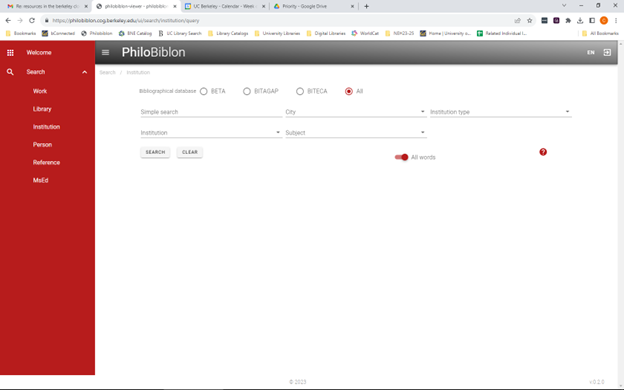
PhiloBiblon User Interface

This mimics the search structure of the PhiloBiblon legacy website:
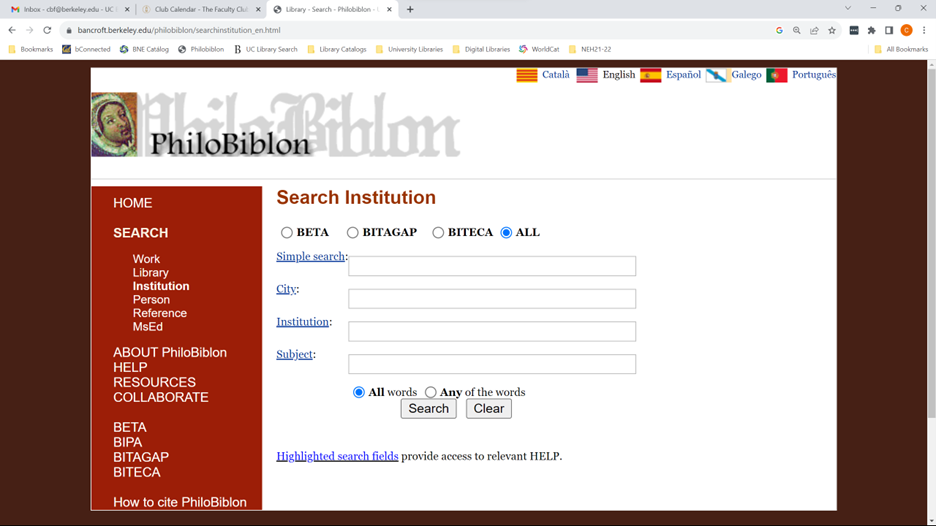
PhiloBiblon legacy Institution Search

The use of templates does not, however, address the problem of searching across different types of objects or of providing different kinds of outputs. For example, one could not use such a template to plot the locations and dates of Franciscans active in Spain between 1450 and 1500. For this one needs a query language, i.e., SPARQL.

We have just begun to consider this problem under the new NEH implementation grant. It might be possible to use a Large Language Model query service such as ChatGPT  or Bard as an interface to SPARQL. A user might send a prompt like this: “Write a SPARQL query for FactGrid to find all Franciscans active in Spain between 1450 and 1500 and plot their locations and dates on a map and a timeline.” This would automatically invoke the SPARQL query service and return the results to the user in the requested format.

Other questions and considerations will undoubtedly arise for any institution or project contemplating the use of Wikibase for its database needs. Nevertheless, we believe that we have demonstrated that this NEH-funded project can serve as a model for low-cost light-weight database development for small institutions or similar academic projects with limited resources.

Questions may be addressed to Charles Faulhaber (cbf@berkeley.edu).

[1] For the sake of convenience, I use the Wikidata Q# and P# numbers.

[2] For a balanced  discussion of whether to join Wikidata or set up a local Wikibase instance, see Lozana Rossenova, Paul Duchesne, and Ina Blümel, “Wikidata and Wikibase as complementary research data management services for cultural heritage data.” The 3rd Wikidata Workshop, Workshop for the scientific Wikidata community, @ ISWC 2022, 24 October 2022. CEUR_WS, vol-3262.

Charles Faulhaber
University of California, Berkeley



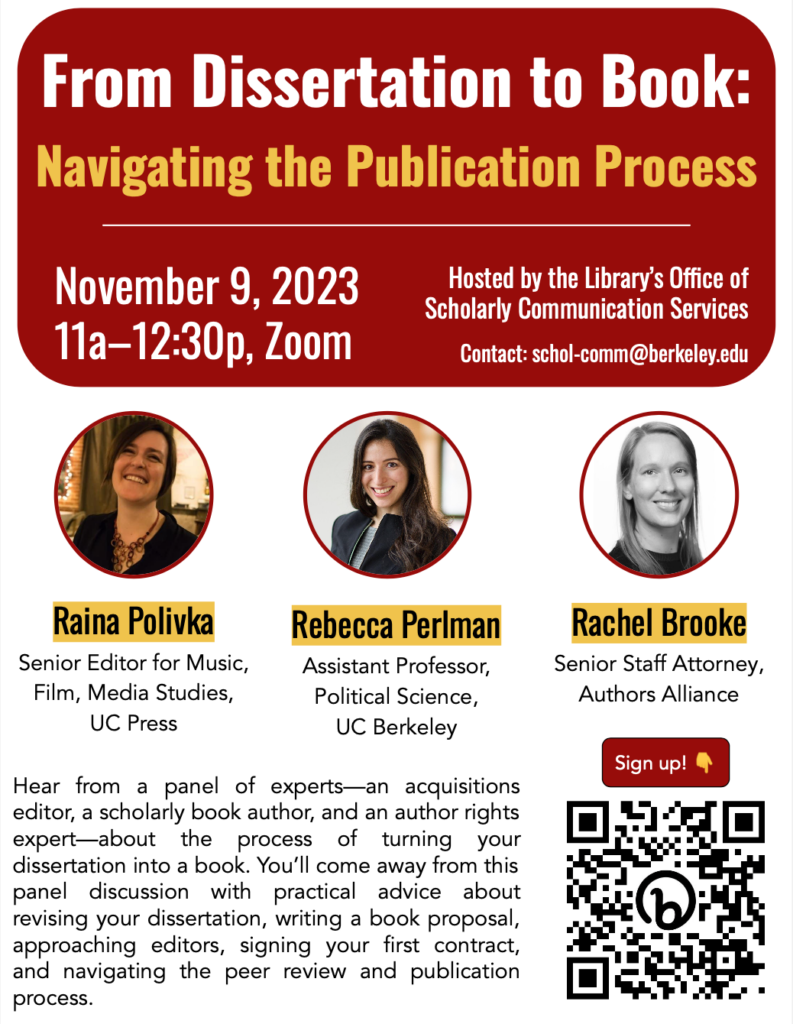
Workshop Reminder — From Dissertation to Book: Navigating the Publication Process on November 9, 2023

Poster with panelist photos, overview, and QR code signup. Red text box at top of poster reads: "From Dissertation to Book: Navigating the Publication Process; November 9, 2023, 11a-12:30p, Zoom; Hosted by the Library's Office of Scholarly Communication Services; contact: schol-comm@berkeley.edu; Raina Polivka: Senior Editor for Music, Film, Media Studies, UC Press; Rebecca Perlman, Assistant Professor, Political Science, UC Berkeley; Rachel Brooke, Senior Staff Attorney, Authors Alliance; Hear from a panel of experts--an acquisitions editor, a scholarly book author, and an author rights expert--about the process of turning your dissertation into a book. You'll come away from this panel discussion with practical advice about revising your dissertation, writing a book proposal, approaching editors, signing your first contract, and navigating the peer review and publication process."

Date/Time: Thursday, November 9, 2023, 11:00am–12:30pm
Location: Zoom only. Register via LibCal.

Hear from a panel of experts—an acquisitions editor, a first-time book author, and an author rights expert—about the process of turning your dissertation into a book. You’ll come away from this panel discussion with practical advice about revising your dissertation, writing a book proposal, approaching editors, signing your first contract, and navigating the peer review and publication process.


UC Berkeley Library to Copyright Office: Protect fair uses in AI training for research and education

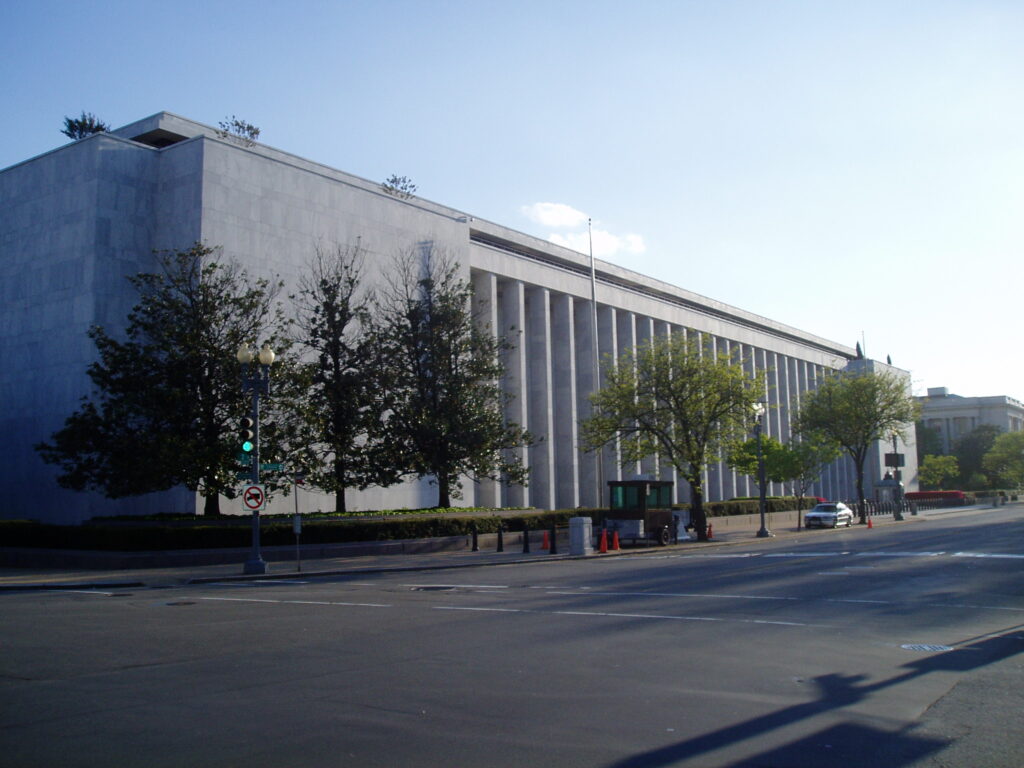
Madison Building, Library of Congress
Copyright Matt H. Wade, licensed CC-BY-NC-SA 3.0

We are pleased to share the UC Berkeley Library’s response to the U.S. Copyright Office’s Notice of Inquiry regarding artificial intelligence and copyright. Our response addresses the essential fair use right relied upon by UC Berkeley scholars in undertaking groundbreaking research, and the need to preserve access to the underlying copyright-protected content so that scholars using AI systems can conduct research inquiries.

In this blog post, we explain what the Copyright Office is studying, and why it was important for the Library to make scholars’ voices heard.

What the Copyright Office is studying and why

Loosely speaking, the Copyright Office wants to understand how to set policy for copyright issues raised by artificial intelligence (“AI”) systems.

Over the last year, AI systems and the rapid growth of their capabilities have attracted significant attention. One type of AI, referred to as “generative AI”, is capable of producing outputs such as text, images, video, or audio (including emulating a human voice) that would be considered copyrightable if created by a human author. These systems include, for instance, the chatbot ChatGPT, and text-to-image generators like DALL·E, Midjourney, and Stable Diffusion. A user can prompt ChatGPT to write a short story that features a duck and a frog who are best friends, or prompt DALL·E to create an abstract image in the style of a Jackson Pollock painting. Generative AI systems are relevant to and impact many educational activities on a campus like UC Berkeley, but (at least to date) have not been the key facilitator of campus research methodologies. 

Instead, in the context of research, scholars have been relying on AI systems to support a set of research methodologies referred to as “text and data mining” (or TDM). TDM utilizes computational tools, algorithms, and automated techniques to extract revelatory information from large sets of unstructured or thinly-structured digital content. Imagine you have a book like “Pride and Prejudice.” There are nearly infinite volumes of information stored inside that book, depending on your scholarly inquiry, such as how many female vs. male characters there are, what types of words the female characters use as opposed to the male characters, what types of behaviors the female characters display relative to the males, etc. TDM allows researchers to identify and analyze patterns, trends, and relationships across volumes of data that would otherwise be impossible to sift through on a close examination of one book or item at a time. 

Not all TDM research methodologies necessitate the usage of AI systems to extract this information. For instance, as in the “Pride and Prejudice” example above, sometimes TDM can be performed by developing algorithms to detect the frequency of certain words within a corpus, or to parse sentiments based on the proximity of various words to each other. In other cases, though, scholars must employ machine learning techniques to train AI models before the models can make a variety of assessments. 

Here is an illustration of the distinction: Imagine a scholar wishes to assess the prevalence with which 20th century fiction authors write about notions of happiness. The scholar likely would compile a corpus of thousands or tens of thousands of works of fiction, and then run a search algorithm across the corpus to detect the occurrence or frequency of words like “happiness,” “joy,” “mirth,” “contentment,” and synonyms and variations thereof. But if a scholar instead wanted to establish the presence of fictional characters who embody or display characteristics of being happy, the scholar would need to employ discriminative modeling (a classification and regression technique) that can train AI to recognize the appearance of happiness by looking for recurring indicia of character psychology, behavior, attitude, conversational tone, demeanor, appearance, and more. This is not using a generative AI system to create new outputs, but rather training a non-generative AI system to predict or detect existing content. And to undertake this type of non-generative AI training, a scholar would need to use a large volume of often copyright-protected works.

The Copyright Office is studying both of these kinds of AI systems—that is, both generative AI and non-generative AI. They are asking a variety of questions in response to having been contacted by stakeholders across sectors and industries with diverse views about how AI systems should be regulated. Some of the concerns expressed by stakeholders include: 

  • Who is the “author” of generative AI outputs?
  • Should people whose voices or images are used to train generative AI systems have a say in how their voices or images are used? 
  • Should the creator of an AI system (whether generative or non-generative) need permission from copyright holders to use copyright-protected materials in training the AI to predict and detect things?
  • Should copyright owners get to opt out of having their content used to train AI? Should ethics be considered within copyright regulation?

Several of these questions are already the subject of pending litigation. While these questions are being explored by the courts, the Copyright Office wants to understand the entire landscape better as it considers what kinds of AI copyright regulations to enact.

The copyright law and policy landscape underpinning the use of AI models is complex, and whatever regulatory decisions that the Copyright Office makes will bear ramifications for global enterprise, innovation, and trade. The Copyright Office’s inquiry thus raises significant and timely legal questions, many of which we are only beginning to understand. 

For these reasons, the Library has taken a cautious and narrow approach in its response to the inquiry: we address only two key principles known about fair use and licensing, as these issues bear upon the nonprofit education, research, and scholarship undertaken by scholars who rely on (typically non-generative) AI models. In brief, the Library wants to ensure that (1) scholars’ voices, and that of the academic libraries who support them, are heard to preserve fair use in training AI, and that (2) copyright-protected content remains available for AI training to support nonprofit education and research.

Why the study matters for fair use

Previous court cases like Authors Guild v. HathiTrust, Authors Guild v. Google, and A.V. ex rel. Vanderhye v. iParadigms have addressed fair use in the context of TDM and determined that the reproduction of copyrighted works to create and text mine a collection of copyright-protected works is a fair use. These cases further hold that making derived data, results, abstractions, metadata, or analysis from the copyright-protected corpus available to the public is also fair use, as long as the research methodologies or data distribution processes do not re-express the underlying works to the public in a way that could supplant the market for the originals. Performing all of this work is essential for TDM-reliant research studies.

For the same reasons that the TDM process is fair use of copyrighted works, the training of AI tools to do that TDM should also be fair use, in large part because training does not reproduce or communicate the underlying copyrighted works to the public. Here, there is an important distinction to make between training inputs and outputs, in that the overall fair use of generative AI outputs cannot always be predicted in advance: The mechanics of generative models’ operations suggest that there are limited instances in which generative AI outputs could indeed be substantially similar to (and potentially infringing of) the underlying works used for training; this substantial similarity is possible typically only when a training corpus is rife with numerous copies of the same work. However, the training of AI models by using copyright-protected inputs falls squarely within what courts have determined to be a transformative fair use, especially when that training is for nonprofit educational or research purposes. And it is essential to protect the fair use rights of scholars and researchers to make these uses of copyright-protected works when training AI.

Further, were these fair use rights overridden by limiting AI training access to only “safe” materials (like public domain works or works for which training permission has been granted via license), this would exacerbate bias in the nature of research questions able to be studied and the methodologies available to study them, and amplify the views of an unrepresentative set of creators given the limited types of materials available with which to conduct the studies.

Why access to AI training content should be preserved

For the same reasons, it is important that scholars’ ability to access the underlying content to conduct AI training be preserved. The fair use provision of the Copyright Act does not afford copyright owners a right to opt out of allowing other people to use their works for good reason: if content creators were able to opt out, the provision for fair use would be undermined, and little content would be available to build upon for the advancement of science and the useful arts. Accordingly, to the extent that the Copyright Office is considering creating a regulatory right for creators to opt out of having their works included in AI training, it is paramount that such opt-out provision not be extended to any AI training or activities that constitute fair use, particularly in the nonprofit educational and research contexts.

AI training opt-outs would be a particular threat for research and education because fair use in these contexts is already becoming an out-of-reach luxury even for the wealthiest institutions. Academic libraries are forced to pay significant sums each year to try to preserve fair use rights for campus scholars through the database and electronic content license agreements that libraries sign. In the U.S., the prospect of “contractual override” means that, although fair use is statutorily provided for, private parties (like publishers) may “contract around” fair use by requiring libraries to negotiate for otherwise lawful activities (such as conducting TDM or training AI for research), and often to pay additional fees for the right to conduct these lawful activities on top of the cost of licensing the content, itself. When such costs are beyond institutional reach, the publisher or vendor may then offer similar contractual terms directly to research teams, who may feel obliged to agree in order to get access to the content they need. Vendors may charge tens or even hundreds of thousands of dollars for this type of access.

This “pay-to-play” landscape of charging institutions for the opportunity to rely on existing statutory rights is particularly detrimental for TDM research methodologies, because TDM research often requires use of massive datasets with works from many publishers, including copyright owners that cannot be identified or who are unwilling to grant licenses. If the Copyright Office were to enable rightsholders to opt-out of having their works fairly used for training AI, then academic institutions and scholars would face even greater hurdles in licensing content for research purposes. 

First, it would be operationally difficult for academic publishers and content aggregators to amass and license the “leftover” body of copyrighted works that remain eligible for AI training. Costs associated with publishers’ efforts in compiling “AI-training-eligible” content would be passed along as additional fees charged to academic libraries. In addition, rightsholders might opt out of allowing their work to be used for AI training fair uses, and then turn around and charge AI usage fees to scholars (or libraries)—essentially licensing back fair uses for research. These scenarios would impede scholarship by or for research teams who lack grant or institutional funds to cover these additional expenses; penalize research in or about underfunded disciplines or geographical regions; and result in bias as to the topics and regions studied. 

Scholars need to be able to utilize existing knowledge resources to create new knowledge goods. Congress and the Copyright Office clearly understand the importance of facilitating access and usage rights, having implemented the statutory fair use provision without any exclusions or opt-outs. This status quo should be preserved for fair use AI training—and particularly in the nonprofit educational or research contexts. 

Our office is here to help

No matter what happens with the Copyright Office’s inquiry and any regulations that ultimately may be established, the UCB Library’s Office of Scholarly Communication Services is here to help you. We are a team of copyright law and information policy (licensing, privacy, and ethics) experts who help UC Berkeley scholars navigate legal, ethical, and policy considerations in utilizing resources in their research and teaching. And we are national and international leaders in supporting TDM research—offering online tools, trainings, and individual consultations to support your scholarship. Please feel free to reach out to us with any questions at schol-comm@berkeley.edu


OHC Exhibit “Voices for the Environment” Curator Q&A

The Oral History Center is excited to announce the opening of Voices for the Environment: A Century of Bay Area Activism, a Bancroft Library Gallery exhibition that was curated by Todd Holmes, Roger Eardley-Pryor, and Paul Burnett. Voices for the Environment traces the evolution of environmentalism in the San Francisco Bay Area across the twentieth century. In three sections, it highlights how Bay Area activists have long been on the front lines of environmental change—from efforts to preserve natural spaces in the wake of the 1906 San Francisco earthquake and fire, to the midcentury fight for state regulations to protect San Francisco Bay shoreline, to more recent demands for environmental justice to address the disproportionate burden of pollution that sickened communities of color around the Bay.

We sat down with Eardley-Pryor and Holmes to ask them about their experience curating the exhibit, bringing the OHC’s interviews to life in The Bancroft Library’s gallery, and what they learned along the way.

Roger Eardley-Pryor
OHC Historian/Interviewer Roger Eardley-Pryor

Todd Holmes
OHC Historian/Interviewer Todd Holmes

Q: When you were originally thinking about this exhibit, which spans a century of Bay Area environmental activism, what topics, themes, or events were important for you to include?

 TH: As historians, both Roger and I approached the exhibit through the lens of change over time, essentially asking the question, “How did what we’ve come to recognize as environmentalism evolve and change in the Bay Area over the twentieth century?” Combining our knowledge of both the oral history collection – which was to stand at the heart of the exhibit – and the environmental history of California, we selected the three stories we wanted to highlight fairly quickly.

First, we wanted to tell the story of Hetch Hetchy, the valley in Yosemite National Park that was dammed for San Francisco’s water system. This is a seminal event used in history classes across the nation to highlight the battle between two schools of environmentalism, preservationists like the Sierra Club’s John Muir, and conservationists like Gifford Pinchot of the U.S. Forest Service in the first part of the twentieth century. For the exhibit, we sought to use the Hetch Hetchy story to introduce visitors to preservation as the first form of environmentalism that took root in the Bay Area.

Second, we wanted to tell the story of Save The Bay, the movement initiated by three women from Berkeley to halt bay fill. Ultimately, that movement led to the creation of the San Francisco Bay Conservation and Development Commission (BCDC), a state government agency to regulate development on the bay. Here we wanted to highlight how environmental concerns became embedded within the fold of government by the mid-century. BCDC stands as the first environmental agency in the United States, providing a precedent for other regulatory agencies on the state and federal level in the years that followed, such as the California Coastal Commission. Moreover, BCDC also operated within a framework that sought to balance environmental protection with economic development.  

Third, we wanted to tell the story of environmental justice, a movement in the last part of the twentieth century that sought to put the health of people – particularly communities of color – within the environmental agenda. While environmental justice is fairly common today in discussions of environmental policy, the story of how it developed is not well known, and the Bay Area was one of the central places in the nation from which the movement took root. 

REP: Todd and I worked to ensure that, in this exhibit, environmental activists could speak for themselves, and that visitors to the exhibit could actually hear the voices of activists recorded in their oral history interviews. The Audio Spotlight technology that allow people to hear interview clips in the gallery, the three videos Todd created with rare film footage and photographs, and the three podcast episodes we made with Sasha Khokha of KQED all make this exhibit something special that has never been done before in The Bancroft Library Gallery. For me, the people-power of communities of color demanding environmental justice, and the longtime leadership of women working for environmental protection were really important themes to include. Often, environmental history is told through the actions of men like John Muir, who does deserve credit for his early advocacy to protect nature through its preservation. The legacy of Muir and the ongoing work of the Sierra Club are important, and they remain so today. But Todd and I wanted to tell a deeper and broader history of Bay Area environmentalism, which shows how women and people of color have been central to the expansion and the evolution of environmental action over the course of the 20th century. I hope the stories shared in this exhibit help contextualize and make current environmental issues more meaningful—be it present-day preservation issues in 30 x ’30 campaigns, or conflicts over coastal regulations amid sea-level rise, or ongoing challenges to empower people of color in mainstream environmental movements.


Q: Did the themes you wanted to highlight change during the course of your research?

 REP: We worked hard for over a year to bring this exhibit to life and to my memory, we agreed fairly early on about the three main narratives featured in the exhibit—the preservation of nature, reconciling environment and development, and environmental justice for communities of color. Over the course of our research, we changed the details of which particular oral history segment we might include here or there, or which image or document would best compliment the oral histories featured in each section of the exhibit. But as I recall, the exhibit’s main story arc remained steady from early in our curation process.

TH: Surprisingly, there was no change in the main topics / stories we wanted to highlight in the three sections of the exhibit. What our research did do was help expand on the themes within each to add more depth and nuance around community activism. For instance, in the first section we not only focused on the story of Hetch Hetchy, but connected it to activism around Save the Redwoods, which in turn highlighted the vital – yet often overlooked – role of women in the early preservation movement. Men like John Muir may have become the figureheads of environmentalism, and voted for such policies in government, but it was women who provided the grassroots momentum that put environmental concerns on the table. The same could be said for the third section on environmental justice. Our research uncovered a lot of different groups and experiences in the Bay Area grappling with environmental racism, from toxic sites in Richmond and what became known as the Silicon Valley, to debates with white environmental groups about even using the term “racism.” So in all, our research gave us a number of themes to spotlight and weave together throughout the exhibit


Q: The exhibit begins with the 1906 earthquake. Why did you decide to start there?

TH: This is another example of how research expanded the themes and stories of the three main topics we sought to feature in the exhibit. We wanted to highlight the story of Hetch Hetchy in the first section. Our research of the Hetch Hetchy battle forced us to upstream to the root cause – the 1906 earthquake and fire that destroyed 80 percent of San Francisco. At the time, San Francisco stood as the largest and richest city west of Chicago. In the wake of the disaster, the rebuilding effort posed a tremendous threat to the natural resources of the state. Ancient redwood forests throughout the Bay Area and along California’s north and central coast were targeted for timber, just as the Hetch Hetchy Valley was eyed for water and hydro-electric power. Thus, these rebuilding efforts proved the impetus of the early activism to preserve California’s environment.

REP: The drowning of Hetch Hetchy Valley—despite it being located within Yosemite National Park—is such a powerful and classic story in environmental history, and it occurred because the 1906 earthquake and fire destroyed San Francisco. Amazingly, Todd found several oral histories in our collection with survivors of the earthquake and fire who recall their experiences of it when they were children. In The Bancroft Library, Todd also found historic film footage, recently digitized, that shows San Francisco still aflame just after the earthquake. Putting those oral histories together with this footage make for a captivating start to the exhibit. 

But what I didn’t realize until working on the exhibit was how the preservation of redwoods was also connected to how the earthquake and fire destroyed San Francisco. After the fire, lumber companies promoted California’s fire-resistant coastal redwoods as a means to rebuild the devastated city. In turn, environmentalists redoubled their efforts to preserve special groves of those ancient redwood trees. It suddenly made sense to me how Muir Woods National Monument was established in Marin County just a few years after the 1906 earthquake. Additionally, we wanted our exhibit on Bay Area environmentalism to highlight the Sierra Club, which was founded in San Francisco in 1892 and has since become one of the most influential environmental organizations in the nation. The Oral History Center has conducted oral histories with Sierra Club leaders since the early 1970s, and several activists, like William Colby, Ansel Adams, and David Brower, discussed in their oral histories how the fate of Hetch Hetchy continues to inform ongoing preservation efforts. So, in many ways, the 1906 San Francisco earthquake and fire helped ignite the spirit of preservation that still informs environmental activism, both in the Bay Area and across much of North America.


Q: What role does oral history play in the exhibit?

 REP: Oral history is the beating heart that gives life to this exhibit! We scoured several scores of Oral History Center transcripts for captivating stories about Bay Area environmental activism. David Dunham helped us obtain digitized versions of those oral history recordings. We then used The Bancroft’s traditional paper, photograph, and film collections to complement the oral history narratives that we featured in the exhibit. Christine Hult-Lewis and Lorna Kirwan helped us explore several of those archival collections, and Theresa Salazar pointed us to the excellent Urban Habitat Program Records, 1970-2001, which are displayed in our exhibit. Ultimately, the exhibit offers a multi-sensory experience where visitors can engage audio recordings, film footage, oil paintings, photographs, pamphlets, posters, descriptive text, and they can even hold the hardbound oral history transcripts featured in the exhibit. But certainly, oral history is the centerpiece of the exhibit.

TH: In short, everything! This is the first exhibit curated by the Oral History Center, and the first in-depth effort to showcase both the oral history and other archival collections of The Bancroft Library. Each section features oral histories about the main topic in three ways. Edited oral history segments are played in each section through an Audio Spotlight speaker, and accompanied with a video that shows captions as well as related photographs and archival footage. The oral histories are also available through a three-episode podcast, narrated by Sasha Khokha from KQED San Francisco. The podcast episodes, available online and in the gallery by scanning a QR Code, offer a deeper dive into the stories of each section. Lastly, we used oral histories quotes in the labels of the exhibit material to add further detail and context.


Q: The 1960s and ’70s were two very productive decades in terms of environmental activism. Did the oral histories that you encountered from the OHC’s collection make you think differently about this period, or illuminate something new?

 TH: In my view, the oral histories we used in the exhibit helped place the activism of the 1960s and 1970s in better context. For instance, we often think of the “environmental movement” as arising around the late 1960s / early 1970s. Yet, this view completely overlooks the activism of men and women around preservation in the first couple decades of the twentieth century. It also overlooks the vital work of Sierra Club executive director David Brower, whose activism throughout the 1950s and 1960s staved off numerous developments and led to the establishment of ten new national parks. In many respects, I think the oral histories featured in this exhibit pushed me to think about a “long environmental movement” that gained traction in the halls of government during the 1960s and 1970s. I think the exhibit also highlights how the Civil Rights Movement and environmental movement came to intertwine by the end of the decade to form environmental justice, which was an area I felt fortunate to learn more about through this project.

REP: Actually, rather than the 1960s and 1970s, the oral histories we included in the exhibit helped me realize the importance of the 1980s and 90s to the expansion and evolution of environmentalism. Without a doubt, activity surrounding Earth Day in 1970 was a key inflection point in environmental history, inspiring new environmental laws and a new generation of environmental activists. But the oral histories in our exhibit tell how Bay Area activists laid the early groundwork at least since the early 20th century for later environmental regulations, and how activists in the final decades of the 20th century worked to include all people in environmental protections, especially communities of color who suffered the most from industrial pollution.


Q: You put together additional material, like a podcast and class workbook, to accompany the exhibit. How do you hope people will use these materials?

 TH: For the past couple years, the Oral History Center has been working on ways to get our collection into the K-12 education space. We developed additional materials, such as the class workbook and podcast, to serve as educational resources for K-12 classrooms, as well as undergraduate courses.

REP: The podcasts and educational workbook can be used anywhere—while visiting and experiencing the exhibit in person, or at home or in classrooms. We hope people use those additional materials long after the exhibit closes in November 2024!


Q: What do you hope that people take away from the exhibit?

 REP: I hope exhibit visitors sense the importance, power, and potential of oral history. I hope they see how the Oral History Center’s work to record the lived experiences and reflections of people through oral history creates invaluable records that helps us better understand where we’ve come from and helps us make sense of our experiences today. I also hope visitors realize the importance of Bay Area activists in shaping the evolution of environmentalism over time. And I hope visitors hear how the actions of Bay Area people in the past, as told in their own words, helped define our experiences in the Bay Area today. Given today’s grave threats to our environment and to our democracy, I hope visitors appreciate how environmental activism remains an ongoing process that is shaped and renewed by average people like them who engage in civic activism. I also hope the oral histories featured in this exhibit—and the many, many more that are preserved in the Oral History Center collection—help inspire people to shape and renew environmentalism today and in the future. 

TH: I hope visitors come away from the exhibit with a better understanding of how environmentalism evolved and changed over the century, and that it has a long history in the Bay Area. Moreover, I hope the oral histories featured in the exhibit highlight the change brought on by everyday people. It was the activism of men and women that led to protected redwood forests and the creation of state and national parks. It was the unwavering dedication of three women from Berkeley that stopped fill projects in San Francisco Bay and led to the nation’s first government-run environmental agency. And it was the collective action of communities of color that put justice within the environmental agenda, and on the dockets of policymakers. Ultimately, I hope visitors, young and old, walk away with the idea that change comes about through everyday people.

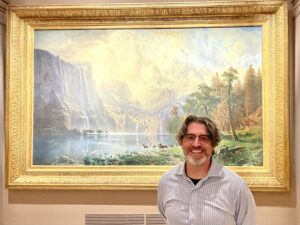
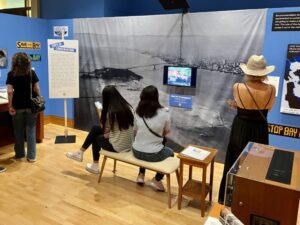
Photo of Voices from the Environment exhibit.
A group of people watch historic footage and listen to clips from oral history interviews in the Voices from the Environment exhibit in The Bancroft Library.