The Bancroft Library’s San Francisco Examiner photograph archive

As part of the UC Berkeley University Library’s ongoing commitment to make all our collections easier to use, reuse, and publish from, we are excited to announce that we have just eliminated licensing hurdles for use of over 5 million photographs taken by San Francisco Examiner staff photographers in our Fang family San Francisco examiner photograph archive negative files, BANC PIC 2006.029–NEG, and Fang family San Francisco examiner photograph archive photographic print files, BANC PIC 2006.029–PIC.
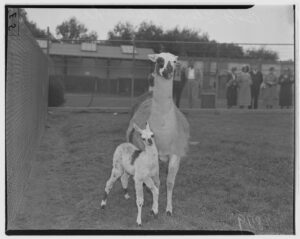
Black and white photo of an adult llama with baby llama in a zoo. People looking at llamas through chainlink fence.
Baby llama at zoo, 1935, Fang family San Francisco Examiner photograph archive, © The Regents of the University of California, The Bancroft Library, University of California, Berkeley. This work is made available under a Creative Commons Attribution 4.0 license.

Every photograph within these photographic print and negative collections that were taken by an SF Examiner staff photographer are now licensed under a Creative Commons Attribution 4.0 license (CC BY 4.0). This means that anyone around the world can incorporate these photos into papers, projects, and productions—even commercial ones—without ever getting further permission or another license from us.

What is the San Francisco Examiner collection?
The SF Examiner has been published since 1863, and continues to be one of The City’s daily newspapers. It was acquired by George Hearst in 1880 and given to his son, William Randolph Hearst, in 1887. It was the founding cornerstone of the Hearst media empire, and remained part of the Hearst Corporation’s holdings until it was sold, in 2000, to the Fang family of San Francisco. In 2006 the Examiner’s photo morgue, totaling over 5 million individual images, was donated to The Bancroft Library by the Fang family’s successors, the SF Newspaper Company, LLC.

Along with the gift of negatives and photographic prints, the copyright to all photographs taken by SF Examiner staff photographers was transferred to the UC Regents, to be managed by UC Berkeley Library. However, the copyright to works (mainly in the form of photographic prints) that appear in the collection that were not created by SF Examiner staff was not part of the copyright transfer to the University. Copyright to any works not taken by SF Examiner staff is presumed to rest with the originating agency or photographer. The Library maintains a list of known SF Examiner staff photographers and can assist in making identification of particular photographs until the metadata has been updated.

What has changed about the collection?
Although people did not previously need the UC Regents’ permission (sometimes called a “license”) to make fair uses of our SF Examiner photograph archive, because of the progressive permissions policy we created, prior to January 2024 people did need a license to reuse these works if their intended use exceeded fair use. As a result, hundreds of book publishers, journals, and film-makers sought licenses from the Library each year to publish our Examiner photos.
The UC Berkeley Library recognized this as an unnecessary barrier for research and scholarship, and has now exercised its authority on behalf of the UC Regents to freely license the SF Examiner photographs in our collection that were taken by staff photographers under a Creative Commons Attribution 4.0 license (CC BY 4.0). This license is designed for maximum dissemination and use of the materials.

How to use SF Examiner collection photographs
Now that the photographs by SF Examiner staff photographers have a CC BY license applied to them, no additional permission or license from the UC Regents or anyone else is needed to use these works, even if you are using the work for commercial purposes. No fees will be charged, and no additional paperwork is necessary from us for you to proceed with your use.
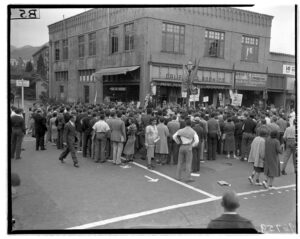
Black and white photo of large group at Sather Gate on UC Berkeley campus gathered around a speaker who cannot be seen over the crowd.
Edward Alexander, State Educational Director, Young Communist League, speaking against Hitler at Sather Gate, UC campus, 1938, Fang family San Francisco Examiner photograph archive, © The Regents of the University of California, The Bancroft Library, University of California, Berkeley. This work is made available under a Creative Commons Attribution 4.0 license.

Making your usage even easier is the fact that over 22,000 of these negative strips have been digitized and made available via the Library’s Digital Collections Site, and the finding aid for the prints and negatives have more information about the photographs that have not yet been digitized.

The CC BY license does require attribution to the copyright owner, which in this case is the UC Regents. Researchers are asked to attribute use of reproductions subject to this policy as follows, or in accordance with discipline-specific standards:

Fang family San Francisco Examiner photograph archive, © The Regents of the University of California, The Bancroft Library, University of California, Berkeley. This work is made available under a Creative Commons Attribution 4.0 license.

One final note on usage: While the SF Examiner Collection now carries a CC BY license, this does not mean that other federal or state laws or contractual agreements do not apply to their use and distribution. For instance, there may be sensitive material protected by privacy laws, or intended uses that might fall under state rights of publicity. It is the researcher’s responsibility to assess permissible uses under all other laws and conditions. Please see our Permissions Policy for more information.

Other Library collections with a CC BY license
The Fang family San Francisco Examiner photograph archive joins a number of other collections that the Library has opened under a CC BY license, including the photo morgue of the San Francisco News-Call Bulletin. All of the collections that have had a CC BY license applied can be found on our Easy to Use Collections page.

Happy researching!

Library purchases digital archive of Prensa Libre (Guatemalan Newspaper): 1951-2024

UC Berkeley Library has purchased ongoing access to Prensa Libre Digital Archive (1951-2024). Prensa Libre is a well-respected Spanish-language Guatemalan Newspaper. It began publishing in 1951, and since then has provided extensive coverage of politics, news, social conditions, history, governance issues, Garífuna, Mayan, and other indigenous communities (Pueblos Originarios en Guatemala), and civil war(s) in Guatemala and Central America.

We hope that this newspaper resource will be of great use to our faculty and students who study Anthropology, Politics Social Sciences, History of Central America, and Latin America.

Prensa Libre digital archive can be accessed from off-campus locations using the proxy or VPN here.

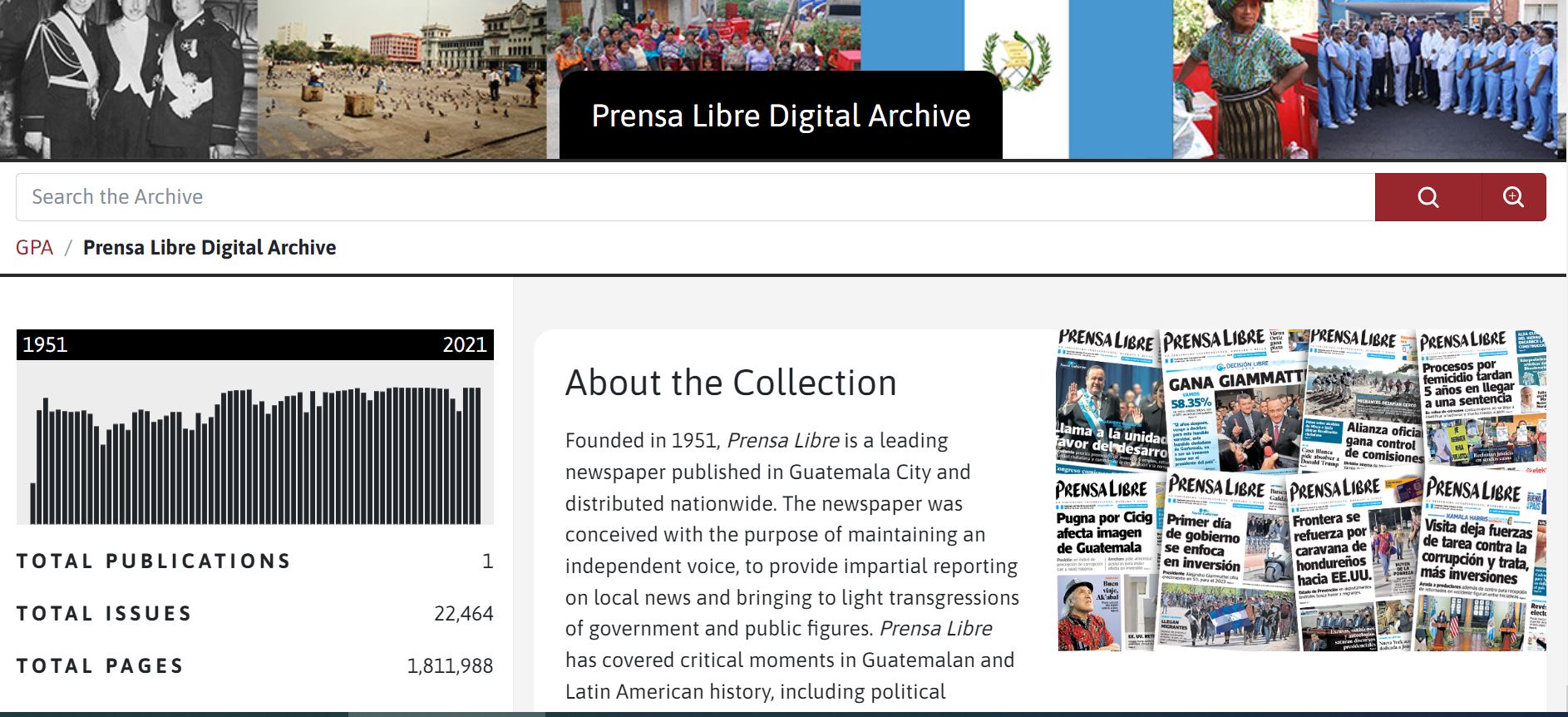
Below is the screenshot of the landing page of the archive. It has a robust search interface.

The landing page of the Prensa Libre Digital Archive.
Prensa Libre Digital Archive’s Landing Page (1951-2024)

Supporting open access book publishing at UC Berkeley: Spring 2024 update

UC Berkeley supports a variety of ways our authors can participate in open access publishing. At its heart, open access literature is “digital, online, free of charge, and free of most copyright and licensing restrictions” (Suber, 2019). Open access materials can be read and used by anyone. 

But you might be wondering, why is UC Berkeley concerned about trying to make research more openly available and accessible? Well, one fundamental reason is that the research and teaching mission of the UC includes the aim of “transmitting advanced knowledge,” and as part of doing that, our faculty, researchers, and students create and share their scholarship. 

This system of scholarly publishing includes traditional publications such as peer-reviewed academic articles, scholarly chapters or books, and conference proceedings. It also includes other types of publications such as digital projects, data sets and visualizations, and working papers.

In this blog post, we first touch briefly on how the UC Berkeley Library is fostering open access publishing for journal articles, and then dive deeper into the innovative ways we’re supporting open access publishing for books.

Library Support for Open Access Articles

UC Berkeley offers a wide range of support to help authors publish scholarly articles. The UC’s system wide Open Access Policies ensure that university-affiliated authors can deposit their final, peer-reviewed research articles into eScholarship, our institutional repository, immediately upon publication in a journal. Once they’re in eScholarship, the articles may be read by anyone for free.

As of February 2024, the University of California has entered into 24 transformative open access publishing agreements with scholarly publishers. These agreements permit UC corresponding authors to publish open access in covered journals, with the publishing fees being covered in part (or in full) by the UC. In fiscal year 2022-23 UC Berkeley authors published 348 open access articles as a part of these system wide open access publishing agreements. 

Locally, the UC Berkeley Library continues to offer the Berkeley Research Impact Initiative (BRII). This program helps UC Berkeley authors defray article processing charges (APCs) that are sometimes required to publish in fully open access journals (note that BRII doesn’t reimburse authors for publishing in “hybrid” journals—that is, subscription journals that simply offer a separate option to pay to make an individual article open access). This past year BRII provided funding for the publication of 60 open access articles. UC Berkeley authors can take advantage of BRII assistance where there is no other system wide open access agreement in place. 

Library Support for Open Access Books

We know that not all University of California authors are publishing journal articles, and many disciplines—such as arts, humanities, and social sciences—focus on the scholarly monograph as the preferred mode of publishing. Some open access book publishers charge authors (or an author’s institution) a fee in exchange for publishing the book open access, similar to the practice of academic journal publishers charging an “article processing charge” to make a scholarly article open access. 

Recently, the University of Michigan Press shared an analysis of book author impressions of open access. They found that authors can realize a wide variety of benefits with OA publishing. For example, authors viewed OA as a means to achieve a global reach with their scholarship, build relationships within their academic discipline, garner more citations, make their scholarly books more affordable for learners, improve accessibility for print-disabled users, and more.

UC Berkeley is supporting authors who wish to publish their books open access. The library provides funding assistance and access to publishing platforms and tools for UCB authors to make their books open access. 

Berkeley Research Impact Initiative books

Above we mentioned how the Berkeley Research Impact Initiative helps UC Berkeley authors publish articles in fully open access journals. BRII funding can also be used to help authors pay book processing charges (up to $10,000/book) so that their monographs can be published open access. In the last year, several UCB-authored books have been published open access in part due to BRII funding support.

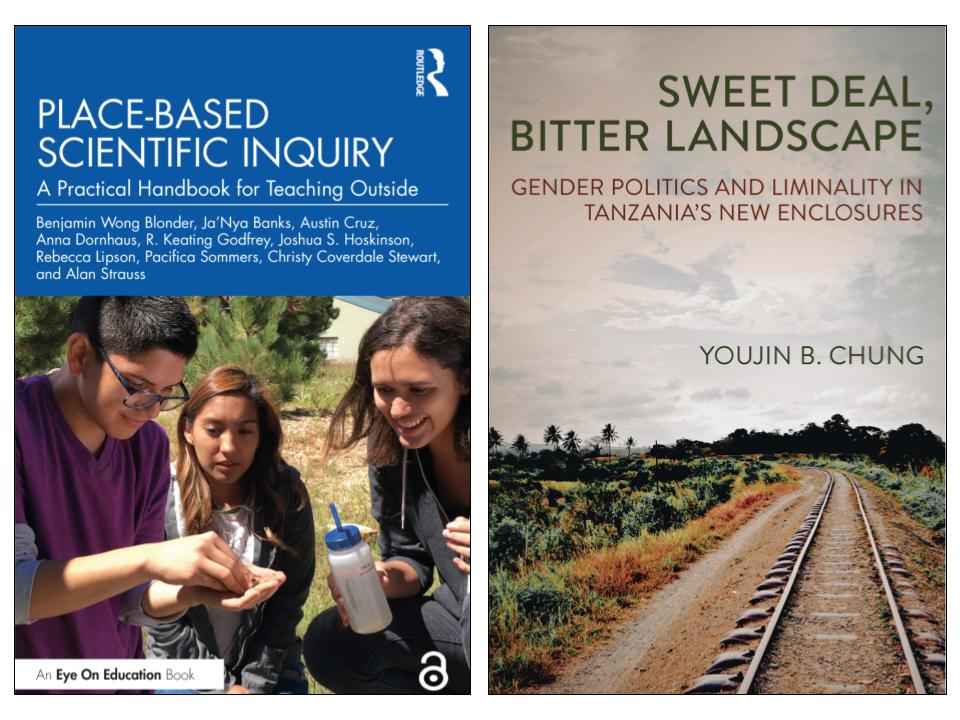
Two book covers side by side representing books published with support of the Berkeley Research Impact Initiative.
  • Prof. Youjin B. Chung, also from ESPM, published Sweet Deal, Bitter Landscape with Cornell University Press. The book is shared under the Creative Commons Attribution-NonCommercial-NoDerivatives (CC BY-NC-ND) license and available as a free download.

Springer Open Access books

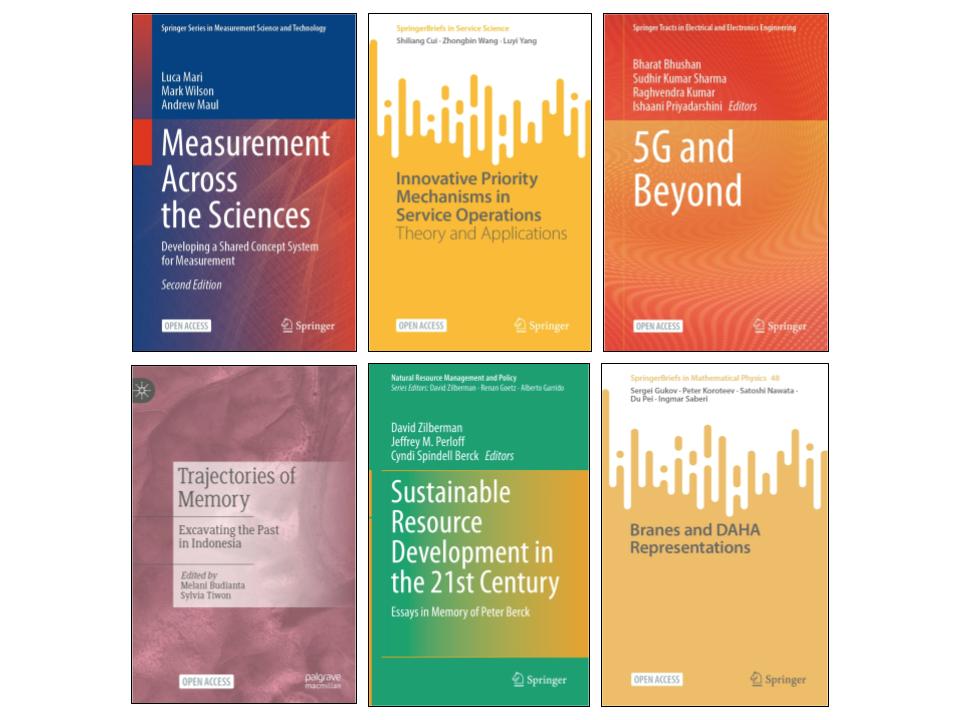
In 2021, the UC Berkeley Library entered into an institutional open access book agreement with Springer Nature. The partnership provides open access funding to UC Berkeley affiliated authors who have books accepted for publication in Springer, Palgrave, and Apress imprints. This means that these authors can publish their books open access at no direct cost to them. The agreement covers all disciplines published by Springer. All the books are published under a Creative Commons Attribution (CC BY) license for free access and downloading. In the last year, several UCB-authored books have been published open access as a result of the UCB-Springer agreement.

Six small book covers representing titles published by UC Berkeley authors through the Springer open access book publishing agreement.
  • Prof. Ishaani Priyadarshini from the School of Information published 5G and Beyond with Springer. 

University of California Press

UC Berkeley Library continues to support open access book publishing via Luminos, the open access arm of the University of California Press. The Library membership with Luminos means that UC Berkeley authors who have books accepted for publication through the UC Press can publish their book open access with a heavily discounted book processing charge. When combined with additional funding support through BRII, a UC Berkeley book author could potentially publish their book open access with the costs being covered fully by the Library. Luminos books are published under Creative Commons licenses with free downloads.  

Pressbooks platform & workshops

The UC Berkeley Library hosts an instance of Pressbooks, an online platform through which the UC Berkeley community can create open access books, open educational resources (OER), and other types of digital scholarship. 

The Office of Scholarly Communication Services OSCS continues to offer a bi-annual Pressbooks workshop and demo where participants can learn how to navigate the platform and create and publish their own eBooks and open educational resources. (Note: the next Pressbooks workshop is happening on April 9, 2024. Sign up now if you’re interested!)

Every year during the fall semester OSCS hosts an author panel to unpack the process of turning a dissertation into a book. One of the topics discussed during the panel are options for open access publishing. Here’s a recording of last year’s panel discussion.

UC contributing to the broader ecosystem of open access book publishing

A near term goal of the UC Libraries is to strategically advance open scholarship by extending its support for OA book publishing. At the systemwide level, the UC is supporting several open access book publishing ventures, including Opening the Future, MIT’s Direct to Open, and the University of Michigan Press’ Fund to Mission. In general, these models secure investments from libraries or other stakeholders, and agree to publish some or all of their frontlist books open access, with limited or zero direct cost to the authors. The backlist books are made accessible to participating institutions. 

Wrapping up

In this post, we highlighted several ways that the University of California—and specifically UC Berkeley—is supporting scholarly authors to create and share open access books. In addition to providing financial assistance, platforms, and publishing guidance, the Library is committed to promoting the broader OA book publishing ecosystem. We’ll continue to explore a variety of approaches to support the UC Berkeley community (and beyond) who wish to publish books on open access terms.

If you’re interested to learn more about how you can create and publish an open access book, visit our website or send an email to schol-comm@berkeley.edu.


New Digital Resource: Собрание законов и распоряжений правительства РСФСР и СССР= Collection of laws and orders of the government of the RSFSR and the USSR

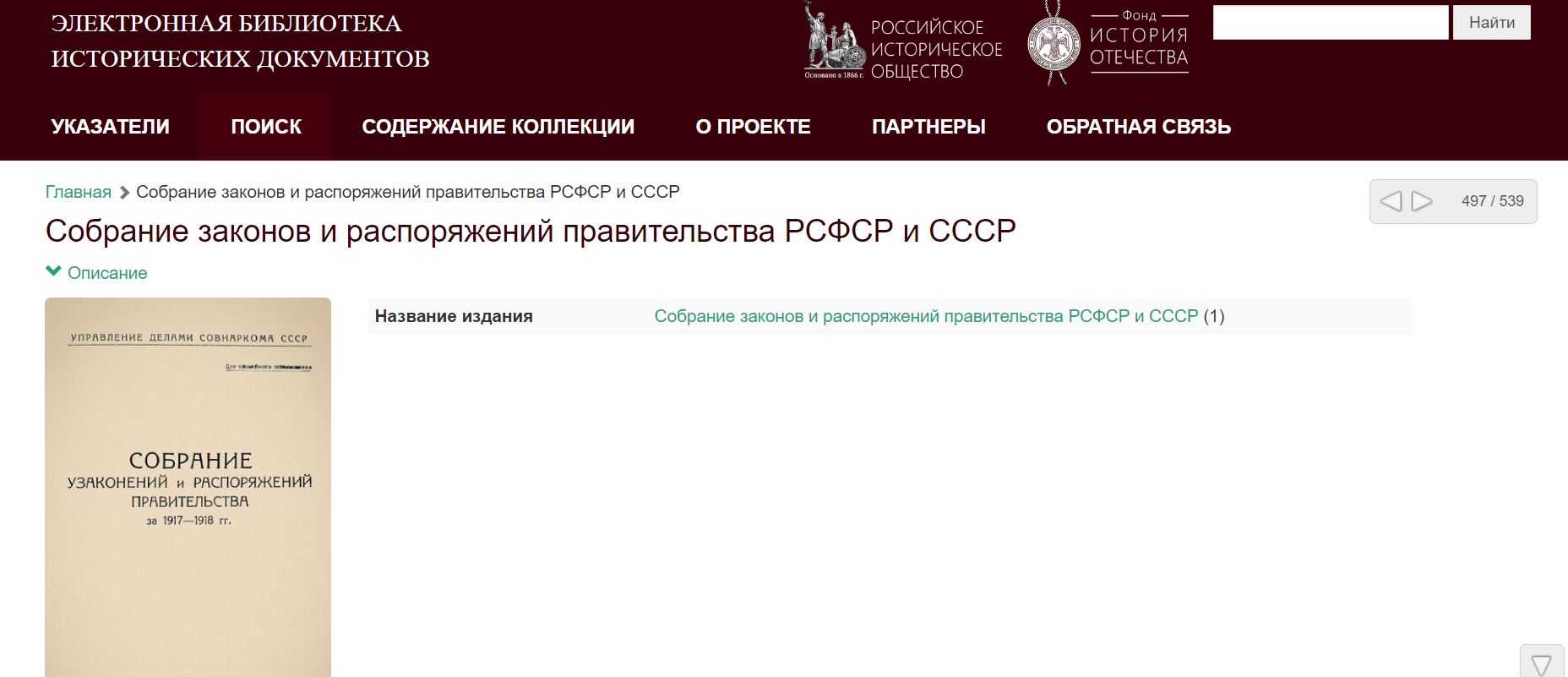
Recently in light of Russian invasion of Ukraine, with almost everything Russian being canceled in society at large, I wanted to bring to our readers’ attention a new digital resource on the Collection of laws and orders of the government of the RSFSR and the USSR. The resource is in Russian, and it was created by the Elektronnaia biblioteka istoricheskikh dokumentov (Электронная библиотека исторических документов).

The source provides access to digital copies of the laws and various orders of the Russian Soviet Socialist Republic and Soviet Union. I hope historians of the Soviet Union and the Russian Federation will find this resource of academic interest.

One can search within the text using specific keywords.

This picture shows the landing page of the compendium of laws of the Soviet Union for 1918.

Library workshops: Advanced Zotero series

Advanced Zotero workshops are intended for Zotero users who want to go beyond the basics of collecting citations and exporting bibliographies.  If you are new to Zotero, consider attending one of the Library’s Introduction to Zotero workshops being offered this term.

Advanced Zotero workshops will be offered every other Wednesday, starting February 7th, from 12:10-1:00 via Zoom. Registration is required and the Zoom link will be provided to participants who register 24 hours in advance of the workshop. Register on the Library’s workshops page. You must have a Calnet ID to register for a workshop.

The agendas for the workshops are listed below. New developments in Zotero and associated add-ons may result in adjustments to the agendas. The workshop descriptions on the Library’s workshop pages will be kept up-to-date. 

The Library attempts to offer programs in an accessible, barrier-free way. If you require a disability-related accommodation, please contact me (Jennifer Dorner) at dorner@berkeley.edu at least one week in advance of the workshop you have registered for. 

 2/7 Advanced Zotero  Week 1: Managing your Zotero library

–        Methods for adding existing research materials to your Zotero library

–        Indexing and searching your Zotero library and attachments

–        Zotero 6.0 PDF viewer and annotation extractor

–        Creating and managing groups

2/21 Advanced Zotero  Week 2: Zutilo add-on

–        Installing and setting up Zutilo

–        Clean up library

–        Manage tags

–        Relate items

–       Create book & book section items

 3/6  Advanced Zotero Week 3: Managing attachments 

–        How and where Zotero saves attachments

–        Linked files vs. stored files

–        Using the Zotfile add-on to store attachments in a cloud server

–        Group attachment storage

 3/20 Advanced Zotero Week 4: Writing with Zotero 

–        Locating and adding citation styles

–        Zotero 6.0 Add note feature

–        Editing citations with Zotero’s tools

–        Changing the font/size of citations

–        Why things go wrong (broken links to Library, unable to update document, etc.)

4/3 Advanced Zotero Week 5: More add-ons & upcoming features

–        Zotero 7.0 beta

–        Zotero Research Assistant “AI” connector to ChatGPT

–        Storage scanner for Zotero

 4/17 Advanced Zotero Week 6: JURIS-M for multilingual scholarship 

–        Installing JURIS-M

–        Configure JURIS-M to link to your Zotero account

–        Setting up JURIS-M to store multilingual information.

–        Integrating JURIS-M into your writing process

5/1 Advanced Zotero Week 7: Agenda TBA 


Bancroft Quarterly Processing News

The archivists of the Bancroft Library are pleased to announce that in the past quarter (October-December 2023) we opened the following Bancroft archival collections to researchers.

Manuscript and University Archives Collections:

Morris Goldstein papers (processed by Presley Hubschmitt)

ruth weiss papers (processed by Simi Best)

Robert A. Scalapino papers (processed by Lara Michels)

Elizabeth Rauscher papers (processed by Jessica Tai)

Lawrence Talbot papers (processed by Lara Michels and student processing assistant David Eick)

Walter S. Hertzmann collection on the Hertzmann and Koshland families (processed by Presley Hubschmitt)

Bush Street Synagogue Cultural Center records (processed by Presley Hubschmitt)

Erle Stanley Gardner papers (processed by Randy Brandt)

Mission Council on Redevelopment records (processed by Lara Michels and student processing assistant Malayna Chang)

Charles W. Leach correspondence (processed by Lara Michels)

Lynn Manning papers, additions (processed by Lara Michels)

Pictorial Collections/Items:

65 small collections and single items (approximately 6,119 items, total)

Lonnie H. Wilson Photograph Archive: over 1000 negatives documenting the William F. Knowland gubernatorial campaign of 1958 and the Republican and Democratic Party conventions of 1960 were processed and added to the existing finding aid.

Pictorial collections staff:  James Eason, Chris McDonald, Lori Hines, Sara Ferguson, and Isabel Breskin.

Collections Currently in Process:

  • Data Center records
  • Associated Students of the University of California, Berkeley records
  • Patricia Buffler papers
  • Nathan and Julia Hare papers
  • Daisy Zamora papers
  • Harriet Smith papers
  • Barbara Oliver collection of theater materials
  • Howard Besser papers
  • Delmer Myers Brown papers
  • Benjamin Swig papers and photographs
  • Isabel Wiel family papers and photographs

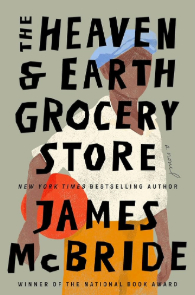
Black History Month 2024


Black History Month

This February, check out our 2024 Black History Month picks from cultural contributions, relatable stories, and historical moments.


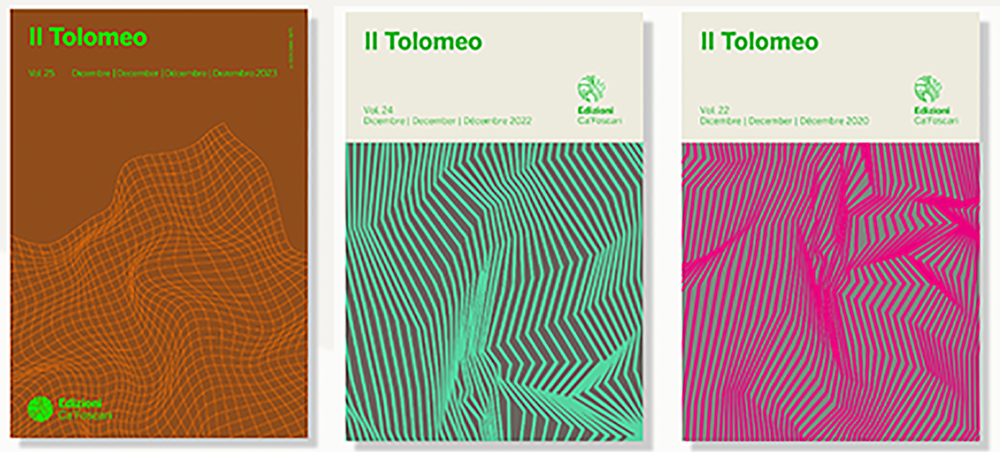
Il Tolomeo: rivista di studi postcoloniali

Il Tolomeo

Hard to imagine the UC Berkeley Library as one that may soon not be able to afford new journal subscriptions but for better for worse, that’s where we are heading with serials reduction projects such as the one we undertook last year. It’s a good thing thing the open access movement is still gaining traction. It’s also a good thing universities like the Ca’ Foscari University of Venice are boldly choosing to publish their journals and some of their books this way.

Il Tolomeo: rivista di studi postcoloniali first saw the light of day in 1995, thanks to the work of a group of postcolonial scholars at Ca’ Foscari. The journal publishes peer-reviewed articles, reviews, interviews, and previously unpublished original contributions in the fields of francophone, anglophone and lusophone literatures. It investigates the postcolonial literary phenomenon in all its manifestations, but is particularly interested in contributions which take a comparative, interdisciplinary approach: dialogues between literature and the arts, investigations of hybrid forms such as comic strips and cinema, research which links literary studies with the social sciences, or innovative approaches such as digital and environmental humanities.

For its next issue, Il Tolomeo invites all interested scholars to send their contributions for the upcoming 2024 issue (no. 26). The issue will be divided into a generalist section (on any theme) and a thematic section dedicated to asylum, refugees and postcolonial literatures. The deadline for submitting complete contributions is May 20, 2024.


Upcoming Workshop: Publish Digital Books and Open Educational Resources with Pressbooks

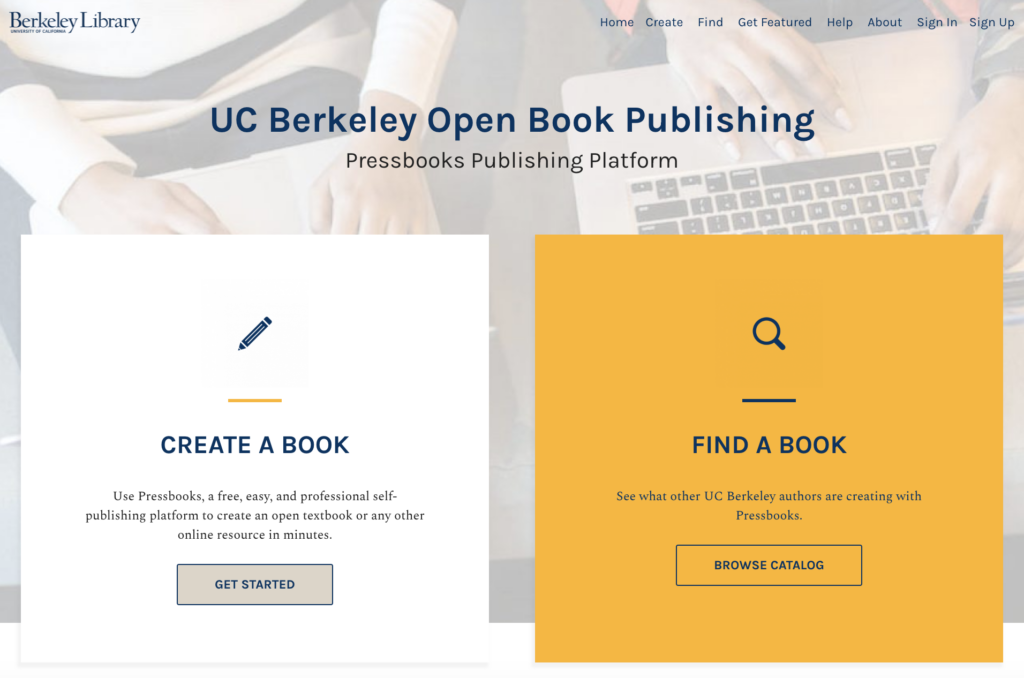
Homepage for UC Berkeley Open Book Publishing where a user can create a new book or view an already published book.

Workshop Date/Time: Tuesday, April 9, 2024, 11:00am–12:30pm

Register to receive Zoom link

If you’re looking to self-publish work of any length and want an easy-to-use tool that offers a high degree of customization, allows flexibility with publishing formats (EPUB, PDF), and provides web-hosting options, Pressbooks may be great for you. Pressbooks is often the tool of choice for academics creating digital books, open textbooks, and open educational resources, since you can license your materials for reuse however you desire. Learn why and how to use Pressbooks for publishing your original books or course materials. You’ll leave the workshop with a project already under way! Signup at the link above and the Zoom login details will be emailed to you.

Please sign up today and join us online on April 9.


Wikiphiliacs, Unite! (At our Wikipedia Editathon, on Valentine’s Day, 2024)

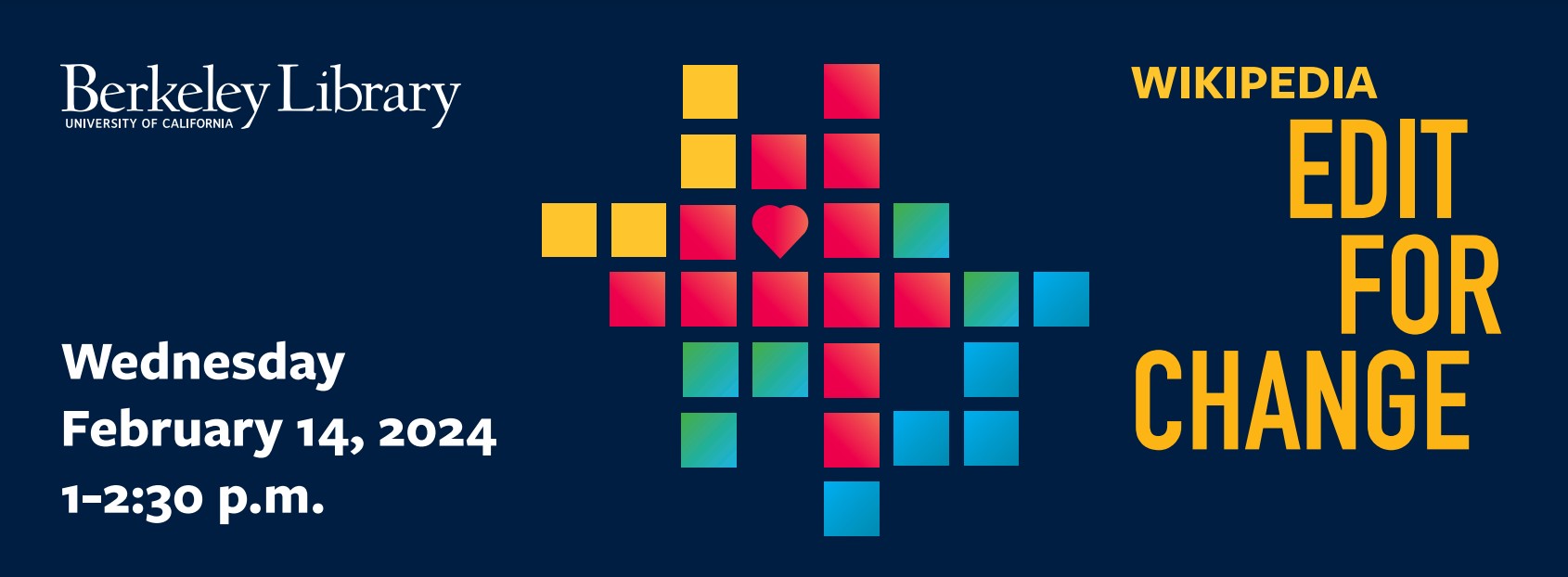
"Edit for Change" Wikipedia Editathon date and time details, with a graphic looking like a crossword puzzle

I am a proud Wikiphiliac.  At least, according to the Urban Dictionary, which defines Wikiphilia as “a powerful obsession with Wikipedia”. I have many of the signs it warns of, including “accessing Wikipedia several times a day…spending much more time on Wikipedia than originally intended [and]… compulsively switching to other Wikipedia articles, using the hyperlinks within articles, often without obtaining the originally sought information and leaving a bizarre informational “trail” in his/her browsing history” (but that last part is just normal life as a librarian).

How else do I love Wikipedia?  Let me count the ways!  As a librarian, I always approach crowd-sourced information with a critical eye, but I also admire that Wikipedia has its own standards for fact-checking, and in fact some topics are locked to public editing.  It takes its mission very seriously.  It also has an accessible and neutral tone.  Especially when I want to learn about a technical topic, it can give me a straightforward and helpful way to approach it.  I also use it pretty routinely as a way to look at collections of sources about a topic; when I was a medical librarian, I was asked for data on the condition neurofibromatosis, and at that time the best basic links I found were in the references for the Wikipedia article.   Last and maybe most importantly, the fact that anyone can edit is a huge strength…with challenges.  Wikipedia openly admits its content is skewed by the gender and racial imbalance of its editors, and knowing this is part of approaching it critically, but it also means that IT CAN CHANGE, and WE CAN CHANGE IT.

Given that philia, a word taken from Ancient Greek (according to the philia Wikipedia article), means affection for or love of something, it’s fitting that our 2024 Wikipedia Editathon is part of UC’s Love Data Week, and happens on Valentine’s Day.   If you would like to learn to contribute to this amazing resource, and perhaps even help diversify its editorial pool, we can get you started!  There isn’t yet a Wikipedia page on Wikiphilia, but maybe you could create one!  There already is a podcast series

If you’re interested in learning more, we warmly welcome you and invite you to join us on Wednesday, February 14, from 1-2:30 for the 2024 UC Berkeley Libraries Wikipedia Editathon.  No experience is required—we will teach you all you need to know about editing!  (but, if you want to edit with us in real time, please create a Wikipedia account before the workshop—information on how to do that is on the registration page).  The link to register is here, and you can contact any of the workshop leaders with questions.  We hope you will join us, and we look forward to editing with you!

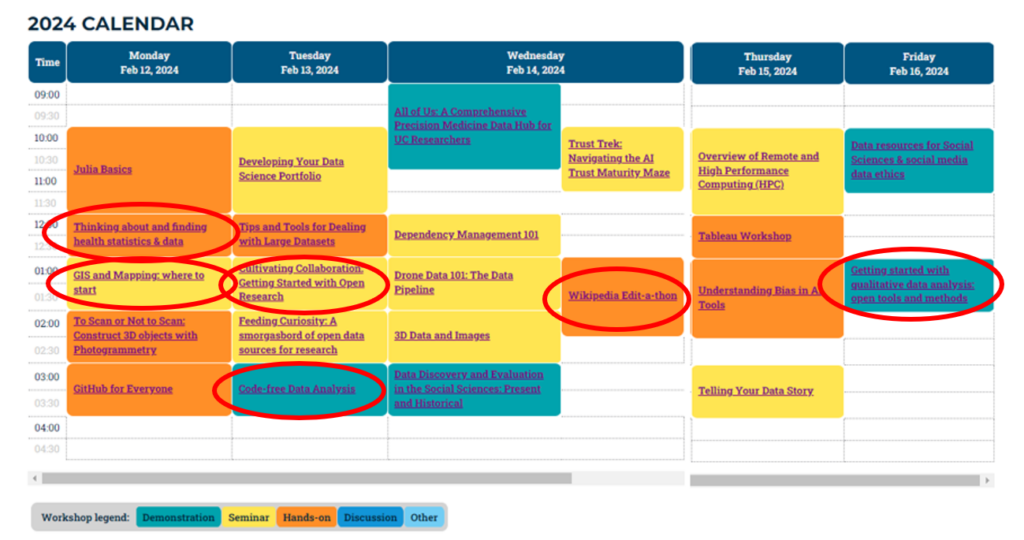
NOTE: the Wikipedia Editathon is just one of the programs that’s part of the University of California’s Love Data Week 2024!  Don’t forget to check out all the other great UC Love Data Week offerings—this year UC Berkeley Librarians are hosting/co-hosting SIX different sessions!  Here are those UCB-led workshop links, and the full calendar is linked here:

Thinking About and Finding Health Statistics & Data

GIS & Mapping: Where to Start

Cultivating Collaboration: Getting Started with Open Research

Code-free Data Analysis

Wikipedia Edit-a-thon 

Getting Started with Qualitative Data Analysis

Love Data Week calendar, with Berkeley-led offerings circled