Primary Sources: Decolonization: Politics and Independence in Former Colonial and Commonwealth Territories

Pokela leader of the PACThe Gale digital archive Decolonization: Politics and Independence in Former Colonial and Commonwealth Territories includes primary sources related to the complex process of decolonization across 60 former colonial territories and Commonwealth nations in the 20th century.  The core content consists of over 250,000 pages of rare pamphlets, newsletters, correspondence, posters, and other ephemera produced by political parties, pressure groups, trade unions, and grassroots movements. This includes the Political Pamphlets collection from the Institute of Commonwealth Studies, African Trade Union pamphlets from Nuffield College at Oxford, and the Marjorie Nicholson Papers on international trade unionism.

This archive is structured into thematic sections that address different facets of decolonization. These sections cover topics such as the rise of nationalist movements, key figures who led their nations to independence, and the residual impacts of colonial rule including economic dependencies and the development of new national identities. Additionally, it explores the involvement of international bodies like the United Nations in supporting decolonization efforts.


Primary Sources: Environmental History: Conservation and Public Policy in America, 1870-1980

Environmental History: Conservation and Public Policy in America, 1870-1980 is a digital archive from Gale that provides access to  sources documenting the emergence of conservation movements and the rise of environmental public policy in North America from the late 19th to the late 20th century.

The archive offers an incisive view into the efforts of individuals, organizations, and government agencies that shaped modern conservation policy and legislation. It includes:

  • Papers of early environmentalists like George Bird Grinnell, a founding member of the Boone and Crockett Club and the first Audubon Society, and Joseph Trimble Rothrock, known as the “father of forestry.”
  • Records of the American Bison Society, which helped save the American bison from extinction, and papers of women conservationists like Rosalie Edge and Velma “Wild Horse Annie” Johnston.
  • Documents from the U.S. Forest Service, U.S. Bureau of Reclamation, and various state and municipal agencies focused on conservation and land-use matters.
  • Grey literature from advocacy organizations, study groups, and commissions covering wildlife management, land preservation, public health, energy development, and more.

This archive provides valuable context for understanding today’s environmental challenges by chronicling the historical struggle to balance economic exploitation and resource conservation. It offers insights into the grassroots movements, advocacy efforts, and policy decisions that laid the foundation for modern environmental protection.

The resource includes grey literature on conservation and environmental policy from UC Berkeley’s Institute of Governmental Studies Library.


Scholarly communication at the Library: New name, same great service

short stack of white bound books accompanied by new name of office
Photo by Beatriz Pérez Moya on Unsplash

We are excited to share that, as of today, the UC Berkeley Library’s Office of Scholarly Communication Services (OSCS) is now called Scholarly Communication and Information Policy (SCIP)

We made this change to better serve YOU! We wanted the UC Berkeley campus and the world to understand and rely upon the breadth of services we offer. The inclusion of “information policy” in our name more accurately and effectively communicates our support not just for scholarly publishing, but also for copyright, contracts, licensing, privacy, and ethics matters within research, scholarship, and instruction. 

Since 2016, our office has provided (an extraordinary volume of) services to UC Berkeley on fundamental scholarly communication issues, including open access publishing, copyright and fair use in research and instruction, authors’ rights, scholarly impact, and beyond. But we also do much more to guide campus and the Library on related law and policy issues. 

To that end, the term “information policy” can be thought of as the application or shaping of laws, regulations, or doctrinal positions affecting information creation, access, and use. And that’s exactly what we do. For example: 

  • Electronic resource licensing: We negotiate all of the Library’s electronic resources agreements;
  • Legal issues in research & teaching: We advise on accessibility, fair use, text and data mining, artificial intelligence, privacy, digital rights management, and intersections with international / foreign laws in research and instruction;
  • Permissions & licensing: We oversee permissions and licensing for usage of library materials;
  • Special collections rights and contractual issues: We address rights issues and contracts to guide incoming collections and collection digitization;
  • Policy creation and advocacy: We advise on University and Library policies affecting scholars’ rights, and engage in broader legislative and regulatory advocacy; and more!

We believe that “information policy” better signals that we cover this wide range of law and policy matters, and are a trusted campus resource for support. Please continue to contact us at our same e-mail address (schol-comm@berkeley.edu) if you need any help, or check out our website (https://www.lib.berkeley.edu/research/scholarly-communication) which remains the same.


Bancroft Library Processing News

The archivists of the Bancroft Library are pleased to announce that in the past quarter (January-March 2024) we opened the following Bancroft archival collections to researchers.

Manuscript and University Archives/Faculty Papers Collections:

Data Center records (processed by Lara Michels with the help of Christina Velazquez Fidler)

Isabel Wiel papers (processed by Presley Hubschmitt)

David E. Good and Forrest M. Craig collection of family papers (processed by Lara Michels)

Nathan and Julia Hare papers (processed by Marjorie Bryer)

Delmer Myers Brown papers (processed by Lara Michels and student assistant David Eick)

Martinez, Dean, and DuCasse family papers and photographs (processed by Lara Michels and student assistant Malayna Chang)

Joan Bekins collection of Terwilliger Nature Education Center records (processed by Jaime Henderson and Lara Michels)

Bissinger and Company records (processed by Presley Hubschmitt)

Howard Besser papers and audiovisual materials (processed by Lara Michels and student assistant David Eick)

Sherman Lewis research collection relating to the Hayward Area Planning Association (HAPA) (processed by Jaime Henderson and Lara Michels)

Barbara Oliver collection of theatre materials (processed by Jaime Henderson and Lara Michels)

Michael and Cynthia Horowitz collection on psychedelics, 1954-2006 (processed by Lara Michels and student assistant David Eick)

Rosborough family papers (processed by Lara Michels and student assistant Malayna Chang)

Pictorial Collections and Items:

127 small collections and single items (approximately 4,911 items, total)

Additions to Cathy Cade’s autobiographical photograph albums, documenting lesbian life and community activism in the Bay Area, 2008-2015. (over 1,900 items)

San Joaquin County mug shot books, wanted notices, and law enforcement ephemera of Sheriff Thomas Cunningham. (over 2,300 items)

The Robert Altman photograph archive, which is particularly strong in counter culture and rock ‘n’ roll images of the late 1960s and 1970s, including work from his time as a photographer for Rolling Stone magazine (approximately 35,000 items) (online finding aid pending)


Arab-American Heritage Month 2024

Arab American Heritage Month 2024

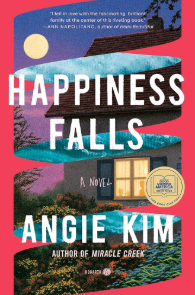
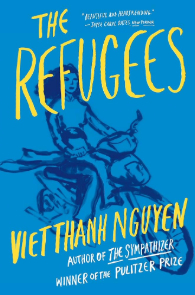
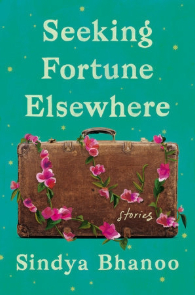
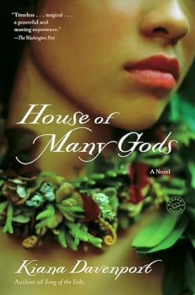
Hey there, bookworms! Ready to celebrate Arab American Heritage Month with a literary twist? Join us as we dive into the captivating world of Arab-American authors and characters and their vibrant stories, both fiction and nonfiction. Explore more at UCB Overdrive today!


Workshop Reminder — Publish Digital Books & Open Educational Resources with Pressbooks

UC Berkeley Open Book Publishing website with buttons to create a book or find a book

Date/Time: Tuesday, April 9, 2024, 11:00am–12:30pm
Location: Online. Register via LibCal and you’ll receive the Zoom link for the event.

If you’re looking to self-publish work of any length and want an easy-to-use tool that offers a high degree of customization, allows flexibility with publishing formats (EPUB, PDF), and provides web-hosting options, Pressbooks may be great for you. Pressbooks is often the tool of choice for academics creating digital books, open textbooks, and open educational resources, since you can license your materials for reuse however you desire. Learn why and how to use Pressbooks for publishing your original books or course materials. You’ll leave the workshop with a project already under way.

Curious about how UC Berkeley faculty, students, and staff have used Pressbooks? Check out some of the Berkeley-created digital books and resources below, or browse over 6,400 open access books on the Pressbooks Directory.


Remembering Joseph E. Bodovitz (1930 – 2024)

Joe Bodovitz sitting in living room
Joseph Bodovitz in 2015 oral history interview

On March 9, 2024, California lost one of its most revered public servants. For over forty years, Joseph Bodovitz stood at the center of the state’s regulatory process.  He was the founding executive director of both the San Francisco Bay  Conservation and Development Commission (BCDC) and the California Coastal Commission. He was the executive director of the Public Utility Commission and headed up the California Environmental Trust. And before retirement, he agreed to serve as the project director for Bay Vision 2020. To be sure, his fingerprints could be found—one way or another—on some of the most important regulatory policies and decisions passed in California during the twentieth century—actions that would come to impact people throughout the Golden State, both then and now.

Joe, as most knew him, did not initially set his sights on government work. Born in Oklahoma City during the Great  Depression, he studied English literature at Northwestern University, and after serving in the Korean War, earned a graduate degree in journalism at Columbia University. In 1956, he accepted a job as a reporter with the San Francisco Examiner, allowing him to return to a state and region for which the young Oklahoman had grown fond during his military service with the Navy. In the early 1960s, Bodovitz left journalism to take a position with the San Francisco Planning and Urban Research Association, an organization whose work in urban policy and development had become critical in the postwar boom of San Francisco. Such work proved a good fit for Bodovitz, whose reporting at the Examiner focused on politics and urban redevelopment in the city. By 1964, his reputation and work at SPUR had caught the attention of Eugene McAteer, a state senator from San Francisco who sought to establish a government study on regulating development and fill in the San Francisco Bay. Bodovitz not only joined that new group, he took the lead in crafting what would become known as the Bay Plan. When finished, he also agreed to serve as the founding executive director of the new regulatory agency that plan created, BCDC.

Bodovitz was entering uncharted waters in his role at BCDC. There was no precedent for this kind of environmental regulation back in 1965. In fact, BCDC was the first regulatory agency of its kind in the nation. That meant Bodovitz, with the help of commission chair Melvin B. Lane, was charged with creating a regulatory structure and policy from scratch. The task was daunting, especially in light of the array of forces they confronted throughout the process, from city mayors and wealthy businesses to citizen groups and environmental organizations. For Bodovitz, the principle that guided his work was striking a balance between economic development and environmental conservation. “People sort of had to confront the legitimate interests of both conservation and development,” he recalled in his 1986 oral history. “They may disagree on a particular permit or a particular issue, but no fair-minded person can say marshlands aren’t important. Similarly, no fair-minded person can say ports aren’t important to the Bay Area economy.” As he would often point out, balance was the underlying principle of BCDC: “There is a reason why conservation and development are in the name.”

In 1972, California voters approved Proposition 20, which created another historic agency: the California Coastal Commission. And as quick as the votes were tallied around the creation of the new state agency, Bodovitz and Lane were asked to bring their expertise from BCDC to the regulation of the state’s 1,100-mile coastline.  In the familiar role of executive director, Bodovitz began to adapt the regulatory structure and policies of the bay to the coast, crafting what would become the coastal plan. His experience aside, the task proved even more daunting this time around. As Bodovitz recalled, the stakes were higher and the issues much more complex. “I don’t mean to make the BCDC planning sound simple because God knows it wasn’t; but relative to what we were dealing with in the Coastal Commission—it was simpler.” Ultimately, that work created a foundation for coastal regulation which would be studied around the world, and help made California one of the most pristine coastal regions of the Western Hemisphere. Fifty years later, the shorelines of Golden State still stand as a legacy of Bodovitz’s work.

Throughout the 1980s and 1990s, Bodovitz’s public service on behalf of California continued. Shortly after he left the Coastal Commission in 1979, he was named executive director of the California Public Utilities Commission—the state agency charged with regulating utility companies throughout the state. Here, Bodovitz brought his experience and expertise to a range of important issues, from the breakup of telephone giant AT&T to the rising debate about deregulation and its impact on the state’s utility services. After his terms with the PUC, Bodovitz was tapped to head the newly created California Environmental Trust, as well as serve as the project director for Bay Vision 2020, which created a plan for a regional Bay Area government. In both organizations, Bodovitz provided invaluable leadership in helping to address a new set of environmental and development issues at the dawn of the twenty-first century.

It is an oft-stated adage among those in politics that civil servants are the unsung heroes of government. They conduct the research, staff the committees and commissions, and do the legwork that turns a written bill into an effective public policy. Joe Bodovitz was one of California’s unsung heroes. The Oral History Center had the privilege of conducting two oral histories with Bodovitz, documenting his experience and insights for future generations. The first, published in 1986 as part of the Ronald Reagan Gubernatorial Era Project, covered his experience at BCDC. Segments of this oral history are featured in the OHC’s Voices for the Environment exhibit and the accompanying podcast episode “Tides of Conservation.” The second oral history, published in 2015, offers an in-depth look at Bodovitz’s life and career. Both oral histories are available online through the links below.

Will Travis—another unsung hero of California in own right—perhaps said it best when writing the introduction for Bodovit’s 2015 oral history.

By having Joe as my friend for over 40 years and watching how other people treat him, I’ve learned why the Yiddish word mensch had to be created. A mensch is a person of integrity and honor, someone to admire and emulate, someone of noble character. In colloquial American English, a mensch is a stand-up kind of guy. Joe is a mensch.

“Joseph E. Bodovitz: Management and Policy Directions,” an oral history conducted by Malca Chall in 1984, in The San Francisco Bay Conservation and Development Commission, 1964-1973, Oral History Center, The Bancroft Library, University of California, Berkeley.

“Joseph E. Bodovitz: Founding Director of the Bay Conservation Development Commission and the California Coastal Commission,” an oral history conducted by Martin Meeker in 2015, Oral History Center of the Bancroft Library, University of California Berkeley.


Review of Sketches from Spain: Homage to the Abraham Lincoln Brigade

Book cover for Sketches from Spain

Peter Neil Carroll. Sketches from Spain: Homage to the Abraham Lincoln Brigade. ALBA Special Edition. Charlotte, NC: Main Street Rag Publishing Company, 2024.

Scholar and poet Peter Carroll may be best known for his historical works on the Spanish Civil War and the 2,800 Americans who served in it. Building on The Odyssey of the Abraham Lincoln Brigade: Americans in the Spanish Civil War (1994) and From Guernica to Human Rights: Essays on the Spanish Civil War (2015), this new collection of poems is a tribute to those volunteers known as Lincolns. Longshoremen, sailors, teachers, students, novelists, poets, nurses, doctors, barbers, carpenters, florists, truck drivers, plummers, salesmen, tailors, artists, cabbies, musicians, and factory workers of all types joined the International Brigades to stop fascism from spreading in Europe. Men and women alike, Jews, African Americans, Asian Americans from virtually all fifty states united in a common cause to liberate the democratically elected Republic of Spain from a fascist uprising led by General Francisco Franco and the neighboring dictators who propped him up—Hitler and Mussolini. Through a lyrical collage of archival sources and blank verse, Carroll has assembled a poignant testimonial of those Americans he knew who enlisted in the Abraham Lincoln and Washington battalions of the International Brigades, more commonly referred to as the Lincoln Brigade after the war.

The Lincolns or brigadistas were united by the choice they made to risk it all crossing the Atlantic for an uncertain fate. The deceased, the survivors, and even the deserters get equal page space in Carroll’s kaleidoscope homage. But not all are typical heroes in these non-fiction poems. The first is dedicated to the fragmented unknown soldier:

Does it matter who he is
or why he’s smiling, what he read?
he was there,
Spain 1937
in ill-fitting trousers and shirt,
fighting fascists,
anonymous, immortal.

Other poems are dedicated to those who became known for their personal uniqueness, or the unique path they took to get to Spain. Many of these volunteers were first-generation children of immigrants from big cities, and small towns. One Lincoln was the son of an Ohio governor while another actually ran for governor of California in 1946. Among the better known is the charismatic Berkeley graduate student Robert Merriman—son of a lumberjack—and his wife Marion, who arrived from California via a research fellowship in Moscow. Novelist, journalist, and screenwriter Alvah Bessie was one of the “Hollywood 10” and appeared before the House Un-American Activities Committee in 1947 where he refused to talk, and became “a minor star mingling with the left elite.” Another who rubbed shoulders with Ernest Hemingway—one of the most renowned chroniclers of the war—was a working class Jew from Brooklyn named Milton Wolff, who began as a machine gunner and was quickly promoted to battalion commander before returning home with the rest of the international volunteers in December 1938.

The war in Spain brought dignity to those discriminated against at home because of the color of their skin, such as Crawford Morgan:

In Spain I felt like a human being, a man.
People didn’t look at me with hatred in
their eyes because I was black, it is quite
a nice feeling to feel like a human being.

 Or Salaria Kea:

She stood out, the one African American
woman in the Spanish Civil War, a nurse who
spoke her mind, fought racism, saved lives.

Carroll’s poems, rarely more than a page, are structured around both known and little known facts which defined these volunteers, many whom Carroll was able to interview himself when they were alive. Nearly all joined the Communist party—a prerequisite of the Comintern’s recruitment and a decision which would follow the survivors back to the United States. Many Lincolns were persecuted, blacklisted, imprisoned, or driven to suicide or exile by their own government during the McCarthy era. Carroll’s verses locate the humanity in those volunteers who had broken and turned against the cause. Edward Barsky, on the other hand, was among so many like Bessie and others who paid a high price for refusing to name names:

[…] He went to prison—
six months and a fine. Now a felon, he
lost his New York medical license but
what else could a good doctor do?

Whether they died in Spain, in the next World War, or in the U.S. most dedicated their lives to the struggle, taking up similar causes along the way. Carroll’s poems document how they found meaning and relevance in new fights against totalitarianism, racism, and anti-semitism in the 20th century. While many re-enlisted and served proudly in World War II, others protested American wars in Korea, Vietnam, and Iraq as well as American covert operations in Cuba, Chile, and Central America.

Peter Carroll’s Sketches from Spain: Homage to the Abraham Lincoln Brigade is an accessible testament and representation of extraordinarily moving individuals who put their lives on the line to change the world. They recognized the high stakes at play in Spain, which so many Americans realized too late, as World War II would come to prove.

Claude Potts is the Librarian for Romance Language Collections at the University of California, Berkeley where he is also part of a cross-departmental team working to install on the campus a plaque honoring Spanish Civil War volunteer Robert H. Merriman. This review also appeared in H-Spain.


Primary Sources: 19th Century British Pamphlets

Due to budget cuts, the Library ended its previous subscription to this resource. Access has been restored through a purchase of JSTOR content by the California Digital Library.

From the JSTOR site: “Throughout the 19th century, pamphlets were an important means of public debate, covering the key political, social, technological, and environmental issues of their day. 19th Century British Pamphlets, created by Research Libraries UK (RLUK), contains the most significant British pamphlets from the 19th century held in research libraries in the United Kingdom.”

More than 26,000 pamphlets from seven major UK research institutions are searchable and browsable in JSTOR.
Bristol Selected Pamphlets 1800-1899
Cowen Tracts 1603-1898
Earl Grey Pamphlets Collection 1800-1900
Foreign and Commonwealth Office Collection 1545-1900
Hume Tracts 1769-1890
Knowsley Pamphlet Collection 1792-1868
LSE Selected Pamphlets 1800-1899
Manchester Selected Pamphlets 1799-1900
Wilson Anti-Slavery Collection

I recommend reading the guides provided by the project, which describe more fully the content of the collections and how to search them. The guides also point out that the pamphlets don’t only reveal contemporary viewpoints, they contain statistics, illustrations, maps, and other evidence that would inform your research. Because pamphlets were sometimes published in response to another publication putting forward an opposing viewpoint, tracking them can provide insight into public debates.