Francisco de Goya and the Art of Critique probes the relationship between the enormous, extraordinary, and sometimes baffling body of Goya’s work and the interconnected issues of modernity, Enlightenment, and critique. Taking exception to conventional views that rely mainly on Goya’s darkest images to establish his relevance for modernity, Cascardi argues that the entirety of Goya’s work is engaged in a thoroughgoing critique of the modern social and historical worlds, of which it nonetheless remains an integral part. The book reckons with the apparent gulf assumed to divide the Disasters of War and the so-called Black Paintings from Goya’s scenes of bourgeois life or from the well-mannered portraits of aristocrats, military men, and intellectuals. It shows how these apparent contradictions offer us a gateway into Goya’s critical practice vis-à-vis a European modernity typically associated with the Enlightenment values dominant in France, England, and Germany. In demonstrating Goya’s commitment to the project of critique, Cascardi provides an alternative to established readings of Goya’s work, which generally acknowledge the explicit social criticism evident in works such as the Caprichos but which have little to say about those works that do not openly take up social or political themes. In Francisco de Goya and the Art of Critique, Cascardi shows how Goya was consistently engaged in a critical response to—and not just a representation of—the many different factors that are often invoked to explain his work, including history, politics, popular culture, religion, and the history of art itself.
Anthony J. Cascardi is the Sidney and Margaret Ancker Distinguished Professor at the University of California, Berkeley. He is the author of numerous books, including The Consequences of Enlightenment; Cervantes, Literature, and the Discourse of Politics; The Subject of Modernity; and The Cambridge Introduction to Literature and Philosophy.
Mª de Lurdes Rosa, Margarida Leme, Fábio Duarte e Miguel Ayres de Campos
Instituto de Estudos Medievais
Universidade Nova de Lisboa
Faculdade de Ciências Sociais e Humanas
VINCULUM ERC project
É com gosto e entusiasmo que partilhamos a descoberta de uma crónica nobiliárquica quinhentista, há muito perdida, e de dois inventários de arquivo de família com ela relacionados, e igualmente apenas há poucos anos recuperados – sendo o seu estudo integrado um trabalho inédito em curso.
Descobertas
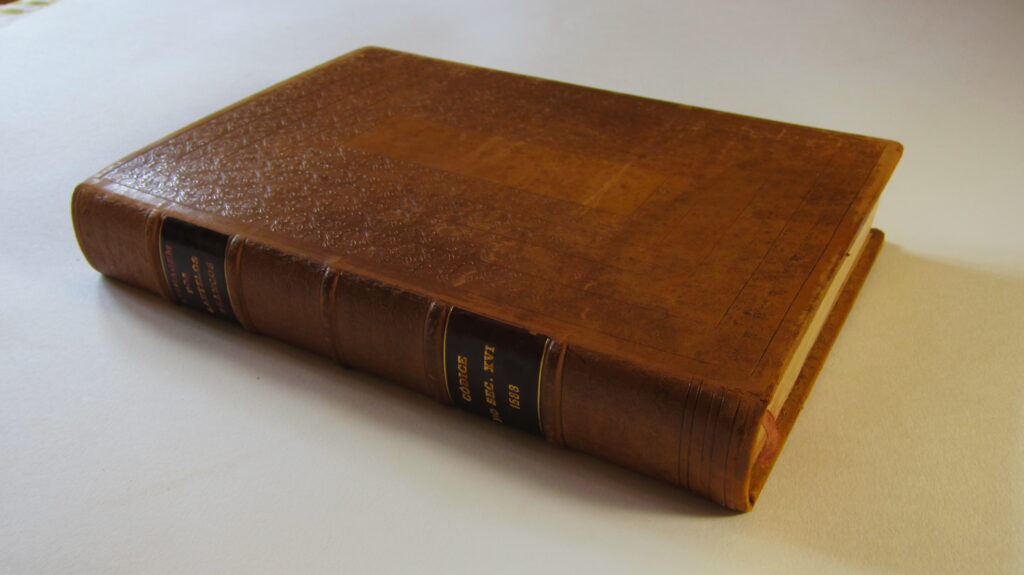
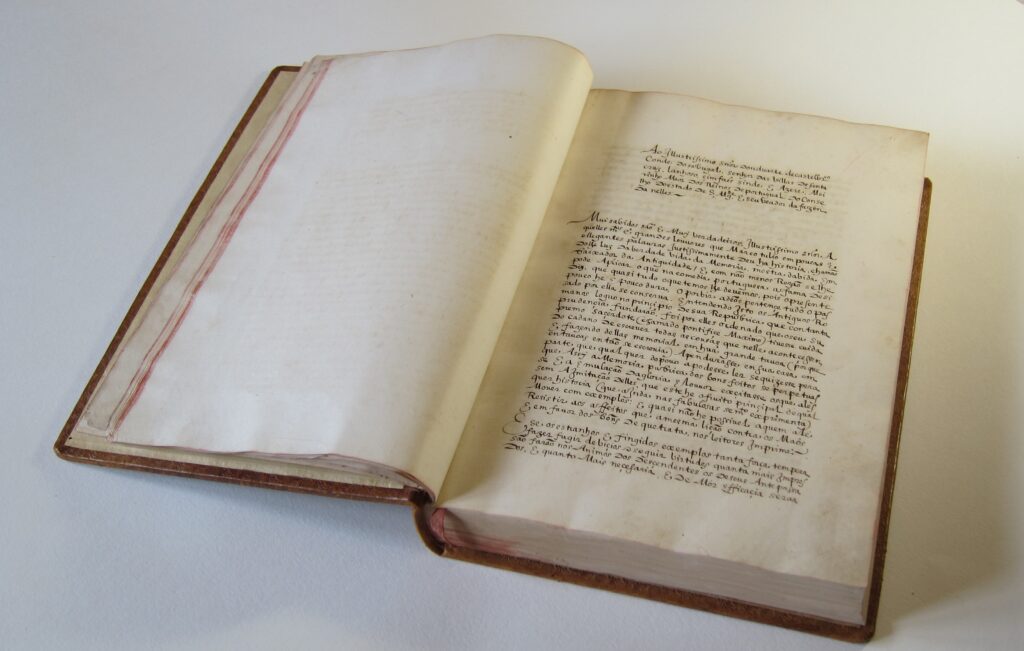
O manuscrito da crónica nobiliárquica quinhentista, conhecido como Descendência e linhagem dos Castelo-Branco (doravante Crónica), está datado de 1588 e contém um longo texto de 261 fólios, em escrita elegante e cuidada. Em cento e dezasseis capítulos narra a história e a genealogia de um grupo familiar da nobreza portuguesa, os Castelo-Branco, estando dedicada a um dos seus expoentes ilustres na época, Duarte Castelo-Branco, conde do Sabugal, meirinho-mor e vedor da Fazenda. Encontra-se nas mãos de um colecionador privado, Doutor Miguel Ayres de Campos, que a cedeu de forma generosa ao projeto VINCULUM para ser estudada e editada.
Este projeto, financiado pelo European Research Council, tem com o objetivo o estudo do funcionamento das instituições de morgados e capelas (vinculação), em Portugal e seus territórios atlânticos, em perspetiva comparada com outros reinos do sul da Europa[i]. A forma como os grupos sociais que recorriam ao estabelecimento de vínculos para reforço da sua riqueza identitária e simbólica é uma das áreas de estudo de projeto VINCULUM, na qual materiais como as narrativas genealógicas e familiares tem grande relevo. Por acréscimo, o grupo familiar dos Castelo-Branco, que se organiza em diversos núcleos fortes, ricos e influentes na Corte portuguesa desde inícios do século XV, permite um dos mais interessantes estudos de caso do projeto.
Encadernação da Descendência e linhagem dos Castelo-Branco
Dedicatória da Descendência e linhagem dos Castelo-Branco
Uma característica comum aos vários núcleos, entre os quais o dos Conde do Sabugal, foi a atenção aos arquivos e às práticas de gestão de informação das casas e das propriedades; uma outra, o cultivo das belas-letras e de vários tipos de saberes técnico – científicos. A literacia jurídica e contabilística permitiu-lhe aceder por gerações a cargos cimeiros da corte, ligados ao direito e à gestão do reino e dos bens régios, desde a Casa do Cível à vedoria da fazenda, passando pelo meirinhato-mor. A influência política dos Castelo-Branco permitiu que assumissem posições de relevo também no interior dos conselhos e juntas que auxiliaram monarcas portugueses e espanhóis. Entre os vários ramos, avultam senhores que cultivavam saberes como a astronomia, matemática e genealogia. A título de exemplo, tenha-se em consideração que Martinho, primeiro conde de Vila Nova de Portimão, foi íntimo do humanista italiano, residente em Lisboa, Cataldo Sículo; que no espólio fúnebre de um dos seus netos, morto em Alcácer Quibir, se encontrava “um livro de Luis de Camões” e um outro de Ludovico Ariosto; e que Manuel de Castelo-Branco, segundo conde de Vila Nova, foi autor de um livro com árvores genealógicas da aristocracia portuguesa, impresso em 1625, e de uma relação manuscrita acerca da história da sua linhagem.
A Crónica de que agora se trata espelha bem a riqueza de informação circulante no grupo, quanto ao seu passado e ao seu presente. São inúmeros os documentos e os livros citados, pelo que se vê de uma primeira análise. O conhecimento dos arquivos da família era especialmente prezado, e o estudo da Crónica será enriquecido com o de dois outros manuscritos, descobertos no âmbito de um dos projetos antecessores do VINCULUM, o projeto INVENTARQ[ii].
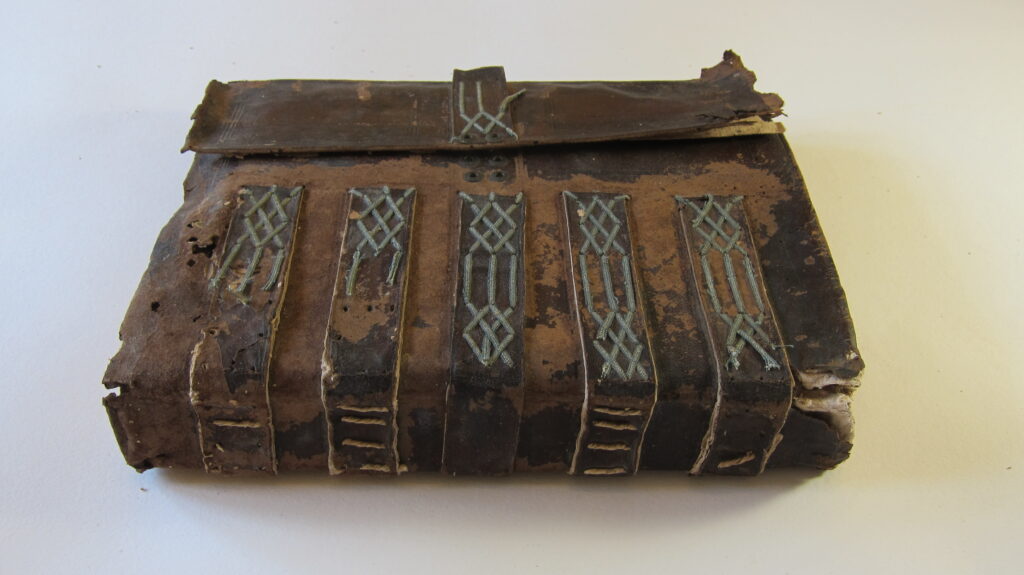
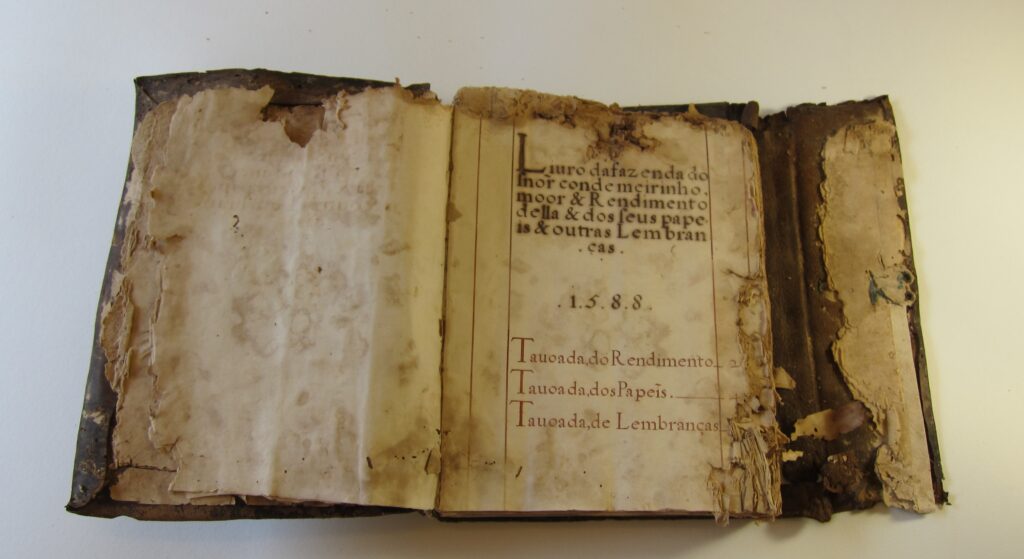
Também em mãos privadas, e generosamente disponibilizado para estudo, em 2015, ao grupo ARQFAM[iii] e, agora, ao projeto VINCULUM, é o Livro da Fazenda do Senhor Conde Meirinho-Mor e rendimento dela e dos seus papeis e outras lembranças. Códice in 4º, de 293 páginas numeradas, encadernado em pele, datado também de 1588, fez parte do Arquivo da Casa de Óbidos onde terá entrado pelo casamento da condessa de Sabugal e Palma com o 2º conde de Óbidos, em 1669. No arquivo da Casa terá permanecido mesmo depois de ter sido entregue, já no século XX, ao marquês de Santa Iria herdeiro dos condes de Óbidos. Está agora nas mãos de um colecionador privado, Arquiteto Jorge Brito e Abreu. Apresenta com a Crónica muitas semelhanças materiais, desde logo o tipo de letra; o seu restauro total, a finalizar em 2023, permitirá a leitura de páginas muito danificadas, e uma analise cuidada.
Encadernação do Livro da Fazenda do Senhor Conde Meirinho-Mor
Portada do Livro da Fazenda do Senhor Conde Meirinho-Mor
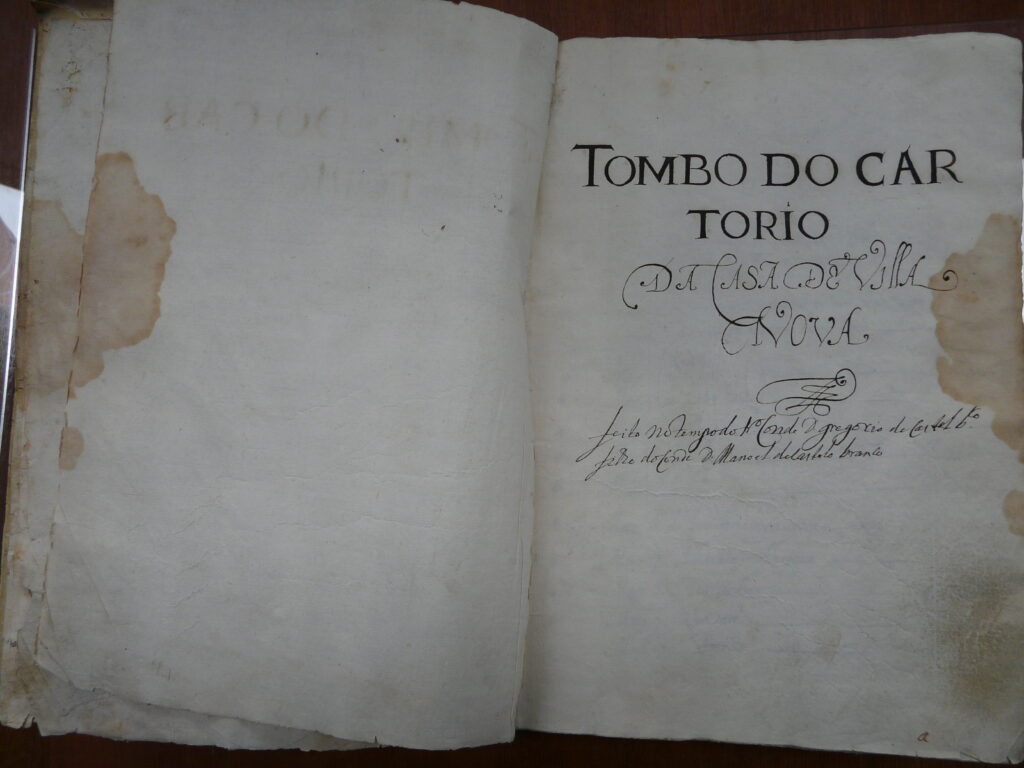
Já o Tombo do Cartório da Casa de Vila Nova de Portimão, atualmente à guarda do Centro de Documentação do Museu Municipal de Portimão, após compra no mercado livreiro, é proveniente da dispersão do arquivo da Casa de Abrantes pelos proprietários, ao longo da segunda metade do século XX. Ao que tudo indica, foi mandado fazer pelo segundo Conde de Vila Nova de Portimão, com sua direta intervenção; a redação final datará dos primeiros anos do século XVII, mas a empreitada deve ter começado nas últimas décadas da centúria anterior – o que o coloca em provável contemporaneidade com os dois documentos Sabugal. Foi editado e estudado por um dos atuais membros da equipa do projeto, Fábio Duarte, na sua tese de mestrado[iv], no âmbito de programa ARFAM, a decorrer na Faculdade de Ciências Sociais e Humanas da U. Nova de Lisboa desde 2010 e da área de formação em Arquivística Histórica da mesma instituição.
Portada do Tombo do Cartório do Casa de Vila Nova de Portimão
Embora não se saiba, igualmente, quem foi o responsável pela elaboração do Tombo do Cartório, note-se que esta, como as outras iniciativas já referidas, foi acompanhada de perto pelos membros da família Castelo-Branco e levada a cabo num breve intervalo de tempo. Não deixa de ser curioso apontar que, concomitantemente, em 1609, Gaspar Coelho Aranha, prior da vila da Atalaia, terminava a mando do terceiro conde de Sortelha, D. Luís da Silveira, genro do segundo conde de Vila Nova, a composição da Tabuada do cartório da Casa de Sortelha[v]. Aqui, uma vez mais, a reorganização de um arquivo familiar surgia a par da veiculação de uma ideia de memória nobiliárquica e da defesa do património conservado e transmitido durante gerações. O cura arquivista faz uma sugestão que poderá parecer estranha, ou megalómana, mas que afinal reflete a extrema importância conferida aos documentos familiares: o Conde deveria estabelece em Góis, vila principal entre as suas propriedades, um arquivo que albergasse os seus preciosos originais. Este arquivo chamar-se-ia, nem mais nem menos, do que «Torre do Tombo de Goez», e o cura relembra que o segundo conde, avô do atual, mandara fazer uma coleção de grande “tombos” semelhantes aos dos reis, onde registaram os seus bens e direitos. Num contexto alargado, estas composições e reorganizações de arquivos – que, como veremos, irão servir a Crónica – testemunham claramente de uma prática de escrita de gestão e de história-memória-genealogia dos Castelo-Branco e famílias afins, na qual avultam alguns longuíssimos testamentos que são, na verdade, “tratados de domesticidade”, contendo instruções aos sucessores sobre gestão política, económica, religiosa e afetiva das Casas e dos homens e mulheres por elas abarcados.[vi]
Autorias
Se para os dois inventários de Arquivo, as autorias – que se colocam, de resto, de modo diverso do que para um texto literário – estão parcialmente esclarecidas, quanto à Crónica tal não sucede ainda. No momento atual, colocamos mesmo a hipótese de 1588 ser a data não da redação, mas sim de uma cópia, feita para Duarte de Castelo-Branco, mesmo se o texto está dedicado àquele titular. O Prólogo pede vénia de erros de copista que não sabia ler latim, pelo que foi escrito após um exame da cópia, que teve aliás outros acrescentos e retificações expressamente referidos no Prólogo. Este terá sido por copiado após finalizado, incluindo a advertência quanto aos erros, pelo mesmo calígrafo do resto, e colocado no caderno inicial do livro.
Outros indícios apontam para escritas em diversos momentos, ou incorporações de outros textos. No capítulo 57 escreve-se “…foraõ aas mujtas moradas de casas da famosa rua Nova de Lisboa que ora são do meirinho moor dom Duarte de Castelbranco e lhe rendem mais de hum conto de reis”. A menção a Duarte Castelo-Branco é algo indireta, não se parecendo com outras que lhe são feitas como promotor da Crónica; sobretudo, não é referido como chamam “Conde”, título que já detinha em 1588.
Indubitável e impressionante é a quantidade de obras e documentos citados, bem como a qualidade da informação deles tirada, com frequência citações diretas. Transmite a clara noção que alguém estava a trabalhar num arquivo. Dizendo muitos dos capítulos ricos em citações documentais respeito a outros ramos que não os Sabugais, é forte a hipótese de uma empresa conjunta, ou pelo menos abertura dos vários arquivos. D. Manuel de Castelo-Branco, conde de Vila Nova de Portimão, acima referido, poderá ter sido nela central, pela sua mestria e fama como genealogista.
Já a entrega do trabalho em si ao um certo Luís Ferreira de Azevedo, que circula desde o século XIX, a partir de uma nota manuscrita de autor não identificado, no manuscrito, parece-nos pelo menos questionável. É conhecido pela entrada que lhe dedica Barbosa Machado na Biblioteca Lusitana (III: 94), a quem se deve de resto quase todas as informações que dele existem. Terá sido cronista-mor por um pequeno intervalo de tempo no início do séc. XVII e guarda-mor da Torre do Tombo. Na verdade, lendo o elenco de obras dado por Barbosa Machado, nada parece garantir que a Crónica dos Castelo-Branco se identifique com o trabalho aí citado. O que efetivamente se lhe atribui são genealogias de uma série de famílias, entre os quais os Castelo-Branco, “de quem dizia ser descendente”, o que parece indicar um trabalho produzido num espírito inteiramente diferente do da Crónica[vii].
Percursos
Estão por fazer os estudos dos percursos destes valiosos documentos. Terão feito parte da enorme quantidade de documentação de constituição e de gestão produzida pelos vários grupos familiares acima referidos, e outros semelhantes, ligados entre si por matrimónios fortemente endogâmicos que se concentraram ao longo dos séculos 17 e 18 em duas grandes Casas – Abrantes e Santa Iria. Os arquivos destas foram dispersos durante as duas centúrias seguintes, e estão hoje na sua maioria conservados em arquivos públicos e privados – embora exista ainda muito por descobrir, como prova os achados de que agora falamos.
Quanto à Crónica, dados até agora recolhidos permitem saber que fez parte da coleção do arquiteto bibliófilo Jose Maria Nepomuceno e vendida no leilão da mesma, em 1897, a Francisco Arthur da Silva, editor e livreiro[viii]. O catálogo não fornece, lamentavelmente, qualquer indicação sobre a proveniência e não se sabe, pois, como Nepomuceno a adquiriu. Terá feito parte do Arquivo e da Biblioteca da Casa de Óbidos, Palma e Sabugal, cujas histórias de constituição e dispersão estão também por fazer[ix]. O arquivo estaria ainda numa fase de vitalidade em 1836, quando é feito um extenso inventários dos seus milhares de documentos; encontra-se nele o Livro da Fazenda do Senhor Conde Meirinho-Mor (p. 416) mas não a Crónica, o que poderá simplesmente explicar-se pelo facto deste tipo de documentos serem antes conservados nas bibliotecas das Casas. A investigação preliminar conduzida nos inventários de livros existentes no Arquivo da Casa de Sta. Iria não produziu resultados.
Um escasso ano depois do leilão de Nepomuceno, em 1898, Francisco Arthur da Silva irá colocá-lo de novo em leilão, com o valor, a crer na indicação lateral, de 6.500 reis; não terá sido arrematado, pois o Apêndice mostra que ficou para o próprio[x]. A cópia do pequeno extrato existente na Biblioteca Pública de Évora e dado a conhecer por Rafael Moreira em 2022[xi], permite saber que o Arquiteto Nepomuceno a deixava consultar a amigos; desta consulta resultou a dita cópia parcial[xii]. Entre a venda por Francisco Arthur da Silva e o recente aparecimento em leilão, de 2016, há um hiato total.
Deve por fim mencionar-se uma sua versão abreviada num arquivo de família hoje depositado na Casa de Sarmento, em Guimarães. Intitulada Epílogo do livro da linhagem: dos de Castelobranco, é obra de um certo Bernardo Amaral Castelo-Branco. Provém do arquivo de uma casa da região vimaranense, a Casa do Costeado, e (ao contrário do que indica o catálogo online) foi feito já em 1610 – se bem que claramente por alguém que teve acesso à cópia da Crónica que agora nos ocupa.
Futuro
A Crónica e o Livro da Fazenda estão a ser alvo de trabalhos de restauro conservação, e serão posteriormente digitalizados para disponibilização pública. Fazem parte de um conjunto mais vasto de documentação cujo restauro e digitalização foram custeadas pelo projeto VINCULUM. A Crónica será apresentada, em conjunto com os restantes manuscritos, num seminário a realizar na FCSH.NOVA, a 28 de Abril de 2023, organizado pelo projeto, e de cujos resultados informaremos o blog!
[i] Entailing Perpetuity: Family, Power, Identity. The Social Agency of a Corporate Body (Southern Europe, 14th-17th Centuries) – ERC Consolidator grant 819734 . [ii]Inventários de arquivos de família, sécs. XV-XIX: de gestão e prova a memórias perdidas. Repensando o arquivo pré-moderno EXPL/EPH-HIS/0178/2013 . [iii]Arquivos de familia, Arquivos de comunidade(s). Arquivística, História, Herança cultural. [iv] Fábio DUARTE, Herdar, Legar e Registar: o arquivo e o Tombo do Cartório da Casa de Vila Nova de Portimão. Degree: MA in History – specialization in Modern History and History of the Discoveries. FCSH-UNL, 2022. [v] Análise em Maria de Lurdes ROSA, Penser et organiser les archives de famille, entre histoire et archivistique. In: Les archives familiales dans l’Occident médiéval et moderne: Trésor, arsenal, mémorial [en ligne]. Madrid: Casa de Velázquez, 2021 (généré le 16 septembre 2021). [vi] O testamento do segundo conde é talvez o mais exemplar, e está publicado (ROSA, op. cit. p. 72); mas os testamentos manuscritos inéditos dos Castelo Branco são de idêntico talhe. [vii] Neste aspeto não podemos, portanto, concordar com a atribuição feita por Rafael MOREIRA, O casamento da Infanta D. Beatriz em Sabóia (1521) e a mais antiga alusão a Gil Vicente. In: Anais de História de Além-Mar 21 (2020): 349-82 (p. 352-53). [viii] Francisco Arthur da Silva (ed.), Catalogo da livraria do distincto bibliografico e bibliophilo José Maria Nepomuceno (…). Lisboa: Empreza Editora de Francisco Arthur da Silva, 1897 (lote 2187). [ix] Margarida LEME– O Arquivo Costa no Arquivo Óbidos Palma Sabugal. In ROSA, Maria de Lurdes (org.) – Arquivos de família, séc. XIII-XX: que presente, que futuro?. Lisboa: IEM; CHAM; Caminhos Romanos, 2012, pp. 279-90. O arquivo foi disperso entre 1995 e 2004; tendo a maior parte sido adquirida em 1995, pelo ANTT, onde se encontra atualmente com o nome de Casa de Santa Iria. [x] Francisco Arthur da Silva (ed.), Catalogo de uma boa colleçáo de livros raros, curiosos e manuscriptos de varias procedencias. Lisboa: Empreza Editora de Francisco Arthur da Silva, 1898 (lote 1124). [xi] MOREIRA, O casamento. A descoberta do manuscrito integral da Crónica permitirá corrigir algumas das hipóteses deste artigo, decorrentes da versão disponível ao autor. [xii] Foi também vendido no leilão de 1898 (catálogo cit. supra, lote 1099, p. 107), no qual é identificado como “cópia de letra moderna” do manuscrito genealógico dos Castelo-Branco.
PhiloBiblon 2023 n. 1 (February) Texts of history, memory and management by a family group of the Portuguese nobility, 15th-16th century: discovery, recovery and study of unpublished manuscripts
Mª de Lurdes Rosa, Margarida Leme, Fábio Duarte e Miguel Ayres de Campos
Instituto de Estudos Medievais
Universidade Nova de Lisboa
Faculdade de Ciências Sociais e Humanas
VINCULUM ERC project
It is with pleasure and enthusiasm that we share the discovery of a long-lost 16th-century noble chronicle and the inventories of two related family archives, both of them only recently recovered – their integrated study is an innovative work in progress.
Discoveries
The manuscript of the 16th-century noble chronicle known as Descendência e linhagem dos Castelo-Branco (hereinafter Crónica), dated 1588, contains a long text of 261 folios, in elegant and careful script. In one hundred and sixteen chapters, it narrates the history and genealogy of a family group of Portuguese nobility, the Castelo-Brancos, and is dedicated to one of its illustrious members of the period, Duarte Castelo-Branco, Count of Sabugal, meirinho-mor and vedor da Fazenda of the kingdom of Portugal. It is owned by a private collector, Doutor Miguel Ayres de Campos, who has generously loaned it to the VINCULUM project to be studied and edited.
This project, funded by the European Research Council, aims to study the functioning of the institutions of primogeniture (morgados) and chantry (endowed) chapels (vinculação/entailment) in Portugal and its Atlantic territories, in comparison with the same institutions in other kingdoms of southern Europe.[i] The way in which social groups used the establishment of vínculos/entails to reinforce their identity and symbolic wealth is one of the study areas of the VINCULUM project, in which materials such as genealogical and family narratives have great relevance. In addition, the Castelo-Branco family group, which comprised several strong, wealthy and influential nuclei at the Portuguese Court from the beginning of the 15th century, will be one of the most interesting case studies of the project.
Encadernação da Descendência e linhagem dos Castelo-Branco
Dedicatória da Descendência e linhagem dos Castelo-Branco
A common feature of the various nuclei, including that of the Count of Sabugal, was the attention given to archives and the information management practices of the various houses and estates; another was the cultivation of the fine arts and various kinds of technical and scientific knowledge. Legal and accounting literacy allowed different members of the group to gain access for generations to top positions at court, linked to law and the management of the kingdom and royal property, from the House of the Civil Court to the treasury and the meirinhato-mor. The Castelo-Branco’s political influence allowed them to assume important positions within the councils and boards that assisted and advised Portuguese and Spanish monarchs. Among the various branches were lords who cultivated fields such as astronomy, mathematics, and genealogy. A few examples: Martinho, first Count of Vila Nova de Portimão, was a close friend of the Italian humanist and Lisbon resident, Cataldo Sículo; in the estate of one of his grandsons, killed at the battle of Alcácer Quibir, there was “a book by Luis de Camões” and another by Ludovico Ariosto; Manuel de Castelo-Branco, second Count of Vila Nova, was the author of a book with family trees of the Portuguese aristocracy, printed in 1625, and a handwritten account of the history of his lineage.
The Crónica reflects the wealth of information circulating in the group about its past and present. It cites numerous documents and books, as a preliminary analysis has shown. Knowledge of the family archives was especially prized, and the study of the Crónica will be enriched by that of two other manuscripts, discovered within the scope of one of VINCULUM’s predecessor projects, the INVENTARQ project[ii].
Also in private hands, and generously made available for study in 2015 to the ARQFAM group[iii] and now to the VINCULUM project, is the Livro da Fazenda do Senhor Conde Meirinho-Mor e rendimento dela e dos seus papeis e outras lembranças (Book of the Estates and property of the Lord Count Meirinho-Mor, his income, papers and other mementos). A codex in 4º, with 293 numbered pages, bound in leather, also dated 1588, it formed part of the House of Óbidos Archives, where it probably entered through the marriage of the Countess of Sabugal and Palma to the 2nd Count of Óbidos in 1669. It remained in the Óbidos archives even after they passed in the 20th century into the hands of the Marquis of Santa Iria, heir of the counts of Óbidos. It is now owned by a private collector, the architect Jorge Brito e Abreu. It has many material similarities with the Crónica, such as the script; the restoration of severely damaged pages, to be completed in 2023, will make possible a careful analysis.
Encadernação do Livro da Fazenda do Senhor Conde Meirinho-Mor
Portada do Livro da Fazenda do Senhor Conde Meirinho-Mor
The Tombo do Cartório do Casa de Vila Nova de Portimão, currently in the custody of the Centro de Documentação do Museu Municipal de Portimão, after purchase from the book trade, comes from the dispersal of the House of Abrantes archive by its owners during the second half of the 20th century. It was apparently commissioned by the second Count of Vila Nova de Portimão, with his direct intervention; the final redaction dates from the early 17th century, but the work must have begun in the last decades of the previous century – which makes it probably contemporary with the two Sabugal documents. It was edited and studied by one of the current members of the project team, Fábio Duarte, in his master’s thesis as part of the ARQFAM program,[iv] which has been underway at the Faculty of Social and Human Sciences at the Universidade Nova of Lisbon since 2010, and the training program in Historical Archival Studies at the same institution.
Portada do Tombo do Cartório do Casa de Vila Nova de Portimão
Although it is also not known who was responsible for preparing the Tombo do Cartório, it should be noted that this, like the other initiatives already mentioned, was closely monitored by members of the Castelo-Branco family and carried out in a short period of time. It is also interesting to note that, at the same time, in 1609, Gaspar Coelho Aranha, the prior of the village of Atalaia, was completing the Tabuada do cartório da Casa de Sortelha (Table of contents of the Cartulary of the House of Sortelha), ordered by the third Count of Sortelha, D. Luís da Silveira, son-in-law of the second Count of Vila Nova.[v] Here, once again, the reorganization of a family archive went hand in hand with the propagation of an idea of noble memory and the defense of a heritage preserved and passed down for generations. The archivist makes a suggestion that may seem strange, or megalomaniac, but which ultimately reflects the extreme importance attached to family documents: the Count should establish in Góis, the main town among his estates, an archive that would house his precious originals. This archive would be called the “Torre do Tombo de Goez,” and the chaplain recalls that the second Count, grandfather of the current Count, had ordered a collection of large “tombos,” cartularies, similar to those of kings, in which they recorded their properties and rights. In a broader context, these compositions and reorganizations of archives – which, as we shall see, underpin the Crónica – are clear evidence of a practice of management by writing, and history-memory-genealogy of the Castelo-Branco and related families, which includes some very long wills that are, in fact, “treaties of domesticity,” containing instructions for successors on the political, economic, religious and affective management of the Houses and the men and women they encompassed.[vi]
Authorship
If for the two archival inventories, the authorship – which is different from that of a literary text – is partially understood, this is not yet so for the Crónica. At the present time, we even hypothesize that 1588 is the date not of composition but of a copy made for Duarte de Castelo-Branco, despite the fact that the text is dedicated to him. The Prologue asks for forgiveness for the errors of a copyist who could not read Latin – which points to the fact that it it was written after the rest of the text, which has other additions and rectifications expressly mentioned in the Prologue. This initial part was thus probably copied after the Crónica was finished, with the warning about the errors, by the same scribe as the rest, and placed in the book’s initial gathering.
Other indications point to writings at various times or the incorporation of other texts. In chapter 57 one finds “…foraõ aas mujtas moradas de casas da famosa rua Nova de Lisboa que ora são do meirinho moor dom Duarte de Castelbranco e lhe rendem mais de um conto de reis.” […there were many dwellings in the famous Rua Nova of Lisbon that now belong to the merinho mor lord Duarte de Castelobranco and bring him in as rent more than 100,000 reis]. The reference to Duarte Castelo-Branco is somewhat indirect, not like others that mention him as promoter of the Crónica; above all, he is not mentioned as “Count,” title he already held in 1588.
Undoubtedly impressive is the quantity of works and documents cited as well as the quality of the information taken from them, often direct quotations. It conveys the clear notion that someone was working in an archive. As many of the chapters rich in document citations concern branches other than the Sabugais, the hypothesis of a joint venture, or at least consultation of various archives, is strong. D. Manuel de Castelo-Branco, Count of Vila Nova de Portimão, mentioned above, may have been central to it, given his mastery and fame as a genealogist.
In contrast, the attribution of the text to a one Luís Ferreira de Azevedo, which originated in note in an unidentified hand on the manuscript and has been circulating since the 19th century, seems to us at least questionable. Ferreira de Azevedo is known by the entry dedicated to him by Barbosa Machado in the Biblioteca Lusitana (III: 94), to which we owe almost all the information known about him. He might have been chronicler-major for a short time in the early 17th century and head keeper of the Torre do Tombo. In fact, reading the list of works given by Barbosa Machado, nothing seems to identify the Crónica with the titles cited. What is effectively attributed to him are genealogies of a series of families, among them the Castelo-Branco family, “from whom he claimed to be descended,” which seems to indicate a work produced in an entirely different spirit from that of the Crónica.[vii]
Provenance
Studies of the provenance of these these valuable documents have yet to be undertaken. They would have formed part of the enormous quantity of documentation produced by the various family groups mentioned above and others like them, linked together by strongly endogamous marriages, which came to be concentrated in the 17th and 18th centuries in two great Houses – Abrantes and Óbidos. Their archives were dispersed over the following two centuries and are today mostly preserved in public and private archives – although there is still much to be uncovered, as proven by the discoveries we are discussing now.
As for the Crónica, data gathered so far allows us to know that it came to be part of the collection of the bibliophile architect Jose Maria Nepomuceno and was sold at his auction in 1897 to Francisco Arthur da Silva, publisher and bookseller.[viii] The sale catalogue unfortunately gives no indication of provenance and it is not known, therefore, how Nepomuceno acquired it. It must have been part of the Archive and Library of the House of Óbidos, Palma and Sabugal, the histories of whose constitution and dispersal are yet to be written.[ix] The archive was still active in 1836 when an extensive inventory of its thousands of documents was made; in it can be found the Treasury Book of the Lord Count Meirinho-Mor (p. 416) but not the Crónica, which can be explained quite simply by the fact that this type of documents were kept in the House libraries, not the archives. Preliminary research conducted on the book inventories in the Casa de Santa Iria Archive, however, was fruitless.
A year after Nepomuceno’s auction, in 1898, Francisco Arthur da Silva put the Crónica up for auction again, with a reserve price, according to the handwritten note on the margin of the auction, of 6.500 reis; it seems that it did not sell, since the Appendix shows that it was left to the owner.[x] The copy of the small extract held in the Biblioteca Pública de Évora and published by Rafael Moreira in 2022, allows us to know that Nepomuceno used to let friends consult the Crónica[xi]; which was apparently the source of this partial copy.[xii] There is a total gap between the sale by Francisco Arthur da Silva and the Crónica’s recent appearance at auction in 2016.
Finally, we should mention the existence of an abridged version of the Crónica in a family archive now held at Casa de Sarmento. Entitled Epílogo do livro da linhagem: dos de Castelobranco (Epilogue of the book of the lineage: dos de Castelobranco), it is the work of a certain Bernardo Amaral Castelo-Branco. It comes from the archive of a house in the Guimarães region, the Casa do Costeado, and (contrary to what the online catalog indicates) was made as early as 1610 – clearly by someone who had access to the copy of the Crónica.[xiv]
Future
The Crónica and the Livro da Fazenda are undergoing conservation work and will later be digitized for public availability. They are part of a larger set of documents whose restoration and and digitization were sponsored and funded by the VINCULUM project. The Crónica will be presented and studied, along with the remaining manuscripts, in a seminar to be held at the Faculty of Social and Human Sciences of the Universidade Nova de Lisboa, on April 28, 2023, organized by the project, and of whose results we shall inform the blog!
[i]Entailing Perpetuity: Family, Power, Identity. The Social Agency of a Corporate Body (Southern Europe, 14th-17th Centuries) – ERC Consolidator grant 819734. [ii]Inventários de arquivos de família, sécs. XV-XIX: de gestão e prova a memórias perdidas. Repensando o arquivo pré-moderno. Project EXPL/EPH-HIS/0178/2013. [iii]Arquivos de familia, Arquivos de comunidade(s). Arquivística, História, Herança cultural. [iv] Fábio DUARTE, Herdar, Legar e Registar: o arquivo e o Tombo do Cartório da Casa de Vila Nova de Portimão. Degree: MA in History – specialization in Modern History and History of the Discoveries. FCSH-UNL, 2022. [v] Studied in Maria de Lurdes ROSA, Penser et organiser les archives de famille, entre histoire et archivistique. In: Les archives familiales dans l’Occident médiéval et moderne: Trésor, arsenal, mémorial [en ligne]. Madrid: Casa de Velázquez, 2021 (généré le 16 septembre 2021). [vi] The second count’s will, perhaps the most exemplary, is published (ROSA, Penser. p. 72); but the Castelo Branco’s unpublished handwritten wills are of identical style. [vii] In this aspect we cannot therefore agree with the authorship attribution made by Rafael MOREIRA, O casamento da Infanta D. Beatriz em Sabóia (1521) e a mais antiga alusão a Gil Vicente. In: Anais de História de Além-Mar 21 (2020): 349-82 (p. 352-53). [viii] Francisco Arthur da Silva (ed.), Catalogo da livraria do distincto bibliografico e bibliophilo José Maria Nepomuceno (…). Lisboa: Empreza Editora de Francisco Arthur da Silva, 1897 (lote 2187). [ix] Margarida LEME– O Arquivo Costa no Arquivo Óbidos Palma Sabugal. In ROSA, Maria de Lurdes (org.) – Arquivos de família, séc. XIII-XX: que presente, que futuro?.Lisboa: IEM; CHAM; Caminhos Romanos, 2012, pp. 279-90. The archive was dispersed between 1995 and 2004 and most of it was acquired in 1995, by the ANTT, where it is currently located under the name of Casa de Santa Iria. [x] Francisco Arthur da Silva (ed.), Catalogo de uma boa colleção de livros raros, curiosos e manuscriptos de varias procedencias. Lisboa: Empreza Editora de Francisco Arthur da Silva, 1898 (lote 1124). [xi] MOREIRA, O casamento. The discovery of the full manuscript of the Crónica will allow us to correct some of the assumptions in this article, which arose from the version available to the author. [xii] It was also sold at the Silva 1898 auction (catalog cited above, lot 1099, p. 107), in which it is identified as a “modern handwritten copy” of the Castelo-Branco genealogical manuscript.
“Can I Mine That? Should I Mine That?”: A Clinic for Copyright, Ethics & More in TDM Research Wednesday, March 8th, 11:10am-12:30pm Online: Register to receive the Zoom link Tim Vollmer and Stacy Reardon
If you are working on a computational text analysis project and have wondered how to legally acquire, use, and publish text and data, this workshop is for you! We will teach you 5 legal literacies (copyright, contracts, privacy, ethics, and special use cases) that will empower you to make well-informed decisions about compiling, using, and sharing your corpus. By the end of this workshop, and with a useful checklist in hand, you will be able to confidently design lawful text analysis projects or be well-positioned to help others design such projects. Consider taking alongside Copyright and Fair Use for Digital Projects. Register here.
In the 16th century, Western European Renaissance cartographers treated the Ukrainian lands as a peripheral place. Initially, Ukraine’s territory appeared only on maps that covered much larger geographical frames, such as Central Europe, Eastern Europe, or the Black Sea region. These early maps still privileged classical sources which had provided descriptions of the area, notably Herodotus, who had authored a detailed account of the Scythian lands north of the Black Sea. Other classical authors, including Ptolemy, Strabo, Pliny the Elder, and Tacitus, covered a later period when the Sarmatians, a confederation of Eastern Iranian nomadic peoples, moved westward and, by 200 BCE, began to dominate the Scythians. Their control of the Pontic Steppe brought the Sarmatians into contact with Greek and Roman communities.
In 1477, Dominicus de Lapis published the first illustrated edition of Ptolemy’s Geography, translated by the humanist Giacomo d’Angelo da Scarperia, in Bologna, Italy. Its 26 plates, which had been engraved by Taddeo Crevilli of Ferrara, included the map “European Sarmatia,” the first printed map to cover Ukrainian territory. The prestige of Ptolemy’s Geography meant that the sheets showing “European Sarmatia” and “Asian Sarmatia” continued to be standard fare for some time.
Sebastian Münster (1489-1552), Lutheran theologian, Hebrew scholar, mathematician, cartographer, and cosmographer, published four editions of Ptolemy’s Geography in his lifetime. His Geographia universalis vetus et nova (1540), printed in Basel, Switzerland, included “Tabula Europae VIII,” a map of Eastern Europe in trapezoidal form with pictorial relief, essentially Münster’s version of the sheet “European Sarmatia.” All geographical names on this map are drawn from the classical sources which Renaissance scholars prized. Rivers which dissect the Ukrainian lands are thus identified as Tyras (Dniester), Hypanis (southern Bug), Borysthenes (Dnipro or Dnieper), and Tanais (Don).
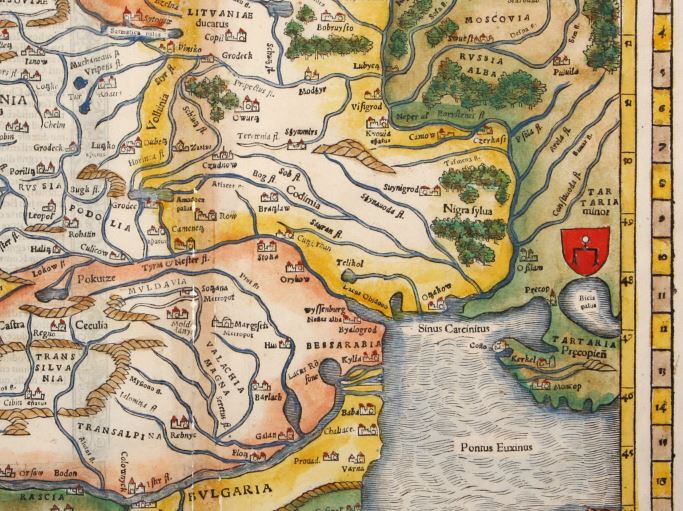
However, Münster’s 1540 edition of Ptolemy’s Geography did not contain just the Ptolemaic maps. It also featured 21 modern maps, which Münster himself had produced. Münster subsequently added new plates each time he issued a revised edition of his Geographia universalis. The 1552 edition also featured a contemporary map of Poland and Hungary, “Polonia et Ungaria, XX Nova Tabula,” based on information gleaned from the work of the Polish cartographer Bernard Wapowski (ca. 1450-1535). The Ukrainian lands west of the Dnipro (or Dnieper) River are here identified with regional labels as Russia, Volhinia, Podolia, Codimia, and Bessarabia.
Münster uses the geographical name Russia to identify the westernmost part of Ukraine, the lands of the Ruthenian domain of the Polish Crown, the Ruthenian Voivodeship. Historically this area was part of the territory of the Principality of Galicia-Volhynia (1199-1253) of the Kyivan Rus, and later the historic core of its successor, the Kingdom of Ruthenia (1253-1349). It was subsequently conquered by Lithuanians and Poles. Other Ukrainian lands west of the Dnipro River with Kyovia (= Kyiv) are shown as parts of Lithuania, within its yellow border. By contrast, the lands east of the Dnipro River are identified as Tartaria Precopien (Crimea) and Tartaria Minor, regions controlled by the Crimean Tatars. Moscovia appears in the upper eastern margin of the map, within the green border which demarcates the Tatar sphere of influence. It is shown as a territory which historically paid tribute to the Golden Horde.
The western Ukrainian cities of Leopol (Lviv) and Halitz (Halicz), important medieval centers, are shown in the left margin next to the geographical name Russia. Münster‘s Polonia et Ungaria, XX Nova Tabula thus identifies Russia as the territory of the Kingdom of Poland’s Ruthenian Voivodeship, which existed from 1434 to 1772.
In the right margin appears the emblem of the Golden Horde (also known as Ulug Ulus, literally “Great State” in Turkic), initially the northwestern part of the Mongol Empire, later transformed into a Turkicized khanate. In the 16th century “Tartaria” was controlled by the Crimean Khanate, a successor state of the Golden Horde. This is also a device that enbles Münster to show that the Ukrainian lands were contested borderlands.
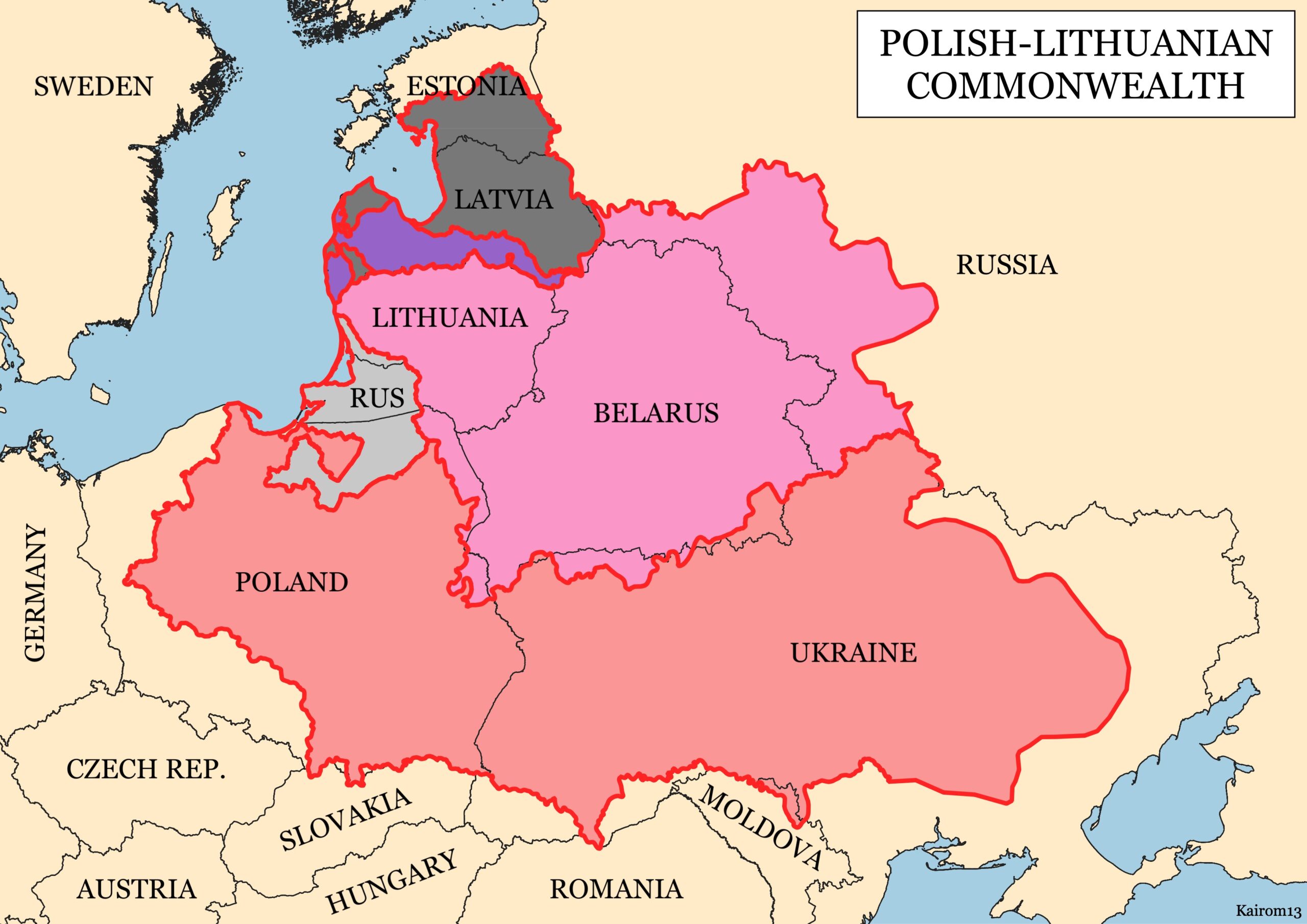
In 1618, after the Truce of Deulino, most Ukrainian lands were situated within the Polish-Lithuanian Commonwealth, but social and political crises gradually eroded its power base. Other powers tried to assert control over parts of the borderlands, including Czarist Russia, the Austrian Habsburgs and the Kingdom of Hungary, the Ottoman Empire, and the Crimean Khanate. Cossack hosts, self-governing groups of Eastern Slavic Orthodox believers, communities with military forces, grew in size, and more aggressively pursued their own interests, notably the Zaporozhian Cossacks, who established the Cossack Hetmanate.
The major subdivisions of the Polish-Lithuanian Commonwealth after the Truce of Deulino, 1618, superimposed on present-day national borders. Shown are the Kingdom of Poland, the Grand Duchy of Lithuania, the Duchy of Livonia, the Duchy of Prussia, and the Duchy of Courland and Semigallia. Image source: Wikipedia.
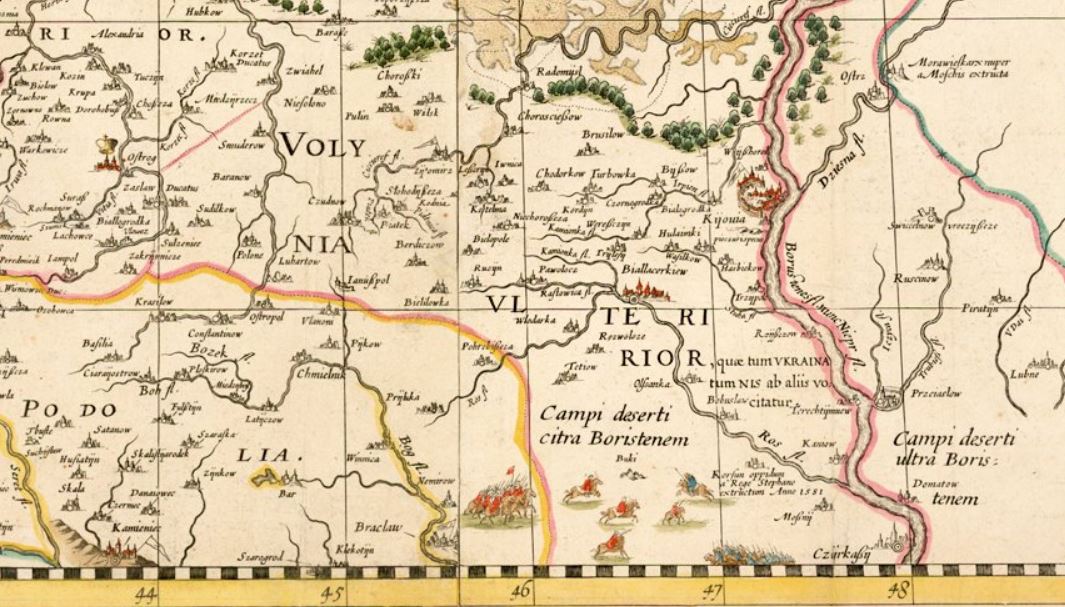
In 1613, the geographical name “Ukraina” appeared for the first time on a printed map, Magni Ducatus Lithuaniae, caeterarumque regionum illi adiacentium exacta descriptio, in English translation The Grand Duchy of Lithuania and the Surrounding Regions with Their Exact Description. This celebrated wall map, commonly identified as the Radziwiłł (or Radvila) map, has a complicated publication history: About 1585 Prince Mikołaj Krzysztof Radziwiłł (1549–1616), also known as Mykalojus Kristupas Radvila, a powerful Lithuanian magnate, commissioned Maciej Strubicz (1530-1604), a notable Polish cartographer, to produce a map of the entire Lithuanian state. Radziwiłł saw a need for an accurate map, which could be used as an efficient planning tool for administrative and military matters. He was also interested in documenting the boundaries and heritage of the old Lithuania, which had been obliterated by the Union of Lublin (1569). The Union’s political settlement had created a single state, the Polish-Lithuanian Commonwealth, both politically and culturally dominated by its Polish core.
Strubicz had served as secretary and geographer to Stephen Báthory, King of Poland and Grand Duke of Lithuania. He had drawn an important military campaign map, which aided Polish and Lithuanian forces in the final stages of the Livonian War (1577-1582), when they faced off against the Muscovite army of Ivan IV “the Terrible.” Báthory managed to force a settlement which excluded the Grand Duchy of Moscow from access to the Baltic Sea. For his services, Strubicz was subsequently ennobled in Warsaw in 1583. This map covered Livonia, as well as parts of the Grand Duchy of Lithuania and the Grand Duchy of Moscow. An improved version was published in Cologne, Germany, in 1589, by Marcin Kromer under the title Magni Ducatus Lithuaniae, Livoniae et Moscoviae descriptio.
Radziwiłł, who was nicknamed “Sierotka” [the orphan] to distinguish him from other members of the princely Radziwiłł family, served as Great Marshal of Lithuania (1579–1586) and Voivode of Trakai-Vilnius (1604–1616). He was a powerful man with connections and considerable means at his disposal. For years, he funded Strubicz’s work and provided support from others who gathered at Nesvizh Castle, the residential estate of the Radziwiłł family, today located in Niasviž, Belarus.
Strubciz’s diligent efforts greatly improved the mapping of this large section of Eastern Europe. He skillfully mined data derived from inventories, surveys, and terrain measurements. Many of these sources were produced during the Volok reform, a 16th-century land reform which led to an increase in crop yields and state revenue. The Volok reform strengthened the manorial system in Lithuania, but the reforms also reduced many Lithuanian peasants to serfdom. Land holdings were measured, divided into voloks, land units of about 52.8 acres, and entered into a cadaster, a detailed, official record of real estate boundaries, ownerships, and land values of a specific area.
Roaming bands of Cossacks and Crimean Tatars are shown at the bottom of the Radziwiłł map of 1613, facing off against each other in the “deserted plains.” Historians like Bohdan S. Kordan, Steven Seegel, and Serhii Plokhy have long emphasized the central role Cossacks played in popularizing the geographical name Ukraine in the 17th century. Europeans identfied Ukraine as the “Land of the Cossacks.”
The map covers a vast region, stretching from Riga to Smolensk in the north, and from Cracow to Kyiv in the south. It locates 1,020 cities, towns, and villages, and very precisely maps water features throughout this vast region. It shows political and administrative boundaries, including a line which divides the ancient Grand Duchy of Lithuania in half and closely mirrors the present-day Ukrainian-Belarusian border. The region west of Kiova (Kyiv) is identified as “Volynia Ulterior, quae tum Ukraina tum Nis ab aliis volcitatur,” in English translation “Outer Volhynia, known either as Ukraine or as the Dnipro River Region.” The geographical name “Ukraina” thus describes part of the lands in the south, centered on the right bank of the Dnipro River. “Ukraina” roughly extends from Kyiv in the north to Cherkasy in the south. Strubicz identifies an area west of Cherkasy as wild steppe, “Campi deserti citra Boristenem,” in English translation “Deserted plains on this side of the river Borysthenes.”
Also included are historical notes and explanatory text, compiled by Tomasz Makowski (1575–circa 1630), a printer, artist, and engraver, who worked at the court of Prince Radziwiłł at Nesvizh Castle and also played an important role in preparing the map for publication. The English Jesuit mathematician Jacob Bosgrave was also a contributor. The Voivode of Kyiv, the Ruthenian Orthodox magnate Konstanty Wasyl Ostrogski (also known as Prince Kostiantyn Vasyl Ostrozkyi) and Józef Wereszczyński, Catholic bishop of Kyiv, provided cartographic data about the Ukrainian lands.
Prince Radziwiłł now contacted the Dutch map publisher Willem Janszoon (Blaeu) (1571–1638), famous for the manufacture of globes and wall maps, for publication of his map. Hessel Gerritsz (1581–1632), a Dutch cartographer of Blaeu’s publishing house in Amsterdam, engraved the plates, and, in 1613, Blaeu published the wall map in four sheets, under the imprint “Guilhelmus Janssonius.” He also published a related strip map of Ukraine’s Dnipro River region from Cherkasy to its Black Sea estuary on two additional sheets. Following the course of the river, the map describes the Dnipro rapids, local salt mines, towns and villages, and fortifications, and also includes notes about Cossack traditions. Blaeu eventually emerged as a noted publisher of atlases, and featured the Radziwiłł map in his Appendix Theatri A. Ortelii et Atlantis G. Mercatoris, continens tabulas geographicas diversarum Orbis regionum, nunc primum editas cum descriptionibus in 1631. The map subsequently appeared in other atlas editions through 1670.
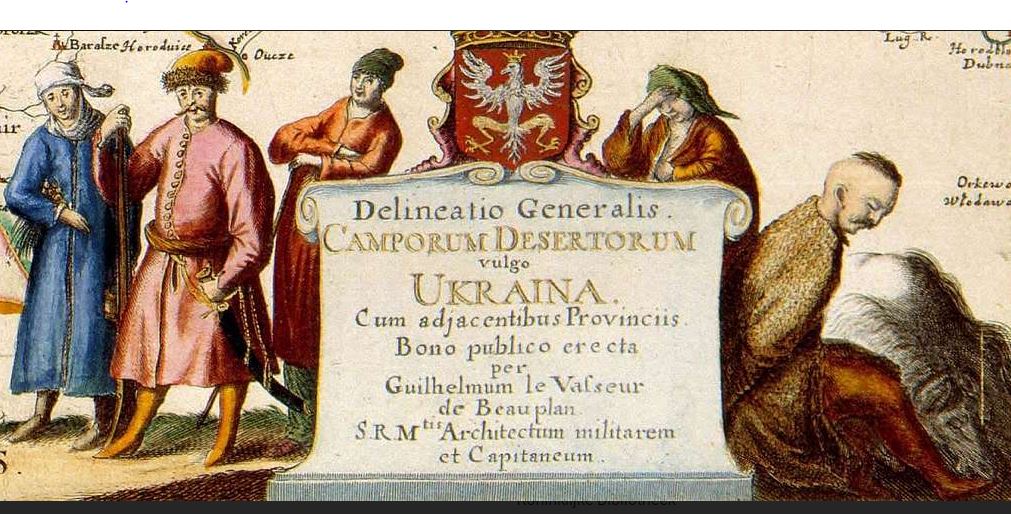
One cartographer who recognized the significance of the Radziwiłł map was Guillaume le Vasseur de Beauplan (1600-1673), a French military engineer, who served for two decades in the army of the Polish-Lithuanian Commonwealth, starting in 1630. Beauplan was initially charged with identifying suitable sites for the construction of fortifications in Ukraine. Later he planned settlements, and built or enlarged fortresses. Beginning in 1648, Beauplan turned his attention to the map trade. He published a general map of Ukraine, in 1650 followed by a special map of the same area on eight sheets, engraved in the workshop of the Dutch cartographer and map publisher Willem Hondius (de Hondt) in Gdansk.
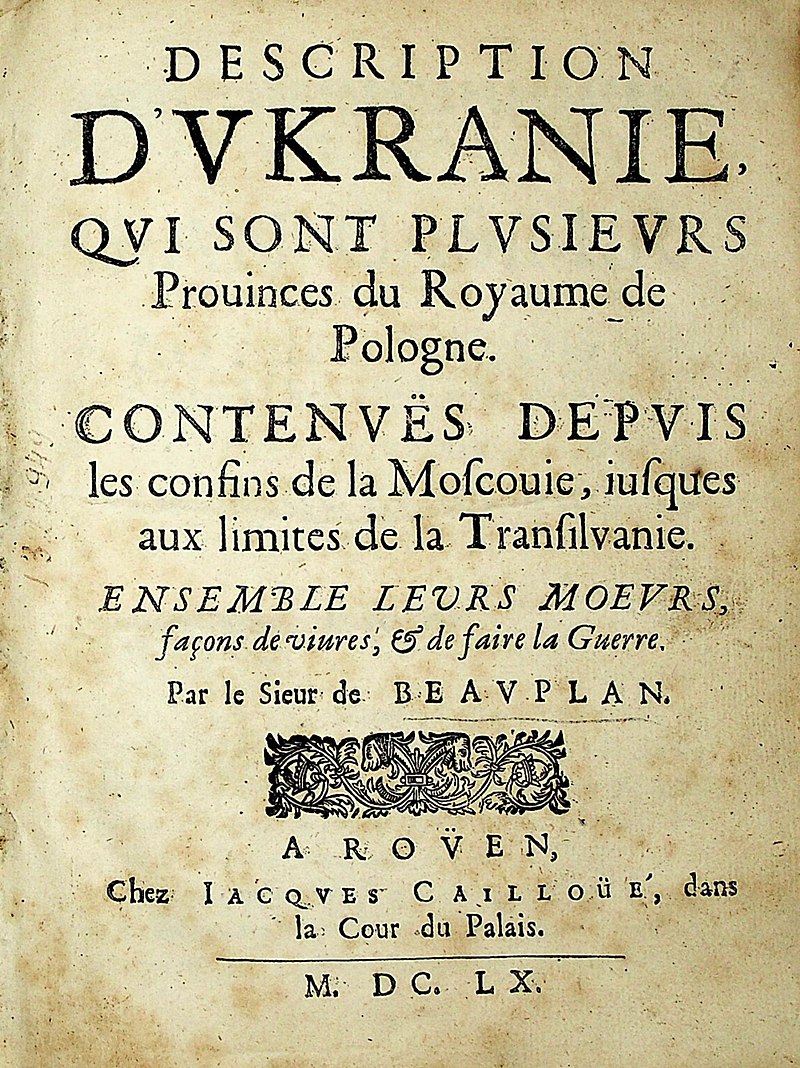
In 1660, the Carte d’Ukranie, contenant plusieurs provinces comprises entre les confins de Moscovie et les limittes de Transilvanie, a Beauplan map published in Rouen, France, by Jacques Cailloue, boldly demarcated the boundaries of Ukraine. That same year Cailloue also published a second, enlarged edition of Beauplan’s popular Description d’Ukranie (Rouen, 1660). A third edition followed in 1661. In his writings and on his maps Beauplan carefully noted the geographical naming practices of the inhabitants of the Ukrainian lands. His decision to identify the vast region located between Transylvania and Muscovy as Ukraine reflects 17th century Cossack usage.
Title page of the 1660 edition of Beauplan’s Description d’Ukraniewhich provides information on many topics: Cossacks, Crimean Tatars, Polish nobles, serfdom, the country’s flora and fauna, its topography, religious and ethnic customs, governmental institutions, and many of Ukraine’s cities and towns. Image source: Wikipedia.
Beauplan’s maps were subsequently incorporated in Blaeu’s Atlas major (1659-72) and appeared in the 1680s in influential atlases published by Johannes Janssonius and Moses Pitt. Other cartographers now treated Beauplan’s work in Eastern Europe as authoritative, and continued to see Ukraine as “Land of the Cossacks.” For the next century and a half cartographers faithfully reproduced Beauplan’s maps in atlas compilations. Beauplan thus played a crucial role in helping to codify the usage of the geographical name “Ukraine,” for a large defined territory.
Suggested readings:
Buczek, Karol. The History of Polish Cartography from the 15th to the 18th Century. 2nd edition. Amsterdam: Meridian Publishing Company, 1982.
Kordan, Bohdan S. Land of the Cossacks: Antiquarian Maps of Ukraine. Winnipeg: Ukrainian Cultural and Educational Centre, 1987.
Kordan, Bohdan S. The Mapping of Ukraine: European Cartography and Maps of Early Modern Ukraine, 1550-1779. New York: The Ukrainian Museum, 2008.
Magocsi, Paul R. Historical Atlas of Central Europe. 3rd edition. Toronto: University of Toronto Press, 2018.
Plokhy, Serhii. The Gates of Europe: A History of Ukraine. Revised edition. New York: Basic Books, 2021.
Plokhy, Serhii. “Placing Ukraine on the Map of Europe.” In The Frontline: Essays on Ukraine’s Past and Present, 15-36. Cambridge, MA: Harvard Ukrainian Research Institute, 2021.
Seegel, Steven. Ukraine under Western Eyes: The Bohdan and Neonila Krawciw Ucrainica Map Collection. Cambridge, MA: Harvard Ukrainian Research Institute, 2011.
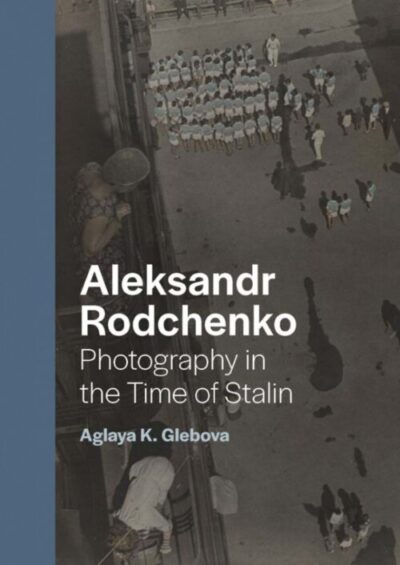
“Through the lens of Aleksandr Rodchenko’s photography, a new and provocative understanding emerges of the troubled relationship between technology, modernism, and state power in Stalin’s Soviet Union
Tracing the shifting meanings of photography in the early Soviet Union, Aglaya K. Glebova reconsiders the relationship between art and politics during what is usually considered the end of the critical avant-garde. Aleksandr Rodchenko (1891–1956), a versatile Russian artist and one of Constructivism’s founders, embraced photography as a medium of revolutionary modernity. Yet his photographic work between the late 1920s and the end of the 1930s exhibits an expansive search for a different pictorial language.
In the context of the extreme transformations carried out under the first Five-Year Plans, Rodchenko’s photography questioned his own modernist commitments. At the heart of this book is Rodchenko’s infamous 1933 photo-essay on the White Sea–Baltic Canal, site of one of the first gulags. Glebova’s careful reading of Rodchenko’s photography reveals a surprisingly heterodox practice and brings to light experiments in adjacent media, including the collaborative design work he undertook with Varvara Stepanova, Rodchenko’s partner in art and life.”
Introduction to Zotero will be offered on Thursday, March 9 at 10:10, 12:10, and 4:10. This is a 50-minute workshop offered via Zoom. Intended for new or potential users of Zotero, it explains the features of the citation manager and covers how to import different types of items into your Zotero library, methods for exporting bibliographies into Word or Google Docs, and sharing Zotero resources among groups.
Advanced Zotero will be offered via Zoom Monday, March 13 & Tuesday, March 14 from 12:10-1:30.
This session covers:
The many different techniques for adding items to your Zotero library
Linked files vs. stored files
Zotero storage vs using Zotfile to store attachments in another cloud app
Creating and managing groups
Zotero 6.0 PDF viewer and annotation extractor
Zotero 6.0 Add note feature
Indexing and searching your Zotero library and attachments
Registration is required so that you can receive the Zoom link 24 hours in advance of the workshop. Register at https://tinyurl.com/UCBlibworkshops.
The Library attempts to offer programs in accessible, barrier-free settings. If you believe you may require disability-related accommodations, please contact me (Jennifer Dorner) at dorner@berkeley.edu.
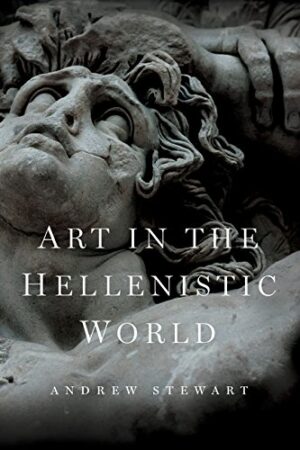
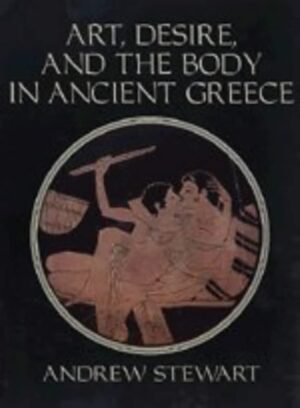
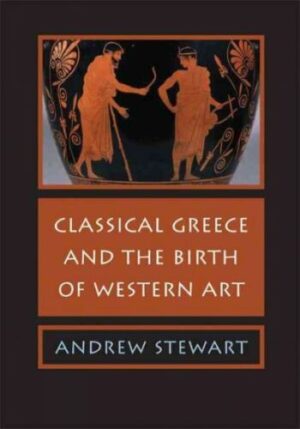
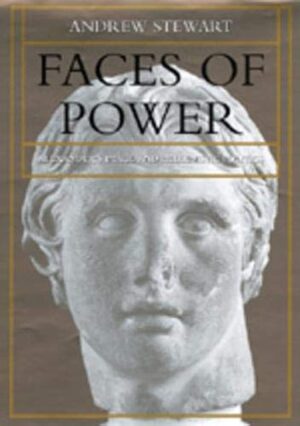
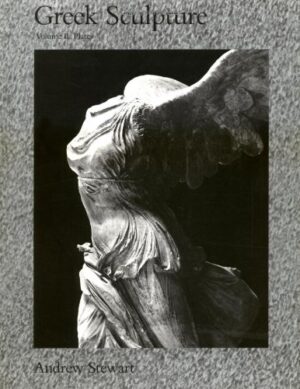
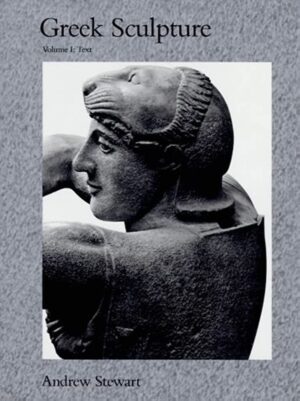
UC Berkeley mourns the passing of Professor Andrew Stewart. You can read the Art Department’s full obituary here.
Professor Andy Stewart was hired as an Assistant Professor in 1979, rising to Full Professor in 1986, to a joint appointment with the Classics Department in 1997, and then to the distinguished Nicholas Petris Chair of Greek Studies in 2007, which he held until his retirement in 2019. He was recently awarded the 2023 Gold Medal Award for Distinguished Archaeological Achievement – the highest award the Archaeological Institute of America bestows.
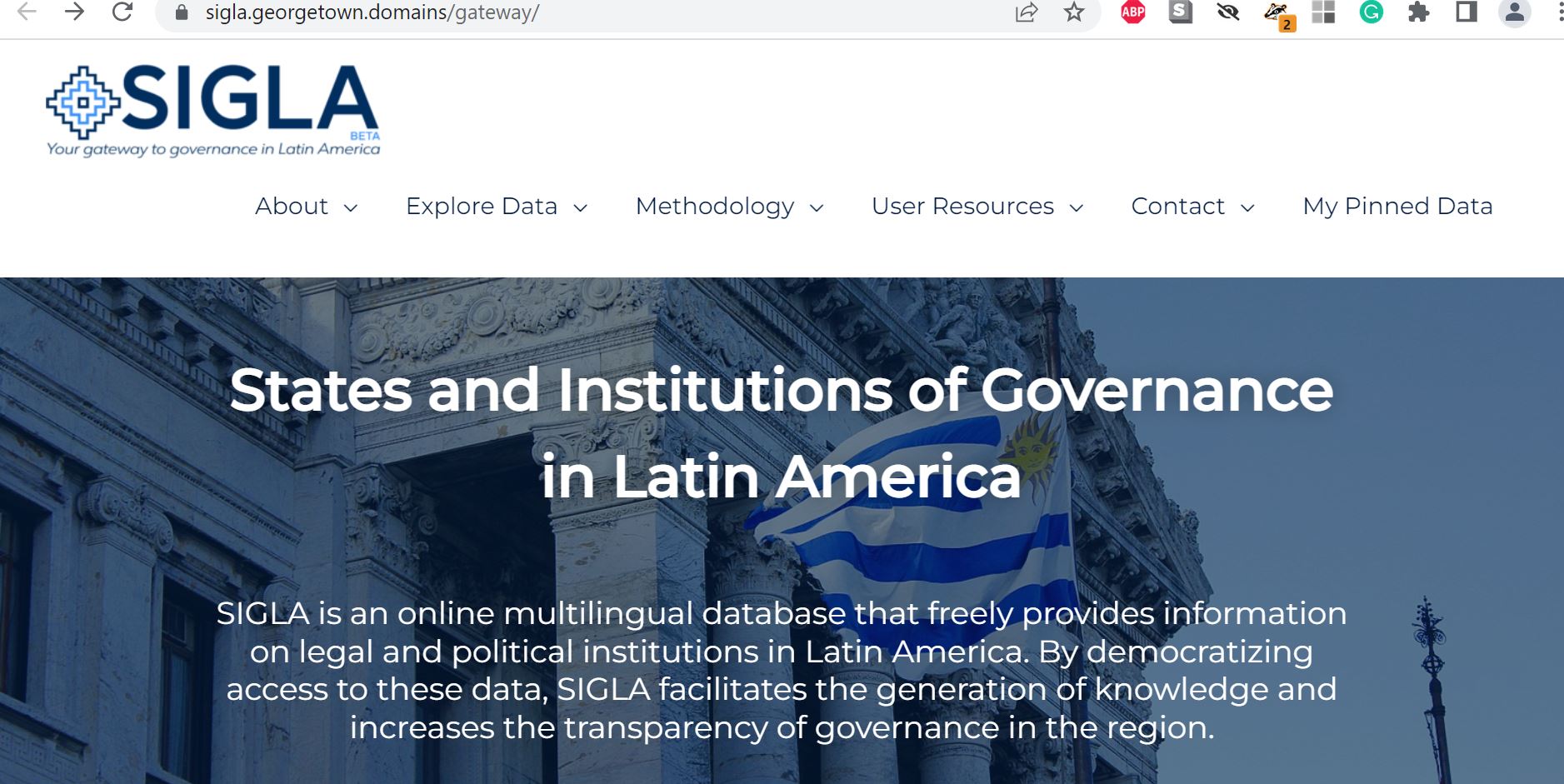
SIGLA (States and Institutions of Governance in Latin America, www.sigladata.org) is a multilingual digital database that freely provides information on legal and political institutions in Latin America. The beta version of SIGLA offers data on national-level institutions in Brazil, Colombia, and Mexico, as well as on international institutions. Ultimately, SIGLA will provide cross-nationally comparable, current and historical, qualitative and quantitative data on over 50 legal and political institutions in 20 Latin American countries in English, Spanish, and Portuguese.
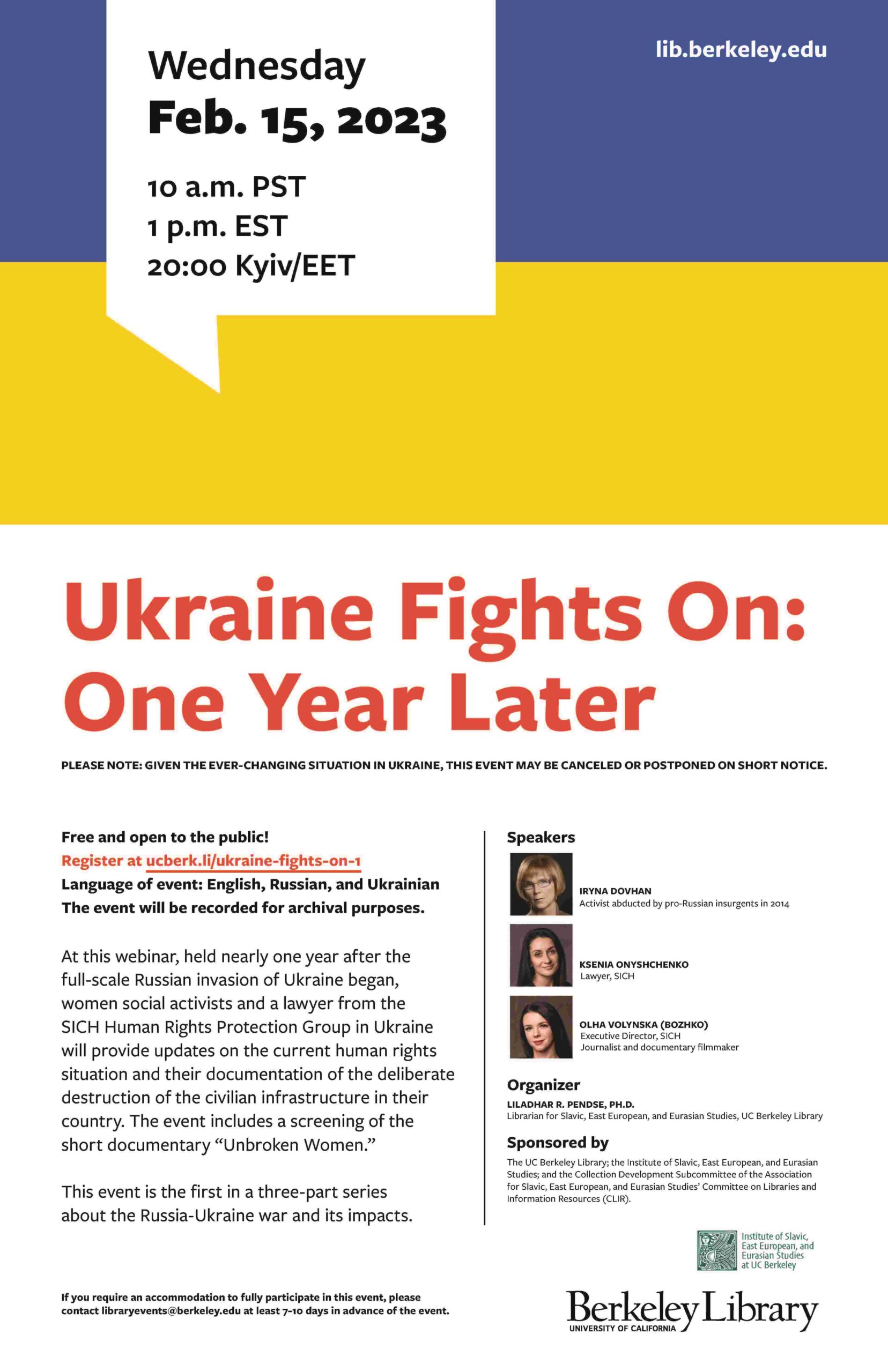
On behalf of the collection development subcommittee of the CLIR-ASEEES and UC Berkeley Library, I would like to invite you to attend the first virtual event in the three-part series of events on Ukraine that we have organized for this year. The first webinar will take place on February 15th at 10 am PST/ 1 pm EST for 60 minutes.
Note: Given the ever-changing situation in Ukraine, this event may be canceled or postponed on short notice.
At this webinar, held nearly one year after the full-scale Russian invasion of Ukraine began, women social activists and a lawyer from the SICH Human Rights Protection Group in Ukraine will provide updates on the current human rights situation and their documentation of the deliberate destruction of the civilian infrastructure in their country. The event includes a screening of the short documentary “Unbroken Women.” This event is the first in a three-part series about the Russia-Ukraine war and its impacts.
The event will be recorded for archival purposes.
Sponsored by the UC Berkeley Library; the Institute of Slavic, East European, and Eurasian Studies; and the Collection Development Subcommittee of the Association for Slavic, East European, and Eurasian Studies’ Committee on Libraries and Information Resources (CLIR).
The event is free and open to all with prior registration. Please don’t hesitate to contact me if you have any questions.
The Oral History Center’s Advocacy and Philanthropy project tells the history of our world from the perspective of those who went above and beyond to help shape it. From local Bay Area volunteers to international activists, these interviews serve as a guide through history, highlighting some of the prominent social concerns and reform movements of the last century.
For a look into the Progressive Era of the early twentieth century, you can read interviews from UC Berkeley alumni Adeline Toye Cox and Emma McCaughlin, who focused their volunteer efforts on fledgling organizations such as Planned Parenthood and the League of Women Voters. Or, if you’re interested in the 1940s and 1950s, several of the interviewees in this project discuss their involvement with postwar activism, including Edith Simon Coliver, who served as an interpreter during the Nuremberg trials, and Florette Pomeroy, who worked with the United Nations to repatriate lost children.
The project only continues to grow from there, with countless interviews on the social concerns of the latter half of the twentieth century. Carol Rhodes Sibly, a Berkeley community leader, touches on the movement to integrate schools in the East Bay, while Sally Lilienthal recounts her long-term commitment to preventing the proliferation of nuclear weapons through her organization, the Ploughshares Fund.
If that’s not enough, take a look at some of the highlights from this rich collection of interviews.
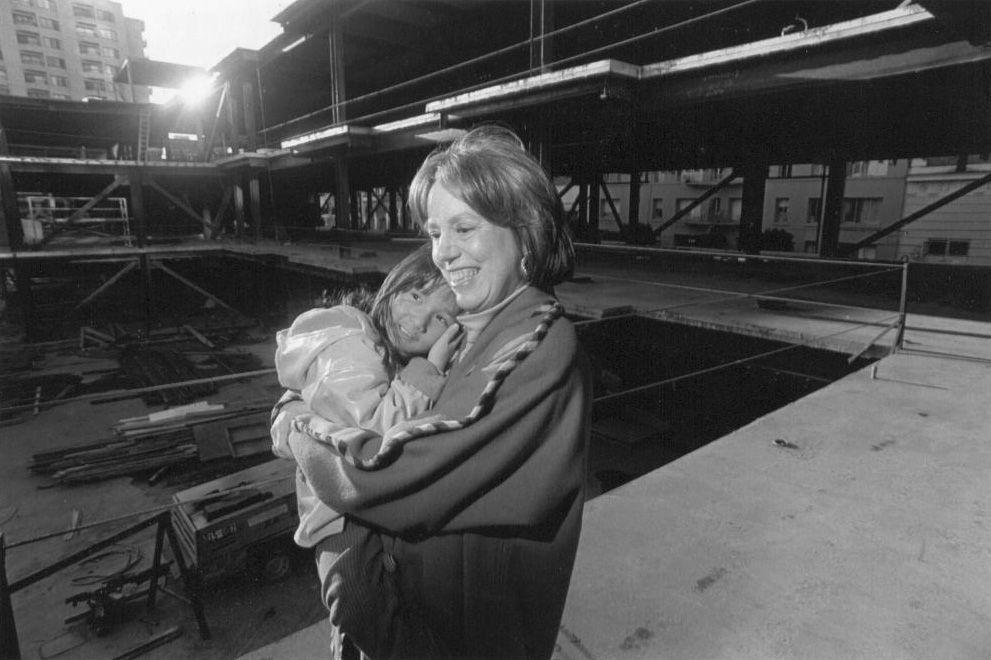
Midge Wilson with daughter Ashley. Wilson founded the Bay Area Women’s and Children’s Center in the Tenderloin district of San Francisco.
Newel Perry: The California Council for the Blind
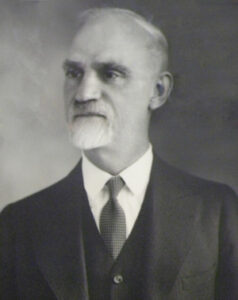
Newel Perry
Newel Perry was a leading figure in disability activism in the early twentieth century, establishing the influential California Council of the Blind in 1934. Blind himself from the age of eight, Dr. Perry advocated for the self-sufficiency of individuals who were blind and visually impaired, and sought to increase their economic opportunities, particularly for students who wished to attend university. Throughout the mid-twentieth century, the Council was credited for a wealth of progressive legislation for Californians with disabilities, in addition to inspiring the larger National Federation of the Blind, established in 1940.
Elinor Heller: A Volunteer in Politics, in Higher Education, and on Governing Boards
Hailing from San Francisco, Elinor Heller was a former committeewoman for California in the Democratic National Committee (1948–1952) and chairwoman of the University of California Board of Regents. In her work with the Committee, she witnessed the appointment of Harry Truman as vice president and his eventual rise to the presidency, while her time with the Regents overlapped with the influential free speech movement led by Berkeley students. In addition to her volunteer work with the League of Women Voters and other organizations, this interview covers Heller’s thoughts on major political campaigns of the mid-century and university-student relationships.
Isabel Wong-Vargas: Commerce, Industry, and Labor, Family & Personal Philanthropy in Peru, China and the United States
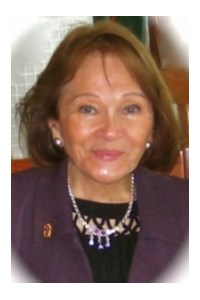
Isabel Wong Vargas
A jack of all trades, Isabel Wong-Vargas was an entrepreneur, restaurant developer, and philanthropist who founded the highly successful restaurant, La Caleta, in Peru. Wong-Vargas spent much of her life in China and Peru before settling in the Bay Area in 1966, where she was named San Francisco’s honorary consul for Peru. In this expansive interview, Wong-Vargas discusses her memories of World War II and the Japanese occupation of Hong Kong, gender roles and divorce in pre-revolution China, Peruvian business practices, and her later years in the Bay Area.
Midge Wilson: An Oral History
Midge Wilson was an activist and community leader who founded the Bay Area Women’s and Children’s Center in the Tenderloin district of San Francisco in the 1980s. A longtime resident of the Tenderloin, Wilson’s dedication to the community was extensive: She helped to establish clothing drives, youth programs, and recreation centers, as well as the neighborhood’s first public school, the Tenderloin Community School. In this interview, Wilson discusses her extensive work with the Bay Area Women’s and Children’s Center, fundraising strategies, youth programs and education, and changes to the Tenderloin community in the 1980s and beyond.
Ernesto Galarza: The Burning Light
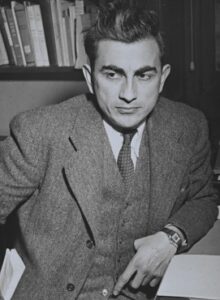
Ernesto Galarza
Another household name, Ernesto Galarza was an influential labor organizer whose activism in the late 1940s laid the groundwork for the Chicano movement of the 1960s. Born in Jalcocotán, Mexico and immigrating to the United States at a young age, he began organizing strikes against the DiGiorgio Corporation in 1948 and worked closely with the American Federation of Labor’s National Agricultural Workers Union. In this collection of speeches and discussions, Galarza discusses data-driven methods of community activism, as well as his years as a professor and the challenges of bilingual education.
Find these and all the Oral History Center’s interviews from the search feature on our home page. Search by name, keyword, and several other criteria. Find projects, including the Advocacy and Philanthropy —Individual Interviews project, through the Projects tab on our home page.
All in all, the narrators in our Advocacy and Philanthropy project had a profound impact on the communities around them, whether big or small, local or global. So if you’re looking for a bit of advice or mentorship from celebrated leaders, look no further: Get reading, and get inspired.
Lauren Sheehan-Clark, a recent graduate of UC Berkeley, studied history and English, and was an editorial assistant at the Oral History Center.
Further Reading and Resources from The Bancroft Library
Blind Educator: The Story of Newel Lewis Perry, by Thomas Buckingham. BANC; xF860.P42.B8
Farm Workers and Agri-business in California, by Ernesto Galarza. Bancroft ; F862.2G14
Interviews on the University of California loyalty oath controversy. Bancroft ; Phonotape 3799 C:1-9. Interviews conducted for David P. Gardner’s thesis, The University of California loyalty oath controversy.
Newel Perry papers. BANC MSS 67/33 c. Presidential campaign, 1940. Democratic Party. Bancroft Folio ; f JK2256 1940d. Party platform, printed copies of speeches, pamphlets, broadsides, clippings and dodgers used in the 1940 presidential campaign of the Democratic Party.
About the Oral History Center
The Oral History Center of The Bancroft Library preserves voices of people from all walks of life, with varying political perspectives, national origins, and ethnic backgrounds. We are committed to open access and our oral histories and interpretive materials are available online at no cost to scholars and the public. You can find our oral histories from the search feature on our home page. Search by name, keyword, and several other criteria. Sign up for our monthly newsletter featuring think pieces, new releases, podcasts, Q&As, and everything oral history. Access the most recent articles from our home page or go straight to our blog home.

![Francisco de Goya and the Art of Critique [cover]](https://update.lib.berkeley.edu/wp-content/uploads/2023/01/art-of-critique.png)

 Introduction to Zotero will be offered on Thursday, March 9 at 10:10, 12:10, and 4:10. This is a 50-minute workshop offered via Zoom. Intended for new or potential users of Zotero, it explains the features of the citation manager and covers how to import different types of items into your Zotero library, methods for exporting bibliographies into Word or Google Docs, and sharing Zotero resources among groups.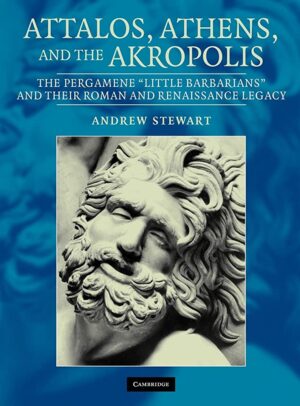


_Together_with_its_Neighboring_Provinces_WDL79.png)
