Zotero workshops: Basic and Advanced

Introduction to Zotero will be offered on Thursday, March 9 at 10:10, 12:10, and 4:10. This is a 50-minute workshop offered via Zoom.  Intended for new or potential users of Zotero, it explains the features of the citation manager and covers how to import different types of items into your Zotero library, methods for exporting bibliographies into Word or Google Docs, and sharing Zotero resources among groups.

Advanced Zotero will be offered via Zoom Monday, March 13 & Tuesday, March 14 from 12:10-1:30.

This session covers:

  • The many different techniques for adding items to your Zotero library
  • Linked files vs. stored files
  • Zotero storage vs using Zotfile to store attachments in another cloud app
  • Creating and managing groups
  • Zotero 6.0 PDF viewer and annotation extractor
  • Zotero 6.0 Add note feature
  • Indexing and searching your Zotero library and attachments

Registration is required so that you can receive the Zoom link 24 hours in advance of the workshop. Register at https://tinyurl.com/UCBlibworkshops.

The Library attempts to offer programs in accessible, barrier-free settings. If you believe you may require disability-related accommodations, please contact me (Jennifer Dorner) at dorner@berkeley.edu.


In Memoriam of Professor Andy Stewart

UC Berkeley mourns the passing of Professor Andrew Stewart.  You can read the Art Department’s full obituary here.

Professor Andy Stewart was hired as an Assistant Professor in 1979, rising to Full Professor in 1986, to a joint appointment with the Classics Department in 1997, and then to the distinguished Nicholas Petris Chair of Greek Studies in 2007, which he held until his retirement in 2019.  He was recently awarded the 2023 Gold Medal Award for Distinguished Archaeological Achievement – the highest award the Archaeological Institute of America bestows.


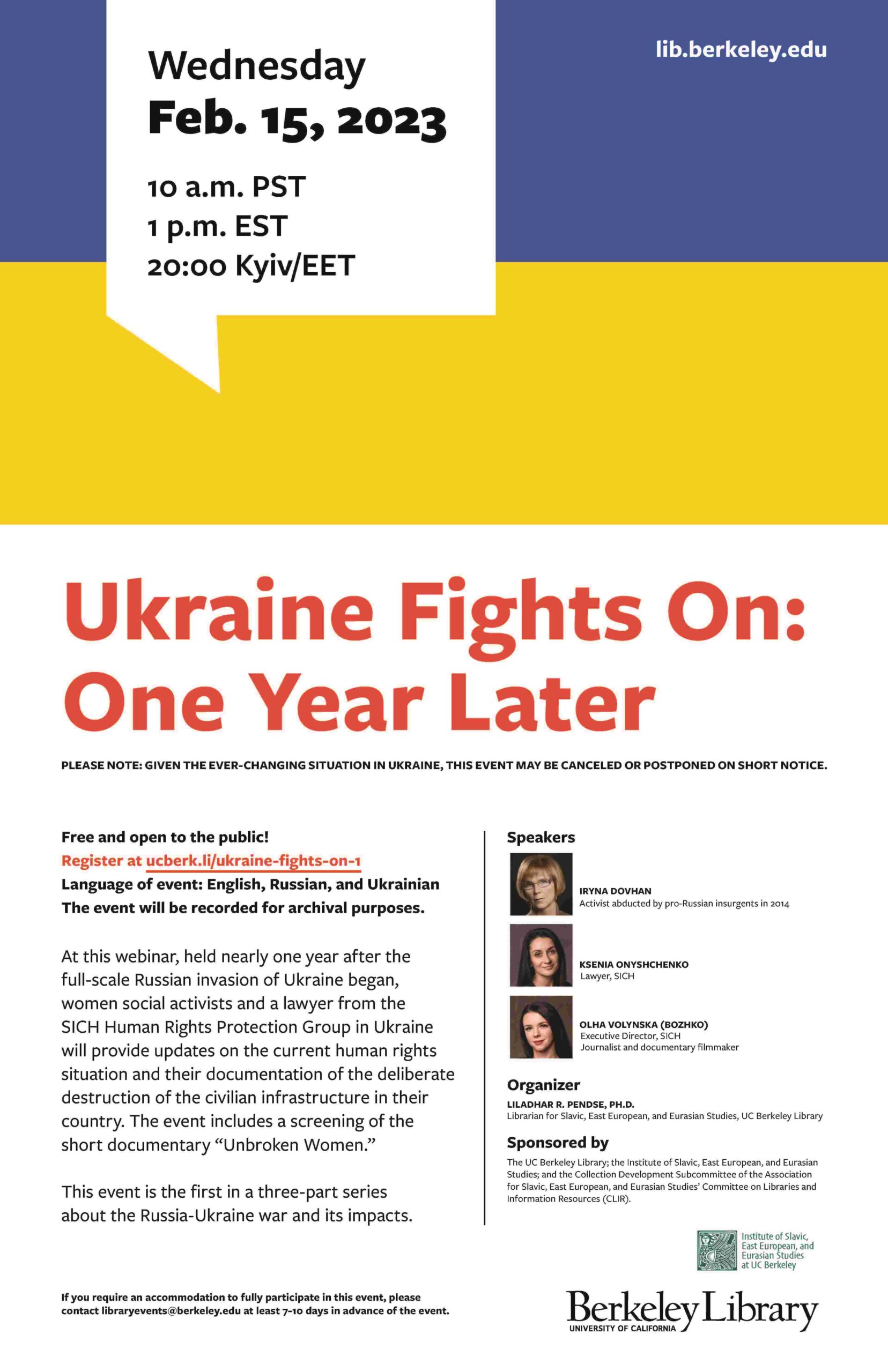
Webinar on February 15: Ukraine Fights On: One Year Later! Episode no. 1

On behalf of the collection development subcommittee of the CLIR-ASEEES and UC Berkeley Library, I would like to invite you to attend the first virtual event in the three-part series of events on Ukraine that we have organized for this year.  The first webinar will take place on February 15th at 10 am PST/ 1 pm EST for 60 minutes.
Here is the event description:

Note: Given the ever-changing situation in Ukraine, this event may be canceled or postponed on short notice.
At this webinar, held nearly one year after the full-scale Russian invasion of Ukraine began, women social activists and a lawyer from the SICH Human Rights Protection Group in Ukraine will provide updates on the current human rights situation and their documentation of the deliberate destruction of the civilian infrastructure in their country. The event includes a screening of the short documentary “Unbroken Women.” This event is the first in a three-part series about the Russia-Ukraine war and its impacts.
The event will be recorded for archival purposes.

Sponsored by the UC Berkeley Library; the Institute of Slavic, East European, and Eurasian Studies; and the Collection Development Subcommittee of the Association for Slavic, East European, and Eurasian Studies’ Committee on Libraries and Information Resources (CLIR).
The event is free and open to all with prior registration. Please don’t hesitate to contact me if you have any questions.

Celebrating Black History Month- New E-Resources in Art History

Check out these materials, all available on-line.  Click on the titles to access them through UC Library Search.

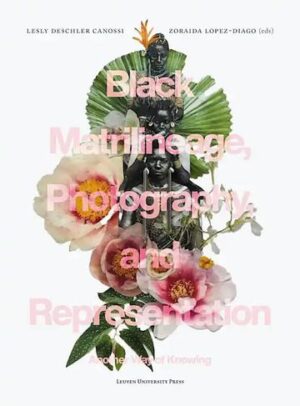
Black Matrilineage, Photography, and Representation: Another Way of Knowing

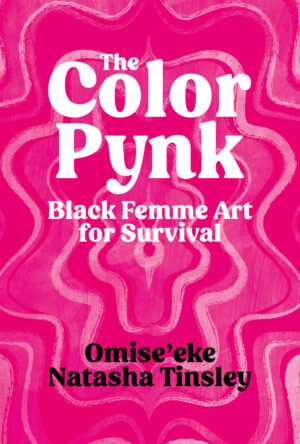
The Color Pynk: Black Femme Art for Survival

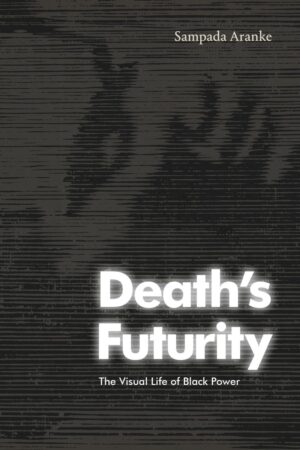
Death’s futurity : the visual life of Black power

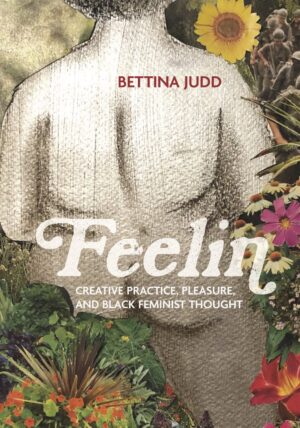
Feelin : creative practice, pleasure, and Black feminist thought

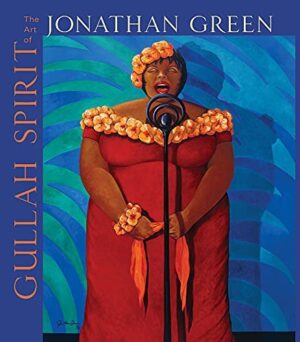
Gullah spirit the art of Jonathan Green

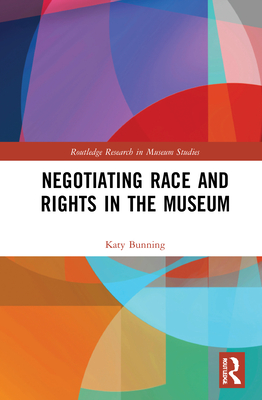
Negotiating Race and Rights in the Museum


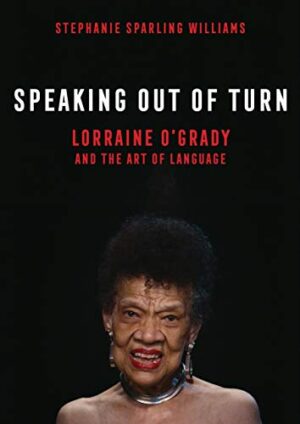
Speaking Out of Turn: Lorraine O’Grady and the Art of Language

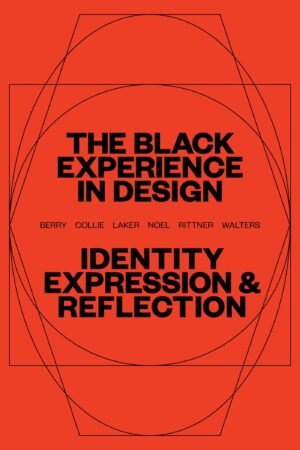
The Black experience in design : identity, expression & reflection

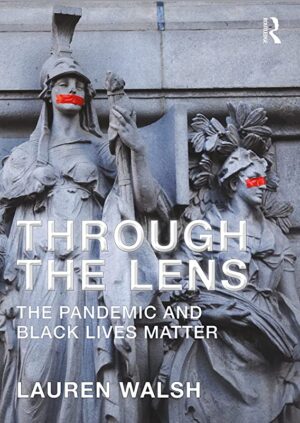
Through the Lens: The Pandemic and Black Lives Matter


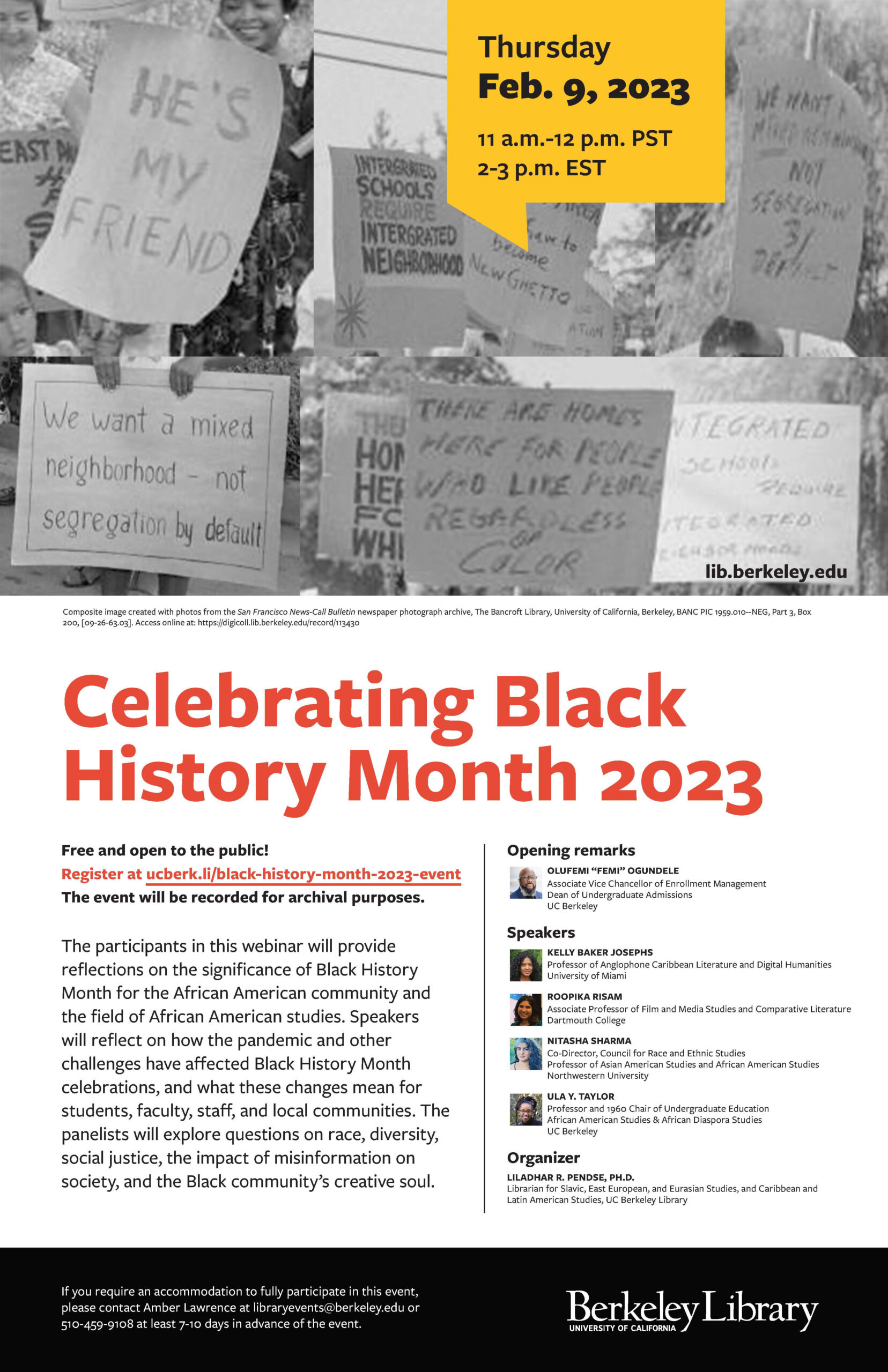
Black History Month Celebration at UC Berkeley Library on Thursday, February 9, 2022 (11 am to noon PST)

Date: February 9th, 2022 

Day: Thursday

Time: 11 am to 12 noon PST

Please register here: http://ucberk.li/black-history-month-2023-event

Opening Remarks:

Olufemi “Femi” Ogundele

Associate Vice Chancellor of Enrollment Management

Dean of Undergraduate Admissions

Confirmed Speakers:

Professor Ula Y. Taylor 

Professor & 1960 Chair of Undergraduate Education

African American Studies and African Diaspora Studies, UC Berkeley

Professor Nitasha Sharma

Director, Asian American Studies Program; Co-Director, Council for Race and Ethnic Studies

Professor of Asian American Studies and African American Studies at Northwestern University

Associate Editor, American Quarterly

Professor Roopika Risam

Associate Professor of Film and Media Studies and Comparative Literature at Dartmouth College, where she is part of the Digital Humanities and Social Engagement Cluster.

Professor Kelly Baker Josephs

Anglophone Caribbean Literature and Digital Humanities, Department of English, University of Miami

Both Professors Risam and Josephs will speak about the Digital Black Atlantic project.


Exhibit: Letters | الحروف How Artists Reimagined Language in the Age of Decolonization
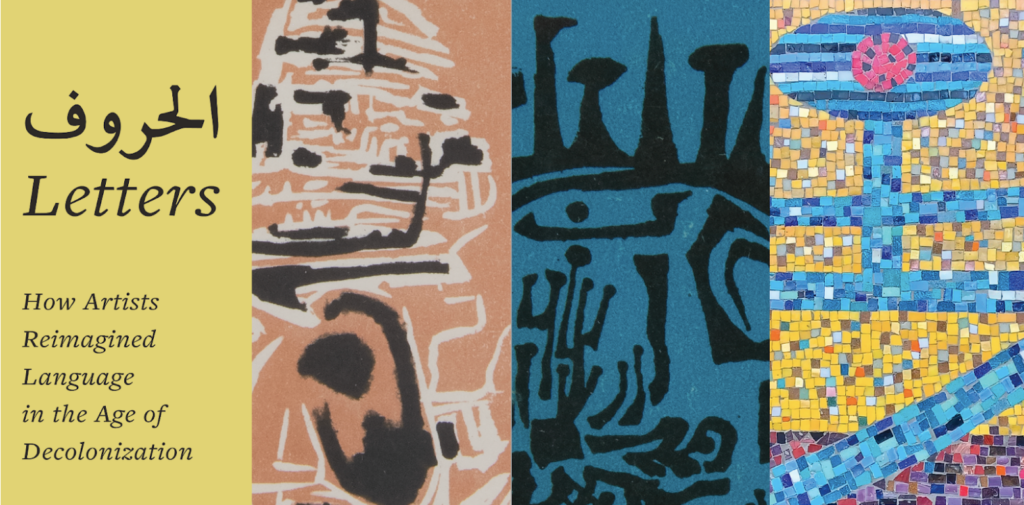
Letters | الحروف How Artists Reimagined Language in the Age of Decolonization

Letters exhibit

Left to right: art by Mohammed Khadda, Ibrahim El-Salahi, and Bedri Rahmi Eyüboğlu (details)

Letters | الحروف How Artists Reimagined Language in the Age of Decolonization is on exhibit in Doe Library’s Bernice Layne Brown Gallery from March 13 until Aug. 31, 2023. How have modern artists in North Africa, the Middle East, and South Asia made use of their inheritance of a visual cache of Arabic signs and letter-forms, and with what meanings? This exhibition, curated by students in the seminar History of Art 192Cu, “Exhibiting Calligraphic Modernism,” in collaboration with the Library, explores work by dozens of artists in multiple media, from poster design to painting, mosaic, poetry, and animation. A shared backdrop to the artwork on display are the decolonization processes and liberation struggles taking place across Asia, Africa, and Latin America in the 1950s, 1960s, and 1970s, which sparked desires to create cultural futures in resistance to dominant imperial values and official language policies.

Exhibit Curators: Drew Atkins, Riana Azevedo, Lynn Cunningham, Sharan Dulai, Eva Elfishawy, Mohamed Hamed, Teddi Haynes, Murtaza Hiraj, Viv Kammerer, Shanti Knutzen, Marissa Lee, Anneka Lenssen, Val Machado, Jasmine Nadal-Chung, Reyansh Sathishkumar, A. Wara, Alice Xie, Jinyu Xu, Suri Zheng, and Hayley Zupancic

Exhibit dates: March 13 to Aug. 31, 2023
Location: Bernice Layne Brown Gallery, Doe Library

Opening reception

Wednesday, March 15, 2023, 5-6:30 p.m.
Morrison Library

The reception will feature brief remarks by members of the curatorial team. Tours of the exhibition will be led by student-curators beginning at 5:45 p.m. Food and drinks will be served.

A pre-reception event will take place from 2:30-4:30 p.m. in 308A Doe Library, and will include a presentation and Arabic calligraphy workshop by the Bay Area-based calligrapher Zubair Simab. Participants will have an opportunity to try writing Arabic letters with a prepared pen and ink. There are 40 slots available for the workshop. Please register here: http://ucblib.link/calligraphyRSVP

Both of these events are open to the public.

Details:
Wednesday, March 15, 2023
Pre-reception calligraphy workshop
2:30-4:30 p.m.
308A Doe Library
Register: http://ucblib.link/calligraphyRSVP

Exhibit reception and tours
5-6:30 p.m.
Morrison Library (101 Doe Library)

If you require an accommodation to fully participate in this event, please contact Amber Lawrence at libraryevents@berkeley.edu or 510-459-9108 at least 7-10 days in advance of the program.

Sponsors/contributors: Center for Middle East Studies, Department of History of Art, and UC Berkeley Library


Text Analysis with Archival Materials: Gale Digital Scholar Lab

Text Analysis with Archival Materials: Gale Digital Scholar Lab

Text Analysis with Archival Materials: Gale Digital Scholar Lab
Thursday, February 16th, 2:00-3:00pm
Online: Register to receive the Zoom link

The Gale Digital Scholar Lab is a platform that allows researchers to do text data mining on archival collections available through Gale (see list below). During this session we’ll cover the workflow for using the Lab, focusing on the Build, Clean, and Analyze steps. We’ll review curating and creating a content set, developing clean configurations, applying text data mining analysis tools, and exporting your Lab results. We’ll also review new Lab updates and explore the Lab Learning Center.

Primary source collections available in Gale include: American Fiction, 17th and 18th Century Burney Collection, American Civil Liberties Union Papers, 1912-1990, American Fiction, Archives Unbound, Archives of Sexuality & Gender, British Library Newspapers, The Economist Historical Archive, Eighteenth Century Collections Online, Indigenous Peoples: North America, The Making of Modern Law, The Making of the Modern World, Nineteenth Century Collections Online, Nineteenth Century U.S. Newspapers, Sabin Americana, 1500-1926, The Times Digital Archive, The Times Literary Supplement Historical Archive, U.S. Declassified Documents Online

This event is part of the UC-wide “Love Data Week” series of talks, presentations, and workshops to be held February 13-17, 2023. All events are free to attend and open to any member of the UC community. To see a full list of UC Love Data Week 2023 events, please visit: https://bit.ly/UC-LDW

Related LibGuide: Text Mining & Computational Text Analysis by Stacy Reardon


Bancroft Roundtable: California and the Making of ‘Latin America’: A View From the 19th-Century Hemispheric Archive

California and the Making of ‘Latin America’: A View From the 19th-Century Hemispheric Archive

February 16, 2023 | Noon | Register via Zoom

Presented by Alexander Chaparro-Silva, Ph.D. candidate in history, The University of Texas at Austin, and 2022 recipient of The Bancroft Library Summer Study Award

During the 19th century, many intellectuals and diplomats from Latin America came to California, published continental newspapers and books, sponsored intellectual circles and political clubs, and established transnational correspondence networks to engage with the political problems common to the American hemisphere. These transnational crossings contributed to debates over slavery, citizenship, and immigration in Latin America and reinforced an Anglo/Latin distinction within the hemisphere as the boundary between two competing civilizations. Drawing upon 19th-century printed materials, travelogues, diaries, official documents, and diplomatic correspondence — many from The Bancroft Library — Alexander Chaparro-Silva will explore the role of these hemispheric mobilities in the making of the geopolitical category of “Latin America,” and reflect on the possibilities and challenges of assembling a hemispheric archive dispersed across a vast geography.

We look forward to seeing you at these talks.

Best wishes,
Christine & José Adrián
Christine Hult-Lewis, PhD
José Adrián Barragán-Álvarez, PhD
Bancroft Library Roundtable Coordinators

New Book by Darcy Grimaldo Grigsby

Creole: Portraits of France’s Foreign Relations During the Long Nineteenth Century [book cover]

This book addresses the unique and profound indeterminacy of “Creole,” a label applied to white, black, and mixed-race persons born in French colonies during the nineteenth century.

“Creole” implies that the geography of one’s birth determines identity in ways that supersede race, language, nation, and social status. Paradoxically, the very capaciousness of the term engendered a perpetual search for visual signs of racial difference as well as a pretense to blindness about the intermingling of races in Creole society. Darcy Grimaldo Grigsby reconstructs the search for visual signs of racial difference among people whose genealogies were often repressed. She explores French representations of Creole subjects and representations by Creole artists in France, the Caribbean, and the Americas. To do justice to the complexity of Creole identity, Grigsby interrogates the myriad ways in which people defined themselves in relation to others. With close attention to the differences between Afro-Creole and Euro-Creole cultures and persons, Grigsby examines figures such as Théodore Chassériau, Guillaume Guillon-Lethière, Alexandre Dumas père, Édouard Manet, Edgar Degas, the models Joseph and Laure, Josephine Bonaparte, Jeanne Duval, and Adah Isaacs Menken.

Based on extensive archival research, Creole is an original and important examination of colonial identity. This essential study will be welcomed by specialists in nineteenth-century art history, French cultural history, the history of race, and transatlantic history more generally.

[from publisher’s site]

Darcy Grimaldo Grigsby is Richard and Rhoda Goldman Distinguished Professor in the Arts and Humanities at the University of California, Berkeley. She is the author of Enduring Truths: Sojourner’s Shadows and SubstanceColossal: Engineering the Suez Canal, Statue of Liberty, Eiffel Tower, and Panama Canal; and Extremities: Painting Empire in Post-Revolutionary France.

Creole : Portraits of France’s Foreign Relations During the Long Nineteenth Century.
University Park, Pennsylvania: The Pennsylvania State University Press, 2022.


Come Help Us Create Wikipedia and Create Change, Edit by Edit, on February 15, 2023!

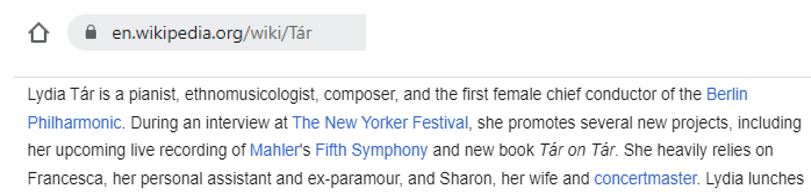
Screenshot of Wikipedia Entry for the Movie Tár 1-20-23

Wikipedia has become so central to our lives that we count on it to represent reality, and solid fact. When we encounter a new phenomenon, we check out our trusty online friend for more information.  So, it was fascinating to me recently to see the lines blur between fiction and reality, when Wikipedia was used as a visual and social cue in the movie Tár, starring Cate Blanchett, about a famed female conductor.  In the movie, one of the clues to the coming turbulence in Lydia Tár’s life is a screen capture of a mystery editor changing items on the conductor’s Wikipedia entry. It looked and felt so real, the filming and Blanchett’s performance so rivetingly vivid, that many people believed the film was a biopic of a real person.   As Brooke LaMantia wrote in her article, No, Lydia Tar is Not Real,

“When I left the theater after watching Tár for two hours and 38 minutesI immediately fumbled for my phone. I couldn’t wait to see actual footage of the story I had just seen and was so ready for my Wikipedia deep dive to sate me during my ride home. But when I frantically typed “Lydia Tar?” into Google as I waited for my train, I was greeted with a confusing and upsetting realization: Lydia Tár is not real…the film’s description on Letterboxd — “set in the international world of classical music, centers on Lydia Tár, widely considered one of the greatest living composer/conductors and first-ever female chief conductor of a major German orchestra” — is enough to make you believe Tár is based on a true story. The description was later added to a Wikipedia page dedicated to “Lydia Tár,” but ahead of the film’s October 28 wide release, that page has now been placed under a broader page for the movie as a whole. Was this some sort of marketing sleight of hand or just a mistake I stumbled upon? Am I the only one who noticed this? I couldn’t be, right? I thought other people had to be stuck in that same cycle of questioning: Wait, this has to be real. Or is it? She’s not a real person?

Wikipedia is central to LaMantia’s questioning!  While it’s easy to understand people’s confusion in general, the Tár Wikipedia page, created by editors like you and like me, is very clear that this is a film, at least as of today’s access date, January 20, 2023… On the other hand, did you know you can click on the “View History” link on the page, and see every edit that has been made to it, since it was created, and who made that edit?  If you look at the page resulting from one of the edits from October 27, 2022, you can see that it does look like Tár is a real person, and in fact, a person who later went on to edit this entry to make it clearer wrote, “Reading as it was, it is not clear if Lydia actually exists.”  Maybe I should write to LaMantia and let her know.

I tell this story to show that clearly, Wikipedia is a phenomenon, and a globally central one, which makes it all the more amazing that it is created continuously, edit by edit, editor by editor.  There are many ways in which our own and your own edits can create change, lead to social justice, correct misinformation and more.  While it’s easy to get lost in the weeds of minute changes to esoteric entries, it’s also possible to improve pages on important figures in real-life history and bring them into our modern narrative and consciousness.  And it’s easy to do!

If you are interested in learning more, and being part of this central resource, we warmly welcome you and invite you to join us on Wednesday, February 15, from 1-2:30 for our 2023 Wikipedia Editathon, part of the University of Calif0rnia-wide 2023 Love Data Week.  No experience is required—we will teach you all you need to know about editing!  (but, if you want to edit with us in real time, please create a Wikipedia account before the workshop).  The link to register is here, and you can contact any of the workshop leaders (listed on the registration page) with questions.  We look forward to editing with you!