
Two Spring Sciences Book Talks: Noah Whiteman, W. Kamau Bell & Kate Schatz

When you take a sip of a delicious caffeinated beverage—for example, a latte from FSM or a can of Guayakí Yerba Maté—did you know that you are enjoying a product of the evolutionary arms race between plants and insects? Coffee and tea plants, along with cacao and cola trees, produce bitter caffeine to deter insects from eating them, but humans have learned to enjoy (although in excess we can also be damaged by) the stimulating effects of this toxic compound.
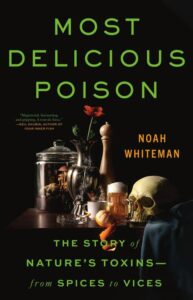
Front cover of Most Delicious Poison: The Story of Nature's Toxins - From Spices to Vices, by Noah Whiteman
Most Delicious Poison: The Story of Nature’s Toxins—From Spices to Vices by Noah Whiteman

Nature’s toxins and the sometimes surprising uses to which they are put by humans is the subject of Noah Whiteman’s Most Delicious Poison: The Story of Nature’s Toxins—From Spices to Vices. On March 5th, the Library’s Sciences Division hosted Whiteman, Professor of Integrative Biology and Molecular & Cell Biology at UC Berkeley, at the Morrison Library for a talk on his acclaimed book, recently out in paperback. Following the talk, Professor Whiteman was joined by Michael Silver, Professor of Neuroscience and Vision Science at UC Berkeley, for a discussion of the book’s themes: how humans became attracted to, learned to harness, and—in some cases—became dependent on nature’s toxins; and how our discovery and use of these natural products intertwine with global histories of colonialism and imperialism. 

An interdisciplinary audience of students, staff, faculty, and members of the broader UC Berkeley community packed the Morrison Library reading room to hear stories of terpenoids in coastal redwoods older than the rings of Saturn, of alkaloids in coffee and nutmeg, and the evolutionary wars that produced these molecules in nature. One highlight of the audience Q&A was learning Whiteman’s preferred method for brewing coffee: pour-over through a paper filter. Most Delicious Poison is available in print at the Biosciences, Natural Resources & Public Health Library (QP631 .W45 2023) and as an ebook.
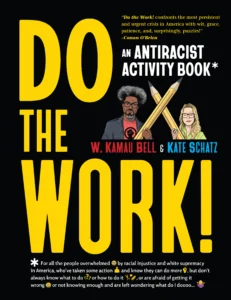
Front cover of "Do the Work! An Antiracist Activity Book" by W. Kamau Bell and Kate Schatz
Do the Work!: An Antiracist Activity Book by W. Kamau Bell and Kate Schatz

On March 11th, the Engineering Library, the College of Engineering’s Inclusive Excellence team, and the Black Graduate Engineering & Science Students (BGESS) hosted W. Kamau Bell and Kate Schatz for a discussion of their book, Do the Work!: An Anti-Racist Activity Book, at Sutardja Dai Hall. Aaron Streets, Associate Professor in the Department of Bioengineering and Vice Chair of Undergraduate Affairs for Berkeley Engineering, moderated a fireside chat with the authors, who discussed how our STEM community can engage with the activities in the book, the challenges of Diversity, Equity & Inclusion work in the current political climate, and how educators can build safe and brave spaces for current and future generations. 

Do the Work! is part of the Kresge Engineering Library’s Inclusive Excellence Book Collection, currently located and browseable at the Earth Sciences & Map Library while the Engineering Library is closed for construction. The Inclusive Excellence Collection brings together resources on the subject of diversity, equity, inclusion, and belonging to support students, faculty & staff in the College of Engineering in their efforts to foster a diverse and inclusive climate in the College and beyond. In fall 2024, the Engineering Library and the College of Engineering hosted Minette Norman, author of The Boldly Inclusive Leader, for the inaugural event in the Berkeley Engineering Book Talk Series.
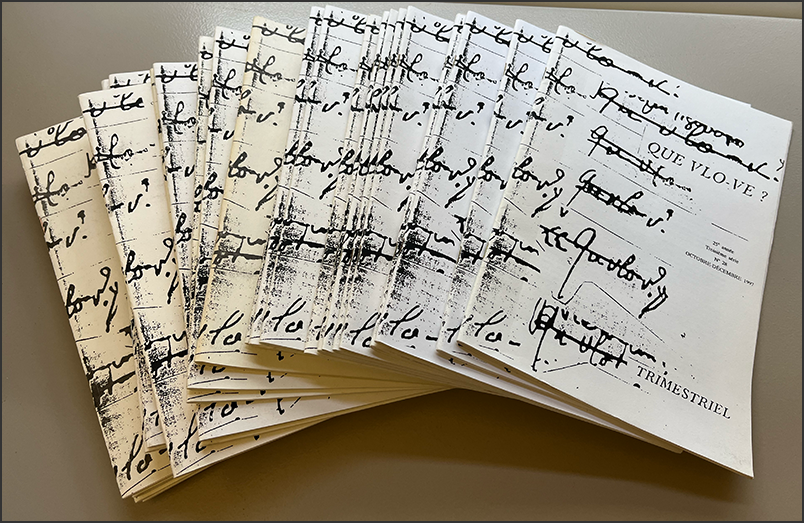
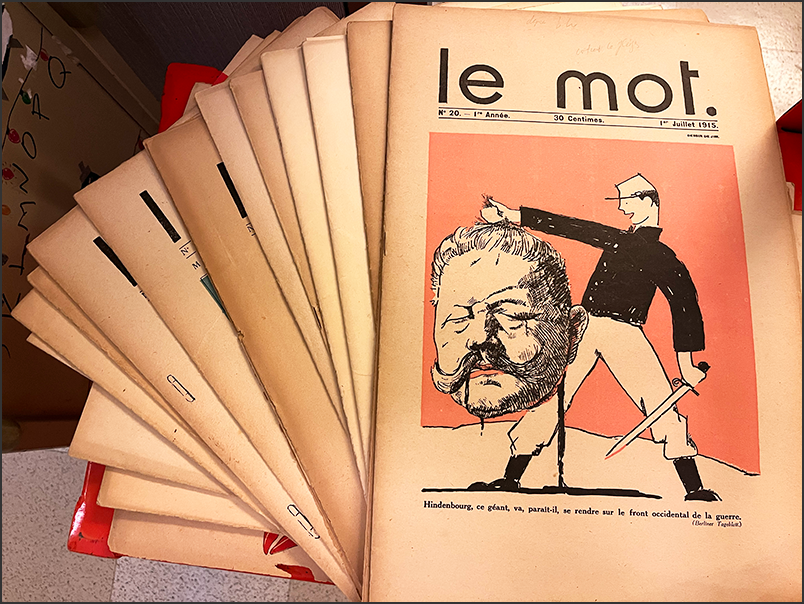
Library event: Que vlo-ve? and Le Mot

Que vlo-ve ?
Various issues of the third series of Que vlo-ve ?

In these austere times where both financial resources and shelving space are limited, it has become a rare occasion when we are able to pursue full-runs of older periodicals. However, the recent acquisition of these two—one from France and the other from Belgium—in more or less the same time period has sparked the idea of hosting a hands-on journal presentation for those interested in interacting with the journals before the issues are processed, cataloged, bound, and stored in their distinct library locations.

Que vlo-ve?: bulletin de l’Association internationale des amis de Guillaume Apollinaire was published from January 1973 to 2004. Centered on the work of the celebrated 20th century French poet, playwright, short story writer, novelist and art critic of Polish descent, its intention was not to duplicate articles published in the annual Guillaume Apollinaire series by Lettres Modernes. Instead, it was meant to welcome articles that could not easily find a place, news of the association and of the museum as well as news that members of the scholarly society wished to disseminate internationally.

Le Mot
Issue number 20 (July 1, 1915) of Le Mot

Le Mot (1914-1915)

Sardonic and visually rich, this wartime French literary and artistic journal published by Jean Cocteau and Paul Iribe, was characterized by a restrained modernism and a fiercely nationalistic, anti-German perspective. Le Mot (The Word) was a wartime sequel to François Bernouard’s Schéhérazade: Album Mensuel d’Oeuvres Inédites d’Art et de Littérature (1909-11). Its primary purpose was to establish an entirely French artistic style and taste—anti-bourgeois and uninfluenced by German modernism.

Reports of the brutal treatment of noncombatants (such as mass executions that included women, small children, and the elderly) and damage to towns and cultural centers shocked the public, leading to a characterization, particularly within France, of the German soldiers as destructive and uncivilized “huns” particularly within wartime propaganda. The bi-monthly periodical included cover designs by not only Iribe and Cocteau but also Sem, Raoul Dufy, Léon Bakst, André Lhote, Albert Gleizes, and Pierre-Emile Legrain. Cocteau signed his drawings as Jim, the name of his dog. In August 1914, when war was declared with Germany, he was twenty-five years old. Like many patriotic young Frenchmen, Cocteau tried to enlist but was turned down because of his health. Looking for other ways to serve his country and the war effort, he collaborated with Iribe to launch Le Mot. As a teenager, Iribe drew illustrations for the popular caricature journal L’Assiette au Beurre (The Butter Plate), which ran from 1902 to 1912. He also freelanced for Le Témoin, Rire, Sourire and other periodicals and was enthusiastic about starting a satirical journal of his own.

Please join us for an interactive show and tell with special guest Willard Bohn, alumnus of the Department of French and Professor Emeritus of French and Comparative Literature at Illinois State University.

Thursday, February 6
4-5:30 pm
223 Doe Library (accessible through south end of the Heyns Reading Room)

No rsvp required.

—-
Claude H. Potts (he/him)
Librarian for Romance Language Collections


Sign up for the Oral History Center’s Introductory Workshop (March 8)

The UC Berkeley Oral History Center is pleased to announce that applications are open for the 2024 Introductory Workshop!

The OHC is offering online versions of our educational programs again this year.

Introductory Workshop: Friday, March 8 from 8:30 a.m. to 2:30.p.m. Pacific Time, via Zoom

The 2024 Introduction to Oral History Workshop will be held virtually via Zoom on Friday, March 8, from 8:30 a.m. to 2:30.p.m. Pacific Time, with breaks woven in. Applications are now being accepted on a rolling basis. Please apply early, as spots fill up quickly. 

Apply for the Introductory Workshop.

This workshop is designed for people who are interested in an introduction to the basic practice of oral history and in learning best practices. The workshop serves as a companion to our more in­-depth Advanced Oral History Summer Institute held in August.

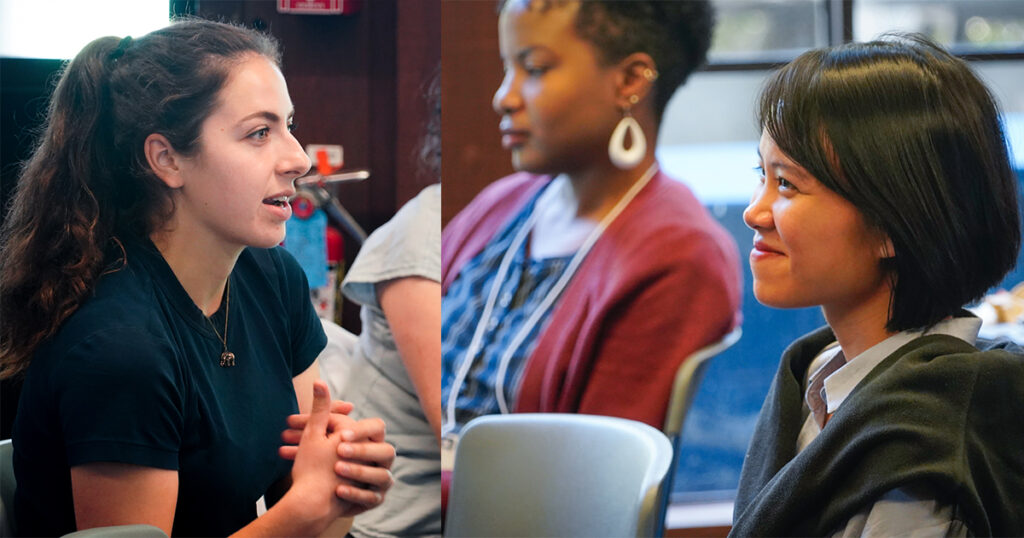
Montage of three women looking interested in a speaker, who is off camera The way the photo is edited, the women are facing each other, but it is clear they are not looking at each other, but rather are looking interested in whatever is going on in the workshop at the moment the photo was taken.
Students in our educational programs learn about best practices in oral history. (UC Berkeley Library)

The workshop focuses on the foundational elements of oral history, including methodology and ethics, practice, and recording. It will be taught by our seasoned oral historians and include hands­-on practice exercises. Everyone is welcome to attend the workshop. Prior attendees have included community-­based historians, teachers, genealogists, public historians, and students in college or graduate school.

Tuition is $150. We are offering a limited number of participants a discounted tuition of $75 for students, independent scholars, or those experiencing financial hardship. If you would like to apply for discounted tuition, please indicate this on your application form and we will send you more information. Please note that the OHC is a soft-money research office of the university, and as such receives precious little state funding. Therefore, it is necessary that this educational initiative be a self-funding program. Unfortunately, we are unable to provide financial assistance to participants other than our limited number of scholarships. We encourage you to check in with your home institutions about financial assistance; in the past we have found that many programs have budgets to help underwrite some of the costs associated with attendance. We will provide receipts and certificates of completion as required for reimbursement.

Applications are accepted on a rolling basis. We encourage you to apply early, as spots fill up quickly. 

If you have specific questions, please contact Shanna Farrell (sfarrell@library.berkeley.edu)

About the Oral History Center

UC Berkeley’s Oral History Center, or the OHC, is one of the oldest oral history programs in the world. We produce carefully researched, recorded, and transcribed oral histories and interpretive materials for the widest possible use. Since 1953 we have been preserving voices of people from all walks of life, with varying perspectives, experiences, pursuits, and backgrounds. We are committed to open access and our oral histories and interpretive materials are available online at no cost to scholars and the public.

Sign up for our monthly newsletter featuring think pieces, new releases, podcasts, Q&As, and everything oral history. Access the most recent articles from our home page or go straight to our blog home.


EVENT Bancroft Roundtable: Land, Wealth and Power: Digitizing the California Land Case Files, 1852-1892

November 17, 2022 | Noon | Register via Zoom

Presented by Adrienne Serra, Digital Project Archivist, The Bancroft Library, University of California, Berkeley, with an introduction by Principal Investigator Mary Elings, Interim Deputy Director, Associate Director, and Head of Technical Services, The Bancroft Library

In 2021, The Bancroft Library launched a large-scale digitization project to preserve and provide online access to more than 127,000 pages of California Land Case Files dating from ca. 1852 to 1892. These records tell an important story about the use and distribution of land, as well as social and legal justice in California following statehood in 1850, when all Spanish and Mexican land grants holders were required to prove their land claims in court. A lengthy process of litigation followed, which resulted in many early Californians losing their land. The Land Case Files are heavily used by current land owners, genealogists, historians, and environmentalists to understand the land, its uses, and ownership over time. The digitization project, Land, Wealth and Power: Private Land Claims in California, ca. 1852 to 1892 (Mary Elings, Principal Investigator), was awarded a 2019 Digitizing Hidden Special Collections and Archives: Amplifying Unheard Voices grant. Digital Project Archivist Adrienne Serra will discuss the collection and the project, including the challenges of preparing and imaging fragile materials under pandemic restrictions, and plans for future community engagement projects.

See you there! As always, this talk will also be recorded and added to our Youtube channel.

Best,

Christine & José Adrián

Christine Hult-Lewis, PhD
José Adrián Barragán-Álvarez, PhD
Bancroft Library Roundtable Coordinators

Resource: Bancroft Roundtables online

The Bancroft Library has updated its website with links to online presentations of most of the past Bancroft Roundtable events.  These include:

September 16th
Expanding Access to WWII Japanese American Incarceree Data Using Machine Learning
Presented by Marissa FriedmanDigital Project Archivist, The Bancroft Library
Watch online on YouTube

October 21st
A Good Drink: In Pursuit of Sustainable Spirits
Presented by Shanna FarrellInterviewer, Oral History Center, The Bancroft Library
Watch online on YouTube

November 18th
The Photographs of the Northwest Boundary Survey, 1857 to 1862
Presented by James EasonPrincipal Archivist, Pictorial Collection, The Bancroft Library
Watch online on YouTube


Event: Documenting the Japanese American Incarceration through Narratives and Data. June 2

Documenting the Japanese American Incarceration Through Narratives and Data

June 2 | 2-4 p.m. | Doe Library, Morrison Library

In person and online: ucberk.li/bancroft-symposium

Hosted by The Bancroft Library, Berkeley Library

The event is posted in the UC Berkeley Events Calendar here.

Session 1: Japanese American Intergenerational Narratives Oral History Project: Is Healing Possible?
2:00 pm – 3:00 pm

This session explores the Oral History Center’s ongoing Japanese American Intergenerational Narratives Oral History Project that documents and disseminates the ways in which intergenerational trauma and healing occurred after the U.S. government’s incarceration of Japanese Americans during World War II. This project examines and compares how private memory, creative expression, place, and public interpretation intersect at the Manzanar and Topaz prison camps in California and Utah. This panel will include discussion with interviewers, and it will feature conversations with a clinical psychologist and specialist in intergenerational trauma who advises on the project and leads healing circles for narrators, as well as a narrator who was interviewed for the project.

Roger Eardley-Pryor, Interviewer, the Oral History Center
Shanna Farrell, Interviewer, the Oral History Center
Dr. Lisa Nakamura, clinical psychologist and Topaz descendant
Ruth Sasaki, Topaz Stories Editor
Amanda Tewes, Interviewer, the Oral History Center

Session 2: Giving Data Back to the Community through Computational Scholarship: Two Case Studies Focused on Japanese American Incarceree Records from World War II
3:00 pm – 4:00 pm

This session brings together two in-process projects that are working to encourage computational and ethical access to collections and data. Presenters from The Bancroft Library and Densho will discuss their projects related to records surrounding the forced removal and incarceration of 120,000 persons of Japanese ancestry during World War II. The intersectional and positional work of these projects highlights the importance of building new partnerships outside of the archives to create new content and implement community co-curation models to support on-going inquiry, knowledge-building, and exploration around this topic, with implications for vulnerable communities today.

Mary Elings, Interim Deputy Director, The Bancroft Library
Marissa Friedman, Digital Project Archivist, The Bancroft Library
Brian Niiya, Content Director, Densho
Geoff Froh, Deputy Director, Densho
Vijay Singh, CEO, Doxie.AI

These events will be recorded.

Funding for this event was made possible, in part, by grants from the U.S. Department of the Interior, National Park Service, Japanese American Confinement Sites Grant Program and The Henri and Tomoye Takahashi Charitable Foundation.

Covid Protocols
We ask that participants comply with all health and safety guidelines and protocols recommended by UC Berkeley. This includes wearing a mask while indoors.

 All Audiences

 bancroft@library.berkeley.edu, 510-642-3781

If you require an accommodation to fully participate in this event, please contact Amber Lawrence at libraryevents@berkeley.edu or 510-459-9108 at least 7-10 days in advance of the event.