Listen to podcast episode 1, “A Preservationist Spirit,” or read a written version of this podcast episode below.
Voices for the Environment: A Century of Bay Area Activism is a gallery exhibition in The Bancroft Library that charts the evolution of environmentalism in the San Francisco Bay Area through the voices of activists who advanced their causes throughout the twentieth century—from wilderness preservation, to economic regulation, to environmental justice. The exhibition is free and open to the public Monday through Friday between 10am to 4pm from Oct. 6, 2023 to Nov. 15, 2024, in The Bancroft Library Gallery, located just inside the east entrance of The Bancroft Library. Curated by UC Berkeley’s Oral History Center, this interactive exhibit is the first in-depth effort to showcase oral history along with other archival collections of The Bancroft Library.
This exhibition includes three podcast episodes that offer deeper narratives to supplement the archival posters, pamphlets, postcards, photographs, oral history recordings, and film footage that are also presented in the gallery. Please use headphones when listening to podcasts in The Bancroft Library Gallery.
A written version of podcast episode 1 is included below.
Listen to episode 1: “A Preservationist Spirit” on SoundCloud.
PODCAST EPISODE SHOW NOTES:
Episode 1: “A Preservationist Spirit.” This podcast episode accompanies a section of the Voices for the Environment exhibition that explores how, after the 1906 San Francisco earthquake and fire, demands to rebuild San Francisco targeted the state’s ancient and fire-resistant redwood trees, while desires for a reliable water supply called for damming the Hetch Hetchy Valley within Yosemite National Park. In the decades that followed, an outpouring of activism shaped the ensuing conflict between economic development and environmental protection, and fueled a preservationist spirit in the Bay Area that would only grow over the century.
This podcast episode features historic interviews from the Oral History Center archives in The Bancroft Library at UC Berkeley, including segments from the “Growing Up in the Cities” collection recorded in the late 1970s by Frederick M. Wirt, as well as oral history interviews with Carolyn Merchant recorded in 2022, with Ansel Adams recorded in the mid-1970s, and with David Brower recorded in the mid-1970s. The oral history of William E. Colby from 1953 was voiced by Anders Hauge, and the oral history of Francis Farquhar from 1958 was voiced by Ross Bradford. This episode also features audio from the film Two Yosemites, directed and narrated by David Brower in 1955. This episode was narrated by Sasha Khokha of KQED Public Radio and The California Report Magazine.
This podcast was produced by Todd Holmes and Roger Eardley-Pryor of the Oral History Center of The Bancroft Library at UC Berkeley, with help from Sasha Khokha of KQED. The album and episode images were designed by Gordon Chun.
WRITTEN VERSION OF PODCAST EPISODE 1: “A Preservationist Spirit”
Anonymous Witness 1: The older people were running around wild! They thought it was the end of the world. Everything was shaking.
Anonymous Witness 2: Kind of a low roar. You had the feeling that the roof was coming off.
Anonymous Witness 3: It was a six-story brick building. We were on the third floor. When we finally got out of the building, we were on the top floor. The top three had gone off.
Anonymous Witness 2: By night the city was—it looked like the whole downtown area was on fire
Anonymous Witness 1: Everything was burned, you couldn’t—the home was gone. Everything was gone.
Sasha Khokha: Those are voices of people who survived the 1906 San Francisco earthquake and fire. And they’re just some of the rare recordings you’re going to hear in Voices for the Environment: A Century of Bay Area Activism.
[music]
This podcast accompanies an exhibition in The Bancroft Library at UC Berkeley that’s the first major effort to bring together both the oral history and archival collections of The Bancroft Library. You’re about to hear more voices recorded by UC Berkeley’s Oral History Center, founded in 1953 to record and preserve the history of California, the nation, and our interconnected world.
Voices for the Environment traces the evolution of environmentalism in the San Francisco Bay Area across the twentieth century, and highlights how Bay Area activists have long been on the front lines of environmental change—starting with efforts to preserve natural spaces in the wake of the 1906 San Francisco earthquake and fire. We’ll also learn about the midcentury fight for state environmental protections, and demands to address the disproportionate burden of pollution that sickened communities of color across the Bay.
You’re listening to the first episode of Voices for the Environment. We’re calling it “A Preservationist Spirit.” I’m your host, Sasha Khokha, from KQED.
[music]
Sasha Khokha: A beautiful vista, an ancient forest, a flooded valley. Our relationships with the world around us define who we are, from the air and water that sustains us, to the natural spaces we enjoy, to the creatures we share our surroundings with. Together, we refer to these intertwined elements as “the environment.” Sometimes we struggle with how to change those relationships. We call that work “environmentalism.”
[piano music from the early twentieth century]
In the San Francisco Bay Area, a new environmental spirit was flourishing in the first decade of the twentieth century. The catalyst for this public activism was not pollution, oil spills, or climate change. Not yet. Back then, it was the 1906 earthquake and fire.
On the morning of April 18, 1906, a massive earthquake struck just two miles off the coast of San Francisco, then California’s largest city. The quake, with an estimated magnitude of 7.9, was absolutely devastating. Thousands of buildings crumbled to the streets, reducing vast sections of the city to rubble. The recordings you’re about to hear are rare, firsthand accounts of people from the Bay Area who survived the harrowing event. These interviewees were children back in 1906, and they recounted their experiences decades later.
Anonymous Witness 5: I was ten years old, I’d just had a tenth birthday, but I had never heard of an earthquake, I didn’t know the word.
Anonymous Witness 6: We woke up. It’d shake, shake you right out of bed, but we couldn’t get out. The house boxed and the doors jammed, and we had a heck of a time.
Anonymous Witness 5: My mother got us into the doorway and stood us there. And she said, “now stand right here.” And she stood us right in the doorway, “Stand right here.” I said, “Well, what is it?” And we could look across the room and out the building and see the buildings collapsing out there.
Anonymous Witness 1: But when the earthquake came in 1906, the day of it, my mother had a baby girl on that morning. She was ill all evening, all night. The earthquake was so strong that, we lived on the first floor, and on the third floor, the balcony and everything fell down. And fire, our kitchen caught fire, there was my father. So finally, the people—there was a little Irish lady who lived next door with her two young sons, I think they were seventeen and nineteen at that time. Her sons broke the windows and took mother, the mattress, baby and all, brought them outside on the sidewalk. I remember that like yesterday.
Anonymous Witness 3: We were four people living in one large room in what was called the Old Supreme Court Building, which was diagonally situated across or located across from the City Hall. Larkin and McAllister Streets. It was a six-story brick building. We were on the third floor. When we finally got out of the building, we were on the top of it. The top three had gone off.
Anonymous Witness 2: So my father said, “You’ve got to get up. You’ve got to get up and dress.” First thing, we went out in the street and you could smell gas. People were all out of their homes in their pajamas and their nightshirts, and so forth, wanted to see what’s happening. Well, it wasn’t too later in the morning when we fully dressed and went out and down the street. And the street car on Geary [Street], the rails were all up in the air and bent. Big gaps, you didn’t, couldn’t—you wondered how far down it went, big gaping holes.
Anonymous Witness 5: And we watched people go by with empty bird cages, and wheeling empty baby buggies, and you know, in a state of complete shock.
[sound effect: fire bell ringing]
Sasha Khokha: As devastating as the earthquake was for San Francisco, it was fire that caused most of the damage. The quake ruptured gas main all throughout the city, sparking nearly three dozen fires, producing an inferno that burned for three-days straight. To make matters worse, firefighters and residents in San Francisco soon ran out of water.
Anonymous Witness 2: And then, about Noon time, we got word that city’s on fire and there’s no water
Anonymous Witness 1: We didn’t have a stitch of clothes on, just an up-top shirt, couldn’t get anything. He went back, thinking he’d be able to save something. Everything was burned, you couldn’t—the home was gone. Everything was gone, so we didn’t.
Anonymous Witness 5: We had gotten some blankets from my aunt. And of course, we went out with nothing from our building except what we were wearing. And we got some blankets from my aunt, and we slept in that—we stayed in that lot. That’s my first recollection of the fire, because from there we could watch everything burn.
[sound effect: dynamite demolition explosions]
Sasha Khokha: No water and a raging fire left city officials only one option: to create fire blocks by dynamiting the buildings that stood in the fire’s path so there would be nothing left to burn.
Anonymous Witness 5: We watched them blast down on Valencia Street and down on Mission Street, sort of backfiring, watched them blast the old theater out there, the Valencia Theater. We slept under the blankets that night, and had to wake every once in a while and shake them because they were heavy with ashes.
Anonymous Witness 4: I recall going to where the Mint is today to watch the fire from where the Mint is on that hill. We could see the fire burning downtown from there on Baker.
Anonymous Witness 2: There’s the school up—it’s right up the hill here—the Lone Mountain College. It was a bare hill at that time, that’s where the name Lone Mountain came to be. So, we walked up there, and by night the city was—it looked like the whole downtown area was on fire.
Anonymous Witness 6: Mr Shields had an automobile, he was the third neighbor to us. So we went down on Market Street. Here was the Palace Hotel, and we were here. And we saw the windows go boom-boom from the heat.
Sasha Khokha: Here’s more recollections of what became known as the Great Fire of 1906.
Anonymous Witness 7: We could see the flames, the fire, from the hills that were burning, all the houses. And the Fairmont Hotel was being built at the time, and it wasn’t finished. And the fire was all around there, but I don’t think it did that much damage there. But just like it was over the sky above us.
Anonymous Witness 2: I can recall the first night when the city was on fire, saying nothing, just staring there next to my father. And I cried and cried. He finally looked down at me and he says, “Well, what can you do about it?” I said, “There goes San Francisco.”
Sasha Khokha: When the last fire was finally extinguished, San Francisco lay in ruins. The earthquake and fire had claimed over 3,000 lives and destroyed 80 percent of what was then the largest and richest city west of Chicago. Within weeks, the mission to rebuild San Francisco got underway.
What you may not know is that the plan to rebuild involved cutting down some of California’s ancient redwood forests. Coastal redwood trees (known scientifically as Sequoia sempervirens) are among the largest and oldest organisms living on Earth. They’ve survived along California’s coast for at least 20 million years, some of them reaching more than 300 feet high and twenty feet wide. That giant size made them a prime timber source to rebuild the devastated city, especially because redwood is pretty fire resistant.
That started a logging frenzy. Timber interests like the Redwood Car Shippers Bureau circulated promotional photos showing buildings constructed out of redwood still standing amid a burned-out San Francisco skyline. [sound effect: sawing wood] In the years that followed, lumber mills up and down the coast worked overtime to meet the city’s endless demand. And record shipments of redwood made their way to San Francisco Bay.
And here’s where the earthquake and fire led to an early call for environmental preservation. Bay Area residents, including John Muir and other members of the newly formed Sierra Club, spearheaded the effort to stop logging redwoods. Muir was an immigrant from Scotland who fell in love with the Sierra Nevada. In the late 1800s, he settled in the Bay Area city of Martinez. In 1892, he and other Bay Area residents founded the Sierra Club with an early mission to explore, preserve, and protect California’s mountains and forests. They feared the logging frenzy to rebuild San Francisco had already taken its toll on the region’s redwoods.
Take the area around Palo Alto. Located 30 miles south on the peninsula, the city got its name from surrounding redwood forests. Palo Alto means “tall tree” in Spanish. In the years after the earthquake and fire, that reference would be lost though, because rebuilding San Francisco depleted those “tall tree” forests.
Concerned residents throughout the Bay Area reacted quickly. They started lobbying the state and federal government to protect the region’s remaining redwood groves. State officials responded by expanding the boundaries of Big Basin Redwoods State Park in the Santa Cruz mountains. It’s California’s first and oldest state park, founded in 1902. Over the decades, the protected area of Big Basin would steadily expand to include some 18,000 acres. That’s 6 times as big as the park’s original boundaries.
Federal officials took action to preserve the redwoods, too. In 1908, Bay Area Congressman William Kent led the charge to federally protect 295 acres of redwood forest in Marin County, just north of San Francisco. The preserved area is known as Muir Woods National Monument. Here’s what John Muir wrote to Kent shortly after the Monument’s creation: “Saving these redwoods from the axe and saw, from money-changers and water-changers, and giving them to our country and the world is in many ways the most notable service to God and man I’ve heard of since my forest wandering began.”
John Muir and other men became figureheads of environmental preservation. But women played a critical—yet often overlooked—role in early environmental activism, too. Women provided much of the grassroots momentum to save California’s redwoods through letter writing, lobbying, fundraising, and leading various organizations. Women in the Sempervirens Club and California Club were instrumental to the creation of protected areas like Big Basin Redwoods State Park, Muir Woods National Monument, and Calaveras Big Trees State Park. The creation of these protected areas forced timber companies to concentrate their operations in more remote regions along the North and Central coasts. But the activists in women’s organizations, from the California Federation of Women’s Clubs to the Women’s Save the Redwoods League, kept pushing to protect those regions, too.
Men may have cast the votes in congress and state government to protect redwood forests, but it was the activism of women throughout California that helped put these issues on the table in the first place. Here’s UC Berkeley environmental historian Carolyn Merchant:
Carolyn Merchant: Women had power, but they had power through their roles in a traditional patriarchal society, so that they could do more things within that patriarchy than had been thought of before. And so women began to feel a sense of power, a sense of what they could do. And they can actually assert that power in order to help save the planet, and how women themselves can become important forces in the whole role of conservation and resources.
Sasha Khokha: The tug-of-war between the development of cities like San Francisco and preservation of California’s redwood forests—that was a fight that would continue for decades, putting the focus on humans, rather than fire or pests, as the primary threat to these ancient trees and their environments. This battle helped ignite and expand the preservationist spirit that would shape environmental activism in the Bay Area for the next century.
[music]
San Francisco had long impacted environments well beyond its city boundaries. In the wake of the 1906 earthquake and fire, the city’s efforts to rebuild began to affect more remote regions of the state, including areas previously protected by preservationists. And as rebuilding San Francisco continued, the city began to need not just trees, but water.
In 1908, city leaders proposed a project to provide a reliable water source for San Franciscans. The scale of the idea was unprecedented. They wanted to dam the Hetch Hetchy Valley, which was then preserved as part of Yosemite National Park. The plan was to engineer a system to carry the water 160 miles to San Francisco—what used to be a 2 day stagecoach ride before the Yosemite Valley Railroad opened in 1907.
The proposal to dam Hetch Hetchy sparked a five year debate, from San Francisco city hall to the steps of congress in Washington DC. The preservationists who opposed the dam were led by John Muir and other Sierra Club officials. They argued Hetch Hetchy Valley was a sacred piece of Yosemite National Park. If it were sacrificed to bring water to San Francisco, that would set a dangerous precedent for tapping into resources in all kinds of protected areas.
William E. Colby: Another outstanding matter that came before the Sierra Club for action, and John Muir was strongly behind it, was what we refer to as the Hetch Hetchy fight. The Hetch Hetchy Valley had been included in Yosemite National Park largely as a result of John Muir’s efforts.
Sasha Khokha: That was Anders Hauge [How-gee] reading the oral history of William E. Colby, who stood on the frontlines with John Muir during the Hetch Hetchy campaign. Colby, who was born and raised in the Bay Area, held the post of Secretary of the Sierra Club for more than forty years. He led campaigns to expand Sequoia National Park, as well as create Olympic and Kings Canyon National Parks. Here is Hauge again reading from Colby’s 1953 oral history about how he cut his political teeth in the fight to keep Hetch Hetchy preserved.
William E. Colby: San Francisco became interested in acquiring this as a municipal water supply. When we heard of it, of course John Muir was tremendously exercised to think that a great part of his work would be undone. And so the Sierra Club very strongly opposed this application by the city of San Francisco. We were successful in preventing the grant for a number of years.
Sasha Khokha: But city developers pushed back. Creating a viable water supply? That was progress. It would help bring fresh water to a thirsty city. Developers also drew heavily on the imagery of a vulnerable San Francisco left without water in the face of a raging fire. The 1906 earthquake and fire was the first natural disaster captured on film. So advocates for the dam had lots of material to help make their case.
William E. Colby: But the tide turned when Woodrow Wilson became president, because he named Franklin K. Lane, who had been City Attorney of San Francisco when the application for the Hetch Hetchy site had been made, Secretary of the Interior. Because of this change in the political situation, we found that we were at a great disadvantage. We had tremendous support from many sources. But this political change was too powerful for us. We even enlisted the support of civil engineers, hydraulic engineers, who aided us in preparing reports showing that there were half a dozen other sources of supply that San Francisco could have obtained. And that was absolutely demonstrated later on by the fact that Oakland went over to the Mokelumne River and obtained a very fine water supply and brought it into Oakland long before San Francisco got the Hetch Hetchy supply. We were handicapped in every direction.
Sasha Khokha: In the end, Congress sided with the city of San Francisco, passing the 1913 Raker Act, which permitted the flooding of the Hetch Hetchy Valley in Yosemite. And the construction of the massive O’Shaughnessy Dam, with an extensive water-delivery system. Colby recalled in his 1953 oral history how this decision impacted his friend and mentor, John Muir.
William E. Colby: The loss of Hetch Hetchy Valley was a tremendous blow to John Muir. I’m quite sure that this loss of the Hetch Hetchy Valley had a great deal to do with Mr. Muir’s subsequent Illness and ultimate death. He probably died in advance of the time that he would have if the attempt to save Hetch Hetchy had not gone against him. Muir didn’t mince any words in expressing his ideas of the tremendous loss to the nation by reason of the flooding of Hetch Hetchy Valley.
Sasha Khokha: John Muir died in December of 1914 – one year after congress voted to authorize San Francisco’s plan to dam the Hetch Hetchy Valley.
[piano music]
Decades later, native San Franciscan and famed photographer Ansel Adams shared his grief over the loss of Hetch Hetchy. Adams joined the Sierra Club shortly after Muir’s death and would build his career photographing Yosemite National Park.
Ansel Adams: We lost the Hetch Hetchy. And one of the great disappointments there was Gifford Pinchot’s support of it. You see, he really turned the trick with the secretary of the interior.
Sasha Khokha: Gifford Pinchot as America’s first professionally trained forester. From 1898 through 1910, he served three American presidents in the US Department of Agriculture as the nation’s chief of forestry. He also became a major supporter of damming the Hetch Hetchy Valley. If John Muir became a figurehead for the preservation of nature, Pinchot’s early leadership of the US Forest Service symbolized the corporate and multi-use model of natural resources.
Ansel Adams: People forget the Forest Service is primarily a commercially oriented, really, a controlling administration. It’s just recently that they’ve been stressing “many uses” for political reasons. It sounds very fine, and in many ways is all right. But when you get into very beautiful areas that should have park or wilderness status, see, it doesn’t work.
Sasha Khokha: As Adams recalls, the Hetch Hetchy site was not just about getting water, but hydroelectricity for the growing city of San Francisco. That would help build the power grid of the utility giant Pacific Gas and Electric, or PG&E.
Ansel Adams: The Hetch Hetchy—where are you going to get your water? In San Francisco, that’s our water supply. And San Francisco, that is a big community. And the Russian River was considered. See, what happened there was that there was another site further down that would be much bigger in expanse but not so deep. And we worked for that very hard, but that could not provide enough power. There wouldn’t be enough “fall.” But the whole Hetch Hetchy was put where it is, in the Hetch Hetchy Valley, because of the favorable power situation.
Sasha Khokha: Some of the defenders of Hetch Hetchy came from San Francisco’s business community, like Francis Farquhar [Far-kwar]. He was a Harvard-educated accountant who joined the Sierra Club a year after moving to San Francisco in 1910. He would serve more than 25 years on the Club’s board of directors, including two terms as Sierra Club president. Here is Ross Bradford reading from Farquhar’s 1958 oral history.
Francis Farquhar: I never participated in the Hetch Hetchy matter. I was in Boston at the time the bill finally passed. I had seen it in 1911 when I came out to the Sierra Club outing with Jim Rennie. We came all the way down the Tuolumne canyon and camped in the Hetch Hetchy Valley a day or two. I recognized its beauty.
Sasha Khokha: For Farquhar, the devastating loss of Hetch Hetchy had a silver lining. Because – although tragic – it may have provided one of the most powerful and lasting influences for what would become the environmental movement in the U.S.
Francis Farquhar: I think that it is too bad that the national park idea had not developed further at the time to prevent the surrender of such an important portion of a national park. Possibly, the fact that Hetch Hetchy was surrendered strengthened the whole national park idea with the slogan, “Never another Hetch Hetchy.”
[music crescendo]
Sasha Khokha: Few activists in America likely used that slogan as effectively as David Brower. Many consider him the godfather of the modern environmental movement. He’s from Berkeley, and served as the first executive director of the Sierra Club from 1952 to 1969. He oversaw a tenfold expansion of the Club’s membership and led campaigns to establish ten new national parks. Brower also pioneered the use of film, books, and other media to advocate for environmental causes. One of those was the fight against a proposed dam on the Colorado River in Dinosaur National Monument.
David Brower: I didn’t go to Dinosaur until 1953. That was the year the Sierra Club started to run river trips that were patterned after a river trip that Harold Bradley had taken his family on the year before. He went there to make a film, and made a family film, and showed around. That was certainly one of the things that awakened my interest in what was there.
Sasha Khokha: When the dam proposal came to congress, Brower and other environmentalists waged an all-out campaign to preserve Dinosaur National Monument.
David Brower: It did—at least it was important to the Sierra Club. It was important to a lot of the conservation organizations, where they could really take on the establishment and stop it. There were all kinds of—that is, whatever led Newton Drury to say, “Dinosaur is a dead duck,” was a force that was reversed, and it was reversed with a battle that had a nationwide audience. And we persuaded a good many of the people whose voices were heard in Congress. They’re a lot of people, but you find a few of the leaders and get them to go, and you’re in fairly good shape.
Sasha Khokha: In his oral history, Brower says the similarity of the dam project in Dinosaur to Hetch Hetchy was striking. He highlighted that parallel in his advocacy film, “The Two Yosemites.”
David Brower: There was one other thing that worked pretty hard, worked well in our lobbying effort. And that was the lowest budget film on record. The one I did on Two Yosemites. The budget was, I guess, five rolls of Kodachrome film and my own time. I did the editing, and I wrote the script, and then I recorded it. We put out this film, it’s an eleven-minute film. We made six copies of it. I showed those in a good many places. And it had quite an impact. That is, what had been done to Hetch Hetchy, and all the claims that were made of how beautiful a lake it would be and how great a recreational resource. Of course, it wasn’t. It isn’t. It wasn’t necessary. And the parallel with Dinosaur was so beautiful that we worked on that constantly.
David Brower in the film Two Yosemites: The other Yosemite was only a little less beautiful than this one, and a few miles to the north: Hetch Hetchy Valley. John Muir, the Sierra Club, and other conservation groups fought hard against this destructive park invasion. San Francisco argued that, without this water, they would wither; it must have this cheap power; there were no good alternatives; and the dam would enhance the beauty of the place and make it more accessible; the greatest good for the greatest number; teeming San Francisco against the few people who had yet visited Yosemite. Not one of the city’s claims has proved valid.
Sasha Khokha: David Brower’s activism, along with efforts of other preservationists, did prove successful. In 1955, the Secretary of the Interior withdrew the proposal for the dam at Dinosaur National Monument. And that campaign was just one of many environmental efforts Brower would lead from Sierra Club headquarters in the Bay Area. By the late 1960s, Brower’s leadership would elevate the Sierra Club’s national profile, transforming it from a California-based group to one of the largest and most influential environmental organizations in North America.
[music]
We’ve heard how a new and bustling San Francisco arose from the ashes of the 1906 earthquake and fire. So did a robust and ever-growing spirit of preservation, a force that would shape environmentalism in the Bay Area, and beyond, for well over the next century. The activism that began to preserve the state’s ancient redwood forests would result in forty-nine state and federally protected redwood parks in California. And the legacy of the Hetch Hetchy fight helped inform the preservation of landscapes across the U.S.—423 federally protected areas to be exact.
Yet, in the middle of the twentieth century, environmentalism in the Bay Area once again found itself at a crossroads.The Postwar development boom forced a choice between protecting the environment and using natural resources to meet the needs of a growing population. You can hear that story in our next episode of Voices for the Environment.
You’ve been listening to “A Preservationist Spirit,” the first of three episodes in the podcast Voices for the Environment: A Century of Bay Area Activism. It’s part of an exhibition in The Bancroft Library at UC Berkeley that runs from October 2023 through November 2024. This episode featured historic interviews from the Oral History Center archives in The Bancroft Library at UC Berkeley. Including segments from the “Growing Up in the Cities Project” recorded by Frederick M. Wirt; and oral history interviews with Ansel Adams, Carolyn Merchant, and David Brower. The oral history of William E. Colby was voiced by Anders Hauge, and the oral history of Francis Farquhar was voiced by Ross Bradford. To learn more about these interviews and the Oral History Center, visit the website listed in the show notes. This podcast was produced by Todd Holmes and Roger Eardley-Pryor, with help from me, Sasha Khokha. Thanks to KQED Public Radio and The California Report Magazine. I’m your host, Sasha Khokha. Thanks for listening!
End of Podcast Episode 1: “A Preservationist Spirit.”
ABOUT THE ORAL HISTORY CENTER
The Oral History Center of The Bancroft Library preserves voices of people from all walks of life, with varying political perspectives, national origins, and ethnic backgrounds. We are committed to open access and our oral histories and interpretive materials are available online at no cost to scholars and the public. You can find our oral histories from the search feature on our home page. Search by name, keyword, and several other criteria. Sign up for our monthly newsletter featuring think pieces, new releases, podcasts, Q&As, and everything oral history. Access the most recent articles from our home page or go straight to our blog home.
Please consider making a tax-deductible donation to the Oral History Center if you’d like to see more work like this conducted and made freely available online. While we receive modest institutional support, we are a predominantly self-funded research unit of The Bancroft Library. We must raise the funds to cover the cost of all the work we do, including for each oral history. You can give online, or contact us at ohc@berkeley.edu for more information about our funding needs for present and future projects.









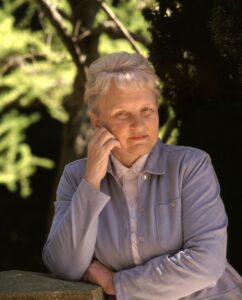
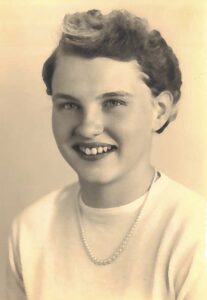


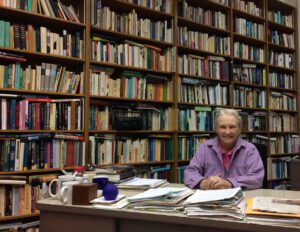 Carolyn Merchant’s oral history is now available to read online, even as the ever-worsening impacts of climate change create an interrelated set of crises for the Earth and all living organisms on it, including humanity. After her long career teaching and researching environmental topics at UC Berkeley, Merchant admitted, “of course, I’m distressed that we have all the environmental problems that we have now.” Yet, in the face of these crises, she also shared her optimism. “There’s also hope in the sense that there are laws being passed, there are people who are working continuously, and there are new societies and new organizations being formed. So we’re at a tipping point. And hopefully, we’ll go in the direction of conservation, and environmental justice, and environmental reform, and saving the Earth.”