Film Screening & Discussion: “State of Silence”
Date & Time: Wednesday, November 5, 2025, 4:30 PM – 6:30 PM
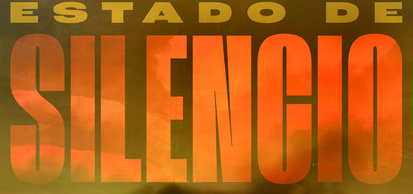
The title of a film is “Estado de Silencio” (The State of Silence).
“State of Silence/Estado de Silencio” delves into the challenges facing press freedom in Mexico, chronicling the dangerous work of four journalists as they uncover the ties between organized crime and government corruption. Through their eyes, the documentary reveals the obstacles and risks they face in breaking the silence around systemic abuse and violence. A panel discussion and audience Q&A with will follow the screening:
Concrete art and poetry—a radical avant-garde movement where the visual and spatial arrangement of words on the page carries as much weight as their literal meaning—emerged in Brazil during the 1950s, a time of rapid and transformative modernization. Professor Nathaniel Wolfson (Spanish & Portuguese) challenges the notion that concretism was socially passive, as some scholars have claimed. Instead, he presents it as the defining literary genre of the early information age.
Concrete Encoded: Poetry, Design, and the Cybernetic Imaginary in Brazil (Texas, 2025) examines how Brazilian poets, artists, and designers engaged with the rise of digital capitalism, forging a distinct cybernetic vision. Wolfson’s study reinterprets concretism—not just as Brazil’s most internationally influential artistic movement, but as a network connecting both prominent and overlooked figures. By mapping these creative exchanges, the book reveals broader, transnational conversations about technology and its critical possibilities.
Día de los Muertos (Day of the Dead) is an essential Mexican holiday, primarily celebrated on November 1st and 2nd. It is a time for families and friends to gather, pray for, and remember loved ones who have died. The celebration is vibrant, focusing on life and remembrance, rather than mourning. Key traditions include creating ofrendas (altars) decorated with marigolds (cempasúchil), favorite foods and drinks of the departed, candles, and colorful sugar skulls (calaveras).
The Bancroft Library: Located within the Doe Annex, Bancroft is the university’s premier special collections library. Its Latin Americana Collection is a critical resource for primary materials related to Día de los Muertos and broader Mexican culture. This collection has been known to feature items such as:
Rare publications and historical documents on Mexican traditions.
Original materials related to the arts and political satire, including the iconic works of artist José Guadalupe Posada (known for his skeletal figures, or calaveras), whose prints have heavily influenced the holiday’s visual iconography.
Illustrating Mexico one page at a time-Print Art of José Guadalupe Posada
Several venues across the East Bay feature Día de los Muertos altars. The Oakland Public Library is among the organizations hosting a related activity. Below are photos of the altar created by the library’s César Chávez branch (formerly the Latin American Library) to commemorate this important cultural tradition.
Photos below: Credit: Liladhar P.
Our Social Sciences Library at UC Berkeley Library, my departmental colleagues have created also an altar whose pictures I am sharing. Two colleagues who took initiative in supporting this activity are Angelica V.M. and Cody H.
Photos below: Credit Angelica VM.
A dia de los muertos altar at Social Sciences Research Library
The following subject terms can be helpful to our students when trying to locate materials on Dia de los muertos in our library’s collections.
We invite you to attend “Art Against Artillery: Cultural Resilience in Times of War,” a panel discussion.
Date: December 4, 2025
Time: 10 am PST (8 pm Kyiv Time)
Registration: https://tinyurl.com/artagainstartillery
Organizer: Dr. Liladhar R. Pendse, Librarian for Slavic, East European, and Eurasian Studies
The event is free and open to all, provided prior registration is completed. Please sign in to your individual Zoom account and then register. All are welcome!
Please submit your feedback to your librarian for Latin American and Caribbean Studies: Liladhar
Latin America Commons Landing Page
Latin America Commons by Coherent Digital is a full-text, richly-indexed database that provides unified, cross-searchable access to millions of pages of Latin American and Latinx primary-source materials, including books, magazines, photographs, maps, letters, diaries, ephemera, videos, and audio files that were previously scattered across the internet and in archives. The project aims to preserve at-risk content, rare documents, and often overlooked resources spanning from the 16th to the 21st centuries, making it easier for scholars and students to discover vetted, high-quality material for research and study.
All are invited to attend our 2025 Hispanic American Heritage Month webinar that this time focuses on Afro-Latinx heritage.
The webinar will take place on September 16th from 12:45 pm to 2:15 pm PST (3:45 pm to 5:15 pm EST). The webinar is free and open to all with prior registration.
This webinar features three scholars whose work advances understanding of Latin American and Afro-Latinx communities through social policy, culture, and education. In recognition of National Hispanic Heritage Month, the event explores racial and gender justice, ethnoracial legislation, climate ethnography, and Afro-Indigenous knowledge systems. Presenters offer critical insights into how law, environment, heritage, and pedagogy shape the lived experiences of Hispanic and Afro-Latinx communities.
As the war in Ukraine is now in its third year of current military conflict (excluding the takeover of Crimea), it becomes vital for us to provide resources to our students related to the actual war and its progress. For this reason, I wanted to focus on two different platforms that currently offer updates from the field as it evolves on the ground. I hope that the readers of these maps will find them helpful to make their own assessment of the current state of affairs. The first resource is the Deepstate map.
The interface is pretty intuitive, and the map can be displayed in both English and Ukrainian legends. Below is the screenshot that shows the map as of 11:05 am PST on August 25, 2025.
The deepstate live has several different partners that sponsor the project. One of them is Brave1.
Also, there is a blog that is associated with DeepState Live, which can be accessed here.
The second source is hosted by the Institute for the Study of War, which can be accessed here. The resource provides an assessment of the Russian offensive in Ukraine with a cutoff date of August 24, 2025.
The library has set up a trial of a bibliographic database on Russian Imperial Era periodicals, which will run through the end of this month. The trial can be accessed here:
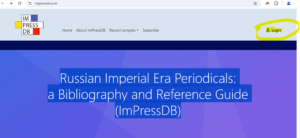
Upon accessing the database, one will see the landing page. A login button will be in the top right-hand corner of the screen. Please click on it, as no password is required. You will be able to test the database and assess its utility.
Please reach out to your Slavic Studies Librarian with your valuable feedback.
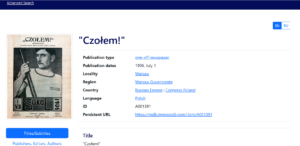
Russian Imperial Era Periodicals: a Bibliography and Reference Guide (ImPressDB) is a comprehensive research database of periodicals and serials from the time of the Russian Empire, published between 1702 and 1917. It includes publications from within the Russian Empire, across its diverse linguistic and cultural regions, and from some territories under its influence, including the Austrian Empire (Austria-Hungary), Germany, and other countries. The database also covers periodicals published by the empire’s diaspora in various parts of the world, including those by émigrés, political exiles, and immigrant communities, offering a broad, transnational perspective on the era’s printed media.
At UC Berkeley Library, with the leadership and guidance from the library’s current acting AUL for Associate University Librarian for Digital Initiatives and Information Technology, Lynne Grigsby, we are excited to report the completion of the Russian Women Writers Collection’s digitization. The collection’s analog items can be searched here.
My predecessor, Dr. Allan Urbanic, was instrumental in helping us with the description of the project, which is as follows, “Russian Women Writers Collection
This project has been created in cooperation with the Russian National Library in St. Petersburg. In recent years, scholarship has focused on women’s contributions to the history of Russian literature. It has also been discovered that many of these writers were poorly represented in American libraries’ collections. The project first concentrated on filling in the corpus of women writers at the beginning of the 19th century. As the project moved forward, the works of Russian women authors of the later 19th century and the 20th century have been added.”
Terms governing use and reproduction
Researchers may freely and openly use the UC Berkeley Library’s digitized public domain materials. However, U.S. copyright law may protect some materials in our online collections (Title 17, U.S.C.). Use or reproduction of materials protected by copyright beyond that allowed by fair use (Title 17, U.S.C. § 107) requires permission from the copyright owners. The use or reproduction of some materials may also be restricted by terms of University of California gift or purchase agreements, privacy and publicity rights, or trademark law. Responsibility for determining rights status and permissibility of any use or reproduction rests exclusively with the researcher. Please see our permissions policies to learn more or make inquiries (https://www.lib.berkeley.edu/about/permissions-policies).
Source Russian Women Writers
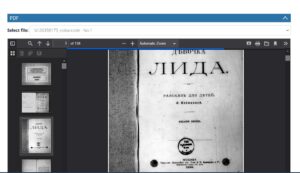
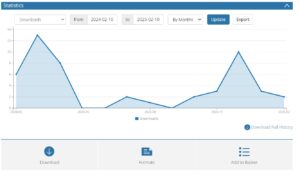
One can look at the usage data of the item called Di͡evochka Lida razskaz dli͡a di͡eteĭ as shown below,