Heavy hitters: the modern era of athletics management at UC Berkeley

By William Cooke

The last fifty years might be considered the modern era of intercollegiate athletics management in the United States. Ballooning TV contracts and Title IX have changed the college athletics landscape forever. The growing pains associated with those changes were felt by everyone involved with college sports, including those at UC Berkeley. The Oral History Center’s project, Oral Histories on the Management of Intercollegiate Athletics at UC Berkeley: 1960–2014, offers cross-sections of the Cal Athletics world during those formative years in the form of interviews with key internal and external actors. 

For college sports fans, the history of the management of collegiate athletics at UC Berkeley is a familiar one. The unending conflict between maintaining a solid academic reputation and fostering winning programs, funding dilemmas, NCAA sanctions and the challenges surrounding gender inclusion in sports — common issues for every university athletic department — are all included in UC Berkeley’s storied athletics history. 

 These tensions and developments are reflected in the UC Berkeley Oral History Center’s project, Oral Histories on the Management of Intercollegiate Athletics at UC Berkeley: 1960–2014. Interviews between former UC Berkeley Associate Chancellor John Cummins — who served as interviewer — and a diverse cross sampling of individuals involved in the management of intercollegiate athletics, including athletic directors, chancellors, donors, and senior administrators, make up this collection of 45 publicly released interviews. 

Organized by decade, here are a few snippets of the voices represented in this collection of oral histories. Themes in this collection include but are not limited to funding dilemmas, controversies surrounding academic standards for student-athletes, the evolving relationship between women’s and men’s sports, and the sometimes incompatible interests of athletic boosters and University officials. 

The 1970s: The beginning of the modern era — Dave Maggard and Luella Lilly

The 40s and 50s were the golden years of Cal football and basketball. Led by legendary head coach Lynn “Pappy” Waldorf, Cal’s football program made three Rose Bowl appearances between 1948 and 1950. In 1959, head basketball coach Pete Newell led Cal to the program’s lone national championship to date. 

A relatively disappointing decade followed for both programs. Then, in the early 1970s, catastrophe. When the NCAA found out that football and track athlete Isaac Curtis had failed to take the SAT as required, the intercollegiate governing body came down hard with sanctions. 

Dave Maggard, who was appointed Athletic Director in 1972, argued against those in the administration and around Cal Athletics who wanted to fight the sanctions. These included the Golden Bear Athletic Association, an independent booster organization that had sued the NCAA in response to the sanctions. According to Maggard in his oral history:

When I became the athletic director I went to the administration and said, “This is a huge mistake. You cannot fight these people. We need to work to get on the inside, we need to get on committees, we need to be a part of the NCAA. I will tell you that they will rip this place apart, and this is something that you will never win. You will never win.” 

The sanctions included probation and four years of bowl game ineligibility, a blow to the revenue stream of Cal’s most profitable program. Thanks to Maggard’s cooperation with the NCAA, though, the sanctions were eventually lifted. 
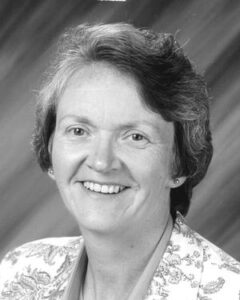
Luella “Lue” Lilly
Luella Lilly held the position of Women’s Athletics Director for 17 years between 1976 and 1992.

At the same time, intercollegiate athletics at UC Berkeley took a huge step towards achieving gender equity in sports at the University. Following the passage of Title IX in 1972, the University hired its first director of Women’s Intercollegiate Athletics, Luella “Lue” Lilly. 

Generating revenue for women’s athletics was a difficult undertaking. But Lilly made it a priority and found creative ways to raise funds and boost support for the newly established programs. Those efforts included the recruitment of a local politician and an Olympic gold medalist. 

Then one time when we had— Dianne Feinstein and Ann Curtis were going to help us with the Mercedes raffle that we were giving out…  We went over in front of city hall, and we just drove. We looked to see what was going to make the best picture, and there was a fountain behind it. We just drove the thing right up on the sidewalk.

If the 1970s was an era of immense change in athletics management at UC Berkeley, the next two decades would see the University settle its position on the relative importance of athletics and academics. 

The 1980s and 1990s: The balance between school and sports — Chancellors Ira Michael Heyman, Chang-Lin Tien

When Chancellor Ira Michael Heyman took the reins from Albert Bowker in 1980, he inherited a sound athletics fundraising plan that Maggard had developed the decade prior. In many ways, Heyman supported the success of athletics at Cal, going so far as to allow “Blue Chip Admits” — 20 student athletes per year who would not normally be eligible to attend UC Berkeley. 

Ira Michael Heyman
Title IX passed during Chancellor Heyman’s time as UC Berkeley’s Vice Chancellor in the 1970s.

But even while supporting athletic success at the calculated expense of lower academic standards, Heyman did not avoid criticism from UC Berkeley athletics boosters: 

So they [The Grid Club]  kept pushing me. “How important is athletics to you in relation to academics?” et cetera, et cetera. And I essentially said, “Academics, they’re really important. And intercollegiate athletics are of importance.” I just tried to make that distinction. And they said, “Well, on an index of one to ten where do athletics stand?” And I said, “Oh, about seven. Six and a half or seven.” That group never really warmed up to me.

In the early 1990s, Earl “Budd” Cheit, who served as the dean of the Haas School of Business, Executive Vice Chancellor and Interim Athletic Director over the course of his time at UC Berkeley, found himself right in the middle of that ongoing tension between winning and maintaining the University’s reputation for being first and foremost an elite academic institution. 

Head football coach Bruce Snyder had led the Bears to a 10-2 season and a trip to the Citrus Bowl in 1991. Arizona State University doubled UC Berkeley’s annual salary offer of $250,000 to recruit Snyder. 
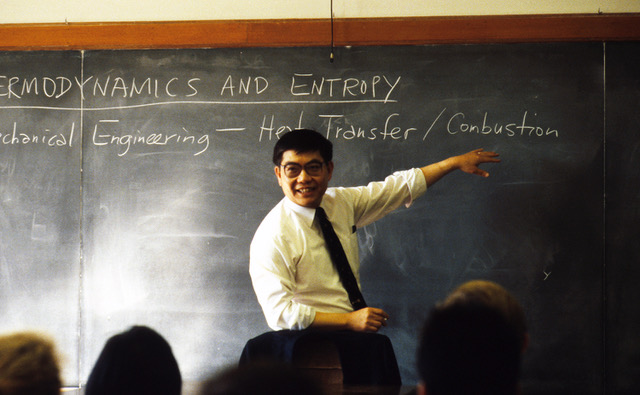
 Chang-Lin Tien in front of blackboard, teaching
In his oral history, former Chancellor Chang-Lin Tien states the need to support athletics, but “not at the expense of institutional integrity.” (Undated photo by Peg Skorpinski/UC Berkeley)

Long-time supporter of UC Berkeley athletics Walter “Wally” Haas offered to match ASU’s offer along with the help of other boosters. But when Cheit relayed Haas’s message to Chancellor Chang-Lin Tien, the Chancellor shot the idea down and explained his reasoning. 

Wally Haas called me during this time, and he said, “There are a number of people, myself included, who will come up with the money to match what he’s being offered. Will the Chancellor go for that?” And I called Chang-Lin and talked to him. And Chang-Lin said, “I can’t justify paying a coach that much more than the highest-paid professor on the campus.”

The 21st century: Changing priorities — Robert Berdahl, Robert Birgeneau

The 80s and 90s saw proponents of academic integrity and responsible spending win out over those who wanted Cal Athletics to accept the national shift toward a culture of commercialism in intercollegiate sports. The potential to rake in huge revenues from TV deals by investing in “revenue athletes” — student-athletes on the football and men’s basketball teams — drove the impetus to sacrifice academic standards for athletic success. 
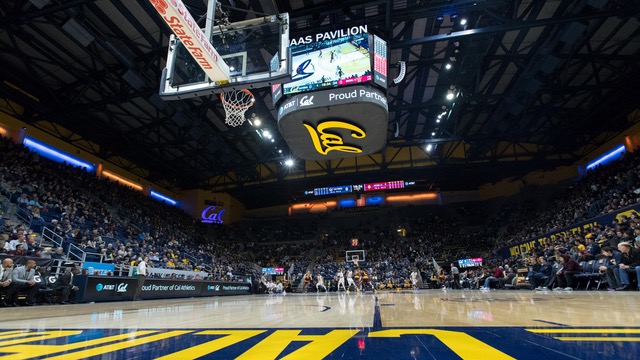
Picture of Haas Pavilion taken from the southern baseline.
The construction of Haas Pavilion, which cost $57.5 million, began in 1997 and finished in time for the 1999–2000 basketball season.

The hiring of Athletic Director Steven Gladstone in 2001 marked the beginning of a short, half-hearted effort to spend money in order to make money. Under Gladstone’s direction, coaching and administrative salaries were increased to attract and retain the very best in the intercollegiate athletics industry, all in the hope of making the two revenue sports — Cal football and men’s basketball — into elite college programs.  

But with higher spending came concerns about the growing athletics budget deficit, which was compounded by the ever-growing cost of the newly built Haas Pavilion. In his interview with Cummins, Robert Berdahl, UC Berkeley’s Chancellor between 1997 and 2004, attributes some of the blame for deficit spending on the 1991 Smelser Report, which called for broad-based, highly competitive athletic programs in spite of budget constraints. 

I think that the Smelser Report was a real disservice, because it created in the donor and booster community the notion we’re going to be as excellent in athletics as we are in academics, which I think is an unrealistic expectation for any high-quality university. I don’t think there’s any university of high quality that has that aspiration. Maybe Stanford, maybe Stanford’s the only one that does… But they don’t—they are competitive in football and basketball but rarely go to the Rose Bowl or to the NCAA championship. 
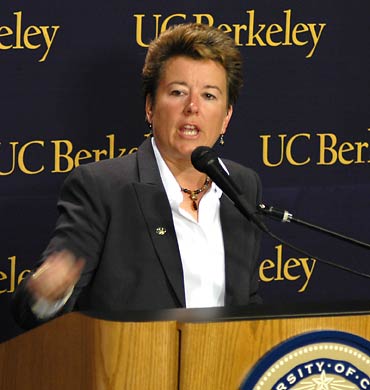
Sandy Barbour at podium answering a question
Athletic Director Sandy Barbour’s tenure under Chancellor Robert Birgeneau included 19 national titles across all programs, as well as a period of poor graduation rates among student-athletes on the football team. (Photo by Steve McConnell)

Robert Birgeneau, who succeeded Berdahl as Chancellor, saw to it that priorities change under his leadership. To the dismay of some donors, Birgeneau replaced Gladstone with Athletic Director Sandy Barbour in 2004. During her tenure, Barbour facilitated the creation of the University Athletics Board (UAB), a committee that included faculty members and student athletes. Its purpose was to increase transparency in athletics spending by sharing this information with faculty for the very first time. 

The Great Recession of 2008 made budget constraints even tighter. In 2010, Birgeneau made the difficult and controversial decision to cut four athletics programs — baseball, men’s and women’s gymnastics, and women’s lacrosse — and make rugby a club sport. 

Because we had such loyal supporters of [Division] IA sports, I felt that they needed to know that the financial situation really was quite dire and that we needed them to step up, both themselves personally and to organize fundraising campaigns. As I said, that just simply did not happen… So, in this fateful September meeting, after the cold hard financial facts were presented to me, I agreed with the financial and IA people, that there really was not any choice. Specifically, we were never going to be able to achieve our goal of $5-million-a-year support from the campus without eliminating sports.

Supporters of those four sports eventually raised a combined $20 million in order to restore them to Division I status. 

We worked out a compromise, basically asking each sport to raise enough funds to close their operating gaps for the next five to seven years… The baseball supporters raised nearly $10 million in six weeks. It is notable that philanthropy to baseball had been negligible for many, many years, and so there was a qualitative change. Indeed, this funding crisis brought the baseball community together, and in fact has resulted in us now having a stadium with lights at night. Thus, for baseball the situation actually is markedly improved. 

These quotes represent just a small fraction of what this collection has to offer. Researchers will also find information on intra-departmental relationships, the personal experiences of former administrators in regards to particular decisions, and the retrospective opinions of both external and internal actors in the most crucial formative decades in the history of intercollegiate athletics management, both at UC Berkeley and institutions across the country. 

Find these interviews and all our oral histories from the search feature on our home page. You can search by name, keyword, and several other criteria.

William Cooke is a fourth-year undergraduate student majoring in Political Science and minoring in History. In addition to working as a student editor for the Oral History Center, he is a reporter in the Sports department at UC Berkeley’s independent student newspaper, The Daily Californian

Related Resources from The Bancroft Library

In addition to these oral histories, The Bancroft Library has related sources on Cal Athletics and intercollegiate athletics management more generally, including books on athletics facilities and fundraising, department records, and newspaper articles. 

Read “Title IX in Practice: How Title IX Affected Women’s Athletics at UC Berkeley and Beyond,” also by William Cooke.

Related oral histories include Brutus Hamilton, Student athletics and the voluntary discipline : oral history transcript / and related material, 1966-1967 and ​​Peter F. Newell, UC Berkeley athletics and a life in basketball.

66 years on the California gridiron, 1882-1948; the history of football at the University of California. Brodie, S. Dan. 1949. Bancroft BANC F870.A96 B7

A celebration of excellence : 25 years of Cal women’s athletics. Compiled by Kevin Lilley, Lisa Iancin, and Chris Downey. UC Archives Folio ; 308m.p415.c.2001.

Pamphlets on athletics in California. Bancroft Pamphlet Double Folio ; pff F870.A96 P16.

About the Oral History Center

The Oral History Center of The Bancroft Library preserves voices of people from all walks of life, with varying political perspectives, national origins, and ethnic backgrounds. We are committed to open access and our oral histories and interpretive materials are available online at no cost to scholars and the public. Sign up for our monthly newsletter featuring think pieces, new releases, podcasts, Q&As, and everything oral history. Access the most recent articles from our home page.
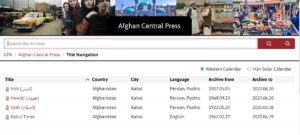

Trial of Afghan Central Press at UC Berkeley Library

We have set up a thirty-day trial of Afghan Central Press at UC Berkeley Library beginning November 15, 2022.

The vendor description is as follows,

“The Afghan Central Press collection brings together four national, Kabul-based publications of Afghanistan whose long runs and prominence provide a concentrated vantage point for understanding developments in Afghanistan for much of the twentieth century. The English-language Kabul Times is presented alongside Pushto publications Anīs (انیس, Companion), Hewād (هیواد, Homeland), and Iṣlāḥ (اصلاح, Reform).”

The collection provides full-text access to over fifty thousand individual issues in Dari (Persian), Pushto, and English languages.

The Afghan Central Press collection is hosted on Eastview’s Global Press Archive platform.


Primary Sources: African American Newspapers in the South, 1870-1926

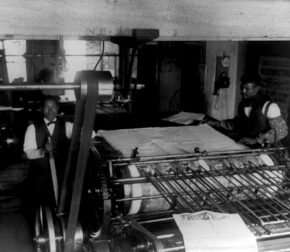
Two African American men working a printing pressAfrican American Newspapers in the South, 1870-1926 is a new addition to Accessible Archives. It documents the African American press in the South from Reconstruction through the Jim Crow period. Written by African Americans for African Americans, the first-hand reporting, editorials, and features kept readers abreast of current domestic and international events, often focusing on racial issues. The editors didn’t shy away from exposing racial discrimination and violence, including the emotionally laden topic of lynching. Yet, the newspapers also covered lighter fare, reporting on civic and religious events, politics, foreign affairs, local gossip, and more.

It includes all complete runs of representative newspapers from the District of Columbia, Georgia, Louisiana, North Carolina, Oklahoma, Tennessee, and West Virginia:

The Advocate, 1907 – 1912
Athens Republique, 1921 – 1926
The Banner-Enterprise, 1883 – 1884
The Bee, 1882 – 1884
The Black Dispatch, 1917 – 1922
The Educator, 1874 – 1875
The Langston City Herald, 1892 – 1900
The Louisianian, 1870 – 1871
The Muskogee Cimeter, 1904 – 1920
The Nashville Globe, 1907 – 1918
The National Forum, 1910
Pioneer Press, 1911 – 1917
The Republican, 1873 – 1875
Semi-Weekly Louisianian, 1871 – 1872
The Tulsa Star, 1913 –1921
Western World, 1903 – 1904


Richard Mendelson, “A Life Lived on the Steep Part of the Learning Curve: Richard Mendelson on Wine Law and History”

by Martin Meeker
Oral History Center Interviewer (retired)

“When we drink a glass of wine, we may enjoy its aromas, consider where it is from, and ideally, care about how it was made and who created it. We might think about the winemaker, along with the vineyard and winery team, and perhaps the brand owner. We most likely don’t consider the people beyond that circle who also play a role in a wine’s existence, ensuring its authenticity, making it more meaningful for consumers, and meanwhile, protecting some of the most sacred places to grow grapes and create wine. For those who are reading this, you are about to meet such a person, one of the most exceptional people in the wine world, and someone who has more passions and layers than the most complex glass of wine you have ever enjoyed,” Linda Reiff, President and CEO of Napa Valley Vintners.

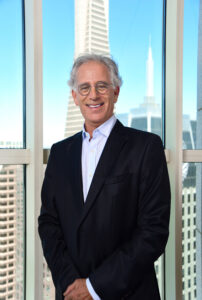
Richard Mendelson
Richard Mendelson in San Francisco, 2021 (Photo courtesy of Richard Mendelson)

Richard Mendelson is in fact the person about whom Linda Reiff writes, and the Oral History Center is pleased to release this major life history interview with the man. Mendelson is an attorney who has played a pivotal role in creating the field of wine law through his legal practice, historical research and writing, and international leadership on the issue over the past four decades. Moreover, he is a Lecturer in Wine Law at UC Berkeley, School of Law, where he directs the Program on Wine Law and Policy. He also lectures on a variety of vineyard and wine law topics at UC Davis Graduate School of Management and has taught at the University of Aix-Marseille and the University of Bordeaux.

A graduate of Harvard University, Oxford University, and Stanford Law School, Mendelson has handled legal matters involving almost every aspect of the wine business, including liquor licensing, environmental challenges to vineyard development, grape purchase agreements, winery use permits, representation of winery clients before the California Department of Alcoholic Beverage Control and federal Alcohol & Tobacco Tax and Trade Bureau, state and federal label approvals, distributor appointments and terminations, and import-export contracts. Mendelson has a special expertise in geographical indications and has been responsible for obtaining recognition for some of the most well-known American Viticultural Areas. He assisted the California legislature with the drafting of legislation to protect the world-famous Napa Valley geographical indication. Subsequently, he successfully defended that law on behalf of the Napa Valley Vintners in the case of Bronco v. Jolly, which he argued before the California Supreme Court. Of his legal work, famed vintner Bill Harlan writes, “His legal mind, business judgment, negotiating skills, discipline, and commitment to his clients are first rate. With great integrity and knowledge and an abiding commitment to be fair and clear, he is able to gain the respect of all parties in practically any setting.”

This oral history is a globe-trotting one, with meaningful stops in England, France, India, and China, but the focus here, as with Mendelson’s work, is California’s Napa Valley. According to Harlan, Mendelson serves “as Napa Valley’s unofficial ambassador, he truly upholds our agricultural heritage and promotes our special place in the world of wine.” Linda Reiff, head of the Napa Valley Vintners, writes, “He helped make Napa Valley one of the most iconic wine regions in the world by mastering groundbreaking initiatives and complex legal challenges. He authors, refines and defends regulations to protect consumers and to ensure a more sustainable wine industry. He is a thinker and a problem solver, a deal maker, a broker.” This oral history goes a long way to explain how over the course of a few short decades “Napa Valley” came to signify and to exemplify environmental stewardship, preservation of agricultural resources, American ingenuity and achievement internationally, and, of course, quality wine.

In this interview, moreover, Mendelson discusses his family’s heritage and his own upbringing in Jacksonville, Florida; his early employment on Capitol Hill; and his attendance at Harvard University, Stanford University, and Oxford University, where he first became enamored with wine in Magdalen College’s wine cellar. Mendelson goes on to discuss his career in wine and wine law, beginning with Bouchard Aîné in Burgundy, France, and continuing in America with the establishment of American Viticultural Areas (AVAs). Other topics discussed in the interview include the research and writing of his books (From Demon to Darling, Law in America: Law and Policy, Spirit in Metal, and Appellation Napa Valley: Building and Protecting an American Treasure), California cannabis law, yoga, tai chi, Hinduism, artistic sculpture and metalwork, and wine law instruction.

Find this interview and all our oral histories from the search feature on our home page. You can search by name, keyword, and several other criteria.

About the Oral History Center

The Oral History Center of The Bancroft Library preserves voices of people from all walks of life, with varying political perspectives, national origins, and ethnic backgrounds. We are committed to open access and our oral histories and interpretive materials are available online at no cost to scholars and the public. You can find our oral histories from the search feature on our home page. Search by name, keyword, and several other criteria. Sign up for our monthly newsletter featuring think pieces, new releases, podcasts, Q&As, and everything oral history. Access the most recent articles from our home page or go straight to our blog home.


Workshop: The Long Haul: Best Practices for Making Your Digital Project Last

Digital Publishing Workshop Series

The Long Haul: Best Practices for Making Your Digital Project Last
Tuesday, October 25th, 11:10am – 12:00pm
Online: Register to receive the Zoom link
Scott Peterson & Erin Foster

You’ve invested a lot of work in creating a digital project, but how do you ensure it has staying power? We’ll look at choices you can make at the beginning of project development to influence sustainability, best practices for documentation and asset management, and how to sunset your project in a way that ensures long-term access for future researchers. Register here


Upcoming Workshops in this Series – Fall 2022:

  • Copyright and Fair Use for Digital Projects


Please see bit.ly/dp-berk for details.


The Value of Relationships and Connections

Oral History Center Director’s Column
by Paul Burnett

It’s an honor and a privilege to address readers as the new director of the Oral History Center. I look forward to continuing the work I have been doing as interim director: helping to build new projects, increasing access to our collection, and facilitating the interpretive work that my colleagues do so well.

Students are back to school, and it is a time when everything can seem fresh for both our new and returning students. Although we experience this annual renewal with an incoming class and fresh faces, the academy is also a place of long, deep relationships, among colleagues, coworkers, and students. I interview people whose current friends can offer a window onto their activities and experiences over the past fifty, sixty years, all because they met here at Cal long ago. University is a place that connects people, and that ought to connect people.  

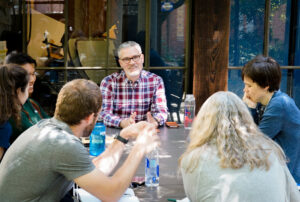
Paul Burnett, center, seated at a table with 5 other people engaged in conversation
Paul Burnett and a group of participants discuss projects at the OHC’s Advanced Oral History Institute, photographed on Aug. 8, 2019. (Photo by Jami Smith for the UC Berkeley Library)

In this month’s OHC newsletter, we see evidence of the deep connections people have with each other through institutions: government, foundations, and universities. My colleague Todd Holmes will be moderating an online panel discussion on October 18th with three influential women state senators who shaped and were shaped by the senate. Shanna Farrell and Amanda Tewes’ podcast explores local environmental activism through the history of the Save Mount Diablo Foundation, which was fueled by the long-term commitments and energy of the staff and the communities with which they worked. The new oral history of art historian and director of the Getty Research Institute Thomas Gaehtgens, also by Todd Holmes, is another example of decades-long dedication to institutions, disciplines, and practices.

Our student articles in this issue also explore the long-term relationships forged in efforts to change, or even survive, institutions. Intern Sari Morikawa explored the way in which individuals survived institutions such as the Japanese American incarceration camps. Shannon White explores the mutually supportive relationships of the suffragists, and the ways in which commitments to institutional change could take a toll on the personal obligations of activists. William Cooke marked the fiftieth anniversary of BART (Bay Area Rapid Transit) by exploring its origins and the ways in which this new institution transformed the relationships between local and regional governments. 

Perhaps dedication, service, and long relationships are on my mind because of a passing of someone I met through the university. This person also talked about colleagues and students who became lifelong friends. We kept in touch over the years, and his passing reminds me of how wonderful it is to meet people from all over the world. The university, at its best, promises to be the departure lounge for a rich and rewarding life full of these connections and commitments.    

About the Oral History Center

The UC Berkeley Oral History Center preserves voices of people from all walks of life, with varying political perspectives, national origins, and ethnic backgrounds. You can find all our oral histories from the search feature on our home page. Search by name, keyword, and several other criteria. We are committed to open access and our oral histories and interpretive materials are available online at no cost to scholars and the public.

Sign up for our monthly newsletter featuring think pieces, new releases, podcasts, Q&As, and everything oral history. Access the most recent articles from our home page or go straight to our blog home.


Cuba: Grito de Yara (10 October 1868)

Each year, on 10th October, the Cubans all over the world commemorate the call for national independence. The “Grito de Yara,” is one of many important events in the complex historical trajectory of Cuba that unleashed the potential of the national consciousness through rebellions against the Spanish imperial authorities. The full text of the Manifiesto de la Junta Revolucionaria de la Isla de Cubacan be read by clicking on the link here.

At UC Berkeley Library, despite our West Coast location and our Pacific Rim orientation, we have a large collection of books that will enlighten our readers about what does “Grito de Yara” means. The other essential Open Access source is dLOC (Digital Library of the Caribbean) where one can browse documents related to the “Grito de Yara.

Some subject searches like the ones below will provide additional information on the print items on the topic that we have in our collections.

Below are some titles that might of interest to the readers of this blog. Since we believe in the equitable access, I am providing some links to the full-text of these items.

Betancourt, José R. (José Ramón). Las dos banderas. Apuntes históricos sobre la insurrección de Cuba. Cartas al excmo. sr. ministro de ultramar. Soluciones para Cuba. Sevilla: Establecimiento tipográfico del Círculo liberal, 1870. Print.

Palomino, Joaquín de, ed. Merecido ramillete que dedican los voluntarios de la isla de Cuba al mal aconsejado diputado a Cortes, Diaz Quintero, formado con las protestas, manifestaciones y composiciones poeticas publicadas en los periódicos de esta capital y precedido de varios dedicatorias en prosa y verso. Habana: Impr. Sociedad de operarios, 1870. Print.

Llofríu y Sagrera, Eleuterio. Historia de la insurrección y guerra de la isla de Cuba. Escrita en presencia de datos auténticos, descripciones de batallas, proporcionadas por testigos oculares documentos oficiales, cuantas noticias pueden facilitar el exacto conocimiento de los hechos. Ed. ilustrada. Madrid: Impr. de la Galeria literaria, 1870. Print.

Below is a clip from a film, “La primera carga al machete”


PhiloBiblon 2022 n. 4 (octubre): Ayuda de la Fundación Larramendi a PhiloBiblon

Nos es muy grato anunciar que la Fundación Ignacio Larramendi acaba de conceder una segunda ayuda al proyecto actual de PhiloBiblon: “From Siloed Databases to Linked Open Data via Wikibase.”

El patrocinio de la Fundación Ignacio Larramendi y de sus antecesores a PhiloBiblon remonta ya a más de treinta años. Conocí a Don Ignacio Hernando de Larramendi (1921-2001) en 1991 cuando visitó Berkeley para anunciar el estreno de las Colecciones MAPFRE 1492, reproducciones de 245 títulos fundamentales para la historia de España y la América Latina. Estos títulos, amén de otros muchos hasta un total de 1800, fueron reproducidos en disco CD-ROM por la Fundación Histórica Tavera entre 1997 y 2005. Uno de los mayores aciertos de Don Ignacio era su acogida de las nuevas tecnologías de la información, poco corriente entre las personas de su generación.

Se celebró el centenario de don Ignacio el año pasado y, siguiendo la metodología de la Biblioteca Virtual de Polígrafos, que es caso de estudio del W3C Library Linked Data y de Europeana, se implementaron sendos micrositios dedicados a la digitalización de las colecciones MAPFRE 1492 y los Clásicos Tavera, recatalogados en RDA, MARC 21 y también con la utilización de la ontología de Europeana Data Model en RDF.

El otro acontecimiento, menos trascendental por cierto pero de una innegable utilidad es que el sitio espejo de PhiloBiblon en la Universitat Pompeu Fabra ya está de alta otra vez después de haber estado de baja desde octubre de 2018. Nuestro agradecimiento más profundo a Marc Esteve y Joan Trenchs de la UPF y a Josep Formentí, ingeniero de informática de Terrassa que trabaja también con nosotros en el proyecto actual.

Por otra parte, acabamos de cargar nuevas versiones de BETA, BITAGAP y BITECA. Pocas novedades pero mucho trabajo en la limpieza de los registros para prepararlos para su eventual mapeo de la aplicación de Windows de PhiloBiblon a FactGrid:PhiloBiblon. De entre estas pequeñas novedades, sólo cabe destacar la incorporación a PhiloBiblon del documento inédito sobre Leonor López de Córdoba (BETA bioid 3168), descubierto por Óscar Perea Rodríguez en la Biblioteca del Congreso de Washington.

Washington, Library Congress. Family Mercy-Argenteau: 1, OV-4, doc. 4
Washington, Library of Congress.Family Mercy-Argenteau: 1, OV-4, doc. 4

Se trata de una carta de donación (BETA manid 6368) a través de la cual la conocida autora de las primeras Memorias (BETA texid 3650) autobiográficas escritas en castellano establece su vinculación con el monasterio cordobés de San Pablo, donde más tarde se edificaría el panteón familiar.

Charles B. Faulhaber
University of California, Berkeley


Oral History Release – Thomas Gaehtgens: Famed Art Historian and Director of the Getty Research Institute

“As a scholar, one’s career typically revolves around teaching, research, and scholarship. Once in a while, a scholar is lucky enough to have a hand in building something. I’d like to think I have helped build a thing or two in my career.”

Such were the words of renowned art historian Thomas Gaehtgens upon wrapping up his oral history at the Getty Research Institute (GRI) in the fall of 2017. That the words held an element of retirement was no coincidence. Gaehtgens had already enjoyed a long and successful academic career before assuming the directorship of the GRI in 2007, a position from which he would officially retire in the spring of 2018. True to form, Gaehtgens met retirement with the same productive stride that had underpinned his work throughout the previous five decades. Thus, after a fruitful delay, the Oral History Center and Getty Trust are pleased to announce the release of Thomas Gaehtgens: Fifty Years of Scholarship and Innovation in Art History, from the Free University in Berlin to the Getty Research Center.

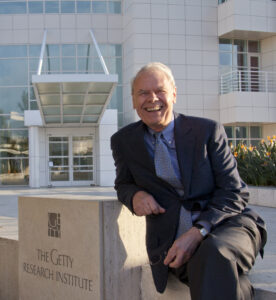
Thomas Gaehtgens
Getty Research Center

For many in the academic and art world of Europe, Gaehtgens needs no introduction. Born in Leipzig, Germany, he completed his PhD in art history at the University of Bonn in 1966, and over the next forty years held professorships at the University of Göttingen and the Free University of Berlin. He is the author of nearly forty publications on French and German art, covering a wide range of topics and artists from the eighteenth to the twentieth century. 

Scholarship aside, Gaehtgens also made a mark through his globalist approach to art, fostering relationships that bridged the divides between universities and museums, as well as those between nations. He organized the first major exhibition of American eighteenth and nineteenth century paintings in Germany, expanded the art history curriculum in Berlin to include non-Western areas, and founded the German Center for Art History in Paris. These efforts made him a natural fit for president of the Comité International d’Histoire de l’Art (CIHA), where he advanced initiatives such as the translation of art history literature and broadening the field of art history through international conferences.

Gaehtgens brought this same spirit of inclusivity and innovation to the Getty Research Institute. In many respects, he helped usher the GRI into the twenty-first century by launching a number of programs that not only brought modern technology to the study of art, but also two principles close to Gaehtgens’ heart: international collaboration and equal access for all. The creation of the Getty Provenance Index proved a case in point. In partnership with a host of European institutions, the Index provided a one-stop, digital archive for researchers to trace the ownership of various art pieces over the centuries. Here, for the first time, the records of British, French, Dutch, German, Italian, and Spanish inventories stood at the fingertips of researchers. These same principles of technology, cooperation, and equitable access also underpinned the GRI’s creation of the Getty Research Portal, a free online platform providing access to an extensive collection of digitized art history texts, rare books, and related literature from around the world. Other important achievements of Gaehtgens’ directorship included the Getty Research Journal, a more internationally represented Getty Scholars program, and the Getty’s California-focused art exhibitions, Pacific Standard Time.

Thomas Gaehtgens retired from the Getty Research Institute in 2018, officially ending an art history career that spanned over fifty years. Fittingly, his decades of work have been recognized around the world. He holds honorary doctorates from London’s Courtauld Institute of Art and Paris-Sorbonne University. In 2009, he received the Grand Prix de la Francophonie by the Académie française, an honor bestowed by the Canadian Government to those who contribute to the development of the French language throughout the world. And in 2011, Gaehtgens was elected a fellow of the American Academy of Arts and Sciences. Such honors highlight the indelible mark he left on the global field of art history, one still seen today from the German Center for Art History in Paris to the now-famed digital programs of the Getty Research Institute. Indeed, Thomas Gaehtgens was not just an influential teacher and productive scholar, but also an innovative art historian who helped build a thing or two.

You can access the full oral history transcript of Thomas Gaehtgens here. See also other oral histories from the Getty Trust Oral History Project.  


About the Oral History Center

The Oral History Center of The Bancroft Library has interviews on just about every topic imaginable. You can find the interview mentioned here and all our oral histories from the search feature on our home page. Search by name, keyword, and several other criteria. We preserve voices of people from all walks of life, with varying political perspectives, national origins, and ethnic backgrounds. We are committed to open access and our oral histories and interpretive materials are available online at no cost to scholars and the public.

Sign up for our monthly newsletter featuring think pieces, new releases, podcasts, Q&As, and everything oral history. Access the most recent articles from our home page or go straight to our blog home.


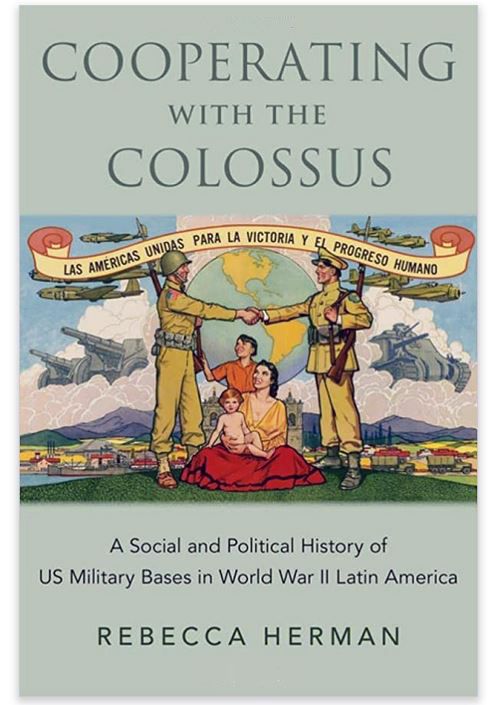
Professor Rebecca Herman’s New Book Published: Cooperating with the Colossus A Social and Political History of US Military Bases in World War II Latin America Cooperating with the Colossus A Social and Political History of US Military Bases in World War II Latin America

Front cover image for Cooperating with the Colossus A Social and Political History of US Military Bases in World War II Latin America
Author:Rebecca Herman, the image is being used for academic, educational, noncommercial purposes only.

UC Berkeley’s Professor Rebecca Herman‘s (History) new book –Cooperating with the Colossus A Social and Political History of US Military Bases in World War II Latin America on our entanglement in Latin America since the World War II is one book that I feel honored to post about in this blog.

According to the Oxford University Press, the book has several interesting facets that are quoted from its website as follows,

  • Offers a new perspective on the period of World War II and its importance in the longer history of US-Latin American relations
  • Brings together the local, national, and international arenas in which the history of wartime basing unfolded
  • Integrates the international history of US-Latin American relations together with local histories of labor, race, gender, and law
  • Moves between the realm of high politics and the ground-level social and cultural histories of the communities surrounding US bases.

I am also pleased to post a video of her presentation at the CLAS-Berkeley.

We have access to its electronic avatar through our catalog. Thank you, Professor Rebecca Herman, for always motivating me to do my best to collect difficult to find materials from Latin America!