Día de los Muertos (Day of the Dead) is an essential Mexican holiday, primarily celebrated on November 1st and 2nd. It is a time for families and friends to gather, pray for, and remember loved ones who have died. The celebration is vibrant, focusing on life and remembrance, rather than mourning. Key traditions include creating ofrendas (altars) decorated with marigolds (cempasúchil), favorite foods and drinks of the departed, candles, and colorful sugar skulls (calaveras).
The Bancroft Library: Located within the Doe Annex, Bancroft is the university’s premier special collections library. Its Latin Americana Collection is a critical resource for primary materials related to Día de los Muertos and broader Mexican culture. This collection has been known to feature items such as:
Rare publications and historical documents on Mexican traditions.
Original materials related to the arts and political satire, including the iconic works of artist José Guadalupe Posada (known for his skeletal figures, or calaveras), whose prints have heavily influenced the holiday’s visual iconography.
Illustrating Mexico one page at a time-Print Art of José Guadalupe Posada
Several venues across the East Bay feature Día de los Muertos altars. The Oakland Public Library is among the organizations hosting a related activity. Below are photos of the altar created by the library’s César Chávez branch (formerly the Latin American Library) to commemorate this important cultural tradition.
Photos below: Credit: Liladhar P.
Our Social Sciences Library at UC Berkeley Library, my departmental colleagues have created also an altar whose pictures I am sharing. Two colleagues who took initiative in supporting this activity are Angelica V.M. and Cody H.
Photos below: Credit Angelica VM.
A dia de los muertos altar at Social Sciences Research Library
The following subject terms can be helpful to our students when trying to locate materials on Dia de los muertos in our library’s collections.
We invite you to attend “Art Against Artillery: Cultural Resilience in Times of War,” a panel discussion.
Date: December 4, 2025
Time: 10 am PST (8 pm Kyiv Time)
Registration: https://tinyurl.com/artagainstartillery
Organizer: Dr. Liladhar R. Pendse, Librarian for Slavic, East European, and Eurasian Studies
The event is free and open to all, provided prior registration is completed. Please sign in to your individual Zoom account and then register. All are welcome!
Please submit your feedback to your librarian for Latin American and Caribbean Studies: Liladhar
Latin America Commons Landing Page
Latin America Commons by Coherent Digital is a full-text, richly-indexed database that provides unified, cross-searchable access to millions of pages of Latin American and Latinx primary-source materials, including books, magazines, photographs, maps, letters, diaries, ephemera, videos, and audio files that were previously scattered across the internet and in archives. The project aims to preserve at-risk content, rare documents, and often overlooked resources spanning from the 16th to the 21st centuries, making it easier for scholars and students to discover vetted, high-quality material for research and study.
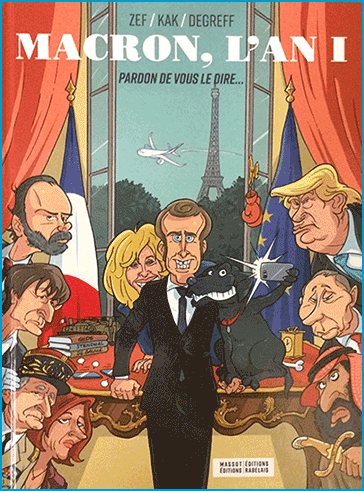
From Macron, L’an I: pardon de vous le dire par Zef, Kak, and Degreff (Paris: Florent Massot, 2018.)
Recent acts of censorship of late night television talk show hosts Stephen Colbert and Jimmy Kimmel have spurred interest in not only reposting this ever pertinent blog post originally published on November 27, 2018 but also updating it with some relevant books acquired since then. With or without humor, we find both presidents still (or again) in power and in the satirical spotlight. Enjoy! Amusez-vous!
—————————
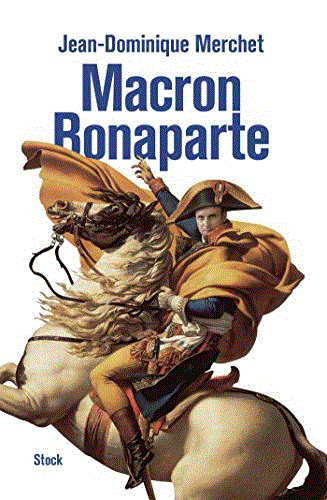
As two of the oldest modern democracies, France and the United States share a long tradition of freedom of speech and of the press (and at times governmental censorship). The two societies have found catharsis in the mockery of their highest elected officials through caricatures, cartoons, and critical writings. Here are a few recent library acquisitions, in English and in French, from both sides of the Atlantic in this category of political critique:
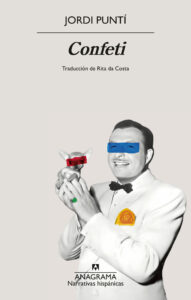
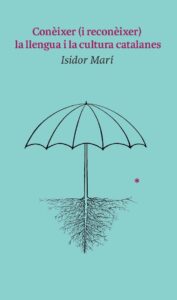
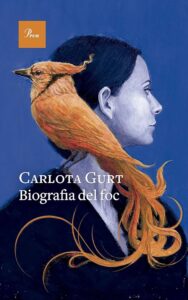
Please find this selection of books in Catalan recently received and cataloged for your reading pleasure. Catalan is a Western Romance language and is the official language of Andorra, and the official language of three autonomous communities in eastern Spain: Catalonia, the Balearic Islands and the Valencian Community, where it is called Valencian.
Catalan is considered a Less Commonly Taught Language (LCTL) in Europe and has received special support from the U.S. Department of Education under the auspices of Title VI of the Higher Education Act of 1965. Other languages of interest to research and teaching at Berkeley and historically supported by this program administered by the Institute of European Studies include Dutch, Portuguese, Modern Greek, Occitan, Yiddish, Galician, Danish, Finnish, Swedish, Norwegian, Icelandic, and more.
All are invited to attend our 2025 Hispanic American Heritage Month webinar that this time focuses on Afro-Latinx heritage.
The webinar will take place on September 16th from 12:45 pm to 2:15 pm PST (3:45 pm to 5:15 pm EST). The webinar is free and open to all with prior registration.
This webinar features three scholars whose work advances understanding of Latin American and Afro-Latinx communities through social policy, culture, and education. In recognition of National Hispanic Heritage Month, the event explores racial and gender justice, ethnoracial legislation, climate ethnography, and Afro-Indigenous knowledge systems. Presenters offer critical insights into how law, environment, heritage, and pedagogy shape the lived experiences of Hispanic and Afro-Latinx communities.
As the war in Ukraine is now in its third year of current military conflict (excluding the takeover of Crimea), it becomes vital for us to provide resources to our students related to the actual war and its progress. For this reason, I wanted to focus on two different platforms that currently offer updates from the field as it evolves on the ground. I hope that the readers of these maps will find them helpful to make their own assessment of the current state of affairs. The first resource is the Deepstate map.
The interface is pretty intuitive, and the map can be displayed in both English and Ukrainian legends. Below is the screenshot that shows the map as of 11:05 am PST on August 25, 2025.
The deepstate live has several different partners that sponsor the project. One of them is Brave1.
Also, there is a blog that is associated with DeepState Live, which can be accessed here.
The second source is hosted by the Institute for the Study of War, which can be accessed here. The resource provides an assessment of the Russian offensive in Ukraine with a cutoff date of August 24, 2025.
Published by Europa Editions, The Passenger series offers an unconventional take on typical travel guides with new writing, original photography, art, and reportage from around the world. The series was first launched in 2018 by the independent Italian publisher Iperborea, and was brought into English by Europa in 2020. It has also been translated into Spanish, Portuguese, and Korean.
The book-magazine travels far and wide to bring back the best writing from the places it visits. It assembles not only reportage, but also long-form journalism and narrative essays with the aim of telling stories of the contemporary life of a place and its inhabitants: “It takes readers beyond the familiar stereotypes to portray the shifting culture and identity of a place, its public debates, the sensibilities of its people, its burning issues, its pleasures and its pain.”
An Author Recommends section provides cultural tips on books, films, music and more from contemporary authors such as Valeria Luisell (Mexico), Banana Yoshimoto (Japan), Enrique Vila-Matas (Barcelona), Pitchaya Sudbanthad (Thailand), Paolo Macry (Naples), Chimamanda Ngozi Adichie (Nigeria) and more. Digging Deeper provides short bibliographies for further reading, and The Playlist links to curated Spotify playlists of music from the featured city, country, or region. To date there have been eighteen volumes published in English, and all are shelved in Morrison Library’s travel section, waiting for their next trip.
Map of Luso-African Literary Publishers by City generated by Bee Lehman
More than 80 works of literature from Angola, Cabo Verde, and Mozambique arrived in Doe Library last week. This selection of poetry, short stories, and novels in Portuguese was made possible through a generous 3-year grant from the Fundação para a Ciência e a Tecnologia (FCT) in Lisbon. The absence of Lusophone African literature from mainstream African literary studies (mostly in English and French) has been noted by contemporary scholars. These new works of post-colonial fiction and verse listed below are held by few academic libraries and reflect the UC Berkeley Library’s longstanding commitment to collect and make accessible underrepresented voices from across the world in more than 400 distinct languages. Please enjoy this curated list by book dealer Susanne Bach Books which provides a snapshot of the rich literary output from Lusophone Africa over the past three years:
100 poemas para Neto / Poetas da União dos Escritores Angolanos. Luanda, Angola: EAL – Edições de Angola, 2022.



 As two of the oldest modern democracies, France and the United States share a long tradition of freedom of speech and of the press (and at times governmental censorship). The two societies have found catharsis in the mockery of their highest elected officials through caricatures, cartoons, and critical writings. Here are a few recent library acquisitions, in English and in French, from both sides of the Atlantic in this category of political critique:
 Collard, Susan P., ed.
  Drezner, Daniel W.
  Lee, Bandy X.
  Ngono, Emmanuel.