Podcast episode 1: “A Preservationist Spirit” in The Bancroft Gallery exhibit VOICES FOR THE ENVIRONMENT: A CENTURY OF BAY AREA ACTIVISM

Listen to podcast episode 1, “A Preservationist Spirit,” or read a written version of this podcast episode below.
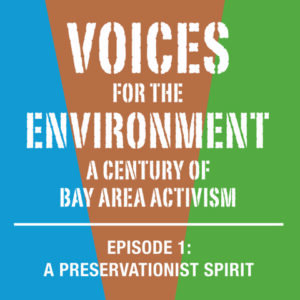
Over a blue, brown, and green background there is white text in a stenciled style that reads Voices for the Environment A Century of Bay Area Activism, Episode 1: A Preservationist Spirit
Podcast Episode 1: “A Preservationist Spirit” is part of the Voices for the Environment exhibition in The Bancroft Library Gallery

Voices for the Environment: A Century of Bay Area Activism is a gallery exhibition in The Bancroft Library that charts the evolution of environmentalism in the San Francisco Bay Area through the voices of activists who advanced their causes throughout the twentieth century—from wilderness preservation, to economic regulation, to environmental justice. The exhibition is free and open to the public Monday through Friday between 10am to 4pm from Oct. 6, 2023 to Nov. 15, 2024, in The Bancroft Library Gallery, located just inside the east entrance of The Bancroft Library. Curated by UC Berkeley’s Oral History Center, this interactive exhibit is the first in-depth effort to showcase oral history along with other archival collections of The Bancroft Library.

This exhibition includes three podcast episodes that offer deeper narratives to supplement the archival posters, pamphlets, postcards, photographs, oral history recordings, and film footage that are also presented in the gallery. Please use headphones when listening to podcasts in The Bancroft Library Gallery.

A written version of podcast episode 1 is included below.

Listen to episode 1: “A Preservationist Spirit” on SoundCloud.

PODCAST EPISODE SHOW NOTES:

Episode 1: “A Preservationist Spirit.” This podcast episode accompanies a section of the Voices for the Environment exhibition that explores how, after the 1906 San Francisco earthquake and fire, demands to rebuild San Francisco targeted the state’s ancient and fire-resistant redwood trees, while desires for a reliable water supply called for damming the Hetch Hetchy Valley within Yosemite National Park. In the decades that followed, an outpouring of activism shaped the ensuing conflict between economic development and environmental protection, and fueled a preservationist spirit in the Bay Area that would only grow over the century.

This podcast episode features historic interviews from the Oral History Center archives in The Bancroft Library at UC Berkeley, including segments from the “Growing Up in the Cities” collection recorded in the late 1970s by Frederick M. Wirt, as well as oral history interviews with Carolyn Merchant recorded in 2022, with Ansel Adams recorded in the mid-1970s, and with David Brower recorded in the mid-1970s. The oral history of William E. Colby from 1953 was voiced by Anders Hauge, and the oral history of Francis Farquhar from 1958 was voiced by Ross Bradford. This episode also features audio from the film Two Yosemites, directed and narrated by David Brower in 1955. This episode was narrated by Sasha Khokha of KQED Public Radio and The California Report Magazine.

This podcast was produced by Todd Holmes and Roger Eardley-Pryor of the Oral History Center of The Bancroft Library at UC Berkeley, with help from Sasha Khokha of KQED. The album and episode images were designed by Gordon Chun.

WRITTEN VERSION OF PODCAST EPISODE 1: “A Preservationist Spirit”

Anonymous Witness 1: The older people were running around wild! They thought it was the end of the world. Everything was shaking.

Anonymous Witness 2: Kind of a low roar. You had the feeling that the roof was coming off.

Anonymous Witness 3: It was a six-story brick building. We were on the third floor. When we finally got out of the building, we were on the top floor. The top three had gone off.

Anonymous Witness 2: By night the city was—it looked like the whole downtown area was on fire

Anonymous Witness 1: Everything was burned, you couldn’t—the home was gone. Everything was gone.

Sasha Khokha: Those are voices of people who survived the 1906 San Francisco earthquake and fire. And they’re just some of the rare recordings you’re going to hear in Voices for the Environment: A Century of Bay Area Activism.

[music]

This podcast accompanies an exhibition in The Bancroft Library at UC Berkeley that’s the first major effort to bring together both the oral history and archival collections of The Bancroft Library. You’re about to hear more voices recorded by UC Berkeley’s Oral History Center, founded in 1953 to record and preserve the history of California, the nation, and our interconnected world.

Voices for the Environment traces the evolution of environmentalism in the San Francisco Bay Area across the twentieth century, and highlights how Bay Area activists have long been on the front lines of environmental change—starting with efforts to preserve natural spaces in the wake of the 1906 San Francisco earthquake and fire. We’ll also learn about the midcentury fight for state environmental protections, and demands to address the disproportionate burden of pollution that sickened communities of color across the Bay.

You’re listening to the first episode of Voices for the Environment. We’re calling it “A Preservationist Spirit.” I’m your host, Sasha Khokha, from KQED.

[music]

Sasha Khokha: A beautiful vista, an ancient forest, a flooded valley. Our relationships with the world around us define who we are, from the air and water that sustains us, to the natural spaces we enjoy, to the creatures we share our surroundings with. Together, we refer to these intertwined elements as “the environment.” Sometimes we struggle with how to change those relationships.  We call that work “environmentalism.”

[piano music from the early twentieth century]

In the San Francisco Bay Area, a new environmental spirit was flourishing in the first decade of the twentieth century. The catalyst for this public activism was not pollution, oil spills, or climate change. Not yet. Back then, it was the 1906 earthquake and fire. 

On the morning of April 18, 1906, a massive earthquake struck just two miles off the coast of San Francisco, then California’s largest city. The quake, with an estimated magnitude of 7.9, was absolutely devastating. Thousands of buildings crumbled to the streets, reducing vast sections of the city to rubble. The recordings you’re about to hear are rare, firsthand accounts of people from the Bay Area who survived the harrowing event. These interviewees were children back in 1906, and they recounted their experiences decades later.

Anonymous Witness 5: I was ten years old, I’d just had a tenth birthday, but I had never heard of an earthquake, I didn’t know the word.

Anonymous Witness 6: We woke up. It’d shake, shake you right out of bed, but we couldn’t get out. The house boxed and the doors jammed, and we had a heck of a time.

Anonymous Witness 5: My mother got us into the doorway and stood us there. And she said, “now stand right here.” And she stood us right in the doorway, “Stand right here.” I said, “Well, what is it?” And we could look across the room and out the building and see the buildings collapsing out there.

Anonymous Witness 1: But when the earthquake came in 1906, the day of it, my mother had a baby girl on that morning. She was ill all evening, all night. The earthquake was so strong that, we lived on the first floor, and on the third floor, the balcony and everything fell down. And fire, our kitchen caught fire, there was my father. So finally, the people—there was a little Irish lady who lived next door with her two young sons, I think they were seventeen and nineteen at that time. Her sons broke the windows and took mother, the mattress, baby and all, brought them  outside on the sidewalk. I remember that like yesterday.

 Anonymous Witness 3: We were four people living in one large room in what was called the Old Supreme Court Building, which was diagonally situated across or located across from the City Hall. Larkin and McAllister Streets. It was a six-story brick building. We were on the third floor. When we finally got out of the building, we were on the top of it. The top three had gone off.

Anonymous Witness 2: So my father said, “You’ve got to get up. You’ve got to get up and dress.” First thing, we went out in the street and you could smell gas. People were all out of their homes in their pajamas and their nightshirts, and so forth, wanted to see what’s happening. Well, it wasn’t too later in the morning when we fully dressed and went out and down the street. And the street car on Geary [Street], the rails were all up in the air and bent. Big gaps, you didn’t, couldn’t—you wondered how far down it went, big gaping holes.

Anonymous Witness 5: And we watched people go by with empty bird cages, and wheeling empty baby buggies, and you know, in a state of complete shock.

[sound effect: fire bell ringing]

Sasha Khokha: As devastating as the earthquake was for San Francisco, it was fire that caused most of the damage. The quake ruptured gas main all throughout the city, sparking nearly three dozen fires, producing an inferno that burned for three-days straight. To make matters worse, firefighters and residents in San Francisco soon ran out of water.

Anonymous Witness 2: And then, about Noon time, we got word that city’s on fire and there’s no water

Anonymous Witness 1: We didn’t have a stitch of clothes on, just an up-top shirt, couldn’t get anything. He went back, thinking he’d be able to save something. Everything was burned, you couldn’t—the home was gone. Everything was gone, so we didn’t.

Anonymous Witness 5: We had gotten some blankets from my aunt. And of course, we went out with nothing from our building except what we were wearing. And we got some blankets from my aunt, and we slept in that—we stayed in that lot. That’s my first recollection of the fire, because from there we could watch everything burn.

[sound effect: dynamite demolition explosions]

Sasha Khokha: No water and a raging fire left city officials only one option: to create fire blocks by dynamiting the buildings that stood in the fire’s path so there would be nothing left to burn. 

Anonymous Witness 5: We watched them blast down on Valencia Street and down on Mission Street, sort of backfiring, watched them blast the old theater out there, the Valencia Theater. We slept under the blankets that night, and had to wake every once in a while and shake them because they were heavy with ashes.

Anonymous Witness 4: I recall going to where the Mint is today to watch the fire from where the Mint is on that hill. We could see the fire burning downtown from there on Baker.

Anonymous Witness 2: There’s the school up—it’s right up the hill here—the Lone Mountain College. It was a bare hill at that time, that’s where the name Lone Mountain came to be. So, we walked up there, and by night the city was—it looked like the whole downtown area was on fire.

Anonymous Witness 6: Mr Shields had an automobile, he was the third neighbor to us. So we went down on Market Street. Here was the Palace Hotel, and we were here. And we saw the windows go boom-boom from the heat.

Sasha Khokha: Here’s more recollections of what became known as the Great Fire of 1906.

Anonymous Witness 7: We could see the flames, the fire, from the hills that were burning, all the houses. And the Fairmont Hotel was being built at the time, and it wasn’t finished. And the fire was all around there, but I don’t think it did that much damage there. But just like it was over the sky above us.

Anonymous Witness 2: I can recall the first night when the city was on fire, saying nothing, just staring there next to my father. And I cried and cried. He finally looked down at me and he says, “Well, what can you do about it?” I said, “There goes San Francisco.”

Sasha Khokha: When the last fire was finally extinguished, San Francisco lay in ruins. The earthquake and fire had claimed over 3,000 lives and destroyed 80 percent of what was then the largest and richest city west of Chicago. Within weeks, the mission to rebuild San Francisco got underway.

What you may not know is that the plan to rebuild involved cutting down some of California’s ancient redwood forests. Coastal redwood trees (known scientifically as Sequoia sempervirens) are among the largest and oldest organisms living on Earth. They’ve survived along California’s coast for at least 20 million years, some of them reaching more than 300 feet high and twenty feet wide. That giant size made them a prime timber source to rebuild the devastated city, especially because redwood is pretty fire resistant.

That started a logging frenzy. Timber interests like the Redwood Car Shippers Bureau circulated promotional photos showing buildings constructed out of redwood still standing amid a burned-out San Francisco skyline. [sound effect: sawing wood] In the years that followed, lumber mills up and down the coast worked overtime to meet the city’s endless demand. And record shipments of redwood made their way to San Francisco Bay.

And here’s where the earthquake and fire led to an early call for environmental preservation. Bay Area residents, including John Muir and other members of the newly formed Sierra Club, spearheaded the effort to stop logging redwoods. Muir was an immigrant from Scotland who fell in love with the Sierra Nevada. In the late 1800s, he settled in the Bay Area city of Martinez. In 1892, he and other Bay Area residents founded the Sierra Club with an early mission to explore, preserve, and protect California’s mountains and forests. They feared the logging frenzy to rebuild San Francisco had already taken its toll on the region’s redwoods.

Take the area around Palo Alto. Located 30 miles south on the peninsula, the city got its name from surrounding redwood forests. Palo Alto means “tall tree” in Spanish. In the years after the earthquake and fire, that reference would be lost though, because rebuilding San Francisco depleted those “tall tree” forests.

Concerned residents throughout the Bay Area reacted quickly. They started lobbying the state and federal government to protect the region’s remaining redwood groves. State officials responded by expanding the boundaries of Big Basin Redwoods State Park in the Santa Cruz mountains. It’s California’s first and oldest state park, founded in 1902. Over the decades, the protected area of Big Basin would steadily expand to include some 18,000 acres. That’s 6 times as big as the park’s original boundaries.

Federal officials took action to preserve the redwoods, too. In 1908, Bay Area Congressman William Kent led the charge to federally protect 295 acres of redwood forest in Marin County, just north of San Francisco. The preserved area is known as Muir Woods National Monument. Here’s what John Muir wrote to Kent shortly after the Monument’s creation: “Saving these redwoods from the axe and saw, from money-changers and water-changers, and giving them to our country and the world is in many ways the most notable service to God and man I’ve heard of since my forest wandering began.”

John Muir and other men became figureheads of environmental preservation. But women played a critical—yet often overlooked—role in early environmental activism, too. Women provided much of the grassroots momentum to save California’s redwoods through letter writing, lobbying, fundraising, and leading various organizations. Women in the Sempervirens Club and California Club were instrumental to the creation of protected areas like Big Basin Redwoods State Park, Muir Woods National Monument, and Calaveras Big Trees State Park. The creation of these protected areas forced timber companies to concentrate their operations in more remote regions along the North and Central coasts. But the activists in women’s organizations, from the California Federation of Women’s Clubs to the Women’s Save the Redwoods League, kept pushing to protect those regions, too.

Men may have cast the votes in congress and state government to protect redwood forests, but it was the activism of women throughout California that helped put these issues on the table in the first place. Here’s UC Berkeley environmental historian Carolyn Merchant:

Carolyn Merchant: Women had power, but they had power through their roles in a traditional patriarchal society, so that they could do more things within that patriarchy than had been thought of before. And so women began to feel a sense of power, a sense of what they could do. And they can actually assert that power in order to help save the planet, and how women themselves can become important forces in the whole role of conservation and resources.

Sasha Khokha: The tug-of-war between the development of cities like San Francisco and preservation of California’s redwood forests—that was a fight that would continue for decades, putting the focus on humans, rather than fire or pests, as the primary threat to these ancient trees and their environments. This battle helped ignite and expand the preservationist spirit that would shape environmental activism in the Bay Area for the next century.

[music]

San Francisco had long impacted environments well beyond its city boundaries. In the wake of the 1906 earthquake and fire, the city’s efforts to rebuild began to affect more remote regions of the state, including areas previously protected by preservationists. And as rebuilding San Francisco continued, the city began to need not just trees, but water. 

In 1908, city leaders proposed a project to provide a reliable water source for San Franciscans. The scale of the idea was unprecedented. They wanted to dam the Hetch Hetchy Valley, which was then preserved as part of Yosemite National Park. The plan was to engineer a system to carry the water 160 miles to San Francisco—what used to be a 2 day stagecoach ride before the Yosemite Valley Railroad opened in 1907.

The proposal to dam Hetch Hetchy sparked a five year debate, from San Francisco city hall to the steps of congress in Washington DC. The preservationists who opposed the dam were led by John Muir and other Sierra Club officials. They argued Hetch Hetchy Valley was a sacred piece of Yosemite National Park. If it were sacrificed to bring water to San Francisco, that would set a dangerous precedent for tapping into resources in all kinds of protected areas. 

William E. Colby: Another outstanding matter that came before the Sierra Club for action, and John Muir was strongly behind it, was what we refer to as the Hetch Hetchy fight. The Hetch Hetchy Valley had been included in Yosemite National Park largely as a result of John Muir’s efforts.

Sasha Khokha: That was Anders Hauge [How-gee] reading the oral history of William E. Colby, who stood on the frontlines with John Muir during the Hetch Hetchy campaign. Colby, who was born and raised in the Bay Area, held the post of Secretary of the Sierra Club for more than forty years. He led campaigns to expand Sequoia National Park, as well as create Olympic and Kings Canyon National Parks. Here is Hauge again reading from Colby’s 1953 oral history about how he cut his political teeth in the fight to keep Hetch Hetchy preserved.

William E. Colby: San Francisco became interested in acquiring this as a municipal water supply. When we heard of it, of course John Muir was tremendously exercised to think that a great part of his work would be undone. And so the Sierra Club very strongly opposed this application by the city of San Francisco. We were successful in preventing the grant for a number of years.

Sasha Khokha: But city developers pushed back. Creating a viable water supply? That was progress. It would help bring fresh water to a thirsty city. Developers also drew heavily on the imagery of a vulnerable San Francisco left without water in the face of a raging fire. The 1906 earthquake and fire was the first natural disaster captured on film. So advocates for the dam had lots of material to help make their case.

William E. Colby: But the tide turned when Woodrow Wilson became president, because he named Franklin K. Lane, who had been City Attorney of San Francisco when the application for the Hetch Hetchy site had been made, Secretary of the Interior. Because of this change in the political situation, we found that we were at a great disadvantage. We had tremendous support from many sources. But this political change was too powerful for us. We even enlisted the support of civil engineers, hydraulic engineers, who aided us in preparing reports showing that there were half a dozen other sources of supply that San Francisco could have obtained. And that was absolutely demonstrated later on by the fact that Oakland went over to the Mokelumne River and obtained a very fine water supply and brought it into Oakland long before San Francisco got the Hetch Hetchy supply. We were handicapped in every direction.

Sasha Khokha: In the end, Congress sided with the city of San Francisco, passing the 1913 Raker Act, which permitted the flooding of the Hetch Hetchy Valley in Yosemite. And the construction of the massive O’Shaughnessy Dam, with an extensive water-delivery system. Colby recalled in his 1953 oral history how this decision impacted his friend and mentor, John Muir.

William E. Colby: The loss of Hetch Hetchy Valley was a tremendous blow to John Muir. I’m quite sure that this loss of the Hetch Hetchy Valley had a great deal to do with Mr. Muir’s subsequent Illness and ultimate death. He probably died in advance of the time that he would have if the attempt to save Hetch Hetchy had not gone against him. Muir didn’t mince any words in expressing his ideas of the tremendous loss to the nation by reason of the flooding of Hetch Hetchy Valley.

Sasha Khokha: John Muir died in December of 1914 – one year after congress voted to authorize San Francisco’s plan to dam  the Hetch Hetchy Valley.

[piano music]

Decades later, native San Franciscan and famed photographer Ansel Adams shared his grief over the loss of Hetch Hetchy. Adams joined the Sierra Club shortly after Muir’s death and would build his career photographing Yosemite National Park.

Ansel Adams: We lost the Hetch Hetchy. And one of the great disappointments there was Gifford Pinchot’s support of it. You see, he really turned the trick with the secretary of the interior.

Sasha Khokha: Gifford Pinchot as America’s first professionally trained forester. From 1898 through 1910, he served three American presidents in the US Department of Agriculture as the nation’s chief of forestry. He also became a major supporter of  damming the Hetch Hetchy Valley. If John Muir became a figurehead for the preservation of nature, Pinchot’s early leadership of the US Forest Service symbolized the corporate and multi-use model of natural resources.

Ansel Adams: People forget the Forest Service is primarily a commercially oriented, really, a controlling administration. It’s just recently that they’ve been stressing “many uses” for political reasons. It sounds very fine, and in many ways is all right. But when you get into very beautiful areas that should have park or wilderness status, see, it doesn’t work.

Sasha Khokha:  As Adams recalls, the Hetch Hetchy site was not just about getting water, but hydroelectricity for the growing city of San Francisco. That would help build the power grid of the utility giant Pacific Gas and Electric, or PG&E.

Ansel Adams: The Hetch Hetchy—where are you going to get your water? In San Francisco, that’s our water supply. And San Francisco, that is a big community. And the Russian River was considered. See, what happened there was that there was another site further down that would be much bigger in expanse but not so deep. And we worked for that very hard, but that could not provide enough power. There wouldn’t be enough “fall.” But the whole Hetch Hetchy was put where it is, in the Hetch Hetchy Valley, because of the favorable power situation. 

Sasha Khokha: Some of the defenders of Hetch Hetchy came from San Francisco’s business community, like Francis Farquhar [Far-kwar]. He was a Harvard-educated accountant who joined the Sierra Club a year after moving to San Francisco in 1910. He would serve more than 25 years on the Club’s board of directors, including two terms as Sierra Club president. Here is Ross Bradford reading from Farquhar’s 1958 oral history.

Francis Farquhar: I never participated in the Hetch Hetchy matter. I was in Boston at the time the bill finally passed. I had seen it in 1911 when I came out to the Sierra Club outing with Jim Rennie. We came all the way down the Tuolumne canyon and camped in the Hetch Hetchy Valley a day or two. I recognized its beauty.

Sasha Khokha: For Farquhar, the devastating  loss of Hetch Hetchy had a silver lining. Because – although tragic – it may have provided one of the most powerful and lasting influences for what would become the environmental movement in the U.S.

Francis Farquhar: I think that it is too bad that the national park idea had not developed further at the time to prevent the surrender of such an important portion of a national park. Possibly, the fact that Hetch Hetchy was surrendered strengthened the whole national park idea with the slogan, “Never another Hetch Hetchy.”

[music crescendo]

Sasha Khokha: Few activists in America likely used that slogan as effectively as David Brower.  Many consider him the godfather of the modern environmental movement. He’s from Berkeley, and served as the first executive director of the Sierra Club from 1952 to 1969. He oversaw a tenfold expansion of the Club’s membership and led campaigns to establish ten new national parks. Brower also pioneered the use of film, books, and other media to advocate for environmental causes. One of those was the fight against a proposed dam on the Colorado River in Dinosaur National Monument.

David Brower: I didn’t go to Dinosaur until 1953. That was the year the Sierra Club started to run river trips that were patterned after a river trip that Harold Bradley had taken his family on the year before. He went there to make a film, and made a family film, and showed around. That was certainly one of the things that awakened my interest in what was there.

Sasha Khokha: When the dam proposal came to congress, Brower and other environmentalists waged an all-out campaign to preserve Dinosaur National Monument. 

David Brower: It did—at least it was important to the Sierra Club. It was important to a lot of the conservation organizations, where they could really take on the establishment and stop it. There were all kinds of—that is, whatever led Newton Drury to say, “Dinosaur is a dead duck,” was a force that was reversed, and it was reversed with a battle that had a nationwide audience. And we persuaded a good many of the people whose voices were heard in Congress. They’re a lot of people, but you find a few of the leaders and get them to go, and you’re in fairly good shape.

Sasha Khokha: In his oral history, Brower says the similarity of the dam project in Dinosaur to Hetch Hetchy was striking. He highlighted that parallel in his advocacy film, “The Two Yosemites.” 

David Brower: There was one other thing that worked pretty hard, worked well in our lobbying effort. And that was the lowest budget film on record. The one I did on Two Yosemites. The budget was, I guess, five rolls of Kodachrome film and my own time. I did the editing, and I wrote the script, and then I recorded it. We put out this film, it’s an eleven-minute film. We made six copies of it. I showed those in a good many places. And it had quite an impact. That is, what had been done to Hetch Hetchy, and all the claims that were made of how beautiful a lake it would be and how great a recreational resource. Of course, it wasn’t. It isn’t. It wasn’t necessary. And the parallel with Dinosaur was so beautiful that we worked on that constantly.

David Brower in the film Two Yosemites: The other Yosemite was only a little less beautiful than this one, and a few miles to the north: Hetch Hetchy Valley. John Muir, the Sierra Club, and other conservation groups fought hard against this destructive park invasion. San Francisco argued that, without this water, they would wither; it must have this cheap power; there were no good alternatives; and the dam would enhance the beauty of the place and make it more accessible; the greatest good for the greatest number; teeming San Francisco against the few people who had yet visited Yosemite. Not one of the city’s claims has proved valid. 

Sasha Khokha: David Brower’s activism, along with efforts of other preservationists, did prove successful. In 1955, the Secretary of the Interior withdrew the proposal for the dam at Dinosaur National Monument. And that campaign was just one of many environmental efforts Brower would lead from Sierra Club headquarters in the Bay Area. By the late 1960s, Brower’s leadership would elevate the Sierra Club’s national profile, transforming it from a California-based group to one of the largest and most influential environmental organizations in North America.

[music]

We’ve heard how a new and bustling San Francisco arose from the ashes of the 1906 earthquake and fire. So did a robust and ever-growing spirit of preservation, a force that would shape environmentalism in the Bay Area, and beyond, for well over the next century. The activism that began to preserve the state’s ancient redwood forests would result in forty-nine state and federally protected redwood parks in California. And the legacy of the Hetch Hetchy fight helped inform the preservation of landscapes across the U.S.—423 federally protected areas to be exact.

Yet, in the middle of the twentieth century, environmentalism in the Bay Area once again found itself at a crossroads.The Postwar development boom forced a choice between protecting the environment and using natural resources to meet the needs of a growing population. You can hear that story in our next episode of Voices for the Environment

You’ve been listening to “A Preservationist Spirit,” the first of three episodes in the podcast Voices for the Environment: A Century of Bay Area Activism. It’s part of an exhibition in The Bancroft Library at UC Berkeley that runs from October 2023 through November 2024. This episode featured historic interviews from the Oral History Center archives in The Bancroft Library at UC Berkeley. Including segments from the “Growing Up in the Cities Project” recorded by Frederick M. Wirt; and oral history interviews with Ansel Adams, Carolyn Merchant, and David Brower. The oral history of William E. Colby was voiced by Anders Hauge, and the oral history of Francis Farquhar was voiced by Ross Bradford. To learn more about these interviews and the Oral History Center, visit the website listed in the show notes. This podcast was produced by Todd Holmes and Roger Eardley-Pryor, with help from me, Sasha Khokha. Thanks to KQED Public Radio and The California Report Magazine. I’m your host, Sasha Khokha. Thanks for listening!

End of Podcast Episode 1: “A Preservationist Spirit.”

ABOUT THE ORAL HISTORY CENTER

The Oral History Center of The Bancroft Library preserves voices of people from all walks of life, with varying political perspectives, national origins, and ethnic backgrounds. We are committed to open access and our oral histories and interpretive materials are available online at no cost to scholars and the public. You can find our oral histories from the search feature on our home page. Search by name, keyword, and several other criteria. Sign up for our monthly newsletter  featuring think pieces, new releases, podcasts, Q&As, and everything oral history. Access the most recent articles from our home page or go straight to our blog home.

Please consider making a tax-deductible donation to the Oral History Center if you’d like to see more work like this conducted and made freely available online. While we receive modest institutional support, we are a predominantly self-funded research unit of The Bancroft Library. We must raise the funds to cover the cost of all the work we do, including for each oral history. You can give online, or contact us at ohc@berkeley.edu for more information about our funding needs for present and future projects.
A spearhead for the barrio: the educational activism of Ernesto Galarza

From the Archives

By Adam Hagen

UC Berkeley’s Oral History Center houses a number of oral histories that center the lives of Mexican American activists. One such history, Burning Light: Action and Organizing in the Mexican Community in California, contains the recorded speeches and interviews of Ernesto Galarza from the late 1950s through the early 1980s, and provides a glimpse into the life of a man whose commitment to the Mexican American agricultural workers of California never wavered, even when he found himself a continent apart from them.

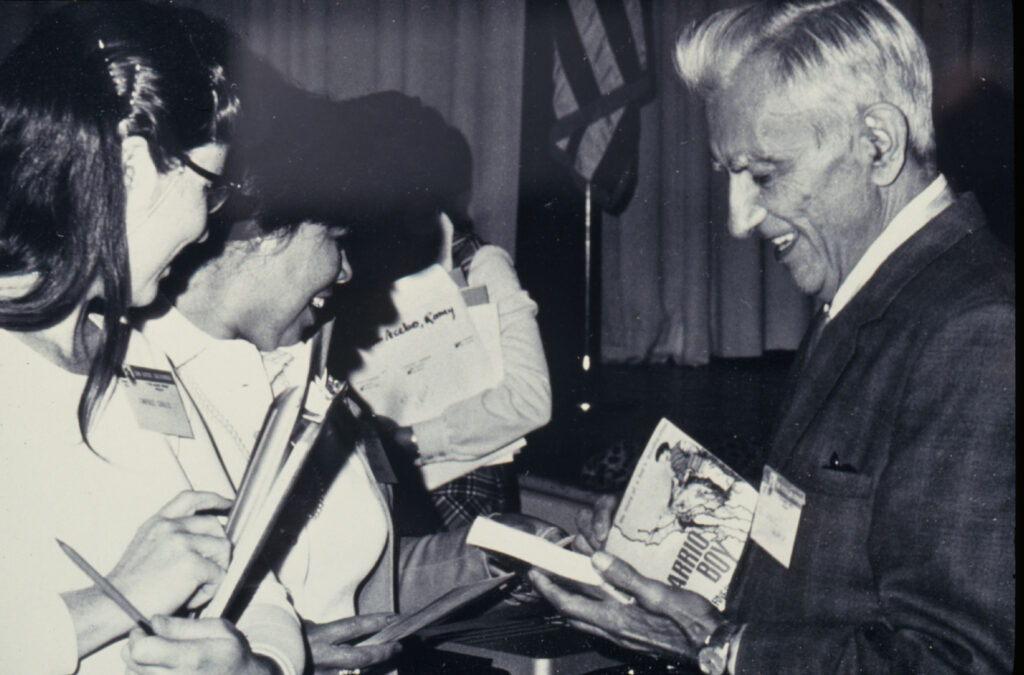
An older Ernesto Galarza at a book signing, signing a book, with two young women waiting in line; everyone is smiling.
Ernesto Galarza signs one of his books. (Photo: Occidental College)

Galarza’s words, which he imbues with a certain dry poetry, recount a life of extraordinary experience and achievement: Galarza worked as an organizer with the United Farm Workers of America, where he was instrumental in bringing the bracero program to an end; as an educator at the elementary and collegiate levels; and for a time as the chairman of the development of bilingual educational material for the National Committee of Classroom Teachers. He also worked as a consultant for several organizations and institutions, including the government of Bolivia. A recurring theme in Galarza’s oral history, and the subject of this profile, is his efforts on behalf of bilingual education and Spanish literacy advancement in the Mexican American community.

Galarza was born in the village of Jalcocotán in the Mexican state of Nayarit in 1905. But fleeing the tumult of Francisco Madero’s revolution, he and his family came to Sacramento in 1911, when the Central Valley’s patchwork of farm property was not yet its present expanse and its limits did not so easily elude the eye. There, enveloped in a community of agricultural laborers in the Sacramento barrio, a young Galarza would see firsthand the struggles of Mexican Americans and braceros as they tried to navigate the foreign land in which they now found themselves. And, as his family was of modest means—exacerbated by his mother’s death in 1917—he too joined in this work from an early age. One of the recorded talks compiled in the oral history contains a poignant allusion to his communities’ challenges in adapting to life in the United States, and, as it deals with the matter of English language acquisition, reveals the seeds of his future work. In the talk, Galarza recalls that he “became a leader in the Mexican community at the age of eight for the simple reason that I knew perhaps two dozen words of English.”

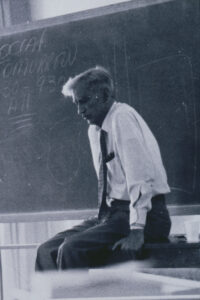
Ernesto Galarza sitting on a desk, with chalk board in the background, looking serious.
Professor Galarza in a classroom. (Photo: Occidental College)

English proficiency, however, was only one of a number of skills that Galarza exhibited in his youth. His academic prowess was so apparent that Sacramento High School teacher Ralph Everett approached him personally and asked that he reconsider his plan to work at the Sacramento Libby, McNeill & Libby cannery after graduation, insisting that he attend college instead. Everett even went to great lengths to help Galarza gain admission to Occidental College in Los Angeles, the institution he would graduate from in 1927. After Occidental, Galarza would go on to earn a master’s degree in history from Stanford University in 1929 and a doctorate in sociology from Columbia University in 1944.

Galarza’s recollection of his time at these institutions reveals how rare it was for a “Mexicano” to have the opportunity to obtain a higher education in the early twentieth century. He had this to say at a talk for Chicano studies students at UC Berkeley in 1977:

The Chicano students that I knew in the thirties at Columbia and elsewhere were very few in number. At Columbia University I didn’t know another graduate student in the department of history or political science or public law, which is where I did my work. Neither were there many of us in the undergraduate institutions in Southern California where I went to college at Occidental. I remember, I think it was in 1925, out of sheer curiosity I inquired among my friends at UCLA, USC, Pomona, Whittier and all of that cluster of colleges in the south, and I could only identify six of us in all of those places. Of course, possibly that wasn’t a good count because even then there were some Chicanos who had already given up their identity. They had become anything but Mexicans. In those days, we didn’t talk about Chicanos. You were either a Mexicano or you were not.

His skills in English and consequent academic achievements were a relative anomaly among the bracero and Mexican American communities due to there being a dearth of bilingual and English language education resources at the time of his youth. According to Galarza, not until the latter half of the twentieth century did the federal government take the concept of bilingual education and English as a second language (ESL) education seriously and fund it in any substantial fashion. And, as he notes in his oral history, once funding did increase there remained a system that overlooked the intricacies of bilingual education; advisory committees in Washington attempted to regulate the bilingual and ESL instruction from afar, and their distance resulted in curriculum that was incongruent with students’ needs.

Concerned about this oversight, Galarza explains that he and other instructors working in bilingual education were actively challenging the Department of Health, Education and Welfare and the Office of Bilingual Education in the 1970s, and had begun to see success. As he says in the oral history, he felt their work “has been so effective, even modest as it is, that it has created waves that have become very ominous to them.”

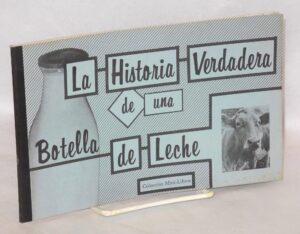
mini book, with images of a bottle of milk and a cow, with the wording: Historia verdadera de una botella de leche
An example from the collection of Mini-Libros.

And beyond his pushing for better, more personalized bilingual education curriculum on an institutional level, Galarza—believing that Spanish literacy had to precede English instruction—took it upon himself to craft and publish what he called “Mini-Libros,” easy-to-read Spanish texts that he designed for use in the classroom and hoped would engage young readers. So as to make students as comfortable as possible, the Mini-Libros even contained vocabulary specific to Mexico and the working-class immigrants coming to the United States at the time.

These actions were especially timely because Mexican immigration into the US was greatly increasing in the 1960s and ’70s, a topic thoroughly discussed in the interview. Galarza recognized the wealth of challenges—from housing to employment to education—that came with incorporating such a massive population into the fabric of American society, and identified the issues of literacy and English proficiency as those he was most eager to help resolve.

Each summer in his undergraduate years Galarzo would return to Sacramento to do what he called “bread and butter work” in the farms and the cannery. Later, when he left California to study at Columbia and the path home was no longer so easily negotiated, his community’s want of literacy became a major concern, in part his due to its personal impact:

I began to be disturbed by the lack of news from home. My family and my friends back in Sacramento were not writers. They didn’t know, many of them, how to write…When I realized after my third or fourth year back in the East that this was happening to me, I became very disturbed. And while we stayed in the East another six years, that feeling never left me that what was happening back in California in all the towns that I knew and where I had worked, I was not keeping abreast of.

Galarza believed that the Mexican immigrant children coming into the school system in the mid-twentieth century had to be brought into the fold of American life, to be “acculturated,” in his words, so as to avoid the fate of his own family and community. And such acculturation could not begin with a hard-and-fast imposition of English instruction, something he believed would only further alienate the newly arrived immigrants, accelerate the creation of insular communities, and complicate their path to prosperity in the US. He viewed bilingual education as the obvious answer to this challenge. It would help a child, as he noted in his oral history, to “recognize—to get into—and become familiar with this strange environment into which he’s been dropped.”

Galarza’s oral history is an invaluable glimpse into the subtle divides of his time: for each acknowledgement of how badly the “American hosts” have treated Mexican Americans, he has another remark on the myopia of Mexican American activists due to their protests against acculturation—something he believed was “largely for the purposes of propaganda.” And beyond these commentaries, he proves to be equally invaluable as a representation of a steadfast activism that lacks glamour and prefers actions to words. Galarza identified the challenges of his time and repeatedly asked the central question: what to do about it?

Find this interview and all our oral histories from the search feature on our home page. You can search by name, keyword, and several other criteria.

Adam Hagen recently graduated UC Berkeley with majors in Spanish linguistics and history. Adam worked as a student editor for the Oral History Center and was also a member of the editing staff of Clio’s Scroll, the Berkeley Undergraduate History Journal.

Related Resources from The Bancroft Library

The Bancroft Library has more than thirty holdings by Ernesto Galarza, including poems, books, reports, pamphlets, conference proceedings, and audio of talks and panel discussions. From the UC Library Search, go to “Advanced Search,” select “UC Berkeley special collections and archives,” and in the search field, enter Ernesto Galarza.

The Chicana/o Studies Oral History Project provides a rare, firsthand look at the development of the field of Chicana/o studies over the last fifty years, as well as unique insight into the lives and careers of the pioneering scholars who shaped it.

The Oral History Center digital collection contains additional oral histories of Mexican American activists, such as Hope Mendoza Schechter and Herman E. Gallegos. More can be found by searching “Mexican American community” or “Mexican American activism” on the Oral History Center home page.

Ernesto Galarza’s oral history is part of the Oral History Center’s Advocacy and PhilanthropyIndividual Interviews collection. Read more about the collection in the article by Lauren Sheehan-Clark, “Helping Hands: A Guide to the Oral History Center’s Advocacy and Philanthropy Individual Interviews.”

About the Oral History Center

The Oral History Center of The Bancroft Library preserves voices of people from all walks of life, with varying perspectives, experiences, pursuits, and backgrounds. We are committed to open access and our oral histories and interpretive materials are available online at no cost to scholars and the public. You can find our oral histories from the search feature on our home page. Search by name, keyword, and several other criteria. Sign up for our monthly newsletter featuring think pieces, new releases, podcasts, Q&As, and everything oral history. Access the most recent articles from our home page or go straight to our blog home.


Connection, Insight, Inspiration, Truth: Berkeley undergraduates reflect on oral history

“I was just one of thousands of people over the years who have done the little things necessary to create and to pass on personal narratives of the past.” —Mollie Appel-Turner 

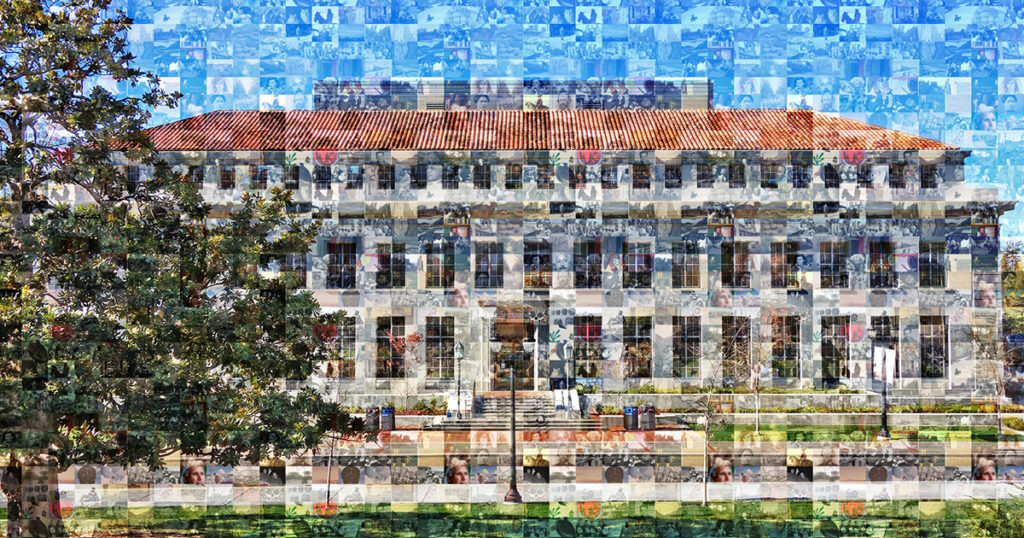
Photo collage where numerous photos that are not individually discernible make up an image of The Bancroft Library, with grass in front and sky above.
Photo collage depicting The Bancroft Library

Introduction: Thoughts on the Production of Oral History and Its Importance

by Serena Ingalls, class of 2023

Like many of my student co-workers at the Oral History Center (OHC), I have recently graduated from UC Berkeley. Graduation from college is a major milestone, and I find myself looking back at all of my different experiences at Cal: classes, clubs, the pandemic, and my job as a student editor and researcher at the Oral History Center. My job in oral history in particular is a point of contemplation, as I’ve spent many hours in this role and it’s a unique experience that only a handful of other students can relate to. I find myself wondering, how has this job impacted me and my view of the world? How has my work in this role contributed to the field of history? 

Before closing the UC Berkeley chapter in our lives and moving on to other post-grad interests, we as the student editors took the time to reflect upon our work at the Oral History Center and what it means to us. We hope that you’ll enjoy stepping into our world as student editors in oral history, just as we have enjoyed the experience of getting to know the many fascinating individuals in our oral history archive. 

Editor’s note: Our team’s student editors serve critical functions in our oral history production, analyzing entire transcripts to write discursive tables of contents, entering interviewee comments, editing front matter, writing abstracts, and more. They do the work of professional editors and we would not be able to keep up our pace of interviews without them.  

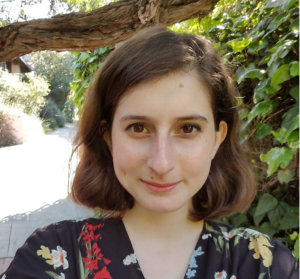
Mollie Appel-Turner: Oral History and Connection

Mollie Appel-Turner - portrait
Mollie Appel-Turner

Working for the Oral History Center of The Bancroft Library while pursuing a history degree was both deeply rewarding and extremely unfamiliar. My area of interest when it comes to history has always been western medieval Europe. While there are plenty of sources from the era where people recount their life experiences, I always had an awareness of the massive separation—temporal, cultural, and physical—between myself and the speaker. At the Oral History Center, I was keenly aware that the work that I was doing on oral histories was with the ultimate goal of preserving knowledge for future generations. But for the time being, that gulf I was used to, which to me practically defined the work I did as history, was simply not present. In my time outside of work, I also spent a fair chunk of time reading people’s personal accounts. While these accounts differed in many ways from the oral histories that I worked on, as time passed, I came to see these different kinds of personal accounts as reflections of one another. I would frequently stop in the middle of my shift, cursor blinking next to a spelling error, and think about how I was just one of thousands of people over the years who have done the little things necessary to create and to pass on personal narratives of the past. The immediacy, and modernity of the accounts that I worked on at the Oral History Center, rather than widening the distance I felt between me and the medieval people I studied, made me feel closer to them in a way that I did not expect.

Mollie Appel-Turner joined the UC Berkeley Oral History Center as a student editor in fall 2021. She recently graduated with a degree in history with a concentration in medieval history. 

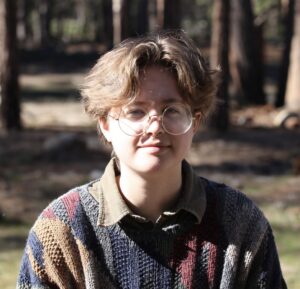
Shannon White: Oral History and Inspiration 

In my time at the Oral History Center, I have worked on and witnessed the publication of interviews from an innumerable variety of narrators, including artists, writers, curators, academics, conservationists, and otherwise “ordinary” people with extraordinary stories to tell. I recall the first oral history I worked on upon joining the Center: Thomas Gaehtgens, former director of the Getty Research Institute, whose interview was not only incredibly detailed but also quite interesting to read. More recently, I have helped edit interviews from the Chicana/o Studies Oral History Project, the Japanese American Intergenerational Narratives Oral History Project, and the California State Archives State Government Oral History Program.

 As a member of the OHC’s editorial team, most of my work is behind the scenes and prior to publication. I see these interviews at almost every stage in production. By the time an oral history transcript is finalized, I have generally read through it in its entirety several times and am quite familiar with the contents; as such, I interact with oral history at multiple levels. This experience has ultimately helped form and maintain my view of oral history as an inherently dynamic, interactive record—a form of living history.

The final oral history is a labor of many people to produce, with several rounds of edits and review that heavily draw from the narrator’s own input, and as such possesses a strong sense of the narrator’s personal style: how they speak, what they consider important or even essential for understanding their stories, their sense of humor, and what elements of the initial oral interview they would prefer to keep private.

The result is a distinctively humanizing portrayal of the narrator that arises from the nature of oral history as a lightly edited, audio-based interview format. The reliance on the “oral” aspect of oral history means that, bar serious editing, the published transcripts of interviews from the OHC tend to preserve a great deal of the tone of the original audio recording, including quirks of speech unique to each narrator. My personal favorite detail is always the bracketed notes included by the transcriber to indicate when someone is laughing, a phenomenon that often accompanies the conversation between interviewer and narrator and, in my opinion, highlights the deeply personal nature of these interviews.

Shannon White in front of trees
Shannon White

By sheer virtue of the volume of in-progress oral histories I interact with, I find that in time they become almost a part of you—there are so many narrators whose words and stories I remember, and whose work I have actively sought out after encountering their oral histories. For example, I became interested in Bay Area arts institutions after reading the interview of a San Francisco Opera board member; my own undergraduate research has been informed in no small part by border theory, a concept I was first introduced to by the narrators of the Chicana/o Studies Oral History Project; and my work on the oral histories of California politicians has contributed to my awareness of the history of the state’s politics. Oral history is intimate and alive, and its existence has the unique ability to inform and inspire those who engage with it.

Shannon White is a recent UC Berkeley graduate in the Department of Ancient Greek and Roman Studies. They were an undergraduate research apprentice in the Nemea Center under Dr. Kim Shelton and a member of the editing staff for the Berkeley Undergraduate Journal of Classics. Shannon worked as an editorial assistant for the Oral History Center.

Serena Ingalls: Oral History and Insight

Before working at the Oral History Center as a student editorial and research assistant, my interactions with oral history were limited. As a history major, it was a topic occasionally mentioned in my classes at Cal. I could understand the value in oral history as a way of filling in gaps in the historical record and giving a voice to those who were excluded from the written record. After I began my work with the OHC, however, I gained a new appreciation for oral history. This change in perspective came after seeing firsthand the immense effort that goes into producing oral histories to be shared with the public, and from reading the oral histories in our archive.

At the Oral History Center, I’ve worked in two roles. One of my roles is as a research assistant. In order to promote our archive and share our interviews with the public, we post on social media about relevant historical anniversaries (25th, 50th, 75th, 100th). I research these anniversaries and then search the archive to see if we have content that references these historical events. It’s surprising how many specific events are mentioned by interviewees, so I never discount an event without checking first with the archive. If there is one event that is very historically significant and has several interviews that reference it, sometimes I’ll write an article on the subject for the OHC. My other role is as an editorial assistant. Editorial assistants are part of the process of readying an oral history for publication. Student editorial assistants have a range of responsibilities during the editorial process which include inputting corrections from narrators, writing the table of contents, and more. Editing the oral history is a collaborative process, and it can take months or even years before an oral history is fully ready for publication. Once an oral history is completed and shared with the public, all who have worked on a particular oral history know the narrator inside and out. 

The OHC has an enormous archive of interviews with narrators who have incredible insight on the history of California and beyond. Their voices provide knowledge, but more critically, they add life to these historical periods. The interviews are at times surprising, heartbreaking, and even funny, and no two interviewees have the same story. Each interview is a unique combination of the mundane and the extraordinary, just like the life of any person. 

“Each interview is a unique combination of the mundane and the extraordinary, just like the life of any person.” —Serena Ingalls

Serena Ingalls recently graduated UC Berkeley with majors in history and French. She is an editorial and research assistant for the Oral History Center. Serena came up with the idea for an article about what it’s like to work on oral histories when she worked on an article about the seventy-fifth anniversary of the tape recorder. 

William Cooke: Oral History and Truth

A few short months ago, I graduated from UC Berkeley. I have completed 12 political science courses; written dozens of sports articles for Berkeley’s independent student newspaper, The Daily Californian; struggled my way through one too many required science classes; and penned more than a few essays en route to a minor in history. 

As a journalist and student, determining and advancing truth was at the heart of everything I did. For example, in order to make a sound political science argument about the role of agency in a democracy, I could not reinvent what Harriet Jacobs wrote in her autobiography, Incidents in the Life of a Slave Girl. Desiderius Erasmus had something specific to say about tyranny. What was it, exactly? Did Cal’s football team run or pass the ball more often on third down? If the United States federal government really did assume a different position towards organized labor after World War II, what evidence supports that claim? 

The answers to my own questions, or the questions my professors asked of me, had to be completely truthful. I certainly couldn’t say that I didn’t have an answer to an essay prompt.  

Oral history is a little bit different. When I first began working here last year, I couldn’t help but be skeptical. An interviewee in her eighties cannot with absolute accuracy remember her childhood years during the Great Depression, or her immediate reaction to the assassination of President Kennedy. Memory fails people all the time. A story might be true on the whole, I thought to myself, but the details might not. And what use was the answer “I don’t know?” That might be the truth, but what good is an oral history in which there are gaps? 

In short, how could a researcher possibly find use in an incomplete, possibly inaccurate story told by someone fifty years after the fact?

Of course, these questions are not on my mind as I write a table of contents or fix formatting issues on a transcript. My work can be tedious at times. As someone whose mind likes to stay busy, I don’t mind. But every now and then I will stop and think critically about what I’m reading and how it relates to my role as a student, journalist, and assistant at the Oral History Center; namely, promoting truth. 

I soon came to terms with the fact that oral histories cannot be totally accurate and that in an important way they are true. While the historian attempts to explain how people in the past saw themselves, their situation or others in very broad terms, the oral history provides insight into how a creator of history currently thinks of her past self, a valuable perspective for social scientists of all stripes. An interviewee might have felt more anxious than nervous at a certain moment in history, but how he remembers the past is also an important part of history. What good is there in knowing the true happenings if we do not know how the living, breathing makers of history think about what happened? 

And for that reason, I have come to realize that oral history isn’t impure, or less true. I do still read the oral histories I work on with a wary eye. But I don’t worry about their truthfulness like I first did back in the spring of 2022. Instead, each time I complete my portion of a project, I feel a sense of gratification for having helped keep history alive. Because true history is not a fixed thing. It lives in the minds of everyone who has experienced it. 

William Cooke recently graduated UC Berkeley with a major in political science and minor in history. In addition to working as a student editor for the Oral History Center, he is a reporter in the Sports department at UC Berkeley’s independent student newspaper, The Daily Californian.

Related Works

Serena Ingalls, Saving the Spoken Word: Audio Recording Devices in Oral History 

Mollie Appel-Turner, Shirley Chisholm, Women Political Leaders, and the Oral History Center collection

William Cooke, Title IX in Practice: How Title IX Affected Women’s Athletics at UC Berkeley and Beyond and Heavy hitters: the modern era of athletics management at UC Berkeley

Shannon White, “I take this obligation freely:” Recalling UC Berkeley’s loyalty oath controversy

Jill Schlessinger, editor, A peaceful silence: Berkeley undergrads reflect on remote employment during the pandemic

About the Oral History Center

The Oral History Center of The Bancroft Library preserves voices of people from all walks of life, with varying perspectives, experiences, pursuits, and backgrounds. We are committed to open access and our oral histories and interpretive materials are available online at no cost to scholars and the public. You can find our oral histories from the search feature on our home page. Search by name, keyword, and several other criteria. Sign up for our monthly newsletter  featuring think pieces, new releases, podcasts, Q&As, and everything oral history. Access the most recent articles from our home page or go straight to our blog home.


“Carolyn Merchant: My Life Exploring Science, Environment, and Ethics,” oral history release

New oral history: “Carolyn Merchant: My Life Exploring Science, Environment, and Ethics”

Video clip from Carolyn Merchant’s oral history on the 1970s social contexts for her book The Death of Nature

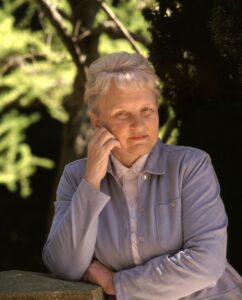
Color photograph of Carolyn Merchant outside with a green tree in the background
Professor Carolyn Merchant at UC Berkeley. (Photograph by Robert Holmgren.)

Carolyn Merchant is a Distinguished Professor Emerita of Environmental History, Philosophy, and Ethics at UC Berkeley. Her extensive research and teaching at Cal explored historical relationships between humanity, nature, and science with an ecofeminist focus on Western culture’s domination of nature and women. Throughout her academic career, Merchant published numerous peer-reviewed articles and wrote eleven books, as well as four edited volumes. Her genre-shaping publications—including The Death of Nature: Women, Ecology, and the Scientific Revolution (1980); Ecological Revolutions: Nature, Gender, and Science in New England (1989); Radical Ecology: The Search for a Livable World (1992), among others—influenced various academic fields from Women’s Studies to the History of Science, and from Ethics to Environmental History.

Merchant and I video-recorded seven hours of her oral history over four interview sessions in the spring of 2022. Those recordings resulted in a 132-page transcript that includes an appendix with photographs. Merchant’s full-life oral history not only explored her intellectual and academic career, but also recorded lesser known details from her female-centered childhood, her educational mentors, her personal relationships, and her social activism, all of which shaped her academic research and teaching at UC Berkeley.

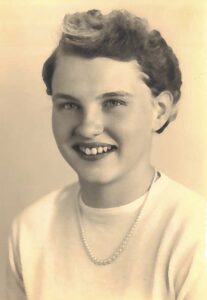
Sepia photograph of Carolyn Merchant wearing a sweater and a pearl necklace
Carolyn Merchant in her senior year in Vassar College, Poughkeepsie, New York, 1958.

Merchant was born in 1936, in Rochester, New York, where she and her younger sister were raised by their mother, grandmother, and aunt. Merchant recalled how sharing a home with five strong women taught her that “women could do anything. …That gave me a role model unconsciously to know that I could do anything I wanted to.” As a high school senior in 1954, Merchant became a national top ten finalist in the Westinghouse Science Talent Search. She earned her AB in Chemistry from Vassar College in 1958, studied physics for a year at the University of Pennsylvania, and then, at the University of Wisconsin, Madison, she earned her MA in 1962 and her PhD in 1967 in the History of Science. Her graduate research explored the Vis Visa controversy in the seventeenth and eighteenth centuries over a “living force” in nature, from Gottfried Wilhelm Leibniz to Jean-Baptiste le Rond D’Alembert.


Video clip from Carolyn Merchant’s oral history on learning and teaching the history of science, 1960s and 1970s

During graduate school in Wisconsin, Merchant met and married botanist Hugh Iltis, with whom she had two sons, both of whom later graduated from UC Berkeley. Merchant also began her environmental activism during graduate school, which included lighting Wisconsin prairies on fire as a means to restore native plants and animal habitat. At that time, Merchant first read Betty Friedan’s The Feminine Mystique and Rachel Carson’s Silent Spring, which affected both her life and academic trajectories. In the late 1960s, upon completing her PhD thesis and her divorce from Iltis, Merchant and her sons moved from Wisconsin to Berkeley, California.

Color photograph of Carolyn Merchant outside and wearing a straw hat with a floral design
Carolyn Merchant in Honolulu, Hawaii, 1967.

Merchant’s life on the west coast provided new opportunities and realizations. While teaching the History of Science as a Visiting Lecturer at Oregon State University, Merchant lived on a Corvallis farm where the runner-up Dairy Queen of the state of Oregon taught her how to milk goats and cows. Merchant’s back-to-the-land experiences would shape her later analysis on utopias and what she described as the “organic society,” from John Salisbury’s organic concept of the state in 1159, to Francis Bacon’s The New Atlantis in 1627. To support herself and her family back in Berkeley, Merchant worked as an adjunct instructor, which she eventually parlayed into a fulltime position. She taught as a Lecturer at the University of San Francisco, where by 1976 she became an Assistant Professor, and she also taught in the innovative, interdisciplinary, yet short-lived Strawberry Creek College program at UC Berkeley.

Throughout the 1970s in the Bay Area, Merchant engaged in feminist, environmental, anti-war, and anti-capitalist politics, which is how she first met UC Berkeley historian Charles Sellers, whom she later married. Over many decades together, Merchant and Sellers advocated for social justice and shared adventures traversing the United States in a camper van while searching for rare birds and visiting far flung archival collections. On the road, Merchant used some of the first laptop computers to draft her eventual publications. Back in the Bay Area, Merchant connected with intellectuals like Theodore Roszak and became a visiting scholar at Stanford’s Center for Advanced Study in Behavioral Sciences. Around that time, Merchant learned from a USF colleague that UC Berkeley planned to hire a professor to work in the then-nascent field of environmental history. “I can do that,” she said to herself, and walked up the hill from her house to campus to submit her application. As she recalled, “when I was interviewed, I was from Stanford, and I was not a local yokel four blocks away in Berkeley where my house actually was.”

Video clip from Carolyn Merchant’s oral history on her hiring at UC Berkeley’s College of Natural Resources, 1980

Color photograph of Carolyn Merchant inside a room, leaning on a white cabinet and standing on a dark wood floor
Carolyn Merchant at her home in Berkeley, California, July 1984.

Women played a central role in Merchant’s research, as well as with her hiring at UC Berkeley in 1979. Merchant applied to the College of Natural Resources for a position in a new department then called Conservation and Resource Studies, which later became the Department of Environmental Science, Policy, and Management. On the hiring committee were five male faculty members and five female undergraduates. Many women took courses in the college, yet the faculty of the College of Natural Resources were still mostly men. After her on-campus interview, Merchant recalled “the students wanted a woman, and they lobbied. …They wanted to understand what role women had played in the environment, and how they used the environment, and how they developed as scientists and environmental scientists. And they liked me because I was interested in pursuing those topics and finding out by digging into the archives who the women were and what they had done.” The first three hires for the new department were all women. In 1980, one year after Merchant joined the faculty at UC Berkeley, she published The Death of Nature: Women, Ecology, and the Scientific Revolution, which remains in print today and has been translated into numerous languages. As Merchant recalled, when the book appeared, “there was a column in Newsweek, and then it was brought up at a congressional hearing. It [my book] was a criticism of what mechanistic science alone would do to the environment if it wasn’t associated with an ethic and some restraints and understanding of what the consequences were. So it was very gratifying to see that reception.”

The majority of Carolyn Merchant’s oral history explores her career as a Professor of Environmental History, Philosophy, and Ethics at UC Berkeley. The topics we discussed ranged from the evolution of Merchant’s research and teaching to her reflections on how the College of Natural Resources has changed over time. Generally, Merchant’s research and teaching examined the history and ethics of science and the environment through the lens of gender. As she noted during her oral history, “gender is so important and so central. Because most of human history, and most of even environmental history and the history of science, has been concerned with the roles that men play. And I want to make the roles that women play and the importance of gender as an equal thing, so that the roles of women are not obscured—and that women and men are equal partners not only in an existing political economy and a social economy, but they are equal partners in every aspect of trying to work together as partners to make the whole planet continue to live on.”

Video clip from Carolyn Merchant’s oral history on gendered reproduction

In her oral history, Merchant also addressed some of the specific, interrelated research themes that she developed throughout her career. One of those themes focused on science and domination, especially Merchant’s attention to impacts on nature as both a mental construct and a physical reality when institutions of science emerged within a patriarchal society. She also spoke about women and nature through the lens of ecofeminism. “Ecofeminism comes from a woman named Françoise d’Eaubonne in France,” Merchant explained. “Ecofeminism asserts the power of women and also their interrelationships with nature, and how women can save nature, and how women themselves can become important forces in the whole role of the conservation of resources.” Merchant discussed her partnership ethic, a contribution she made to environmental ethics in which humans of all genders, along with nonhuman nature, would be valued as equal partners inhabiting a flourishing earth. “Partnership makes nature and humans equal, and interactive, and sharing and giving,” Merchant declared, “and we have to conserve nature if we are going to go ahead and live in the future with an active nature and an active humanity.” In light of her own politics to protect and conserve nature, Merchant also reflected on about the importance of gendered reproduction, and how control of women’s bodies and the unpaid labor of those bodies are essential to the material, social, and cultural maintenance of a capitalist and patriarchal society. In contrast to the modern world’s focus on production, Merchant emphasized the need for reproduction: “allowing the reproduction of nature and its systems to continue is what is going to allow humanity to reproduce itself and to continue. …Because if we don’t allow the natural resources of the world to keep reproducing themselves, if we don’t set aside land or pass laws that prevent us from using everything up, we won’t be able to continue reproduction.”

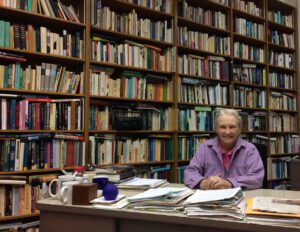
Color photograph of Carolyn Merchant seated in her office on campus behind a desk covered with stacks of paper, which sits in front of a floor-to-ceiling bookshelf entirely full of booksCarolyn Merchant’s oral history is now available to read online, even as the ever-worsening impacts of climate change create an interrelated set of crises for the Earth and all living organisms on it, including humanity. After her long career teaching and researching environmental topics at UC Berkeley, Merchant admitted, “of course, I’m distressed that we have all the environmental problems that we have now.” Yet, in the face of these crises, she also shared her optimism. “There’s also hope in the sense that there are laws being passed, there are people who are working continuously, and there are new societies and new organizations being formed. So we’re at a tipping point. And hopefully, we’ll go in the direction of conservation, and environmental justice, and environmental reform, and saving the Earth.”

Carolyn Merchant, “Carolyn Merchant: My Life Exploring Science, Environment, and Ethics” conducted by Roger Eardley-Pryor in 2022, Oral History Center, The Bancroft Library, University of California, Berkeley, 2023.

Video clip from Carolyn Merchant’s oral history on her partnership ethic for humanity and nature

Video clip from Carolyn Merchant’s oral history on becoming a national finalist in the Westinghouse Science Talent Search, 1954

ABOUT THE ORAL HISTORY CENTER

The Oral History Center of The Bancroft Library preserves voices of people from all walks of life, with varying political perspectives, national origins, and ethnic backgrounds. We are committed to open access and our oral histories and interpretive materials are available online at no cost to scholars and the public. You can find our oral histories from the search feature on our home page. Search by name, keyword, and several other criteria. Sign up for our monthly newsletter featuring think pieces, new releases, podcasts, Q&As, and everything oral history. Access the most recent articles from our home page or go straight to our blog home.

If you’d like to see more interviews like this conducted and made freely available online, please consider making a tax-deductible donation to the Oral History Center. While we receive modest institutional support, we are a predominantly self-funded research unit of The Bancroft Library. We must raise the funds to cover the cost of each oral history. You can give online, or contact us at ohc@berkeley.edu for more information about our funding needs for present and future projects.

Senga Nengudi: Black Avant-Garde Visual and Performance Artist

As a continuation of our work for the Getty Research Institute’s African American Art History Initiative (AAAHI), Dr. Bridget Cooks and I conducted several oral history interviews with the avant-garde artist Senga Nengudi. This interview is one of several AAAHI oral histories exploring the lives and work of Los Angeles-based artists, and highlights Nengudi’s contributions to visual and performance art.

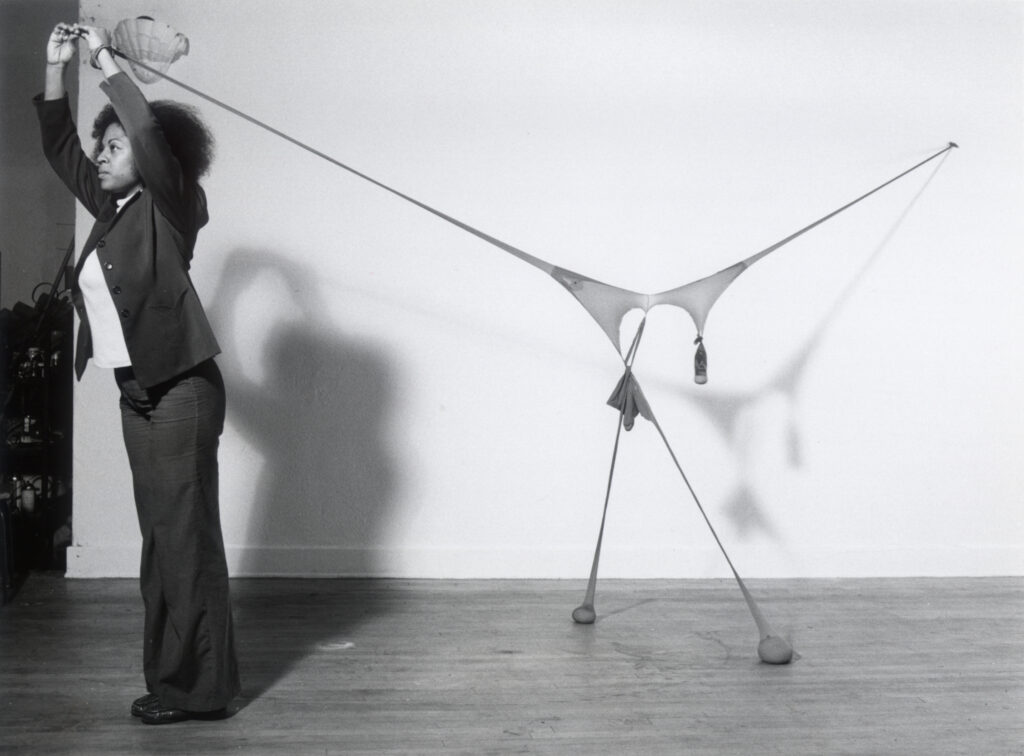
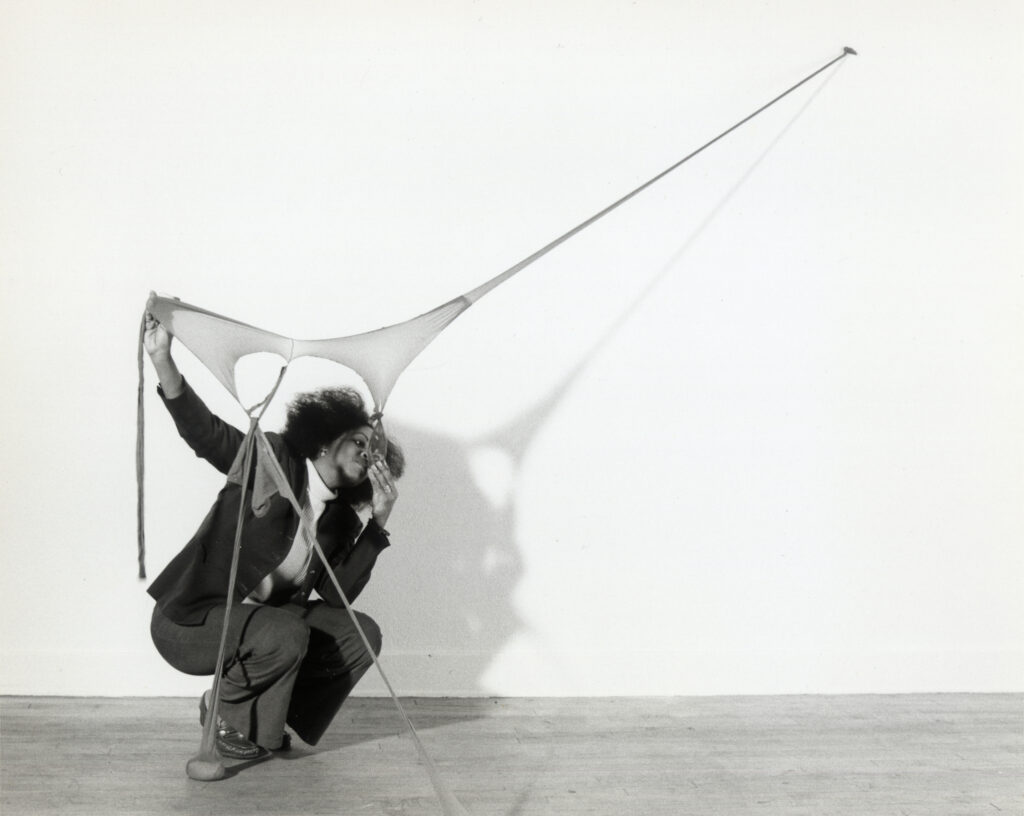
Senga Nengudi and her pantyhose sculptures.
Senga Nengudi setting up for a performance with R.S.V.P. X, 1976. Senga Nengudi Papers, Amistad Research Center, New Orleans. © Senga Nengudi.

Senga Nengudi is an avant-garde artist best known for her abstract sculpture and performance art. Nengudi was born in Chicago, Illinois, in 1943 and moved to Los Angeles, California, at a young age. She attended California State University, Los Angeles (CSULA) for both her undergraduate and master’s work, as well as completed a program at Waseda University in Tokyo, Japan. Nengudi was active in the avant-garde Black art scenes in Los Angeles and New York during the 1960s and 1970s, and was a member of the Studio Z Collective. She is best known for her R.S.V.P. (Répondez s’il vous plaît) Series featuring pantyhose, which she began in 1975. Nengudi is the recipient of many awards, including the Louis Comfort Tiffany Foundation Award in 2005, the Anonymous Was a Woman Award in 2005, the Denver Art Museum Key Award in 2019, and was elected as a member to the American Academy of Arts and Sciences in 2020. Find this interview and all our oral histories from the search feature on our home page. You can search by name, key word, and several other criteria.

Senga Nengudi was still in elementary school when she and her mother moved to Los Angeles in the early 1950s. Despite a brief stint in New York, for more than thirty years she lived in the greater Los Angeles area first as a child; as a student at CSULA; as an artist and active member of the Studio Z Collection; and as a young mother. That Nengudi called Los Angeles home for so long meant that her formative years of creative expression and early artistic networks sprang from the Southland. 

Looking back, Nengudi credits her mother with providing a creative foundation.

“…she was very, very, very conscious of the home and making something home, and so she would decorate the house. And then, say like three years later, she would repaint the walls, she would change the upholstery, she would do all those kinds of things. She was very aesthetically aware, as well as needed a particular beauty in her home to feel good.”

And Nengudi expressed her own creativity through several outlets, remembering, “It’s always been a deal between art and dance with me…” Indeed, during her undergraduate years at CSULA, she chose to major in art and minor in dance—a pairing which supports much of her work.

In the mid-1970s, Nengudi found an outlet to express her love of performance through the Studio Z Collective—a collective of artists interested in improvisation that continued into the 1980s. In addition to Nengudi, Studio Z was comprised of Houston Conwill, David Hammons, Maren Hassinger, and occasionally other artists including Franklin Parker and Ulysses Jenkins. Her relationships with these artists also had a great impact on Nengudi’s artistic career. Thinking of Studio Z’s contribution to her 1978 performance Ceremony for Freeway Fets, which took place under a freeway overpass on Pico Blvd., she muses that “we all kind of supported each other in our efforts.”

Nengudi also found early support from Los Angeles-based gallery owners like Greg Pitts at the Pearl C. Woods Gallery, as well as Brockman Gallery’s Alonzo and Dale Davis. In fact, Brockman Gallery’s dispersal of CETA [Comprehensive Employment and Training Act] funds helped employ artists like Nengudi and Maren Hassinger.

Hassinger remains Nengudi’s longtime creative collaborator. Nengudi recalls that the connection between the two was immediate, “We just kind of instantly became friends, because there was this commonality. She was involved with dance, she was involved with sculpture, all that kind of stuff.” And to why this collaboration with Hassinger has sustained both the passing of years and geographical distance, Nengudi explains:

“Because we believe so much in collaboration. We believe in unity. We believe in bringing the best out in each other…Even though our background is different, our interests are the same. It’s always been dance, performance, sculpture, movement, and this commitment to our art. And when we had some really funky times and we were 2,000 miles apart, the thing that held us together was this commitment to art. And so that kind of carried us through the most difficult things…So all these life events were going on, but the constant was our ability to connect and think and make happen.”

Senga Nengudi and her pantyhose sculptures.
Senga Nengudi setting up for a performance with R.S.V.P. X, 1976. Senga Nengudi Papers, Amistad Research Center, New Orleans. © Senga Nengudi.

Nengudi’s most recognizable series of work is R.S.V.P., which she started in the mid-1970s. The R.S.V.P. Series, or Répondez s’il vous plaît (respond, please), demonstrated Nengudi’s experimentation with nylon pantyhose. Importantly, Nengudi began working in this medium after the birth of her first son, when she was especially interested in the elastic nature of a woman’s body. She recalls, 

“So yes, the explorations were really exciting. I put eggs in them, I broke eggs in them…I used white glue, I used hot glue, which obviously didn’t last that long. I tried everything—resin. Again, it dissolved in the resin. So really, as I was developing the series, it was all about exploring the material…And it took a while to get to…the sand, where I just noticed that…once in the nylons, it had such sensuality to it, because it had this kind of natural body form from the weight of the sand.”

Given the experimental nature of her sand-filled nylon pieces, Nengudi explains, “I thought about them as sculpture first. I did not develop them thinking that I would perform in them.” But Nengudi eventually did embrace the performative potential of these sculptures, even engaging Hassinger to perform with them at the Pearl C. Woods Gallery in 1977 by entwining her body with the material, manipulating it, even dancing with it. 

Nengudi has lived in Colorado since the 1980s, and continues to stimulate audiences by creating work that plays with the line between sculpture, installation, and performance in space. However, she has also made significant contributions as an arts educator, especially at University of Colorado at Colorado Springs, and as an advocate of the arts. Namely, she established a community art gallery called ARTSpace in Colorado Springs so that “artists could show their work” and learn “what it takes to have an art exhibit.” The added bonus, of course, was that “the community could come in and see the artwork. It was right there for them.” For someone whose early exposure to creative expression was so formative to her artistic practice, this is a logical next step to engage new generations of artists and viewers. It also connects with her decades-long entreaty to audiences: “respond, please.”

To learn more about Senga Nengudi’s life and work, check out her oral history interview! Find this interview and all our oral histories from the search feature on our home page. You can search by name, key word, and several other criteria.


Science in Context: The UC Berkeley School of Public Health Oral History Project

As we know from our daily experience of the COVID-19 pandemic, public health is a political and cultural flashpoint in American society, as it has been since its emergence as a field of study and area of state authority in the 19th century. Whereas conventional biomedicine situates illness squarely inside the human body — a matter of damage to or malfunction of organ systems — public health looks outward, to the communication of diseases among populations and to the social factors that contribute to health or illness. Public health practitioners look at everything from the aggregate of individual human choices, such as smoking, to larger, deeper historical structures in society, such as the impact of systemic racism on health outcomes. Is it the government telling you how you or your children should behave, or is it science-based advice to help reduce rates of illness, harm, or death in society? Public health is science in political context like few other fields of research. 

Well over a decade ago, the School of Public Health at UC Berkeley began to take stock of this positioning and reflect on how a teaching and research institution could better respond to the challenges of science in context. This set of interviews emerged from an effort to document the recent history and institutional evolution of the school. Steve Shortell, who was dean of the school from 2002 until 2013, wanted to chronicle the foundation and growth of the On-campus/Online Professional MPH (master’s of public health) Program; the reinstitution of the undergraduate major in public health; the development of an office of diversity; a graduate program in public health practice and leadership; and a center for health leadership, formerly known as the Center for Public Health Practice and Leadership and currently known as RISE. Dean Shortell also wanted to feature some key leaders associated with these developments.  

Close-up of the back of a decorated graduation cap on a person with long hair; the cap says, “Life, UCB, and OOMPH turned try into triumph.” At the bottom of the cap, there is a button fastened to a bow; the button depicts a graduation cap surrounded by confetti, and says “just graduated!”

There are three interviews with Dean Shortell that provide the context for the institutional changes during this period, as well as explorations of his career in health management research. Executive Associate Dean Thomas Rundall was also interviewed about multiple initiatives, including his leadership of the graduate programs in health management and co-directorship of the Center for Lean Engagement and Research in Healthcare (CLEAR). Jeffrey Oxendine was interviewed about his role as co-founder and associate dean of the Center for Public Health Practice and Leadership, which began in 2008. Another feature of this oral history project was to explore the reinstitution of the undergraduate major in public health in 2003. Dr. Lisa Barcellos was interviewed in part about her leadership of that program and her research on the genetic and environmental factors involved in autoimmune disease. 

There is also a set of interviews surrounding the establishment and growth of the online MPH program. Dr. Nap Hosang was the first director of the hybrid master’s of public health program, and he discusses the unique features of the program’s design, particularly with respect to accessing a diverse and unique pool of student talent, which contributed to the program’s success in subsequent years. Dr. Deborah Barnett was interviewed partly about her capacity as the successor and current leader of the program and as chief of curriculum and instruction. Alberta (Abby) Rincón recounted the history of her time as director of diversity and the foundation of the DREAM (Diversity, Respect, Equity, Action, Multiculturalism) office in the school. In her interview, chair of the Division of Community Health Sciences Dr. Denise Herd discusses the history of research in health disparities and the social determinants of health — a subject that is raised in many of the interviews — and her participation in the campus-wide Othering & Belonging Institute. Finally, Dr. Art Reingold was interviewed about his several decades as director of the Division of Epidemiology, the online MPH program, and teaching in the time of COVID.

If the field of public health is broadly defined as the study of health at the population level, this set of interviews reveals the broadest themes of health in context: the environment that shapes the expression of genes, the factors that lead to the nourishment or deprivation of bodies and minds, the factors that determine who gets to study or teach public health, the factors that shape the delivery of health care, and the contexts that shape the interactions between human bodies and other organisms and pathogens. The overarching story is about how these individuals studied, improved, and optimized institutional attention to these larger contexts, contributing to one of the most extraordinary public health programs in the country. 

Read more from the individual interviews below:

Deborah Barnett portrait
Deborah Barnett


Denise Herd portrait
Denise Herd


Nap Hosang portrait
Nap Hosang


Jeffrey Oxendine portrait
Jeffrey Oxendine


Arthur Reingold portrait
Arthur Reingold
Alberta Rincon portrait
Alberta Rincón


Thomas Rundall portrait
Thomas Rundall


Steve Shortell portrait
Steve Shortell

Stanton Glantz: Putting Cardiovascular, Epidemiological, Economic, Political, and Policy Research into Action at UC San Francisco and Beyond

Today we announce the publication of the Oral History Center’s interviews with Dr. Stan Glantz. Dr. Glantz received his doctorate in applied mechanics from Stanford University before embarking on a multi-decade career at UC San Francisco. He contributed engineering concepts to cardiovascular research, biostatistics to epidemiology, and economics to the study of second-hand smoke and policymaking to regulate second-hand smoke, among many other research projects. The oral history explores his political and policy activism, the history of the clean indoor air movement, and his commitments to science and public health, in particular his long struggles with the tobacco industry and efforts to make UC San Francisco a world center for research into second-hand smoke, nicotine addiction, and the broader social determinants of health. His service to UC San Francisco and the University of California is also explored, in particular, his research and advocacy for policy changes on issues ranging from the rights of adjunct faculty to state funding of the UC system. These interviews showcase Glantz’s applied epistemology, his continual reflection on how knowledge is produced and shaped through formal and informal practices for arriving at scientific truth. 


portrait photo of Dr. Stanton Glantz in suit and tie
Dr. Stan Glantz, 2010. Photograph by Noah Berger


Bancroft Quarterly Processing News

The archivists of The Bancroft Library are pleased to announce that in the past quarter (April-June 2023) we have opened the following Bancroft archival collections to researchers.


Western Americana collections:

The role of women in the Black movement conference materials (processed by Marjorie Bryer)

Jonathan Winters collection on campus and East Bay LGBT activism (processed by Marjorie Bryer)

Edward Miyakawa papers (processed by Marjorie Bryer)

YMCA of San Francisco, Chinatown branch records, approximately 1915-2010 (processed by Marjorie Bryer)

Nan Tucker McEvoy collection (processed by Jaime Henderson and Marjorie Bryer)

Joni Jacobs collection of mayoral campaign materials (processed by Lara Michels)

Louise Taber family papers (processed by Lara Michels and student processing assistant Malayna Chang)

Central American Labor Defense Network records (processed by Marjorie Bryer)

Elaine Dorfman papers and oral histories (processed by Presley Hubschmitt)

Oakland-Piedmont Jewish Community Center records (processed by Presley Hubschmitt)

B’nai B’rith, San Francisco Lodge No. 21 records (processed by Presley Hubschmitt)

Rosene Family papers (processed by Lara Michels)

Women’s American ORT, San Francisco Chapter records (processed by Presley Hubschmitt)

Jerome H. Bayer papers (processed by Presley Hubschmitt)

Keesling family collection of John Henry Barbat correspondence, photographs, and realia (processed by Lara Michels)

Joel Bolster correspondence, 1851-1852 (processed by Lara Michels)

Harold Dobbs scrapbooks and photo albums (additional processing and finding aid written by Lara Michels)

Keesling family collection of Stebbins family papers (processed by Lara Michels)

William R. Sanford and Charles T. Forbes correspondence and sketches related to Native American archaeology, Owens Valley, California (processed by Lara Michels)

Presbyterian Church in Chinatown, San Francisco, additions (2019-08-16) (processed by Lara Michels)

Sierra Club mountain registers and records, 1860-2005, additions (processed by Lara Michels)

Robert (Bob) Edward Rooker rodeo archive (processed by Jaime Henderson)

Warren Hinkle papers (digital files) (processed by Christina V. Fidler)

Vivian Low collection of materials on the Military Intelligence Service Language School, Chinese Division, 1945-2017 (digital files) (processed by Christina V. Fidler)

Judith Heumann papers (digital files) (processed by Christina V. Fidler)


Literary and Arts collections: 

Anne S. Perlman papers (processed by Marjorie Bryer)

Robert D. Brotherson collection of the Activist Group of Poets (processed by Marjorie Bryer)

Nancy Karp + Dancers records (processed by Jaime Henderson and Lara Michels)

Claire Van Vliet letters to Frederick W. Hegeman, 1977-1988 (processed by Lara Michels)

Kenneth Perkins papers (processed by Randal Brandt and Sterling Kinnell)


University Archives and Faculty Papers collections:

University of California, Berkeley, Department of Women’s Intercollegiate Athletics records (processed by Jessica Tai)

Harold Biswell papers (processed by Jessica Tai)

Joseph L. Sax papers (processed by Lara Michels)

Robert Tracy papers (processed by Michele Morgan and Lara Michels)

Jaroslav Joseph Polivka papers (processed by Lara Michels)

Lawrence Levine paper (digital files) (processed by Christina V. Fidler)

Jacqueline Ellen Violette de La Harpe papers (additions) (processed by Marjorie Bryer)


Pictorial collections:

Acción Latina and El Tecolote pictorial archive photographic print and poster collection (processed by Isabel Breskin with James Eason)

Fakir Musafar archive (processed by Lori Hines)

John S. Service photograph collection (processed by Isabel Breskin with James Eason)

Photographs from the Noël Sullivan papers (1 unprocessed box)

185 small pictorial collections and single items.


Collections currently in process include:

  • The papers of George Barlow, UC Berkeley ichthyologist, ethologist and evolutionary biologist (processing work by Jessica Tai)
  • The papers of Michael Paul Rogin, UC Berkeley political scientist notable for his critique of American imperialism (processing work by Marjorie Bryer)
  • University of California, Berkeley, American Cultures Center records (processing work by Jessica Tai)
  • Western Jewish History Center records (processing work by Presley Hubschmitt)
  • Acción Latina records (processing work by Marjorie Bryer)
  • Haas-Bransten-Rothman family papers (processing work by Presley Hubschmitt)


The Surprising Ink Recipe of an Ancient Scribe

By Leah Packard-Grams
Ancient History & Mediterranean Archaeology PhD student
Center for the Tebtunis Papyri


Writers in the modern world often have a favorite pen, a preferred color of ink, or quirky handwriting, and ancient writers were no different! Scribal habits are a topic of increasing interest among scholars who study the ancient Mediterranean, and UC Berkeley’s papyrus collection is full of possibilities for the topic that has set researchers abuzz.

UC Berkeley’s collection of papyri, housed in the Center for the Tebtunis Papyri (CTP) on the fourth floor of The Bancroft Library, was excavated from the sands of Egypt 123 years ago, but it has often been remarked that the collection is rich enough to provide work for generations of scholars. The papyri provide crucial insights for our knowledge of daily life in Egypt and can illuminate individual priests, artisans, and scribes in extraordinary detail. One specific group of papyri caught my attention when CTP Director Todd Hickey mentioned it in a graduate course a few years ago: the archive of a scribe who worked for a local record-office in the 70-60s BCE. Since his name has not yet been deciphered from the surviving papyri, scholars refer to him as “Scribe X”. His papyri were found in the crocodile mummies excavated in Tebtunis, Egypt, on behalf of UC Berkeley over a century ago.

A crocodile mummy on display in the Object Lessons exhibit, Spring 2020A reed pen from Tebtunis held in the Hearst Museum at UC Berkeley, object no. 6-21420.
1. (Left: A crocodile mummy on display in the Object Lessons exhibit, Spring 2020. Right: a reed pen from Tebtunis held in the Hearst Museum at UC Berkeley, object no. 6-21420.)

The Scribe X papyri have been examined by several scholars, and two of them have been published in full, while dozens of fragments remain to be edited.1 Previous researchers have found this archive to be unique: It not only represents the oldest collection of documents from a village record-office (grapheion in Greek), it also displays the earliest use of the reed pen (kalamos in Greek) to write the Demotic Egyptian script, which was traditionally written with a rush. The Egyptian scribes of this era did not use the reed pen for Demotic so far as we know, and it would be decades before the reed was used with regularity for the Demotic script. In other words, Scribe X had a favorite pen, and he used it even though it differentiated him from the other scribes around him. This prompted a question: If the scribe used an “atypical” writing instrument, was the ink he used likewise “atypical”? 

A selection of lines from Scribe X’s account papyrus P.Tebt.UC 2489, displaying Demotic and Greek written on the same document, both written with the reed pen.
2. (A selection of lines from Scribe X’s account papyrus P.Tebt.UC 2489, displaying Demotic and Greek written on the same document, both written with the reed pen.)

Previous studies by a team of researchers in Europe have proved that there was a shift when scribes began to add copper sulfate to ancient inks of this period in the region of Tebtunis.2 This was a development from the earlier Egyptian ink recipe of gum arabic, soot, and water. In later periods, metallic elements such as lead and copper were intentionally added to the ink to make it more durable. Did this innovative scribe use a more recent ink recipe, or the traditional gum-soot-water recipe? 

To find out, a chemical analysis using X-ray fluorescence spectrometry (XRF) was conducted in collaboration with UC Berkeley’s Archaeological Research Facility. One reason scholars favor the use of XRF for testing ancient objects is because it is nondestructive and extremely safe. A portable XRF spectrometer from the Archaeological Research Facility was brought to the Center for Tebtunis Papyri, where Dr Jesse Obert (a recent PhD from the Graduate Group in Ancient History and Mediterranean Archaeology) and I scanned multiple papyri from the Scribe X archive. The XRF spectrometer contains both an x-ray emitter with a precise 5 mm beam as well as a detector which identifies photons that are ejected from the atom when it is exposed to the x-rays. Different elements emit different photon signatures, and the detector “reads” the photon signatures to identify which elements are present in the atoms of the scanned area. We selected nine areas on one bilingual papyrus for scanning and included a number of uninscribed areas on the papyrus as a control. Several other papyrus fragments from the archive were also scanned in subsequent months.

Dr Jesse Obert performing the initial scan with the portable XRF

3. (Dr Jesse Obert performing the initial scan with the portable XRF)

The results of the scans were surprising: The machine did not detect any metallic elements in the ink whatsoever. From this information, we can infer that Scribe X used the traditional ink recipe without any of the ink additives that were popular in the era! Such a finding was unforeseen because studies of comparable papyri did not attest to the use of this ink. At the same time, however, it is somewhat un-surprising, because it is well known that Ancient Egyptian traditions in art, religion, language, and culture endured even beyond Alexander the Great’s conquest of Egypt in 332 BCE. What this project has proven is that this ancient ink recipe was one of these enduring traditions, holding on longer than previously thought in the area of Tebtunis. 

In April 2023, I presented this study in a poster for the annual meeting of the American Research Center in Egypt and received first place in the “Best Student Poster Competition.”3 More research on the archive is forthcoming (stay tuned for an upcoming feature in the Fall 2023 issue of Fiat Lux!). The project inspired me to get my own certification in XRF scanning, and my work with the archive has allowed me to become familiar with this scribe, his quirks, and his writing habits. The project and the prestigious award it has received are testaments to the open, collaborative attitude of UC Berkeley researchers working across disciplines and across the many research facilities and hubs across campus. I am extremely grateful to Dr Todd Hickey, Dr Jesse Obert, Dr Nicholas Tripcevich, and Directors of The Bancroft Library Charles Faulhaber and Kate Donovan, whose support and encouragement has enabled this project to come to fruition!

Notes

  1. The two papyri published thus far are edited by Parker 1972 and Muhs & Dieleman 2006. For assessment of the Demotic material, see Muhs 2009 and 2010. The Greek material was surveyed in Hoogendijk 2013.
  2. See the XRF ink study in Christiansen et al., 2017.
  3. See Packard-Grams 2023.


Sources

Christiansen, Thomas, et al. “Chemical Characterization of Black and Red Inks Inscribed on Ancient Egyptian Papyri: The Tebtunis Temple Library.” JAS Reports 17, 2017, pp. 208-219.

Hoogendijk, Francisca A.J.. “Greek Contracts Belonging to the Late Ptolemaic Tebtynis grapheion Archive?” in Das Fayyûm in Hellenismus und Kaiserzeit: Fallstudien zu multikulturellem Leben in der Antike, Carolin Arlt, Martin Andreas Stadler, and Ulrike Weinmann, eds., Wiesbaden: Harrassowitz Verlag, 2013, pp. 63-74.

Muhs, Brian. “The Berkeley Tebtunis Grapheion Archive,” in Actes du IXe Congrès des études démotiques, G. Widmer and D. Devauchelle, eds. BiEtud. 147. Cairo, 2009, pp. 243-252.

Muhs, Brian. “A Late Ptolemaic grapheion Archive in Berkeley,” in Proceedings of the Twenty-Fifth International Congress of Papyrology, Ann Arbor, 2007. American Studies in Papyrology, Ann Arbor, 2010, pp. 581-588.

Muhs, Brian, and Jacco Dieleman. “A Bilingual Account from Late Ptolemaic Tebtunis.”  Zeitschrift für Ägyptische Sprache und Altertumskunde, vol. 133, 2006, pp. 56-65.

Packard-Grams, L. . “New Pen & Old Ink: XRF Analysis of a Unique Archive from 1st c. BCE  Tebtunis,” X-Ray Fluorescence Reports: Archaeological Research Facility: UC Berkeley eScholarship Publications. 2023. https://escholarship.org/uc/item/25n2k5bn

Parker, R.A. “An Abstract of a Loan in Demotic from the Fayum.” Revue d’Égyptologie 24, 1972, pp. 129-136.


PhiloBiblon 2023 n. 4 (June): The Bancroft Library’s Fernán Núñez Collection

I am delighted to announce that thanks to the efforts of Randy Brandt, Head Cataloguer of The Bancroft Library, it is now possible to find all of the volumes in Bancroft’s Fernán Núñez Collection.

You can now search by call number and retrieve the records for the volumes that have been individually cataloged. (If you don’t see the volume number you’re looking for, that means it is still only part of the larger set; no individual record yet).
 
To see which ones have been cataloged  in volume number order, use the University of California Library Search catalog:
 
1) Click on Browse Search in the top menu bar.
2) Open the pop-up menu and scroll down to “Other call numbers.”
3) Type in “BANC MS UCB 143” and click the Search icon (or press Enter).
 
The first result is the record for the collection itself, followed by several hits for microfilm, many with the title “Host bibliographic record for boundwith item….” Near the bottom of the first screen you will see the record for v. 1-2, Epitome de la vida del Marques de la Mina, Conde de Pezuela …. To see the rest of the call numbers, use the scroll tab at the lower right of the screen.
 
Note that even with this project, there are still some volumes that have “Host bibliographic record…” as the title (see v. 17 for the first one). However, when you click on that record, you will have access to the individual titles bound within that volume.

This collection of 224 manuscripts comes from the library of the counts and then dukes of Fernán Núnez, a town near Córdoba, principally from that of  the 6th count of Fernán Núñez, Carlos José Gutiérrez de los Ríos y Córdoba (1742-1795), although the nucleus of the collection probably goes back to Juan Fernández de Velasco (1550-1613), 5th  duke of Frías and viceroy of Milan. According to the Diccionario Biográfico electrónico of the Real Academia de la Historia, Gutiérrez de los Ríos was a man of broad culture who wrote a biography of King Carlos III and was an honorary member of the Real Academia de Bellas Artes de San Fernando in Madrid and the Real Academia Sevillana de Buenas Letras.
 
Bancroft bought the collection in 1984 from the legendary New York bookseller H.P. Kraus, thanks in part to the happy instance that at the time I was in New York working on the catalog of medieval manuscripts of the Hispanic Society of America. Kraus recruited me to write an initial description of the collection prior to putting it on the market. I alerted my colleagues in Berkeley of its importance, and they in turn convinced James D. Hart, Bancroft’s director, to find the funds for its purchase.
 
Among the interesting volumes is the most important manuscript of the Crónica sarracina de Pedro del Corral (BETA manid 3602), from the library of Bernardo de Alderete,  author of Del origen y principio de la lengua castellana o romance que  hoy se usa en España (1606), and a late 16th-c or early 17th-c. copy of the  Cancioneiro da Vaticana (BITAGAP manid 1666), one of the three major collections of medieval Galician-Portuguese lyric poetry.
 
We are fortunate to have descriptions of the collection from Ignacio Díez Fernández and Antonio Cortijo. Cortijo also studied the Crónica sarracina, while Arthur Askins identified the Cancioneiro da Bancroft Library. More recently Pablo Saracino has studied the Antigüedades de España of Lorenzo Padilla.
Charles B. Faulhaber
University of California, Berkeley
References

Askins, Arthur L-F. “The Cancioneiro da Bancroft Library (previously, the Cancioneiro de um Grande d’Hespanha): a copy, ca. 1600, of the Cancioneiro da Vaticana.” Actas do IV Congresso da Associação Hispânica de Literatura Medieval. Lisboa: Edições Cosmos, 1991: I:43-47 (BITAGAP bibid 2595)

Cortijo Ocaña, Antonio. “La Crónica del Moro Rasis y la Crónica Sarracina: dos testimonios desconocidos (University of California at Berkeley, Bancroft Library, MS UCB 143, Vol. 124).” La Corónica 25.2 (1997): 5-30 (BETA bibid 3946)
 
—–. La Fernán Núñez Collection de la Bancroft Library, Berkeley: estudio y catálogo de los fondos castellanos (parte histórica). London: Dept. of Hispanic Studies, Queen Mary and Westfield College, 2000 (BETA bibid 7111)
 
 
—–. Viviendo yo esta desorden del mundo. Textos literarios españoles de los Siglos de Oro en la Colección Fernán Núnez. Burgos : Fundación Instituto Castellano y Leonés de la Lengua, 2003 (BITAGAP bibid 17216)