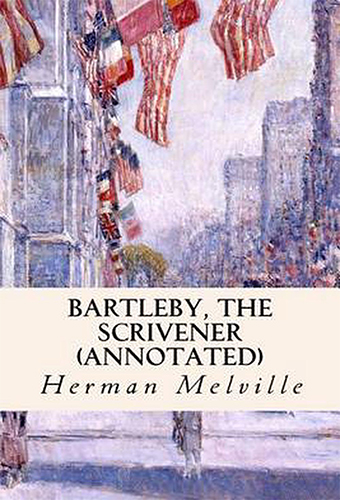
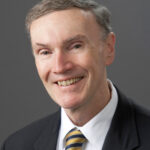
I recommend Bartleby, the Scrivener, written by Melville in 1853. In this short story, Bartleby is a new, quiet clerk in a lawyer’s (the narrator’s) office, who soon ends up not doing any of the work, for inexplicable, impenetrable reasons. He adamantly resists answering any questions or to go along with accommodations his baffled employer tries to make for him. The lawyer and we readers can only guess at what kind of an anarchic (maybe?) inner life he lives. Another part of the joy of the story is the lawyer’s inability to do anything about Bartleby, not even to fire him, so that Bartleby’s inscrutable life has found a perfect partner in his employer’s avoidance. Bartleby is THE classic character of passive inexorability in the face of the rules. His short reply to all probing is one of the most well-known quotes in American literature: “I would prefer not to.”
JEAN DICKINSON Slavic and E. European Cataloging & Metadata Librarian
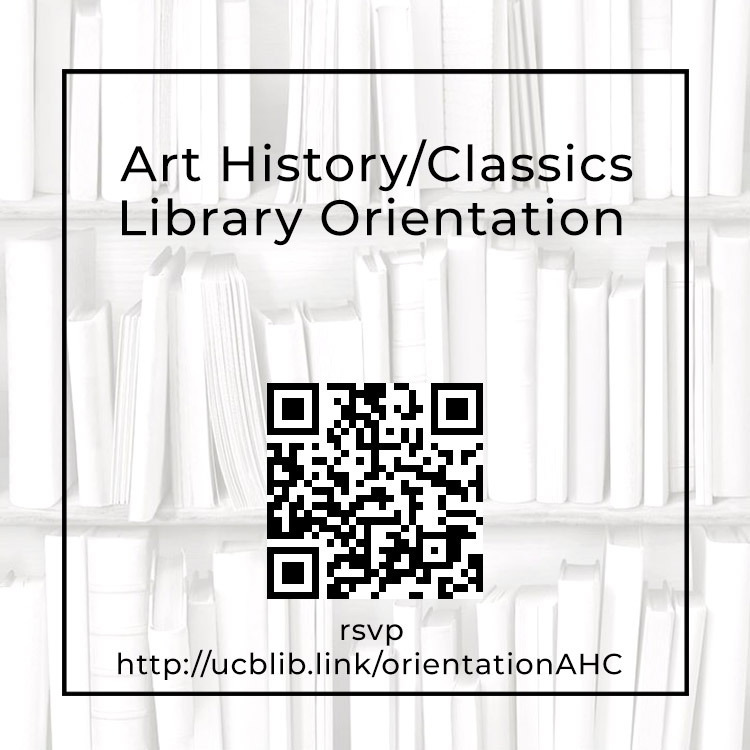
Welcome back students! If you are interested in learning more about the wonderful library arts resources, please join us at one of our upcoming library orientation sessions. Current sessions offered include:
Tuesday, September 5th 1-2
Tuesday, September 5th 4-5
Friday, September 8th 12-1
Friday, September 8th 3-4
Registration will be capped at 20 students per session. New dates/times will be added to the rsvp form if the current offerings reach capacity. We will meet in the Art History/Classics Library (room 308, 3rd floor Doe Library).
A recent acquisition of the Library, Reports of the Anglo-American Committee of Inquiry Palestine, 1944-1946, provides access to the papers of this committee created in 1945 to “study the situation of Jewish survivors in Europe and the problems connected with their resettlement in Palestine.
“The committee was charged with gathering information and making recommendations on 1) the effect of Jewish immigration and resettlement on the political, economic, and social conditions in Palestine; and (2) the position of surviving Jews in Europe and the possibility of relieving the problem by repatriation or resettlement of the survivors in Palestine and other non-European countries. The committee called for a unitary state rather than partition based on ethnicity or religious profession. The records include AACI reference files, evidence submitted to the committee, transcripts of hearings, AACI reports, and papers of the Anglo-American Cabinet Committee.”
A recent acquisition, Testaments to the Holocaust, Dococuments and Rare Printed Materials from the Weiner Library, London, provides access to the “first archive to collect evidence from the Holocaust and the anti-semitic activities of the German Nazi party. It contains documentary evidence collected in several different programmes: the eyewitness accounts which were collected before, during and after the Second World War, from people fleeing the Nazi oppression, a large collection of photographs of pre-war Jewish life, the activities of the Nazis, and the ghettoes and camps, a collection of postcards of synagogues in Germany and eastern Europe, most since destroyed, a unique collection of Nazi propaganda publications including a large collection of ‘educational’ children’s’ books, and the card index of biographical details of prominent figures in Nazi Germany, many with portrait photographs. Pamphlets, bulletins and journals published by the Wiener Library to record and disseminate the research of the Institute are also included. 75% of the content is written in German.”
As a continuation of our work for the Getty Research Institute’s African American Art History Initiative (AAAHI), Dr. Bridget Cooks and I conducted several oral history interviews with the avant-garde artist Senga Nengudi. This interview is one of several AAAHI oral histories exploring the lives and work of Los Angeles-based artists, and highlights Nengudi’s contributions to visual and performance art.
Senga Nengudi is an avant-garde artist best known for her abstract sculpture and performance art. Nengudi was born in Chicago, Illinois, in 1943 and moved to Los Angeles, California, at a young age. She attended California State University, Los Angeles (CSULA) for both her undergraduate and master’s work, as well as completed a program at Waseda University in Tokyo, Japan. Nengudi was active in the avant-garde Black art scenes in Los Angeles and New York during the 1960s and 1970s, and was a member of the Studio Z Collective. She is best known for her R.S.V.P. (Répondez s’il vous plaît) Series featuring pantyhose, which she began in 1975. Nengudi is the recipient of many awards, including the Louis Comfort Tiffany Foundation Award in 2005, the Anonymous Was a Woman Award in 2005, the Denver Art Museum Key Award in 2019, and was elected as a member to the American Academy of Arts and Sciences in 2020. Find this interview and all our oral histories from the search feature on our home page. You can search by name, key word, and several other criteria.
Senga Nengudi was still in elementary school when she and her mother moved to Los Angeles in the early 1950s. Despite a brief stint in New York, for more than thirty years she lived in the greater Los Angeles area first as a child; as a student at CSULA; as an artist and active member of the Studio Z Collection; and as a young mother. That Nengudi called Los Angeles home for so long meant that her formative years of creative expression and early artistic networks sprang from the Southland.
Looking back, Nengudi credits her mother with providing a creative foundation.
“…she was very, very, very conscious of the home and making something home, and so she would decorate the house. And then, say like three years later, she would repaint the walls, she would change the upholstery, she would do all those kinds of things. She was very aesthetically aware, as well as needed a particular beauty in her home to feel good.”
And Nengudi expressed her own creativity through several outlets, remembering, “It’s always been a deal between art and dance with me…” Indeed, during her undergraduate years at CSULA, she chose to major in art and minor in dance—a pairing which supports much of her work.
In the mid-1970s, Nengudi found an outlet to express her love of performance through the Studio Z Collective—a collective of artists interested in improvisation that continued into the 1980s. In addition to Nengudi, Studio Z was comprised of Houston Conwill, David Hammons, Maren Hassinger, and occasionally other artists including Franklin Parker and Ulysses Jenkins. Her relationships with these artists also had a great impact on Nengudi’s artistic career. Thinking of Studio Z’s contribution to her 1978 performance Ceremony for Freeway Fets, which took place under a freeway overpass on Pico Blvd., she muses that “we all kind of supported each other in our efforts.”
Nengudi also found early support from Los Angeles-based gallery owners like Greg Pitts at the Pearl C. Woods Gallery, as well as Brockman Gallery’s Alonzo and Dale Davis. In fact, Brockman Gallery’s dispersal of CETA [Comprehensive Employment and Training Act] funds helped employ artists like Nengudi and Maren Hassinger.
Hassinger remains Nengudi’s longtime creative collaborator. Nengudi recalls that the connection between the two was immediate, “We just kind of instantly became friends, because there was this commonality. She was involved with dance, she was involved with sculpture, all that kind of stuff.” And to why this collaboration with Hassinger has sustained both the passing of years and geographical distance, Nengudi explains:
“Because we believe so much in collaboration. We believe in unity. We believe in bringing the best out in each other…Even though our background is different, our interests are the same. It’s always been dance, performance, sculpture, movement, and this commitment to our art. And when we had some really funky times and we were 2,000 miles apart, the thing that held us together was this commitment to art. And so that kind of carried us through the most difficult things…So all these life events were going on, but the constant was our ability to connect and think and make happen.”
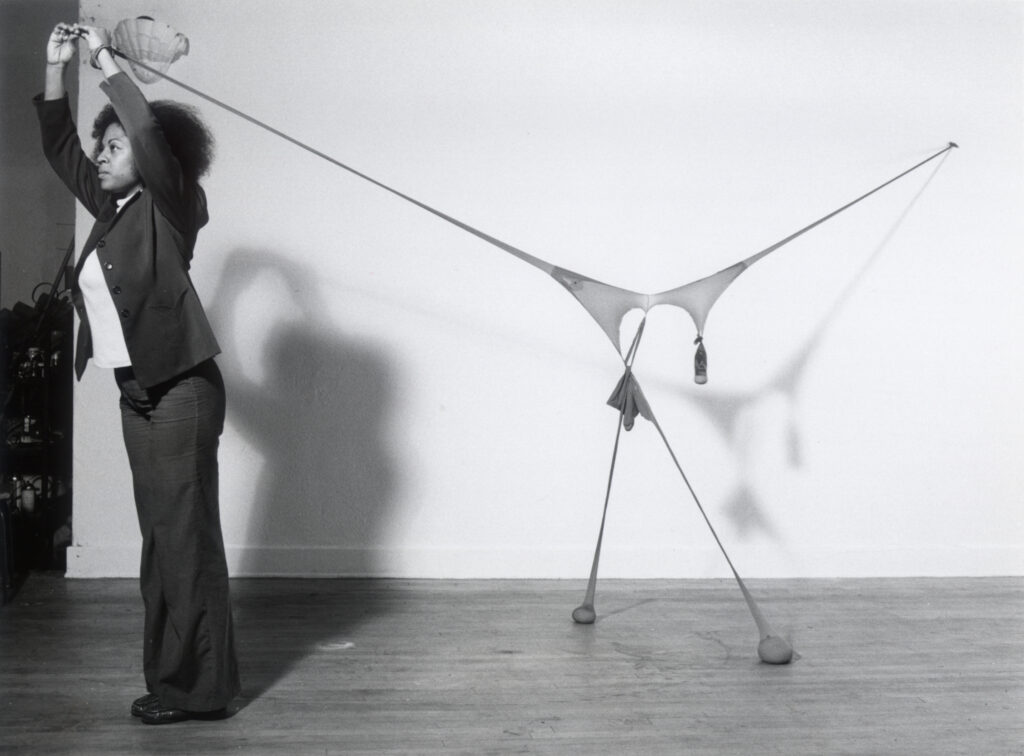
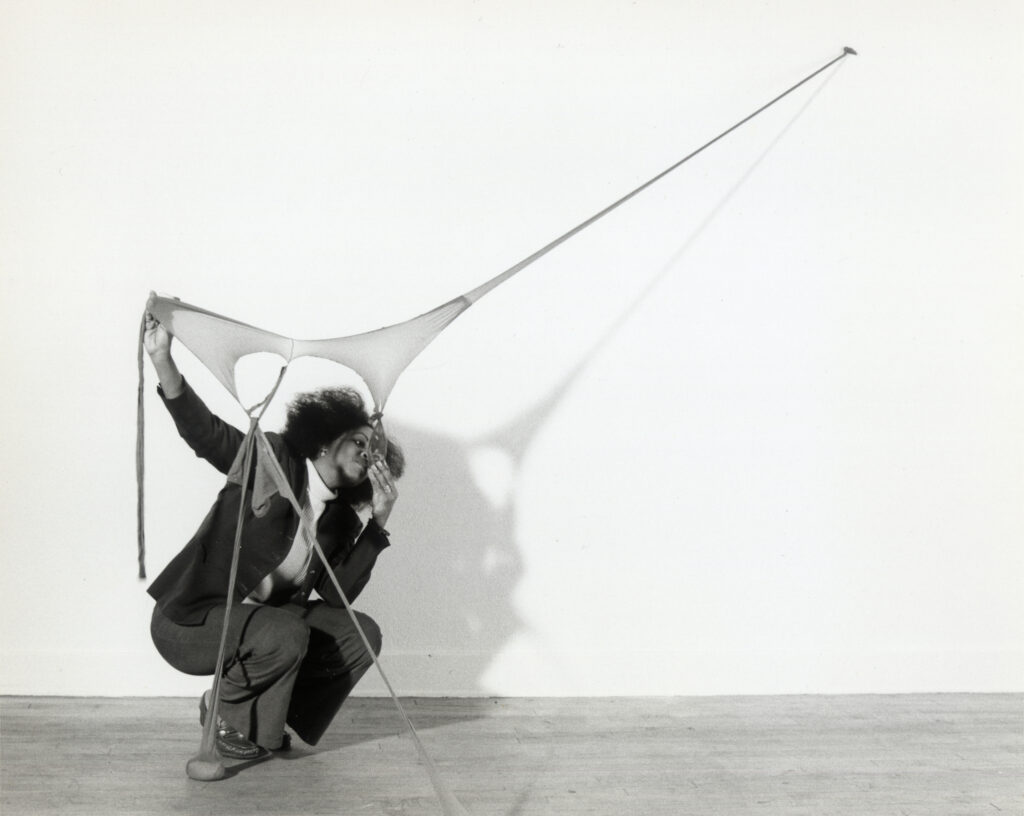
Nengudi’s most recognizable series of work is R.S.V.P., which she started in the mid-1970s. The R.S.V.P. Series, or Répondez s’il vous plaît (respond, please), demonstrated Nengudi’s experimentation with nylon pantyhose. Importantly, Nengudi began working in this medium after the birth of her first son, when she was especially interested in the elastic nature of a woman’s body. She recalls,
“So yes, the explorations were really exciting. I put eggs in them, I broke eggs in them…I used white glue, I used hot glue, which obviously didn’t last that long. I tried everything—resin. Again, it dissolved in the resin. So really, as I was developing the series, it was all about exploring the material…And it took a while to get to…the sand, where I just noticed that…once in the nylons, it had such sensuality to it, because it had this kind of natural body form from the weight of the sand.”
Given the experimental nature of her sand-filled nylon pieces, Nengudi explains, “I thought about them as sculpture first. I did not develop them thinking that I would perform in them.” But Nengudi eventually did embrace the performative potential of these sculptures, even engaging Hassinger to perform with them at the Pearl C. Woods Gallery in 1977 by entwining her body with the material, manipulating it, even dancing with it.
Nengudi has lived in Colorado since the 1980s, and continues to stimulate audiences by creating work that plays with the line between sculpture, installation, and performance in space. However, she has also made significant contributions as an arts educator, especially at University of Colorado at Colorado Springs, and as an advocate of the arts. Namely, she established a community art gallery called ARTSpace in Colorado Springs so that “artists could show their work” and learn “what it takes to have an art exhibit.” The added bonus, of course, was that “the community could come in and see the artwork. It was right there for them.” For someone whose early exposure to creative expression was so formative to her artistic practice, this is a logical next step to engage new generations of artists and viewers. It also connects with her decades-long entreaty to audiences: “respond, please.”
To learn more about Senga Nengudi’s life and work, check out her oral history interview! Find this interview and all our oral histories from the search feature on our home page. You can search by name, key word, and several other criteria.
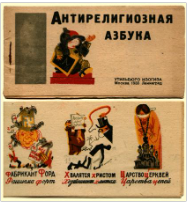
East View has digitized a collection of 280 e-books that are most emblematic of Soviet anti-religious fervor. They were published mainly in the 1920s and 1930s on a variety of atheist or anti-religious topics, with titles including Christianity versus Communism, Church versus Democracy, and The Trial of God.
An ebook collection of 778 works from Brill Online. It represents works of all Russian literary avant-garde schools, most published betwen 1910-1940. According to the publisher, “the strength of this collection is in its sheer range. It contains many rare and intriguingly obscure books, as well as well-known and critically acclaimed texts, almanacs, periodicals, literary manifests. This makes it a gold mine for art historians and literary scholars alike. Represented in it are more than 30 literary groups without which the history of twentieth-century Russian literature would have been very different. Among the groups included are the Ego-Futurists and Cubo-Futurists, the Imaginists, the Constructivists, the Biocosmists, and the infamous nichevoki – who, in their most radical manifestoes, professed complete abstinence from literary creation.”
As we know from our daily experience of the COVID-19 pandemic, public health is a political and cultural flashpoint in American society, as it has been since its emergence as a field of study and area of state authority in the 19th century. Whereas conventional biomedicine situates illness squarely inside the human body — a matter of damage to or malfunction of organ systems — public health looks outward, to the communication of diseases among populations and to the social factors that contribute to health or illness. Public health practitioners look at everything from the aggregate of individual human choices, such as smoking, to larger, deeper historical structures in society, such as the impact of systemic racism on health outcomes. Is it the government telling you how you or your children should behave, or is it science-based advice to help reduce rates of illness, harm, or death in society? Public health is science in political context like few other fields of research.
Well over a decade ago, the School of Public Health at UC Berkeley began to take stock of this positioning and reflect on how a teaching and research institution could better respond to the challenges of science in context. This set of interviews emerged from an effort to document the recent history and institutional evolution of the school. Steve Shortell, who was dean of the school from 2002 until 2013, wanted to chronicle the foundation and growth of the On-campus/Online Professional MPH (master’s of public health) Program; the reinstitution of the undergraduate major in public health; the development of an office of diversity; a graduate program in public health practice and leadership; and a center for health leadership, formerly known as the Center for Public Health Practice and Leadership and currently known as RISE. Dean Shortell also wanted to feature some key leaders associated with these developments.
There are three interviews with Dean Shortell that provide the context for the institutional changes during this period, as well as explorations of his career in health management research. Executive Associate Dean Thomas Rundall was also interviewed about multiple initiatives, including his leadership of the graduate programs in health management and co-directorship of the Center for Lean Engagement and Research in Healthcare (CLEAR). Jeffrey Oxendine was interviewed about his role as co-founder and associate dean of the Center for Public Health Practice and Leadership, which began in 2008. Another feature of this oral history project was to explore the reinstitution of the undergraduate major in public health in 2003. Dr. Lisa Barcellos was interviewed in part about her leadership of that program and her research on the genetic and environmental factors involved in autoimmune disease.
There is also a set of interviews surrounding the establishment and growth of the online MPH program. Dr. Nap Hosang was the first director of the hybrid master’s of public health program, and he discusses the unique features of the program’s design, particularly with respect to accessing a diverse and unique pool of student talent, which contributed to the program’s success in subsequent years. Dr. Deborah Barnett was interviewed partly about her capacity as the successor and current leader of the program and as chief of curriculum and instruction. Alberta (Abby) Rincón recounted the history of her time as director of diversity and the foundation of the DREAM (Diversity, Respect, Equity, Action, Multiculturalism) office in the school. In her interview, chair of the Division of Community Health Sciences Dr. Denise Herd discusses the history of research in health disparities and the social determinants of health — a subject that is raised in many of the interviews — and her participation in the campus-wide Othering & Belonging Institute. Finally, Dr. Art Reingold was interviewed about his several decades as director of the Division of Epidemiology, the online MPH program, and teaching in the time of COVID.
If the field of public health is broadly defined as the study of health at the population level, this set of interviews reveals the broadest themes of health in context: the environment that shapes the expression of genes, the factors that lead to the nourishment or deprivation of bodies and minds, the factors that determine who gets to study or teach public health, the factors that shape the delivery of health care, and the contexts that shape the interactions between human bodies and other organisms and pathogens. The overarching story is about how these individuals studied, improved, and optimized institutional attention to these larger contexts, contributing to one of the most extraordinary public health programs in the country.
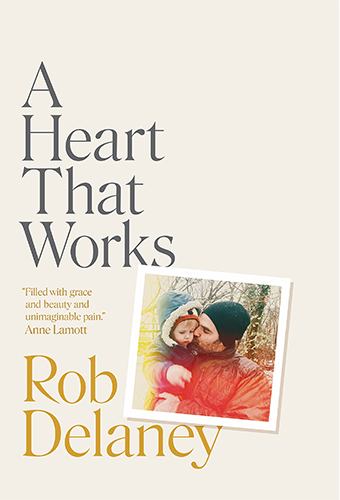
A memoir about the death of a 2-year-old from brain cancer should not make you laugh out loud. Yet actor, comedian, and writer Rob Delaney does just that in this loving account of his son Henry, who died before reaching his third birthday. In addition to sharing tender memories of Henry’s bright spirit even in the face of a brutal illness and an even more brutal treatment, this book is a love letter to Delaney’s family. It’s also an homage to the many professionals in the medical and care community who touched Henry’s life — from surgeons and nurses to healthcare assistants and hospice care workers; not to mention the volunteers who gave so much joy to Henry, including Lola the therapy dog and Singing Hands, the musical duo who use a special sign language to help teach non-verbal children how to communicate.
The other lesson in this book: The NHS – the U.K.’s much-beloved national health care service – is a “glorious institution” that enabled the Delaneys, transplants from the U.S., to maximize time spent with their very sick child rather than dealing with the bureaucracy of a multibillion dollar, publicly traded insurance bureaucracy.
MARGARET PHILLIPS Librarian Social Sciences Division
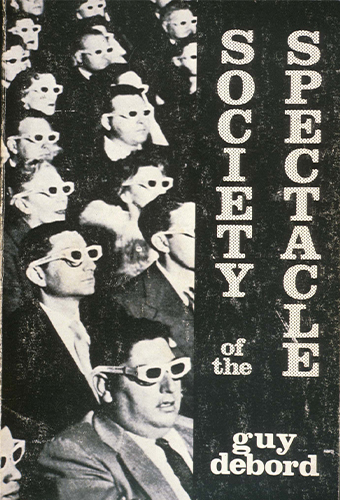
The Society of the Spectacle Guy Debord
“The spectacle is not a collection of images, but a social relation among people, mediated by images.”
Guy Debord’s La société du spectacle, written in the wake of the student riots in Paris in 1967, is one of the most influential philosophical texts of the latter half of the 20th century that is as relevant today as when it was first published. Like one of his major influences, Karl Marx, Debord critiques our entire society: e.g., our consumption of commodities. But he goes beyond that to consider what predominates our consciousness in our daily lives. Because of the scope of his project, this is a challenging, often confounding, read.
The Society of the Spectacle consists of 221 passages, paragraphs, contained within nine chapters. I had to reread many of these several times before I even got close to something like an understanding of what Debord was trying to say. But this is worth the effort for an ultimately rewarding, no-holds-barred text that will make you rethink your daily experience.
MIKE PALMER Enrollment Manager College Writing Programs
Advanced Zotero will be offered in-person in 223 Doe Library on Thursday, September 14 from 12:10-1:30pm and via Zoom Friday, September 15 from 12:10-1:30.
This session covers:
The many different techniques for adding items to your Zotero library
Linked files vs. stored files
Zotero storage vs using Zotfile to store attachments in another cloud app
Creating and managing groups
Zotero 6.0 PDF viewer and annotation extractor
Zotero 6.0 Add note feature
Indexing and searching your Zotero library and attachments
Registration is required so that you can receive the Zoom link 24 hours in advance of the workshop. Register at https://tinyurl.com/UCBlibworkshops.
The Library attempts to offer programs in accessible, barrier-free settings. If you believe you may require disability-related accommodations, please contact Jennifer Dorner at dorner@berkeley.edu.
The Library has recently acquired British Political Opinion Polls and Social Surveys, 1960-1988.
A digitized collection of the complete political and social opinion polls of five major social survey organizations — MORI (Market and Opinion Research International), NOP (National Opinion Polls Market Research); HARRIS (The Harris Research Centre), MARPLAN and GALLUP, covering 1960-1988. Subjects covered include: AIDS, the Channel Tunnel, education, general elections, homosexuality, the miner’s strike, police, poll tax, and many others.
Other resources for British public opinion include:
Mass Observation Online
Digitized archive of the Mass-Observation Project, a “pioneering social research organization,” documenting everyday life and ordinary people in Britain from 1937 to 1972.
BBC Listener Research Department reports, 1937-c.1950
Includes the entire available collection of weekly Audience Summaries, together with the weekly then daily Listening Barometers. Also included are the Audience Reaction Reports on specific programmes and Special Reports on particular themes or issues for the period, as well as some key policy documents produced by the LRD.
Reports (UK Ministry of Information)
These reports were created by the British government’s Ministry of Information during the Second World War for the purpose of monitoring public opinion, and for researching aspects of wartime life of interest to the government. They were a valuable source of information for the ministers and civil servants charged with steering the country through a total war, and give a vivid picture of life on the home front.


 Advanced Zotero will be offered in-person in 223 Doe Library on Thursday, September 14 from 12:10-1:30pm and via Zoom Friday, September 15 from 12:10-1:30.