The Library recently acquired three collections of propaganda materials: two from World War II a collection of anti-Semitic materials published before the war.
This publication collection consists of over 1,000 air dropped and shelled leaflets and periodicals created and disseminated during the Second World War. The majority of items in this collection were printed by the Allies then air or container dropped, or fired by artillery shell over German occupied territory. Many leaflets and periodicals have original publication codes and were printed in over 10 languages. Only shelled leaflets, Germans to Allies (115 items), are in English.
This collection presents the complete files of the Political Warfare Executive (PWE) kept at the U.K. National Archives as FO 898 from its instigation to closure in 1946, along with the secret minutes of the special 1944 War Cabinet Committee “Breaking the German Will to Resist.”
Comprised of 170 German-language books and pamphlets, this collection presents anti-Semitism as an issue in politics, economics, religion, and education. Most of the writings date from the 1920s and 1930s and many are directly connected with Nazi groups. The works are principally anti-Semitic, but include writings on other groups as well, including Jehovah’s Witnesses, the Jesuits, and the Freemasons.
With the school year kicking off soon in Berkeley, the Library’s Office of Scholarly Communication Services is here to help UC Berkeley faculty, students, and staff understand copyright and scholarly publishing with online resources, Zoom and in-person workshops, and consultations. Here’s what’s coming up this semester.
Workshops
Publish Digital Books & Open Educational Resources with Pressbooks
Date/Time: Wednesday, September 20, 2023, 11:00am–12:30pm Location: Zoom only. Register via LibCal.
If you’re looking to self-publish work of any length and want an easy-to-use tool that offers a high degree of customization, allows flexibility with publishing formats (EPUB, PDF), and provides web-hosting options, Pressbooks may be great for you. Pressbooks is often the tool of choice for academics creating digital books, open textbooks, and open educational resources, since you can license your materials for reuse however you desire. Learn why and how to use Pressbooks for publishing your original books or course materials. You’ll leave the workshop with a project already under way.
Copyright and Your Dissertation
Date/Time: Wednesday, September 27, 2023, 11:00am–12:30pm Location: In-person in Doe Library Room 223, or Zoom. Register via LibCal.
This workshop will provide you with practical guidance for navigating copyright questions and other legal considerations for your dissertation or thesis. Whether you’re just starting to write or you’re getting ready to file, you can use our tips and workflow to figure out what you can use, what rights you have as an author, and what it means to share your dissertation online.
Managing and Maximizing Your Scholarly Impact
Date/Time: Tuesday, October 10, 2023, 11:00am–12:30pm Location: In-person in Doe Library Room 223, or Zoom. Register via LibCal.
This workshop will provide you with practical strategies and tips for promoting your scholarship, increasing your citations, and monitoring your success. You’ll also learn how to understand metrics, use scholarly networking tools, and evaluate journals and publishing options.
How to Publish Open Access at UC Berkeley
Date/Time: Tuesday, October 17, 2023, 11:00am–12:30pm Location: Zoom only. Register via LibCal.
Are you wondering what processes, platforms, and funding are available at UC Berkeley to publish your research open access (OA)? This workshop will provide practical guidance and walk you through all of the OA publishing options and funding sources you have on campus. We’ll explain: the difference between (and mechanisms for) self-depositing your research in the UC’s institutional repository vs. choosing publisher-provided OA; what funding is available to put toward your article or book charges if you choose a publisher-provided option; and the difference between funding coverage under the UC’s systemwide OA agreements vs. the Library’s funding program (Berkeley Research Impact Initiative). We’ll also give you practical tips and tricks to maximize your retention of rights and readership in the publishing process.
From Dissertation to Book: Navigating the Publication Process
Date/Time: Thursday, November 9, 2023, 11:00am–12:30pm Location: Zoom only. Register via LibCal.
Hear from a panel of experts—an acquisitions editor, a first-time book author, and an author rights expert—about the process of turning your dissertation into a book. You’ll come away from this panel discussion with practical advice about revising your dissertation, writing a book proposal, approaching editors, signing your first contract, and navigating the peer review and publication process.
Other ways we can help
In addition to the workshops, we’re here to help answer a variety of questions you might have on intellectual property, digital publishing, and information policy.
Interested in publishing your research Open Access? UCB Library can help defray the costs of an article processing charge (up to $2,500) or book processing charge (up to $10,000). See the Berkeley Research Impact Initiative (BRII) for more information. And explore the various UC-wide open access agreements and discounts that can help UC corresponding authors publish their scholarship open access.
Do you want to create an open digital textbook? Take a look at UC Berkeley’s Open Book Publishing platform (anyone with a @berkeley.edu email can sign up for a free account), and get in touch with us about our Open Educational Resources (OER) grant program.
Keep an eye on the Library’s events calendar for more workshops and trainings.
Want help or more information? Send us an email. We can provide individualized support and personal consultations, online class instruction, presentations and workshops for small or large groups & classes, and customized support and training for departments and disciplines.
Square Haunting: Five Writers in London Between the Wars Francesca Wade
In 1928, when Virginia Woolf gave her lectures at Cambridge University titled A Room of One’s Own, Cambridge still did not give degrees to women, and would not until 1948. For women in Britain in the decades between the world wars, forging an independent life, let alone one of the mind, was a daunting challenge and almost impossible to achieve. Yet, a decade later, Woolf was living in London’s Mecklenburgh Square, writing a biography of the painter Roger Fry, with her husband operating a literary press in the basement.
Actually, a number of women, defying societal pressures and the odds, similarly managed to pursue their intellectual ideals in this same leafy, quiet square (which also saw some pretty festive partying). This book is a poignant and beautifully written account of the square hauntings of five of the women who lived there between 1918 and 1945: Woolf, novelist-theologian Dorothy Sayers, poet HD (Hilda Doolittle), economist Eileen Power, and classicist Jane Ellen Harrison. In its bohemian Bloomsbury setting, the residents “lived in squares, painted in circles, loved in triangles,” and this book is a fitting and fascinating tribute to their vibrant and revolutionary pursuit of autonomy, and ideas of their own.
ANN GLUSKER Librarian for Sociology, Demography, & Research Methods; Interim Librarian for Public Policy, Anthropology
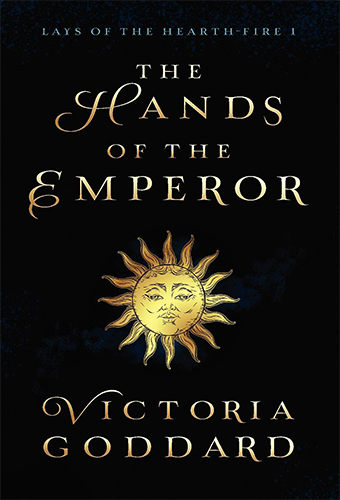
The Hands of the Emperor Victoria Goddard
In the aftermath of a worlds-shattering magical cataclysm, Cliopher Mdang works tirelessly to reform a bloated and broken bureaucracy into something that serves its people. He works side by side with the god-emperor of the old empire, literally untouchable, whose humanity has been denied for a thousand years. In a story about compassion, identity, and making the world a better place, Cliopher goes against millennia of tradition and taboo to extend a hand in friendship when he invites the Sun-on-Earth to come home with him on holiday. The mere suggestion could see him executed for blasphemy. Instead, it upends the world.
ANITA BROWN Serials Processing Assistant Bioscience, Natural Resources, & Public Health Library
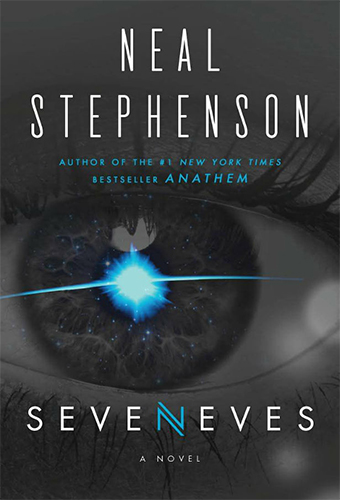
What would happen if the moon exploded? All the rules that govern our solar system would change – or rather, because the rules of physics would still be followed, everything about life on Earth would change irreversibly. This novel imagines in stunning detail a multicentury history of human life after the moon shatters, and the central role that women would play in it. Stephenson creates a rigorously science-based alternate reality peopled with compelling characters on complex adventures.
MICHELE RABKIN Associate Director Berkeley Connect
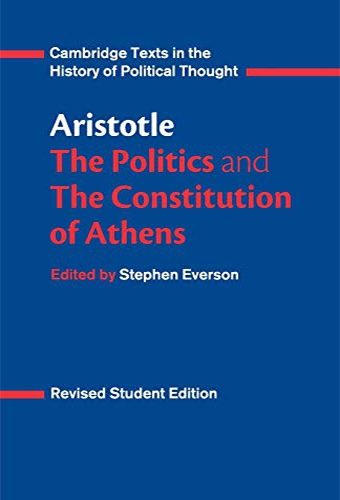
The Politics and the Constitution of Athens Aristotle
An oldie but a goodie, Aristotle’s account of the political machine of fourth-century Athens is a fundamental tool for understanding the origins of political thought and how states formed institutions to order their state. Although Aristotle is attributed with some 158 accounts of other Greek constitutions, this is the only extant version of these works, which we only have by chance, as papyri containing portions of the text surfaced within the last century and a half and were pieced together by scholars.
ANDY HOGAN Postdoctoral Fellow The Center for the Tebtunis Papyri The Bancroft Library
This book is a gem – an entrancing page-turner taking place in the near future, where the existence of a society of highly intelligent and communicative octopuses comes into contact with humans. In narrating this encounter, the author explores deep questions on the nature of mind – the meaning of and requirements for sentience, and how mind, body, and world are intertwined. All of this in the context of a near-future world continuing to be plagued by environmental catastrophe and extreme human suffering. How might such an intimate meeting with the alien consciousness of cephalopods with a very different lens on the world inform our capacity to rewrite the rules?
DAVID PRESTI Teaching Professor Neurobiology and Psychology
White Mughals: Love and Betrayal in Eighteenth-Century India William Dalrymple
William Dalrymple shares the remarkable and true story of James Achilles Kirkpatrick, an English East India Company officer, and his wife, Khair-un-Nissa, an Indian Muslim noblewoman. Their love story serves as a powerful reminder of the cultural amalgamations that thrived during 18th-century India, building bridges between India and the West through the intermingling of languages, art, religion, and politics.
However, this historical perspective seems unusual and ironic in contrast to the narrative that exists in the world’s consciousness of today, given the oppressive practices of cultural separation spurred on by racism and colonialism in 19th- and early 20th-century India. These practices led to the burning of the aforementioned bridges and the collective social awakening of a country seeking freedom and justice. In the shifting shadows of these opposing ideologies, Dalrymple provides new perspectives on the mechanisms of racism, colonialism, and globalization. He encourages the reader to examine the sociocultural fabric of our current existence and reconsider how the legacies of our past weave our future.
This book is well-researched and beautifully written, and has everything one could want: memorable characters, adventure, romance, espionage, betrayal, tragedy, and curated pictures that offer a glimpse into this forgotten world!
VINEETA RAM Disability Specialist Disabled Students Program
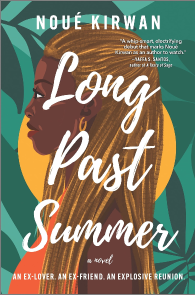
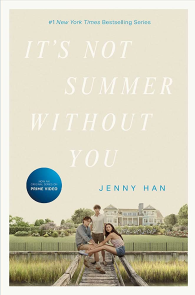
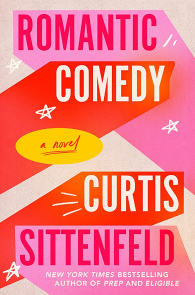
Kick off this summer with these fantastic beach reads! From summer scares to beachside romances, check out Overdrive and the selections below for an irresistible read.
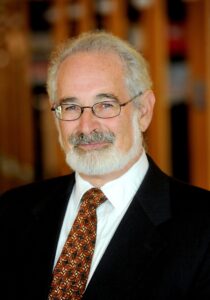
Today we announce the publication of the Oral History Center’s interviews with Dr. Stan Glantz. Dr. Glantz received his doctorate in applied mechanics from Stanford University before embarking on a multi-decade career at UC San Francisco. He contributed engineering concepts to cardiovascular research, biostatistics to epidemiology, and economics to the study of second-hand smoke and policymaking to regulate second-hand smoke, among many other research projects. The oral history explores his political and policy activism, the history of the clean indoor air movement, and his commitments to science and public health, in particular his long struggles with the tobacco industry and efforts to make UC San Francisco a world center for research into second-hand smoke, nicotine addiction, and the broader social determinants of health. His service to UC San Francisco and the University of California is also explored, in particular, his research and advocacy for policy changes on issues ranging from the rights of adjunct faculty to state funding of the UC system. These interviews showcase Glantz’s applied epistemology, his continual reflection on how knowledge is produced and shaped through formal and informal practices for arriving at scientific truth.
This is a story about bending the boundaries of life, love, and the in/ability to change. Klara is an “artificial friend” – an emotional support type of robot – and the story unfolds from her perspective as she is purchased and taken to her new home. It is dark and dystopian and also light as air.
LOTTA WECKSTRÖM Language Program Coordinator Lecturer, Finnish Studies
The Just City Jo Walton
The Just City by Jo Walton is sci-fi/fantasy about a social experiment involving an attempt to “(re)write the rules” to implement a version of Plato’s Republic, but grappling with issues of sexual consent, the rights of slaves or robots in this proposed new society, etc., all done with a focus on Socratic debate. Highly readable. It’s the first of three volumes in Walton’s “Thessaly” series.
ETHAN LIGON Professor Agricultural & Resource Economics
This post provides information to UC Berkeley authors about programs that our Library and the UC system offer to help defray open access article processing charges. It also offers tips about how to plan or budget in advance for these fees when possible.
The University of California has been a long-time supporter of open access publishing—that is, making peer-reviewed scholarship available online without any financial, legal, or technical barriers. Just because the publishing outcome is open to be read at no cost, though, doesn’t mean the publishing enterprise as a whole is “free.” One of the most common ways for open access publishers to continue to finance their publishing and production of journals in the absence of selling subscriptions for access is to instead charge authors a fee to publish—moving from a publishing system based on paying to read to one based on paying to publish. Of course, not all methods of funding open access require authors to pay publication fees in this way. And in all cases (except those rare instances in which a publisher requests that you waive this right), the UC’s open access policy makes it possible for UC authors to share their author-accepted manuscript version of their articles on eScholarship, the UC’s research repository, immediately upon publication in a journal.
But when a publisher does charge a fee to publish, we want to help you understand what UC Berkeley resources are available—whether from your grant funds or the University of California Libraries—to help with those costs.
Typically publishers refer to author-facing fees as “article processing charges”, or “APCs”. APCs can range from a few hundred dollars all the way up to $10,000 or more for some select Nature journals.
UC authors may be able to cover or contribute to these fees by leveraging research accounts or grant funds (to the extent available). But there are also other University Library programs available to support payment when research accounts or grant funds are not available.
UC-wide open access publishing agreements will cover some (or all) APCs
UC corresponding authors can take advantage of funding opportunities to defray the cost of publishing their scholarship open access where their grant or other research funds come up short or are not available. The University of California libraries have entered into a growing number of systemwide transformative open access agreements with publishers. UC libraries’ transformative agreements aim to transform scholarly publishing by moving from a publication model based on subscription access to an open access model.
When a UC-affiliated corresponding author has an article accepted for publication in a journal with which the UC has an open access publishing agreement, the UC libraries will pay some or all of the associated publishing fee. So, when it comes time to pay the APC, the UC libraries will pay at least the first $1,000. If there’s any remaining balance due on the APC, the publisher’s payment system will ask if the UC author has grant funding available to cover the remainder. If the UC author cannot contribute the remaining balance, the UC libraries will pay the entire APC on their behalf. (Note: there are a few instances where the UC libraries will contribute a maximum of $1,000 toward the APC, such as Nature-branded titles.)
The UC maintains an updated list of Publisher OA Agreements and Discounts where you can explore which journals are available for partial or full APC coverage under the open access agreements.
The UC Berkeley Library-specific fund can reimburse open access fees for other fully open access journals
UC Berkeley’s Library also has a campus open access fund that UCB authors can use if they are publishing in a fully open access journal and are required to pay an APC. The Berkeley Research Impact Initiative (BRII) is open to any current UC Berkeley faculty, graduate student, postdoc, or academic staff who does not have other sources of funds to pay article processing charges. The BRII fund is available for journals other than those with which the UC has entered into a systemwide transformative open access agreement.
For BRII APC coverage to apply, the entire journal must be freely available to the public without subscription fees. BRII cannot cover fees for publishing in “hybrid” OA journals—which are subscription-based journals that only offer open access options if an author decides to pay an additional fee to make their individual article open access. BRII reimbursements are capped at $2,500 per article, and a UC Berkeley author can use BRII funds once per fiscal year.
How to plan in advance
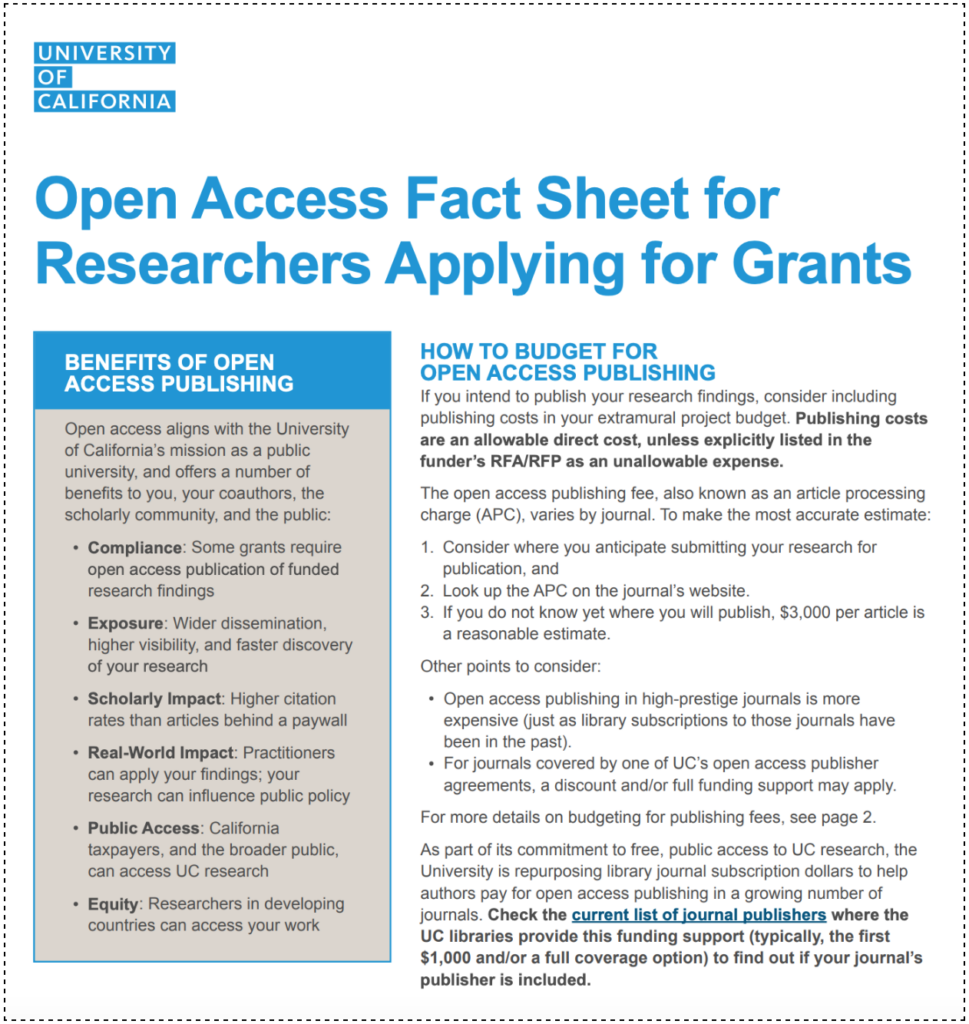
If your research is grant funded, it is important to think about publishing costs at the beginning of your research cycle and account for them in your grant applications and annual research budgeting. For grant recipients (such as researchers with funding from NIH, NSF, etc.), open access publishing costs generally are considered an allowable direct expense unless funders explicitly prohibit them. For more information on how and why to plan in advance, check out the Open Access Fact Sheet for Researchers Applying for Grants.
Click the image above to view the full guide “Open Access Fact Sheet for Researchers Applying for Grants”
Planning in advance allows you to be a partner in the publishing process. It allows the UC libraries to cover some of your article processing charge ($1,000) and, where possible, you to use grant or research funds to cover the rest. The more researchers are able to contribute, the farther the UC agreements can go in publishing more articles open access, and the better UC libraries are able to help provide financial support to researchers who do not have specific access to grant funds.
Most of the UC transformative open access agreements are set up to cover the full article processing charge should UC authors not have research or grant funds to contribute to making their journal articles open access. But there are a few journal titles and series within transformative agreements for which the libraries were unable to negotiate full coverage. For example, if a UC author has an article accepted in Nature Communications, the UC libraries cover only the first $1,000 of the article processing charge through the terms of the UC-Springer Nature transformative open access agreement. Since the current APC for Nature Communications is $6,290, then the UC author must pay the remainder of the fee ($5,290).
Another instance in which an author may need to pay a balance is when the author is publishing in a fully-open access journal not covered by a transformative agreement at all, and in turn when that journal’s article processing charge exceeds what can be covered through the BRII program. For instance, if a UC Berkeley author has an article accepted for publication in JAMA Network Open, the BRII program is capped at covering $2,500 of the article processing charge. Since the APC for JAMA Network Open is $3,000, then the UC Berkeley author must pay the remainder of the fee ($500).
Since both of the examples above are journals in which an APC is required in order to publish there, authors are responsible for securing the remainder of any publishing fees should the open access publication costs exceed the amount of UC libraries (or UC Berkeley Library’s) support.
Fight Like Hell: The Untold History of American Labor Kim Kelly
Kelly came to national attention for rewriting rules when she shattered common expectations for Teen Vogue with her hard-hitting labor reporting. In Fight Like Hell, she offers a celebratory yet critical history of American labor movements and activists who rewrote the rules of work in America. It is an accessible survey of labor history that honors the positive efforts of the past while outlining how bias and prejudice have hampered American labor activism from its earliest origins to the movements of today. Fight Like Hell provides a great foundation for understanding Berkeley’s and the Bay Area’s history of activism.
ABBY SCHEEL Head, Arts & Humanities Division Doe Memorial Library
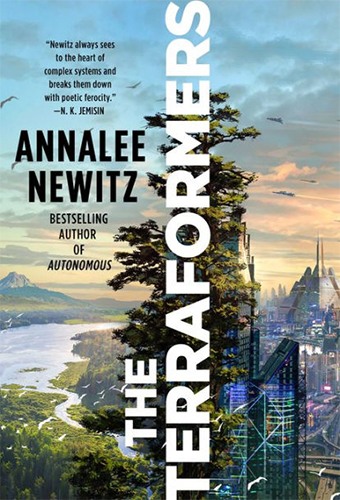
The Terraformers Annalee Newitz
It’s thousands of years in the future in this novel by Annalee Newitz, and humanity has completely rewritten the rules of what it means to be sentient. We find ourselves on a planet that is owned by a corporation and yet being terraformed with humility and understanding of the intelligence of all life. This novel explores bio- and geoengineering, gender, evolution, capitalism, and more, with an uplifting tone and creative approach that makes us question pretty much everything about what it means to live a meaningful life.
JENNIFER CALESHU Continuing Lecturer Haas School of Business