Documenting Italian-American Communities in California


Italians reading war news, North Beach, San Francisco
Photo by Harold Ellwood. Italians reading war news, North Beach, 1935. Fang family San Francisco Examiner Photograph Archive Negative Files. The Bancroft Library. UC Berkeley. BANC PIC 2006.029–NEG box 625, sleeve 092981_01

The UC Berkeley Library has rich collections pertaining to Italian-American communities in California. An online exhibition Italian Americans in California created in 2007 imparts little known facts about centuries of immigrants to the Golden State and is now archived on the Internet Archive’s Wayback Machine. Here are just a few from this marvelously researched exhibit:

  • Though small in number, Italians were some of the first European explorers and settlers of California. From 1687 to 1711, Father Eusebio Chino (probably pronounced Kee–no) traveled in northern Mexico and Lower California. He was the first person to prove that  Lower California was a peninsula, not an island. Other early Italian visitors to the shores of California were sailors and fishermen.
  • Though we often associate Italians in California with San Francisco, the initial Italian settlers established themselves in such diverse communities as Monterey, Stockton, and San Diego during the years of Spanish Rule. While the majority of Italians settled in the urban centers of the east, many, especially northern Italians came out west. As late as 1890, there were more Italian immigrants on the Pacific coast than in New England.
  • As early as the 1840s, settlers from Genoa began to arrive in the valleys of northern and central California after hearing their Ligurian (the region that includes Genoa) sailing relatives talk about how ideal the valleys were for vinting. Despite the fact that Liguria is not a major wine producing region in Italy, the wine industry in California was mostly built by Genoese.
  • The first significant wave of Italian immigrants came to California during the Gold Rush. Those who came quickly moved to buy land or work in service industries, rather than stay in the mines.
  • The majority of these Italian immigrants to California came from northern Italy. They began building communities, introduced Italian Opera to California in 1851, and founded an Italian language newspaper in San Francisco as early as 1859. Amadeo Giannini founded what became the Bank of America, first known as the Bank of Italy, in 1904 as a way for Italian immigrants to save and borrow small amounts, but the genius of his bank was the first use of branches put in locations closer to his customers.
  • The aftermath of the Gold Rush brought even more northern Italians to California. The ostentatious wealth of those who succeeded during the Gold Rush years brought with it a demand for stone and marble cutters from Italy to work on the mansions of the newly rich. The fishing grounds and warm climate began to attract Sicilian fishermen, especially in the Bay Area and San Diego.
  • San Francisco’s Little Italy bounced back from the 1906 earthquake in better shape than ever. At the same time, Italian immigrants had established themselves as the primary fishermen in the San Francisco Bay, and as a major agricultural force as well. Some children of the first wave of immigrants were coming of age in the 1900s to the 1930s, and these achieved greater success than their parents in law, politics, business, and agriculture, especially wine. 
  • The cultural contributions of generations of Italian Americans in San Francisco in particular is impressive. Writers such as Lawrence Ferlinghetti, Gregory Corso, Diane di Prima, Philip Lamantia and others fostered the Beat movement in the post-World War II years, rebelling against the conventions of mainstream American life (consumerism, racism, homophobia, etc.).

From Doe Library’s collection in the Main Stacks and NRLF, here are some noteworthy publications:

At the play [portraits of prominent San Franciscans, California]
Garibaldi, C. G. (active ca. ). At the Play [Portraits of Prominent San Franciscans, California]. Robert B. Honeyman, Jr. Collection of Early Californian and Western American Pictorial Material. The Bancroft Library. UC Berkeley. BANC PIC 1963.002:0501–E
Select Finding Aids from The Bancroft Library

Early California Italian-American Newspapers in The UC Berkeley Library

  • ll Corriere del Popolo. San Francisco, CA: Pedretti Bros., 1914-1943, 1948-1967 (lacks issues)
  • L’Eco d’Italia. San Francisco, CA: Pierino Mori, 1966-1980.
  • L’Italo-Americano. Los Angeles, CA: Scalabrini Fathers, 1985-2016. Online archive for 2012-present available via UCB only. Former titles: Eco d’Italia and Italo-Americano di Los Angeles
  • La Voce del Popolo. San Francisco, CA, 1868-1939.
Italian fisherman with no crabs at Fisherman's Wharf.
Italian fisherman with no crabs at Fisherman’s Wharf. Fang family San Francisco Examiner Photograph Archive Negative Files. The Bancroft Library. UC Berkeley. BANC PIC 2006.029–NEG box 644, sleeve 093662_02

See also the website for the Museo Italo Americano in San Francisco.


Women in Politics Collections Now Available!

Photograph of a collection of pins, badges, and other ephemera relating to Republican National Conventions and Republican political campaigns mostly from the 1950s and 1960s from the Marjorie H. E. Benedict papers.
Pins, badges, and other ephemera relating to Republican National Conventions and Republican political campaigns mostly from the 1950s and 1960s from the Marjorie H. E. Benedict papers (BANC MSS 90/168 c).

Over the last year, I’ve worked on a grant project funded by Jo Freeman processing four collections relating to women in politics. These collections include the Vera Smith Schultz papers, Mary Moore papers, Marjorie H. E. Benedict papers, and Eleanor Cameron Fowle papers. Each of these collections have been important and enlightening in their own way. They are now processed and open for the public to research and explore. 

Mary Moore Papers

The first collection from this project that I processed was the Mary Moore papers (BANC MSS 2016/111). Moore served as a councilwoman for Oakland City Council for District 2 from 1977-1994. Her papers cover political issues in Oakland at this time, including local disputes over projects and businesses in the area of District 2. On the juicier side of politics, there are articles referring to the breakdown of the relationship between Moore and then Oakland Mayor, Lionel Wilson. It’s always fun to get to know more about a city’s politics during a different time period. A lot of proposals for projects and redevelopment came across Moore’s desk and it is particularly interesting to find out which projects were implemented and which ones were not. 

Vera Smith Schultz Papers

The next collection I worked on was the Vera Smith Schultz papers (BANC MSS 96/62 c). Schultz was the first woman elected to the Mill Valley City Council in 1946 as well as the first woman elected to the Marin County Board of Supervisors in 1952. After she lost her re-election in 1960, Schultz continued her involvement in local government and non-profit organizations that operated in Marin County. She was a fierce advocate of getting Frank Lloyd Wright to design the Marin County Civic Center. Her papers primarily consist of materials related to her work on the Marin County Board of Supervisors, her personal interests in local Marin County issues, and her work with the Marin Senior Coordinating Council.

Marjorie H. E. Benedict Papers

One of the most rewarding (and most difficult to organize) collections that I worked on for this project was the Marjorie H. E. Benedict papers (BANC MSS 90/168 c). Benedict’s papers provide a unique perspective on the organizing and political tactics of the Republican Party in the 1940s-1960s. She was the Republican National Committeewoman for California representing the state for the Republican National Committee (RNC) from 1949-1960. Her work with the RNC comprises most of her papers and includes materials from when she was designated as Hostess for the 1956 Republican National Convention in San Francisco. Her collection includes correspondence and campaign materials from both state and national campaigns. State campaigns featured include politicians that also have papers in The Bancroft Library’s holdings, including Senators Thomas Kuchell and William Knowland. The wealth of correspondence and ephemera that Benedict’s collection holds can help researchers better understand the relationship between politicians and the RNC and political organizers. 

Eleanor Fowle Cameron Papers

The final collection I worked on for this project was the Eleanor Fowle Cameron papers (BANC MSS 90/177 c). Eleanor Fowle Cameron was a chairwoman of the Democratic State Women of California, a former head of the women’s division of the Democratic State Central Committee, and president of the Foothill-De Anza Community Foundation. She also was part of the Stanford University Founding Grant Society board of directors and a trustee of The Trust for Hidden Villa in Los Altos Hills. She was the sister of former California Senator Alan Cranston. She authored “Cranston, The Senator from California,” a biography of her brother, that was published in 1980 and republished in 1984. The bulk of this collection consists of materials related to the research and writing of her biography on Alan Cranston. There are also a few articles she wrote for other publications and some personal correspondence and family papers.


Art for the Asking: Check-Out Art From The Graphic Arts Loan Collection At The Morrison Library August 25 to 28

A bright poster advertising the GALC open house from August 25th through 28th, in the Morrison Library.

The Graphic Arts Loan Collection (GALC) at the Morrison Library has been checking out art to UC Berkeley students, staff, and faculty since 1958 and it is back again this year!

The purpose of the GALC since its inception has been to put art in the hands of UC Berkeley students (and the best way to appreciate art is to live with it!), so on August 25 and 26, from noon to 4 p.m., and August 27 and 28, from 10 a.m. to 4 p.m., UC Berkeley students can come to the Morrison Library (101 Doe Library) and check-out up to two pieces of art from the GALC’s collection to take home and hang on their walls for the academic year. The prints will be available to students on a first come, first served basis. We will also have our newest prints available, including art by Dave Eggers and Annie Owens.

If you would like to see what we have before you come to the Morrison Library, all the prints are available to browse online at the Graphic Arts Loan Collection website. Not everything in the collection will be available at the Morrison Library on these days, but much of the collection will. Please note that the Graphic Arts Loan Collection will not be available to staff and faculty members during this time, but only available to UC Berkeley students. Starting September 2nd students can reserve prints from the collection through the GALC website, and on September 15th, faculty and staff can begin reserving prints. Any questions about the GALC can be directed to graphicarts-library@berkeley.edu.


Hugo Award Nominees for 2025!

Hugo Award banner from with UGO

To my usual delight with speculative fiction, the Hugo awards have been announced! These controversial awards raise lots of questions about voice, audience, and the politics of publication. Nonetheless, they are usually worth a gander as awesome literature. I, for one, adore a couple of these authors.

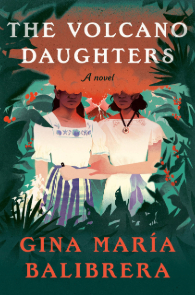
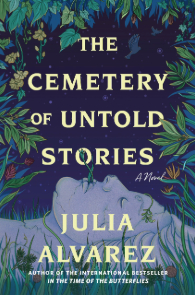
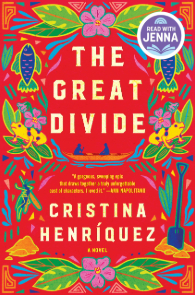
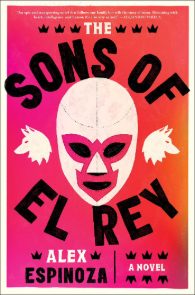
Best Novel

Best Novella

Best Novelette

The Brotherhood of Montague St. Video” by Thomas Ha (Clarkesworld, May 2024)
By Salt, By Sea, By Light of Stars” by Premee Mohamed (Strange Horizons, Fund Drive 2024)
The Four Sisters Overlooking the Sea” by Naomi Kritzer (Asimov’s, September/October 2024)
“Lake of Souls” by Ann Leckie in Lake of Souls (Orbit)
Loneliness Universe” by Eugenia Triantafyllou (Uncanny Magazine, Issue 58)
Signs of Life” by Sarah Pinsker (Uncanny Magazine, Issue 59)

Best Short Story

Five Views of the Planet Tartarus” by Rachael K. Jones (Lightspeed Magazine, Jan 2024 (Issue 164))
Marginalia” by Mary Robinette Kowal (Uncanny Magazine, Issue 56)
Stitched to Skin Like Family Is” by Nghi Vo (Uncanny Magazine, Issue 57)
Three Faces of a Beheading” by Arkady Martine (Uncanny Magazine, Issue 58)
We Will Teach You How to Read | We Will Teach You How to Read” by Caroline M. Yoachim (Lightspeed Magazine, May 2024 (Issue 168))
Why Don’t We Just Kill the Kid in the Omelas Hole” by Isabel J. Kim (Clarkesworld, February 2024)

For More

For the rest of categories, take a look at the official page.


The Passenger: An Unconventional Travel Guide

Published by Europa Editions, The Passenger series offers an unconventional take on typical travel guides with new writing, original photography, art, and reportage from around the world. The series was first launched in 2018 by the independent Italian publisher Iperborea, and was brought into English by Europa in 2020. It has also been translated into Spanish, Portuguese, and Korean.

The book-magazine travels far and wide to bring back the best writing from the places it visits. It assembles not only reportage, but also long-form journalism and narrative essays with the aim of telling stories of the contemporary life of a place and its inhabitants: “It takes readers beyond the familiar stereotypes to portray the shifting culture and identity of a place, its public debates, the sensibilities of its people, its burning issues, its pleasures and its pain.”

An Author Recommends section provides cultural tips on books, films, music and more from contemporary authors such as Valeria Luisell (Mexico), Banana Yoshimoto (Japan), Enrique Vila-Matas (Barcelona), Pitchaya Sudbanthad (Thailand), Paolo Macry (Naples), Chimamanda Ngozi Adichie (Nigeria) and more. Digging Deeper provides short bibliographies for further reading, and The Playlist links to curated Spotify playlists of music from the featured city, country, or region. To date there have been eighteen volumes published in English, and all are shelved in Morrison Library’s travel section, waiting for their next trip.


New Data Alert: Web of Science XML Data

Exploring Research at Scale with Web of Science XML Data

Algo-r-(h)-i-(y)-thms, 2018. Installation view at ON AIR, Tomás Saraceno's solo exhibition at Palais de Tokyo, Paris, 2018.

The Web of Science XML dataset now available for research, teaching, and learning at UC Berkeley. 

This dataset is an essential tool for anyone exploring, evaluating, or visualizing global research activity. Drawing from over 12,500 journals across 254 disciplines in the sciences, social sciences, and humanities, this rich dataset includes not only journal articles, but also conference proceedings and book metadata—spanning back to 1900.

With more than 63 million article records and over 1 billion cited references, the dataset supports large-scale analysis of scholarly communication and impact. Key metadata elements include ORCID identifiers in over 6.2 million records to help disambiguate authors, detailed funding acknowledgments with grant numbers, and full author and institutional affiliations to support accurate attribution and collaboration analysis. Web of Science also standardizes institutional names to resolve naming variations, making cross-institutional analyses more reliable.

Researchers can access this data through flexible XML, allowing them to build complex citation networks, analyze research dynamics, and model trends over time. The dataset can be combined with other datasets for additional insights or used in visualization and statistical tools.

For research offices the dataset provides an opportunity to gain meaningful insights into the ever-evolving research landscape. With consistent indexing and global coverage, it’s a foundation for informed research strategy, evaluation, and discovery. 

The data can be accessed in UC Berkeley Library’s Dataverse, through the Savio computing cluster, or TDM Studio. Please visit the Web of Science XML data section of the Text Mining & Computational Text Analysis research guide. Contact the Library Data Services Program for a Dataverse API token or with questions: librarydataservices@berkeley.edu


New Faculty Publication by Atreyee Gupta

Check out the new  publication from Art History faculty Atreyee Gupta.

Post War Revisited; a global art history

Postwar Revisited: a Global Art History  is available to read online through UC Library Search.

“Rethinking the narrow Euro-American basis of ‘postwar’ as an art historical epoch, Postwar Revisited makes a major contribution. It reflects and will further influence the broader spirit of revisionism toward more global understandings of the twentieth century that have been effectively redefining the field of art history over the past two decades.” – Saloni Mathur, author of A Fragile Inheritance: Radical Stakes in Contemporary Indian Art

From Duke University Press


What UC Berkeley researchers need to know about NIH’s Updated Public Access Policy

This post was written by Tim Vollmer, Anna Sackmann, and Elliott Smith

Wall display at the National Institutes of Health (NIH) featuring the agency’s name in large metallic letters at the top and a mission statement in smaller text below. The text reads: “The National Institutes of Health (NIH) is dedicated to fostering discovery at the frontiers of science and medicine. An agency of the United States Department of Health and Human Services, the NIH conducts and supports medical research to uncover new knowledge that will improve the health of all Americans and the human condition throughout the world.” A round emblem of the U.S. Public Health Service with the year 1798 is also visible on the right.
​​Duane Lempke, CC0, via Wikimedia Commons

If you receive funding from the National Institutes of Health (NIH), a recent policy update will impact how you publish and share your research.

Beginning on July 1, 2025, all author accepted manuscripts (defined below) accepted for publication in a journal must be submitted to PubMed Central (PMC), and will be made publicly available at the same time that the article is officially published, with no embargo allowed. The NIH’s 2024 Public Access Policy replaces the 2008 policy that permitted up to a 12-month embargo on public access.

Does the NIH Public Access Policy apply to you?

If your publication results from any NIH funding, including 1) grants or cooperative agreements (including training grants), 2) contracts, 3) other transactions, 4) NIH intramural research, or 5) NIH employee work, then the NIH public access policy applies to you.

What do you need to do?

The author accepted manuscript (AAM) must be deposited in the NIH Manuscript Submission System immediately upon acceptance in a journal.  The AAM is “the author’s final version that has been accepted for journal publication and includes all revisions resulting from the peer review process, including all associated tables, graphics, and supplemental material.” The updated NIH Public Access Policy echoes the 2008 policy in that deposit compliance is generally achieved through submission of the AAM by the author or author’s institution to PubMed Central.

AAMs will be made publicly available in PubMed Central (NIH’s repository) on the official date of publication in the journal, with no embargo period.

According to the supplemental guidance on the Government Use License and Rights, accepting NIH funding means granting NIH a nonexclusive license to make your author accepted manuscript publicly available in PubMed Central. Authors are required to agree to the following terms:

“I hereby grant to NIH, a royalty-free, nonexclusive, and irrevocable right to reproduce, publish, or otherwise use this work for Federal purposes and to authorize others to do so. This grant of rights includes the right to make the final, peer-reviewed manuscript publicly available in PubMed Central upon the Official Date of Publication.”

The supplemental guidance also recommends that grantees should consider including the following NIH-recommended language in your manuscript submission to journals:

“This manuscript is the result of funding in whole or in part by the National Institutes of Health (NIH). It is subject to the NIH Public Access Policy. Through acceptance of this federal funding, NIH has been given a right to make this manuscript publicly available in PubMed Central upon the Official Date of Publication, as defined by NIH.”

Will I be charged for publishing the AAM open access?

Depositing the AAM in PMC is free and fulfills your public access compliance obligations under the NIH Policy. (Note: Berkeley authors are also asked to submit the AAM to eScholarship to fulfill their obligations under the UC’s Open Access Policy.)

Authors are not required to pay an article processing charge (APC) to comply with this policy. However, the journal in which you are publishing may separately wish to charge you an APC for publishing open access through their own platform. You may be eligible to allocate some of your NIH grant funds to cover the journal’s APC. NIH has provided supplemental guidance regarding allowable publishing costs to include in NIH grants. In addition, the University of California continues to support publishing through open access publishing agreements. Through these and other local programs such as the Berkeley Research Impact Initiative, UC Berkeley authors have options for open access publishing with the UC Libraries covering some or all of the associated publishing fees. For questions about open access publishing options, please contact schol-comm@berkeley.edu.

What about data?

The NIH’s updated Public Access Policy combines with the already-in-place Data Management and Sharing Policy. That policy says that all NIH funded research that generates scientific data requires the submission of a Data Management and Sharing Plan as part of the grant proposal.

There is an expectation for researchers to maximize appropriate data sharing in established repositories. Data should be made accessible as soon as possible, and no later than the time of the associated publication or end of award, whichever comes first.

Where can I learn more?

Slide with a red and blue background. The title in bold white and red text reads: “Navigating NIH’s Updated Public Access Policy Requirements.” Below the title, in white text on a blue background, are the presenter names and roles: “Anna Sackmann: Data Services Librarian, Elliott Smith: Biology & Bioinformatics Librarian, Tim Vollmer: Scholarly Communication & Copyright Librarian.”

Join UC Berkeley Library staff on Tuesday, June 10, 2025 from 1:00-2:00 pm on Zoom for an overview of the NIH Public Access Policy changes. The presentation will cover the key updates that take effect on July 1, 2025, including the mandatory manuscript submission to PubMed Central, how to navigate acknowledgement requirements, copyright and licensing, and the NIH data sharing requirements. You will also learn how the Library and other units on campus can provide ongoing support with the new policy. All registrants will receive a link to a recording of the session.

Do you have specific questions? Reach out to Anna, Elliott, or Tim.


Pride Month 2025

Pride Month 2025 banner

Celebrate June’s Pride Month with literary classics, memoirs, and more LGBTQ+ stories and authors through UCB Overdrive.


Follow Lit at the Library!
Subscribe by email
Instagram: @doe_lit
RSS

Making Crafts and Memories: Reflecting on Three Years as a Maker Fellow

By Ava Gessl, Undergraduate Library Making Fellow, 2024-2025

As my final semester at Berkeley comes to a close, so does my time at the Makerspace. Over the past three years, I’ve had the chance to be a part of the development of this space and have been able to interact with so much of the Berkeley community. More than anything, what stands out to me is the community we’ve built. I’m so happy that the Makerspace is something that many people hear about through word of mouth, with people who attended Drop-in Hours or workshops enthusiastically sharing the space with their friends. 

When I first started working in the Makerspace, we were out in the open of Doe 190, with less people milling about and getting the chance to see us. Since our move, the surrounding tables have filled with students and more people are able to curiously glance around our space as they walk by. There’s been a steady flow of students coming through the space, and it’s always exciting to learn about how they found out about the Makerspace. 

One of the biggest changes that I’ve appreciated is how workshops are structured. We work together as a team to draft comprehensive guides for how the workshops should run and try to prepare for different levels of student experience and attendance. Behind every sewing, vinyl, papercraft, felting, and every other workshop there is a surprising amount of coordination. We choose materials, write clear instructions for attendees, and estimate how long each part of the workshop should take. I’ve come to really love that behind-the-scenes work, especially having a chance to try the craft out myself to try and identify areas where students might get stuck. It’s fun looking for ways to improve instructions and finding new ways to use the given instructions to make something else. 

Over the years, I’ve helped with many workshops and each one has taught me something new. Not just about the craft, but about teaching, patience, and how to create an inviting learning environment. I’ve worked with students who’ve never touched a sewing machine before, and others who’ve come in with something they thrifted that morning and are coming to adjust the hems like they’ve done dozens of times before. 

I came into the Makerspace with sewing as my biggest skill, with an interest in other crafts but not much experience outside of an art class. The Makerspace has allowed me to develop more skills and made me fall in love with felting, stamp carving, and crocheting. Each new skill makes me think about how to plan ahead, visualize each step, and how I’d teach it to someone else so they could avoid some of the mistakes I made. Those one-on-one interactions are some of my favorite moments, the small moments of sitting next to someone and teaching them something whether I’ve done it a hundred times or I just learned it last week. One such interaction has been when someone came to the Makerspace with a big plan of learning to sew and make a shirt. Though we weren’t able to get to the shirt that day, I was able to direct them through different sewing exercises and give them advice about their fabric and pattern choice. When they returned the next day, they came to show me their fabric and tell me about what they planned to do that day. It was such a nice moment to have someone come back to the Makerspace and excitedly tell me about how they planned to use the skills I helped teach them to complete a project. 

As I wrap up my time here, I feel grateful for everything this role has given me. I’ve gained practical skills, yes, but also a deeper understanding of how to lead with empathy, how to collaborate with a team, and how to support others in their creative journeys. I’m leaving the Makerspace better than I found it, but I also know it will keep growing after I’m gone. Thank you to everyone I’ve worked with, learned from, and taught along the way. I’ll forever be grateful for my time here, and I hope to continue to use the skills I learned to craft new things to share with others.