
Tag: California Politics
Virtual Discussion with Legendary Lawmakers Loni Hancock, Fran Pavley and Lois Wolk
The California Secretary of State, State Archives & UC Berkeley are holding a Virtual Discussion with Legendary Lawmakers Loni Hancock, Fran Pavley and Lois Wolk on Oct. 18 at 6 pm. This event will launch new oral histories of these celebrated lawmakers to be housed at the California State Archives.
California Secretary of State Shirley N. Weber, Ph.D., and the UC Berkeley Oral History Center will hold a virtual panel discussion and Q&A as The State Archives releases three new oral histories of former state senators Loni Hancock, Fran Pavley, and Lois Wolk.
This virtual event will take place via Zoom from 6–7 pm on Tuesday, October 18. Participants can register and submit questions in advance.
“The leadership and impact of Senators Pavley, Wolk, and Hancock will be felt by Californians for decades to come,” said UC Berkeley Academic Specialist and Historian, Todd Holmes, who interviewed the three women. “Documenting their experience in the legislature for the next generation is exactly what the State Government Oral History Program was created to do. We at the Oral History Center are honored to partner with the State Archives on this important work.”
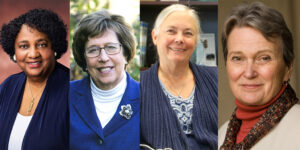
“The California State Government Oral History Program is a critical part of documenting our state’s history and we are pleased to have worked with The UC Berkeley Oral History Center to capture the stories and remarkable accomplishments of the Honorable Loni Hancock, the Honorable Fran Pavley, and the Honorable Lois Wolk,” State Archivist, Tamara Martin said. “We look forward to their interviews and transcripts being available for the public to explore at the California State Archives and on our website.”
“The opportunity for the State Archives to capture the stories of these remarkable lawmakers in our state’s history has been an honor,” Secretary Weber said. “I look forward to the conversations we will be having with three women who have had such a lasting impact on California.”
Since 1986, the California State Archives has administered the Oral History Project, a legislatively established oral history program that has, to date, completed over 200 interviews. This systematic and disciplined effort to record, preserve, and make interviews available supplements the historical records in the Archives and provides researchers with a broader and more complete picture of California government than can be gleaned from documents alone.
About the Oral History Center
The Oral History Center of The Bancroft Library preserves voices of people from all walks of life, with varying political perspectives, national origins, and ethnic backgrounds. You can find all our oral histories from the search feature on our home page. Search by name, keyword, and several other criteria. We are committed to open access and our oral histories and interpretive materials are available online at no cost to scholars and the public. Sign up for our monthly newsletter featuring think pieces, new releases, podcasts, Q&As, and everything oral history.
Bay Area Political Women Leaders Panel: The Importance of Networks
Support networks point to the generations of activists, staffers, fundraisers, and more who have helped the Bay Area become an incubator for powerful political women.
This is an exciting moment in women’s political history! Not only does August mark the 100th anniversary of the Nineteenth Amendment, the recent announcement of Senator Kamala Harris as Vice President Joe Biden’s running mate on the Democratic ticket ensures that women’s political work is at the front of our minds. And Harris’s prospects on the national stage also highlight the Bay Area’s outsized influence in fostering women political leaders. This makes for the perfect atmosphere to celebrate the Bay Area Women in Politics Oral History Project from UC Berkeley’s Oral History Center!
In the spirit of this celebration, on Wednesday, July 29, 2020, the Oral History Center hosted the Bay Area Political Women Leaders Panel with guests former San Francisco Supervisor Louise Renne, Pittsburg City Councilmember Shanelle Scales-Preston, and Oakland Mayor Libby Schaaf. This all-star lineup of Bay Area politicos shared their personal journeys to elected office, as well as stories about local political women’s challenges and achievements.
Of particular note in this conversation was the importance of networks. Panelists explained how personal connections not only helped build leadership experience and fuel campaigns, but also pushed them to run in the first place. For Councilmember Scales-Preston, who is in her first term on the Pittsburg City Council, her relationships with other political staffers brought years of expertise to her campaign. And for Mayor Schaaf (and indeed Senator Harris), the women’s political recruitment and training organization Emerge America had a profound impact on her preparedness to seek elected office.
But these support networks also point to the generations of activists, staffers, fundraisers, and more who have helped the Bay Area become an incubator for powerful political women. For example, each panelist shared stories about those who paved the way for them and acted as mentors in political environments sometimes hostile to women. In addition to charismatic elected officials, it is the stories of these behind-the-scenes political players who form the basis of the Bay Area Women in Politics Oral History Project.
As for what we should expect for the Bay Area’s political future, all panelists agreed: more women!
Now is the time to support this project and celebrate generations of the Bay Area’s political women. Join us in documenting this important history through the Bay Area Women in Politics Oral History Project! The UC Berkeley Oral History Center is committed to putting voices in the historical record that might otherwise be lost, and providing the oral histories to the public at no cost. We are currently raising funds and need your help to undertake the expansion of this ambitious oral history collection. You can support this project by giving to the Oral History Center. Please note under special instructions: “For the Bay Area Women in Politics Oral History Project.” To learn more about this project, please contact Amanda Tewes at atewes@berkeley.edu.
To catch up with the conversation with former San Francisco Supervisor Louise Renne, Pittsburg City Councilmember Shanelle Scales-Preston, and Oakland Mayor Libby Schaaf, watch the panel here!
Louise Renne is a lawyer with the Renne Public Law Group, former San Francisco Supervisor (1978–1986), and former City Attorney for the City and County of San Francisco (1986–2001). She previously served as the General Counsel for the San Francisco Unified School District and as the City Attorney for the City of Richmond.
Shanelle Scales-Preston is a first-term member of the Pittsburg City Council, and District Director for Congressman Mark DeSaulnier. She previously worked for Congressman George Miller, and has been working in public service for nearly twenty years.
Libby Schaaf has been the Mayor of Oakland since 2015, and served on the Oakland City Council from 2011–2015. She was previously the Public Affairs Director for the Port of Oakland, and has a background in law.
OHC Director’s Column – February 2020
From the OHC Director…
Berkeley students and researchers from around the country reach out to us, especially during Black History Month, interested in our oral histories with African Americans. We always point people in the direction of our African American Faculty and Senior Staff oral history project, otherwise known as The Originals. And there is a good reason we do that: this project features seventeen lengthy and substantive oral histories with leading and pioneering UC Berkeley scholars and administrators (more on this below). But limiting our reference to this single project does service neither to OHC’s full collection nor to the amazing and accomplished individuals interviewed for other projects or simply based on their own merits. In preparation for this month’s column, I spent a day digging into our collection in an effort to uncover a host of hidden gems — in this case, interviews with African Americans whose living memories date to the early 20th century (at least) and offer first-person insights into the life of a Tuskegee airman, the contours of the West Coast jazz scene, the role of women in the Black Panthers, and much more.
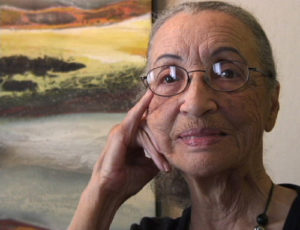
The migration of African Americans from the American South to the industrial centers of Northern California in World War II changed those who moved, along with the places they moved to. Drawn to jobs in places like the Kaiser Shipyards in Richmond, California, these migrants set down their roots in the Bay Area. In some interviews from the Rosie the Riveter / World War Two Home Front oral history project, Black “Rosies” tell about their lives in Jim Crow South, about the migration north and the hope for a better life, and about their experiences working in wartime industries and experiencing both greater opportunity but still discrimination based on race. Of the 197 Rosie project oral history, about a quarter are with African American women and men. It is likely folly to pull out one interview from this group, but I’m certain people will be interested in the story of Betty Reid Soskin, who not only worked in Richmond during the war but decades later became a ranger with the National Park Service at the Rosie the Riveter National Historic Site. Reid Soskin continues to work at the park today — at the ripe young age of 98!
One chapter in the Second World War that tragically demonstrated the enduring power of racism was the Port Chicago Disaster of 1944. The majority of the 320 killed and 340 injured in this accidental munitions explosion were African American. The eight oral histories of the Port Chicago project were recorded in the late 1970s and early 1980s by UC Berkeley scholar Robert Allen (whose life history interview we will be released this spring).
Our documentation of the African American experience in the Bay Area continues well past World War II. In a few major projects, Black East Bay residents — and their neighbors — offer accounts of not only the transformation during war but the important decades that followed. The On the Waterfront project follows several narrators through these decades. In the Oakland Army Base project, we hear from several African Americans (Charles Snipes, Cleophas Williams, Davetta Thibeaux, Ellen Wyrick-Parkinson, Elois Thornton, George Bolton, George Cobbs, Gordon Coleman, Grant Davis, Leo Robinson, Louis Harris, Margaret Gordon, Michael Thomas, Monsa Nitoto, Queen Thurston, and Robert Taylor) about their interactions with base, whether as a member of the military service, an employee of the Department of Defense, or as a resident of the nearby community of West Oakland.
The Civil Rights Movement is documented in our collection (though, admittedly, many more oral histories can be found elsewhere, such as at the Library of Congress), particularly as it
manifest in the San Francisco Bay Area in organizations that likely deserve more attention from researchers. Frances Mary Albrier was elected in the 1930s to the local Democratic Party Central Committee (and was welder during the war) and Terea Pittman became a leader of the NAACP (and many other organizations) in the earliest years of the Civil Rights Movement. The Council for Civic Unity, in addition, was established in the 1940s and was an important precursor to the California Fair Employment Practices Commission; Charles Patterson, in his interview, tells about the organization for which he was an intern before becoming a major figure in the foundation world (along with Ira DeVoyd Hall, who was a leader of the San Francisco Foundation). Orville Luster, who was interviewed in 1975, recalled his leadership of the unique Youth for Service organization which taught disadvantaged youth the skills necessary to be successful at work. And there is always a good deal of interest in the interview we hold with Ericka Huggins of the Black Panthers, which was donated to us by Fiona Thompson.
African Americans, not surprisingly, have played key roles in social justice work beyond the 1960s Civil Rights Movement. Henry Clark and Ahmadia Thomas and Carl Anthony were interviewed for their groundbreaking work in the area of environmental justice, while Michael Crawford and John Newsome were interviewed for our large project on Freedom to Marry, or the fight to win marriage equality. For our major project documenting the history of the Disability Rights and Independent Living Movements, we interviewed Chester Finn, Victor Robinson, and others.
Movement politics and protest is one way to force change, building institutions and running for elected office are other avenues pursued by African Americans we’ve interviewed over the years. I encourage you to read through two very interesting oral histories with three influential elected officials, Oakland Mayor Lionel Wilson and California State Assemblymen William Byron Rumford and Willie Brown (the second part of Brown’s oral history, covering his terms as San Francisco Mayor, will be released this spring). African Americans have made signal contributions to the law, as well: Cecil Poole, the first African American appointed as a United States Attorney in 1961, later became a distinguished federal judge; Allen Broussard rose up through the ranks of city and county courts, eventually joining the California State Supreme Court in 1981 as an associate justice; and to this day, US District Court Judge Thelton Henderson plays an outsized role in the area of law and civil rights.
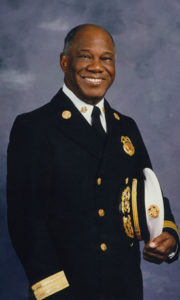
Law and politics are only two venues in which an individual can make an impact as the ethos of public service runs through many other institutional domains. Born just over 120 years ago, C.L. Dellums led a life of public service through many offices, perhaps most notably as through his decades as Vice President and then President of the Brotherhood of Sleeping Car Porters. After he had already done important work integrating the department, Robert Demmons was appointed the first African American Chief of the San Francisco Fire Department by Willie Brown in 1996. Everett Brandon might be little remembered today, but as a young man, he was a leader in San Francisco’s War on Poverty programs which brought services and employment to thousands of in the city. In recent decades, Joseph Marshall has continued the work of Brandon and others through his Omega Boys Club / Alive and Free service organization in San Francisco. The spirit of public service thrives in the private sector too. Our interviews with Ron Knox and Amanda Brown reveal how one of the largest private health care providers in the country have fought to improve health outcomes for African Americans.
The Oral History Center has long been committed to documenting our culture well beyond politics, law, and public service — we are deeply interested in the arts and the people who create them. Longtime OHC historian Caroline Crawford held an ongoing interest in documenting African American contributions to the arts, particularly music. Her interviews with Allen Smith (jazz trumpeter), Earl Watkins (jazz drummer), Gildo Mahones (jazz composer and pianist), John Handy (saxophonist, composer, and bandleader), and Jimmy McCracklin (blues singer and pianist).
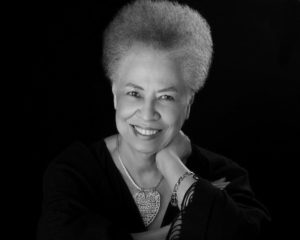
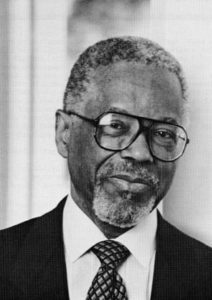
Finally, I want to bring this back around to education, as this is the root of all good things (dare I say) and I think it is essential for a university to document its role in improving society and creating new possibilities. I very much encourage you to take a deep dive into the African American Faculty and Senior Staff project, perhaps beginning with a 20 minute video we produced a few years back. This project, however, was years in the making and while we refer to this group of early faculty and staff as “the Originals,” the truth is that they weren’t the first. Our interview with Archie Williams is a true hidden gem of the collection. Williams attended Berkeley between 1935 and 1939, which was punctuated by an appearance at the infamous 1936 Olympics in Berlin at which he won a gold medal. Although too old to serve in a combat role in World War II, as a certified pilot he trained the Tuskegee airmen! He went on to a career as a respected educator. Marvin Poston was a student at Berkeley at the same time as Williams and eventually became a widely respected optometrist. In 1958, Robert Gibson was the first African American to earn a doctorate in pharmacy at UCSF, where he became a distinguished member of the faculty. Born in 1920, Emmett Rice earned his doctorate in economics at Berkeley in 1954, before being named to the Federal Reserve Board of Governors in 1979; it is worth noting that Rice’s daughter is Susan Rice, who served as UN Ambassador and National Security Advisor in the Obama Administration. A graduate of UC Berkeley and San Diego State, Del Anderson Handy had a distinguished career in education, culminating with a term as chancellor of San Francisco City College.
These oral histories represent a meaningful slice of OHC’s interviews with African Americans, but surely not the entirety of the collection. The Oral History Center encourages you to not only explore the interviews listed above, but dig even deeper into our collection, honoring the voices of those African Americans we interviewed by reading their words and absorbing their ideas and experiences.
Martin Meeker, Charles B. Faulhaber Director
Find these interviews and all our oral histories from the search feature on our home page. Search by name, keyword, and several other criteria. You can also find the projects mentioned here on our projects page.
OHC Director’s Column – January 2020
From the OHC Director:
The staff of the Oral History Center wishes everyone a happy and productive 2020!
After a long winter’s rest for the Berkeley band of oral historians, this year has jumped off to a running — and even wild — start.
For one, we have begun the unveiling of our lengthy life history interview with four-term California Governor Jerry Brown. Done in partnership with KQED Public Media, this oral history also serves as the first interview conducted for the relaunched California State Government Oral History Project, a project of the Secretary of State. Read more about the interview background and context — or the interview itself. Here’s the page that serves as clearing house for all information about and coverage of this important oral history
We are in the final phases of preparing a number of new interviews for release in the coming weeks and months, including new releases for our projects with: the Sierra Club, the East Bay Regional Park District, the Presidio Trust, San Francisco Opera, the founders of Chicano/a Studies, and the Getty Trust African American Artist project.
Along with our usual oral history work, we are preparing for our annual Introductory Workshop (Leap Day! February 29th) and Advanced Summer Institute (August 10–14). Applications for the Introductory Workshop and Advanced Institute are both now open.
Come back in February for a more substantive column from your’s truly. Until then, back to that reservoir of unread emails!
Martin Meeker, Oral History Center Director
UC Berkeley Oral History Center: Jerry Brown Oral History
“Jerry Brown, I found, to be a man with a largely unwavering set of core values and principles who sometimes appears to choose contradictory ways in which to express those drives.”
— Director Martin Meeker, Oral History Center of The Bancroft Library, reflecting on his experience interviewing Jerry Brown
Inside the Jerry Brown Oral History
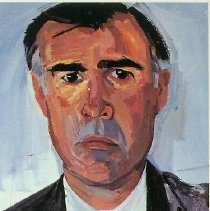
There are very few individuals who are what might be called a “shoe-in” for an Oral History Center life history interview. Governor Jerry Brown is one who easily qualifies. Brown’s career as an elected official began in Southern California in 1969 when he was elected to the Los Angeles Community College Board of Trustees and then continued for nearly the next fifty years through a succession of high offices; in 2018 he concluded his record fourth term as governor.
In forty hours of interviews, there are at least three main areas of study of the life of Jerry Brown, and politics much more broadly, that might be impacted by the contents of this interview from today’s vantage point: the historical trajectory of key social and political issues; the influence of creative and unique ideas upon Brown and his agenda; and what might be called the philosophy of realpolitik — of how politics really works, at least according to Brown.
The Jerry Brown oral history was made possible by funding from the State Government Oral History Program, A Project of the California Secretary of State, State Archives.
Dive Deeper
Dive deeper into the political life of Jerry Brown through the Jerry Brown oral history.
“20 Shades of Jerry Brown” UC Berkeley Podcast
“We had 20 interview sessions, and I would say that in those 20 interview sessions, we had 20 different shades of Jerry Brown,” explains Oral History Center Director Martin Meeker in UC Berkeley’s 9-minute Fiat Vox podcast, “Berkeley oral history project reveals 20 shades of Jerry Brown.” Get a taste of the oral history — hear Brown talk about the medfly invasion, Linda Ronstadt, and politics past and present. Martin Meeker provides insights into this “extraordinarily detailed, thoughtful, self-critical, broad, and sweeping oral history.”
Jerry Brown Interview History
For the historians at UC Berkeley’s Oral History Center, the question was not, “Should this interview be done?” but rather, “How might it be done at all?” Get the inside story about the making of this riveting 40-hour oral history from interviewer and Oral History Center Director Martin Meeker.
Governor Gray Davis Foreword to the Jerry Brown Oral History
When Gray Davis tried to have a hole in the governor’s rug repaired, Jerry Brown responded, “That hole will save the state at least $500 million, because legislators cannot come down and pound on my desk demanding lots of money for their pet programs while looking at a hole in my rug!” Find out why Gray Davis, the 37th Governor of the State of California, who served as chief of staff to Jerry Brown during his first two terms as governor (1975-1981), thinks Jerry Brown is one of the most consequential governors in California history.
California State Government Oral History Program
The Jerry Brown oral history is a part of the State Government Oral History Program and is the cornerstone of the re-launch of the program under California Secretary of State Alex Padilla. All of the oral history materials (recordings and transcripts) will be deposited with the California State Archives and available to users through their website as well.
Jerry Brown Oral History Transcript
Read the transcript of the 40-hour oral history. In this oral history, the following topics are discussed at length: family background and upbringing; education, religion, and friendships; the political career of Pat Brown; college, seminary, and law school; California statewide elected offices, including Governor of California; campaigns for elected office, including for US President; election reform; taxation, budgets, and deficits; law, the courts, and criminal justice reform; immigration; the environment and climate change; education reform, charter schools, and higher education; Oakland, CA; popular culture, journalism, and political campaigns; political philosophy, theories of governance, and applied politics.
KQED Forum Podcast Featuring OHC Director Martin Meeker
Politics was the family business. The Democratic party was tribal for Brown. Listen as Oral History Center Director Martin Meeker, and KQED interview partners Scott Shafer and Guy Marzorati, talk about the unique political perspective and interviewing style of Jerry Brown.

KQED Podcast: The Political Mind of Jerry Brown
From KQED: The Political Mind of Jerry Brown brings listeners the wisdom of the former Governor, Mayor, and presidential candidate. The Oral History Center’s Martin Meeker and Todd Holmes, and KQED’s Scott Shafer, interviewed Brown for more than 40 hours, covering the former governor’s life and half-century in the political game – and Brown has some lessons he’d like to share. Premiering January 8 with hour-long episodes on KQED 88.5 FM every Wednesday at 8pm through January 29.
Find this interview and all our oral histories from the search feature on our home page. You can search by name, key word, and several other criteria.
Bancroft Roundtable: Thursday, February 20 at noon in the Lewis-Latimer Room of The Faculty Club (This event has passed.)
Brown, Behind the Scenes: Contending with Governor Jerry Brown and His Oral History
In this presentation, OHC historians Martin Meeker and Todd Holmes will provide the behind-the-scenes story of a remarkable interview with a singular Californian and offer an initial perspective on how this oral history might influence our understanding of California and its political culture.
Bay Area Women in Politics Oral History Project
This project is unique in that it focuses on women in one geographic region in order to get a clearer picture of the breadth of political work women have been doing on the ground and behind the scenes.
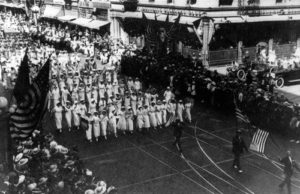
Nineteen ninety-two has been dubbed “The Year of the Woman,” a phenomenon in which a wave of women candidates swept local and national races for public office. California led this charge by becoming the first state in American history to be represented by two women senators—Barbara Boxer and Dianne Feinstein. And since 2016—after a presidential election that provoked heated debate about gender discrimination and sexual harassment—many women stepped up to the challenge of engaging even more visibly in the American political system. Since then, organizations like Emily’s List and She Should Run reported record-breaking numbers of women who wanted to make their voices heard by running for public office.
And yet, 1992 was not the beginning of women’s political activism, but rather the culmination of decades of organization encouraging women to get involved and run for office. For generations, Bay Area women have built the foundations of political activism that span neighborhood organizations to support networks. And their stories inform our present.
In order to document these stories, I am developing the Bay Area Women in Politics Oral History Project to record the history of these local women and their impact on and journeys through politics. The Oral History Center of The Bancroft Library at UC Berkeley continues to preserve stories about California politicians, but this project is unique in that it focuses on women in one geographic region in order to get a clearer picture of the breadth of political work women have been doing on the ground and behind the scenes. Documenting political engagement outside of traditional political venues will capture more stories about women in politics and a more diverse array of stories.
For instance, the pilot interview for this oral history project is with Mary Hughes, a Bay Area political consultant. In her interview, Hughes explained that “in politics and in political consulting, you either win races or you don’t. If you don’t win, no one hires you. If you do win, everybody wants to hire you.” Hughes’s successful career in the Bay Area spans decades and highlights the prominence of women in national politics. And though she does not wish to run for office herself, Hughes sees her role as someone who can best serve her community by managing the election process for political candidates—especially other women. Hughes’s recollections are an example of the kinds of stories that will drive this oral history project.

These long-form oral history interviews survey Bay Area political women’s backgrounds in and passion for political work through self-reflection. This format allows for comparisons between various avenues of political activism—like organizers and elected officials. It also reveals the importance of networks and mentors, and the impact they have had on women in the Bay Area political scene.
As engaged citizens, we need to know more about these women who helped create a space for themselves in Bay Area political life. Who are these women and what are their stories? From neighborhood organizations to national campaigns, what is the range of political activism in which these women engage? How has being a woman been a challenge or an asset to their political involvement? How have these women been working in the background of political life for generations? How does living and working in California affect political opportunities? What kind of political power do these women wield locally and nationally?
As we approach the hundredth anniversary of women’s suffrage, conducting oral histories with women activists and politicians in California’s San Francisco Bay Area will help shape the national narrative about women’s historic, current, and future roles in American political life. Further, gathering firsthand stories will help inspire and instruct a new generation of politically engaged women.
In addition to collecting primary source materials, The Oral History Center shares its collection with the general public through interpretive materials—like podcasts—and educational initiatives. Recording the contributions of these impressive Bay Area women—political fundraisers, organizers, and elected officials—through life history interviews is the first step in developing curriculum for workshops that cultivate young women’s political leadership. These workshops will use oral histories as a tool to foster civic engagement across the political spectrum, as well as to help develop confidence and skills of future women leaders. We also plan to create a podcast, a series of public forums, and a museum exhibit featuring these interviews.
We are currently raising funds for this project, and need your help to undertake the expansion of this ambitious oral history collection. You can support this project by giving to the Oral History Center. Please note under special instructions: “For the Bay Area Women in Politics Oral History Project.” To learn more about this project, please contact Amanda Tewes at atewes@berkeley.edu or 510-666-3687.
Amanda Tewes is an interviewer with The Oral History Center and specializes in California history and political culture.
The Oral History Center is a research program of the University of California, Berkeley. The OHC helps preserve contemporary history by conducting carefully researched video recorded and transcribed interviews. As part of UC Berkeley’s commitment to open access, archival copies of the audio/video and transcripts are placed in The Bancroft Library and are publicly accessible online.
An Oral History with Malca Chall, Interviewer/Editor for the Regional Oral History Office, 1967-2000

by Ann Lage
We are delighted to introduce the oral history of our former colleague, Malca Chall: Wage Rate Analyst for the War Labor Board, World War II; East Bay Community Activist; Interviewer/Editor for the Regional Oral History Office, 1967-2000.
Malca is well known in the Oral History Center as a key staff member for thirty-three years. She came to the Regional Oral History Office, as we were then named, in 1967 and soon became an indispensable and respected interviewer, project director, and right-hand woman to director Willa Baum. Over the years she planned and carried out an impressive array of oral histories, most prominently in the fields of California water policy and politics and government. Her final volume of interviews was completed in 2000.
Few of Malca’s colleagues were aware of an earlier chapter in her life: her employment with the National War Labor Board in Seattle during World War II. Once we learned of her work as a wage rate analyst in the Seattle area for the War Labor Board, we realized that her story would add a unique perspective to our Rosie the Riveter / World War II American Home Front Project. Recognizing an opportunity to also document some important history of the Regional Oral History Office, where I was her colleague for many years, I offered to record Malca’s wartime experiences as the first topic in a longer oral history encompassing her career with ROHO. Only after meeting with Malca to plan her oral history did I realize the importance of also discussing her extensive civic activism in the Hayward/Castro Valley area. In many ways, her volunteer activities with the League of Women Voters and other citizen groups, as well as her wartime experiences, informed her pursuits as an interviewer and project director at ROHO.
Malca Kleiner Chall was born in 1920 in Tacoma, Washington, to a family active in business, in civic affairs, and in the Jewish community. Malca graduated from Reed College and received a master’s degree in political science at the University of Iowa.
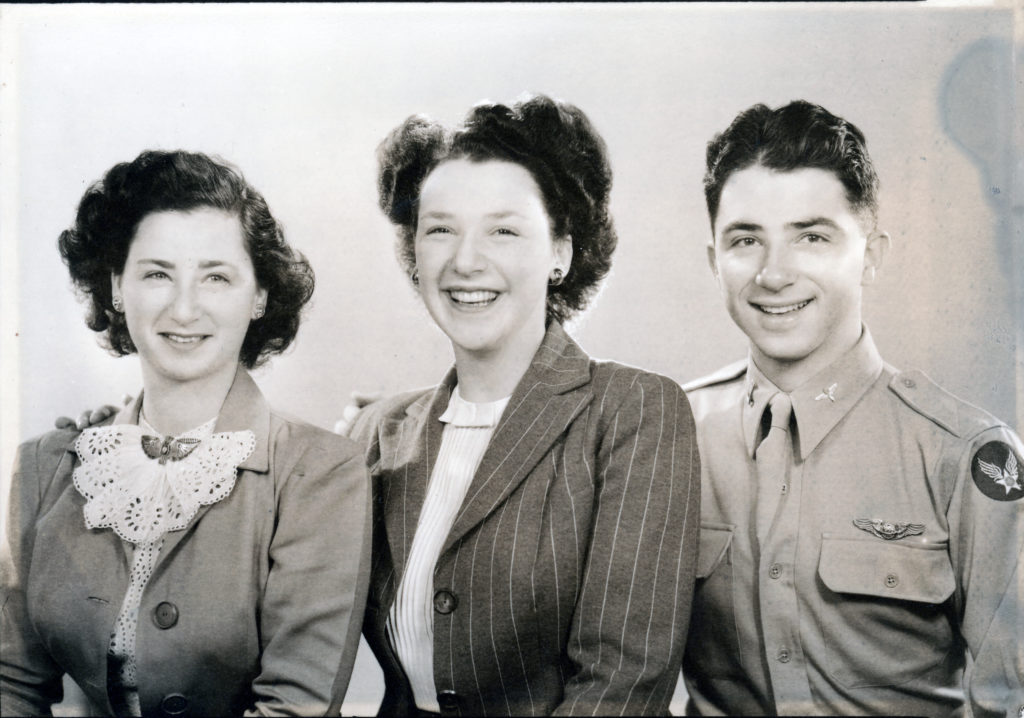
Photo taken for parents’ 25th wedding anniversary, 1944
In 1943, she accepted an offer from George Bernard Noble, her major professor at Reed who had been appointed head of the War Labor Board, Twelfth Region, to join his staff in Seattle. At age twenty-three, with minimal formal training, she stepped into the ticklish job of analyzing requests for wage increases from both labor and industry, as the WLB sought to dampen inflationary pressures in the midst of critical labor shortages. She visited potato fields, apple orchards, and fisheries, as well as banks, aluminum factories, shipping companies, and other work sites, conducting research and making determinations on acceptable wage rates.
In the oral history Malca reflects on the impact of her wartime employment and also discusses social and political life in wartime Seattle for a young professional woman. An amusing highlight of this section is her account of a bike trip with a friend and colleague, during which the two young women spent a night in a jail cell, arranged by the police of Everett, Washington, when the friends found themselves without a safe place to sleep.
Following the war, Malca moved to New York in search of a job in labor relations. She found work instead with the Edward Bernays public relations firm and in time met and married her husband, Harold Chall. After they moved west to California, settling south of Oakland in San Leandro and then Hayward and Castro Valley, Malca launched her second career as a civic activist, or as she puts it, “a pioneer of controversy in the community.” She worked for the Community Welfare Council in Oakland until the birth of the first of her two sons, David and Barry. As a young mother, she joined the League of Women Voters and was soon a leader in its Eden Unit, spearheading a study of the Hayward city government and helping to draft and secure voter approval for substantial charter revisions. She was active in campaigns for local political figures, including March Fong Eu’s election to the State Assembly as the second woman and first Asian American in the California legislature. She was also prominent in numerous battles to counter right-wing-John Birch Society-McCarthyite pressures in the Hayward area and to secure increased funding for local schools.
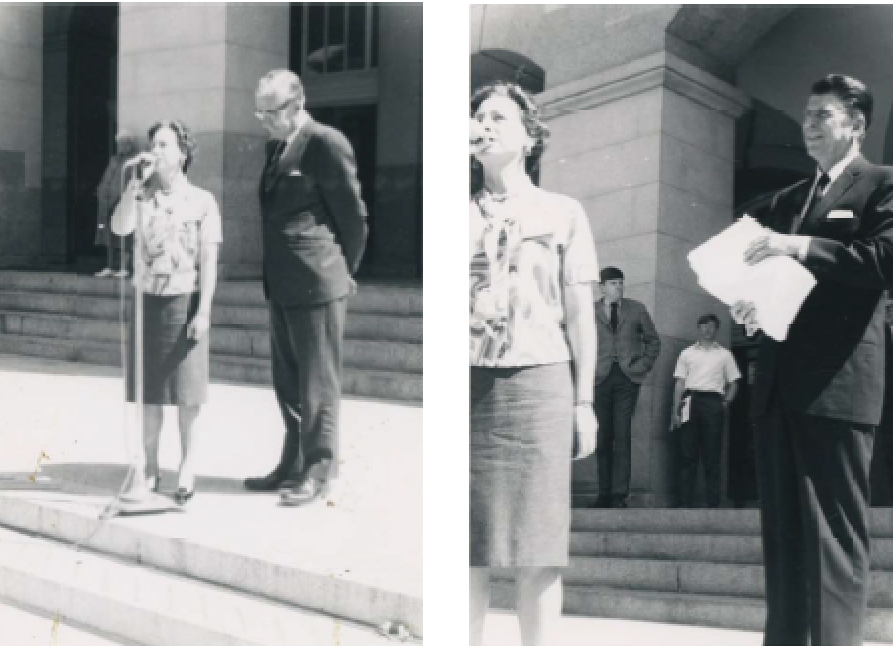
In the second photo, Reagan appears.
In 1967, Malca was hired by Willa Baum, long-time director of the Regional Oral History Office. Her background in political issues and personal relationships with East Bay women who had entered the arena of local and statewide government soon led to the development of one of ROHO’s earliest major projects, California Women Political Leaders, focusing on elected officials, political party officers, and community leaders from 1920 to 1970. She documented an era where women in elected offices at the state and federal levels were few and far between, demonstrating how they had nevertheless long been active, if often behind the scenes, in governance of political parties and community organizations, in local government and on school boards. She helped secure project funding for the Women Political Leaders project from multiple sources, including the National Endowment for the Humanities and the Rockefeller Foundation, honing an essential survival skill in an office that was funded almost solely by grants and gifts. Malca directed the Women Political Leaders project and was eventually tapped to conduct interviews in a variety of other subject areas, from banking to education to health care, even as she became the primary interviewer on California water policy for many years. Her wide-ranging work on water—from sanitary engineers to the founders of Save-the-Bay, from Governor Pat Brown and state water resource managers to the architects of the historic federal Central Valley Project Improvement Act—has made the Oral History Center’s collection an essential source for researchers on California water issues.
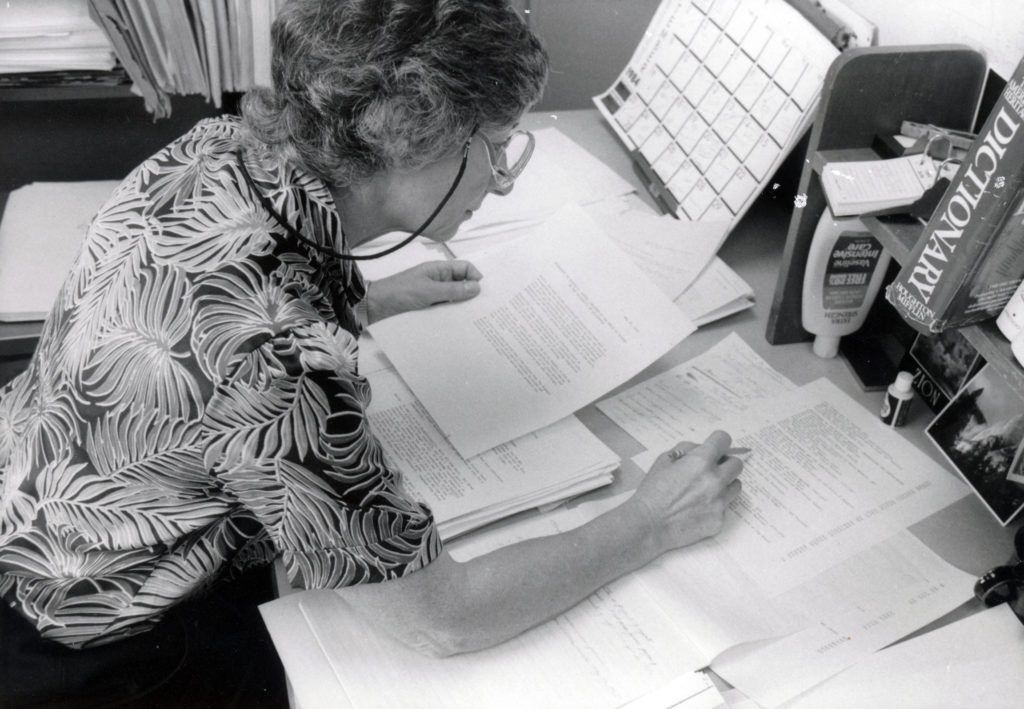
Willa Baum soon recognized Malca’s organizational skills, work ethic, and attention to detail and enlisted her for key tasks in office management. In the oral history, Malca describes preparing style and indexing guidelines for her projects, which became templates for many others. She researched average times to complete each aspect of the oral history process, an essential budgeting tool. Most impressive was the multi-paged comprehensive production manual, outlining each task in the oral history process, whose responsibility it was, and in which file drawer each stage of the evolving transcript should be placed, an essential document for an office primarily staffed by a shifting array of part-time workers, as many as thirty people sharing desks in a four-room space. Malca also discusses her contributions to outreach, including performing with Amelia Fry in a play based on ROHO’s interviews with suffragists. Throughout the oral history she recalls many of the ROHO women (almost all staff members were women), and the leadership qualities of Willa Baum, as well as friendships, fun, and challenges of her three-decade career with the Regional Oral History Office.
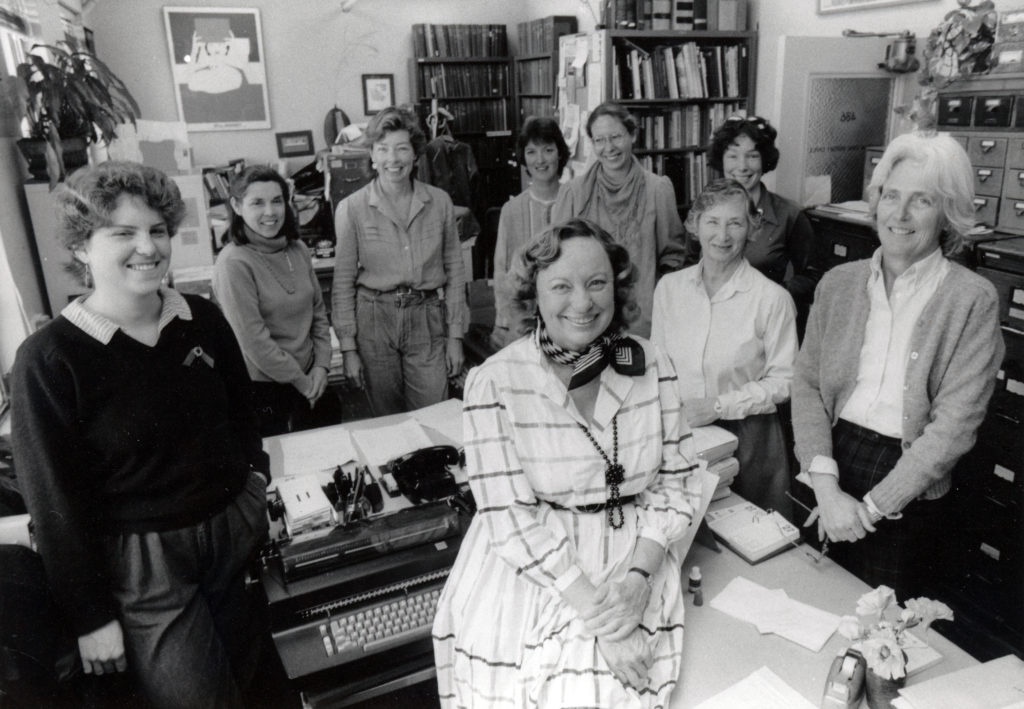
Left to right, Nora Cody, Ann Lage, Suzanne Riess, Elizabeth Eshleman, Laurie Dunlap, Malca Chall, Julie Shearer, Gaby Morris. In front, Willa Baum
From January to May 2015, Malca and I met for seven sessions at her Hayward home to record her oral history. After receiving the lightly edited transcript, she undertook her characteristically careful review, did further research to check her facts, and added in names or details she had overlooked. She did not edit her words beyond a few clarifying changes. As we finished the review, Malca was packing up her house for a move to a retirement community nearby. Ever the careful historian, as she sifted through files she gathered historically significant papers and placed them with the Hayward Area Historical Society or the Bancroft Library, as appropriate. Her research files relating to water issues went to the Water Resources Center Archives (now the Water Resources Collections and Archives at UC Riverside) when she retired from ROHO.
Nearly all of the oral histories Malca Chall conducted during her ROHO career are available on line through the Oral History Center website, where also can be found the oral history with former director Willa K. Baum, conducted in part by Malca Chall. The Oral History Center is a division of the Bancroft Library and is under the direction of Martin Meeker. Special thanks are due to David Dunham who directs the World War II American Home Front project; he first tapped Malca as a Rosie interviewee and has shepherded this oral history throughout the process.
Ann Lage
Interviewer Emeritus
Berkeley, California
July 2017