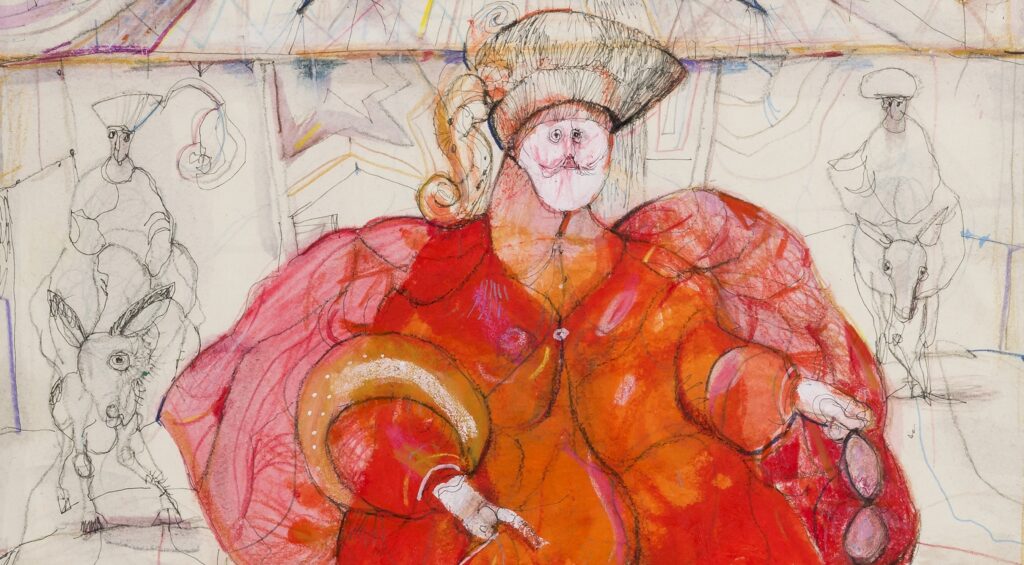
The Graphic Arts Loan Collection (GALC) at the Morrison Library has been checking out art to UC Berkeley students, staff, and faculty since 1958 and it is back again this year!
The purpose of the GALC since its inception has been to put art in the hands of UC Berkeley students (and the best way to appreciate art is to live with it!), so on August 17, 18, 21 and 22, from noon to 5pm, UC Berkeley students can come to the Morrison Library (101 Doe Library) and check-out up to two pieces of art from the GALC’s collection to take home and hang on their walls for the academic year. The prints will be available to students on a first come, first served basis.
If you would like to see what we have before you come to the Morrison Library, all the prints are available to browse online at the Graphic Arts Loan Collection website. Not everything in the collection will be available at the Morrison Library these days, but much of the collection will. Please note that the Graphic Arts Loan Collection will not be available to staff and faculty members during this time, but only available to UC Berkeley students. Starting August 24th students can reserve prints from the collection through the GALC website, and on September 5th, faculty and staff can begin reserving prints. Any questions about the GALC can be directed to graphicarts-library@berkeley.edu.
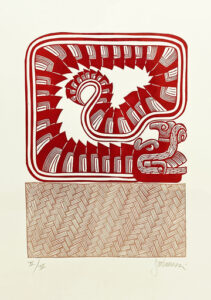
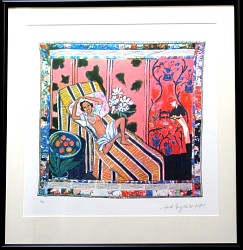
Carrie Mae Weems, Untitled: Trees With Mattress Culebra en el Petate, Sergio Sanchez Santamaria Faith Ringgold, Jo Baker’s Birthday
Today we announce the publication of the Oral History Center’s interviews with Dr. Stan Glantz. Dr. Glantz received his doctorate in applied mechanics from Stanford University before embarking on a multi-decade career at UC San Francisco. He contributed engineering concepts to cardiovascular research, biostatistics to epidemiology, and economics to the study of second-hand smoke and policymaking to regulate second-hand smoke, among many other research projects. The oral history explores his political and policy activism, the history of the clean indoor air movement, and his commitments to science and public health, in particular his long struggles with the tobacco industry and efforts to make UC San Francisco a world center for research into second-hand smoke, nicotine addiction, and the broader social determinants of health. His service to UC San Francisco and the University of California is also explored, in particular, his research and advocacy for policy changes on issues ranging from the rights of adjunct faculty to state funding of the UC system. These interviews showcase Glantz’s applied epistemology, his continual reflection on how knowledge is produced and shaped through formal and informal practices for arriving at scientific truth.
This is a story about bending the boundaries of life, love, and the in/ability to change. Klara is an “artificial friend” – an emotional support type of robot – and the story unfolds from her perspective as she is purchased and taken to her new home. It is dark and dystopian and also light as air.
LOTTA WECKSTRÖM Language Program Coordinator Lecturer, Finnish Studies
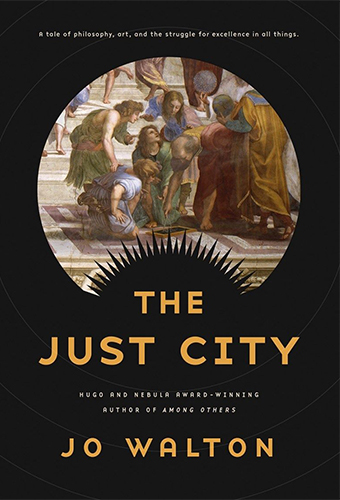
The Just City Jo Walton
The Just City by Jo Walton is sci-fi/fantasy about a social experiment involving an attempt to “(re)write the rules” to implement a version of Plato’s Republic, but grappling with issues of sexual consent, the rights of slaves or robots in this proposed new society, etc., all done with a focus on Socratic debate. Highly readable. It’s the first of three volumes in Walton’s “Thessaly” series.
ETHAN LIGON Professor Agricultural & Resource Economics
This post provides information to UC Berkeley authors about programs that our Library and the UC system offer to help defray open access article processing charges. It also offers tips about how to plan or budget in advance for these fees when possible.
The University of California has been a long-time supporter of open access publishing—that is, making peer-reviewed scholarship available online without any financial, legal, or technical barriers. Just because the publishing outcome is open to be read at no cost, though, doesn’t mean the publishing enterprise as a whole is “free.” One of the most common ways for open access publishers to continue to finance their publishing and production of journals in the absence of selling subscriptions for access is to instead charge authors a fee to publish—moving from a publishing system based on paying to read to one based on paying to publish. Of course, not all methods of funding open access require authors to pay publication fees in this way. And in all cases (except those rare instances in which a publisher requests that you waive this right), the UC’s open access policy makes it possible for UC authors to share their author-accepted manuscript version of their articles on eScholarship, the UC’s research repository, immediately upon publication in a journal.
But when a publisher does charge a fee to publish, we want to help you understand what UC Berkeley resources are available—whether from your grant funds or the University of California Libraries—to help with those costs.
Typically publishers refer to author-facing fees as “article processing charges”, or “APCs”. APCs can range from a few hundred dollars all the way up to $10,000 or more for some select Nature journals.
UC authors may be able to cover or contribute to these fees by leveraging research accounts or grant funds (to the extent available). But there are also other University Library programs available to support payment when research accounts or grant funds are not available.
UC-wide open access publishing agreements will cover some (or all) APCs
UC corresponding authors can take advantage of funding opportunities to defray the cost of publishing their scholarship open access where their grant or other research funds come up short or are not available. The University of California libraries have entered into a growing number of systemwide transformative open access agreements with publishers. UC libraries’ transformative agreements aim to transform scholarly publishing by moving from a publication model based on subscription access to an open access model.
When a UC-affiliated corresponding author has an article accepted for publication in a journal with which the UC has an open access publishing agreement, the UC libraries will pay some or all of the associated publishing fee. So, when it comes time to pay the APC, the UC libraries will pay at least the first $1,000. If there’s any remaining balance due on the APC, the publisher’s payment system will ask if the UC author has grant funding available to cover the remainder. If the UC author cannot contribute the remaining balance, the UC libraries will pay the entire APC on their behalf. (Note: there are a few instances where the UC libraries will contribute a maximum of $1,000 toward the APC, such as Nature-branded titles.)
The UC maintains an updated list of Publisher OA Agreements and Discounts where you can explore which journals are available for partial or full APC coverage under the open access agreements.
The UC Berkeley Library-specific fund can reimburse open access fees for other fully open access journals
UC Berkeley’s Library also has a campus open access fund that UCB authors can use if they are publishing in a fully open access journal and are required to pay an APC. The Berkeley Research Impact Initiative (BRII) is open to any current UC Berkeley faculty, graduate student, postdoc, or academic staff who does not have other sources of funds to pay article processing charges. The BRII fund is available for journals other than those with which the UC has entered into a systemwide transformative open access agreement.
For BRII APC coverage to apply, the entire journal must be freely available to the public without subscription fees. BRII cannot cover fees for publishing in “hybrid” OA journals—which are subscription-based journals that only offer open access options if an author decides to pay an additional fee to make their individual article open access. BRII reimbursements are capped at $2,500 per article, and a UC Berkeley author can use BRII funds once per fiscal year.
How to plan in advance
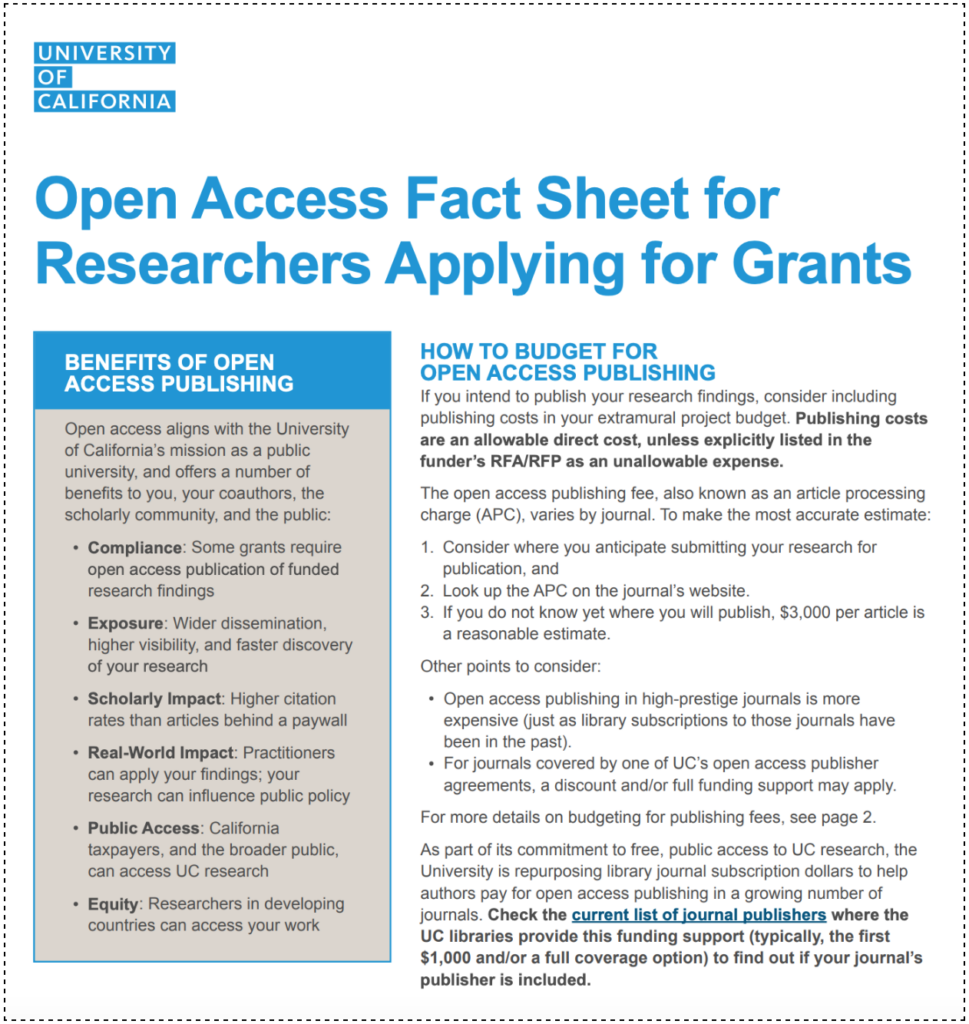
If your research is grant funded, it is important to think about publishing costs at the beginning of your research cycle and account for them in your grant applications and annual research budgeting. For grant recipients (such as researchers with funding from NIH, NSF, etc.), open access publishing costs generally are considered an allowable direct expense unless funders explicitly prohibit them. For more information on how and why to plan in advance, check out the Open Access Fact Sheet for Researchers Applying for Grants.
Click the image above to view the full guide “Open Access Fact Sheet for Researchers Applying for Grants”
Planning in advance allows you to be a partner in the publishing process. It allows the UC libraries to cover some of your article processing charge ($1,000) and, where possible, you to use grant or research funds to cover the rest. The more researchers are able to contribute, the farther the UC agreements can go in publishing more articles open access, and the better UC libraries are able to help provide financial support to researchers who do not have specific access to grant funds.
Most of the UC transformative open access agreements are set up to cover the full article processing charge should UC authors not have research or grant funds to contribute to making their journal articles open access. But there are a few journal titles and series within transformative agreements for which the libraries were unable to negotiate full coverage. For example, if a UC author has an article accepted in Nature Communications, the UC libraries cover only the first $1,000 of the article processing charge through the terms of the UC-Springer Nature transformative open access agreement. Since the current APC for Nature Communications is $6,290, then the UC author must pay the remainder of the fee ($5,290).
Another instance in which an author may need to pay a balance is when the author is publishing in a fully-open access journal not covered by a transformative agreement at all, and in turn when that journal’s article processing charge exceeds what can be covered through the BRII program. For instance, if a UC Berkeley author has an article accepted for publication in JAMA Network Open, the BRII program is capped at covering $2,500 of the article processing charge. Since the APC for JAMA Network Open is $3,000, then the UC Berkeley author must pay the remainder of the fee ($500).
Since both of the examples above are journals in which an APC is required in order to publish there, authors are responsible for securing the remainder of any publishing fees should the open access publication costs exceed the amount of UC libraries (or UC Berkeley Library’s) support.
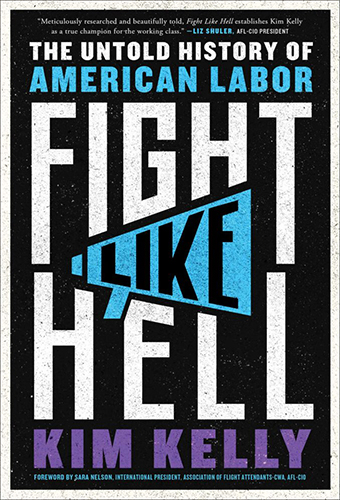
Fight Like Hell: The Untold History of American Labor Kim Kelly
Kelly came to national attention for rewriting rules when she shattered common expectations for Teen Vogue with her hard-hitting labor reporting. In Fight Like Hell, she offers a celebratory yet critical history of American labor movements and activists who rewrote the rules of work in America. It is an accessible survey of labor history that honors the positive efforts of the past while outlining how bias and prejudice have hampered American labor activism from its earliest origins to the movements of today. Fight Like Hell provides a great foundation for understanding Berkeley’s and the Bay Area’s history of activism.
ABBY SCHEEL Head, Arts & Humanities Division Doe Memorial Library
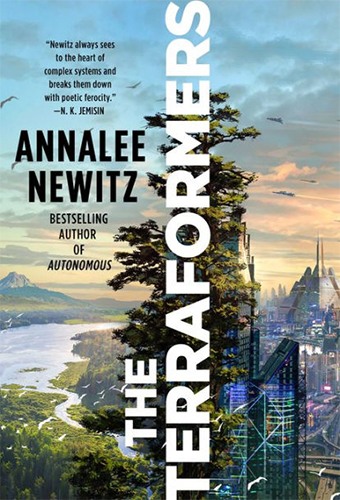
The Terraformers Annalee Newitz
It’s thousands of years in the future in this novel by Annalee Newitz, and humanity has completely rewritten the rules of what it means to be sentient. We find ourselves on a planet that is owned by a corporation and yet being terraformed with humility and understanding of the intelligence of all life. This novel explores bio- and geoengineering, gender, evolution, capitalism, and more, with an uplifting tone and creative approach that makes us question pretty much everything about what it means to live a meaningful life.
JENNIFER CALESHU Continuing Lecturer Haas School of Business
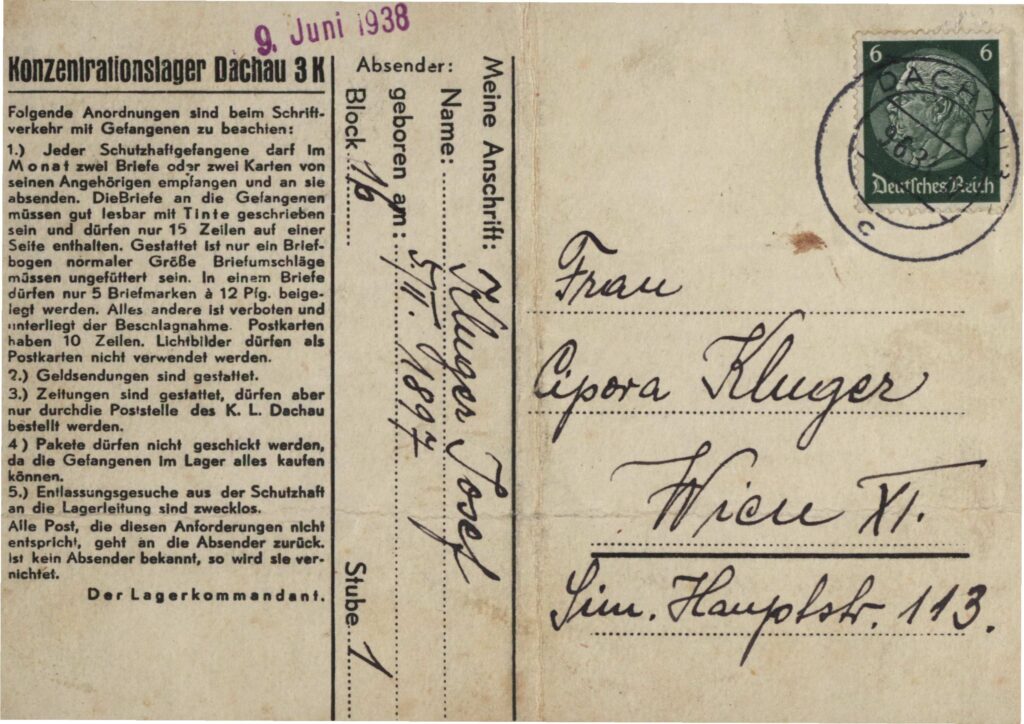
Correspondence from German Concentration Camps and Prisons is a digitized version of a “collection of items originating from prisoners held in German concentration camps, internment and transit camps, Gestapo prisons, and POW camps, during and just prior to World War II. Most of the collection consists of letters written or received by prisoners, but also includes receipts for parcels, money orders and personal effects; paper currency; and realia, including Star of David badges that Jews were forced to wear.”1
Cover art for AOQU III, 2 (2022) by Antonio Possenti.
As serials costs continue to soar and academic library budgets continue to decline, Open Access (OA) remains a viable path for knowledge sharing in different disciplines. In the wake of the $850k serials cancellation project currently underway, here’s one online journal that will emerge unscathed. AOQU (Achilles Orlando Quixote Ulysses). Rivista di epica is published at the Università degli Studi di Milano (University of Milan) and is now in its fourth year.
This biannual peer-reviewed journal aims to be a forum for scholars from multiple disciplines to discuss epics beyond linguistic, cultural and chronological boundaries. Epic poetry will be seen as a cultural, moral and ideological model, defining self-perception in history and society, in relationship with other cultures, ideologies as well as the collective imagination.
Today Milan Kundera passed, and the whole literary world grieved; likewise, I grieved. I often ask myself why some deaths get marked albeit more while the others, such as those of migrants who drowned on their way to Europe or the Honduran female inmates who were killed in prison, were forgotten by many.
I believe life and death are part of being human or animate. When I heard the news of passing Professor Richard Hovannisian of Armenian History at UCLA yesterday, I grieved. In the Winter of 2002, when many of the UCLA classes were full and as a transfer student-immigrant, I had no idea what class in History I should enroll in as UCLA felt like an Indian jungle; Professor Hovanissian came out of new and suggested, I take his class on Armenian History. He also mentioned that although his class was full, he would gladly have an extra-Indian voice. I am forever grateful to him for admitting me to a course that opened the door to a new cultural, civilizational, and linguistic experience. His teaching style and compassion have remained with me to this day, for he was my first university professor. He was always supportive of my work as a professional librarian at UCLA. We have all his books
RIP Professor Hovannisian
Here is the obituary Professor Bedros de Matossian wrote on the Society of Armenian Studies email list.
“On July 10, the Society for Armenian Studies, the academic world, the field of Armenian Studies, and the Armenian nation lost one of the most prominent icons of the modern period: Prof. Richard G. Hovannisian (1932-2023). Hovannisian was a monumental figure in the field of Armenian Studies. Considered as the Dean of Modern Armenian History, he established the field of Modern Armenian History in the Western Hemisphere. He supported the establishment of some of the most important chairs in Armenian Studies in the United States. Hovannisian was the child of Genocide survivors. His father, Kaspar Gavroian, was born in in the village of Bazmashen near Kharpert in 1901. Unlike others, he survived the Genocide and arrived in the U.S. He changed his last name from Gavroian to Hovannisian after his father Hovannes. In 1928 Kaspar married Siroon Nalbandian, the child of Genocide survivors. They had four sons: John, Ralph, Richard, and Vernon. Richard was born in Tulare, California, on November 9, 1932. Being the son of Genocide survivors played an important role in his academic path. In 1957, he married Dr. Vartiter Kotcholosian in Fresno and had four children: Raffi, Armen, Ani, and Garo. Raffi would become the first Minister of Foreign Affairs (1991-1992) of the Modern Republic of Armenia.
Hovannisian began his academic life in 1954 by earning a B.A. in History, followed by an M.A. in History from the University of California, Berkley. In 1966, he earned his Ph.D. from the University of California, Los Angeles (UCLA). His dissertation was published in 1967 with the title Armenia on the Road to Independence which was the precursor to the four-volume magnum opus The Republic of Armenia. Hovannisian played an important role in establishing the teaching of Armenian history at UCLA. In 1987, he became the first holder of the Armenian Education Foundation Chair in Modern Armenian History at UCLA, which after his retirement was named in his honor as the Richard Hovannisian Endowed Chair in Modern Armenian History, with Prof. Sebouh Aslanian as its first incumbent.
Hovannisian was a Guggenheim Fellow and received numerous prestigious national and international awards for his service to the field and civic activities. He served on the Board of Directors of multiple national and international educational institutions and was a member of the Armenian National Academy of Sciences. After finishing his four-volume The Republic of Armenia, he dedicated his research and career to battling the denial of Armenian Genocide, resurrecting the history of Armenian towns and villages of the Armenian Provinces of the Ottoman Empire, and writing textbooks on modern Armenian history. Although not a scholar of Armenian Genocide, he has contributed more to the discipline than many others in the field. He edited multiple volumes on different facets of the Armenian Genocide, including historical, literary, and artistic perspectives. Hovannisian also spearheaded a monumental project to preserve the eyewitness accounts of the Armenian Genocide survivors.
In the 1970s, he launched the Armenian Genocide oral history project. He and his students interviewed more than 1,000 Armenian Genocide survivors in California. In 2018, Hovannisian donated the collection to the USC Shoah Foundation’s Visual History Archive to be available to scholars around the world. He single-handedly edited and published 15 volumes with Mazda Press as part of the UCLA Armenian History & Culture Series. The 15 volumes covered the history of Armenians in Van/Vaspourakan, Cilicia (with Simon Payaslian), Sivas/Sepastia, Trebizond/Trabzon, Baghesh/Bitlis, Taron/Mush, Smyrna/Izmir, Kesaria/Kayseri and Cappadocia among other places. The final book in the series, The Armenians of Persia/Iran, was published in 2022. Hovannisian’s also edited the two-volume The Armenian People from Ancient to Modern Times, which is considered a classic Armenian History textbook.
Hovannisian came from a generation that fought against the stifling of Armenian voices within the fields of Middle Eastern and Ottoman Studies, which had relegated Armenian Studies to second-class status. He fought for the relevance of Armenian Studies within these fields and tirelessly fought against the efforts to marginalize Armenian issues and to deny the Armenian Genocide.
Besides his contribution to the field, Hovannisian also mentored and educated multiple generations of scholars and thousands of students. He was a strict mentor who demanded that his students work to reach their full potential. He wanted to make sure that they would survive and thrive in the tough terrain of the academic job market.
In his lifetime, Hovannisian was especially influenced by two people: his wife Vartiter and Simon Vratsian (the last Prime Minister of the First Republic of Armenia). Vartiter was his life’s partner for more than half a century. Her dedication to Richard and the field of Armenian Studies played an important role in shaping who Richard became. Vartiter was an intellectual companion who read and reviewed every piece that he wrote. She was also a constant presence at every conference he planned or attended. In the early 1950s, Vratsian, the author of a major book on the First Republic, became Hovannisian’s mentor when he studied Armenian language at the Hamazkayin Nishan Palanjian Jemaran in Beirut, Lebanon. This influence led Hovannisian to write the first academic work on the First Republic of Armenia and created the first step for his academic career.
In 1974, Hovannisian along with Dickran Kouymjian, Nina Garsoïan, Avedis Sanjian, and Robert Thomson spearheaded the project to establish a Society for Armenian Studies (SAS). Considered as the pillars of Armenian Studies, the main objective of this group was the development of Armenian Studies as an academic discipline. With access to very limited resources, this group of scholars was able to establish the foundations of a Society that would play a dominant role in developing Armenian Studies in North America and beyond. From a handful of chairs and programs that supported the initiative at the time, today Armenian Studies as a discipline has flourished in the United States with more than thirteen chairs and programs providing their unconditional support to the Society. Hovannisian was the president of SAS for three terms (1977, 1991-1992, 2006-2009). During his tenure the Society flourished and achieved major accomplishments in the field.
In 2019, the Society for Armenian Studies awarded Hovannisian with the SAS Life Time Achievement Award in recognition and appreciation for his outstanding service and contribution to the field of Armenian Studies.
Hovannisian’s legacy will remain for generations to come.
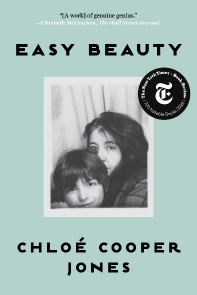
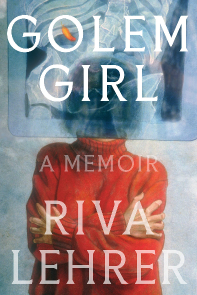
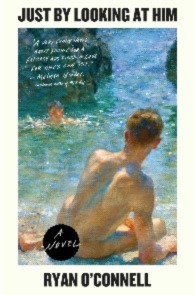
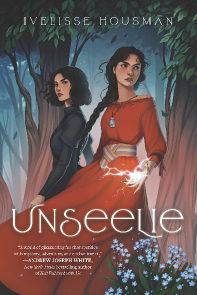
Celebrate this year’s Disability Pride Month with these great recommendations from the library. Spanning disability culture, activism, love, and finding yourself, our picks are a must-read for everyone!
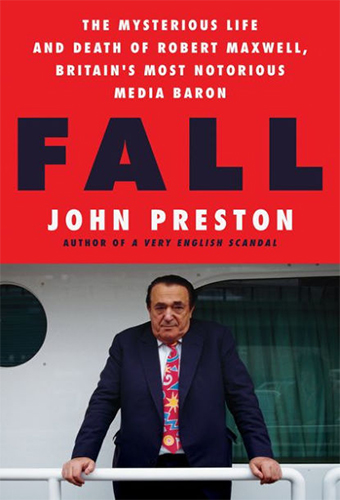
Fall: The Mysterious Life and Death of Robert Maxwell, Britain’s Most Notorious Media Baron John Preston
Ian Robert Maxwell (born Ján Ludvík Hyman Binyamin Hoch) was a Czechoslovak-born British media proprietor, member of Parliament (MP), suspected spy, and fraudster. He is a larger-than-life character whose triumphs, crimes, and human flaws are now notoriously documented.
Part of me appreciates this multifaceted and detailed analysis of Maxwell, but part of me is irritated at what sounds like tacitly absolving him of his worst crimes. All and all, this book by John Preston is breathtaking – you will gasp and choke on your emotions throughout it.
ELENA ZASLAVSKY Metadata Creation Professional, Metadata Creation Unit Collection Services Division — Metadata Services
Lady Justice: Women, the Law, and the Battle to Save America Dahlia Lithwick
Dahlia Lithwick profiles several women who used their legal expertise in various ways to challenge the excesses of the Trump administration. One thread that runs through the chapters (which cover topics like immigrant rights, reproductive rights, #MeToo in the federal judiciary, and protecting the vote) is the different perspectives on transformation from those who see themselves working inside versus outside the system.
KATHLEEN MCCARTHY Professor Ancient Greek and Roman Studies

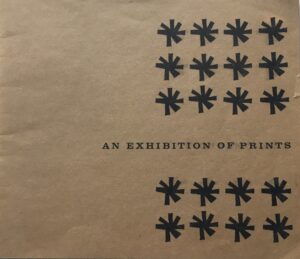 The Graphic Arts Loan Collection (GALC) at the Morrison Library has been checking out art to UC Berkeley students, staff, and faculty since 1958 and it is back again this year!
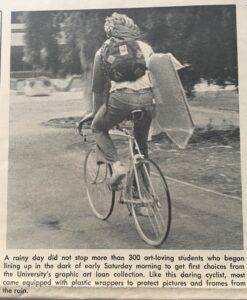 The purpose of the GALC since its inception has been to put art in the hands of UC Berkeley students (and the best way to appreciate art is to live with it!), so on August 17, 18, 21 and 22, from noon to 5pm, UC Berkeley students can come to the Morrison Library (101 Doe Library) and check-out up to two pieces of art from the GALC’s collection to take home and hang on their walls for the academic year. The prints will be available to students on a first come, first served basis.