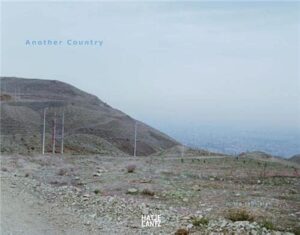
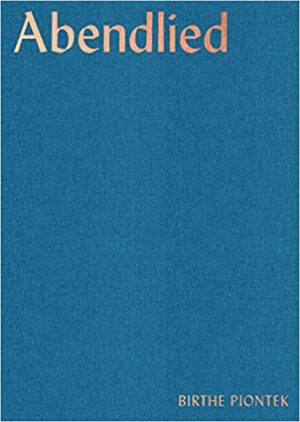
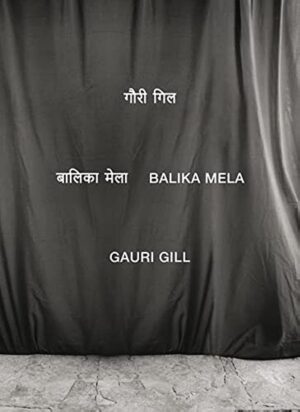
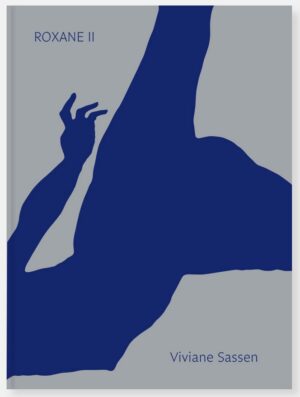
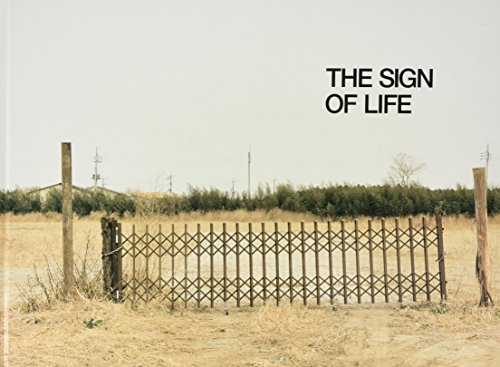
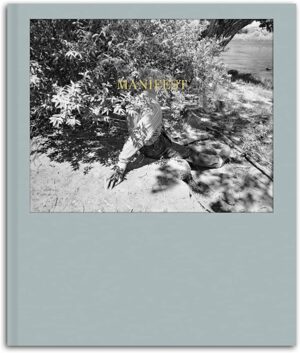
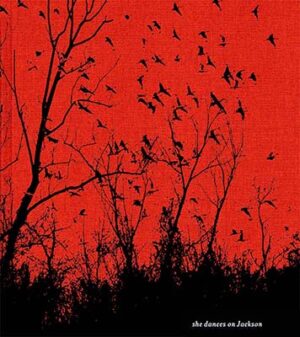
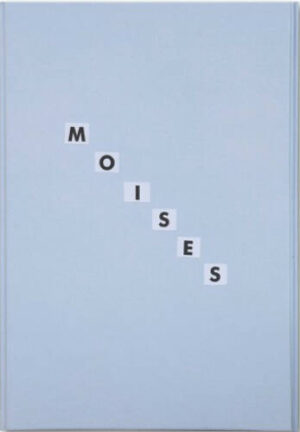
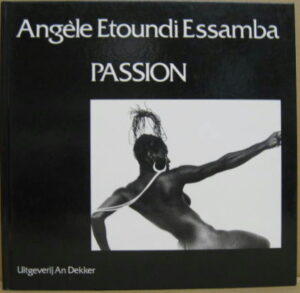
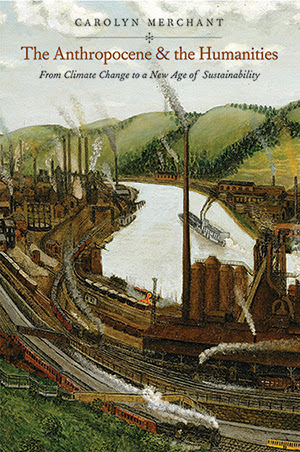
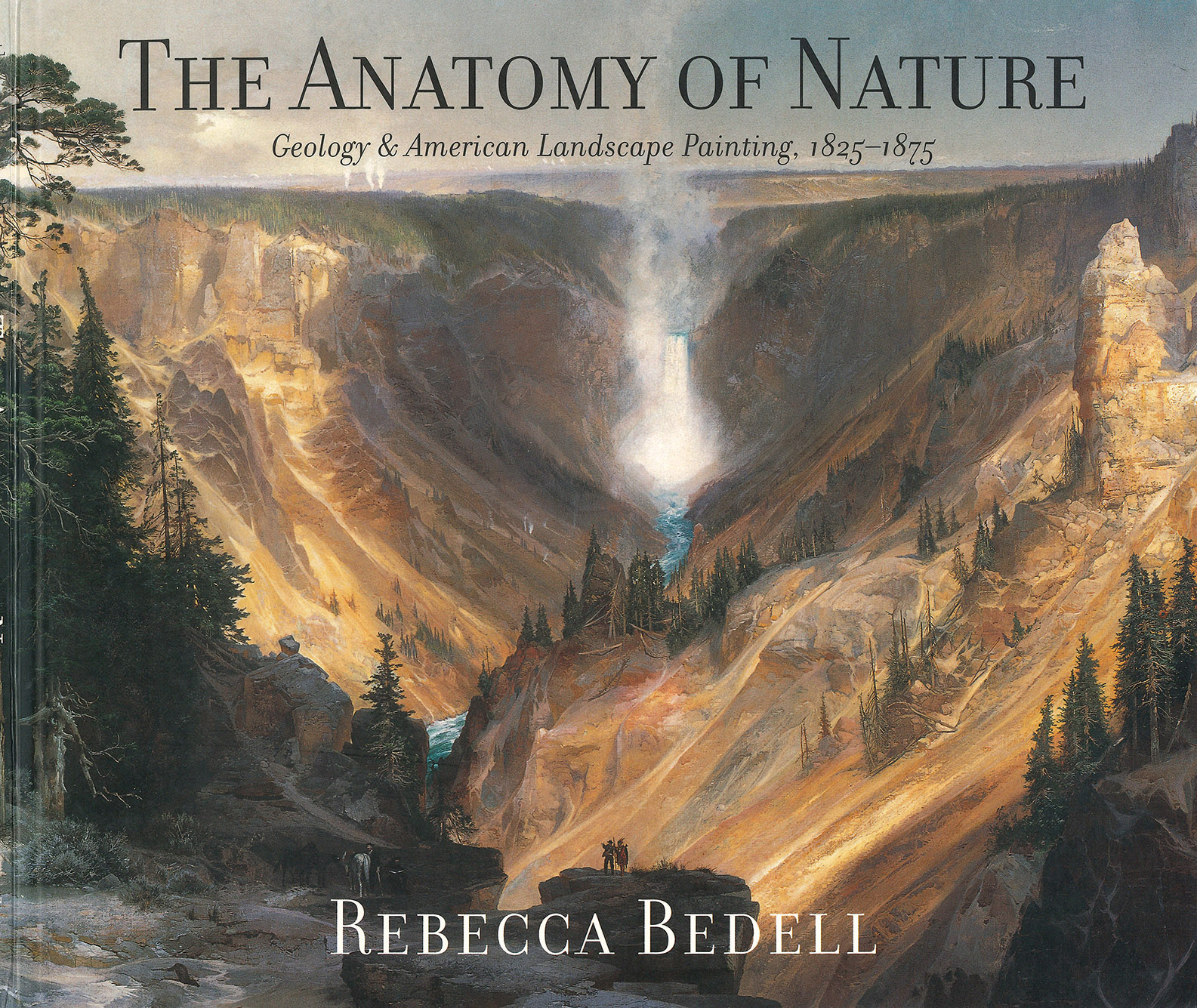
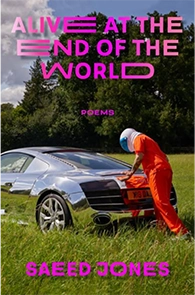
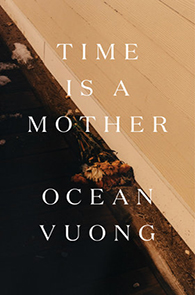
Come see books recently on display from the Richard Sun Photography Book Donation. These items are now shelved in the Art History/ Classics Library. Click the titles to see their records in UC Library Search.
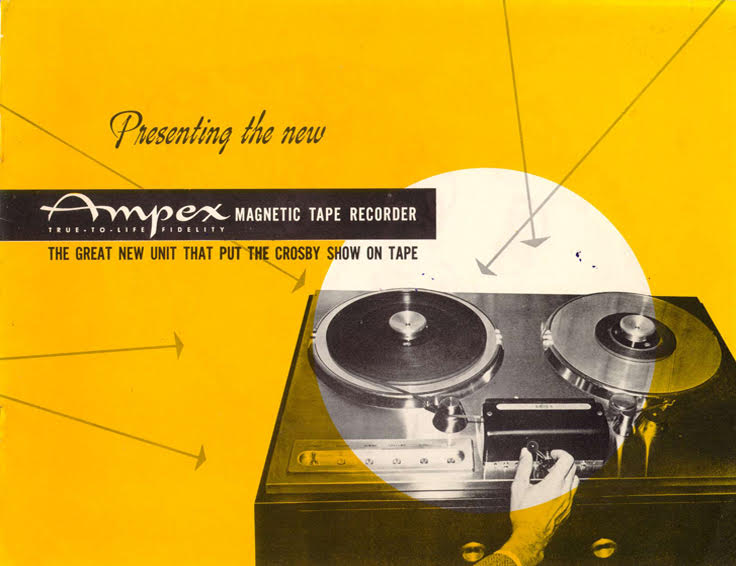
Seventy-five years ago, in April 1948, Ampex began to sell the first audio tape recorder commercially to the public, the Ampex Model 200. This product, a rather large and bulky unit, was first marketed towards local and regional radio broadcasters and promised to be well worth the cost due to its utility. As time went on, audio recording technology only became less expensive, smaller, and more widely available, notably with the creation of the cassette tape by Philips. The invention of audio tape recorders made a huge mark on the world, and it impacted the daily lives of many, particularly those who spent much of their time interviewing and taking notes. In the archive of the UC Berkeley Oral History Center, there are many casual mentions of tape recorders that reveal the importance of these devices, and how people thought about and experienced the recording of interviews.
Original 1948 ad for the Ampex 200 tape recorder. Image: Museum of Magnetic Audio Recording.
Sports journalist and UC Berkeley alum Glenn Dickey began his career before tape recorders were generally used in the field, so he became very skilled at taking shorthand notes. His ability to take notes and remember conversations verbatim was so remarkable that others doubted that he didn’t use a tape recorder. In his oral history, Dickey talks about tape recorders and reflects on a personal experience. “One time when Garry St. Jean was an assistant coach for Don Nelson, he had a bet with Don Nelson that I have a tape recorder hidden,” explained Dickey. “Because he’d be there when I was talking to Nelson, and he knew that what I was writing in the column was what Nelson said—he says, ‘He can’t remember all that.’”
“It is easy to say now that I can narrate the story of my life on a tape recorder before writing these memoirs down, but for millennia it was impossible and everything hinged upon the spoken word, and all traditions and all the knowledge gradually accumulated by humanity depended upon this knowledge.” — Alexander Paul Albov
Others took full advantage of the tape recorder as a memory aid. Jo DeJean, the personal assistant to Gary Rogers at the Dreyer’s Grand Ice Cream Company, was one such person. She recalls in her oral history that “on my ride home I would talk into a tape recorder about things that I needed to do. We didn’t have cell phones back then. Because I had all these things swimming around in my head, so I needed to record them. So that’s what I did.” This strategy is now employed by many through the means of “voice memo” features on smartphones.
George Waters. Photo: Pacific Horticulture.
When tape recorders became inexpensive and easily accessible, they were used consistently by interviewers. Tape recorders were incredibly useful tools for longer interviews. Sometimes during the oral histories conducted by the Oral History Center, the methodology of the interviewers makes its way onto the record through the mention of tape recorders and other tools.
One interviewee, George W. Waters, former editor of Pacific Horticulture, became curious about the tape while his interview was being conducted. While chatting about interviewing techniques, Waters asked about what would become of the tape after the interview was done, and the interviewer, Suzanne Riess, replied “You can ask that the tape be destroyed, if you really wish.” This remark seemed to surprise Waters, and he replied, “Well, I appreciate the fact that somebody else has accepted the job of transcribing it. No, there are advantages and disadvantages [to using the tape recorder], and well, I wouldn’t have missed this for the world. It’s so rare, isn’t it, that one gets an opportunity to talk about himself to someone who’s actually interested in staying?”
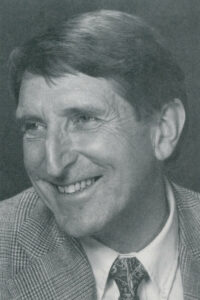
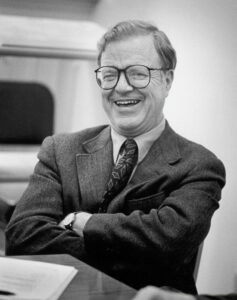
Robert Harlan. Photo courtesy the UC Berkeley School of Information.
Sometimes, however, the presence of a tape recorder could create an awkward barrier between the interviewer and interviewee. Robert D. Harlan, professor of the UC Berkeley School of Librarianship (later the UC Berkeley School of Information), who also conducted oral history interviews for the Oral History Center (then the Regional Oral History Office), was asked about his experience in his own oral history. Harlan reflects that “Having been both the interviewer and the interviewee, it’s easier to be the interviewee, I think. It’s more reactive. You know, I don’t have to change the tapes and that sort of thing. [laughter]” At the same time, he recalls that one of his interviewees had difficulty in opening up because “he found the process intimidating, sticking this thing [tape recorder] in front of him, so I had to work at it. And well, you’re certainly aware of this. It can be a problem. I wish he’d been a little more forthcoming.”
Even if they sometimes initially hindered the flow of conversation between the interviewer and the interviewee, tape recorders and more modern recording devices are invaluable to the creation of oral histories. They allow for relaxed conversations that can be transcribed at a later date by someone who wasn’t present at the original interview. Recording devices and the transcripts that are produced are more accurate than one’s memory and shorthand notes as well.
More than anything, these recording devices allow us to do what we’ve always done: pass down stories of one generation to the next. Today, the Oral History Center not only records their words, but we also record videos of the narrators. This allows us to capture the sound, rhythm, and accent of someone’s voice, which will make a new viewer of an oral history video feel as though the story is being told to them directly. Although the transcripts usually contain photos of the narrator, the additional video content shows the person in motion and the nuances of their expressions. The combination of oral history transcripts and video recordings, only possible now due to advancements in technology since the first tape recording device, preserves the stories of those in our past and present for future generations. Like a fossil preserved in amber, these histories are immaculately preserved, but rather than being a gift from nature, the preservation of oral histories is a product of evolving technology — and the extensive work of all of the interviewers, transcribers, and professional and student staff of the Oral History Center.
Find these interviews and all our oral histories from the search feature on our home page. You can search by name, keyword, and several other criteria.
Serena Ingalls is a fourth year student in History and French at the University of California, Berkeley. She works at the Oral History Center as a research and editorial assistant.
Related Resources from The Bancroft Library
For sources related to athletics, see the Oral History Center’s project, Athletics at UC Berkeley. The Bancroft Library also holds several books written by Glenn Dickey, including Glenn Dickey’s 49ers : the rise, fall, and rebirth of the NFL’s greatest dynasty ; Bancroft (NRLF) ; GV956.S3 D518 2000.
For sources related to Dreyer’s ice cream, see the Oral History Center’s projects, Dreyer’s Grand Ice Cream; Food and Agriculture — Individual Interviews; and Commerce, Industry, and Labor — Individual Interviews. See also: Dreyers: history in the making. Bancroft Pamphlet Folio ; pf HD9281.U54 D7 1997.
For sources related to horticulture, see the Oral History Center’s project, Natural Resources, Land Use and Environment — Individual Interviews. See also: California’s horticultural statutes with court decisions and legal opinions relating thereto, also county ordinances relating to horticulture and list of state and county horticultural officers corrected to March 1, 1908. Bancroft ; F862.21.C2.1908. Read the Oral History Center article, “U.S. Forest Service, California Water History, and Horticulturalists in the Natural Resources, Land Use, and Environment Oral History Project,” by Ricky J. Noel.
For sources related to University History, see the Oral History Center project, Education and University of California — Individual Interviews. See also: Robert D. Harlan papers, 1947-2000. BANC MSS 2003/225 c.
About the Oral History Center
The Oral History Center of The Bancroft Library preserves voices of people from all walks of life, with varying political perspectives, national origins, and ethnic backgrounds. We are committed to open access and our oral histories and interpretive materials are available online at no cost to scholars and the public. You can find our oral histories from the search feature on our home page. Search by name, keyword, and several other criteria. Sign up for our monthly newsletter featuring think pieces, new releases, podcasts, Q&As, and everything oral history. Access the most recent articles from our home page or go straight to our blog home.
U.S. Forest Service, California Water History, and Horticulturalists in the Natural Resources, Land Use, and Environment Oral History Project
The UC Berkeley Oral History Center has a large collection of oral histories documenting the history of natural resources, land use and the environment within California and worldwide. The oral histories in the subject area record the experiences and reflections of individuals who have participated in some of the most impactful organizations within this field, such as the United States Forest Service, the East Bay Regional Park District. Additionally, this collection contains interviews detailing the history of the California wine industry, California water wars, forestry, and horticulture within the United States and abroad.
Forestry
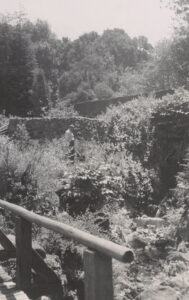
Botanical garden, with Everett Stanford. 1952. Fritz, Emanuel, Photographer. Fritz-Metcalf Photograph Collection. Bioscience, Natural Resources & Public Health Library.
One of the highlights in this expansive and broad collection includes several interviews with individuals from the early days of the United States Forest Service. The interviews detailing the history of forestry could be very useful to someone who wants to trace the evolution of the forestry industry. In addition, if one is working on something involving University of California history or the history of the U.S. Forest Service, particularly in the first half of the twentieth century, these interviews, among the many others present in the collection, would be an invaluable resource for that research.
My personal recommendations for this area would be an interview with Emanuel Fritz, who was a very early practitioner of the forestry field in the United States. He attended Yale School of Forestry and eventually made his way to the University of California in the 1920s, where he became involved with redwoods and assisted the U.S. Forest Service with their second-growth investigation along with other projects of that nature. He also discusses his political experience, particularly his involvement with the California Forest Practice Act of 1945 and his work as a consultant for the Legislative Forest Study Committee in 1944. Another recommendation would be our interview with Edward Kotok who was a researcher for the U.S. Forest Service as well as the assistant chief in charge of state and private forestry work. Some of the highlights of his interview involve him discussing his role as the assistant chief, relationships with Congress, ties between American and European forestry, arguing against the transfer of the U.S. Forest Service to the Department of the Interior, and helping to keep forestry at UC Berkeley.
Water
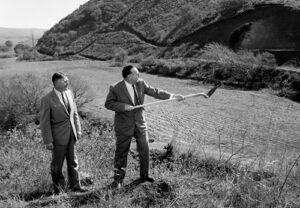
Governor Edmund G. “Pat” Brown tossed the traditional first shovel of dirt during the 1959 groundbreaking ceremony for the Whale Rock Dam Project – the first major dam constructed and designed by the Department of Water Resources (DWR). Director Harvey O. Banks (left) joined him for the event. Photo: DWR
Another incredibly useful and relevant resource in this collection has to do with the history of the struggle over California’s water. Anyone interested or researching the history of California, the impact of the Los Angeles Aqueduct on the Lone Pine region, the California Water Project, irrigation, the United States government’s involvement with water in California and the evolution of the California Water Wars would do well to check out some of these interviews in this collection. Some of the ones I find most interesting and useful would be an interview with Frank Adams, a irrigation specialist who was the author of Bulletin 21, Irrigation Districts in California but also was part of the investigations into the irrigation of California from 1910 to 1924 and was involved in the redrafting of the Soil Conservation Act and the Central Valley Project. In regards to the California Water Project (1955–1961) there is an interview with a key developer of the project, Harvey O. Banks, who reflects on the development and financing of this endeavor, as well as his term as director of the California Division of Water Resources and his work on water-related legislation, such as the Davis-Grunsky, Burns-Porter and San Luis acts.
Horticulture
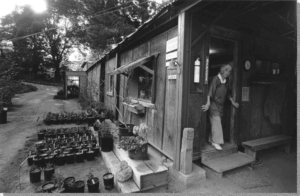
Gerda Isenberg at the Yerba Buena Nursery. Photo: Yerba Buena Nursery
A unique aspect of this collection involves the interviews with horticulturalists. While these interviews might at first glance seem a bit niche in their focus, they offer valuable insights into small businesses in California, horticulture in California in the mid century, California regional history, and the development of plant societies such as the UC Berkeley Botanical Gardens. Interviews that stand out to me in this collection include Edward Carman who ran Ed and Jean Carman’s nursery beginning in 1946 and was an active member of the Los Gatos community, Wayne Roderick, a senior nurseryman for the UC Berkeley Botanical Garden from 1960 to 1976 and Gerda Isenberg, a humanitarian and owner of the Yerba Buena Nursery.
These interviews are among the many that are excellent resources for researchers looking to understand more about the environment, particularly the environment in its relation to conservation groups, water, and education. The Oral History Center’s Natural Resources, Land Use and the Environment – Individual Interviews is a collection of roughly a hundred interviews ranging from oral histories regarding the Sierra Club, United States Forest Service, California Wine Production, California Water Rights and the East Bay Regional Parks District, among many other unique, insightful personal commentaries that give insight into some of the most important aspects of the environment in the United States and abroad.
Find these interviews and all our oral histories from the search feature on our home page. You can search by name, keyword, and several other criteria.
Ricky J. Noel is a recent graduate of UC Berkeley, with a major in history with a Latin American concentration. During his time at Berkeley, Ricky worked with the Oral History Center as an editorial assistant.
Gerda Isenberg papers, 1931-1990. Consists of correspondence, writings, speeches, reports, interviews, subject files, clippings, a scrapbook, photographs and ephemera. BANC MSS 94/210 c.
Harvey O. Banks. Federal-state relations and the California water plan. Bancroft ; 1956?? ; F862.25.I49.
Emanuel Fritz papers, circa 1900-1988. BANC MSS C-B 728.
Forestry photographs from the Emanuel Fritz papers. BANC PIC 1987.057–PIC.
About the Oral History Center
The Oral History Center of The Bancroft Library preserves voices of people from all walks of life, with varying political perspectives, national origins, and ethnic backgrounds. We are committed to open access and our oral histories and interpretive materials are available online at no cost to scholars and the public. You can find our oral histories from the search feature on our home page. Search by name, keyword, and several other criteria. Sign up for our monthly newsletter featuring think pieces, new releases, podcasts, Q&As, and everything oral history. Access the most recent articles from our home page or go straight to our blog home.
Video clip from Kevin Murray’s oral history about his political role models and becoming more a legislator than a politician:
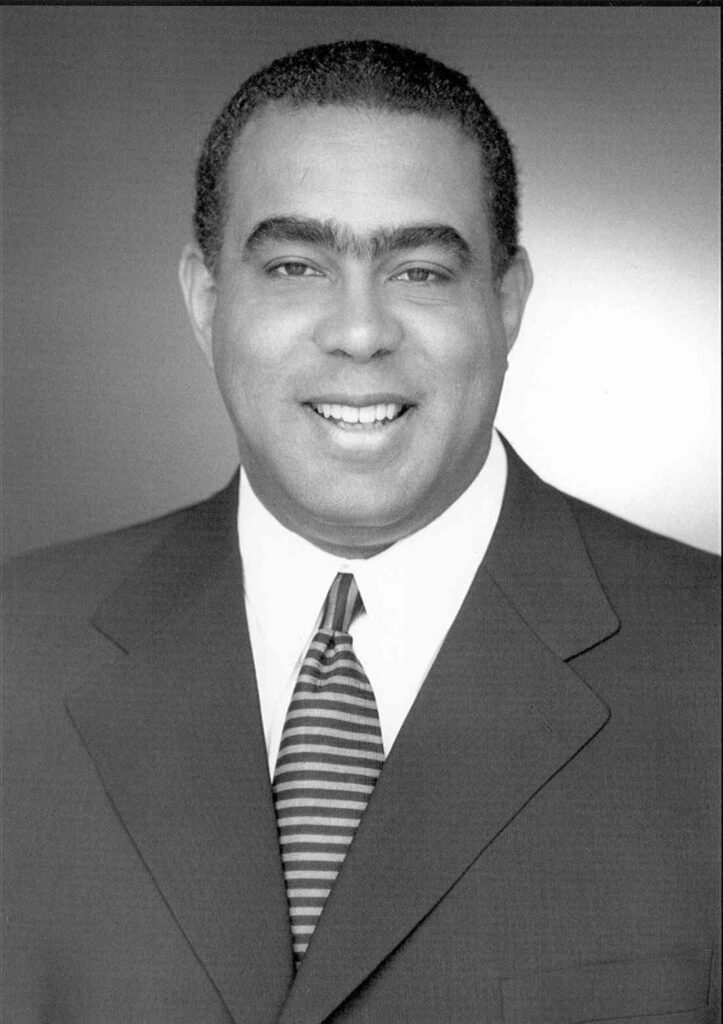
Hon. Kevin Murray in the early 2000s as a member of the California Senate
Kevin Murray represented regions of Los Angeles as a member of the Democratic party in the California State Assembly (1994-1998) and in the California State Senate (1998-2006), until he retired due to term limits. Murray and I recorded over five hours of interviews about his life and career in May 2021 as part of the Oral History Center‘s contributions to the California State Government Oral History Program. Murray’s oral history reveals ways he capitalized on opportunities as they arose throughout his life. In the process, he became an influential leader in the California Legislature, including as chair of the state’s Democratic Caucus and the California Legislative Black Caucus.
Many of Kevin Murray’s life stories reflect a kind of American dream narrative for Black middle-class families in Los Angeles. Murray was born in the spring of 1960 in the westside community of View Park, where he still lives and now raises his own family. Both of Murray’s parents graduated from college, and around the time of his birth, Murray’s father transitioned from work as an aerospace engineer to working in Los Angeles city politics and eventually in state politics. Around that time, their View Park neighborhood experienced white flight, which according to Murray resulted with an influx of middle and upper-middle class Black families of doctors, lawyers, dentists, and political figures who became his role models. At his parents’ insistence, Murray attended elite Los Angeles middle and high schools. During college, while earning a Bachelor of Science in Business Administration from California State University, Northridge, Murray began booking music and entertainment acts on campus. After graduating in 1981, Murray’s college entertainment experiences led to him start work in the infamous mail room at the William Morris Agency in Beverly Hills. While working at William Morris, Murray earned a Master’s in Business Administration from Loyola Marymount University in 1983, and in 1987, he earned a Juris Doctor from Loyola Law School. Prior to his political career, Murray provided consulting and management services to artists in the entertainment industry while also practicing law in the areas of entertainment, real estate, insurance, and dependency.
Due to his father’s work in L.A. politics, Murray recalled as a child attending barbecues and breakfasts at the homes of legends in California politics like Big Daddy Jesse Unruh and Black political leaders like Mervyn Dymally, Julian Dixon, and Tom Bradley. From his young exposure to powerful politicians, Murray learned they were simply people, not intimidating icons. Eventually, Murray came to believe, rightfully, that he, too, could become a political leader. When an opportunity to run for the California Assembly arose in the early 1990s, Murray seized that chance and won his first election to the California Assembly in 1994. His father was, by then, also serving in the Assembly, which made them the first-ever California Assemblymembers to serve as father and son.
Video clip from Kevin Murray’s oral history about California’s North-South power politics:
Murray described himself as more of a legislator than a politician. In the Assembly, Murray worked with Speaker Willie Brown and quickly became a leader who, over the next twelve years, served in both the California Assembly and Senate. Murray was elected as a Democratic member of the California State Assembly from the 47th District in Los Angeles from 1994-1998, where served as Chair of the Transportation Committee. In the California State Senate from 1998 to 2006, Murray represented the 26th District based in Culver City, California, and served as chair of the influential Appropriations Committee, the Transportation Committee, the Democratic Caucus, and the California Legislative Black Caucus. Murray also served on the California Film Commission.
Most of Murray’s oral history explored his years of political work in Sacramento where he passed numerous bills, including one of the nation’s first laws on identity theft (AB 157, the Consumer Protection: Identity Theft Act); bills on “Driving while Black”; education bills to address the digital divide and ensure California students had access to the internet (then called “the information superhighway”); bills protecting victims of domestic violence; a bill protecting houses of worship from hate crimes; and many others, including a bill eventually vetoed by Governor Pete Wilson that would have enabled Californians to register to vote online, to sign a petition online, and to vote via the internet as early as 1997.
Video clip from Kevin Murray’s oral history about intra-caucus relationships in the California Legislature:
About the California State Government Oral History Program
Kevin Murray’s oral history was conducted in collaboration with of the California State Government Oral History Program, which was created in 1985 with the passage of AB 2105. Charged with preserving the state’s executive and legislative history, this state Program conducts oral history interviews with individuals who played significant roles in California state government, including members of the legislature and constitutional officers, agency and department heads, and others involved in shaping public policy. The State Archives oversees and directs the Program’s operation, with interviewees selected by an advisory council and the interviews conducted by university-based oral history programs. Over the decades, this collective effort has resulted in hundreds of oral history interviews that document the history of the state’s executive and legislative branches, and enhance our understanding of public policy in California. The recordings and finished transcripts of these interviews are housed at the State Archives. Additionally, Kevin Murray’s oral history is available online in the Berkeley Library Digital Collections.
About the Oral History Center
The Oral History Center of The Bancroft Library preserves voices of people from all walks of life, with varying political perspectives, national origins, and ethnic backgrounds. We are committed to open access and our oral histories and interpretive materials are available online at no cost to scholars and the public. You can find our oral histories from the search feature on our home page. Search by name, keyword, and several other criteria. Sign up for our monthly newsletter featuring think pieces, new releases, podcasts, Q&As, and everything oral history. Access the most recent articles from our home page or go straight to our blog home.
Video clip from Kevin Murray’s oral history about California Senate and Assembly differences and good committees:
Video clip from Kevin Murray’s oral history about term limits for California legislators and the role of legislative staff:
Africa and the New Imperialism documents the period of rapid colonial expansion by European powers across the African continent during the late nineteenth and early twentieth century.
From the accounts of missionaries and European explorers navigating the interior of the continent in the early nineteenth century; to the rise in European desire for increased power, empire and wealth culminating in the Berlin Conference 1885-1886; to the subsequent power struggles, negotiations and conflicts that raged across the continent at the turn of the twentieth century, the documents within Africa and the New Imperialism charts Africa’s encounters with European imperialist regimes and their impact on the lives of peoples across the continent.
In recent years AM has made significant advancements in handwritten text recognition (HTR) technology, which first allowed for searching of handwritten documents, then on-the-fly transcription of handwritten documents. This digital archive is hosted on their newest platform, and allows for side-by-side views of the documents and their transcriptions. (Normally, both the documents and their transcriptions can be downloaded, but our trial access does not allow for downloads. ) While the transcriptions are less than perfect, they can still be helpful with interpreting handwritten documents.
Journals in the Romance languages in Doe Library’s Heyns Reading Room.
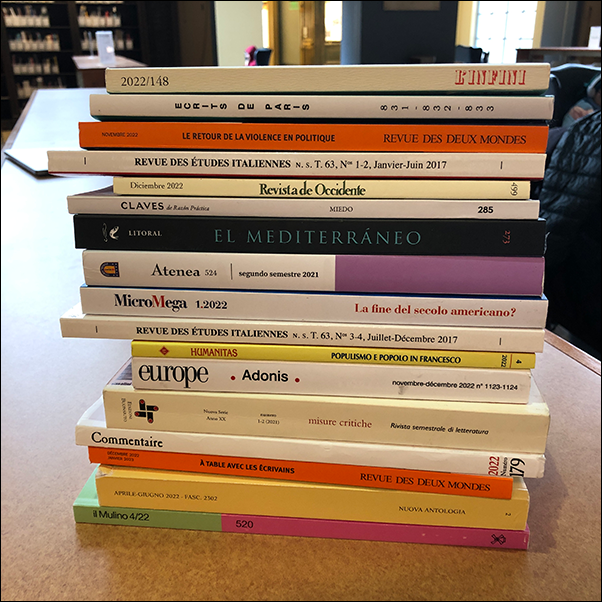
You need not fret about L’Infiniti, Écrits de Paris, Revue des deux mondes, Revue des études Italiennes, Revista de occidente, Claves de razón práctica, El Mediterráneo, Atena, MicroMega, Humanitas, Europe, Misure critiche, Commentaire, Nuova antologia, Il Mulino, and many more journals in the Southern European collection. These have evaded cancellation for now in the second year of a two-year planned reduction of UC Berkeley Library’s acquisitions and licensing budget.
This week, the Library has shared with the campus via CALmessages a complete list of proposed serials cancellations for public comment until May 12. For 2023/24, the budget for recurring annual costs such as subscription databases, journal subscriptions, ebook and journal packages will be reduced by $850K. The Arts and Humanities portion of the serials reduction came to about $165,000. Much of this was met through a renegotiation of the price share for a statewide Taylor & Francis journal package that met about $65,000 of our target. The remaining $100,000 came from the subject funds. (For Latin American and Caribbean Studies, please scroll down to the Social Sciences grouping.)
The proposed list of cancellations was developed to minimize the impact on the community by focusing on duplicative subscriptions; journals and databases that are available open access or in other ways; and the most seldomly accessed journals and databases. Together, subject librarians have reviewed all subscriptions and prioritized retaining titles based on strength of need and available alternatives for access. Across disciplines, the total number of titles came to 1,204 which includes large packages. These ranged from very cheap (Annali di statistica @ $9.67/year) to exorbitant (Greenwire for $17,544/year).
These exercises are never easy but have become a regular part of the scholarly resources life cycle as academic libraries continue to endure rapidly declining budgets for an expanding terrain of expensive intellectual materials in both print and digital formats. The last serials reduction was in 2018 in the amount of $1.5M. At the beginning of this year, the Library reduced its discretionary budget (mostly for books) by $850K and two years earlier by $1M.
Including our recent reductions in 2018 and 2020, this year’s serials reduction will bring the total annual reduction in acquisitions and licensing to $4.425 million – an approximately 35% reduction of campus, state, and unrestricted funding for collections since 2016. Without an influx of funding from the campus and the state, the UC Berkeley Library can expect to see another round of budget cuts in the near future.
For the month of April, I will be posting on Instagram nearly every day the cover of a different journal in the Romance languages that we are retaining access to for now in either print or digital form.
Four Notes on our Love of Books and our Need for Libraries
by Henrike Christiane Lange, Associate Professor of History of Art and Italian Studies, University of California, Berkeley
UC Berkeley, Spring Term 2023
A Note on Historical Books
The historical books in our collection are honeycombs of the centuries. They provide us not just with their specific knowledge from other times, but also with new insights about our own historical situation that we can only fully appreciate when seeing it compared to other eras. The material presence of historical books offers a shared experience with earlier readers – the readers of their time. Finally, the very awareness of the books’ own different time and place of origin generates a friction which allows us to progress with better consciousness and determination in our own timelines – not to be free-floating and lost in space, without time and context. The library thusly can both anchor us and liberate us at the same time in this process of discovery. Finally, a library of such historical objects for teaching and training is more than the sum total of the books. It is the select and familiar presence of those books together in an organized space, carved out of the chaos of the rest of the world as a refuge for the calm immersion into the records of others’ long-gone thoughts that spark the magic of understanding.
A Note on Scholarly Monographs
Monographs are little time machines: In a matter of hours, one can walk with the author through a specific and manageable field of knowledge, acquired over years, condensed yet decompressed, presented in a reader-friendly way, and focused on a valuable question. A monograph is not as short and shallow as a blog post, and it is not as limitless and infinite (therefore ungraspable) as the whole wide virtual cosmos of the world wide web. In a scholarly monograph, an author explores at the speed of the reader’s reading time what they have learned from having done years and decades of work of researching, reading, sorting, evaluating, weighing, expressing, writing, re-writing, and editing under the harsh conditions of double-blind peer review. This model can help enable readers and researchers to produce, eventually, their own unique contribution to a field in the form of a book – sent into the world to find its readers, way beyond the personal sphere of its author. The department library is the space to encounter and compare these kinds of books (at the height of their training, graduate students are expected to read up to a dozen of monographs per week in order to grasp their different styles, approaches, rhetoric, and strategies of presentation of the material).
A Note on Art History Libraries
Art history libraries have a double importance for the discipline, as they contain both secondary and primary sources: Books in art history research are not only containers of written, textual knowledge, or simple records of visual material, but also often serve as primary materials when they contain large or unique plates, a corpus of drawings, of maps, or of prints. They provide core materials such as large folio-sized works that outdo our screens, or plates that we use for comparisons in teaching around the table. Art History Libraries such as ours in Doe Library hold original documents that are themselves primary sources also when it comes to photo books and artist books, and the library’s rooms filled with books are our equivalent of a “lab” space. Large prints, maps, and photos need to be spread out on folio-size accommodating tables and compared, arranged, discussed with small groups in our training of emerging experts in our fields. The access to these physical materials together with small groups of students in a dedicated library space is an irreplaceable feature of the training of future architects and art historians. As is true for all our campus libraries, such specialized department libraries are not only collections somewhere without roots in time and space, but carefully grown, cultivated, specific places that have been assembled only here for a likewise growing and developing student population according to their specific needs.
A Note on Berkeley’s Libraries in the Now-Moment
Entering someone’s personal research library, fascinatingly, can feel like entering someone else’s brain – and to move about as if in a silent conversation with them, following their lead or jumping between sections and fields of knowledge, seeing the surprising and original connections that someone else made a long time ago, and getting inspired. The same applies to the experience of wonder and discovery in the large departmental, field-specific library: when we enter our library, we truly enter the good will, deep knowledge, and great care that generations of librarians, faculty, staff, and students have left there in invisible traces – in the objects as much as in the coherence, distribution, arrangement, and context of the objects. This is why off-campus storage removes the most important component from research, teaching, and learning; the eureka moments that can only happen on the quiet days alone in the library. We sometimes forget that not only the books and their authors speak to us, but all the caretakers and champions of the books that helped them find their way into our collection. As disciplines in the arts and humanities in a worldwide context that is hostile to the slow, deep, focused, and truly generative conditions of our work, we need those moments more than ever – not just the researchers, but especially our brilliant, insightful students.


 Until May 4th, the Library has trial access to a new digital archive produced by AM (formerly Adam Matthew Digital) titled