Science in Context: The UC Berkeley School of Public Health Oral History Project

As we know from our daily experience of the COVID-19 pandemic, public health is a political and cultural flashpoint in American society, as it has been since its emergence as a field of study and area of state authority in the 19th century. Whereas conventional biomedicine situates illness squarely inside the human body — a matter of damage to or malfunction of organ systems — public health looks outward, to the communication of diseases among populations and to the social factors that contribute to health or illness. Public health practitioners look at everything from the aggregate of individual human choices, such as smoking, to larger, deeper historical structures in society, such as the impact of systemic racism on health outcomes. Is it the government telling you how you or your children should behave, or is it science-based advice to help reduce rates of illness, harm, or death in society? Public health is science in political context like few other fields of research. 

Well over a decade ago, the School of Public Health at UC Berkeley began to take stock of this positioning and reflect on how a teaching and research institution could better respond to the challenges of science in context. This set of interviews emerged from an effort to document the recent history and institutional evolution of the school. Steve Shortell, who was dean of the school from 2002 until 2013, wanted to chronicle the foundation and growth of the On-campus/Online Professional MPH (master’s of public health) Program; the reinstitution of the undergraduate major in public health; the development of an office of diversity; a graduate program in public health practice and leadership; and a center for health leadership, formerly known as the Center for Public Health Practice and Leadership and currently known as RISE. Dean Shortell also wanted to feature some key leaders associated with these developments.  
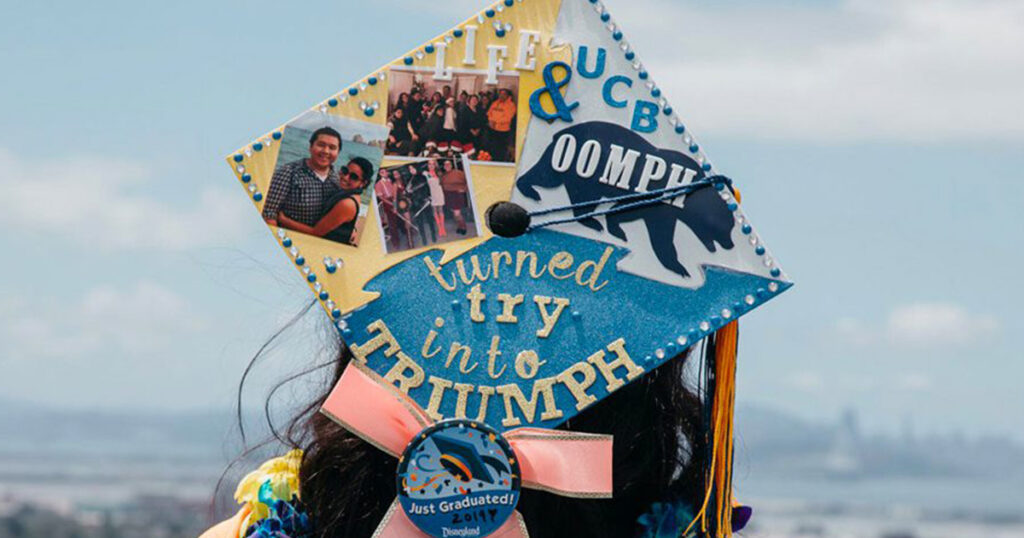
Close-up of the back of a decorated graduation cap on a person with long hair; the cap says, “Life, UCB, and OOMPH turned try into triumph.” At the bottom of the cap, there is a button fastened to a bow; the button depicts a graduation cap surrounded by confetti, and says “just graduated!”

There are three interviews with Dean Shortell that provide the context for the institutional changes during this period, as well as explorations of his career in health management research. Executive Associate Dean Thomas Rundall was also interviewed about multiple initiatives, including his leadership of the graduate programs in health management and co-directorship of the Center for Lean Engagement and Research in Healthcare (CLEAR). Jeffrey Oxendine was interviewed about his role as co-founder and associate dean of the Center for Public Health Practice and Leadership, which began in 2008. Another feature of this oral history project was to explore the reinstitution of the undergraduate major in public health in 2003. Dr. Lisa Barcellos was interviewed in part about her leadership of that program and her research on the genetic and environmental factors involved in autoimmune disease. 

There is also a set of interviews surrounding the establishment and growth of the online MPH program. Dr. Nap Hosang was the first director of the hybrid master’s of public health program, and he discusses the unique features of the program’s design, particularly with respect to accessing a diverse and unique pool of student talent, which contributed to the program’s success in subsequent years. Dr. Deborah Barnett was interviewed partly about her capacity as the successor and current leader of the program and as chief of curriculum and instruction. Alberta (Abby) Rincón recounted the history of her time as director of diversity and the foundation of the DREAM (Diversity, Respect, Equity, Action, Multiculturalism) office in the school. In her interview, chair of the Division of Community Health Sciences Dr. Denise Herd discusses the history of research in health disparities and the social determinants of health — a subject that is raised in many of the interviews — and her participation in the campus-wide Othering & Belonging Institute. Finally, Dr. Art Reingold was interviewed about his several decades as director of the Division of Epidemiology, the online MPH program, and teaching in the time of COVID.

If the field of public health is broadly defined as the study of health at the population level, this set of interviews reveals the broadest themes of health in context: the environment that shapes the expression of genes, the factors that lead to the nourishment or deprivation of bodies and minds, the factors that determine who gets to study or teach public health, the factors that shape the delivery of health care, and the contexts that shape the interactions between human bodies and other organisms and pathogens. The overarching story is about how these individuals studied, improved, and optimized institutional attention to these larger contexts, contributing to one of the most extraordinary public health programs in the country. 

Read more from the individual interviews below:

Deborah Barnett portrait
Deborah Barnett


Denise Herd portrait
Denise Herd


Nap Hosang portrait
Nap Hosang


Jeffrey Oxendine portrait
Jeffrey Oxendine


Arthur Reingold portrait
Arthur Reingold
Alberta Rincon portrait
Alberta Rincón


Thomas Rundall portrait
Thomas Rundall


Steve Shortell portrait
Steve Shortell

This week in Summer Reading

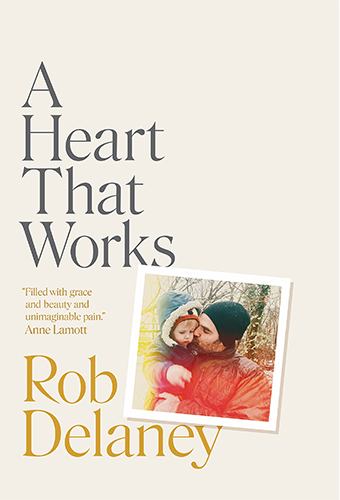
Book cover for A Heart that Works

A Heart That Works
Rob Delaney

A memoir about the death of a 2-year-old from brain cancer should not make you laugh out loud. Yet actor, comedian, and writer Rob Delaney does just that in this loving account of his son Henry, who died before reaching his third birthday. In addition to sharing tender memories of Henry’s bright spirit even in the face of a brutal illness and an even more brutal treatment, this book is a love letter to Delaney’s family. It’s also an homage to the many professionals in the medical and care community who touched Henry’s life — from surgeons and nurses to healthcare assistants and hospice care workers; not to mention the volunteers who gave so much joy to Henry, including Lola the therapy dog and Singing Hands, the musical duo who use a special sign language to help teach non-verbal children how to communicate.

The other lesson in this book: The NHS – the U.K.’s much-beloved national health care service – is a “glorious institution” that enabled the Delaneys, transplants from the U.S., to maximize time spent with their very sick child rather than dealing with the bureaucracy of a multibillion dollar, publicly traded insurance bureaucracy.

MARGARET PHILLIPS
Librarian
Social Sciences Division


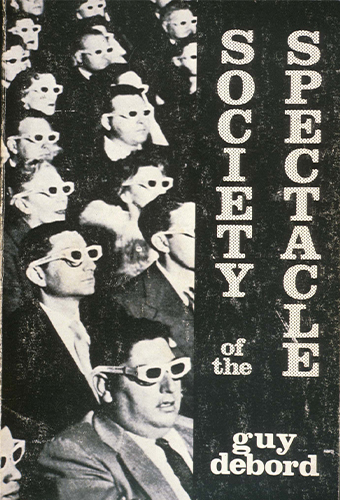
Book cover for Society of the Spectacle

The Society of the Spectacle
Guy Debord

“The spectacle is not a collection of images, but a social relation among people, mediated by images.”

Guy Debord’s La société du spectacle, written in the wake of the student riots in Paris in 1967, is one of the most influential philosophical texts of the latter half of the 20th century that is as relevant today as when it was first published. Like one of his major influences, Karl Marx, Debord critiques our entire society: e.g., our consumption of commodities. But he goes beyond that to consider what predominates our consciousness in our daily lives. Because of the scope of his project, this is a challenging, often confounding, read.

The Society of the Spectacle consists of 221 passages, paragraphs, contained within nine chapters. I had to reread many of these several times before I even got close to something like an understanding of what Debord was trying to say. But this is worth the effort for an ultimately rewarding, no-holds-barred text that will make you rethink your daily experience.

MIKE PALMER
Enrollment Manager
College Writing Programs


Workshop: Advanced Zotero

zotero iconAdvanced Zotero will be offered in-person in 223 Doe Library on Thursday, September 14 from 12:10-1:30pm and via Zoom Friday, September 15 from 12:10-1:30.
This session covers:

  • The many different techniques for adding items to your Zotero library
  • Linked files vs. stored files
  • Zotero storage vs using Zotfile to store attachments in another cloud app
  • Creating and managing groups
  • Zotero 6.0 PDF viewer and annotation extractor
  • Zotero 6.0 Add note feature
  • Indexing and searching your Zotero library and attachments

Registration is required so that you can receive the Zoom link 24 hours in advance of the workshop. Register at https://tinyurl.com/UCBlibworkshops.

The Library attempts to offer programs in accessible, barrier-free settings. If you believe you may require disability-related accommodations, please contact Jennifer Dorner at dorner@berkeley.edu.


Primary Sources: Sources of 20th century British public opinion

The Library has recently acquired British Political Opinion Polls and Social Surveys, 1960-1988.
A digitized collection of the complete political and social opinion polls of five major social survey organizations — MORI (Market and Opinion Research International), NOP (National Opinion Polls Market Research); HARRIS (The Harris Research Centre), MARPLAN and GALLUP, covering 1960-1988. Subjects covered include: AIDS,  the Channel Tunnel, education, general elections, homosexuality, the miner’s strike, police, poll tax, and many others.

Other resources for British public opinion include:

Mass Observation Online
Digitized archive of the Mass-Observation Project, a “pioneering social research organization,” documenting everyday life and ordinary people in Britain from 1937 to 1972.

BBC Listener Research Department reports, 1937-c.1950
Includes the entire available collection of weekly Audience Summaries, together with the weekly then daily Listening Barometers. Also included are the Audience Reaction Reports on specific programmes and Special Reports on particular themes or issues for the period, as well as some key policy documents produced by the LRD.

Reports (UK Ministry of Information)
These reports were created by the British government’s Ministry of Information during the Second World War for the purpose of monitoring public opinion, and for researching aspects of wartime life of interest to the government. They were a valuable source of information for the ministers and civil servants charged with steering the country through a total war, and give a vivid picture of life on the home front.


Primary Sources: Propaganda collections

The Library recently acquired three collections of propaganda materials: two from World War II a collection of anti-Semitic materials published before the war.

Psychological Warfare and Propaganda in World War II: Air Dropped and Shelled Leaflets and Periodicals

This publication collection consists of over 1,000 air dropped and shelled leaflets and periodicals created and disseminated during the Second World War. The majority of items in this collection were printed by the Allies then air or container dropped, or fired by artillery shell over German occupied territory. Many leaflets and periodicals have original publication codes and were printed in over 10 languages. Only shelled leaflets, Germans to Allies (115 items), are in English.

Allied Propaganda in World War II and the British Political Warfare Executive

This collection presents the complete files of the Political Warfare Executive (PWE) kept at the U.K. National Archives as FO 898 from its instigation to closure in 1946, along with the secret minutes of the special 1944 War Cabinet Committee “Breaking the German Will to Resist.”

German Anti-Semitic Propaganda, 1909-1941

Comprised of 170 German-language books and pamphlets, this collection presents anti-Semitism as an issue in politics, economics, religion, and education. Most of the writings date from the 1920s and 1930s and many are directly connected with Nazi groups. The works are principally anti-Semitic, but include writings on other groups as well, including Jehovah’s Witnesses, the Jesuits, and the Freemasons.


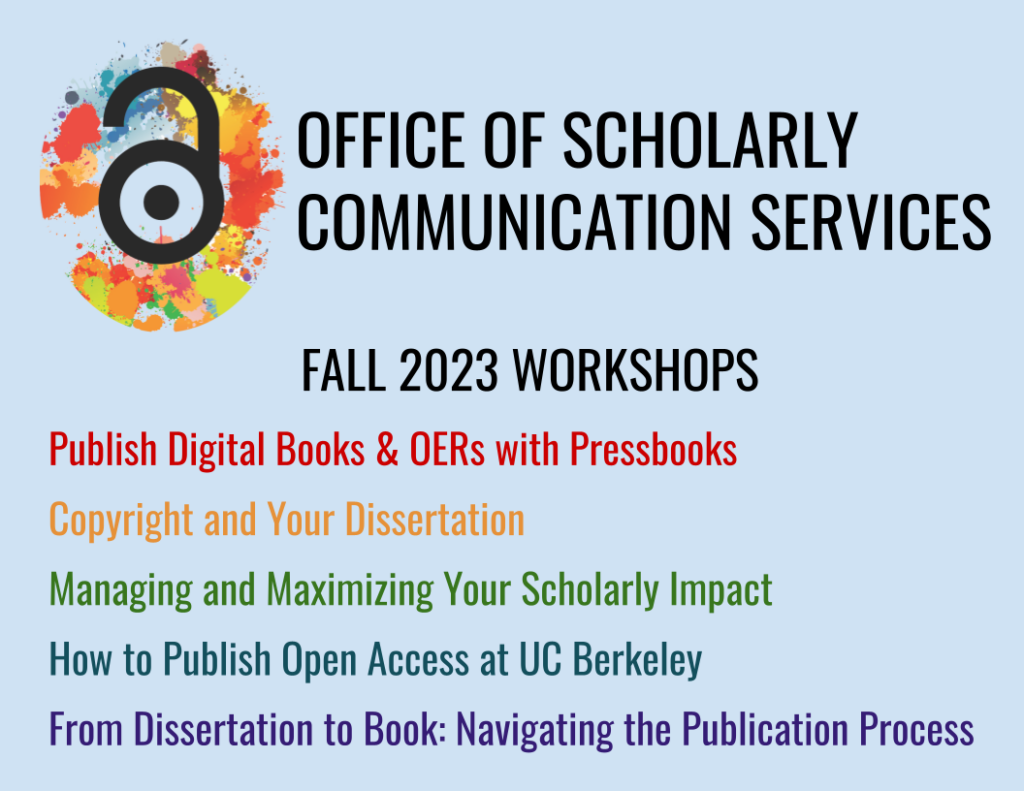
Fall 2023 copyright and publishing workshops with the Office of Scholarly Communication Services

Graphic with blue background, the Office of Scholarly Communications Services logo, and text as follows: "Office of Scholarly Communication Services, Fall 2023 Workshops: Publish Digital Books & OERs with Pressbooks; Copyright and Your Dissertation, Managing and Maximizing Your Scholarly Impact, How to Publish Open Access at UC Berkeley, From Dissertation to Book: Navigating the Publication Process."

With the school year kicking off soon in Berkeley, the Library’s Office of Scholarly Communication Services is here to help UC Berkeley faculty, students, and staff understand copyright and scholarly publishing with online resources, Zoom and in-person workshops, and consultations. Here’s what’s coming up this semester.

Workshops

Publish Digital Books & Open Educational Resources with Pressbooks

Date/Time: Wednesday, September 20, 2023, 11:00am–12:30pm
Location: Zoom only. Register via LibCal.

If you’re looking to self-publish work of any length and want an easy-to-use tool that offers a high degree of customization, allows flexibility with publishing formats (EPUB, PDF), and provides web-hosting options, Pressbooks may be great for you. Pressbooks is often the tool of choice for academics creating digital books, open textbooks, and open educational resources, since you can license your materials for reuse however you desire. Learn why and how to use Pressbooks for publishing your original books or course materials. You’ll leave the workshop with a project already under way.

Copyright and Your Dissertation

Date/Time: Wednesday, September 27, 2023, 11:00am–12:30pm
Location: In-person in Doe Library Room 223, or Zoom. Register via LibCal.

This workshop will provide you with practical guidance for navigating copyright questions and other legal considerations for your dissertation or thesis. Whether you’re just starting to write or you’re getting ready to file, you can use our tips and workflow to figure out what you can use, what rights you have as an author, and what it means to share your dissertation online.

Managing and Maximizing Your Scholarly Impact

Date/Time: Tuesday, October 10, 2023, 11:00am–12:30pm
Location: In-person in Doe Library Room 223, or Zoom. Register via LibCal.

This workshop will provide you with practical strategies and tips for promoting your scholarship, increasing your citations, and monitoring your success. You’ll also learn how to understand metrics, use scholarly networking tools, and evaluate journals and publishing options.

How to Publish Open Access at UC Berkeley

Date/Time: Tuesday, October 17, 2023, 11:00am–12:30pm
Location: Zoom only. Register via LibCal.

Are you wondering what processes, platforms, and funding are available at UC Berkeley to publish your research open access (OA)? This workshop will provide practical guidance and walk you through all of the OA publishing options and funding sources you have on campus. We’ll explain: the difference between (and mechanisms for) self-depositing your research in the UC’s institutional repository vs. choosing publisher-provided OA; what funding is available to put toward your article or book charges if you choose a publisher-provided option; and the difference between funding coverage under the UC’s systemwide OA agreements vs. the Library’s funding program (Berkeley Research Impact Initiative). We’ll also give you practical tips and tricks to maximize your retention of rights and readership in the publishing process.

From Dissertation to Book: Navigating the Publication Process

Date/Time: Thursday, November 9, 2023, 11:00am–12:30pm
Location: Zoom only. Register via LibCal.

Hear from a panel of experts—an acquisitions editor, a first-time book author, and an author rights expert—about the process of turning your dissertation into a book. You’ll come away from this panel discussion with practical advice about revising your dissertation, writing a book proposal, approaching editors, signing your first contract, and navigating the peer review and publication process.

Other ways we can help

In addition to the workshops, we’re here to help answer a variety of questions you might have on intellectual property, digital publishing, and information policy. 

Want help or more information? Send us an email. We can provide individualized support and personal consultations, online class instruction, presentations and workshops for small or large groups & classes, and customized support and training for departments and disciplines.


This week in Summer Reading

Book cover for Square Haunting

Square Haunting: Five Writers in London Between the Wars
Francesca Wade

In 1928, when Virginia Woolf gave her lectures at Cambridge University titled A Room of One’s Own, Cambridge still did not give degrees to women, and would not until 1948. For women in Britain in the decades between the world wars, forging an independent life, let alone one of the mind, was a daunting challenge and almost impossible to achieve. Yet, a decade later, Woolf was living in London’s Mecklenburgh Square, writing a biography of the painter Roger Fry, with her husband operating a literary press in the basement.

Actually, a number of women, defying societal pressures and the odds, similarly managed to pursue their intellectual ideals in this same leafy, quiet square (which also saw some pretty festive partying). This book is a poignant and beautifully written account of the square hauntings of five of the women who lived there between 1918 and 1945: Woolf, novelist-theologian Dorothy Sayers, poet HD (Hilda Doolittle), economist Eileen Power, and classicist Jane Ellen Harrison. In its bohemian Bloomsbury setting, the residents “lived in squares, painted in circles, loved in triangles,” and this book is a fitting and fascinating tribute to their vibrant and revolutionary pursuit of autonomy, and ideas of their own.

ANN GLUSKER
Librarian for Sociology, Demography, & Research Methods;
Interim Librarian for Public Policy, Anthropology


Book cover for Hands of the Emperor

The Hands of the Emperor
Victoria Goddard

In the aftermath of a worlds-shattering magical cataclysm, Cliopher Mdang works tirelessly to reform a bloated and broken bureaucracy into something that serves its people. He works side by side with the god-emperor of the old empire, literally untouchable, whose humanity has been denied for a thousand years. In a story about compassion, identity, and making the world a better place, Cliopher goes against millennia of tradition and taboo to extend a hand in friendship when he invites the Sun-on-Earth to come home with him on holiday. The mere suggestion could see him executed for blasphemy. Instead, it upends the world.

ANITA BROWN
Serials Processing Assistant
Bioscience, Natural Resources, & Public Health Library


This week in Summer Reading

Book cover for Seveneves

Seveneves
Neal Stephenson

What would happen if the moon exploded? All the rules that govern our solar system would change – or rather, because the rules of physics would still be followed, everything about life on Earth would change irreversibly. This novel imagines in stunning detail a multicentury history of human life after the moon shatters, and the central role that women would play in it. Stephenson creates a rigorously science-based alternate reality peopled with compelling characters on complex adventures.

MICHELE RABKIN
Associate Director
Berkeley Connect


Book cover for The Politics and Constitution of Athens

The Politics and the Constitution of Athens
Aristotle

An oldie but a goodie, Aristotle’s account of the political machine of fourth-century Athens is a fundamental tool for understanding the origins of political thought and how states formed institutions to order their state. Although Aristotle is attributed with some 158 accounts of other Greek constitutions, this is the only extant version of these works, which we only have by chance, as papyri containing portions of the text surfaced within the last century and a half and were pieced together by scholars.

ANDY HOGAN
Postdoctoral Fellow
The Center for the Tebtunis Papyri
The Bancroft Library


This week in Summer Reading

Book cover for The Mountain in the Sea

The Mountain in the Sea
Ray Nayler

This book is a gem – an entrancing page-turner taking place in the near future, where the existence of a society of highly intelligent and communicative octopuses comes into contact with humans. In narrating this encounter, the author explores deep questions on the nature of mind – the meaning of and requirements for sentience, and how mind, body, and world are intertwined. All of this in the context of a near-future world continuing to be plagued by environmental catastrophe and extreme human suffering. How might such an intimate meeting with the alien consciousness of cephalopods with a very different lens on the world inform our capacity to rewrite the rules?

DAVID PRESTI
Teaching Professor
Neurobiology and Psychology


Book cover for White Mughals

White Mughals: Love and Betrayal in Eighteenth-Century India
William Dalrymple

William Dalrymple shares the remarkable and true story of James Achilles Kirkpatrick, an English East India Company officer, and his wife, Khair-un-Nissa, an Indian Muslim noblewoman. Their love story serves as a powerful reminder of the cultural amalgamations that thrived during 18th-century India, building bridges between India and the West through the intermingling of languages, art, religion, and politics.

However, this historical perspective seems unusual and ironic in contrast to the narrative that exists in the world’s consciousness of today, given the oppressive practices of cultural separation spurred on by racism and colonialism in 19th- and early 20th-century India. These practices led to the burning of the aforementioned bridges and the collective social awakening of a country seeking freedom and justice. In the shifting shadows of these opposing ideologies, Dalrymple provides new perspectives on the mechanisms of racism, colonialism, and globalization. He encourages the reader to examine the sociocultural fabric of our current existence and reconsider how the legacies of our past weave our future.

This book is well-researched and beautifully written, and has everything one could want: memorable characters, adventure, romance, espionage, betrayal, tragedy, and curated pictures that offer a glimpse into this forgotten world!

VINEETA RAM
Disability Specialist
Disabled Students Program


Summer Reading 2023

2023 Summer Reading

Kick off this summer with these fantastic beach reads! From summer scares to beachside romances, check out Overdrive and the selections below for an irresistible read.