The Library has acquired access to Egypt and the Rise of Nationalism, an online collection of British government documents “that capture and reflect an era spanning from the first appearance of a nationalist sensibility to its gradual entrenchment in public life through protests, journalistic agitprop, lobbying activities, sporadic violence, and then — almost as a denouement — through an ordered political process, in the context and perspective of Britain’s evolving policy regarding Egypt.” (source)
The resource includes more than 4000 primary source documents dating from the 1870s until approximately 1924.
Public Housing, Racial Policies, and Civil Rights: The Intergroup Relations Branch of the Federal Public Housing Administration, 1936-1963 includes directives and memoranda related to the Public Housing Administration’s policies and procedures. Among the documents are civil rights correspondence, statements and policy about race, labor-based state activity records, local housing authorities’ policies on hiring minorities, court cases involving housing decisions, racially-restrictive covenants, and news clippings. The intra-agency correspondence consists of reports on sub-Cabinet groups on civil rights, racial policy, employment, and Commissioner’s staff meetings.
For a better understanding of the scope and arrangement of this colletion, consult the guide that was created for the original microfilm publication.
Starting in the late nineteenth century, in direct response to the Industrial Revolution, forces in social and political spheres struggled to balance the good of the public and the planet against the economic exploitation of resources. Environmental History: Conservation and Public Policy in America, 1870–1980 chronicles various responses in the United States to this struggle through key primary sources from individual activists, advocacy organizations, and government agencies.
Collections Included
Papers preserved at Yale University of George Bird Grinnell, a founding member of the Boone and Crockett Club, one of the earliest American wildlands preservation organizations; a founder of the first Audubon Society and New York Zoological Society; and editor for 35 years of the outdoorsman magazine Forest and Stream, which played a key role as an early sponsor of the national park movement and Migratory Bird Treaty Act of 1918.
Records housed at the Denver Public Library of the American Bison Society, an organization that sought to save the American bison from extinction and succeeded as the first American wildlife reintroduction program.
Also housed at the Denver Public Library, the papers of key women conservationists, such as Rosalie Edge and Velma “Wild Horse Annie” Johnston. Edge formed the Emergency Conservation Committee to establish Hawk Mountain Sanctuary (the first preserve for birds of prey), clashed with the Audubon Society over its policy of protecting songbirds at the expense of predatory species, and was a leading advocate for establishing the Olympic and Kings Canyon national parks. Johnston worked to end the capture and killing of wild mustang horses and free-roaming donkeys and lobbied to protect all wild equine species.
Documents held at various institutions of the “father of forestry” Joseph Trimble Rothrock, who served as the first president and founder of the Pennsylvania Forestry Association and Pennsylvania’s first forestry commissioner. Rothrock’s work acquiring land for state parks and forests illustrates the role of key actors at state and regional levels.
Project histories and reports of the U.S. Bureau of Reclamation from the National Archives and Records Administration, chronicling the bureau’s work on projects including Belle Fourche, South Dakota; Grand Valley, Colorado; Klamath, Oregon; Lower Yellowstone, Montana; Shoshoni, Wyoming; and more.
Select gray literature on conservation and environmental policy from the Institute of Governmental Studies Library at the University of California at Berkeley. This vast array of documents issued by state, regional, and municipal agencies; advocacy organizations; study groups; and commissions from the 1920s into the 1970s cover wildlife management, land use and preservation, public health, air and water quality, energy development, and sanitation.
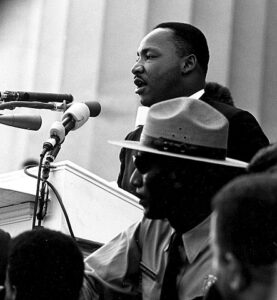
By White House Staff Photographers. Public Domain, https://commons.wikimedia.org/w/index.php?curid=546670
Full text access to the FBI’s file on the assassination of Martin Luther King, Jr. is available on the GALE platform. “The 44,000-page case file … documents the bureau’s role in finding Ray and obtaining his conviction. The file also includes background information amassed by the FBI on Dr. King’s social activism.”
Black Freedom Struggle in the 20th Century: Federal Government Records, on the Proquest platform, includes the two FBI files on Martin Luther King, Jr. Part 1
“details the heavy surveillance and painful harassment that J. Edgar Hoover’s FBI directed against America’s foremost civil rights leader throughout the 1960s.” Part 2 consists of verbatim transcripts and detailed summaries of telephone conversations between King and one of his most trusted confidants, Stanley D. Levinson.
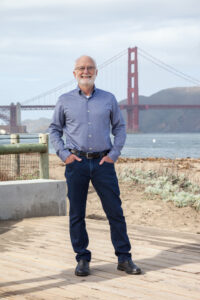
The San Francisco Bay Area is known for the kind of environmental advocacy that has become a model for regions around the country. There’s a long legacy, spanning decades, of people behind this work. Greg Moore is one of these people. Greg has dedicated his career to conserving public lands and making parks accessible for all. He, too, has become a model, someone to whom people throughout the country – and world – look for guidance.
Greg Moore in 2018
Greg served as the executive director of the Golden Gate National Parks Conservancy from 1986 until his retirement in 2019. The GGNPC was founded in 1981 and its mission is to preserve the Golden Gate national parks, enhance the park visitor experience, and build a community dedicated to conserving the parks for the future. But his work in the environmental sector began long before 1986, dating back to his time as a student at UC Berkeley in the newly-formed Conservation of Natural Resources School and College of Environmental Design, during the environmental decade of the 1970s when the Environmental Protection Agency was formed and regulatory laws, like the Clean Water Act, were passed. And even before that, when he was a ranger with the National Park Service.
I had the privilege of sitting down with Greg in 2022 to interview him about his life and work. In preparation for the sixteen hours I would end up spending with him, I spoke with a number of people who know him in different capacities – former fellow National Park Service rangers; as well as Conservancy board members, employees, and donors. One thing was clear: Greg is universally respected for his work and his collegiality. I kept hearing about how, as both a colleague and manager, he listened to people and carefully considered their perspectives. About how, as the executive director of the Conservancy, he wrote heartfelt letters to board members each year, letters that they all not only save, but cherish. About how he would write and perform in an annual musical parodying popular songs for year-end parties.
But what struck me the most was how present Greg was during each phase of our interview sessions. Whether we were discussing how he developed a love for music as a child; his studies at Cal and then later at the University of Washington; meeting his wife, Nancy, and raising their son; or his love for parks; the development of his career; managing a large staff and multi-million dollar fundraising campaigns; and working to make parks accessible for all, Greg took every question I asked seriously, responding sincerely and weaving in humor throughout.
Greg is perhaps best known for his work with the Conservancy. He played a role in the creation of the organization, which he discussed in more detail in his oral history, before becoming the executive director. There are an incredible array of projects on which he worked during his tenure with the Conservancy, like various habitat restorations, converting the Presidio from an Army base to a park, transiting Fort Baker from a military base into a national park, promoting citizen science through the Golden Gate Raptor Observatory, transforming Crissy Field into one of San Francisco’s crown jewels and creating the beloved Crissy Field Visitor Center, developing community partnerships and youth programs, and shepherding the Tunnel Tops project into existence. The list goes on.
The underlying theme of each of these projects was the drive to make parks accessible for everyone. “Parks for All” is the beating heart of the Conservancy’s mission. Here’s what Greg said about the origin of the mission:
“The ‘Parks For All’ came when the Conservancy was trying to think through how to simply and straightforwardly describe our mission. The Conservancy had a mission statement, but like many it was probably twenty-five to thirty words long, and I began thinking about how to put that in simple words that were very direct and, in some way, have the power-of-three impact. That’s when I began thinking, Well, of course, we’re about ‘parks.’ These are the physical places that we need to transform and enhance. Then we’re about ‘for all’ because these places are owned by every person in the United States as national parks, and then our final responsibility is ‘forever’ – to pass them from one generation to the next. It not only summarized our mission but almost described a theory of change that first you have the places and to make them for all youth to improve and enhance them. You have an opportunity to engage people in their enjoyment, in their stewardship, in their contributions for all, and then finally all the restoration work that cares for these places that you’ve enhanced and taken care of.”
Greg wanted to make sure people were aware that the parks existed, they felt comfortable there, and that they were relevant to the visitor’s life experience. He did this by bringing communities into planning conversations, implementing a bus route that would drive people from their neighborhoods to the parks and then back again, partnering with public libraries, and creating a multitude of programs – for kids, related to art, and citizen science for civilian park goers. Greg’s commitment to the Conservancy’s simple mission is what made the organization so successful and such an integral part of life in the Bay Area. And Greg’s interest in working with communities and listening to people – his colleagues, board members, donors, and park users alike – is what has made him such a towering figure in the Bay Area’s environmental movement.
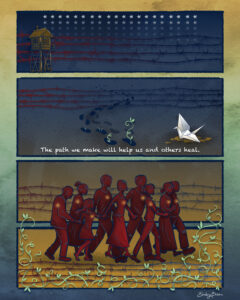
“TOPAZ” by Emily Ehlen, a graphic illustration based on oral histories recorded in the Oral History Center’s Japanese American Intergenerational Narratives project
In April 2024, Oral History Center (OHC) interviewers Amanda Tewes, Shanna Farrell, and Roger Eardley-Pryor traveled to Salt Lake City, Utah, where we presented our work on the Japanese American Intergenerational Narratives Project at the annual meeting of the National Council on Public History (NCPH). We also joined a pilgrimage to the central desert of Utah along with other public historians and several members of the Wakasa Memorial Committee, including survivors and descendants of the Topaz prison camp in Utah, one of the ten US government mass incarceration sites where Japanese Americans were unjustly imprisoned during World War II. Our experiences in Utah at NCPH and at Topaz reiterated how history remains a powerful and living force, and how oral history can help promote that power. Difficult questions about “belonging” appear throughout many of the oral histories in OHC’s Japanese American Intergenerational Narratives project, and those same questions punctuated much of our time in Utah this past April.
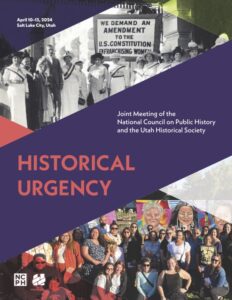
Program cover for the annual meeting of the National Council on Public History held in Salt Lake City, Utah, from April 10-13, 2024.
“Historical Urgency” was the conference theme for this year’s meeting of the National Council on Public History (NCPH) in Salt Lake City, where some 740 attendees presented, networked, and learned together. Presentation topics included community engagement, particularly with communities whose histories face urgent existential threats; communicating the critical importance of history and historical thinking; discourse and dialogue in a time of extreme social polarization; exploration of oral history, especially the collection of oral histories from older generations; and repatriation of human remains and cultural objects. As noted by NCPH president Kristine Navarro-McElhaney, conference discussions highlighted how historians’ work for public audiences remains essential to the fabric of our society, especially during this time of political and cultural polarization—and yet historical perspectives, tools, and history workers themselves have increasingly come under threat. While urgency may seem in opposition to the often slow and deliberate work that oral historians and other public historians do to build trust and lasting relationships with the communities we serve, many of us cannot help but feel a strong sense of urgency and importance in our efforts to collaboratively excavate the past and elevate community stories in ways that help make meaning in the present.
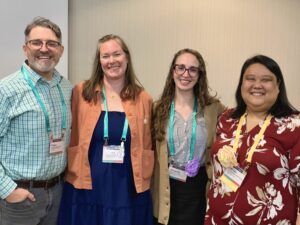
Left to right: OHC interviewers Roger Eardley-Pryor, Shanna Farrell, and Amanda Tewes, and Executive Director of the Japanese American Museum of Oregon Hanako Wakatsuki-Chong at the 2024 NCPH conference in Utah
We felt especially honored to share at this NCPH our work on the Japanese American Intergenerational Narratives Project. Our roundtable presentation recounted the project’s origins, the trauma-informed interviewing approach we used with these oral histories, and some of emergent themes from the project’s interviews, like “belonging,” “art and expression,” “healing,” and “memorialization.” The roundtable’s discussion was moderated by Hanako Wakatsuki-Chong, the Executive Director of the Japanese American Museum of Oregon and a former National Park Service Ranger who recorded her own oral history as part of the project. Nancy Ukai and Masako Takahashi, both of whom also recorded oral histories as part of the project, attended and also presented at the NCPH conference in Utah, where they heard portions their own oral history interviews during our presentation. Our presentation included audio clips from season 8 of The Berkeley Remix podcast, “From Generation to Generation”: The Legacy of Japanese American Incarceration,” as well as graphic narrative artwork by Emily Ehlen, all based on oral histories recorded for the Japanese American Intergenerational Narratives Project.
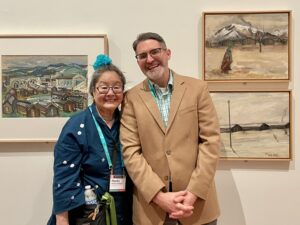
Masako Takahashi and Roger Eardley-Pryor at the Pictures of Belonging exhibit at the Utah Museum of Fine Arts
Relatedly, during the NCPH conference, I (Roger Eardley-Pryor) joined other public historians for a tour of the Utah Museum of Fine Arts on the University of Utah campus to see a new exhibit titled Pictures of Belonging: Miki Hayakawa, Hisako Hibi, and Miné Okubo. The exhibition was curated by Professor ShiPu Wang of UC Merced and features over 100 paintings and works on paper by these three Japanese American women artists, all critically acclaimed with long and productive careers. Yet during World War II, both Hibi and Okubo were unjustly incarcerated in Utah at Topaz, along with Hayakawa’s parents. Pictures of Belonging follows the three artists’ prewar, wartime, and postwar art practices, sharing an expanded view of the American experience by women who used artmaking to take up space, make their presence and existence visible, and assert their own belonging. Many of the exhibit’s artworks are on view to the public for the first time. The exhibit’s titular theme of “belonging” resonated nicely with the Oral History Center’s Japanese American Intergenerational Narratives Project at UC Berkeley, and Okubo even earned her Master in Fine Arts degree in 1938 from UC Berkeley. Our tour of the art exhibit was co-led by Sarah Palmer, Head Exhibition Designer at the Utah Museum of Fine Arts, and by Dr. Kristen Hayashi, Director of Collections Management & Access and Curator at the Japanese American National Museum in Los Angeles. I am especially grateful I could tour Pictures of Belonging with Masako Takashashi, who herself is an outstanding multi-media artist, was born behind barbed wire at the Topaz prison camp in Utah, and who I worked with to record her forthcoming oral history interview for the Japanese American Intergenerational Narratives Project.
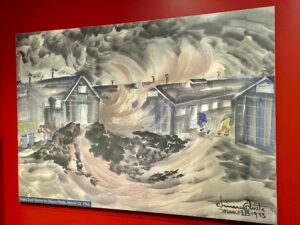
“Dust Storm, Topaz” by Chiura Obata, reprint of 1943 watercolor as displayed at the Topaz Museum in Delta, Utah
Our visit to the Utah Museum of Fine Arts also included another new exhibit titled Chiura Obata: Layer by Layer, which presents an in-depth look at the creation and conservation of Obata’s beautiful “Horses” silk screen painting from 1932. Chiura Obata was an esteemed artist and professor at UC Berkeley who was also incarcerated during World War II at Topaz in Utah, where he and Miné Okubo taught art classes for their fellow Japanese American incarcerees. Kimi Kodani Hill, the granddaughter of Chiura Obata, recently presented at the Utah Museum of Fine Arts on her grandfather’s life and work, and I’m grateful that during our recent meeting in Berkeley, prior to my own Utah trip, she shared stories with me about Obata’s silk screen exhibit. During the screen’s 2022 conservation treatment, conservators at Nishio Conservation Studio discovered that the four-paneled screen contained hidden full-scale preparatory charcoal drawings of the horses. In addition, they found that the screen’s internal layers were made of practice drawings by Professor Obata and his summer 1932 students. The recently conserved screen, the full-scale under-drawings, and a selection of the practice drawings were all on display at the Utah Museum of Fine Arts, along with a short film on the conservation process, which itself is an artform. After we returned to the Bay Area, Kimi Kodani Hill provided a guided tour of another exhibition with forty of Chiura Obata’s watercolors, woodblock prints, and ink paintings from several decades of his life that are currently displayed through mid-July at the San Francisco Museum of Modern Art.
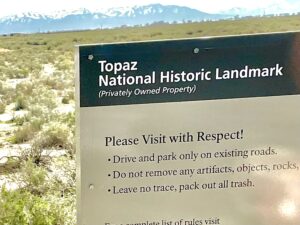
National Historic Landmark sign at Topaz notes that the site is privately owed by the Topaz Museum Board and asks visitors not to remove any objects, including rocks
On April 11, 2024, in Salt Lake City at the NCPH conference, Masako Takahashi and Nancy Ukai joined other members of the Wakasa Memorial Committee to present their own panel titled “Who Writes Our History?” This panel explored the life and tragic death of James Hatsuaki Wakasa, who was shot and killed while confined in Topaz eighty-one years earlier on April 11, 1943. Their panel also addressed urgent and ongoing challenges over descendant and survivor community consent and collaboration with the Topaz Museum following the recent discovery and excavation of the Wakasa Memorial Stone from the Topaz incarceration site in 2021. That massive, 1,000-pound stone memorial was erected in 1943 by Japanese American incarcerees at Topaz just after James Wakasa’s murder there. But US government authorities quickly demanded the memorial’s destruction in their effort to bury acknowledgement of Wakasa’s death from a bullet fired by a white, nineteen-year-old US soldier who was quickly acquitted of any crime. The Wakasa Memorial Committee’s NCPH presentation, which was standing-room only, featured short films and personal reflections on the life, death, memory, and now-contested stone memorial of James Wakasa.
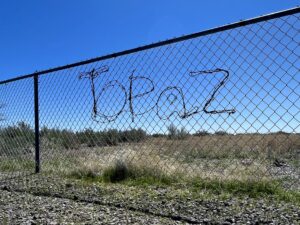
A perimeter fence at Topaz bears the name of the WWII-era mass incarceration in barbed wire
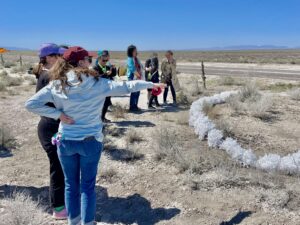
Two days later, still in Utah, Oral History Center interviewers and several other public historians joined Ukai, Takahashi, and other members of the Wakasa Memorial Committee on a pilgrimage to the dust-strewn ruins of the Topaz site on the edge of the Great Basin in Utah’s central desert. The bus ride out to the remote site included watching historical films and sharing personal backgrounds and reflections amongst this group that had assembled from eight different states. Hours later, we arrived at a sparse, sun-bleached landscape encircled by distant snow-capped mountains. Much of the original barbed wire fence around Topaz remains today where some 8,000 Americans were unjustly imprisoned for years during World War II. Crumbled concrete foundations mark sites of now-gone guard towers where US soldiers aimed their guns down at the Japanese American prisoners, and from where they occasionally fired shots, like the one that pierced James Wakasa’s heart in 1943. At the Topaz site, we joined members of the Topaz Museum Board, including board president Patricia Wakida; Scott Bassett, board secretary and education director at the Topaz Museum; and Topaz descendant and board member Dianne Fukami. Together, we all participated in a ceremony organized by the Wakasa Memorial Committee to commemorate Wakasa’s death, as well as the 140 people who died behind barbed wire at Topaz, and the sixteen Japanese American soldiers drafted from Topaz who died during their World War II military service.
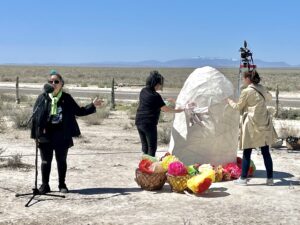
Wakasa Memorial Committee members Masako Takahashi (left), Nancy Ukai (center) and Lauren Araki at Topaz near where James Wakasa was shot 81 years earlier. Ukai and Araki drape ancestral name tags around an artist’s rendition of the Wakasa Memorial Stone.
The Wakasa 81st Memorial Ceremony at Topaz began at block 36-7-D, where James Wakasa’s tar-paper barracks once stood. From there, we re-traced Wakasa’s steps across the dusty and now-hauntingly empty landscape to the western perimeter site of his murder, near where the Wakasa Memorial Stone once stood before incarcerated Japanese Americans, under government orders to destroy the memorial, buried it in 1943. An artist’s large recreation of the stone, this one blazing white and made of paper mache and wood, stood near the former burial site of the stone memorial before its removal in 2021. After a land blessing and words of remembrance from survivors born at Topaz, we encircled the artist’s stand-in memorial with name tags bearing the names of our own ancestors. Joshua Shimizu then sang in both Japanese and English the hymn “Rock of Ages,” which was also sung at Wakasa’s funeral in April 1943, and which offered deeper meaning for the missing original Wakasa Memorial Stone.
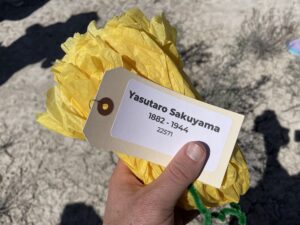
A folded paper flower used during the ceremony that bears the name of Yasutaro Sakuyama, who died in 1944 while imprisoned at Topaz.
During the “Rock of Ages” hymn, ceremonial participants attached to the base of the art installation many colorful paper flowers that carried tags naming other Japanese Americans who died in Topaz. The paper flowers we carried to the ceremony were made by Topaz survivors and descendants in honor of the paper floral blossoms folded by imprisoned Japanese Americans at Topaz in lieu of actual flowers for James Wakasa’s 1943 funeral. Miné Okubo, the artist whose work we saw earlier at the Utah Museum of Fine Arts, drew several illustrations of Wakasa’s funeral while she was incarcerated at Topaz, including drawings of imprisoned women folding paper flowers to adorn wreaths and crosses. On the desert floor in April 2024, white paper flowers also surrounded the excavation site where the Topaz Museum Board excavated Wakasa’s Memorial Stone in 2021. The Wakasa 81st Memorial Ceremony at Topaz simultaneously evoked absence and living memory. It was especially meaningful to me (Roger) to join Nancy Ukai and Masako Takahashi at the ceremony after having worked together to record their oral histories, in which they shared intergenerational memories about James Wakasa and more recent memories about the Wakasa Memorial Stone’s recent rediscovery and removal from that site.
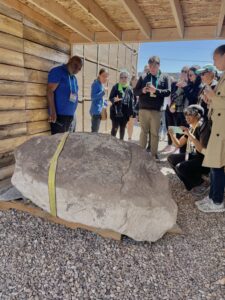
Public historians and Wakasa Memorial Committee members view the excavated Wakasa Memorial Stone at the Topaz Museum in Delta, Utah
After the ceremony at Topaz, the pilgrimage group boarded the bus and traveled sixteen miles to the handsome Topaz Museum, which opened in 2017 after decades of fundraising and planning in the small town of Delta, Utah. Once there, the pilgrimage group found their way to the back of the museum where we gathered to witness the actual Wakasa Memorial Stone, a one-thousand-pound rock now confined in a small enclosure. After paying our respects to the stone, we toured the Topaz Museum’s exhibits and collections, which include hundreds of artifacts, photographs, and oral histories, as well as 150 pieces of original artwork. The Topaz Museum’s core exhibit explores the complex story of the World War II Japanese American incarceration experience, especially as it transpired at Topaz. The exhibit begins with the racist laws that marginalized early Japanese immigrants, which lead eventually to the mass incarceration of Japanese Americans during World War II. The exhibit extends into the traumatic impacts of their exile, with an obvious focus on the Topaz experience, and it concludes with an examination of the Constitutional violations that the incarcerees were forced to endure. I found the Topaz Museum exhibits to be impressive, interactive, and informative. The pilgrimage group then gathered a final time out back by the Wakasa Memorial Stone before boarding the bus and returning to Salt Lake City.
OHC interviewers Amanda Tewes (in maroon cap) and Shanna Farrell (in purple hat) observe the excavation site of the Wakasa Memorial Stone near where James Wakasa was shot 81 years earlier in April 1943
The emotional experiences throughout our time in Utah reminded me of William Faulkner’s line in Requiem for a Nun: “The past is never dead. It’s not even past.” The public history presentations on “historical urgency” at NCPH, the outstanding exhibits on Japanese American artists, the powerful pilgrimage to Topaz and the commemorative ceremony at the site of James Wakasa’s murder, which we shared with survivors and descendants of the prison camp eighty-one years from the date of Wakasa’s death, as well as our trip to the Topaz Museum to see its exhibits and the excavated Wakasa Memorial Stone all reminded us that history is still very much alive and shapes our present experiences. At both the Topaz incarceration site and at the Topaz Museum in Delta, we witnessed some of the still-simmering tensions between Topaz Museum Board members and members of the Wakasa Memorial Committee over what has happened and what will happen to the now-unearthed Wakasa Memorial Stone. Throughout all of those experiences in Utah, I kept thinking on the recurrent theme of “belonging,” including in the oral histories we continue to conduct in the Oral History Center’s Japanese American Intergenerational Narratives Project. “Belonging” carries multiple meanings and invites complex questions. Within what communities, or within which factions of communities, do we find and feel belonging? Throughout history, and up through the present, where have Japanese Americans found belonging? What about the physical artifacts of Japanese American history, like artwork created during World War II-era incarceration, or like the recently re-discovered Wakasa Memorial Stone? To whom do those objects belong? And importantly, who has the right to tell the history of artifacts, artwork, memorials, or lived experiences? To whom does this history belong?
Answers to questions of belonging are elusive because they’re always evolving. I do know, however, how grateful I feel to continue working with individuals and communities to record oral histories that empower narrators to share their own living memories and reflections on the past, and how the personal histories these interviews record will continue to shape our shared present moments. These experiences in Utah helped further inspire our ongoing work on the Japanese American Intergenerational Narratives Project. We hope that you, too, can find inspiration and meaning in these stories, and that they might inform your own sense of belonging.
— Roger Eardley-Pryor, Oral History Center historian and interviewer
ABOUT THE ORAL HISTORY CENTER
The Oral History Center of The Bancroft Library preserves voices of people from all walks of life, with varying political perspectives, national origins, and ethnic backgrounds. We are committed to open access and our oral histories and interpretive materials are available online at no cost to scholars and the public. You can find our oral histories from the search feature on our home page. Search by name, keyword, and several other criteria. Sign up for our monthly newsletter featuring think pieces, new releases, podcasts, Q&As, and everything oral history. Access the most recent articles from our home page or go straight to our blog home.
Please consider making a tax-deductible donation to the Oral History Center if you’d like to see more work like this conducted and made freely available online. While we receive modest institutional support, we are a predominantly self-funded research unit of The Bancroft Library. We must raise the funds to cover the cost of all the work we do, including each oral history. You can give online, or contact us at ohc@berkeley.edu for more information about our funding needs for present and future projects.
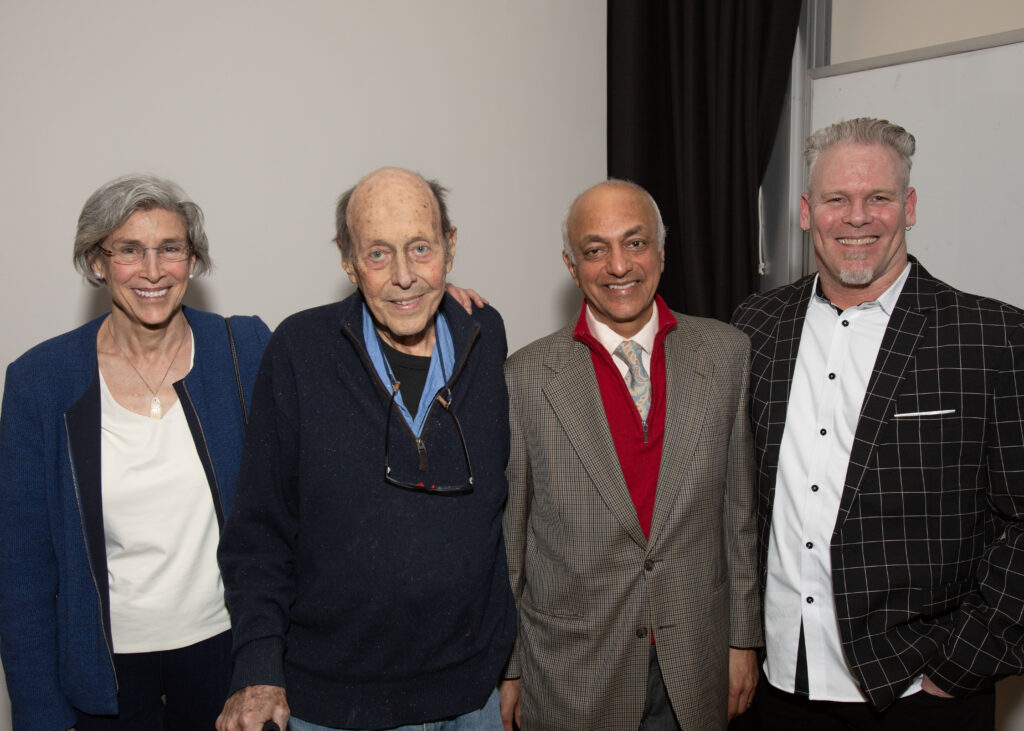
From Left to Right: Elizabeth Wood, Jim Scott, K. (Shivi) Sivaramakrishnan, and Todd Holmes at Yale Celebration on March 28, 2024. Wood and Sivaramakrishnan are the co-directors of the Yale Agrarian Studies Program. Photo Credit: Harold Shapiro
On March 28, OHC historian Todd Holmes participated in the retirement celebration of James C. Scott at Yale University. For many academics around the world, Scott needs no introduction. He is the Sterling Professor of Political Science and Anthropology at Yale University; founder of the renowned Yale Agrarian Studies Program; and author of a series of groundbreaking books that over the decades have become mainstays across the fields of the humanities and social sciences. To be sure, this impressive scholarship not only earned him honors from nearly every corner of the academy, but also made him one of the most influential and widely read social scientists in the world. In 2022, Scott announced his retirement, drawing to a close an academic career that had spanned over five decades.
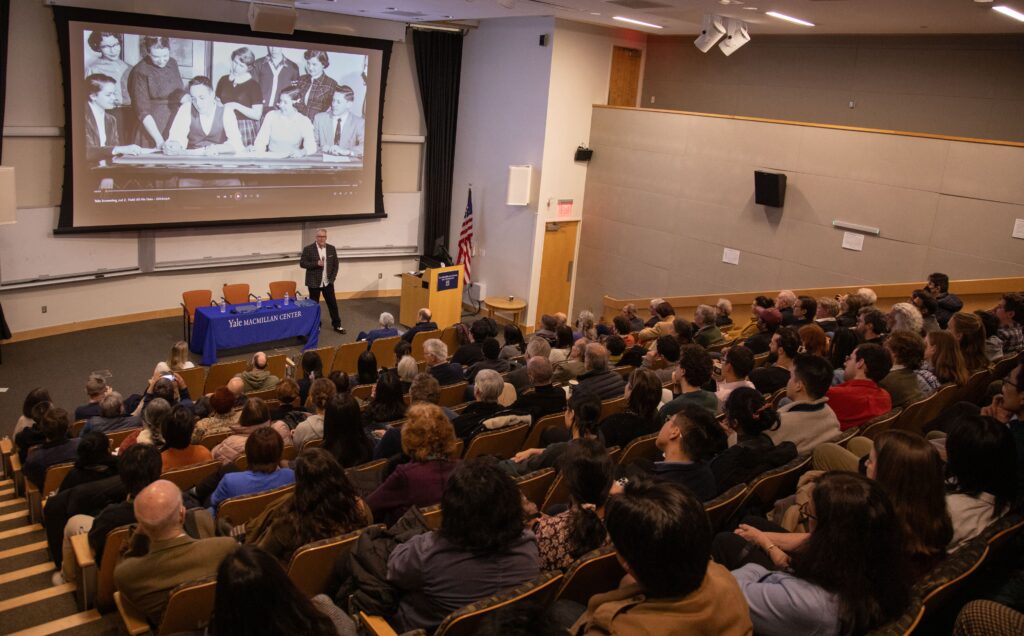
This past March, scholars and students alike gathered at Yale University to celebrate Scott and his extraordinary career—an event in which the Oral History Center was proud to participate. The OHC began working with Yale in 2018 on an oral history project to document both the career of Jim Scott and the history of the Agrarian Studies Program he founded in 1991. Led by OHC historian Todd Holmes and released in 2022, The Yale Agrarian Studies Oral History Project featured the full life history of Scott and shorter interviews with sixteen affiliates of the program. At the event, Holmes – a Yale alum and former graduate coordinator of the Agrarian Studies Program – presented bound volumes of the oral histories to the Yale University Library. In addition to the oral history presentation, the event also featured a screening of the documentary film, In A Field All His Own: The Life and Career of James C. Scott. Produced by Holmes, the film draws from the nearly thirty hours of oral history interviews conducted for the project to trace the intellectual journey of the award-winning social scientist from his childhood in New Jersey through each of the works he produced in his accomplished career. The film is available to the public on YouTube. It is also linked below.
Todd Holmes speaking to the audience before the screening of the documentary. Photo Credit: Harold Shapiro
Jim Scott expressed his appreciation for the event in his concluding remarks, noting how much he preferred a celebration of this sort – with film and discussion – over the typical academic retirement symposium, or Festschrift. The latter, in his view, “always seems like a memorial,” he joked with the audience, “and I assure you, I’m still here!” Always the humorist, he punctuated the point by announcing the forthcoming release of his book on Burma’s Irrawaddy River by Yale University Press, another noteworthy achievement for a scholar who turns 88 years young in December. Scott had discussed this project in his oral history, hinting that he still had something to say about rivers before he “hung up his coat.” It was a fitting end for an event celebrating an extraordinary career.
The Oral History Center of The Bancroft Library preserves voices of people from all walks of life, with varying political perspectives, national origins, and ethnic backgrounds. We are committed to open access and our oral histories and interpretive materials are available online at no cost to scholars and the public. You can find our oral histories from the search feature on our home page. Search by name, keyword, and several other criteria. Sign up for our monthly newsletter featuring think pieces, new releases, podcasts, Q&As, and everything oral history. Access the most recent articles from our home page or go straight to our blog home.
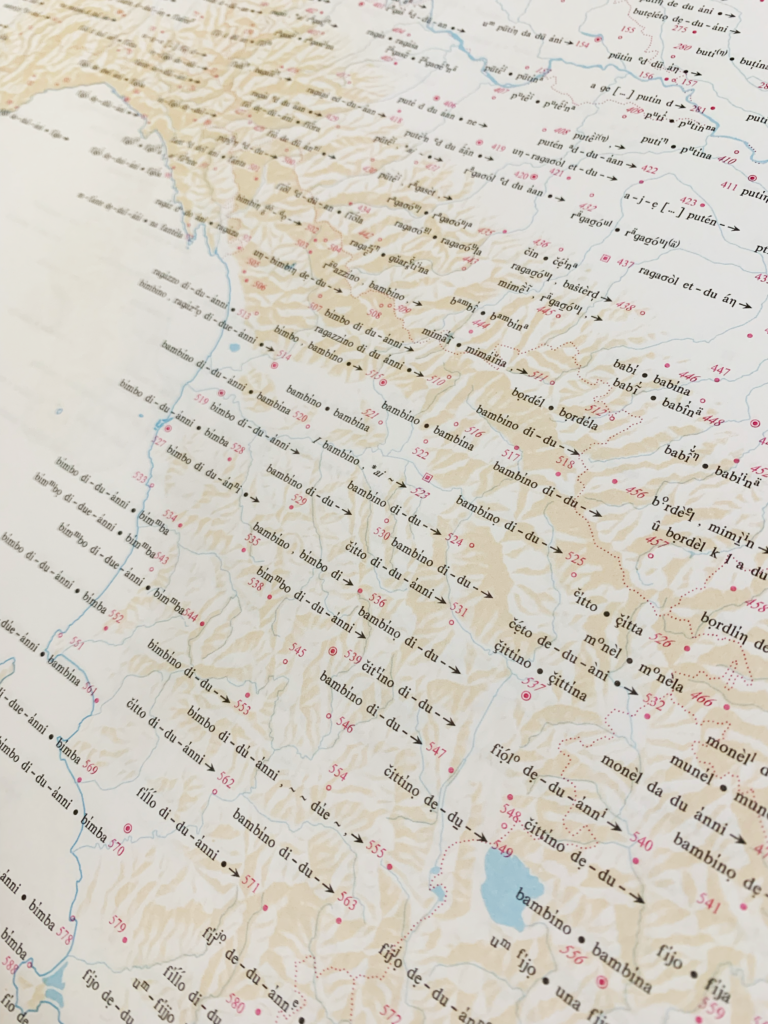
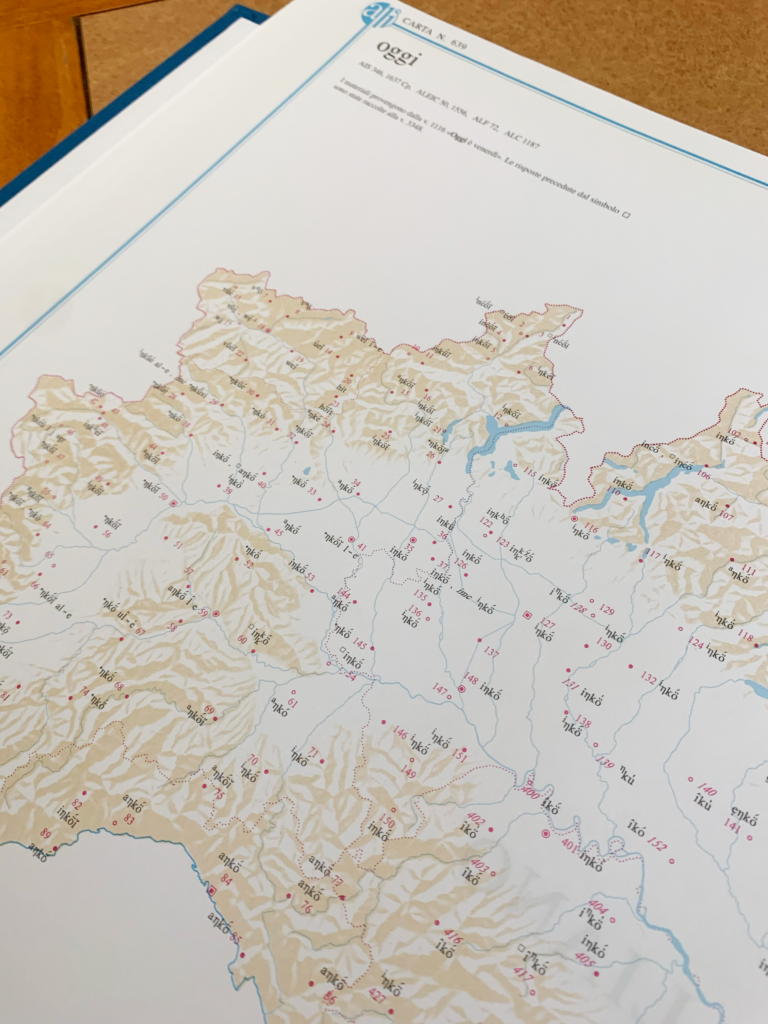
With its tenth volume recently added to the UC Berkeley Library, the Atlante Linguistico Italiano is a unique piece of the Library’s map collections. Each entry in the atlas begins with a single concept, notion or phrase in standard Italian such as cuore, heart. Accompanying this is a map of the Italian peninsula (along with Sicily and Sardinia) that contains the equivalent term, rendered in IPA, as heard in communes all across the country. The lexical and phonetic variations of a single word play out in gradients across the landscape with small changes from one commune to the next that give way to seismic ones from one region to another. The result is a condensed roadmap of the immense linguistic diversity of Italy.
Entry for the world “bambino”, showing variants across Tuscany, Emilia-Romagna and Liguria.
As of now, the ten available volumes cover lexical items in the following spheres: the human body, clothing, the home, food, family, and society, with many other spheres such as fauna, commerce, and agriculture yet to be published. While this work is comprehensive in its treatment of geographic variants, it says unfortunately very little about diastratic variation or the relative social capital of the varieties it contains. With its data now over 30 years old, and many of its constituent dialects likely under the threat of extinction, the Atlante may soon start to take on historic and diachronic intrigue as well.
Entry for the word “oggi” showing showing variants Lombardy, Liguria, Piedmont, and the Aosta Valley.
And if you’re thinking of taking these volumes home with you, think twice. They won’t fit in your backpack. They are big and heavy, measuring 49 x 71 centimeters each, and best consulted in the comfort of the Main Stacks.
Pellis, Ugo, and L. (Lorenzo) Massobrio. Atlante linguistico italiano / materiali raccolti da U. Pellis [and others] ; redatto da L. Massobrio [and others]. Roma: Istituto Poligrafico e Zecca dello Stato, Libreria dello Stato, 1995.
Main (Gardner) Stacks fff PC1711 .A89 1995 v.1-10
Carmen del Camino Martínez
(Universidad de Sevilla)
Tan nocivos como el fuego y otros desastres naturales pueden resultar para el conocimiento de los textos antiguos los cambios de denominación de los manuscritos. La confusión que produce un nuevo nombre o signatura en un testimonio puede obstaculizar, o incluso impedir, el avance de la investigación, por lo que a filólogos e historiadores se nos impone, como primer paso para el estudio de una tradición manuscrita, la aclaración de las concordancias entre las denominaciones de cada pieza, mutantes a lo largo del tiempo. Descifrar esos códigos puede ser una tarea más o menos exigente en función de la edad de los manuscritos: cuanto más antiguo es un testimonio, mayor cantidad de mudanzas ha podido sufrir de una biblioteca a otra, y más cambios posibles de signaturas. Si además tratamos con tradiciones complejas, compuestas de abundantes testimonios, la dificultad se multiplica.
El caso de la tradición manuscrita del Fuero Juzgo (BETA texid 1191)reúne todas las características que lo hacen complejo en cuanto a las denominaciones de los testimonios: está constituida por un número elevado de testimonios (50), de los cuales 36 (más 3 fragmentos) son medievales, que han cambiado de poseedores y que se han editado y estudiado haciendo uso de designaciones que ya no corresponden a las de hoy. En consecuencia, muchas preguntas importantes han estado en el aire durante décadas, incluso durante siglos, sobre la tradición manuscrita y las ediciones existentes del Fuero Juzgo: ¿qué manuscrito editó Villadiego en 1600? ¿A qué manuscritos corresponden exactamente las denominaciones que utilizó la RAE en su edición de 1815? ¿Están en el aparato de la edición académica de 1815 los manuscritos que editaron Mencé (1996) u Orazi (1997)? Por muy sorprendente que pueda parecer, nadie hasta la fecha ha intentado establecer una lista completa de correspondencias entre las denominaciones antiguas y las signaturas modernas de los testimonios del Fuero juzgo, como tampoco se ha identificado el manuscrito editado por Villadiego en 1600, y ni siquiera en las ediciones de Mencé y de Orazi se llega a indicar a qué denominaciones académicas (RAE 1815) correspondían los manuscritos escurialenses editados por ambas autoras (Z-III-6 y Z-III-21 respectivamente).
En PhiloBiblon hasta ahora [abril/mayo de 2024] sólo se presentaban tres concordancias entre denominaciones antiguas y signaturas modernas, extraídas del catálogo de Zarco Cuevas (1924, 1926, 1929). A estas referencias se limitaba casi el estado de la cuestión, al que debemos añadir otras tres informaciones. En el caso de los otros dos códices estudiados por Orazi (escurialenses P-II-17 y M-II-18), esta autora sí consignó la correspondencia con la denominación académica (Orazi 1997: 40 y 41). A su vez, en su estudio sobre Dialectalismos leoneses de un códice del Fuero Juzgo, García Blanco (1927: 7) identificó el manuscrito que estudió –BNE 5814– con el número 16 de los citados en la edición de la RAE 1815, es decir, con Biblioteca Real 2. Por lo tanto, antes de nuestras investigaciones podríamos contabilizar en total seis concordancias publicadas, de las cuales una, como veremos más adelante, es incorrecta.
En comparación con otra tradición manuscrita muy próxima, la de las Siete Partidas, también con un juego de denominaciones académicas (empleado en la edición de la RAH de 1807) necesitado de correspondencias a las signaturas actuales, el caso del Fuero Juzgo sale bastante mal parado. Para las Partidas, García y García (1985: 255-57 apud Fradejas Rueda 2021: 23) compuso hace ya cuatro décadas una tabla de correspondencias entre las designaciones de la RAH y las signaturas actuales (v. esa tabla adaptada en Fradejas Rueda 2021: 23).
En vista del vacío de conocimiento, y al hilo de nuestras investigaciones sobre el Fuero Juzgo, las autoras de este post nos hemos dedicado en los últimos años a identificar los manuscritos que se esconden tras denominaciones distintas y también hemos localizado, mediante una serie de cotejos textuales, el manuscrito que editó Villadiego en 1600. Hemos dado cuenta del juego completo de concordancias en dos conferencias (Castillo Lluch/Mabille 2022 y Castillo Lluch 2023), cuyas versiones escritas se hallan en prensa en este momento (Castillo Lluch/Mabille y Castillo Lluch/García López). En ambas publicaciones se hace mención a la aportación común de Castillo Lluch y Camino Martínez a esa lista de correspondencias mediante intercambios al respecto producidos entre 2021 y 2023.
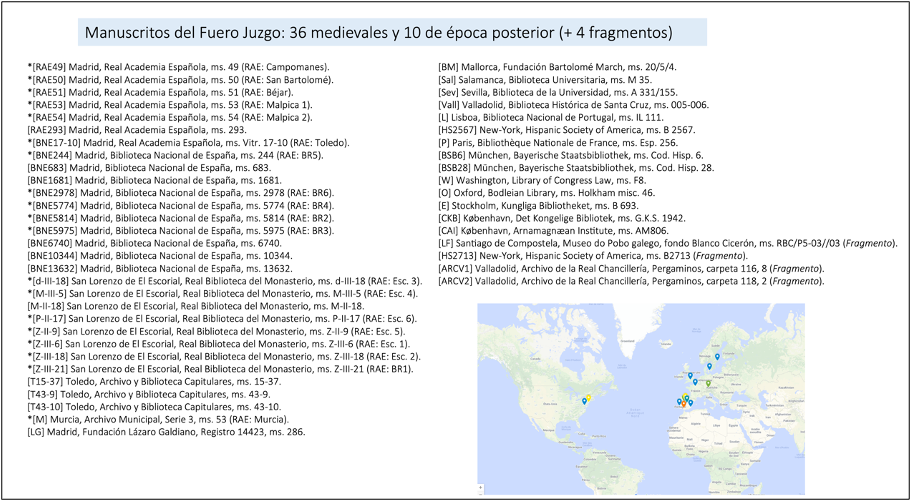
Listado del conjunto de mss. del Fuero Juzgo con las correspondencias a las denominaciones de la RAE en los testimonios precedidos de asterisco (Castillo Lluch, conferencia en Yale University, abril 2023)
En este post presentamos los resultados de nuestra investigación, con los que nos complace contribuir a la mejora de las noticias de PhiloBiblon. Empezaremos analizando las tres referencias que debemos a Zarco, ofreceremos después el listado de correspondencias de denominaciones antiguas y signaturas modernas que hemos conseguido establecer y, para terminar, nos referiremos a la edición de Villadiego (1600), preguntándonos por el manuscrito que copió.
Zarco Cuevas (1924, 1926, 1929) cataloga el conjunto de manuscritos del Fuero Juzgo custodiados en la Real Biblioteca de El Escorial, y para todo ese conjunto (v. p. 116 del vol. 1 de su catálogo, donde, en la ficha dedicada a d-III-18, menciona la existencia de M-II-18, M-III-5, P-II-17, Z-II-9, Z-III-6, Z-III-18 y Z-III-21), consigue ofrecer tres correspondencias con las denominaciones de la edición académica:
d-III-18 = ‟Escurialense 3º” en la edición de la RAE (Zarco Cuevas 1924: I, 116).
M-II-18 = ‟Escurialense 3º” en la edición de la Academia (Zarco Cuevas 1926: II, 284).
Z-III-18 = ‟Escurialense 2º” en la edición de la ‟Academia de la Historia” (sic, léase RAE) (Zarco Cuevas 1929: III, 149).
La concordancia de ‟Escurialense 3º” con dos manuscritos es, evidentemente, errónea, pues a cada uno de esos dos debería corresponderle una denominación distinta en la edición académica. Zarco se equivocó con M-II-18, que en realidad es el designado como ‟Escorial 5º” en el aparato de variantes de la RAE, si bien la descripción inicial que los académicos ofrecen de ese manuscrito escurialense 5º (RAE 1815: prólogo, 5-6) corresponde a Z-II-9. Se suman aquí, por tanto, dos fallos: uno de la RAE al describir Z-II-9 en el prólogo a su edición dándole por nombre Escorial 5º, pero después no incluyéndolo en su aparato, y en su lugar introduciendo las variantes de M-II-18; y el de Zarco Cuevas, que asimila M-II-18 a Escurialense 3º.
Otro detalle que debe tenerse en cuenta es que el número de testimonios medievales que tuvo la Academia para su edición de 1815 fue de 21; pero, en la práctica, ofrece el texto de Murcia en el cuerpo de la página y en el aparato crítico recoge las variantes de 16 códices (omite las de BR4, BR5, BR6 y las de Z-II-9, que había descrito en el prólogo por error como Esc 5, pues, como se acaba de ver, en el aparato Esc 5 es M-II-18).
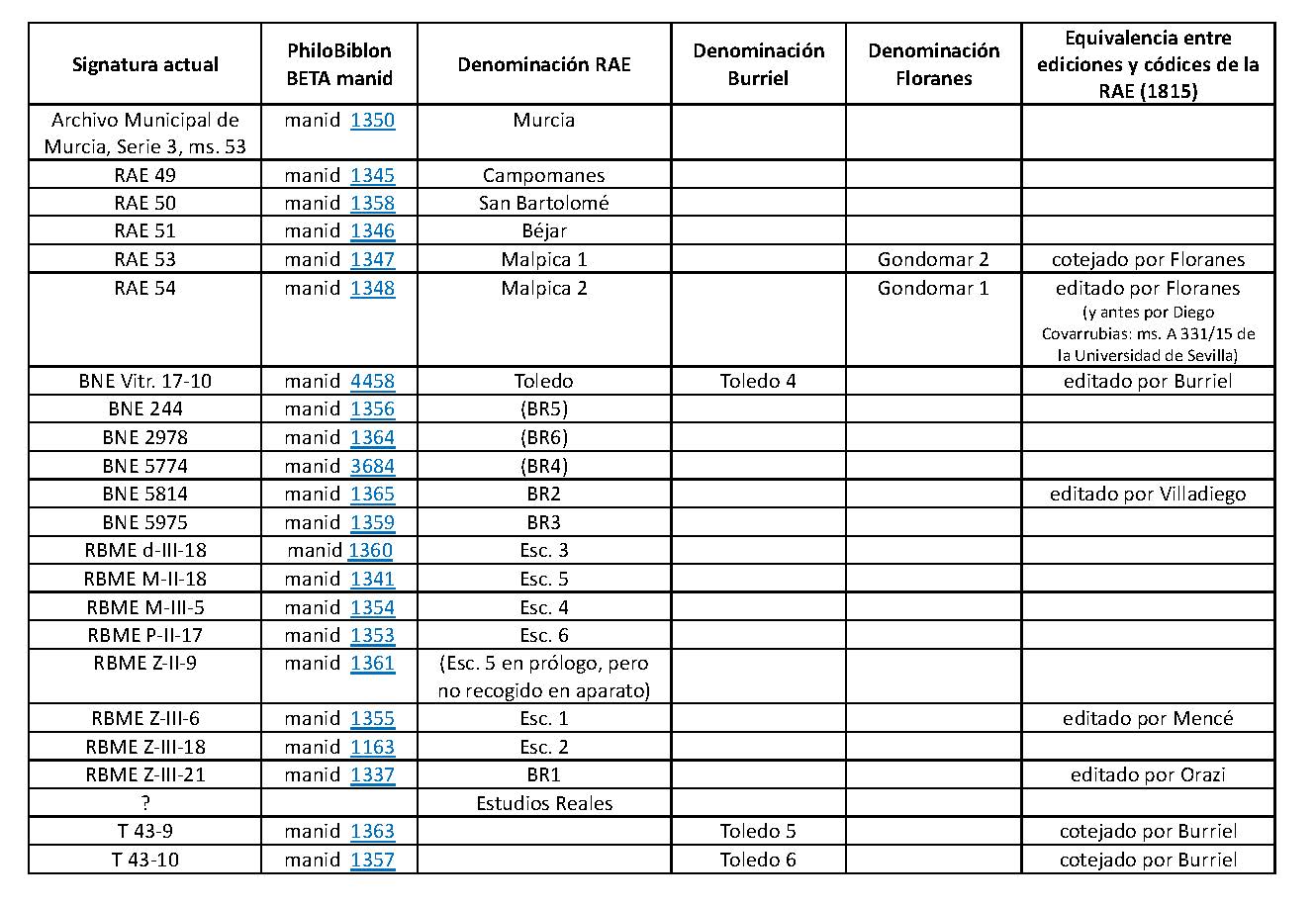
Ofrecemos a continuación el listado de los manuscritos del Fuero Juzgo que manejaron los académicos para su edición de 1815 y décadas antes Andrés Marcos Burriel (1755), primer editor del manuscrito de Murcia y precursor de la edición académica, por su elección de ese códice como manuscrito óptimo y porque incluye variantes de otros dos manuscritos romances que desconoció la Academia (actuales T 43-9 y T 43-10). Incorporamos también la información relativa a la edición de Rafael Floranes (1780), basada en RAE 54, que cotejó con RAE 53, con otro de su propiedad que no tuvo la RAE para su edición (RAE 293), y con el texto editado por Villadiego (Camino Martínez 2021 y 2022). Entre paréntesis se indican los manuscritos que la Academia tuvo a la vista, pero que no incluyó en su aparato crítico. La última columna de la tabla contiene la identificación a partir de las signaturas actuales de los manuscritos que fueron editados sin indicar, por desconocimiento, a qué denominación de la RAE correspondían (obviamente esto no hace para las ediciones de Villadiego, Burriel o Floranes, anteriores a la edición académica).
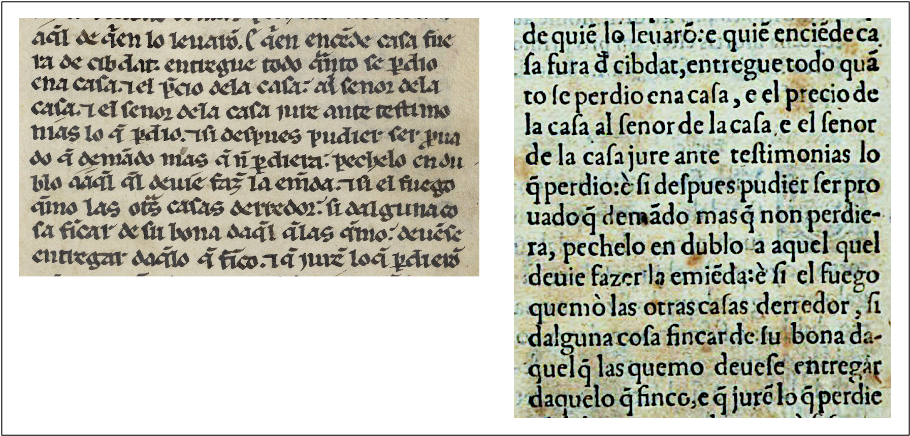
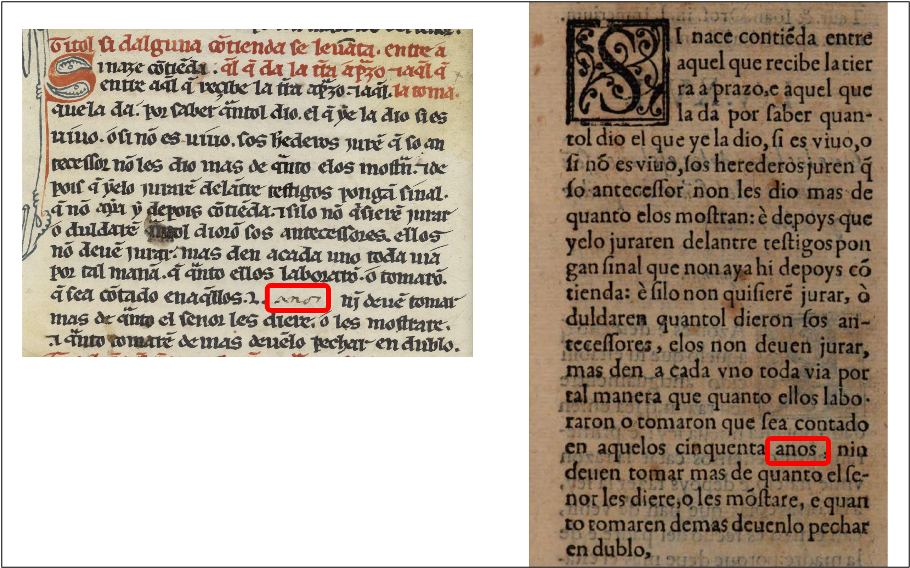
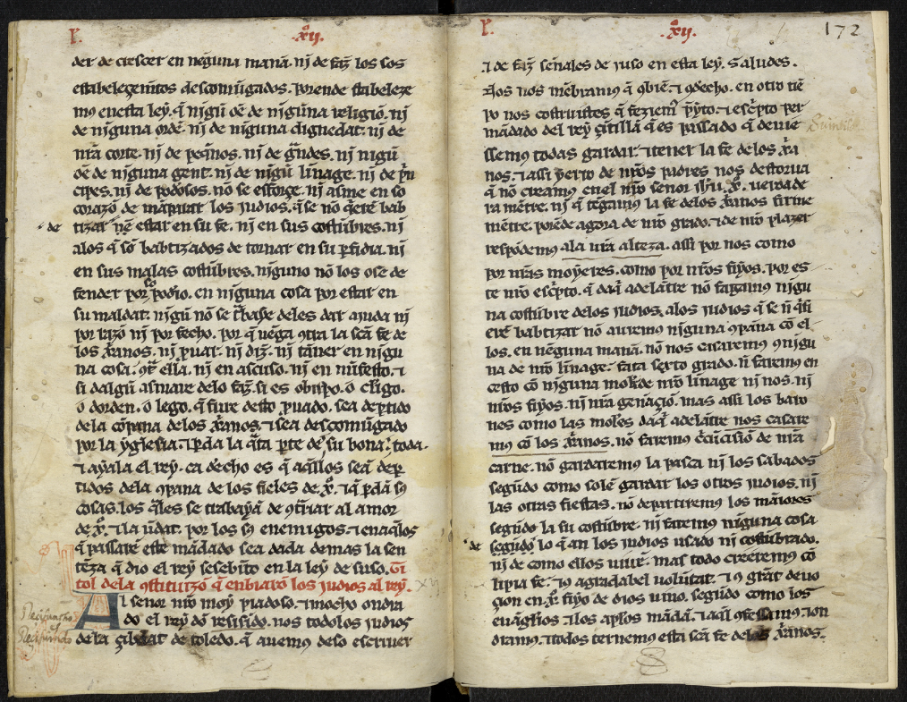
Por último, expondremos cuál era el estado de la cuestión con respecto al manuscrito editado por Villadiego en 1600 y el procedimiento que hemos seguido para identificarlo. En las ‟Advertencias necesarias a la claridad desta obra” que preceden a su edición, Villadiego (1600: 7) se limitaba a informar de que el códice del que copiaba procedía de ‟vna libreria muy antigua, escrito de mano, y en pergamino” y que Antonio de Covarrubias lo estudió y comentó entre 1596 y 1598. Entre los preliminares de ese impreso de Villadiego, se encuentra un ‟Testimonio de la libreria de la santa Iglesia de Toledo” en el que se confirma que concordaba el texto del original de imprenta de Villadiego con el ‟Fuero Iuzgo que tiene esta santa Iglesia mayor en su libreria”. Siglo y medio más tarde, Burriel (1754: 270-271) también indicaba que esa edición se basaba en un ‟tomo manuscrito de la Iglesia de Toledo”. Ahora bien, en un estudio reciente (cf. Castillo Lluch y Mabille 2021: 80, n. 11), tras haber examinado algunos pasajes del texto de la edición de 1600, hemos podido probar que el testimonio que copia Alonso Villadiego no es el de ninguno de los toledanos que manejó Burriel (T4, T5, T6) ni tampoco es T 15-37. Dado que hoy no se conserva ningún manuscrito antiguo en Toledo que no sean T5 (T 43-9), T6 (T 43-10) y T 15-37, y que T4 (hoy BNE Vitr. 17-10) tampoco es el modelo, ¿se trataría de un manuscrito que se conservaba en Toledo antes del siglo XVII y después se desplazó a otro lugar? Ignoramos muchos detalles de la conservación de los distintos manuscritos en diversos repositorios, pero en el caso de algunos, como, por ejemplo, RAE 54, hemos inferido, a partir de unas anotaciones en el recto del primer folio que había quedado en blanco, que ‟en el último cuarto del siglo XIV debía encontrarse en Toledo” (Camino Martínez 2018: 74). Mediante un cotejo de un fragmento de 8.2.1 de la edición de Villadiego con, además de los cuatro toledanos ya mencionados, 24 manuscritos antiguos a nuestra disposición (escurialenses Z.III.21, P.II.17, M.II.18, M.III.5, d.III.18, Z.III.6, Z.III.18, académicos 49, 50, 51, 53, 54, 293, el BNF 256, el Hisp. 6 de la Bayerische Staatsbibliothek, el IL 111 de Lisboa, el de Estocolmo, el de la Biblioteca Real de Copenhague, el de Oxford, los de las fundaciones Lázaro Galdiano y Bartolomé March y los de la BNE 5774, 5814 y 244), hemos logrado identificar ese testimonio occidental que edita Villadiego en 1600 como BNE 5814 (véanse imágenes 3 y 4). Dos datos concordantes adicionales son: 1) el número de folios del manuscrito (‟ciento y setenta y tres hojas”) que Ambrosio Mexia, el escribano público que se encargó de comprobar la concordancia del original de imprenta de Villadiego con su modelo, hizo constar y que coincide con el de BNE 5814 (cf. ‟Testimonio de la librería de la santa Iglesia de Toledo” entre los preliminares de la edición de Villadiego); y 2) la rúbrica sistemática de cada página del manuscrito por Ambrosio Mexia durante el proceso de comprobación de la adecuación del original de imprenta al modelo (‟en cada hoja està rubricado de vna rubrica de mi firma”) (v. Imagen 5).
Imagen 3: Fragmento de la ley 8.2.1 en el ms. BNE 5814, f. 132r y en la ed. de Villadiego, f. 379v. Se aprecia que la edición sigue el manuscrito.Imagen 4: Ley 10.1.14 en el ms. BNE 5814, f. 157v y en la ed. de Villadiego, f. 419r. En lugar de la unidad de medida espacial arpendes, en ambos textos se lee la lección deturpada años, criticada en la edición académica (RAE 1815: XXXVIII) y, como se ve, introducida por mano posterior a la del copista de BNE 5814.
Imagen 5: Folios 171v y 172r del ms. BNE 5814 con la rúbrica en el margen inferior de Ambrosio Mexia, escribano público, que comprobó la concordancia entre el original de imprenta de Villadiego y el manuscrito que en aquel momento se encontraba en la librería de la catedral de Toledo.
La identificación de este manuscrito permite ahora a los investigadores al menos dos cosas: controlar la calidad de la edición de Villadiego, tan a menudo criticada por editores posteriores, y valorar la decisión del siguiente editor del Fuero Juzgo en el tiempo: Andrés Marcos Burriel (1755), que prefirió editar el manuscrito de Murcia. La lista completa de concordancias entre denominaciones antiguas y signaturas actuales de los testimonios que nos han transmitido el Fuero Juzgo aclarará a toda persona interesada por este texto a qué manuscritos exactamente han hecho referencia desde hace décadas estudiosos que nos han dejado lecciones importantes sobre la ley visigótica en romance utilizando la nomenclatura de la edición de la RAE (pensamos en Yolanda García López 1996 y en José Manuel Pérez Prendes 1957) o la de Floranes (Mª Luz Alonso Martín 1983 y 1985). La incorporación a PhiloBiblon de nuestras concordancias garantiza que esta información esté a partir de ahora fácilmente accesible para toda la comunidad científica.
Ediciones citadas
Burriel, Andrés Marcos (1755), Fuero Juzgo ò Codigo de las leyes que los reyes godos promulgaron en España. Traducido del original latino en lenguage castellano antiguo por mandado del Santo Rey D.n Fernando III.º, copiado de un exemplar autentico del Archivo de la Ciudad de Murcia, y de otros tres mss. antiquisimos de la libreria de la S.ta Iglesia de Toledo, ajustado al original latino, ilustrado, y corregido por el P.e Andrès Marcos Burriel de la Comp. de Jesus, Manuscrito BNE 683.
Floranes, Rafael (1780) Fuero Juzgo. Manuscrito cotejado con varios exemplares, Manuscrito BNE 10344.
Mencé, Corinne (1996), Fuero juzgo(Manuscrit Z.iii.6 de la Bibliothèque de San Lorenzo de El Escorial), 3 vols., Lille, ANRT.
Orazi, Verónica (1997), El dialecto leonés antiguo (edición, estudio lingüístico y glosario del Fuero Juzgo según el ms. Escurialense Z.iii.21), Madrid, Universidad Europea-CEES Ediciones.
Real Academia Española (ed.) (2015 [1815]), Fuero Juzgo en latín y castellano, cotejado con los más antiguos y preciosos códices, con estudio preliminar de Santos M. Coronas González, Madrid, Agencia Oficial Boletín Oficial del Estado.
Villadiego Vascuñana y Montoya, Alonso (1600), Forus antiquus gothorum regnum Hispaniae, olim Liber Iudicum hodie Fuero Iuzgo nuncupatus, Madrid, Pedro Madrigal.
Bibliografía secundaria
Alonso Martín, Mª Luz (1983), ‟Nuevos datos sobre el Fuero o Libro castellano: Notas para su estudio”, Anuario de Historia del Derecho Español LIII, 423-45.
Alonso Martín, Mª Luz (1985), ‟Observaciones sobre el Fuero de los Castellanos y las leyes de Nuño González”, Anuario de Historia del Derecho Español LV, 773-7\81.
Camino Martínez, Carmen del (2018), ‟Notarios, escritura y libros jurídicos. Algunas consideraciones”, en Miguel Calleja-Puerta y María Luisa Domínguez-Guerrero (eds.), Escritura, notariado y espacio urbano en la Corona de Castilla y Portugal(siglos xii-xvii), Gijón, Trea, 63-79.
Camino Martínez, Carmen del (2021), ‟En torno al Libro de Nuño González y algunos manuscritos toledanos del Fuero Juzgo”, en Juan Carlos Galende Díaz (dir.) y Nicolás Ávila Seoane (coord.), Libro homenaje al profesor don Ángel Riesco Terrero, Madrid, ANABAD Federación y Universidad Complutense de Madrid, 65-74.
Camino Martínez, Carmen del (2022), ‟El erudito, el calígrafo y dos ejemplares dieciochescos del Fuero Juzgo”, comunicación presentada en el coloquio Los manuscritos del Fuero Juzgo: abordaje interdisciplinar, Université de Lausanne, 11-12 de noviembre de 2022.
Castillo Lluch, Mónica (2022), ‟La tradición manuscrita del Fuero Juzgo: una visión de conjunto”, comunicación presentada con Charles Mabille en el XII Congreso Internacional de Historia de la Lengua Española, Universidad de León, 16 de mayo de 2022.
Castillo Lluch, Mónica (2023), ‟The Visigothic Code and the Fuero Juzgo: The Transmission and Translation of Law from Latin to Romance”, conferencia pronunciada en Yale University, 28 de abril de 2023.
Castillo Lluch, Mónica y Mabille, Charles (2021), ‟El Fuero Juzgo en el ms. BNE 683 (1755) de Andrés Marcos Burriel”, Scriptum digital 10, 75-107.
Castillo Lluch, Mónica y Mabille, Charles (en prensa), ‟Hacia un stemma codicum del Fuero Juzgo desde el Humanismo hasta hoy”, en Actas del XII Congreso Internacional de Historia de la Lengua Española.
Castillo Lluch, Mónica y García López, Yolanda (en prensa), ‟The Visigothic Code and the Fuero Juzgo: The Transmission and Translation of Law from Latin to Romance”, en Noel Lenski y Damián Fernández (eds.), Lex Visigothorum, Cambridge University Press.
Fradejas Rueda, José Manuel (2021), ‟Los testimonios castellanos de las Siete Partidas”, en José Manuel Fradejas Rueda, Enrique Jerez Cabrero, y Ricardo Pichel (eds.), Las Siete Partidas del Rey Sabio: una aproximación desde la filología digital y material, Madrid/Frankfurt, Iberoamericana/Vervuert, 21-35.
García Blanco, Manuel (1927), Dialectalismos leoneses de un Códice del Fuero Juzgo, Salamanca, Imp. Silvestre Ferreira.
García López, Yolanda (1996), Estudios críticos y literarios de la ‟Lex Wisigothorum”, Alcalá de Henares, Servicio de publicaciones de la Universidad de Alcalá.
Pérez-Prendes Muñoz de Arraco, José Manuel (1957), La versión romanceada del Liber Iudiciorum. Algunos datos sobre sus variantes y peculiaridades, Tesis doctoral inédita dirigida por Manuel Torres López, Madrid, Universidad Complutense.
Zarco Cuevas, Julián (1924, 1926, 1929, 3 vols.), Catálogo de los manuscritos castellanos de la Real Biblioteca de El Escorial dedicado a S.M. el rey don Alfonso XIII, Madrid, Imprenta Helénica (vols 1 y 2) y San Lorenzo de El Escorial, Imprenta del Real Monasterio de El Escorial (vol. 3).
By Timothy Kim, Undergraduate Library Research Fellow, 2023-2024
As my time as an Undergraduate Library Fellow (ULF) at the UC Berkeley library comes to a close, I look back with gratitude to the lessons I’ve learned over the past two years. This role has not only shaped my understanding of academic research, but I’ve also gained invaluable skills of empathy, teaching, and most importantly learning.
As an inexperienced ULF, I had a lot of ideas about what solutions to try and what projects to take on but not a strong understanding of the role of an ULF. This spark of interest is what helped the undergraduate research fellows work on and develop the Bancroft Library User Experience project and Wayfinding project among many others, as we developed ways to improve how library services were utilized. Having the inexperience is what allowed us fellows to draw up creative ideas and try to find pain points and inefficiencies in how students and researchers used the library.
Simultaneously, as the other research fellows and I gained experience, we also learned the ropes of teaching in front of classes of our fellow peers on how to conduct Research 101 basics. Through carefully observing the students taking the class, I learned where to anticipate potential problems people might have, as well as those who wouldn’t necessarily bring up their obstacles in the first place.
As I gained more experience through my second year, I eventually transitioned to conducting more one-on-one peer advising. Armed with a deeper understanding of how people learn, I approached teaching with a renewed perspective and confidence. This year was about action—applying theories and techniques I had learned in real-world scenarios and refining them through experience. Every visiting student came with unique challenges and learning styles. This experience taught me the importance of adaptability and empathy in educational settings. It was through these personal interactions that I rediscovered the joy of learning and the satisfaction of helping others achieve their academic goals.
The skills I’ve acquired extend far beyond the walls of Doe library. Learning to teach and communicate effectively are abilities that I anticipate will influence various aspects of my life, from my future academic pursuits to professional endeavors. The ability to facilitate learning and foster understanding is an invaluable tool I will always carry with me.
As I reflect on my time as a ULF, I cannot help but be extremely grateful to the program and its coordinators for its success in not only providing a service to the student body but also in educating me and the other fellows in mentorship and teaching. I believe through the program’s unique and diverse projects I’ve emerged as a more competent and confident individual.

 The Library has gained access to the online archive “