Graduate Student Colloquium in Armenian Studies at UCLA

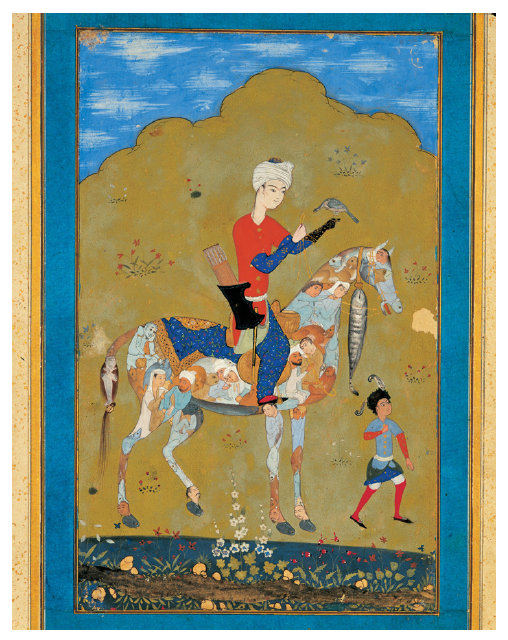
An illuminated page of manuscript from Gladzor Gospels. The Armenian Gospels of Gladzor 2001

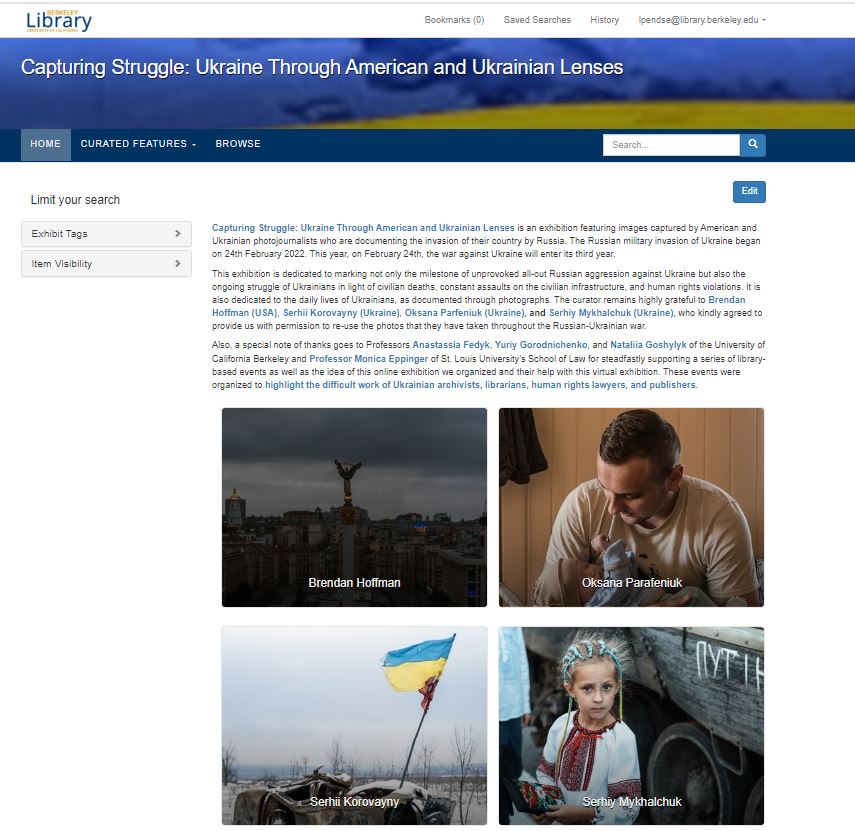
The above image is from one of the pages of the Gladzor Armenian Manuscripts. It was used last year at the 2023 graduate student colloquium

Royce Hall 314
Friday, February 16th, 2024

9:30 a.m.-10:00 Breakfast

10:00-10:10 Opening Remarks
Lori Pirinjian
Director of the 2024 Graduate Student Colloquium in Armenian Studies (Near Eastern Languages and Cultures, UCLA)

Dr. S. Peter Cowe
Narekatsi Professor of Armenian Studies (Near Eastern Languages and Cultures, UCLA)

Panel 1: Contemporary Policy in the Armenian Republic

Chair: Lori Pirinjian (UCLA)

10:10-10:30 Arev Papazian “Fishing Ban on Lake Sevan in Post-Soviet Armenian Republic” (Central European University, Vienna)

Read about the fishing ban here: https://www.azatutyun.am/a/32742178.html

10:30-10:40 Discussion

Panel 2: Modern Political Developments Chair: Lori Pirinjian (UCLA)

10:40-11:00 Orhun Yalcin, “The ARF in the Ottoman Empire” (Ludwig Maximilian University of Munich)

11:00-11:20 Kima Saribekyan, “Cilicia under the French Mandate” (Peter Pazmeny Catholic University, Budapest)

11:20-11:40 Nils Berliner, “Armenian Genocide in Germany” (Technical University of Berlin)

11:40-12:00 Levon-Leonidas Ntilsizian, “Aspects of Greece’s state policy towards the Armenian community in Greece (1945-1975)” (Panteion University, Athens)

12:00-12:25 Discussion

12:25-12:45 Coffee/Tea Break

Panel 3: Early Modern Armenian Communities

Chair: Martin Adamian (UCLA)

12:45-1:05 Andranik Nahapetian, “The Armenian Colony of Nor Nakhichevan” (Free University of Berlin)

1:05-1:25 Andranik Yesayan, “Demographic Transformations in Armenian Peripheral Canton Tavush Under Safavid and Ottoman Rule (1600-1725)” (Institute of History, The National Academy of Sciences of the Republic of Armenia)

1:25-1:40 Discussion

1:40-3:00 Lunch Break

Panel 4: Armenian Literary Practices in Late Antiquity and the Middle Ages Chair: Nora Bairamian (UCLA)

3:00-3:20 Lorenzo Colombo, “Censorship Greek-Armenian” (Universities of Pisa and Geneva)

3:20-3:40 Anush Apresyan, “The Spiritual-Cultural Significance of Translation: Nemesius of Emesa’s Treatise on Human Nature” (Matenadaran Institute, Yerevan)

3:40-4:00 Hayarpi Hakobyan, “Medieval Armenian Book Production in the Lake Van Region in 1275-1350: Scriptoria, scribes, manuscripts” (Martin Luther University of Halle- Wittenberg)

4:00-4:15 Discussion

4:15-4:35 Tea/Coffee Break

Panel 5: Medieval Trade across the Northern Hemisphere Chair: Arpi Melikyan (UCLA)

4:35-4:55 Francesca Cheli, “Chinese Pottery Imports” (University of Florence)

4:55-5:05 Discussion

Panel 6: 19th century Socio-Cultural Developments

Chair: Alexia Hatun (UCLA)

5:05-5:15 Aram Ghoogasian, “Learning to Read in the mid-19th Century” (Princeton University)

5:15-5:35 Emma Avagyan, “19th century Armenian-Jewish Revitalization” (University of Michigan, Ann Arbor)

5:35-5:55 Nazelie Doghramadjian, “Armenian Women’s Archives” (University of Michigan, Ann Arbor)

5:55-6:20 Discussion

6:20-6:35 Guest Speaker
Professor Shushan Karapetian
Director of the Institute of Armenian Studies, USC

6:35-8:00 Reception (Royce Hall 306)

Co-sponsored by Calouste Gulbenkian Foundation, National Association for Armenian Studies and Research, UCLA Department of Near Eastern Languages and Cultures, UCLA Promise Armenian Institute, UCLA Center for Near Eastern Studies, UCLA Center for European and Russian Studies, UCLA Center for Early Global Studies, UCLA Center for the Study of Religion, UCLA Stavros Niarchos Foundation Center for the Study of Hellenic Culture, UCLA Department of Classics, UCLA Leve Center for Jewish Studies, UCLA History Department.
For further details, please consult the website <nelc.ucla.edu>.


Svidok: A Story From Every Ukrainian

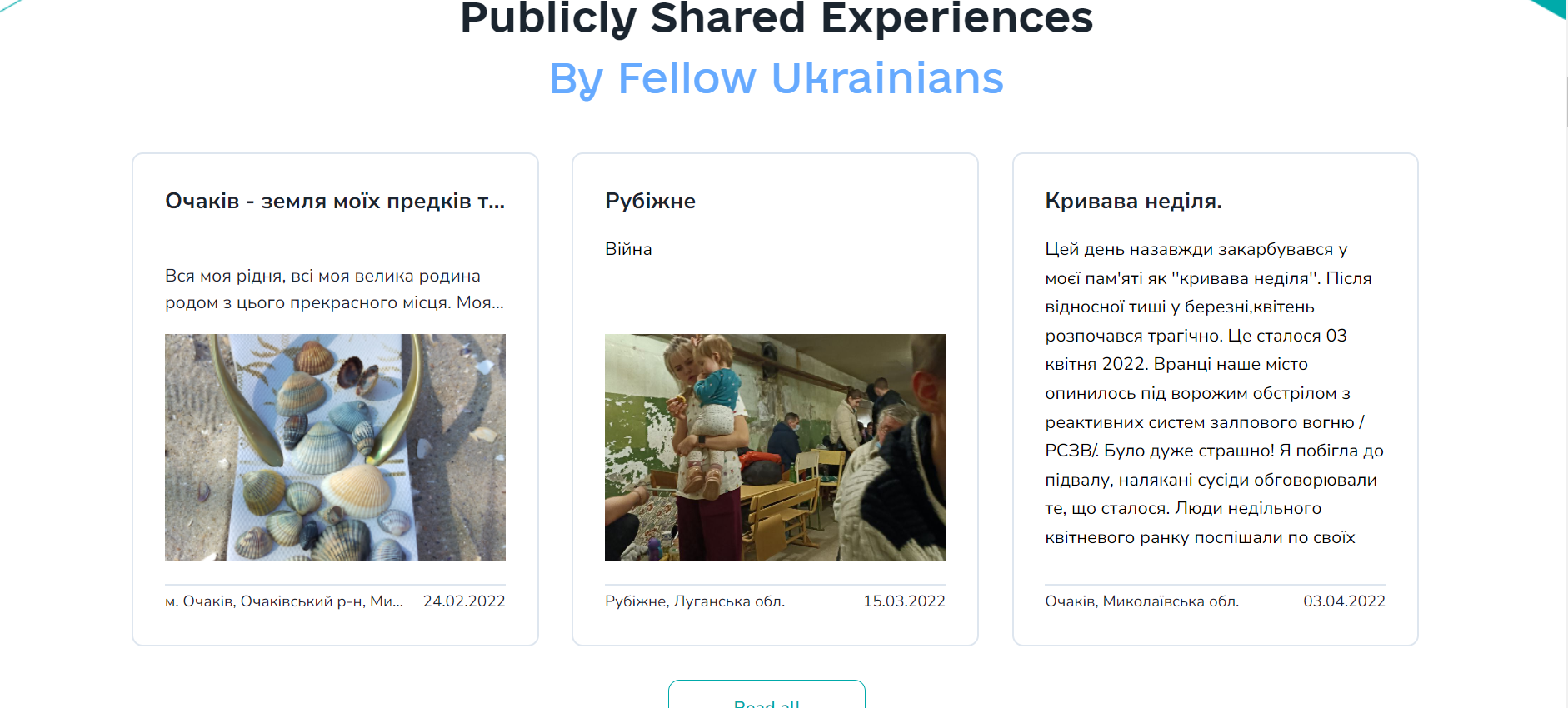
As the Russian invasion of Ukraine continues without a meaningful resolution in sight, Ukrainians continue to document the stories of Russian aggression in their country. One such project is Svidok. Svidok (свідок) means witness. The bilingual multimedia website allows Ukrainians to record their stories associated with Russian aggression. The purpose of recording is not only documenting their everyday lives but also to bear witness to history as it unfolds in their independent nation-state.

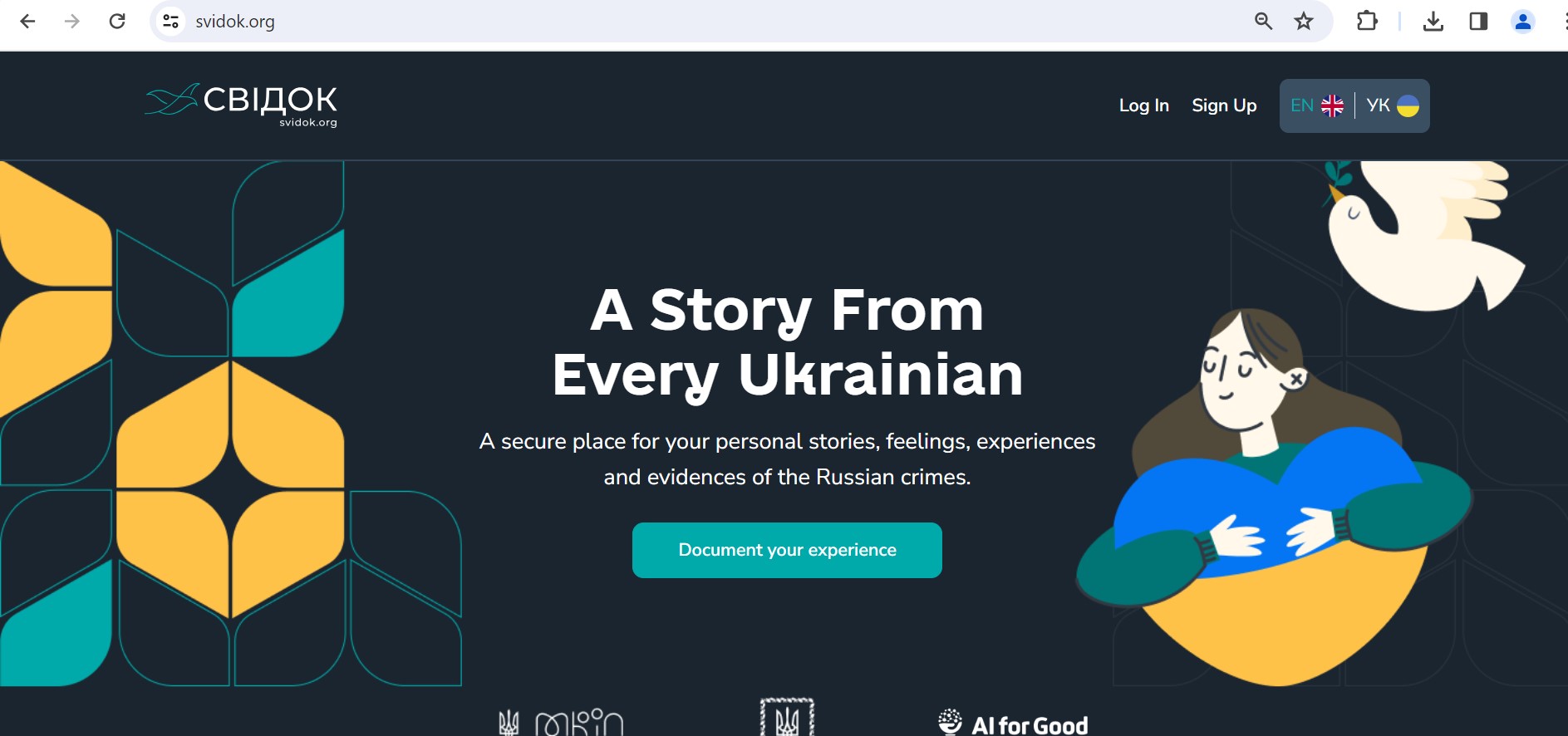
Below is a three-part screenshot of the Svidok’s website. The website also has a memorial board for the fallen heroes and the civilian victims.

The landing page of Svidok's website, part 1Part 2 of the landing page of Ukrainian website: Svidok

Svidok’s self-description is below,

Svidok is your personal war journal. Where you can safely and securely store your experiences of living through the Russian invasion of Ukraine, and collect evidence of all the atrocities and war crimes that were committed by the Russians.

Svidok has been built by Ukraine’s proud citizens and friends in partnership with the AI for Good Foundation to ensure the truth of this war is accurately documented.

Про Свідок
Свідок – це ваш особистий щоденник війни. Ви можете безпечно та надійно зберігати свій досвід життя під час російського вторгнення в Україну та збирати докази всіх звірств та військових злочинів, які були скоєні росіянами.

Свідок був створений щирими громадянами та друзями України у партнерстві з Фундацією AI for Good, щоб гарантувати, що правда цієї війни буде точно задокументована.


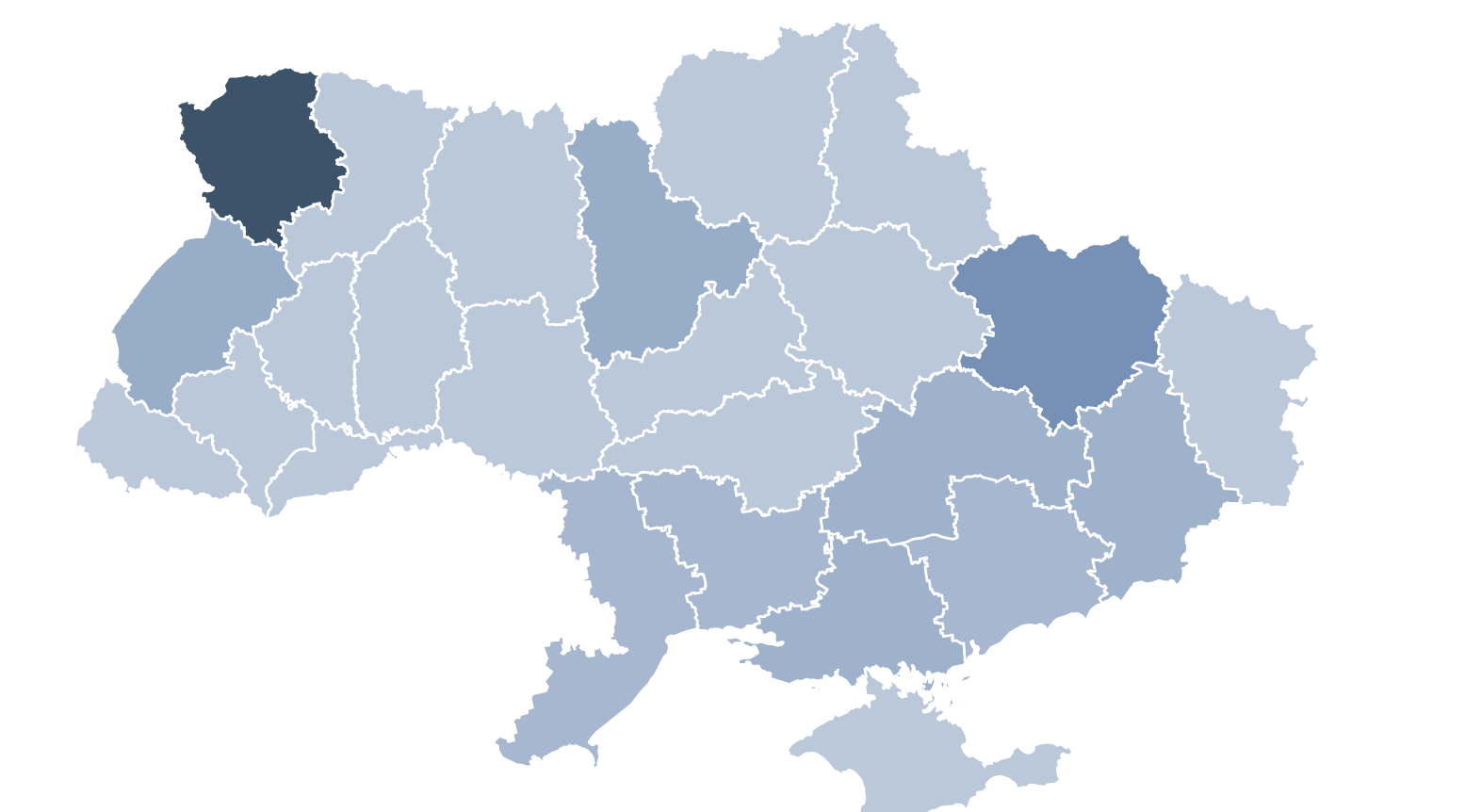
An interactive map of Ukraine on the Svidok's website.


Library purchases digital archive of Prensa Libre (Guatemalan Newspaper): 1951-2024

UC Berkeley Library has purchased ongoing access to Prensa Libre Digital Archive (1951-2024). Prensa Libre is a well-respected Spanish-language Guatemalan Newspaper. It began publishing in 1951, and since then has provided extensive coverage of politics, news, social conditions, history, governance issues, Garífuna, Mayan, and other indigenous communities (Pueblos Originarios en Guatemala), and civil war(s) in Guatemala and Central America.

We hope that this newspaper resource will be of great use to our faculty and students who study Anthropology, Politics Social Sciences, History of Central America, and Latin America.

Prensa Libre digital archive can be accessed from off-campus locations using the proxy or VPN here.

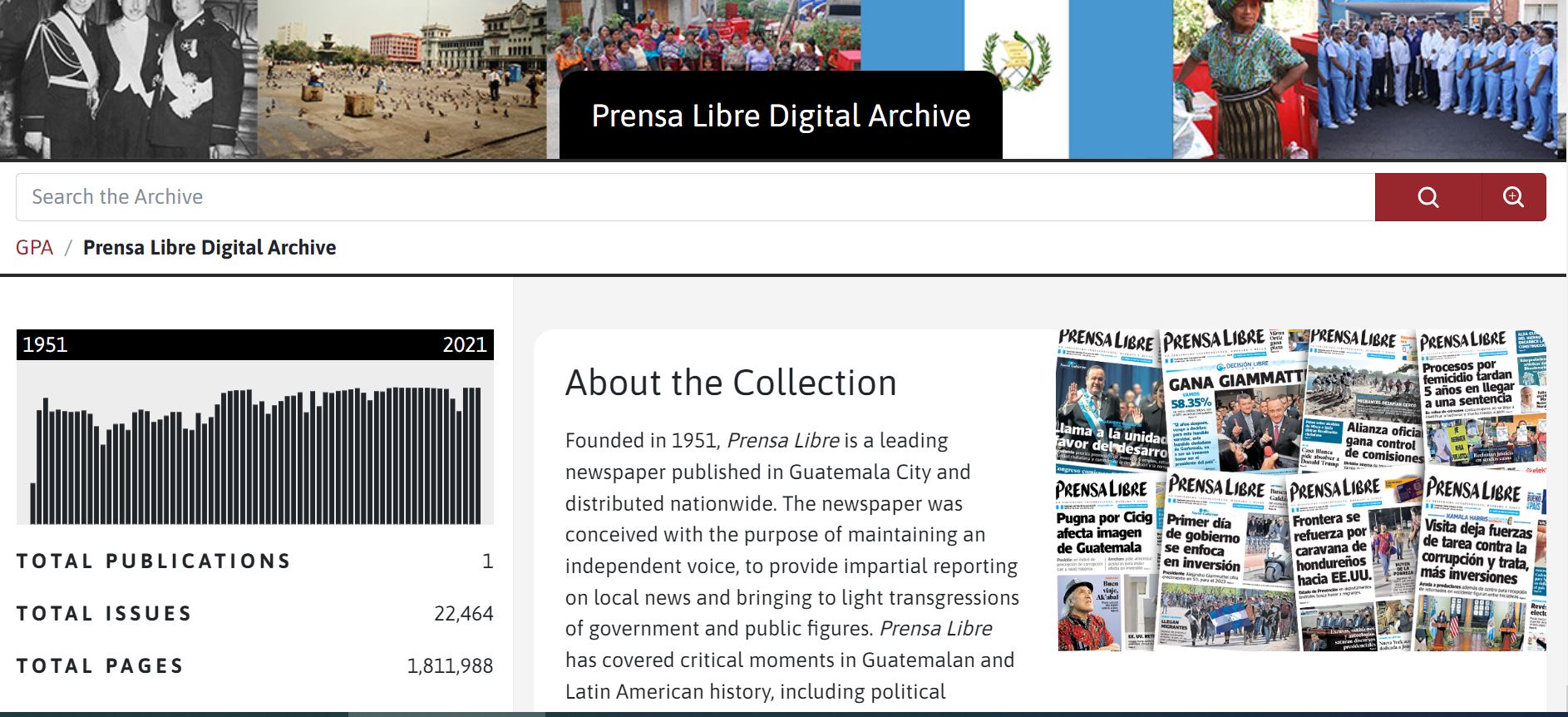
Below is the screenshot of the landing page of the archive. It has a robust search interface.

The landing page of the Prensa Libre Digital Archive.
Prensa Libre Digital Archive’s Landing Page (1951-2024)

New Digital Resource: Собрание законов и распоряжений правительства РСФСР и СССР= Collection of laws and orders of the government of the RSFSR and the USSR

Recently in light of Russian invasion of Ukraine, with almost everything Russian being canceled in society at large, I wanted to bring to our readers’ attention a new digital resource on the Collection of laws and orders of the government of the RSFSR and the USSR. The resource is in Russian, and it was created by the Elektronnaia biblioteka istoricheskikh dokumentov (Электронная библиотека исторических документов).

The source provides access to digital copies of the laws and various orders of the Russian Soviet Socialist Republic and Soviet Union. I hope historians of the Soviet Union and the Russian Federation will find this resource of academic interest.

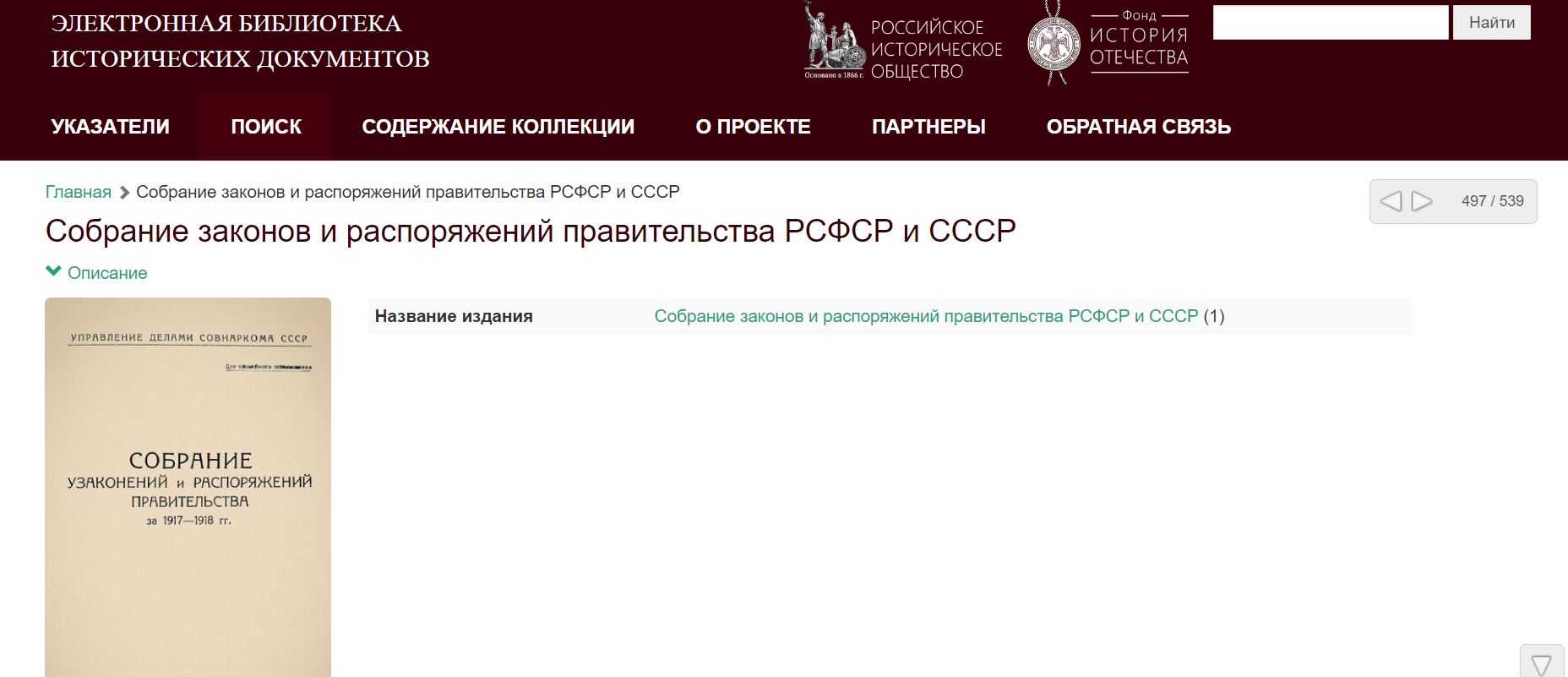
One can search within the text using specific keywords.

This picture shows the landing page of the compendium of laws of the Soviet Union for 1918.

Trial Access to the Africa Commons Digital Archival Collections

Trial access to the Africa Commons digital archival collections, produced by Coherent Digital, is available until January 31st. This resource provides access to books, magazines, newspapers, government documents, manuscripts, photographs, videos, and oral histories related to African history and culture. Africa Commons is a project which aims to enable Africa to easily control, digitize, and disseminate its cultural heritage–within Africa, and internationally.

Africa Commons comprises four distinct collections:

History and Culture, an index of open source materials related to African history and culture.

Black South African Magazines created from 1937-1973 targeting Black audiences.

Southern African Films and Documentaries including propaganda, newsreels, documentaries, feature films, and interviews spanning the 1900s to the early 2000s.

The Hilary Ng’wengo Archive documents the fifty-year career of the iconic Kenyan journalist, publisher, commentator, and public figure Hilary Ng’wengo through his magazines, newspapers, television programs, and documentaries.

Send your feedback to mmckenzie@berkeley.edu.


Center for Research Libraries releases Soviet-Era Ukrainian Newspapers Online

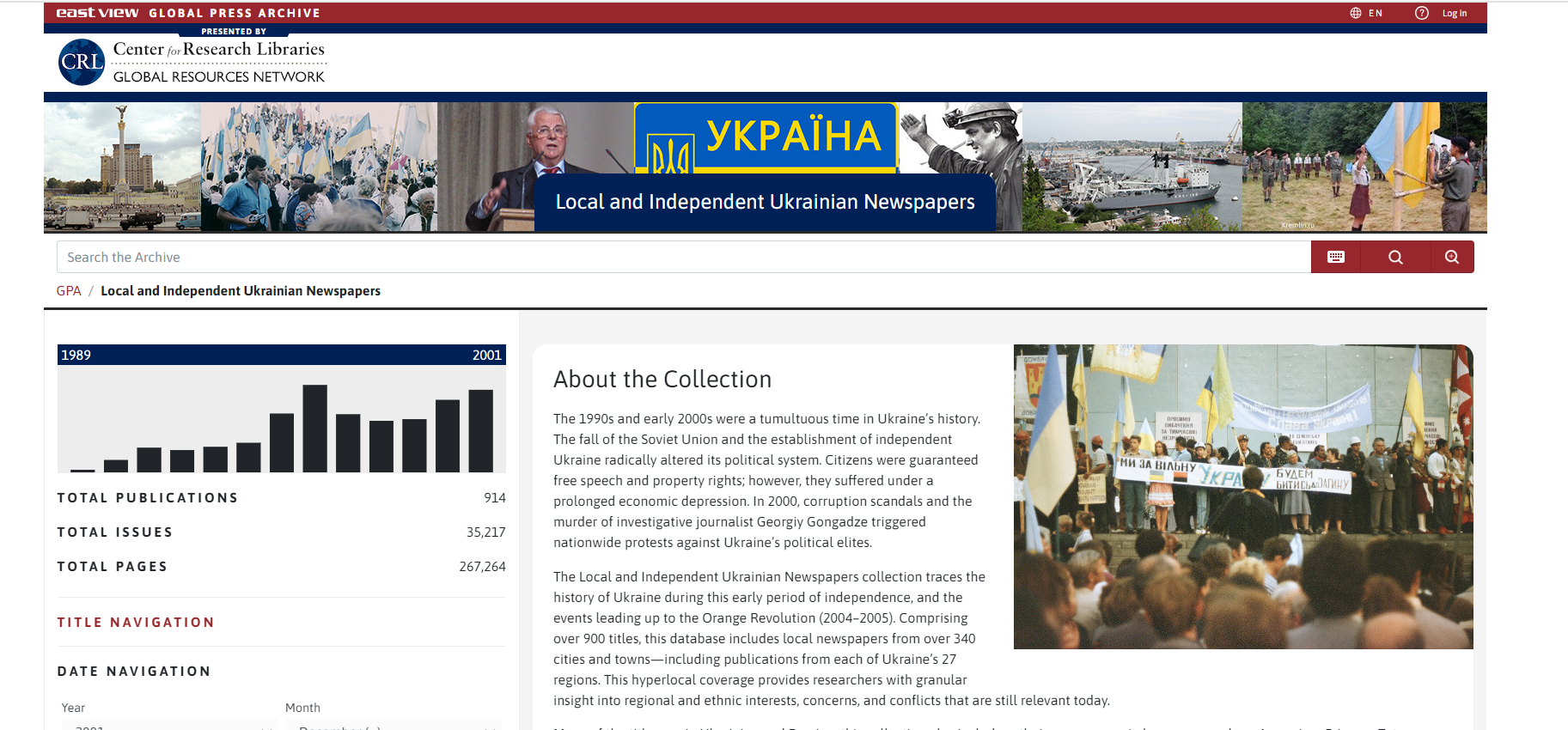
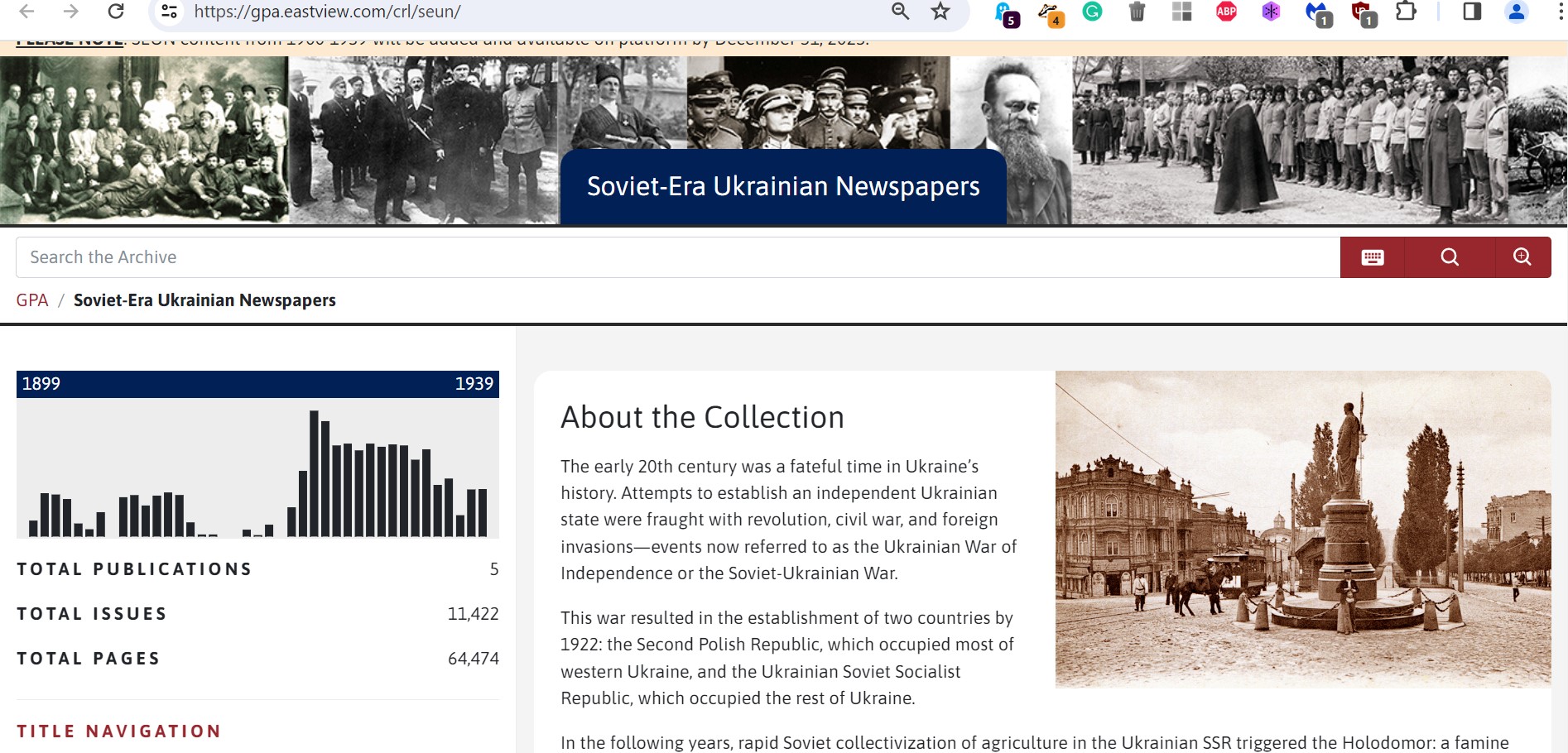
Center for Research Libraries in collaboration with the Global Press Archive of East View has released its latest digital collection of select Soviet-Era Ukrainian Newspaper. The collection can be accessed here: https://gpa.eastview.com/crl/seun/ or here

This image describes the landing page of the Center for Research Libraries Global Press Archives Soviet Era Ukrainian Digitized Newspapers page.
Soviet Era Ukrainian Newspaper project’s landing page. These are digital copies.

About the collection:

The early 20th century was a crucial time in Ukraine’s history, marked by attempts to establish an independent state, leading to the Ukrainian War of Independence. This conflict resulted in the creation of two countries by 1922: the Second Polish Republic in western Ukraine and the Ukrainian Soviet Socialist Republic in the rest of the country.

Following this, rapid Soviet collectivization in the Ukrainian SSR triggered the Holodomor, a famine that began in 1932 and claimed millions of lives.

The Soviet-Era Ukrainian Newspapers (SEUN) collection, with over 50,000 pages and five titles, documents Ukraine’s history during this turbulent period, including events leading up to WWII. It includes newspapers from Kyiv, Kharkiv, and Lviv, featuring content in both Ukrainian and Russian.


Sovetskii Ekran (Soviet Film) Digital Archive at UC Berkeley Library

The Library has purchased the Digital Archive of a Soviet film magazine: Sovetskii Ekran. The archive provides access to the full-text of journal issues that were published from 1925-1998.

Below is the screenshot of the landing page of the Sovietskii Ekran.

The landing page of the digital archive of Sovetskii Ekran aka Soviet Film Journal. The archive spans from 1925-1998.
The landing page of Sovietskii Ekran Digital Archive (above)

Access it here

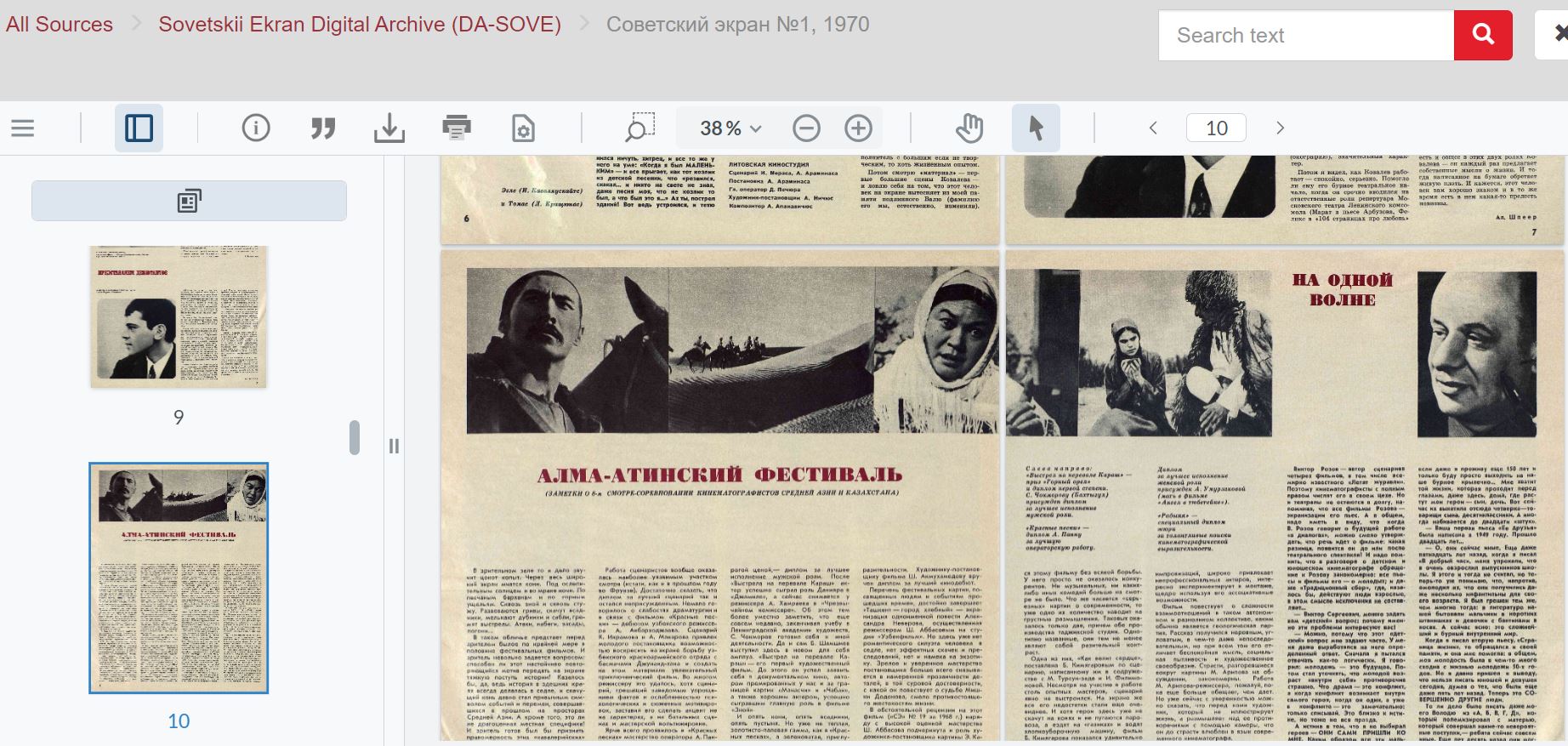
At the time of writing this blog, the digitization of issues was completed through 1970 and the additional digitization was in progress.

a page from digitized issue no. 1 of 1970 of Sovetskii Ekran.
Sovetskii Ekran, Issue no. 1 (1970)

About the journal:

Soviet Screen was a magazine in the USSR that ran from 1925 to 1998 (with a break from 1941 to 1957). It talked about movies, both from the Soviet Union and other countries, cinema history, and had articles critiquing films. They also had reader polls each year to pick the best film, actor, actress, film for children, and music film.

The magazine had different names over the years, like Screen Film Gazeta in 1925, Cinema and Life in 1929–1930, Proletarian Cinema from 1931–1939, and Screen from 1991–1997. Before 1992, it was connected to the Union of Cinematographers of the USSR State Committee for Cinematography and the USSR.

In 1984, they printed 1.9 million copies. In 1991, the editor was Victor Dyomin, and the magazine was published under the title: Screen. It started coming out less often, monthly instead of more frequently. It kept going as Screen Magazine until 1997, then for a few months in 1997-1998, it went back to its old name-Soviet Screen. But it couldn’t survive the financial troubles in 1998 and had to stop publishing (Source: Wikip.).


Library Trial: Znamia Digital Archive (Soviet-era periodical)

At the library, we have set up a thirty-day trial of Znamia Digital Archive through November 18, 2023.

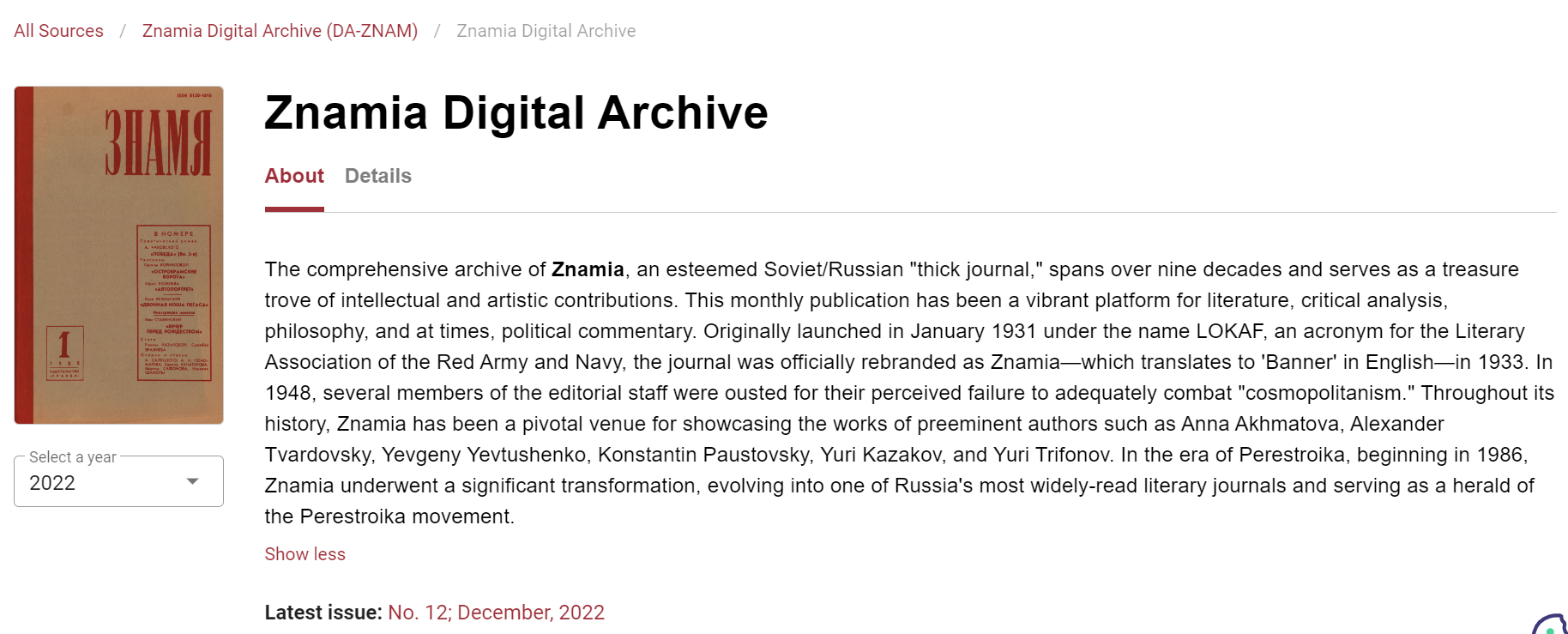
The extensive archive of Znamia (Знамя, Banner), a highly regarded Soviet/Russian “thick journal” (tolstyi zhurnal), covers more than nine decades and is a rich source of intellectual and artistic contributions. This monthly publication has been a vibrant platform for literature, critical analysis, philosophy, and, at times, political commentary.

Originally introduced in January 1931 as LOKAF (Локаф), an acronym for the Literary Association of the Red Army and Navy, the journal officially adopted the name Znamia, which translates to “Banner” in English, in 1933. Throughout its history, Znamia has played a crucial role in presenting the works of renowned authors such as Anna Akhmatova, Alexander Tvardovsky, Yevgeny Yevtushenko, Konstantin Paustovsky, Yuri Kazakov, and Yuri Trifonov.

During the era of Perestroika, starting in 1986, Znamia underwent a significant transformation and became one of Russia’s most widely read literary journals, serving as a herald of the Perestroika movement.

The comprehensive archive of Znamia, an esteemed Soviet/Russian "thick journal," spans over nine decades and serves as a treasure trove of intellectual and artistic contributions. This monthly publication has been a vibrant platform for literature, critical analysis, philosophy, and at times, political commentary. Originally launched in January 1931 under the name LOKAF, an acronym for the Literary Association of the Red Army and Navy, the journal was officially rebranded as Znamia—which translates to 'Banner' in English—in 1933. In 1948, several members of the editorial staff were ousted for their perceived failure to adequately combat "cosmopolitanism." Throughout its history, Znamia has been a pivotal venue for showcasing the works of preeminent authors such as Anna Akhmatova, Alexander Tvardovsky, Yevgeny Yevtushenko, Konstantin Paustovsky, Yuri Kazakov, and Yuri Trifonov. In the era of Perestroika, beginning in 1986, Znamia underwent a significant transformation, evolving into one of Russia's most widely-read literary journals and serving as a herald of the Perestroika movement.
a photo of the landing page of Znamia Digital Archive

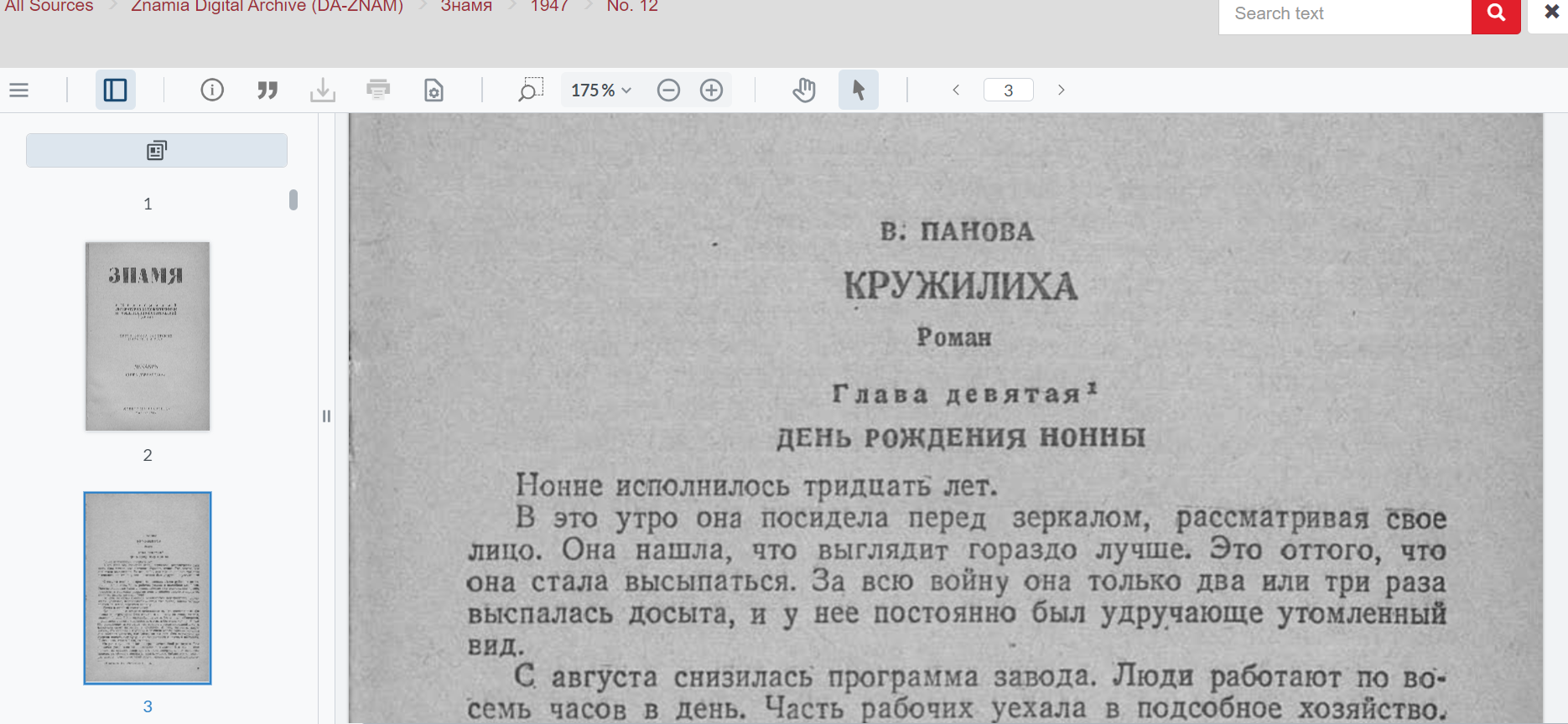
An issue of Znamia for December 1947


Access Link: https://libproxy.berkeley.edu/login?qurl=https%3A%2F%2Fdlib.eastview.com%2Fbrowse%2Fudb%2F6250


Third annual Hispanic Heritage Month Celebration Webinar at UC Berkeley Library

We invite you to the third annual Hispanic Heritage Month Celebration Webinar at UC Berkeley Library. The webinar is free and open to all with prior registration. Please log in to your Zoom account before registering for the webinar. Only authenticated users will be able to register and join (See here)
 
Date and Time: Monday, September 18, 2023, 10 am to 11:15 am PDT
Registration: http://ucberk.li/3yg
 
Speakers:
  • Sarah Aponte; Chief Librarian, Dominican Studies Institute, CUNY
  • Dr. Irma Guadarrama, former professor/ researcher and writer at Houston University–author of a 2023 book,  “To Change the Impossible World: Central American Women in Struggle and Resistance.”
  • Kathia Salome Ibacache, Librarian for Romance Languages
  • David Woken, Latin American and Caribbean Studies Librarian, University of Chicago
Closing Remarks: Dr. Matthew Hill, Librarian for Latin American and Iberian Studies, Brigham Young University
Organizer: Liladhar P, Librarian for Latin American and Latinx Studies

This image speaks about National Hispanic Heritage Month Webinar Celebration at UC Berkeley Library that will take place on September eighteenth of this year, 2023. The image provides basic information same as in the text of this post about how to register for this webinar as well as information about the speakers who will participate in it.

National Hispanic Heritage Month Celebration Webinar 2023 at UC Berkeley Library


Prensa Libre (Guatemalan Newspaper) Archive Trial at UC Berkeley Library

The Library has started a thirty-day trial of Prensa Libre Newspaper. One can access the resource by authenticating from an off-campus location using the following hyperlink: https://libproxy.berkeley.edu/login?qurl=https%3A%2F%2Fgpa.eastview.com%2Fpren%2F

Currently, the full-text content is available for the issues starting in 1980 through 2022.

This is the landing page of the Presna Libre Newspaper's Digital Archive. Prensa Libre is a Guatemalan newspaper that was established in 1951. It has been digitized by EastVIew and as of September 5, 2023, issues from 1980 through 2022 were accessible.
Prensa Libre Digital Archive’s Landing Page.


Prensa Libre fue fundado el 20 de agosto de 1951 por Pedro Julio García, Álvaro Contreras Vélez, Salvador Girón Collier, Mario Sandoval Figueroa e Isidoro Zarco Alfasa.

Prensa Libre is a Guatemalan newspaper published in Guatemala City by Prensa Libre, S.A. and distributed nationwide. It was formerly the most widely circulated newspaper in the country and as of 2007 it has the second-widest circulation.[1] It is considered a local newspaper of record. It was founded in 1951. (Source: Wikipedia)