I hope you have had a fruitful summer. I wanted to send you some updates about the Caribbean and Latin American Studies collection development and my activities for the past few months as your department’s liaison librarian.
I’m excited to share some recent library acquisitions that will enhance your research and teaching resources at UC Berkeley. Here are the highlights of our new collections. Besides electronic resources, I purchase print materials for current teaching and research. This year, I launched a permanent approval plan for contemporary Mexican books. I will continue to offer by appointment student research consultations regularly throughout this semester. Please have your students reach out to me through my email: Lpendse at Berkeley.edu
Digital Archives and Journals
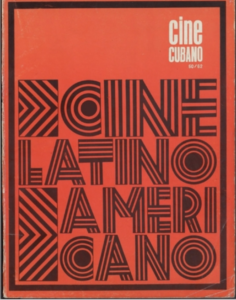
Cine Cubano: Latin America’s Oldest Film Magazine
This invaluable resource offers over 200 issues spanning six decades of Cuban revolutionary and Latin American cinema. It provides unparalleled access to film theory, filmmaking approaches, and reviews from 1960 to 2019.
Cine Cubano, 1960-1962
Cuban Pre-Revolutionary Cinema
This collection documents the development of Cuban cinema from the Silent Era to 1959, including the complete run of Cinema magazine from 1935 to 1965
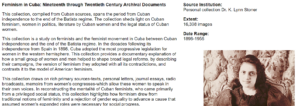
Feminism in Cuba: Nineteenth through Twentieth Century Archival Documents
Feminism in Cuba, 1898-1958
Compiled from Cuban sources, this collection illuminates Cuban feminism, women in politics, and literature by Cuban women from independence to the end of the Batista regime.
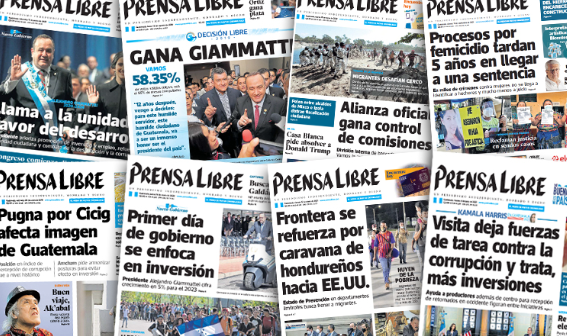
Prensa Libre Digital ArchiveAccess the digital archive of Prensa Libre, a leading Guatemalan newspaper published in Guatemala City since 1951.
Prensa Libre Digital Archive Access the digital archive of Prensa Libre, a leading Guatemalan newspaper published in Guatemala City since 1951.
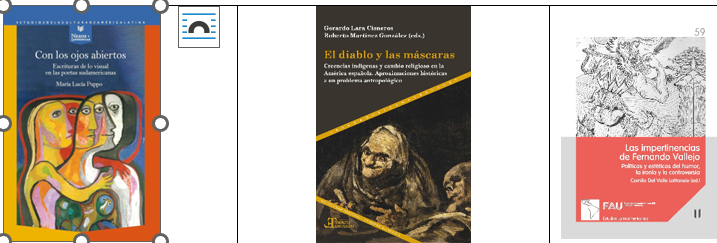
E-book Collections Iberoamericana Vervuert Frontlists (2022-2024)
We’ve acquired the latest front lists from the Iberoamericana Vervuert publishing house through DeGruyter, covering publications from 2022 to 2024.
I also purchased the following rare periodicals for Berkeley.
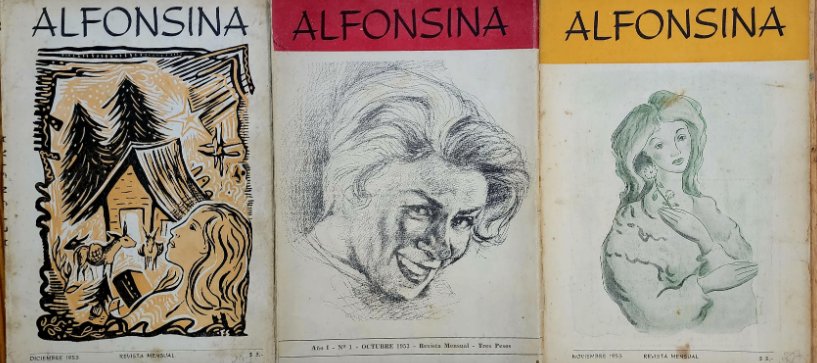
Alfonsina Revista Mensual
Zulma Nuñez (Dir)
Published in Buenos Aires by Impresiones El Sol, 1953
In-8. #1 Oct 1953 – #3 Dic 1953 (Complete set). Wrappers in slipcase.
Collaborators: Fanny Navarro, Iris Marga, Duilio Marcio, Maciel Barbosa, Evelina Benasso, Gomez Cou, and others. Apart from literary and artistic criticism, this magazine dedicates many chapters to the life and work of Alfonsina Storni, with many illustrations of his house in Lugano, Switzerland, and stages of his life. Missing to all bibliographies
Alfonsina Revista Mensual Zulma Nuñez (Dir) Published in Buenos Aires by Impresiones El Sol, 1953
Revista Artes Graficas Organo Oficial
Publisher: Buenos Aires Graficos Platt
Publication Date: 1941
Edition: 1st Ed
In-8. #1 Sep 1941. #2 Oct 1941, #4 May 1942, #5 Jan Mar 1943. Collaborators: Pablo Paoppi, Jose Carbonell, Felix de Ugarteche, Among others. Rare graphic magazine that only cites incompletely Washington Pereyra, it came out with an irregular frequency for three years, from September 1941 until September 1943, probably 7 or 8 issues max. In all its issues, this magazine brings some extraordinary studies on the first printing presses of Argentina and Paraguay Jesuit missions. Washington Pereyra T4,p204.
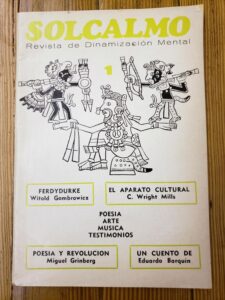
Title: SOLCALMO. Revista de Dinamizacion Mental: …
Publisher: Buenos Aires S.A.G.A.
Publication Date: 1967
Binding: Sin Encuadernar
Edition: 1ª Edición.
In-8º. #1 Verano de 1967-1968 (Complete set). Collaborators : Miguel Grinberg, Manuel Ruano, Eduardo Barquin, Victor Garcia Robles, Oscar Barney Finn, Jorge Lavelli, Horacio Vaggione. This initial number of Solcalmo, publication of the orbit of Miguel Grinberg, also included the original prologue of Gombrowicz`s book Ferdydurke—Provenzano page 306.
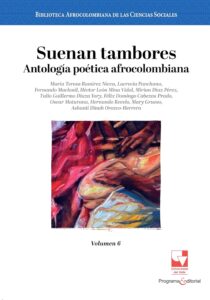
Prada Fortul, Antonio. Benkos… Las Alas de un Cimarrón : Volumen 1. 1st ed. Bogotá: Programa Editorial Universidad Del Valle, 2024. Print.
Carabalí Díaz, Liliana. Memorias de un Orgullo de Ebano : Graciela Diaz, el trasegar de una mujer afrocolombiana / Liliana Carabali Diaz. Bogota, Colombia: Programa Editorial Universidad del Valle, 2022. Print.
These new resources significantly expand our holdings in Latin American studies, film, literature, and history. I encourage you to explore these materials for your research and teaching needs.
If you have any questions or need assistance accessing these resources, please don’t hesitate to contact me.
Happy researching!
Liladhar
Library Liaison for the Caribbean and Latin American Studies
The Open Science Framework (OSF) supports and enables reproducible open science, allowing researchers to manage the full lifecycle of their research projects in one place. OSF provides a platform for open research outputs including preprints through MetaArXiv, registrations and preregistrations; and project sites to host plans, results and related files.
With UC Berkeley’s new OSF membership, you can now log in to OSF with your UC Berkeley CalNet login and password.
Connect your research
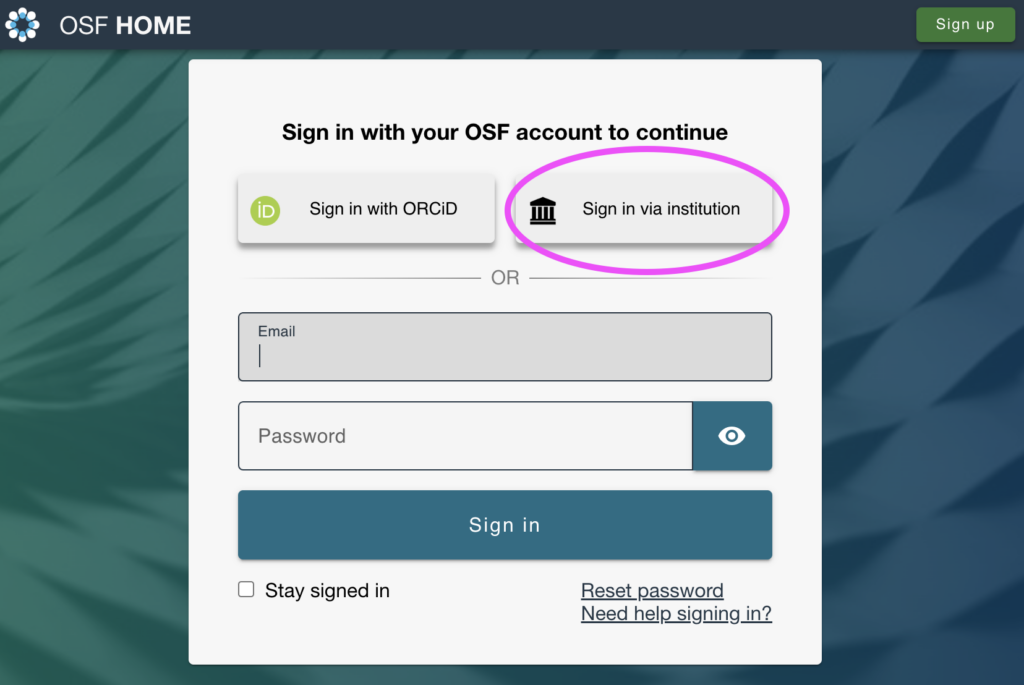
To affiliate your research, first visit osf.io and choose “sign in with my institution.”
Then select University of California, Berkeley from the drop-down on the next screen. You will be directed to login with your UC Berkeley CalNet login and password. Once you connect the first time, you can either login with your existing OSF username and password or with your CalNet.
Open your research
Conducting your research through the UC Berkeley OSFI platform is a strategic way to enhance transparency, foster collaboration, and increase the visibility of your research. It allows you to affiliate your public research with UC Berkeley on OSF and discover other affiliated research. If your research is not yet public, now might be a good time to consider sharing your existing or future work!
Sophia Faaland is a third-year student at UC Berkeley studying history. They are an Undergraduate Research Apprentice and Archaeological Field Student for the Nemea Center. Sophia works at the Oral History Center as a student editor.
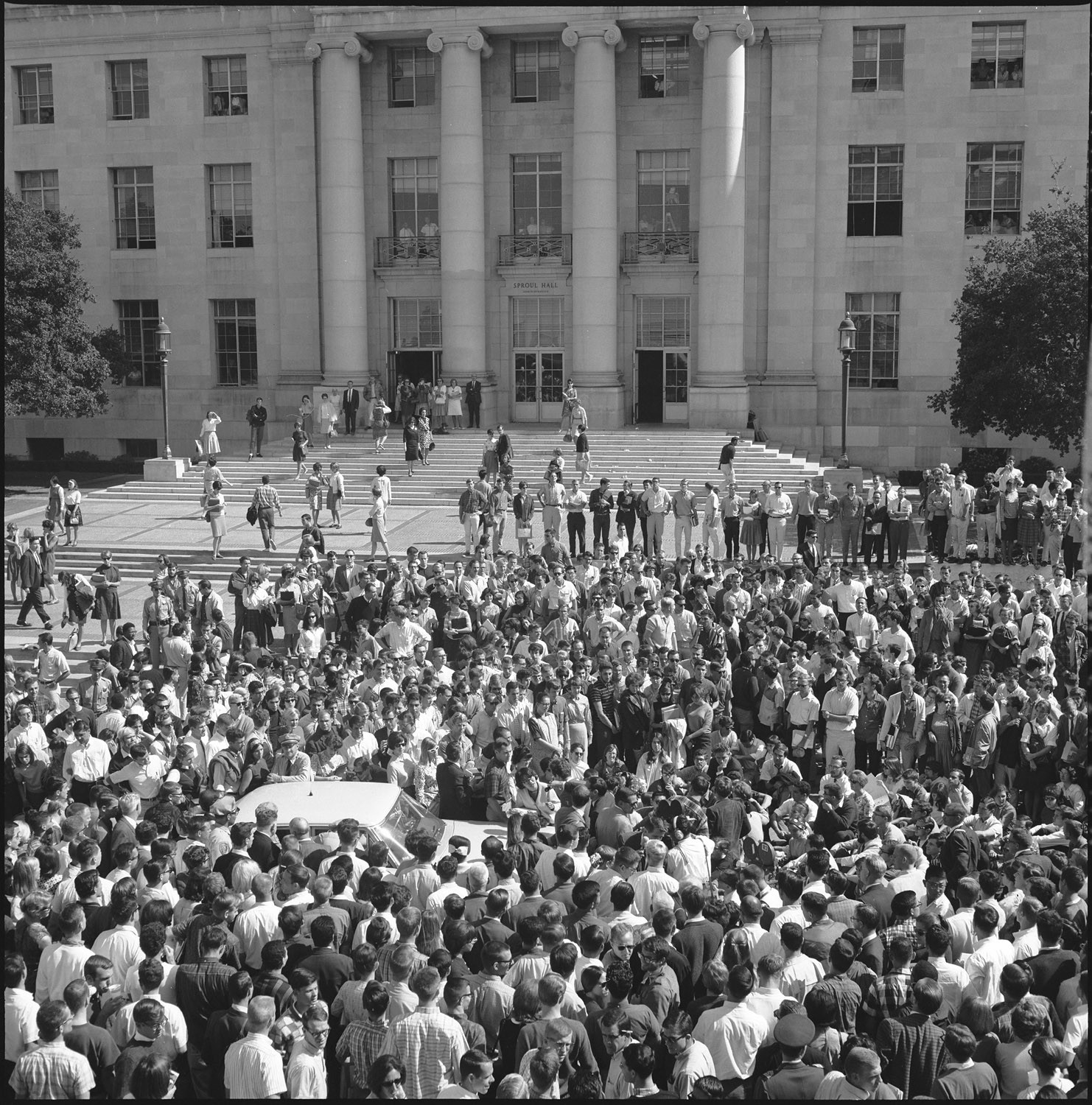
Crowd grows around police car after Jack Weinberg’s arrest, Michael Rossman Free Speech Movement Photographs, BANC PIC 2000.067:36, Courtesy of The Bancroft Library, University of California, Berkeley.
Freedom Summer in 1964 was a landmark moment in the Civil Rights Movement that challenged systemic racism in the United States. Activists—typically white, college-educated, and from Northern states—volunteered to travel to Mississippi and Louisiana to direct national media attention towards Jim Crow Laws and racist violence that prevented Black people from voting in Southern states. The ultimate goal of Freedom Summer was to end racial inequality in the Deep South, and ensure constitutional liberties for all people living in the United States. Organizations such as CORE (Congress of Racial Equality), SNCC (Student Nonviolent Coordinating Committee), NAACP (National Association for the Advancement of Colored People), and SCLC (Southern Christian Leadership Conference) all recruited, trained, and coordinated activists for Freedom Summer. Once there, activists faced the legacy of deeply-rooted systemic racism in the United States that had shaped elections.
Beginning in the late nineteenth century, politicians in the American South designed excessively complex voter registration forms in order to privilege white people attempting to register over Black people—regardless of the quality of responses. For instance, forms without a dot above the letter “i” would be disregarded entirely if they were filled out by a Black person. To combat this, Freedom Summer activists provided workshops for Black residents to navigate deliberately unforgiving voter registration forms, and taught literacy classes in Freedom Schools.
This moment in history drew on decades of activism from the Black community, accelerating the passage of the Civil Rights Act in July 1964 and the Voting Rights Act in August 1965. The integrated effort of Freedom Summer helped popularize the movement for civil rights legislation across the country, and reached many pockets of American society, including the UC Berkeley campus. On this sixtieth anniversary of Freedom Summer, it is important to acknowledge that the movement did not happen long ago. This recent, violent struggle for civil rights illustrates the aggressive power of white supremacy in American society and its persistence in American politics. UC Berkeley’s Oral History Center features interviews with narrators who experienced this critical moment in civil rights history firsthand. Their memories of civil rights activism include the period before Freedom Summer, during Freedom Summer itself, and the movement’s impact on UC Berkeley. The Oral History Center does not currently have any interviews of Black activists who participated in Freedom Summer.
Before Freedom Summer, UC Berkeley Professor Olly Wilson was a Black participant in civil rights activism across the United States. In the late 1950s, while working to obtain his bachelor’s of music at Washington University, he was also an active member of CORE, where he volunteered for test cases. Civil rights organizations frequently used test cases to prove racial discrimination and, subsequently, define new anti-discriminatory law. Wilson recalls the process of gathering evidence of racial inequality for CORE test cases:
Olly Wilson, African American Faculty and Senior Staff Oral Histories. Courtesy of the Bancroft Library, University of California, Berkeley.
What we would do is to have a Black person go into a hotel or restaurant by himself and he would either be served or not served. Then you’d have a Black and a white person go in and they would be served or not served. Then you would have a white person go in, the same white person go in by themselves, and you are both creating valuable data for legal challenges and pointing out the inanity of it all.
In 1960, Wilson accepted an academic appointment at the University of Florida A&M, and traveled to the Deep South with his wife, Elouise. On this journey, he witnessed Jim Crow laws in action and stark segregation for the first time. In his oral history, Wilson discusses Elouise’s experience of determining the correct car while transferring trains in New Orleans. He describes how segregation was discriminatory and nonsensical:
When she gets in the train, she notices that this is a brand new, beautiful, clean car, and she looked in the corner and nobody else was there but white folks, you know. So, she was wondering, “Well, maybe I am in the wrong car…” Now, Elouise is light skinned, and sometimes, if you don’t look at her right, you know, you might not know what race she is, you know. So, she was afraid people didn’t look at her right, so she came out, because she thought, “Well, if I get on this car and then Olly comes, they are definitely going to send him to the Black car, and I will be up here and he will be at that end…”
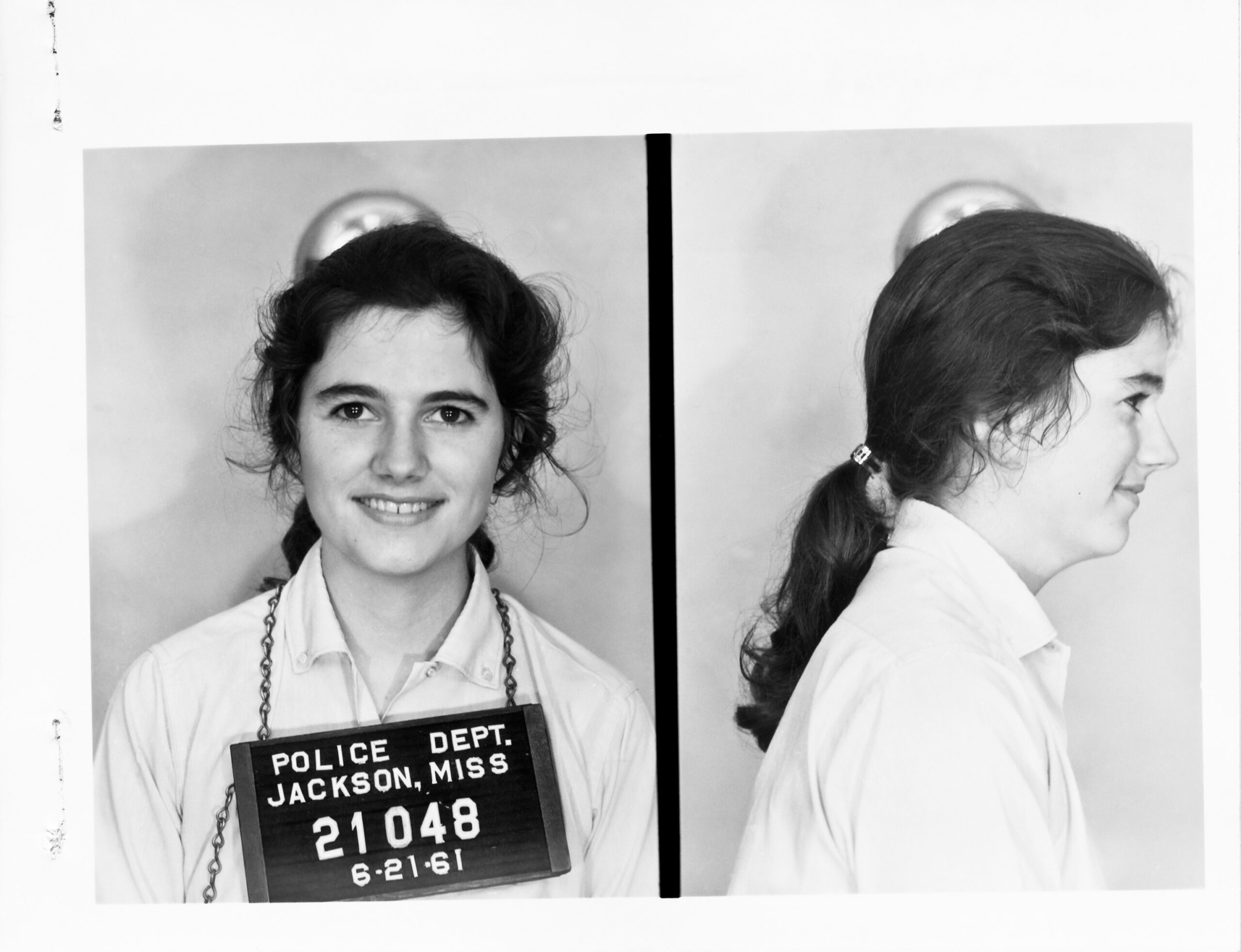
One year after the Wilsons’ journey to Florida, Freedom Riders boarded buses and trains through Mississippi to advocate for legislation ending segregation on interstate public transportation. In 1961, Mimi Feingold Real, a civil rights activist with CORE, was jailed for her participation in the Freedom Rides. Feingold Real recalls that the purpose of the Freedom Rides was to draw national media attention to Mississippi’s segregationist laws:
Mimi Feingold Real, Bay Area Women in Politics. Courtesy of The Bancroft Library, University of California, Berkeley.
What we were doing—it was twofold, again—we were testing the system, doing a little stress test. But we were also, by the time I joined, we were also doing sort of a jail-in in Mississippi, that one of the ways to create pressure on the State of Mississippi was to have—first of all, to have all these Freedom Riders flooding into the state. But we all, as a condition of our being accepted, we had to agree that we would stay in jail for forty days. And that had to do with a quirk in the law in Mississippi, that you had forty days to post bail, and if you had not posted bail by forty days, you forfeited that right. So CORE was going to bail us out, but we were going to stay in that full forty days. That would force Mississippi, of course, to house us and clothe us and feed us and put up with all the national publicity that would arouse, and that would be one more way to pressure, at least the State of Mississippi, to discontinue this odious practice of segregated interstate transportation facilities.
Feingold Real extended her career in civil rights activism by continuing to work with CORE in Louisiana. She became a Freedom School teacher in the East Feliciana Parish teaching literacy, and showing Black residents how to navigate voter registration. In her oral history, she describes her philosophy of work as a Freedom School Teacher in 1963:
This wasn’t any sort of top-down endeavor, this is giving people the power to act on their own. It’s not trying to put pressure on the federal government to come in, and from the top-down force the white people in the South to do something that will allow Black people to do something else. I mean, in a way that was one of the ideas. But the basic idea was power to the people, giving people the initiative to make their own decisions and to have control of their lives. And that’s what I was doing on a person-to-person basis.
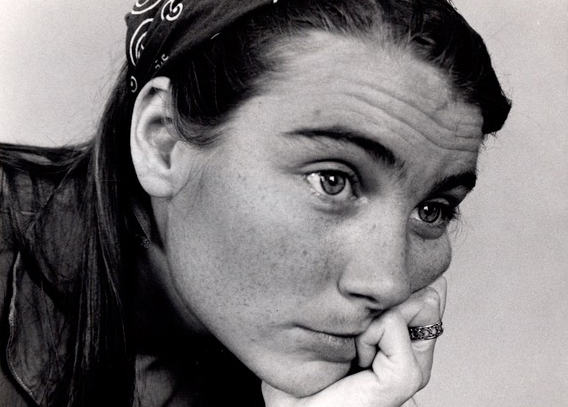
Chude Pamela Allen began participating in civil rights activism in 1964 when she heard the director of SNCC Freedom Schools, Staughton Lynd, speak in a seminar titled “Nonviolence in America” at Spelman College. Lynd inspired her to travel to Mississippi during Freedom Summer with the SNCC and help ensure Black people’s right to vote. She recalls the shift in political opinion about the protection of civil rights activists after the murder of Michael Schwerner, Andrew Goodman, and James Chaney in June 1964:
Chude Pamela Allen, Bay Area Women in Politics. Courtesy of the Bancroft Library, University of California, Berkeley.
And one of the first things we were then asked to do was to divide up by states, and then contact our parents and relatives to contact their congressmen and ask for safety for the civil rights workers. I did that, and my father did contact his congressmen. And later I learned, because his congressman—at least one of them called him up and said, “Get her out of there.” And my father who, as I’ve defined, was not what we think of as a political activist, but he said very clearly to his congressman, “This is not about her safety. It’s about all their safety.” That kind of shift—and that’s just, again, that reference to the fact that when you get involved in something, people around you can also have their own—they grow, too, or they can grow, depending on whether they support you.
To help combat social and political barriers Black activists faced, Freedom Summer activists were an integrated group. In her oral history interview, Allen reflects on adjusting to safety precautions in the Deep South, and becoming more aware of the nature of racist violence. Allen recalls that white activists did not always respect the danger integrated activism created for their Black colleagues during Freedom Summer:
I heard one story, as an example, of a white woman who did not want to hide on the floor under a blanket when riding in a car with a number of Black people, mostly men. I can remember the worker who then said he wouldn’t ride in a car with her anymore, because she insisted on sitting up. She insisted, “I have the right to be seen.” But of course, in that situation, she wasn’t the one that was going to get beaten to a pulp.
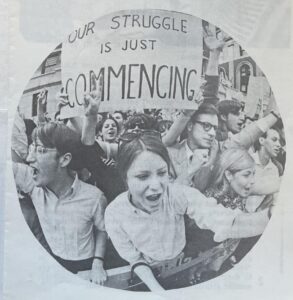
Even across the country, Berkeley students and university administrators felt the social and political repercussions of Freedom Summer. In 1964, UC administrators punished students exercising political speech that the university deemed unacceptable—beginning the debate on the limits of campus free speech. Prohibited topics of speech included civil rights and anti-Vietnam War advocacy. One of the first students arrested during the Free Speech Movement, Jack Weinberg, tabled in Sproul Plaza with CORE to raise money for civil rights work after returning from Freedom Summer activism in Mississippi. His arrest for speech on civil rights sparked a spontaneous sit-in protest around the police car detaining him that lasted thirty-two hours until he was released (seen in the first photo). Atop the police car at the protest for Weinberg’s release, Cal student Mario Savio gave a rousing speech to the crowd on the fundamental right to speech, and later became instrumental in organizing the Free Speech Movement at Berkeley. Savio had also returned from Mississippi for Freedom Summer before his organization of the Free Speech Movement in 1964. Thus, it was not a coincidence that the Free Speech Movement became a mass protest on the UC Berkeley campus the same year Freedom Summer occurred. This debate on speech and advocacy played a pivotal role in shaping the protections of student and faculty rights to free political speech at UC Berkeley today.
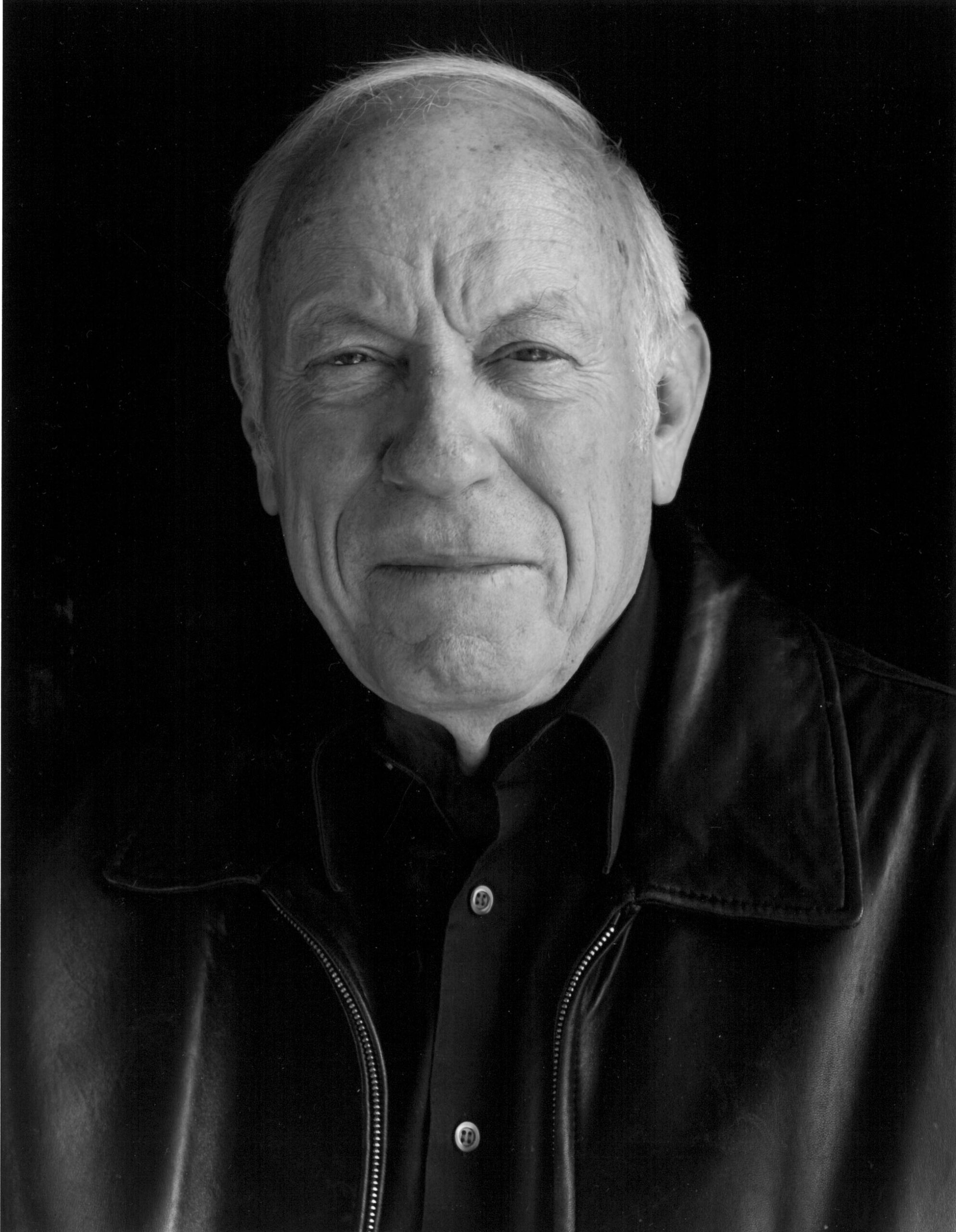
UCB professor Leon F. Litwack witnessed this shift in student activism at the beginning of the Free Speech Movement. In his oral history, Litwack remarks on the similar philosophies of Freedom Summer and the Free Speech Movement:
Leon F. Litwack, History Department, UC Berkeley Oral Histories, Courtesy of the Bancroft Library. University of California, Berkeley.
Of course, Mario Savio had just come back from the Mississippi summer when he came back to Berkeley in 1964. At places like Berkeley and other places around the country significant numbers of young people came to believe that direct personal commitment to social justice was a moral imperative and that social inequities are neither inevitable nor accidental but reflect the assumptions and beliefs and decisions of people who command enormous power, including the university administrators. Well, these were important perceptions. So what began at Berkeley as a protest to obtain a very traditional liberal freedom, freedom of speech and advocacy, soon brought into question the official version of reality.
In all, the legacy of Freedom Summer in 1964 is a historically significant moment that accelerated voting protections for Black people in the United States, and inspired the movement to protect free speech on all university campuses—starting at UC Berkeley. The passage of the Civil Rights Act of 1964 and the Voting Rights Act of 1965 solidified the work of civil rights activists, and encoded anti-discriminatory practices into federal law. In the sixty years since Freedom Summer, Berkeley students have utilized their freedom of speech to address many other political issues, and as a result, the university has a reputation for vibrant political dialogue. The debate about the limits of free speech continues to this day as the University of California system grapples with Pro-Palestinian student activism. Indeed, on August 19, 2024, UC Berkeley announced its new policy for “expressive activity,” revising the previous agreements on freedom of speech for the coming academic year.
To learn more about the history of student activism at Berkeley, the Oral History Center collections include many other interviews, including the SLATE and Free Speech Movement oral history projects. For more information on women’s activism throughout the twentieth century, please visit the Women Political Leaders collection. To learn more about Black activists involved in the Civil Rights Movement and their legacies, see Charles M. Payne’s book I’ve Got the Light of Freedom: The Organizing Tradition and the Mississippi Freedom Struggle. Finally, the UC Berkeley Library holds a wide variety of secondary sources on Freedom Summer, available here.
About the Oral History Center
The Oral History Center of The Bancroft Library preserves voices of people from all walks of life, with varying political perspectives, national origins, and ethnic backgrounds. We are committed to open access and our oral histories and interpretive materials are available online at no cost to scholars and the public. You can find our oral histories from the search feature on our home page. Search by name, keyword, and several other criteria. Sign up for our monthly newsletter featuring think pieces, new releases, podcasts, Q&As, and everything oral history. Access the most recent articles from our home page or go straight to our blog home.
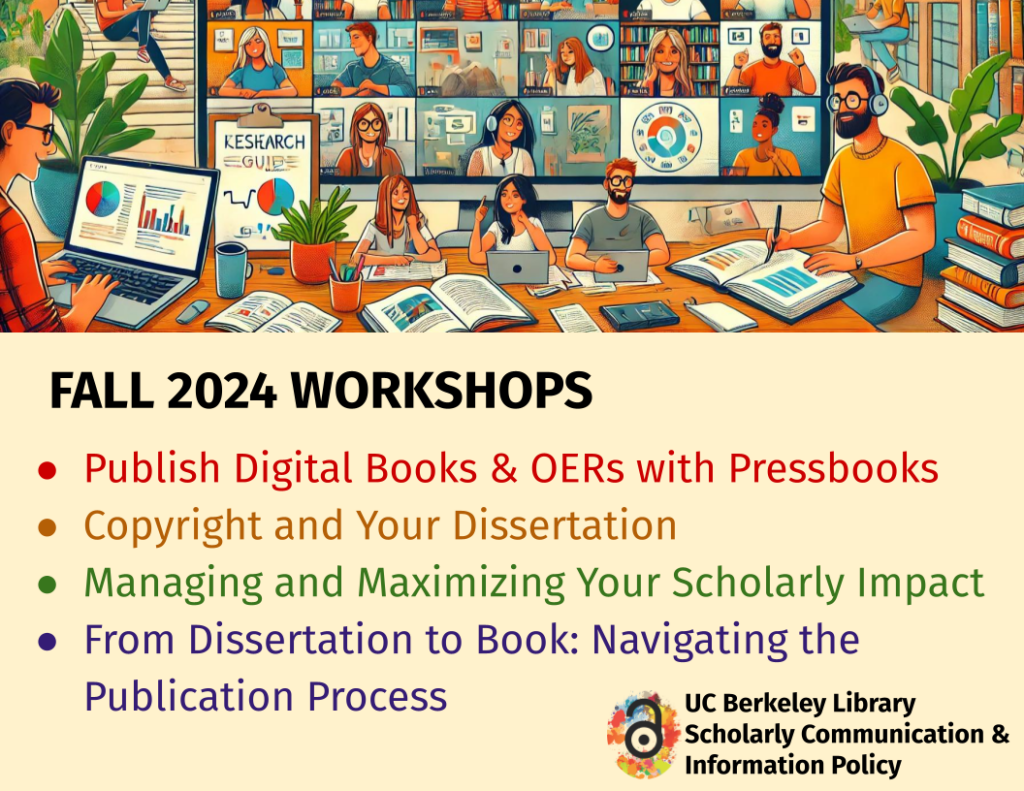
With the school year kicking off at UC Berkeley, the Library’s Scholarly Communication & Information Policy office is here to help faculty, students, and staff understand copyright and scholarly publishing with online resources, Zoom workshops, and consultations. Here’s what’s coming up this semester.
Workshops
Publish Digital Books & Open Educational Resources with Pressbooks
Date/Time: Tuesday, September 17, 2024, 11:00am–12:00pm. RSVP to get the Zoom link
If you’re looking to self-publish work of any length and want an easy-to-use tool that offers a high degree of customization, allows flexibility with publishing formats (EPUB, PDF), and provides web-hosting options, Pressbooks may be great for you. Pressbooks is often the tool of choice for academics creating digital books, open textbooks, and open educational resources, since you can license your materials for reuse however you desire. Learn why and how to use Pressbooks for publishing your original books or course materials. You’ll leave the workshop with a project already under way.
Copyright and Your Dissertation
Date/Time: Tuesday, October 1, 2024, 11:00am–12:00pm. RSVP to get the Zoom link
This workshop will provide you with practical guidance for navigating copyright questions and other legal considerations for your dissertation or thesis. Whether you’re just starting to write or you’re getting ready to file, you can use our tips and workflow to figure out what you can use, what rights you have as an author, and what it means to share your dissertation online.
Managing and Maximizing Your Scholarly Impact
Date/Time: Tuesday, October 15, 2024, 11:00am–12:00pm RSVP to get the Zoom link
This workshop will provide you with practical strategies and tips for promoting your scholarship, increasing your citations, and monitoring your success. You’ll also learn how to understand metrics, use scholarly networking tools, and evaluate journals and publishing options.
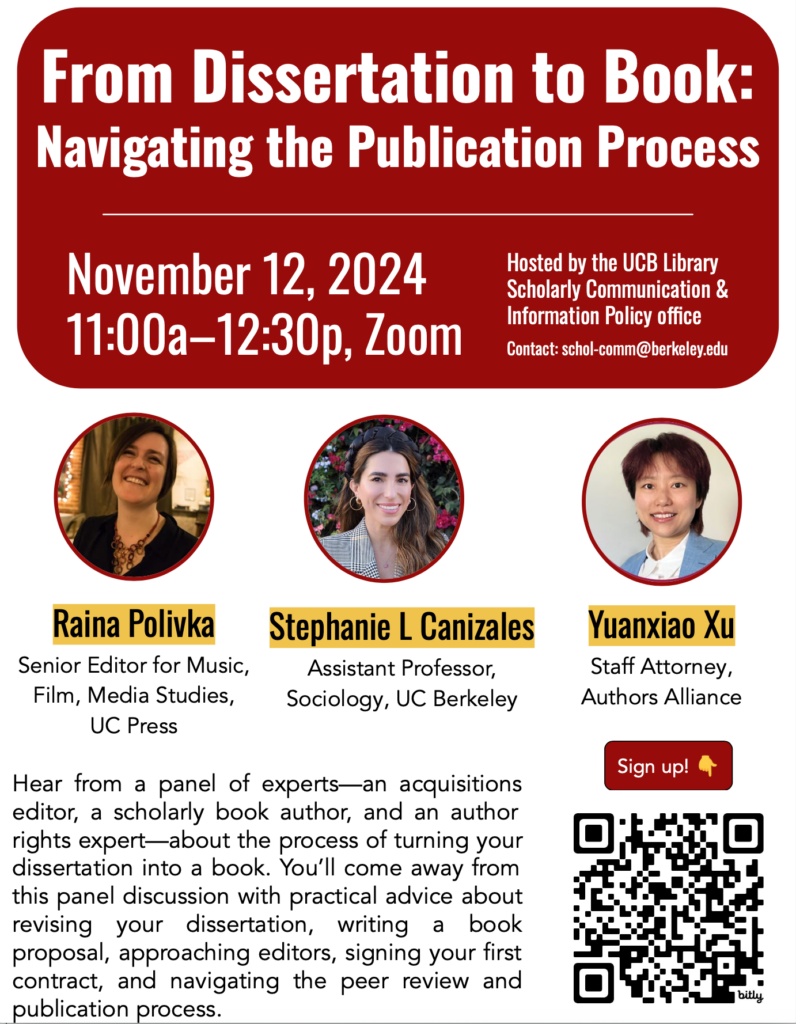
From Dissertation to Book: Navigating the Publication Process
Date/Time: Tuesday, November 12, 2024, 11:00am–12:30pm RSVP to get the Zoom link
Hear from a panel of experts—an acquisitions editor, a first-time book author, and an author rights expert—about the process of turning your dissertation into a book. You’ll come away from this panel discussion with practical advice about revising your dissertation, writing a book proposal, approaching editors, signing your first contract, and navigating the peer review and publication process.
Other ways we can help you
In addition to the workshops, we’re here to help answer a variety of questions you might have on intellectual property, digital publishing, and information policy.
Have a question about copyright and artificial intelligence (AI) in relation to research and scholarship? Or your rights and responsibilities in using library-licensed materials for AI use? View the AI page on our website for guidance.
Interested in publishing your research open access? UCB Library can help defray the costs of an article processing charge (up to $2,500) or book processing charge (up to $10,000). See the Berkeley Research Impact Initiative (BRII) for more information. And explore the various UC-wide open access agreements and discounts that can help UC corresponding authors publish their scholarship open access.
Do you want to create an open digital textbook? Take a look at UC Berkeley’s Open Book Publishing platform (anyone with a @berkeley.edu email can sign up for a free account), and get in touch with us about our Open Educational Resources (OER) grant program.
Keep an eye on the Library’s events calendar for more workshops and trainings.
Want help or more information? Send us an email at schol-comm@berkeley.edu. We can provide individualized support and personal consultations, online class instruction, presentations and workshops for small or large groups & classes, and customized support and training for departments and disciplines.
You are welcome to attend one of the upcoming library orientation sessions for the Art History/Classics Library (308 Doe). The sessions are capped at 20 students, so be sure to reserve your spot via the rsvp form. Sessions are offered on the following dates/times:
From file, “Student Political Parties” (carton 80)
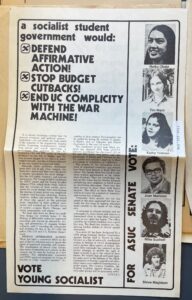
The Associated Students of the University of California, Berkeley records are now open to researchers at The Bancroft Library. The Associated Students of the University of California, Berkeley (ASUC) is the officially recognized students’ association of the University of California, Berkeley. The ASUC is a 501(c)(3) non-profit, and is the largest and most autonomous students’ association in the nation. Founded in 1887, the ASUC continues to operate separate from University governance. The ASUC controls funding for all ASUC-sponsored clubs and organizations, provides resources and student programming, oversees commercial activities and student services including the Cal Student Store and Lower Sproul Plaza in partnership with the ASUC Student Union, and advocates for students on a University, local, state, and national level.
The collection includes ASUC constitutions, executive office files, Student Advocate’s Office files, senate bills, agendas, and resolutions, committee files, financial and budget materials, planning and renovation files, ASUC program files, and other material documenting student services, groups, and activities from 1893 to 2012.
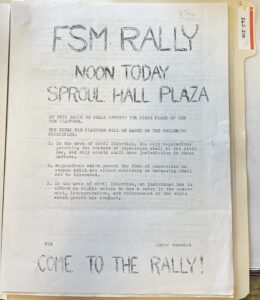
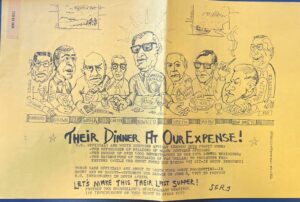
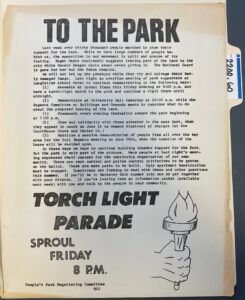
The collection also contains materials documenting student activism on campus, including the Free Speech Movement, People’s Park advocacy, affirmative action, the Third World Liberation Front, divestment in South Africa, and LGBTQ rights.
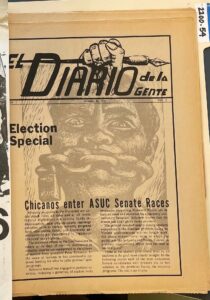
El Diablo de la Gente newspaper, October 20, 1972 (carton 82)Flyer for the Young Socialist candidates running for ASUC Senate (carton 74)
Free Speech Movement rally flyer (carton 39)
Protest flyer against UC investments in South Africa, 1978 (carton 51)People’s Park Negotiating Committee flyer (carton 82)
For more information about the collection, access the finding aid and/or catalog record for the Guide to the Associated Students of the University of California, Berkeley, records (CU-282). Interested in transferring your student records to University Archives? Find out more here.
To my delight, I get to announce that Prof. Grace Lavery has a new book titled Closures: Heterosexuality and the American Sitcom (cover figured here).
At UC Berkeley, Lavery teaches courses (course catalog) on topics such as “Literature and Popular Culture” as well as special topics courses and research seminars examining representations of sex, sexuality, and gender.
Lavery’s new book is a phenomenal study looking at the idea of heterosexuality in the U.S. American sitcom. More specifically, the book “reconsiders the seven-decade history of the American sitcom to show how its reliance on crisis and resolution in each episode creates doubts and ambivalence that depicts heterosexuality as constantly on the verge of collapse and reconstitution.”
You can access and download the book online through the UC Library Search.

 This year’s short list for the Caine Prize for African Writing is rather phenomenal. Here’s the list with access to most of the stories full text:
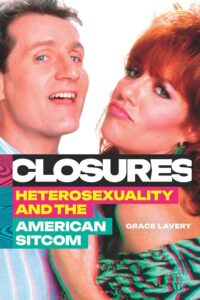 To my delight, I get to announce that Prof. Grace Lavery has a new book titled Closures: Heterosexuality and the American Sitcom (cover figured here).