Reflection

By Avery Klauke, Undergraduate Library Research Fellow, 2023-2024

With my time as a Berkeley student winding down, I wanted to reflect on the past year and my undergraduate experience. 

Throughout the past year, the overarching theme for the research fellows was to take initiative in the projects that interested us. For me, co-teaching Research 101 workshops was high on my priority list, as I saw this as one of the best opportunities to engage with as many students as possible. I recognized that the importance of these workshops lay in their ability to provide insight into the library system while also providing students with an open forum to ask questions. Additionally, the research fellows met with various librarians to provide a student perspective on library spaces to make them more welcoming and accessible. In essence, my goal for this year was to contribute, in any capacity, to the libraries and the general Berkeley community.

While writing these reflections, I often focus on what we research fellows have contributed, but I also wanted to highlight how Berkeley (and by extension this position) has given back to me.

My experience started the same as everyone else’s, as my freshman year at Berkeley was akin to throwing me into flaming chaos. General confusion mixed with lots of looming pandemic anxiety is how I would describe it. People always say college is the best time of your life or it’s where you ‘find yourself,’ (however you choose to take that) but unsurprisingly, no one tells you where to start. And as someone who thrives off consistency, finding my “niche” here was important.

Becoming a research fellow gave me consistency that I had never experienced before. It was similar to an extended group project, but unlike some randomized assignments in those required lower-level classes, everyone contributed consistently. Where I would draw a blank after a student’s question, the other fellows could offer their insight; likewise, I stepped up in their moments of need. To be expected, being a research fellow helped me hone my ability to work with and for others (something I’ve learned is a skill not everyone possesses). But it also taught me little lessons like how to improvise, adapt, and not focus on something so much that I lose sight of the big picture. I anticipate using these skills frequently as I leave the past 18 years of schooling behind.


Expanding my Creative Horizons at the Makerspace

By Ava Gessl, Undergraduate LibraryMaking Fellow, 2023-2024

A large part of my Berkeley experience has revolved around lectures, exams, and assignments. However, the Makerspace has become a creative outlet for me and many other undergraduates. This year, I have had the opportunity to help plan and execute workshops, including learning to crochet in order to teach others. I think that for anyone who wants to find a creative outlet at Berkeley, the Makerspace is an amazing place to explore and learn new skills, and I am happy that I have had the opportunity to be a part of it for another year. What I’ve come to appreciate most about teaching sewing, crochet, and every other craft offered at the Makerspace is the gratification it brings to students. I think the Makerspace is an important part of student life at Berkeley. It is the perfect place whether someone wants to learn a new skill or have a space to pursue a craft they already know. By sharing my passion for crafting and providing a supportive learning environment, I hope to inspire other students to unleash their creativity and pursue their projects with confidence.

As a library fellow, I have had the opportunity to share my passion based on over a decade of sewing experience, and use my learning process in crochet to help others. Learning crochet for the Granny Square Workshop was challenging but fun. It is always good to put yourself into the shoes of someone learning a new skill to remember what it’s like. I was able to apply the mistakes and tricks I learned to help new crocheters in the Granny Square and Crochet Rose workshops. It was exciting to work with students new to crochet and see them use what I learned to transform yarn into something beautiful. This felt different than teaching sewing in the T-shirt Tote Bag or providing one-on-one sewing help because of my years of sewing experience. My prior experience has helped me assist with a wide range of problems and projects. However it has also made it harder for me to remember what it was like to be a beginner. Threading a sewing machine is now a trivial step for me, but I must always remember to go slow, explain all my steps, and why when introducing someone to a sewing machine. I love both teaching experiences and how they each inform each other about what is the best way to teach a new skill and provide the most helpful advice and support. I hope to be able to provide a mixture of guidance that comes from mastering a craft with the perspective of someone who just started in order to give tips that are not obvious but extremely helpful to a beginner. 

This year my making journey has focused more on learning new skills, both crafting and organizing. This process has been dynamic and not without bumps, but I think that it helped me be a more effective library fellow. I found a way to master the vinyl cutter, or specifically its unwillingness to connect to my computer. I am happy with how learning crochet has opened a door for me to help students learn a skill that is on the rise with undergraduates. Taking a more active role in designing and working with my library fellows in workshops has been a rewarding process of logistics, effective communication, and troubleshooting unexpected student hurdles. Working in a workshop environment with  time constraints has forced me to streamline my teaching process and ability to quickly move between students at different levels of experience. In the Crochet Rose Workshop I worked with students who had never crocheted before and their enthusiasm for creating a chain with even stitches was another reminder that every step in a creative process is important and worth celebrating. As a library fellow, I’ve had to be patient and supportive, guiding students through the process step by step, encouraging them to persevere, and quickly troubleshoot unexpected problems. It has been a practice in tailoring my teaching approach to meet the diverse learning styles and skill levels of the students. Overall, working in the Makerspace and helping students learn has been an incredibly fulfilling experience. It’s not just about teaching a crafting skill, it’s about fostering creativity and community. I look forward to continuing to share my passion for sewing and learning alongside the students in the Makerspace. 


My Makerspace Journey

By Adelaide Phillips, Undergraduate Library Making Fellow, 2023-2024

I started working in the Makerspace in Fall 2022 during my junior year at Cal. I’m graduating this Spring as an architecture major meaning most of my education was design and model making. The Makerspace has provided me with so many resources and learning opportunities like leading workshops, utilizing new tools, and providing peer-to-peer design tips these past two years. I’m truly going to miss this space when I leave Berkeley.

During my time as a library fellow, I’ve learned how to operate various equipment like 3D printers, vinyl cutters, button makers, sewing machines, and more! This work would not be possible without guidance from dedicated Makerspace staff. Whether assisting fellow makers with their projects or navigating the challenges of a physical move and leadership transitions, the Makerspace has been a constant source of inspiration and learning. This space would not be what it is without the people and the students who make wonderful projects here every week. I always enjoy bringing friends to the Makerspace and seeing them get so excited about all the cool equipment and supplies we have to offer! Helping out my friends 3D print tiny stairs or do some last-minute pieces for their architectural models is so rewarding. I love seeing the look on their faces when they see the 3D printers zooming away.

The Makerspace has also been a great place for my personal projects. Whether it’s 3D printing pieces for an architecture model, hemming my graduation dress on the sewing machines, or crocheting a new pillow while learning to make granny squares; the Makerspace has provided me with all the resources I need and more! The craft guides I and the other Making fellows have compiled over the past couple of years have been a great resource for me and my peers. Additionally, learning how to lead workshops, like our Crochet Rose and Grad Cap Decorating workshops, has been a wonderful opportunity to develop my leadership and teaching skills.

Another one of my favorite things about working in the Makerspace is getting to help so many people on so many different projects. I’ve been able to hone my problem-solving skills and think on my feet. Finding solutions where there seems to be none; and never saying no to any idea! Like I said, I’m truly going to miss the Makerspace after I graduate but I will take with me the lessons it has taught me as I embark on my professional career.


Bibliography for Trauma-informed Interviewing

In April 2024, the Japanese American Intergenerational Narratives project team at The Oral History Center—Roger Eardley-Pryor, Shanna Farrell, and Amanda Tewes—had the opportunity to present about our project at the National Council on Public History conference in Salt Lake City. Since our presentation, we’ve gotten a number of questions about the literature we read related to trauma-informed interviewing, intergenerational trauma, and memory. Below is the bibliography we used, as well as some recent works. We hope this provides some guidance for your own work, and we’d love to hear from you if there are any articles or resources that have been helpful to you!

General 

Cathy Caruth, Unclaimed Experience: Trauma, Narrative, and History (Baltimore: Johns Hopkins University Press, 1996).

Mary Marshall Clark, “The September 11, 2001 Oral History Narrative and Memory Project: A First Report,” The Journal of American History 89:2 (September 2002): 569-579.

Mary Marshall Clark, “Resisting Attrition in Stories of Trauma,” Narrative 13:3 (October 2005): 294-298.

Lily Dayton. 2019 “Keep These Seven Lessons in Mind When Interviewing Trauma Survivors.” Center for Health Journalism. April 17, 2020. https://centerforhealthjournalism.org/our-work/insights/keep-these-seven-lessons-mind-when-interviewing-trauma-survivors

Andrea Eidinger, “Trauma and Orality: New Publications on Mass Violence and Oral History,” Social History 49:98 (May 2016): 187-196.

Steven High, Oral History at the Crossroads: Sharing Life Stories of Survival and Displacement (Vancouver: University of British Columbia Press, 2014).

Marianne Hirsch, “Family Pictures: Maus, Mourning, and Post-Memory,” Discourse 15:2, Special Issue: The Emotions, Gender, and the Politics of Subjectivity (Winter 1992-93): 3-29.

Marianne Hirsch, The Generation of Postmemory: Writing and Visual Culture After the Holocaust (Columbia University Press, 2012).

Mark Klempner, “Navigating Life Review Interviews with Survivors of Trauma,” Oral History Review 27:2 (Summer/Fall 2000): 67-83.

Selma Leydesdorff, “Oral History, Trauma, and September 11, Comparative Oral History,” in edited volume September 11th-12th: The Individual and the State Faced with Terrorism (2013).

Carmen Nobel. 2018. “10 Rules for Reporting on War Trauma Survivors.” Shorenstein Center on Media, Politics, and Public Policy. April 17, 2020. https://journalistsresource.org/politics-and-government/10-rules-interviewing-trauma-survivors/

Emma L. Vickers, “Unexpected Trauma in Oral Interviewing,” Oral History Review 46:1 (Winter/Spring 2019): 134-141.

Specific to Japanese American History

Jeffery F. Burton and Mary M. Farrell, “The Power of Place: James Hatsuaki Wakasa and the Persistence of Memory,” Discover Nikkei (June 13, 2021): http://www.discovernikkei.org/en/journal/2021/6/13/wakasa-1/  

Jeffery F. Burton, Mary M. Farrell, Florence B. Lord, and Richard W. Lord, Confinement and Ethnicity: An Overview of World War II Japanese American Relocation Sites (Tucson, AZ: Western Archeological and Conservation Center, National Park Service, U.S. Department of the Interior, Publications in Anthropology 74, 1999).

Connie Y. Chiang, Nature Behind Barbed Wire: An Environmental History of the Japanese American Incarceration (New York: Oxford University Press, 2018).

Roger Daniels, “Words Do Matter: A Note on Inappropriate Terminology and the Incarceration of Japanese Americans,” in Louis Fiset and Gail Nomura, eds. Nikkei in the Pacific Northwest: Japanese Americans and Japanese Canadians in the Twentieth Century (Seattle, Washington: University of Washington Press, 2005).

Roger Daniels, Sandra Taylor, and Harry L. Kitano, eds., Japanese Americans: From Relocation to Redress, Revised Edition (Seattle: University of Washington Press, 1986).

Art Hansen, Barbed Voices: Oral History, Resistance, and the World War II Japanese American Social Disaster (Denver: University of Colorado Press, 2018).

William M. Hohri, Repairing America: An Account of the Movement for Japanese American Redress (Pullman, Washington: Washington State University Press, 1988).

Cathy Park Hong, Minor Feelings: An Asian American Reckoning (New York: One World, 2020).

Stephen Holsapple, dir., produced by Satsuki Ina, Children of the Camps (Los Angeles, CA: AsianCrush, now Cineverse Corp., 1999).

Satsuki Ina, The Poet and the Silk Girl: A Memoir of Love, Imprisonment, and Protest (Berkeley, California: Heyday Books, 2024).

Donna K. Nagata, “Intergenerational Effects of the Japanese American Internment,” International Handbook of Multigenerational Legacies of Trauma, edited by Yael Danieli (New York: Plenum Press, 1998), p 125-139.

Donna K. Nagata and Wendy J. Y. Cheng, “Intergenerational Communication of Race-Related Trauma by Japanese American Former Internees,” American Journal of Orthopsychiatry 73:3 (2003): 266-278.

Donna K. Nagata, Jacqueline H. J. Kim, and Kaidi Wu, “The Japanese American Wartime Incarceration: Examining the Scope of Racial Trauma,” American Psychology 74:1 (Jan. 2019): 36-48.

Donna K. Nagata, Jackie H. J. Kim, Teresa U. Nguyen, “Processing Cultural Trauma, Intergenerational Effects of the Japanese American Incarceration,” Journal of Social Issues 71 (2015): 356-370.

Lisa Nakamura “Seeking Meaning from the Past: Psychological Effects of Tule Lake Pilgrimage on Japanese American Former Internees and Their Descendants” (PsyD diss., Wright Institute Graduate School of Psychology, 2008).

Raymond Okamura. “The American Concentration Camps: A Cover-Up through Euphemistic Terminology,” Journal of Ethnic Studies 10:3 (1982).

Emiko Omori, dir., produced by Emiko and Chizu Omori, Rabbit in the Moon: A Documentary/Memoir about the World War II Japanese Internment Camps (Mill Valley, California, 1999).

Brandon Shimoda, The Afterlife Is Letting Go (San Francisco: City Lights Books, 2024).

Karen L. Suyemoto, “Ethnic and Racial Identity in Multiracial Sansei: Intergenerational Effects of the World War II Mass Incarceration of Japanese Americans,” Genealogy 2:26 (2018).

Stephanie Takaragawa, “Not for Sale: How WWII Artifacts Mobilized Japanese Americans Online,” Anthropology Now, 7:3 (2015): 94-105,



Primary Sources: Decolonization: Politics and Independence in Former Colonial and Commonwealth Territories

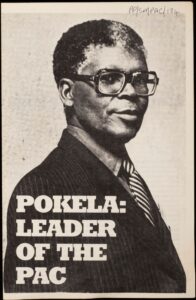
Pokela leader of the PACThe Gale digital archive Decolonization: Politics and Independence in Former Colonial and Commonwealth Territories includes primary sources related to the complex process of decolonization across 60 former colonial territories and Commonwealth nations in the 20th century.  The core content consists of over 250,000 pages of rare pamphlets, newsletters, correspondence, posters, and other ephemera produced by political parties, pressure groups, trade unions, and grassroots movements. This includes the Political Pamphlets collection from the Institute of Commonwealth Studies, African Trade Union pamphlets from Nuffield College at Oxford, and the Marjorie Nicholson Papers on international trade unionism.

This archive is structured into thematic sections that address different facets of decolonization. These sections cover topics such as the rise of nationalist movements, key figures who led their nations to independence, and the residual impacts of colonial rule including economic dependencies and the development of new national identities. Additionally, it explores the involvement of international bodies like the United Nations in supporting decolonization efforts.


Primary Sources: Environmental History: Conservation and Public Policy in America, 1870-1980

Environmental History: Conservation and Public Policy in America, 1870-1980 is a digital archive from Gale that provides access to  sources documenting the emergence of conservation movements and the rise of environmental public policy in North America from the late 19th to the late 20th century.

The archive offers an incisive view into the efforts of individuals, organizations, and government agencies that shaped modern conservation policy and legislation. It includes:

  • Papers of early environmentalists like George Bird Grinnell, a founding member of the Boone and Crockett Club and the first Audubon Society, and Joseph Trimble Rothrock, known as the “father of forestry.”
  • Records of the American Bison Society, which helped save the American bison from extinction, and papers of women conservationists like Rosalie Edge and Velma “Wild Horse Annie” Johnston.
  • Documents from the U.S. Forest Service, U.S. Bureau of Reclamation, and various state and municipal agencies focused on conservation and land-use matters.
  • Grey literature from advocacy organizations, study groups, and commissions covering wildlife management, land preservation, public health, energy development, and more.

This archive provides valuable context for understanding today’s environmental challenges by chronicling the historical struggle to balance economic exploitation and resource conservation. It offers insights into the grassroots movements, advocacy efforts, and policy decisions that laid the foundation for modern environmental protection.

The resource includes grey literature on conservation and environmental policy from UC Berkeley’s Institute of Governmental Studies Library.


Scholarly communication at the Library: New name, same great service

short stack of white bound books accompanied by new name of office
Photo by Beatriz Pérez Moya on Unsplash

We are excited to share that, as of today, the UC Berkeley Library’s Office of Scholarly Communication Services (OSCS) is now called Scholarly Communication and Information Policy (SCIP)

We made this change to better serve YOU! We wanted the UC Berkeley campus and the world to understand and rely upon the breadth of services we offer. The inclusion of “information policy” in our name more accurately and effectively communicates our support not just for scholarly publishing, but also for copyright, contracts, licensing, privacy, and ethics matters within research, scholarship, and instruction. 

Since 2016, our office has provided (an extraordinary volume of) services to UC Berkeley on fundamental scholarly communication issues, including open access publishing, copyright and fair use in research and instruction, authors’ rights, scholarly impact, and beyond. But we also do much more to guide campus and the Library on related law and policy issues. 

To that end, the term “information policy” can be thought of as the application or shaping of laws, regulations, or doctrinal positions affecting information creation, access, and use. And that’s exactly what we do. For example: 

  • Electronic resource licensing: We negotiate all of the Library’s electronic resources agreements;
  • Legal issues in research & teaching: We advise on accessibility, fair use, text and data mining, artificial intelligence, privacy, digital rights management, and intersections with international / foreign laws in research and instruction;
  • Permissions & licensing: We oversee permissions and licensing for usage of library materials;
  • Special collections rights and contractual issues: We address rights issues and contracts to guide incoming collections and collection digitization;
  • Policy creation and advocacy: We advise on University and Library policies affecting scholars’ rights, and engage in broader legislative and regulatory advocacy; and more!

We believe that “information policy” better signals that we cover this wide range of law and policy matters, and are a trusted campus resource for support. Please continue to contact us at our same e-mail address (schol-comm@berkeley.edu) if you need any help, or check out our website (https://www.lib.berkeley.edu/research/scholarly-communication) which remains the same.


Bancroft Library Processing News

The archivists of the Bancroft Library are pleased to announce that in the past quarter (January-March 2024) we opened the following Bancroft archival collections to researchers.

Manuscript and University Archives/Faculty Papers Collections:

Data Center records (processed by Lara Michels with the help of Christina Velazquez Fidler)

Isabel Wiel papers (processed by Presley Hubschmitt)

David E. Good and Forrest M. Craig collection of family papers (processed by Lara Michels)

Nathan and Julia Hare papers (processed by Marjorie Bryer)

Delmer Myers Brown papers (processed by Lara Michels and student assistant David Eick)

Martinez, Dean, and DuCasse family papers and photographs (processed by Lara Michels and student assistant Malayna Chang)

Joan Bekins collection of Terwilliger Nature Education Center records (processed by Jaime Henderson and Lara Michels)

Bissinger and Company records (processed by Presley Hubschmitt)

Howard Besser papers and audiovisual materials (processed by Lara Michels and student assistant David Eick)

Sherman Lewis research collection relating to the Hayward Area Planning Association (HAPA) (processed by Jaime Henderson and Lara Michels)

Barbara Oliver collection of theatre materials (processed by Jaime Henderson and Lara Michels)

Michael and Cynthia Horowitz collection on psychedelics, 1954-2006 (processed by Lara Michels and student assistant David Eick)

Rosborough family papers (processed by Lara Michels and student assistant Malayna Chang)

Pictorial Collections and Items:

127 small collections and single items (approximately 4,911 items, total)

Additions to Cathy Cade’s autobiographical photograph albums, documenting lesbian life and community activism in the Bay Area, 2008-2015. (over 1,900 items)

San Joaquin County mug shot books, wanted notices, and law enforcement ephemera of Sheriff Thomas Cunningham. (over 2,300 items)

The Robert Altman photograph archive, which is particularly strong in counter culture and rock ‘n’ roll images of the late 1960s and 1970s, including work from his time as a photographer for Rolling Stone magazine (approximately 35,000 items) (online finding aid pending)


Arab-American Heritage Month 2024

Arab American Heritage Month 2024

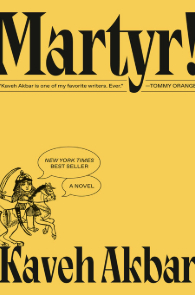
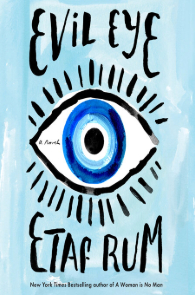
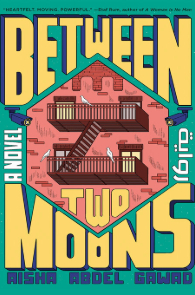
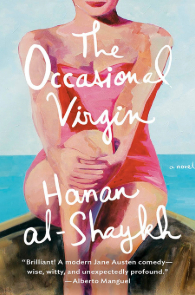
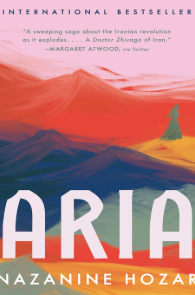
Hey there, bookworms! Ready to celebrate Arab American Heritage Month with a literary twist? Join us as we dive into the captivating world of Arab-American authors and characters and their vibrant stories, both fiction and nonfiction. Explore more at UCB Overdrive today!


Workshop Reminder — Publish Digital Books & Open Educational Resources with Pressbooks

UC Berkeley Open Book Publishing website with buttons to create a book or find a book

Date/Time: Tuesday, April 9, 2024, 11:00am–12:30pm
Location: Online. Register via LibCal and you’ll receive the Zoom link for the event.

If you’re looking to self-publish work of any length and want an easy-to-use tool that offers a high degree of customization, allows flexibility with publishing formats (EPUB, PDF), and provides web-hosting options, Pressbooks may be great for you. Pressbooks is often the tool of choice for academics creating digital books, open textbooks, and open educational resources, since you can license your materials for reuse however you desire. Learn why and how to use Pressbooks for publishing your original books or course materials. You’ll leave the workshop with a project already under way.

Curious about how UC Berkeley faculty, students, and staff have used Pressbooks? Check out some of the Berkeley-created digital books and resources below, or browse over 6,400 open access books on the Pressbooks Directory.