Crossing Paths in San Francisco’s North Beach: Weston, Rivera, Kahlo, Pflueger and Stackpole

Proof prints depicting Diego Rivera (left) and Timothy L. Pflueger sitting on a bench in the outdoor studio of sculptor Ralph Stackpole in San Francisco, taken by Edward Weston.
Unfixed proof prints, each depicting Diego Rivera (left) and Timothy L. Pflueger, taken by Edward Weston at the outdoor studio of sculptor Ralph Stackpole in San Francisco on December 14, 1930. From Edward Weston Portraits from the Timothy L. Pflueger Papers (BANC PIC 2013.119).

On December 14, 1930 the photographer Edward Weston, then based in Carmel-by-the-Sea, drove to San Francisco to take portraits of a few clients, including the prominent architect Timothy L. Pflueger, who was then overseeing his firm’s remodel of the San Francisco Stock Exchange Building in the city’s financial district. The sitting with Pflueger took place at the North Beach studio of sculptor Ralph Stackpole, whose massive figurative pieces were commissioned by Pflueger to adorn the facade of the Exchange. Coincidentally residing with Stackpole at the time was Mexican artist Diego Rivera — also commissioned by Pflueger, to create a mural inside the Exchange. Accompanying Rivera was his young wife, the artist Frida Kahlo, who was early in her career and not yet known outside of Mexico. Weston was already acquainted with Rivera after having worked for a spell in Mexico City, where he befriended the artist and took his portrait in the mid-1920s. The crossing of paths of these creative luminaries at Stackpole’s studio is richly documented in Weston’s daybook entry for this date. (See The Daybooks of Edward Weston, vol. 2, pages 198-199; published by Aperture in 1973.)

The Pictorial unit of The Bancroft Library’s archival processing team is pleased to announce that some of the portraits taken by Weston at this sitting have been recently processed and are now available for access (described in the library catalog under the call number BANC PIC 2013.119). Separated and transferred from the Timothy L. Pflueger Papers of our Manuscripts unit (BANC MSS 2012/182), the collection of Weston materials includes a letter written by the photographer and a selection of small-format proof prints offered to the architect so that he could choose the images he preferred for final printing. Among the thirteen prints in the collection, eleven of them depict Pflueger in various shoulder-length poses, while two images depict the architect informally sitting on a bench with Rivera. Stackpole is not depicted, but evidence of his open-air studio is present in the natural light reflected on the subjects’ faces and some of the objects captured in the shots of the architect and muralist seated together. Although Weston took separate portraits of Rivera and Kahlo at this same encounter, these images are not present in the material sent to Pflueger.

Weston’s letter to Pflueger, written by hand on the photographer’s studio stationery, refers to the specific images from the sitting that he feels were best, yet also admits to his being unsatisfied with the overall results and offers the architect the option of a second sitting. The collection also includes Weston’s original envelope in which the letter and prints were sent, the wrapping materials in which Weston enclosed the prints, and Pflueger’s annotated file envelope in which the material had been saved.

Manuscript material pertaining to Edward Weston's correspondence with Timothy L. Pflueger.
Front page of letter from Edward Weston to Timothy L. Pflueger, written December 15, 1930; with the original postmarked envelope and Pflueger’s file envelope in which the letter and associated photographic prints were stored. From Edward Weston Portraits from the Timothy L. Pflueger Papers (BANC PIC 2013.119).

The proof prints that Weston sent to Pflueger were unfixed — i.e. after being exposed to the negative and placed in a bath of developer, the prints did not undergo a subsequent chemical bath which would have “fixed” the development of the images at a given point. The images therefore continued to gradually develop and are, in their current state, predictably faded and darkly discolored. The practice of not fixing such proof prints was common among 20th century portrait photographers whose work involved traditional gelatin silver “black & white” processes. In addition to serving as quickly produced reference images for both photographer and client, the inferior-quality prints also helped to ensure that the proofs sent to clients for final selection would have minimal resale value — an obvious concern for prominent photographers whose works were collected on the market.

Some of the prints in the collection display additional deterioration as a result of having been stored in direct contact with the chemically harmful foil and acidic paper in which they were wrapped for decades prior to their arrival in the library. On the backs of the prints are pencil-written annotations by Weston, including numbers that indicate the sequence of poses he photographed. On the back of one print Weston’s initials indicate an image which he considered to be among the most suitable for final printing.

Portraits of Timothy L. Pflueger.
Unfixed proof prints depicting San Francisco architect Timothy L. Pflueger, taken by Edward Weston at the North Beach studio of Ralph Stackpole on December 14, 1930. While both were stored in the same stack of prints likely for decades, the print on the left has undergone additional deterioration after prolonged immediate contact with acidic wrapping materials, and/or other detrimental environments. From Edward Weston Portraits from the Timothy L. Pflueger Papers (BANC PIC 2013.119).

To ensure safe access by researchers, the prints have been individually enclosed in polyester sleeves that prevent any unfixed chemical residue from migrating during their handling. As a safeguard against long-term damage caused by exposure to light, each print is additionally housed in a paper sleeve. Each of the components of the collection is housed in a separate folder, and all are stored together in a single box.

The Bancroft is excited to make this material accessible for a number of reasons, the most obvious being its evidentiary connection to a moment in time when Weston, Pflueger, Rivera, Kahlo and Stackpole came together for a professionally and socially satisfying gathering, one documented for posterity by the photographer in both word and image. Weston’s distinct large handwriting is impressive to behold in person, as are the pieces of stationery which conveyed the contents from photographer to architect. Perhaps the collection’s most enduring value lies in its glimpses of Weston’s working methods, his relations with his clients, and his openly frank assessment of the quality of his work.

To more broadly illustrate the context of the collection, we have supplemented the original material with printouts of high-quality scans of contact prints made from Weston’s original negatives taken at Stackpole’s studio on that day. Compared to the proofs in the Pflueger papers, these clear, sharp images depict the full range of portraits of Pflueger, and additional shots of Rivera, including one depicting him with Kahlo. We’ve also included a copy of the pages in Weston’s original daybook entry that describe the photographer’s various appointments and observations of that day, most of it expressing his affectionate reunion with Rivera, his first impressions of Kahlo, and the group’s dinner outing in North Beach that followed the sitting. These supplemental materials were kindly shared by the Center for Creative Photography of the University of Arizona, Tucson, where Edward Weston’s archive is held.

Diego Rivera (left) and Timothy L. Pflueger sitting on bench in San Francisco studio of sculptor Ralph Stackpole.
Contact print of an Edward Weston portrait of Diego Rivera (left) and Timothy L. Pflueger, taken at the San Francisco studio of Ralph Stackpole on December 14, 1930. (Courtesy of Center for Creative Photography, University of Arizona, Tucson.)
Frida Kahlo (left) and Diego Rivera, at the San Francisco studio of sculptor Ralph Stackpole.
Contact print of an Edward Weston portrait of Frida Kahlo (left) and Diego Rivera, taken at the San Francisco studio of Ralph Stackpole on December 14, 1930. (Courtesy of Center for Creative Photography, University of Arizona, Tucson.)

Among the Pflueger papers are other photographs of Rivera and Kahlo – not taken by Weston – including two snapshots which may depict the couple during one of their stays in San Francisco. These can be found in BANC MSS 2012/182, carton 33.

Artists Diego Rivera and Frida Kahlo standing on a balcony.
Frida Kahlo, with Diego Rivera in image at left, on sunlit balcony, unidentified location. From the Timothy L. Pflueger Papers (BANC MSS 2012/182, carton 33).

Of related interest, Bancroft’s holdings of the San Francisco News-Call Bulletin Photograph Archive include original glass negatives of studio portraits of Rivera, Kahlo and Stackpole taken at a single sitting. The photographer, location and exact date of these portraits are unknown, but they were undoubtedly taken during the couple’s same stay in San Francisco, between late 1930 and mid-1931, when Weston visited them for the Pflueger sitting. These portraits are found in BANC PIC 1959.010–NEG pt. 1, box 3135 (items 37390 and 37391) and box 3136 (items 37404 and 37405).

Mural artist Diego Rivera (left) and sculptor Ralph Stackpole, taken during a studio portrait sitting.
Diego Rivera (left) and Ralph Stackpole, 1930 or 1931. Photographer unknown. From the San Francisco News-Call Bulletin Photograph Archive (BANC PIC 1959.010–NEG pt.1, box 3136, item 37405).
Studio portrait of artists Diego Rivera and Frida Kahlo.
Diego Rivera (left) and Frida Kahlo, 1930 or 1931. Photographer unknown. From the San Francisco News-Call Bulletin Photograph Archive (BANC PIC 1959.010–NEG pt.1, box 3135, item 37390).

Chris McDonald
Processing Archivist, Pictorial Unit
Technical Services
The Bancroft Library


Dispatches from The Bancroft Library’s DCU

Elevated wooden balcony decorated with hanging glass lanterns, plants in ceramic vessels, and ornately carved relief panels overlooking Dupont Street with multi-level buildings in the background.
Balcony of the Chinese Restaurant, Dupont Street, San Francisco, Chinese in California, 1850-1925, BANC PIC 1905.06485:044–PIC, The Bancroft Library, University of California, Berkeley.

Closing the Loop

It has been almost a year since Leah Sylva joined the Digital Collections Unit (DCU) at The Bancroft Library as the Digital Collections and Metadata Librarian. In that time, she has provided crucial technical services support, moving the program forward by building on its past successes. With Christina Velazquez Fidler at its head, the DCU has largely focused on how to “close the loop” in regards to descriptions of digital materials. This process of “closing the loop” refers to an integration of the data points created at various stages of representing the archival material in our care. In the Bancroft context, this translates to ensuring that digitized materials are represented in the records of their originating collections whenever possible.
Underscoring this issue is the iterative nature of archival description, especially in the digital context. As we work with digital materials, we hold in mind the goals of maintaining archival context and improving access and discovery. These goals can only be accomplished by strategic decision-making to guide processes of observation, evaluation, and action. This often requires returning to past projects to ensure that they are meeting current standards and needs of library users. One example of this is the DCU’s newly completed The Bancroft Library Archived Websites LibGuide which preserves and provides context to past digital projects that are no longer hosted on the Library website. 
As archival material passes through discrete stages of arrangement and description, new data points are created: 

  • Archival material is acquired and accessioned → creation of catalog record
  • Archival material is arranged and described → creation of finding aid
  • Archival material is digitized -> creation of digital object and Digital Collections record

Since these processes can be completed years apart, there are often overlapping fragments of metadata existing in different platforms without reference to one another. With limited resources and staff capacity, we are always making choices about what to prioritize and what to leave for another day, creating backlogs and technical debt that future generations must repay with effort and creative problem solving. With migrations between systems, changing accessibility standards, and shifts in the direction of our work, we understand that the digital landscape is ephemeral and in need of attention, maintenance, and augmentation. Digital projects offer new pathways for access and discovery alongside significant technical challenges that must be resolved as part of a process of quality control. 

“Closing the Loop” case study: Moving Images from Environmental Movements in the West, 1920-2000

These recordings, comprising 130 videos from 8 distinct collections, were digitized under a Council on Library and Information Resources (CLIR) grant to preserve audiovisual material in need of reformatting.

At the end of the project, the recordings were added to the  Berkeley Library Digital Collections, but there were many inconsistencies and a lack of archival context for these materials. This necessitated a careful review of the digital objects and archival collection information to note what information existed in each system and where there were discrepancies. 

  • Catalog
    • Problem
      • Catalog records did not include digital material
      • Some material did not have item-level catalog records
    • Solution
      • Updated collection level records and item-level records to reflect digital material
  • Finding aid
    • Problem
      • Some audiovisual material was separated from original collections or appeared in multiple resource records
      • Some recordings did not have archival objects
    • Solution
      • Archival objects confirmed, moved, or created in ArchivesSpace
      • Digital objects created in ArchivesSpace linking out to Digital Collections records
  • Digital Collections
    • Problem
      • Objects had incorrect collection names in some cases
      • Many items did not have links to their catalog records or finding aids
    • Solution
      • Reviewed and resolved metadata issues
      • Added links in Digital Collections to connect digital object with catalog record and finding aid

This project is a prime example of “closing the loop” – circling back to the system of record, augmenting metadata, and ensuring that the various systems we employ connect to one another. It is only at the closing of this loop that we can truly consider a digitization project complete.

Delivering Archives and Digital Objects: A Conceptual Model (DadoCM)

This approach is supported by the emerging Delivering Archives and Digital Objects: A Conceptual Model (DadoCM). This model acknowledges that while digital repositories are largely designed for managing single discrete objects, archival principles are focused on efficiently describing materials in the aggregate. This model is centered on facilitating access and provides a framework which aims to resolve the inherent tensions in archival description of digital collections through a series of guiding principles and technical structures. UC Berkeley Library’s maría a. matienzo, Head of the Application Development Services Department, is a contributor to the DadoCM and she has been a helpful resource in conceptualizing DadoCM.

Two core ideas of DadoCM that we can apply to our work:

  • The meaning of an individual record becomes impoverished when it is removed from its context.
  • Information may be displayed in multiple places, but it must only be created and updated in one, canonical system of record.

The DCU’s focus on “closing the loop” lays down the foundation of DadoCM by keeping materials described within the context of their collections as well as maintaining connections through our canonical system of record, ArchivesSpace. We hope to continue implementing the DadoCM framework in our practices.

Completed Loops

During FY 2024/2025, Leah added 891 digital objects to ArchivesSpace. The following finding aids were republished by Leah to include newly added digital objects from ArchivesSpace.

Looking ahead, we are excited to build on this momentum, and we are exploring how emerging technologies can enhance discovery and access to our collections. We are also continuing to learn from and contribute to our vibrant digital archives community. Our collaboration with our campus stakeholders is the cornerstone of this work, and we are eager to continue this journey together. 

Post written by Christina Velazquez Fidler and Leah Sylva


Women in Politics Collections Now Available!

Photograph of a collection of pins, badges, and other ephemera relating to Republican National Conventions and Republican political campaigns mostly from the 1950s and 1960s from the Marjorie H. E. Benedict papers.
Pins, badges, and other ephemera relating to Republican National Conventions and Republican political campaigns mostly from the 1950s and 1960s from the Marjorie H. E. Benedict papers (BANC MSS 90/168 c).

Over the last year, I’ve worked on a grant project funded by Jo Freeman processing four collections relating to women in politics. These collections include the Vera Smith Schultz papers, Mary Moore papers, Marjorie H. E. Benedict papers, and Eleanor Cameron Fowle papers. Each of these collections have been important and enlightening in their own way. They are now processed and open for the public to research and explore. 

Mary Moore Papers

The first collection from this project that I processed was the Mary Moore papers (BANC MSS 2016/111). Moore served as a councilwoman for Oakland City Council for District 2 from 1977-1994. Her papers cover political issues in Oakland at this time, including local disputes over projects and businesses in the area of District 2. On the juicier side of politics, there are articles referring to the breakdown of the relationship between Moore and then Oakland Mayor, Lionel Wilson. It’s always fun to get to know more about a city’s politics during a different time period. A lot of proposals for projects and redevelopment came across Moore’s desk and it is particularly interesting to find out which projects were implemented and which ones were not. 

Vera Smith Schultz Papers

The next collection I worked on was the Vera Smith Schultz papers (BANC MSS 96/62 c). Schultz was the first woman elected to the Mill Valley City Council in 1946 as well as the first woman elected to the Marin County Board of Supervisors in 1952. After she lost her re-election in 1960, Schultz continued her involvement in local government and non-profit organizations that operated in Marin County. She was a fierce advocate of getting Frank Lloyd Wright to design the Marin County Civic Center. Her papers primarily consist of materials related to her work on the Marin County Board of Supervisors, her personal interests in local Marin County issues, and her work with the Marin Senior Coordinating Council.

Marjorie H. E. Benedict Papers

One of the most rewarding (and most difficult to organize) collections that I worked on for this project was the Marjorie H. E. Benedict papers (BANC MSS 90/168 c). Benedict’s papers provide a unique perspective on the organizing and political tactics of the Republican Party in the 1940s-1960s. She was the Republican National Committeewoman for California representing the state for the Republican National Committee (RNC) from 1949-1960. Her work with the RNC comprises most of her papers and includes materials from when she was designated as Hostess for the 1956 Republican National Convention in San Francisco. Her collection includes correspondence and campaign materials from both state and national campaigns. State campaigns featured include politicians that also have papers in The Bancroft Library’s holdings, including Senators Thomas Kuchell and William Knowland. The wealth of correspondence and ephemera that Benedict’s collection holds can help researchers better understand the relationship between politicians and the RNC and political organizers. 

Eleanor Fowle Cameron Papers

The final collection I worked on for this project was the Eleanor Fowle Cameron papers (BANC MSS 90/177 c). Eleanor Fowle Cameron was a chairwoman of the Democratic State Women of California, a former head of the women’s division of the Democratic State Central Committee, and president of the Foothill-De Anza Community Foundation. She also was part of the Stanford University Founding Grant Society board of directors and a trustee of The Trust for Hidden Villa in Los Altos Hills. She was the sister of former California Senator Alan Cranston. She authored “Cranston, The Senator from California,” a biography of her brother, that was published in 1980 and republished in 1984. The bulk of this collection consists of materials related to the research and writing of her biography on Alan Cranston. There are also a few articles she wrote for other publications and some personal correspondence and family papers.


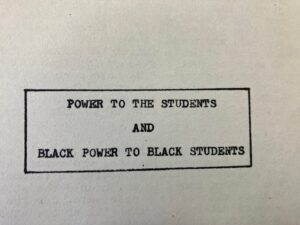
“Power to the Students and Black Power to Black Students” – The Life and Legacy of Sister Makinya Sibeko-Kouate

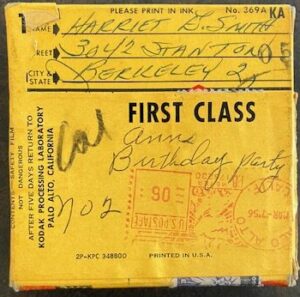
The Sister Makinya Sibeko-Kouate papers are open for research! Educator and community activist Sister Makinya Sibeko-Kouate (nee Harriet Smith) was celebrated for her efforts to promote Black Studies curricula in the East Bay and to popularize Kwanzaa. Her papers reflect the ways her personal and political lives intersected and offer a window into both Black radical politics and middle class African-American life in the mid-to late 20th century.

Sibeko-Kouate was born into a middle-class family in San Leandro, California on July 1, 1926. Her father, Turner Smith, worked for Calvert Distillers Corp., and her mother, Willette Smith, was active in many African American social clubs and fraternal orders. Sibeko-Kouate grew up in South Berkeley and graduated from Berkeley High in 1947. In the early 1950s, she studied music and teaching at San Francisco State College and ran a small business (Harriet – Ceramic Creations) out of the home she shared with her mother. Sibeko-Kouate attended Merritt College from 1965-1968, where she studied business administration, real estate, and community planning. She received her BA in Black Studies and an MA in Education from Cal State Hayward in the 1970s. At Merritt, Sibeko-Kouate helped develop the Black Studies Department and was the first African-American person elected student body president.

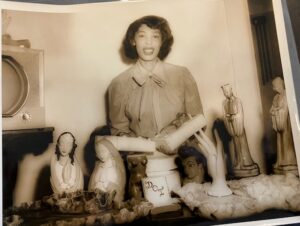
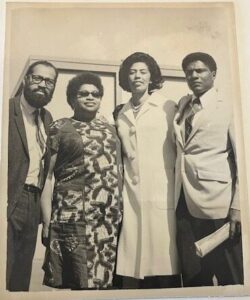
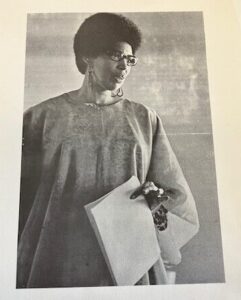
Here are three of the many faces of Sibeko-Kouate. On the left, posing with her ceramic creations, which she advertised on her business card as “hand made gifts to fit your personality”; in the center, pictured with colleagues who also advocated for the discipline of Black Studies and for Black Power: Sid Walton, Ruth Hagwood, and Nathan Hare; and on the right, teaching a class.

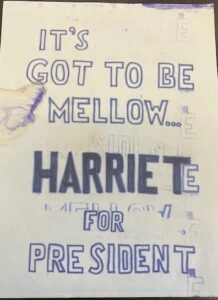
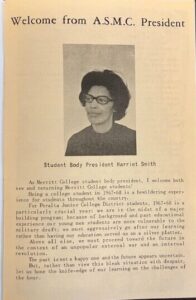
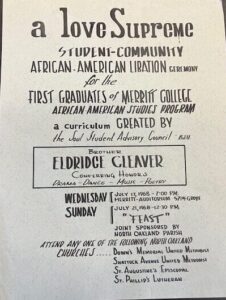
Sibeko-Kouate was elected president of the Associated Students of Merritt College (ASMC) in Fall 1967. In her welcome address, she notes that “Being a college student in 1967-68 is a bewildering experience…we must proceed toward the future in the context of an unpopular external war and an internal revolution…education should be a maker of a virgin future rather than a slave to an unjust and shopworn past. YOU CAN CHANGE THE WORLD!” Students like Sibeko-Kouate, and faculty, like Walton, sought to change the world by advocating for an African-American Studies Program at Merritt. The flyer on the right advertises a student-community ceremony to celebrate the first graduates of that program.

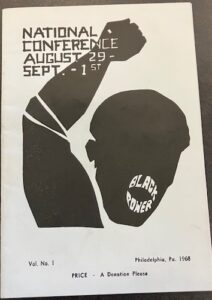
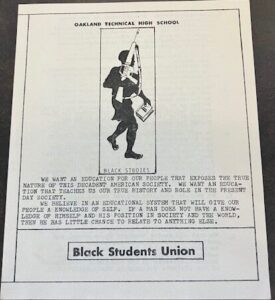
Sibeko-Kouate’s influence went beyond Merritt College. She also served as the President of the National Black Student Union and, in 1968, ran an education workshop on student-community relations for Black students on white campuses at the National Black Power conference in Philadelphia. Sibeko-Kouate’s papers contain materials related to Black curricula and Black Student Unions from many schools in California and, especially, the Bay Area. Examples include a brochure from the Black Students Union at Oakland Tech (in the center and on the right).

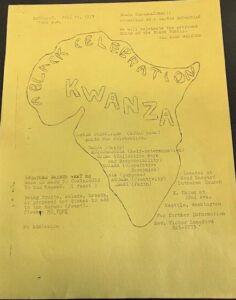
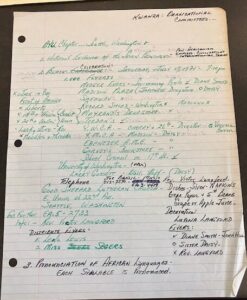
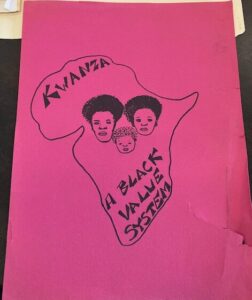
Several celebrations of Sibeko-Kouate’s life referred to her as the “Queen Mother of Kwanzaa,” and her papers contain evidence of her efforts to define and promote the holiday. Examples include these flyers and her notes from an Organizational Committee meeting in Seattle. (Most documents in the collection spell the holiday “Kwanza.” That is the original spelling of the African harvest festival on which the celebration is based. According to the American Heritage Dictionary, a seventh letter was added to correspond with the seven African principles honored during the holiday. Both spellings are correct.)

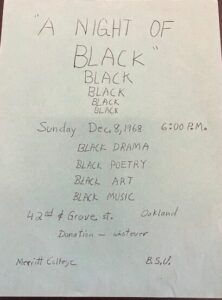
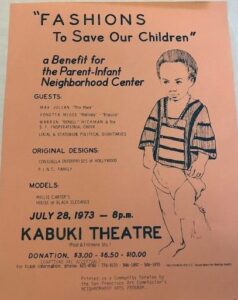
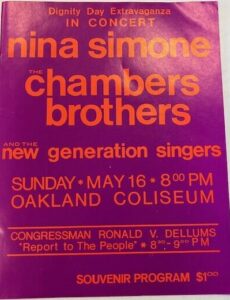
Sibeko-Kouate came into contact with a wide range of political and cultural organizations, either through her direct participation in them, or through ephemera she gathered at events she attended. The materials she collected document decades of African-American cultural life in the Bay Area, including visual arts, music, dance, theater, film, poetry, books, fashion shows, cultural festivals, sporting events, and the culinary arts.  Events ranged from the very local (a night of entertainment at Merritt College), to benefits (for the Parent-Infant Neighborhood Center), to appearances by well-known performers and politicians at community events (Nina Simone, the Chambers Brothers, and Congressman Ron Dellums) . The fact that Sibkeo-Kouate collected these flyers and programs reflected her awareness of their historical significance.

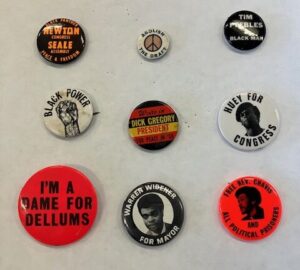
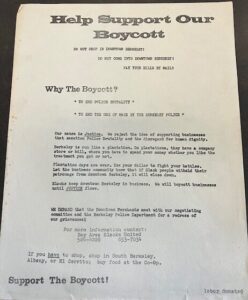
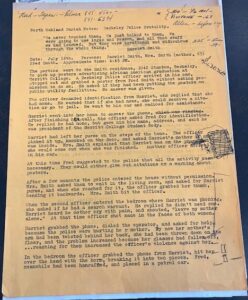
The collection documents how Sibeko-Kouate campaigned for politicians, supported the Black Panthers, and was a community organizer. The buttons on the left reflect her politics, the flyer in the middle asks residents to support a boycott to end police brutality, and the notes on the right document a July 1968 incident when Berkeley police assaulted Sibeko-Kouate and her mother after entering their home without permission. It’s not clear whether the assault motivated the boycott or was just another incident of police brutality in the Black community – but the cause of the organizers was very clear: “Our cause is Justice. We reject the idea of supporting businesses that sanction Police Brutality and the disregard for human dignity…Berkeley is run like a plantation…Plantation days are over. Use your dollars to fight your battles…Blacks keep downtown Berkeley in business. We will boycott businesses until JUSTICE flows.”

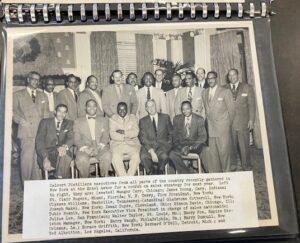
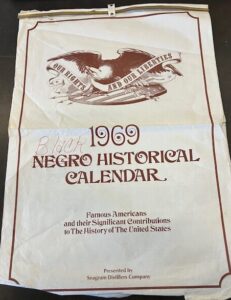
The bulk of Sibeko-Kouate’s papers cover the years 1939-1975 and document significant cultural and political changes over that time. The album on the left is from a 1953 Calvert Distillers gathering that Sibeko-Kouate’s father Turner attended. The meeting “represents the first time any industry gathered its men covering the Negro market from all over the country to meet in New York with its top executives for a two-way exchange of ideas on business.” The gathering included a testimonial dinner honoring Thurgood Marshall. Tubie Resnki, an Executive Vice President,  said “This trip is another leaf in the Calvert book of leadership in interracial affairs.” A 1969 calendar produced by Seagram Distillers, Calvert’s parent company (on the right), celebrates “Famous Americans and their Significant Contributions” to the history of the United States. Someone (presumably Sibeko-Kouate) crossed out the outdated/offensive term “Negro” and replaced it with “Black.” This item’s contrast with her father’s souvenir from the early 1950s captures a cultural and political shift in rhetoric that can be seen throughout the collection.

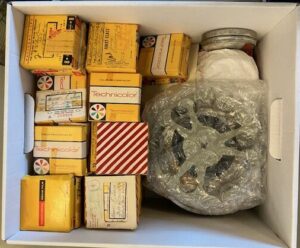
It is exciting that Sibeko-Kouate’s papers contain nearly 100 home movies (8mm and 16mm) that document vacations, celebrations, and other social gatherings with family and friends (circa 1955-1969). These films, like the Calvert album, other photographs, personalia, and family papers in the collection document the everyday lives of middle-class African Americans in the 20th century. (Please note: the films are not currently available for viewing.)

For more information about the collection, access the catalog record and finding aid for the Sister Makinya Sibeko-Kouate papers (BANC MSS 2019/135) here:
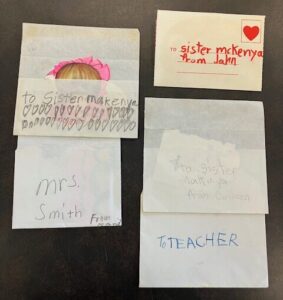
Five Valentines Day cards, from students to Sibeko-Kouate
Valentines cards from students (Carton 6, Folder 16)

Student activism highlights from the Associated Students of the University of California, Berkeley records

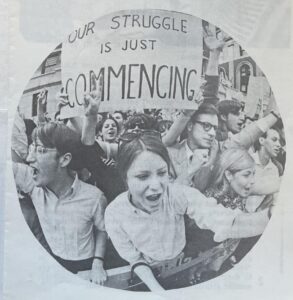
Black and white photograph of students with a sign saying, "our struggle is just commencing"
From file, “Student Political Parties” (carton 80)

The Associated Students of the University of California, Berkeley records are now open to researchers at The Bancroft Library. The Associated Students of the University of California, Berkeley (ASUC) is the officially recognized students’ association of the University of California, Berkeley. The ASUC is a 501(c)(3) non-profit, and is the largest and most autonomous students’ association in the nation. Founded in 1887, the ASUC continues to operate separate from University governance. The ASUC controls funding for all ASUC-sponsored clubs and organizations, provides resources and student programming, oversees commercial activities and student services including the Cal Student Store and Lower Sproul Plaza in partnership with the ASUC Student Union, and advocates for students on a University, local, state, and national level.

The collection includes ASUC constitutions, executive office files, Student Advocate’s Office files, senate bills, agendas, and resolutions, committee files, financial and budget materials, planning and renovation files, ASUC program files, and other material documenting student services, groups, and activities from 1893 to 2012.

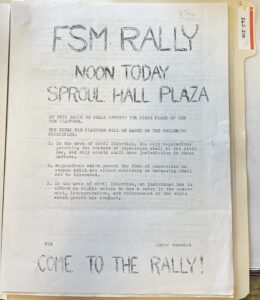
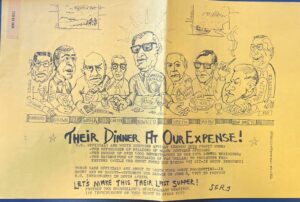
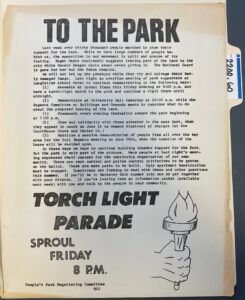
The collection also contains materials documenting student activism on campus, including the Free Speech Movement, People’s Park advocacy, affirmative action, the Third World Liberation Front, divestment in South Africa, and LGBTQ rights.

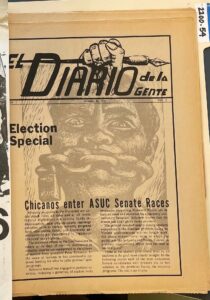
Black and white El Diablo de la Gente newspaper featuring a graphic of a raised fist holding an ink quill pen and a person with metal chains over their mouth.
El Diablo de la Gente newspaper, October 20, 1972 (carton 82)
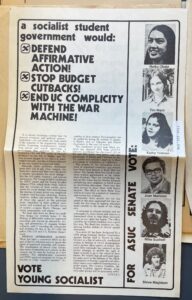
Black and white flyer featuring photographs of student candidates running for ASUC senate.
Flyer for the Young Socialist candidates running for ASUC Senate (carton 74)
Black and white flyer with handwritten and typed text.
Free Speech Movement rally flyer (carton 39)
Illustration of UC administrators on yellow paper.
Protest flyer against UC investments in South Africa, 1978 (carton 51)
Black and white flyer with text and illustration of a hand holding a torch.
People’s Park Negotiating Committee flyer (carton 82)
For more information about the collection, access the finding aid and/or catalog record for the Guide to the Associated Students of the University of California, Berkeley, records (CU-282). Interested in transferring your student records to University Archives? Find out more here.

“Stop Pot Rot – Switch to Beer!” The California NORML Records Are Open for Research

Researchers can now access the records of the California chapter of the National Organization for the Reform of Marijuana Laws at The Bancroft Library. California NORML is a non-profit “dedicated to protecting and expanding cannabis consumers’ rights.” According to their website, they were founded in 1972 as Amorphia (the Cannabis Cooperative), which organized the effort to repeal laws against adult use, possession, and cultivation of marijuana. In 1974, Amorphia merged with the state chapter of NORML. These days, California NORML lobbies lawmakers, sponsors events, offers consumer, educational and legal advice, and supports scientific research. (For more information, see https://www.canorml.org)

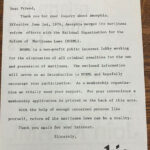
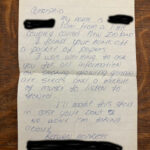
The California NORML records capture the history of marijuana reform nationwide. The bulk of the collection consists of people, organization, subject, and legal files, but there are also administrative records, ephemera, and publications about marijuana. The collection includes mass mailings that document the history of the organization, like this letter from Amorphia:

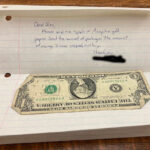
Some letters (circa 1974-1980) show how people worldwide used California NORML as a resource. A writer from New Zealand requests (among other things) “a mixture of music to listen to stoned”; another correspondent asks them to send as many packs of rolling papers as they can get for $1.

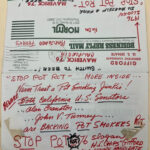
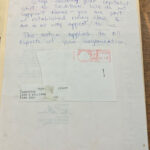
Some of the organization’s mass mailings were returned, with the recipients’ clear criticism of California NORML. One is from Howard L. “Chips” Gifford, a “Maverick” Democrat who challenged – and lost to – incumbent California Senator John V. Tunney in the 1976 primary. Gifford wanted to “Stop Pot Rot.” (Tunney was, in turn, narrowly defeated by Republican S.I. Hayakawa in the general election). Another was returned by the folks at Sedition, a radical  free newspaper in San José that “sought to revolutionize the nation.” They critiqued California NORML from the left, as a tool of “the established ruling class.” (https://scholarworks.sjsu.edu/sedition/)

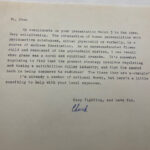
A letter from Chuck, “an unreconstructed flower child and reaminent [sic] of the psychedelic sixties,” circa 1978-1979, on the other hand, was complimentary, but also anticipates the changes legalization of marijuana will bring, and the development of the Marijuana Industrial Complex. Chuck writes, “I can recall when grass was a moral and spiritual crusade. It’s somewhat surprising to find that the present strategy involves regulating and taxing a multibillion [sic] dollar industry.”

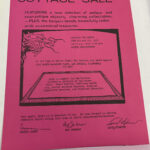
The subject files in the California NORML records track legislation in all of California’s counties and in all 50 states. They also document issues that were central to the organization in the 1970s and 1980s, from medical and therapeutic uses of cannabis, to correcting misinformation about marijuana, to the war on drugs, to the dangers of herbicides, such as paraquat. These files also help put the fight for marijuana reform in the context of other struggles for change. They also suggest an interest in coalition building with – or at least support of – other political activists, from the White Panthers, an anti-racist political collective, to COYOTE (Call Off Your Tired Old Ethics), a sex workers’ rights organization. The folder titled “Gay Coalition,” for example, contains a flyer for a sale in Los Angeles “to support the Gay/Lesbian liberation projects of our household.” The members of “our household” included Morris Kight, who co-founded the LA chapter of the Gay Liberation Front and who helped lead a campaign against Dow Chemical and the use of napalm in Vietnam. (https://oac.cdlib.org/findaid/ark:/13030/kt6w1040bj/)

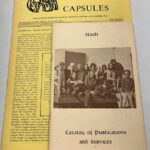
The California NORML records also include materials from other organizations and ephemera from their own events. These include publications from the Student Association for the Study of Hallucinogens (STASH), and a poster from the “First Right-to-Harvest Festival, “A Day on the Grass,” [1978]. The festival featured Margo St. James from COYOTE and medical marijuana activist Dennis Peron. (STASH formed to provide unbiased information on drugs and drug use by students at Beloit College in Wisconsin in 1968. They moved to Madison in 1974 and disbanded in 1980: https://search.library.wisc.edu/catalog/9911124865502121

For more information about the collection, access the finding aid and catalog record for the California NORML records (BANC MSS 2009/122) here:

https://oac.cdlib.org/findaid/ark:/13030/c8dj5pkj/

https://search.library.berkeley.edu/permalink/01UCS_BER/1thfj9n/alma991074574479706532


SAA Annual Meeting Centers Archival Accessioning (and the work of Bancroft’s Accessioning Archivist Jaime Henderson!)

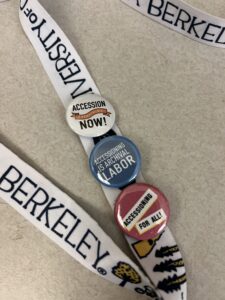
Lanyard with buttons created at the Accessioning Best Practices Symposium at the SAA Annual Meeting, 2024

The Society of American Archivists Annual General Meeting took place in Chicago between August 14th and August 17th. For many of the archivists at The Bancroft Library, this was the first in-person SAA meeting we have attended in years and we had lots to do, talk about, and even celebrate.

Most notably, Bancroft Accessioning Archivist Jaime Henderson helped put on a day-long symposium introducing a new archival standard: the Archival Accessioning Best Practices. The product of a few years of hard remote and in-person work by the Archival Accessioning Best Practices Working Group (of which Jaime is a member), these best practices are the first of their kind. The efforts of the Working Group were made possible by generous funding from the Institute of Museum and Library Services. Archivists all over the country are excited to see dedicated best practices that center archival accessioning as a key component in ethical archival practice and management.

The Archival Accessioning Best Practices were recently submitted to the Society of American Archivists’ Standards Committee (currently chaired by yours truly) for approval as an official SAA standard and will be published as a GitBook document soon.

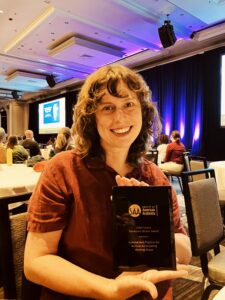
The Archival Accessioning Best Practices Working Group was also honored with an SAA Council Exemplary Service Award at the annual business meeting this past Saturday. We all congratulate Jaime and her colleagues for this well-deserved honor.

Bancroft Library Accessioning Archivist Jaime Henderson with SAA Council Exemplary Service Award
Bancroft Library Accessioning Archivist Jaime Henderson with SAA Council Exemplary Service Award, August 17, 2024.


Bancroft Library Processing News

The archivists of the Bancroft Library are pleased to announce that in the last quarter (April-June 2024) we opened the following Bancroft archival collections to researchers:
Oliver Williamson papers (Michele Morgan and Marjorie Bryer)

Howard Luck Gossage papers, approximately 1960-1973 (Jaime Henderson and Lara Michels)

Barbara Oliver collection of theatre materials, 1945-2012 (Jaime Henderson and Lara Michels)

Mary Moore papers, 1975-2002 (Presley Hubschmitt)

Arif Press records, approximately 1970-1991 (Dean Smith)

Letters from Victor Palfi to Dody Weston Thompson, 1961-1964 (Jaime Henderson)

Tulare County Sheriff’s Office scrapbook of wanted flyers, cards, bulletins, and posters (Lara Michels)

Robert Jackson archive of Zen Buddhism in Berkeley, California (Marjorie Bryer)

Gladys L. Collier papers (Marjorie Bryer)

 [Stuart H. Ingram photograph album of the class of 1908] (Jessica Tai)

Brett Weston and Dody W. Thompson correspondence and journals, 1949-1989 (Jaime Henderson)

Rosario Curletti papers (Marjorie Bryer)

Gay Olympics (Gay Games) scrapbook, 1982 (Marjorie Bryer)

Art Varian collection of scrapbooks and photographs, 1911-1945 (Marjorie Bryer)

Granary Books collection of publishing ephemera, 1986-2021 (Marjorie Bryer)

African American choir ephemera collection, approximately 1931-1946 (Marjorie Bryer)

Hadassah San Francisco, Lakeside Chapter records, cookbooks, and photographs, 1980-2005 (Lara Michels)

Charles W. Hope papers (Lara Michels)

Prisoner rights ephemera (Marjorie Bryer)

Sandra Ramois collection on Eldridge Cleaver, 1984-1998 (Marjorie Bryer)

Diana Russell collection on Lakireddy Bali Reddy sex trafficking case, 1999-2018 (Jaime Henderson and Marjorie Bryer)

Emma Fong Kuno papers, 1907-1942 (Marjorie Bryer)

Tobyanne Berenberg collection of Ethel Duffy Turner papers, 1860-1984 (bulk 1955-1969) (Marjorie Bryer)

Paul Steiner family papers (Presley Hubschmitt)

Arthur St. John Oliver journal, 1899 (Michele Morgan)

Mare Island Naval Shipyard Structural Shops Training Program Course Packet, 1958 (Michele Morgan)

Elisabeth C. Caldwell Niles letters, 1858-1866 (Marjorie Bryer)

Mariana Ruybalid papers (Jaime Henderson and Marjorie Bryer)

The Pictorial Processing Unit opened:

70 small collections and single items (approximately 7,160 items, total)

Including:

A 2,450 item collection of Frashers Fotos real photograph postcards of California views, published approximately 1925-1955.

Over 1250 snapshots in a Photograph album documenting California travels, Christian Endeavor events, approximately 1925-1945.

A collection of William Alsup’s well-documented and beautifully printed photographs of the Sierra Nevada, with recent additions.

And also made available:

A newly published finding aid to the Robert Altman photograph archive of rock-and-roll and counter-culture images, chiefly of the 1960s and 1970s.

Additions to the Art Hazelwood Collection of San Francisco Poster Syndicate Political Posters


Bancroft Library Processing News

The archivists of the Bancroft Library are pleased to announce that in the past quarter (January-March 2024) we opened the following Bancroft archival collections to researchers.
Manuscript and University Archives/Faculty Papers Collections:

Data Center records (processed by Lara Michels with the help of Christina Velazquez Fidler)

Isabel Wiel papers (processed by Presley Hubschmitt)

David E. Good and Forrest M. Craig collection of family papers (processed by Lara Michels)

Nathan and Julia Hare papers (processed by Marjorie Bryer)

Delmer Myers Brown papers (processed by Lara Michels and student assistant David Eick)

Martinez, Dean, and DuCasse family papers and photographs (processed by Lara Michels and student assistant Malayna Chang)

Joan Bekins collection of Terwilliger Nature Education Center records (processed by Jaime Henderson and Lara Michels)

Bissinger and Company records (processed by Presley Hubschmitt)

Howard Besser papers and audiovisual materials (processed by Lara Michels and student assistant David Eick)

Sherman Lewis research collection relating to the Hayward Area Planning Association (HAPA) (processed by Jaime Henderson and Lara Michels)

Barbara Oliver collection of theatre materials (processed by Jaime Henderson and Lara Michels)

Michael and Cynthia Horowitz collection on psychedelics, 1954-2006 (processed by Lara Michels and student assistant David Eick)

Rosborough family papers (processed by Lara Michels and student assistant Malayna Chang)

Pictorial Collections and Items:

127 small collections and single items (approximately 4,911 items, total)

Additions to Cathy Cade’s autobiographical photograph albums, documenting lesbian life and community activism in the Bay Area, 2008-2015. (over 1,900 items)

San Joaquin County mug shot books, wanted notices, and law enforcement ephemera of Sheriff Thomas Cunningham. (over 2,300 items)

The Robert Altman photograph archive, which is particularly strong in counter culture and rock ‘n’ roll images of the late 1960s and 1970s, including work from his time as a photographer for Rolling Stone magazine (approximately 35,000 items) (online finding aid pending)


Bancroft Quarterly Processing News

The archivists of the Bancroft Library are pleased to announce that in the past quarter (October-December 2023) we opened the following Bancroft archival collections to researchers.
Manuscript and University Archives Collections:
Morris Goldstein papers (processed by Presley Hubschmitt)

ruth weiss papers (processed by Simi Best)

Robert A. Scalapino papers (processed by Lara Michels)

Elizabeth Rauscher papers (processed by Jessica Tai)

Lawrence Talbot papers (processed by Lara Michels and student processing assistant David Eick)

Walter S. Hertzmann collection on the Hertzmann and Koshland families (processed by Presley Hubschmitt)

Bush Street Synagogue Cultural Center records (processed by Presley Hubschmitt)

Erle Stanley Gardner papers (processed by Randy Brandt)

Mission Council on Redevelopment records (processed by Lara Michels and student processing assistant Malayna Chang)

Charles W. Leach correspondence (processed by Lara Michels)

Lynn Manning papers, additions (processed by Lara Michels)

Pictorial Collections/Items:

65 small collections and single items (approximately 6,119 items, total)

Lonnie H. Wilson Photograph Archive: over 1000 negatives documenting the William F. Knowland gubernatorial campaign of 1958 and the Republican and Democratic Party conventions of 1960 were processed and added to the existing finding aid.

Pictorial collections staff:  James Eason, Chris McDonald, Lori Hines, Sara Ferguson, and Isabel Breskin.

Collections Currently in Process:

  • Data Center records
  • Associated Students of the University of California, Berkeley records
  • Patricia Buffler papers
  • Nathan and Julia Hare papers
  • Daisy Zamora papers
  • Harriet Smith papers
  • Barbara Oliver collection of theater materials
  • Howard Besser papers
  • Delmer Myers Brown papers
  • Benjamin Swig papers and photographs
  • Isabel Wiel family papers and photographs