Latinx Research Center (LRC) Faculty-Mentored Undergraduate Research Fellowship
LRC is excited to launch the LRC Faculty-Mentored Undergraduate Research Fellowship program, pairing outstanding faculty with outstanding undergraduate students to advance research in US Latinx Studies.
The LRC has been awarded $550K by the Office of Financial Aid & Scholarships for the next 5 years to support this program. Every year, eleven $10K awards will be made in the liberal arts, and across the professional schools and the museum, to support faculty-mentored undergraduate research fellows throughout a full year: two semesters and a summer. The first round of awards will begin as early as Spring 2022. However, research can also begin in the summer of 2022. The application period has been extended to February 16th. Awards for applications that met the original January 31st deadline will be announced on Monday, February 7th; awards for applications received by February 16th will be announced on February 23rd. The award jury will consist of senior humanities and social sciences professors and will be distributed equitably across disciplines.
Applications should be submitted by faculty, who will nominate an outstanding undergraduate student that has agreed to work with them. Faculty in earlier stages of their career will be favored, however, all faculty are encouraged to apply. Selected student fellows will receive the $10K award throughout the course of a year, and will work closely with their faculty mentor, assisting in research, and developing their research skills, critical thinking, and intellectual creativity. Student fellows and mentors will be expected to meet weekly or biweekly, and to discuss their research at the LRC at the end of the award cycle. As an outcome of this mentored research fellowship, under the guidance of their faculty mentors, students will develop their own honors or capstone thesis, art practice, or other projects.
To apply, please visit https://forms.gle/H4hy1oRJhm39G1KT9.
For questions, email latinxresearch@berkeley.edu.

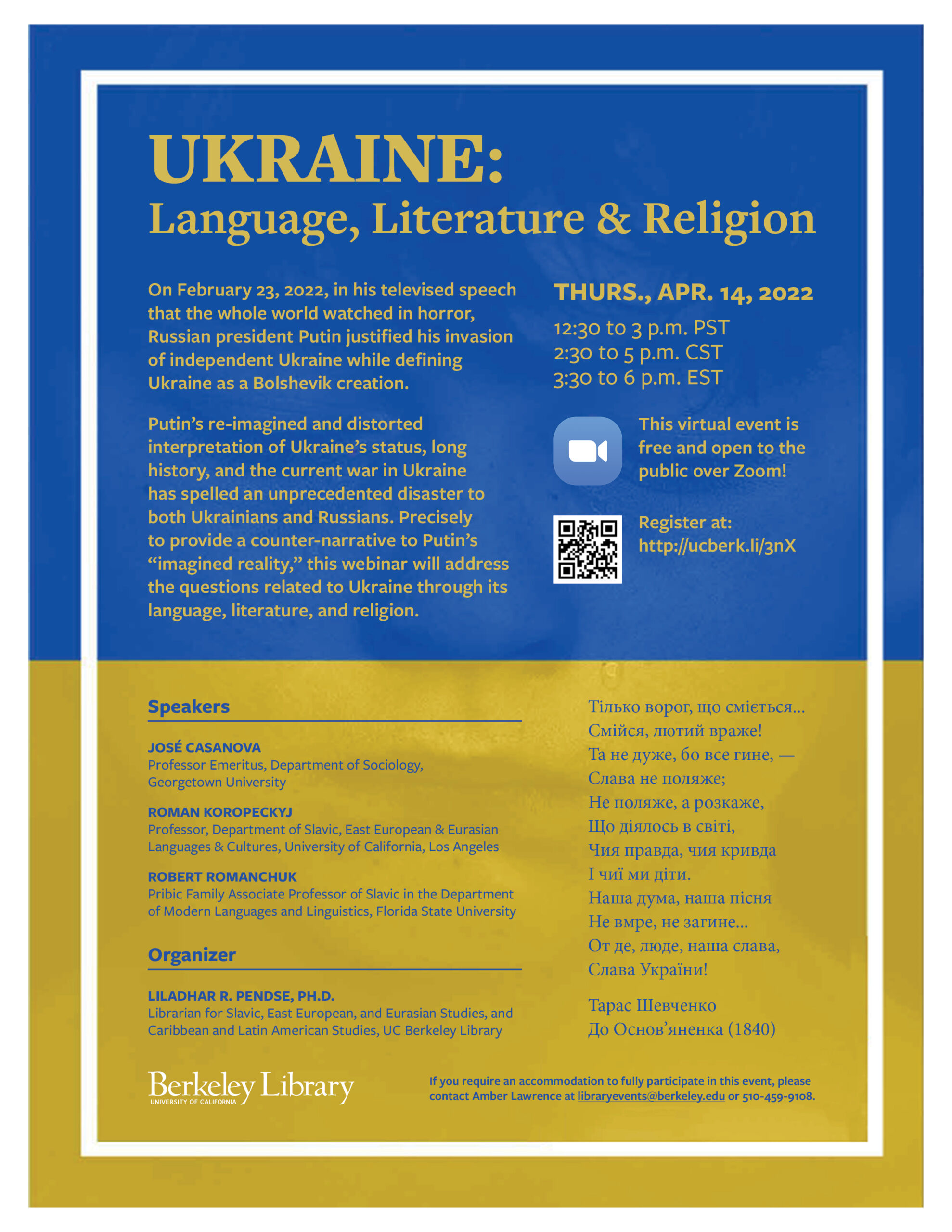
Even as much of the world has been preoccupied with the immediate military and geopolitical stakes of Russia’s war on Ukraine, panelists turn their attention to the trajectory of Ukrainian culture over the longer arc of history and in the contemporary post-Soviet era.
In a conversation moderated by Harsha Ram (Slavic Languages & Literatures and Comparative Literature), Ukrainian intellectuals and scholars of Ukraine share their perspectives on Ukraine and its culture.
Participants:
Alex Averbuch, poet and literary scholar originally from the Luhans’k region.
Vitaly Chernetsky (University of Kansas), Ukrainian-American literary scholar and author of Mapping Postcommunist Cultures: Russia and Ukraine in the Context of Globalization.
Mayhill Fowler (Stetson University), cultural historian and author of Beau Monde on Empire’s Edge: State and Stage in Soviet Ukraine.
Alisa Lozhkina, independent art curator and critic.
Cosponsored by the Townsend Center for the Humanities, the Department of Slavic Languages & Literatures, and the Institute of Slavic, East European, and Eurasian Studies.
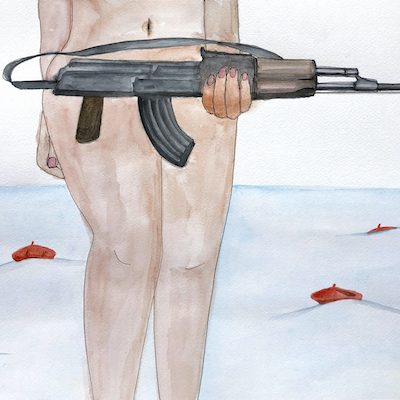
Artwork: Untitled (Detail) by Kinder Album, mixed media on paper, 2019, Lviv.
In the face of unfolding horrendous tragedy in Ukraine, I was remembering my “families and friends” in Kyiv, Minsk, and Moscow. There was this Soviet saying- Znanie Sila (Knowledge is power). In face of this tragedy, as a librarian, I was thinking of doing my part by presenting the readers of this blog with some choices on information sources.
I have been thinking about presenting some items from UC Berkeley Library’s collections that speak to Ukraine’s rich yet nuanced history. All histories are nuanced, and I am trying to avoid my implicit biases and opinions about the current tragedy unfolding in Ukraine. Ukraine was never a state until the Bolsheviks created the Ukrainian SSR is as problematic as cutting the long-standing intertwining of Russo-Ukrainian histories. However, the post-Soviet Ukraine is an independent modern European nation-state whose sovereignty and freedom to chart its destiny matter to humanity.
I remember today Gogol‘s Cтрашная месть or A Terrible Vengeance. This story is a part of a larger collection with the title: Vechera na khutori︠e︡ bliz Dikanʹki Mirgorod
Please think a minute about Ivane and Petro! And I refrain from discussing the modern-day Oligarchs from both sides.
Below are some subject-based links that will allow you to browse our catalog for additional resources on Ukraine.
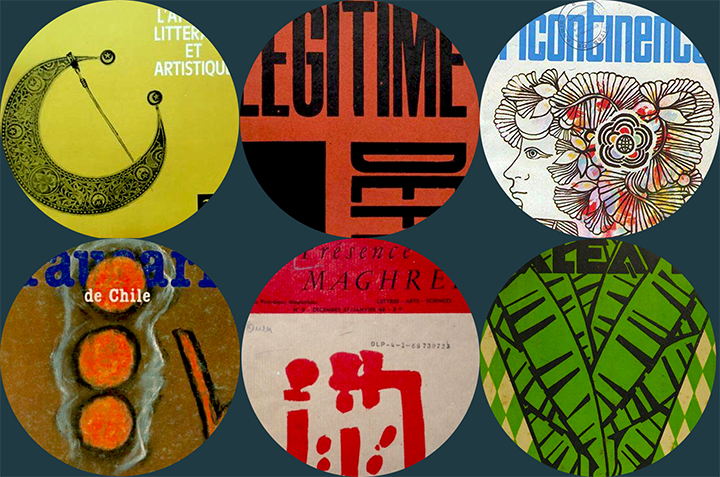
The Portail Mondial des Revues/Global Journals Portal of the French Institut national d’histoire de l’art (INHA) comprises a collection of over one thousand decolonial and diasporic periodicals spanning the nineteenth and twentieth centuries. Often ephemeral and with brief publication histories, these journals offer glimpses into the literary critical and social critical practices of their times.
Publications in the database can be filtered by geographical area, language, and topic (literature, gender studies, diaspora, etc.). For those that are open access, links are provided directly inside the database. Each entry contains a list of articles and books that have recently cited the journal, allowing scholars easy access to critical work surrounding each publication.
At the core of the collection are works published in Paris, particularly during the entre-guerres period, that convey the voices of migrant and diasporic communities. Among these are journals such as the anti-imperialist Phản-Đế (1934), published by the Ligue contre l’impérialisme et l’oppression coloniale, and Césaire and Senghor’s L’Étudiant noir (1935). Many publications such as L’Arche (1944-1948), with joint editions from both Paris and Algiers, publish literary texts from around the world, placing them alongside reflections on contemporaneous philosophical and political debates.
Works span across several dozen languages and every continent of the globe. Publications such as the Catalan El Cami and the Haitian Bon Nouvèl account for just two of many periodicals published in minority languages and creoles. Other publications offer transnational and multilingual perspectives such as the Franco-uruguayan Entregas de la Licorne and Tricontinental, a social critical periodical published through the Organization for Solidarity of the Peoples of Africa, Asia, and Latin America.
Cameron Flynn
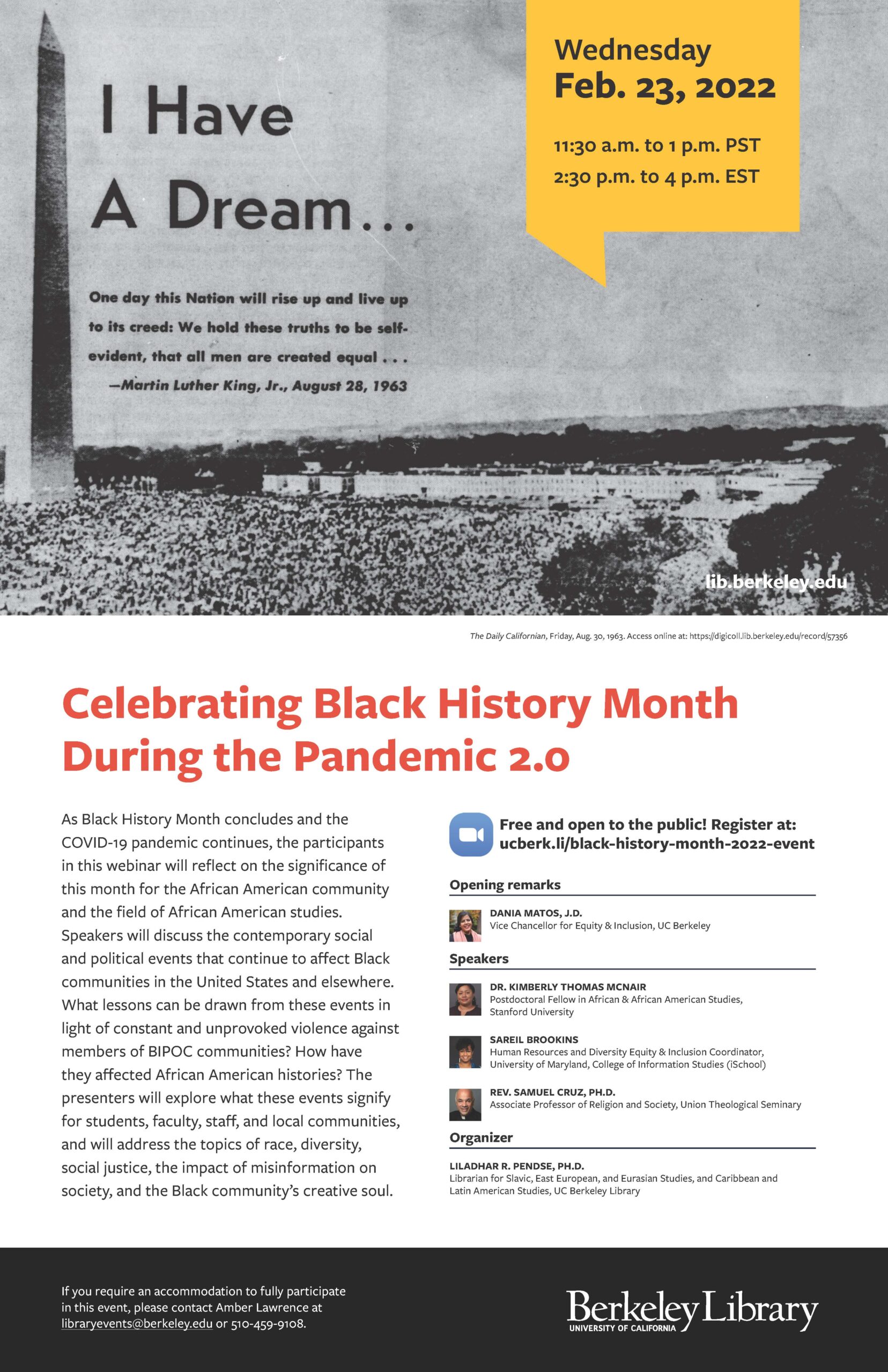
Please join us for a virtual Black History Month Celebration at UC Berkeley Library! The event is planned for Wednesday, February 23, 2022, from 11:30 am until 1 pm PST / 2:30 pm to 4 pm EST on Zoom.
Webinar Registration: ucberk.li/black-history-month-2022-event
Free and Open to all with prior registration. Please remember to authenticate by signing into your institutional or individual zoom accounts first before trying to register for the event.
I want to thank our Vice Chancellor for the Division of Equity & Inclusion, Dania Matos, who found time out of her hectic schedule to provide the opening remarks. We look forward to welcoming everyone. Please be so kind as to share information about this event with your respective communities of practice.
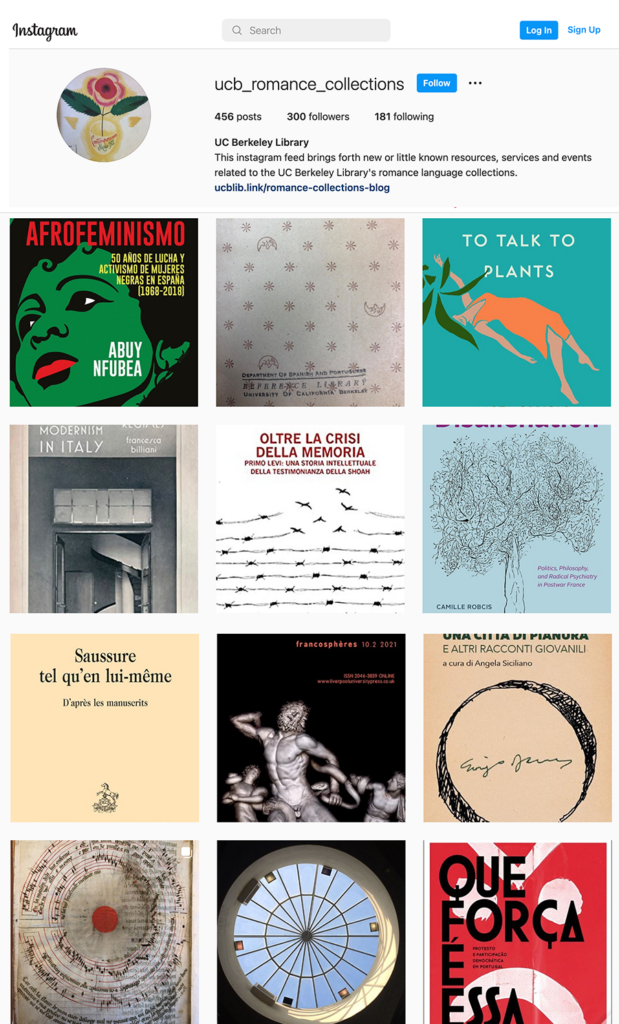
The Romance Language Collections Instagram feed brings forth little known and new resources and services in the UC Berkeley Library. Once you start following you’ll instantly receive early notices of new books, e-resources, exhibits, readings and more through your smartphone or any web browser.
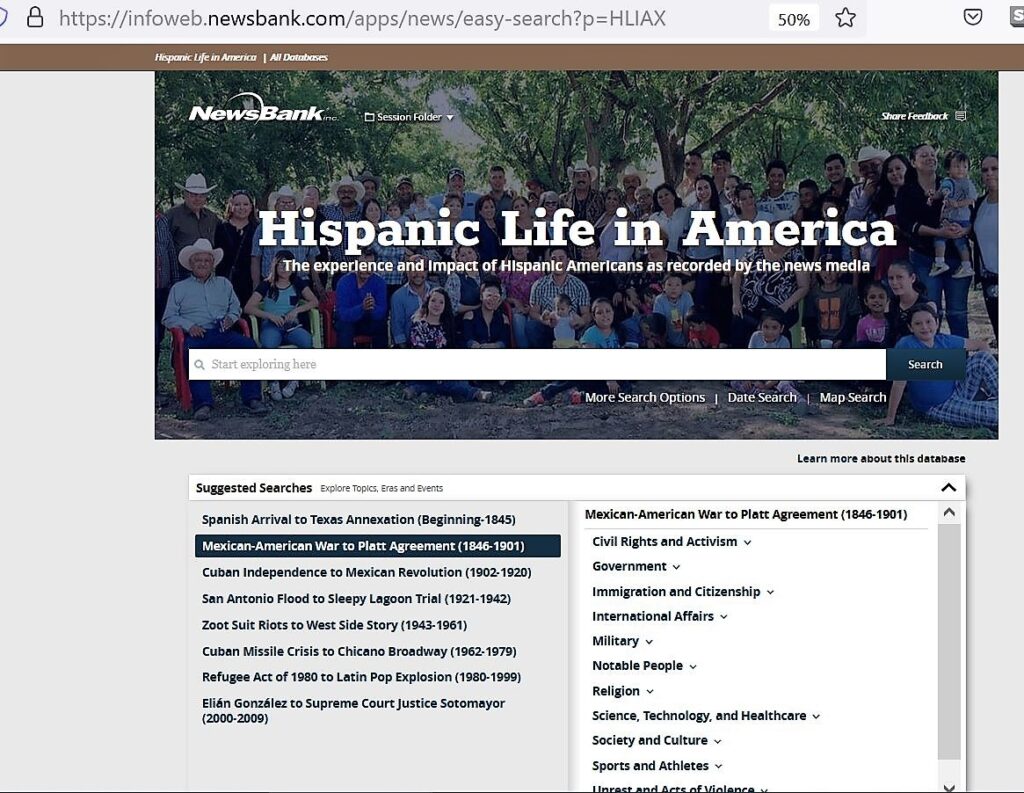
The library has opted for a thirty-day trial of Hispanic Life in America: a Readex Database. The trial is good through March 15, 2022.
The database trial can be accessed here after authenticating using either the VPN or proxy.
Readex provides the following information on the database:
This database covers three time periods: Series 1: 1704-1942 | Series 2: 1943-2009 | Series 3: 2010-today
Source: https://www.readex.com/products/hispanic-life-america#summary

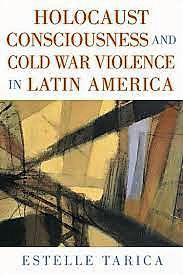
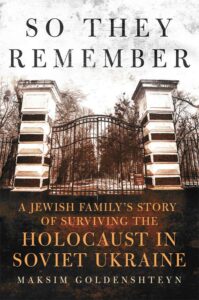
Yesterday was Holocaust (Shoah) Remembrance Day, and today at sundown, we will have the beginning of Jewish Shabbat. So, first of all, to my readers of this blog who follow the Jewish faith, Shabbat Shalom. I fondly remember my teacher in Jewish Studies, Professor Zev Garber of Los Angeles Valley College, who helped me understand the complexities of Jewish American Literature when I was a “new” and yet unestablished “immigrant from the Indian sub-continent” in the United States. I had no idea that the West had coined “South Asia” and that campus identity politics existed across North America. I had no idea about the words like “being canceled” and sent to an exile in Academic Siberia. But I knew of Babii (Babyn) Yar and the Genocide of innocent Jews and others during WW II. And leave you with three recent books that interrogate the Holocaust. In memoriam to the victims of Holocaust/Shoah. Also, reminder, that the library with the gracious funding assistance from our AUL Joanne Newyear-Ramirez was successful in purchasing access to USC Shoah Foundation Visual History Archive

Lastly, I leave you to reflect on an article by Larisa Maliukova (Лариса Малюкова) in a Russian Newspaper: Novaya Gazeta with the title: Сергей Лозница: «Война — всегда отвратительный способ нерешения проблемы»
And two clips of Sergei Loznitsa’s 2021 documentary film: Voina-vsegda otvratitel’nyi sposob neresheniia problemy (translation: War- always a poisonous method (for) a failure to resolve problems.
And the second clip is below:
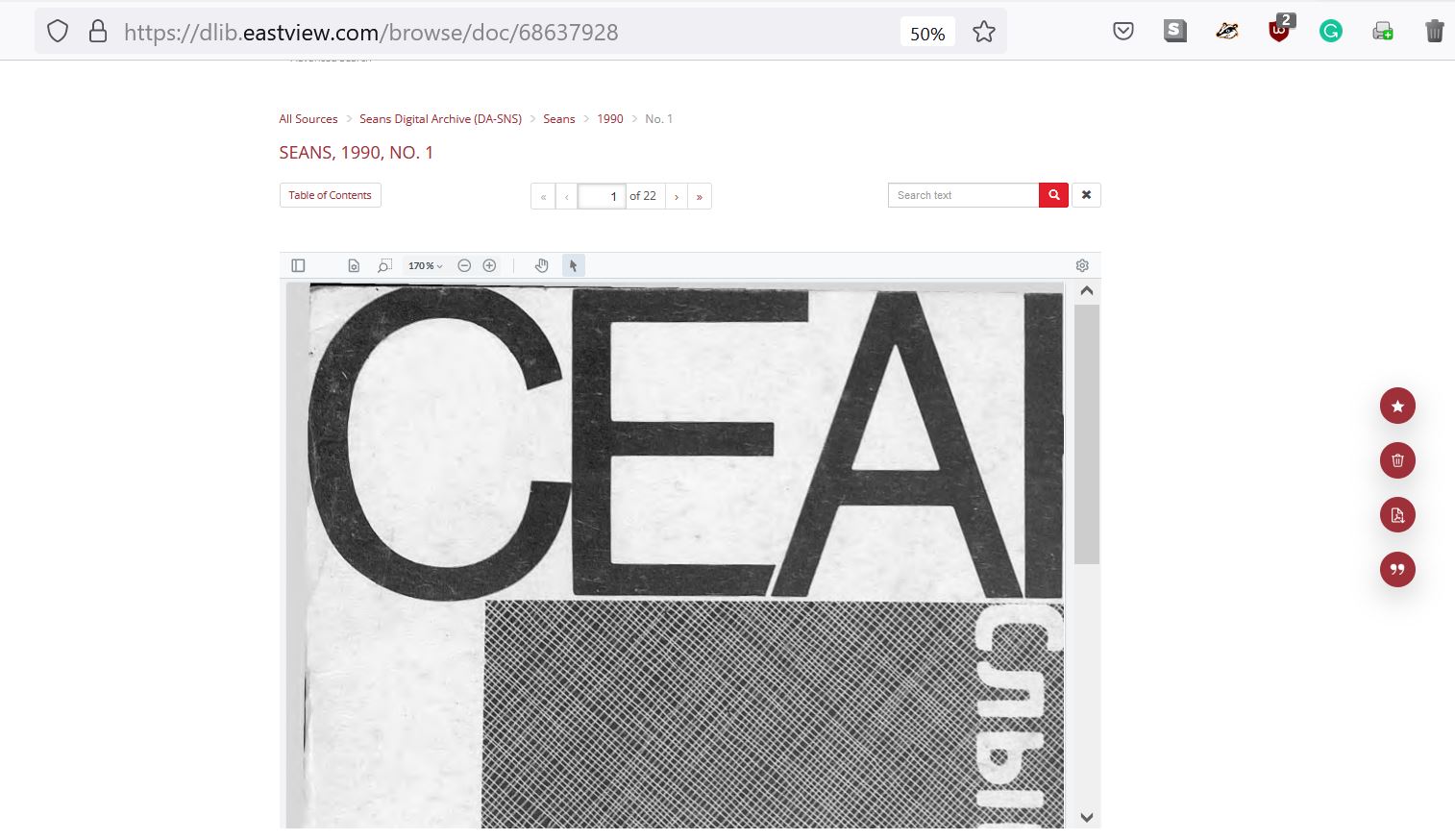
UC Berkeley Library has set up a trial of Seans Digital Archive (1990-2020). Seans is a well-known Russian journal dedicated to Film Studies. The UC Berkeley’s registered students, staff, and faculty can access the digital archive here. The trial will last from 12 January 2022 through 11 February 2022. The vendor description: The Seans digital archive contains all available published issues from 1990, with an additional year’s worth of content added annually. The archive offers scholars the most comprehensive collection available for this title and features full page-level digitization and complete original graphics. The archive has searchable text and is cross-searchable with numerous other East View digital resources.
Each issue of Seans is devoted to a specific theme. Examples of past themes include:
Alternatively, the Seans Digital Archive is also available on the web at no cost here: https://seance.ru/magazine/
However, the archive that is on the web is not cross-searchable with other digital content that Eastview offers.