Armeno-Indica: Four Centuries of Familiarity and Friendship Conference at UCLA

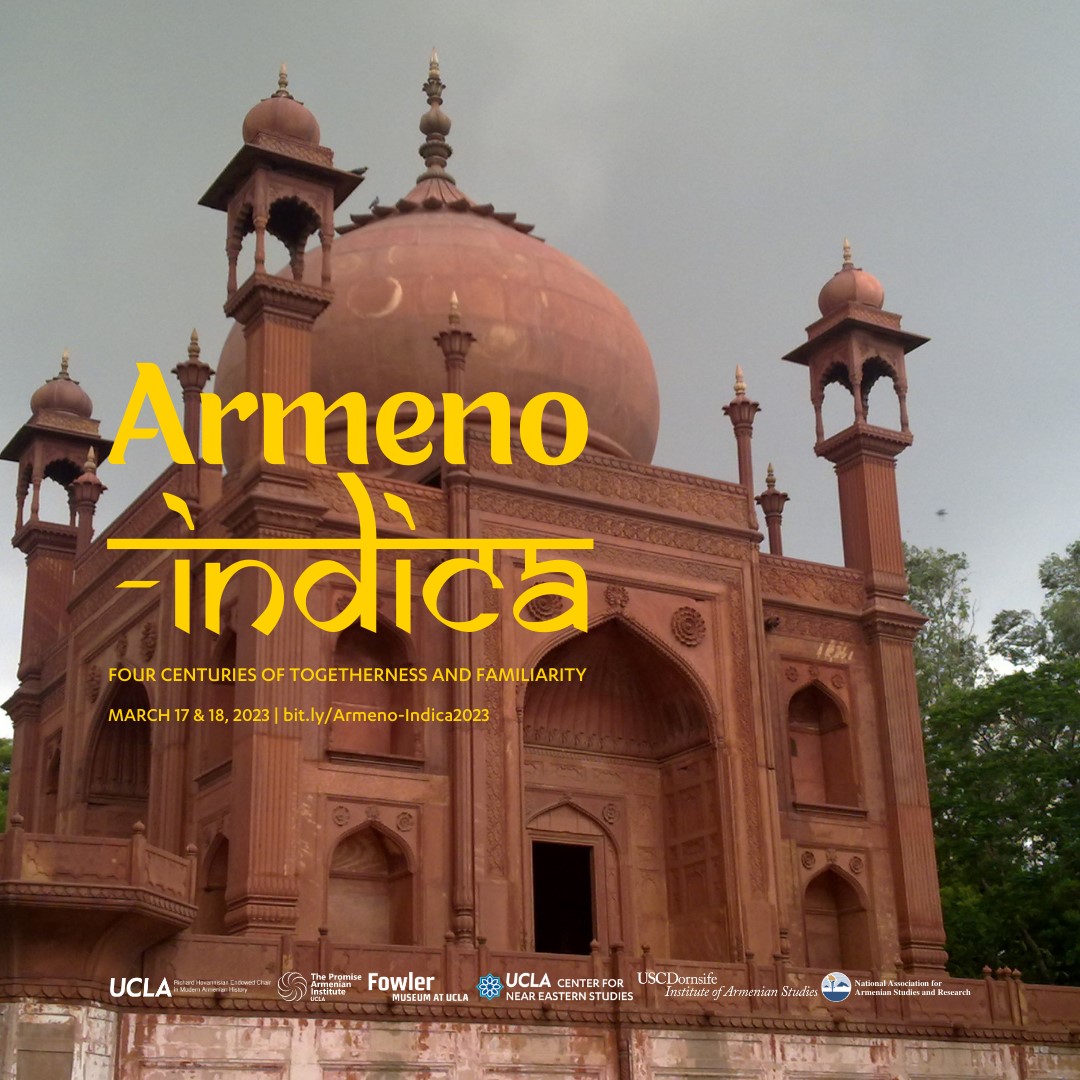
The image shows a monument from India. This photo was used for a poster or marketing material of Armeno Indica conference that was organized at UCLA in March of 2023


Armeno-Indica: Four Centuries of Familiarity and Friendship
March 17 – March 18

This event is organized by the UCLA Richard Hovannisian Endowed Chair in Modern Armenian History.

Friday, March 17, 2023, | 10:00 AM – 6:30 PM (Pacific Time)
to
Saturday, March 18, 2023, | 11:30 AM – 6:00 PM (Pacific Time)

Postponed due to the pandemic, this international conference celebrates the bicentenary of the founding of Kolkata’s famed Armenian College (est. 1821), one of three centers of Armenian higher learning in the diaspora during the nineteenth century and the only one that has survived and is thriving today. Bringing together economic, literary, legal, and cultural historians from India, Armenia, France, the United Kingdom, Germany, and the United States, the conference highlights how, beginning in the early modern period and continuing to the present, Armenians have traveled to India to make its distant shores and cultures their own. India looms large in the Armenian social imaginary. It was not only the place where the first Armenian proto-constitution for an “imagined” nation-republic was published (Madras 1788/9), it was also the cradle of the first Armenian newspaper (Madras, 1794-1796), the first modern Armenian play (Calcutta 1823), and arguably also where the first Eastern Armenian novel appeared (Calcutta, 1846), as well as where the first Armenian “feminist” tract (Calcutta, 1847) was published.

Gathering an international group of scholars, Armeno-Indica explores the Indo-Armenian saga in South Asia from the seventeenth to the twenty-first centuries. The themes to be explored include the connected economic, literary, legal, and political histories of Armenians and Indians in South Asia and beyond across the waters of the Indian Ocean. The keynote for the conference will be delivered by Professor Sanjay Subrahmanyam.


Please fill out the form for providing RSVP for in-person attendance. The form is located at the following hyperlink: https://sscucla.qualtrics.com/jfe/form/SV_bgcerNdYzuQgRHU

VENUE: UCLA Royce Hall 314 and Fowler Museum

Alternatively, you may attend this conference using zoom with prior. Here is the hyperlink that will lead you to the form that needs to be filled out: http://bit.ly/armenoindica-virtual

Friday, March 17, 2023 (Royce 314, UCLA)
Welcoming words: Amy Landau and Ann Karagozian
(10:00 AM – 10:15 AM)

Introduction to the conference: Sebouh David Aslanian
(10:15 AM – 10:30 AM)

Panel 1: Trade, Law, and Go-Betweens (10:30 AM – 12:30 PM)
Santanu Sengupta (Kolkata): “Negotiating with Law: Phases of Armenian Interaction with the Early Colonial Law Courts in India.”

Xabier Lamikiz (University of the Basque Country /Euskal Herriko Unibertsitatea (UPV/EHU): “Armenian Merchants from Madras in Eighteenth-Century Spanish Manila: A Story of Love and Hate.”

Ruquia Hussain (Aligarh Muslim University, AMU): “Of Sarhad and Calcutta: The English East India Company, Khwāja Israel di Sarhad and the Foundation of Modern Calcutta.”

Sona Tajiryan (Gemological Institute of America, GIA): “How to Choose and Buy Pearls? An Eighteenth-Century Armenian Guide on the Pearl Trade in India (1730s).”

Discussant: Glenn Penny (UCLA)

Lunch Break: Balcony of Royce 306 (12:30 PM – 1:30 PM)

Panel 2: Language and Literary Revival (1:30 PM-3:00 PM)
Ahona Panda (Claremont McKenna): “Ajab Shahar Calcutta: The Outsider in the Bengal Renaissance.”

Talar Chahinian (University of California, Irvine): “Mobilizing Subjectivity in the Practice of the Nation: Tagheadeants‘s’ Case for Women’s Education.”

Peter Cowe (Near Eastern Languages and Cultures, UCLA): “Intertextuality and Innovation: Mesrop Taghiadeants‘ and his Experimentation with the Novel Genre in Comparative Perspective.”

Discussant: Houri Berberian (University of California, Irvine)

Coffee Break: (3:00 PM – 3:15 PM)

Panel 3: Armenian Historiography and Print Culture in Madras (3:15-5:00PM)
Martin Adamian (UCLA, graduate student): “Mesrovb J. Seth, Father of Indo-Armenian Historiography.”

Anna Sirinian (Dipartimento di Storia Culture Civiltà, Università di Bologna): “Azdarar (1794-1796): The First Armenian Periodical in the World.”

Hasmik Kirakosyan (Senior Researcher, Mashtots Repository of Manuscripts, Yerevan): “Harutiwn Shmavonean an Armenian Printer-publisher in Madras and a Farman for Printing in Arabic script in Madras.”

Discussant: Nile Green (UCLA)

Panel 4: History in the Present (5:00 PM – 6:30 PM)
Armen Arslanian: (Warden of the Armenian Church of Dhaka, Bangladesh): “The Armenian Church of Dhaka (Bangladesh) and the task of Heritage preservation.”

Vache Tadevosyan: (Community leader, Kolkata, India): “The Mardasirakan Jemaran (Armenian College of Kolkata) and its Bicentenary.”

Satenik Chookaszian (Armenian National Gallery in Yerevan): “Sargis Katchadourian’s reproductions of India’s cultural gems from the collection of National Gallery of Armenia.”

Chair and Discussant: Armen Baibourtian

Saturday, March 18, 2023 (Fowler Museum, UCLA)
Check-in at Lenart Hall (11:30 AM – 12:00 PM)

Welcoming remarks: Amy Landau

Panel 1: Monuments, Patronage, and Indo-Persianate Identities (12:00 PM – 2:00 PM)
Sebouh David Aslanian (Department of History, UCLA): “Cemeteries as Heterotopias: Armenian Sepulchral Culture in Agra and Surat, or what the Dead can tell us About the Living.”

Talinn Grigor (Department of Art History, UC Davis): “‘Transimperial’ Strategies of Artistic Patronage: From New Julfan Merchants to Parsi Industrialists.”

Veronika Zablotsky (Freie Universität, Berlin): “Orientalism and the Making of the Armenian Diasporic Imaginary in Early Colonial India.”

Discussant: Peter Cowe (UCLA)

Panel 2: The Historical Imagination and the Circulation of Revolutionary Ideas in Late 18th Century South India (2:00 PM – 3:30PM)
Michael O’Sullivan (The European University Institute, Florence): “Portfolio Capitalism and History-Writing in Hagop Simonean Ayubeant’s Life of Haydar Ali Khan, c. 1782-1795.”

Ayal Amer (UC Irvine): “Fitna and Patriotism in Late 18th century Madras.”

Satenig Badwagan Toufanian (Inalco, Paris): “The Snare of Glory: A Call for Freedom from Madras.”

Discussant: Sebouh D. Aslanian

Intermission: Lemonade, Cookies, and Open Galleries in Courtyard (3:30 PM – 4:40 PM)

Keynote Address (4:40 PM – 5:40 PM)
Sanjay Subrahmanyam (Distinguished Professor & Irving and Jean Stone Endowed Chair in Social Sciences): “Armenians and Others in Mughal Surat: Rethinking Communities, Collaboration and Conflict.”

Reception on the Terrace (6:00m – 7:30 pm)


ORGANIZERS

UCLA Richard Hovannisian Chair of Modern Armenian History
Fowler Museum at UCLA
Armenian Studies Center at the UCLA Promise Armenian Institute
USC Dornsife Institute of Armenian Studies
National Association for Armenian Studies and Research (NAASR)
UCLA Narekatsi Chair in Armenian Studies
UCLA Center for Near Eastern Studies

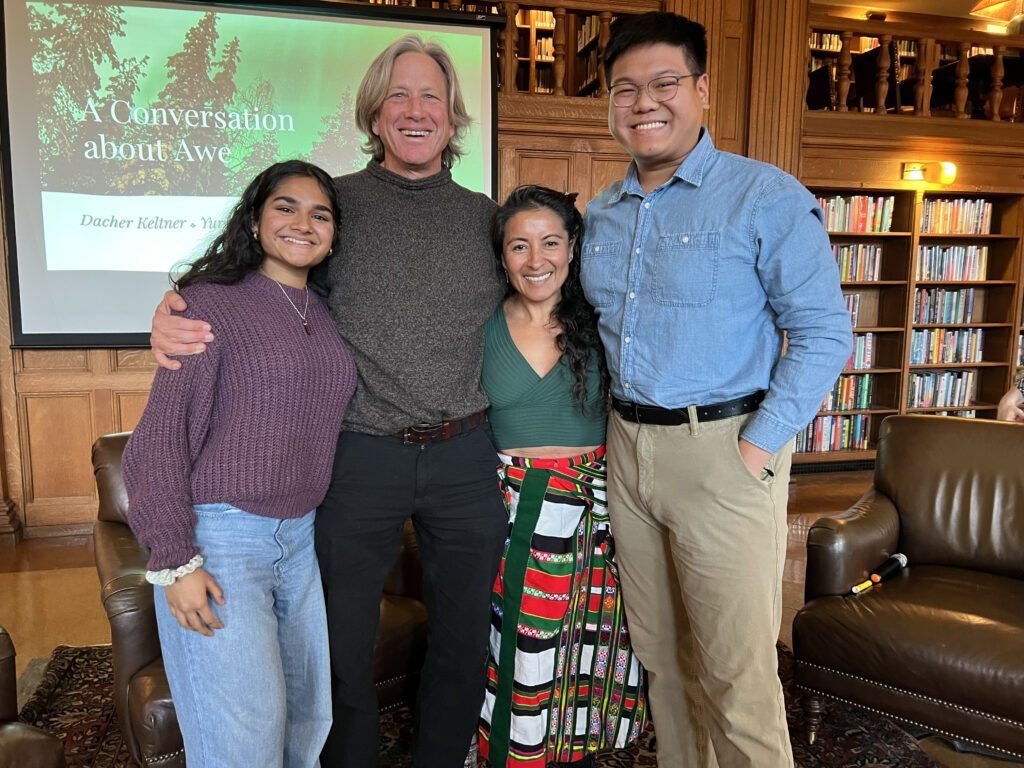
A Conversation About Awe

Group photo of speakers
Mridini Vijay, Dacher Keltner, Yuria Celidwen, and Wesley Lu in a conversation about awe in the Morrison Library on February 27, 2023.

In his new book Awe: The New Science of Everyday Wonder and How it Can Transform Your Life, Dacher Keltner, UC Berkeley professor of psychology, defines awe as “the emotion we experience when we encounter vast mysteries that we don’t understand.” In his recent book talk, he introduced a receptive crowd to this concept, and how it is distinct from bliss, ecstasy, or gratitude. It is an emotion of mystery, of goosebumps. Keltner has even served as an “awe consultant,” guiding Pixar films on how to incorporate awe in the films Inside Out, and Soul.

When ProfBook Coveressor Keltner was joined in conversation with three colleagues and an audience of a hundred in the Morrison Library on February 27, the discussion touched on many aspects of this emotion. Yuria Celidwen, a senior fellow at the Othering & Belonging Institute, spoke about transcendent experiences as conceptualized in indigenous cultures and how the elders in her Chiapas, Mexico community teach about a sense of reverence for nature or “ecological belonging.” Wesley Lu, a fourth year undergraduate and a student mental health advocate, spoke about collective effervescence — when a life force creates a collective self whether in a classroom, during a religious ceremony or among sports fans.
And no conversation about awe, especially in Berkeley, is complete without a discussion of plant medicine; third year undergraduate Mridini Vijay, also a campus mental health advocate, asked Celidwen to discuss her research on the topic that is commonly, though incorrectly, referred to as psychedelics. In Ethical Indigenous Medicine to Guide Western Psychedelic Research and Practice (The Lancet Regional Health – Americas (February 2023)), which Keltner described as “one of the most important papers on psychedelics ever published,” Celidwen and colleagues discuss concerns by Indigenous Nations over the cultural appropriation and exclusionary practices of psychedelic use in the West and the false notion that plant medicine is somehow the “one key pill to human enlightenment.” In fact, there is evidence that a daily practice incorporating “understanding, kindness, gratitude and reverence” may be as good as or better than psychedelics. In the end, there is so much more to learn about awe, and how we may experience it in our daily lives. Keltner’s book is a wonderful starting point for that journey.


Women’s History Month 2023

Women's History Month

“Let us make our future now, and let us make our dreams tomorrow’s reality.” – Malala Yousafzai

Happy International Women’s Day! March is Women’s History Month, and at the Library we’re rejoicing in the achievements women have made and celebrating a future full of promise.

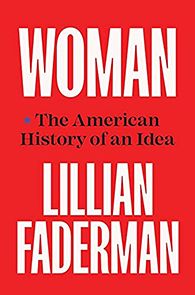
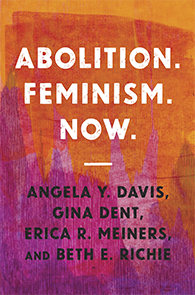
Read about feminism and progress in these nonfiction books.

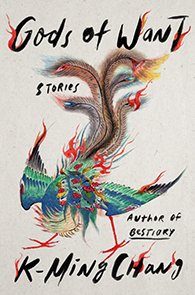
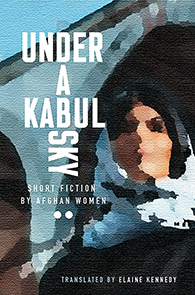
Catch up on fiction with these bestsellers by women.

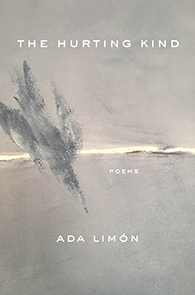
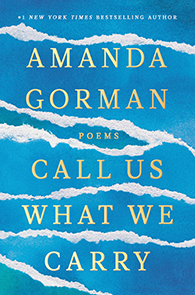
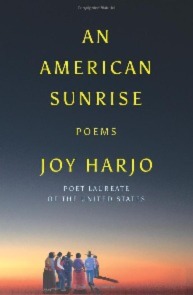
Try these poets for fresh insights and moving words.

Still looking for more books by wonderful women? Try our Overdrive collection for books like Lady Justice by Dalia Lithwick, The Seven Husbands of Evelyn Hugo by Taylor Jenkins Reid, and National Book Award Winner All My Rage by Sabaa Tahir. Is there a book by a woman that you want to read, but is missing from our collection? Let’s fix that.

Happy reading, and happy International Women’s Day!


Happy International Women’s Day and Conference Dedicated to International Women’s Day!

In many of the world, we enthusiastically celebrate International Women’s Day. We were not aware then of Valentine’s Day and scamming of flower prices then. While the questions surrounding diverse values, gender identities, and contemporary politics are complicated, it is important to note that for many in the world, the basic human rights that we take for granted in the United States are beyond reach. I have been asked today to post a courtesy conference that is not affiliated with our library in which I will participate as a member of the organizing committee in my private capacity. The conference is dedicated to women of contemporary Afghanistan.

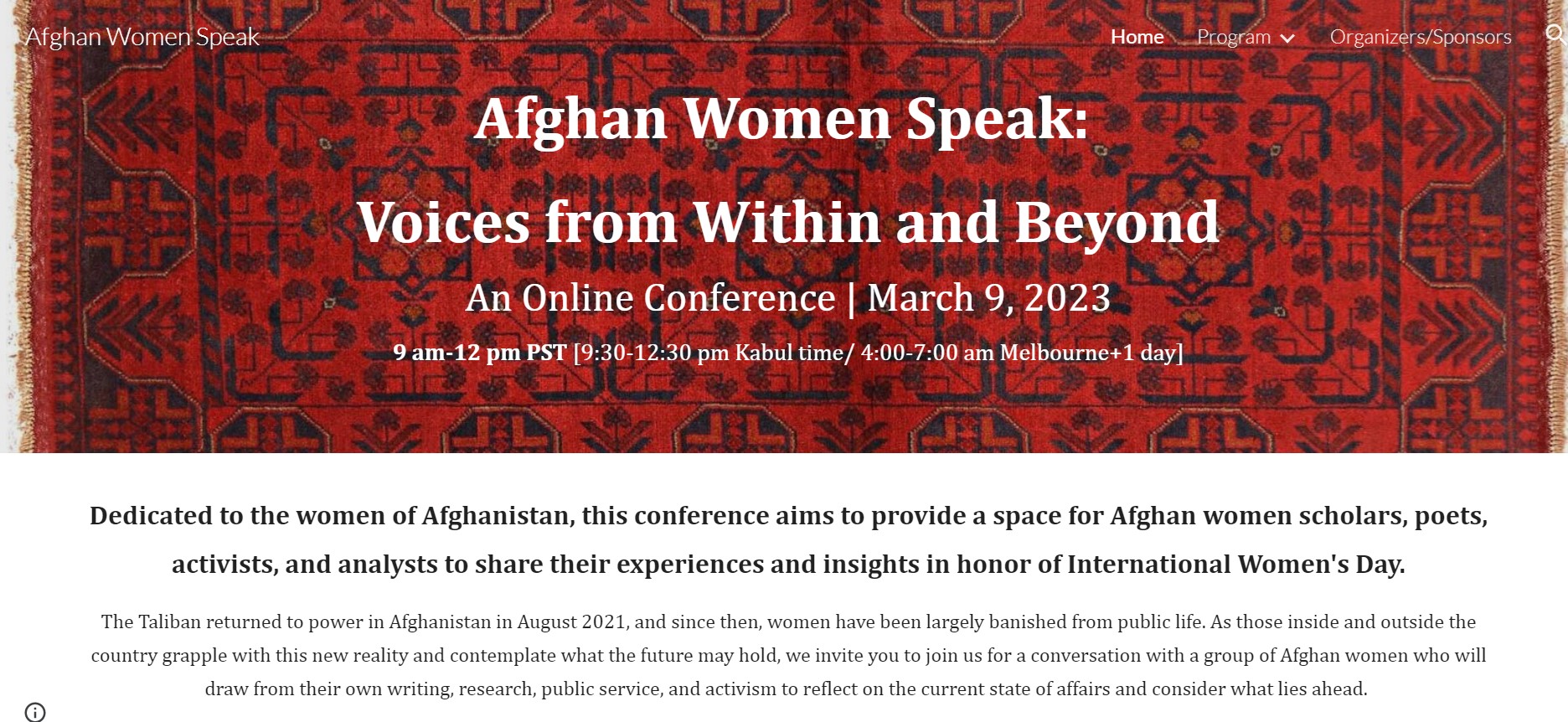
The conference will occur tomorrow, March 9th, from 9 am PST through 12 noon. The website for the conference is Afghan Women Speak: Voices from within and beyond. The conference is FREE and OPEN to all with prior registration.

The image is a screenshot of website that is entitled Afghan Women Speak. It is about an online conference that will take place on March 9th, 2023 from 9 am to 12 noon Pacific Standard Time.

In Memoriam: Phil Hoehn (1941-2023)

Phil Hoehn 2
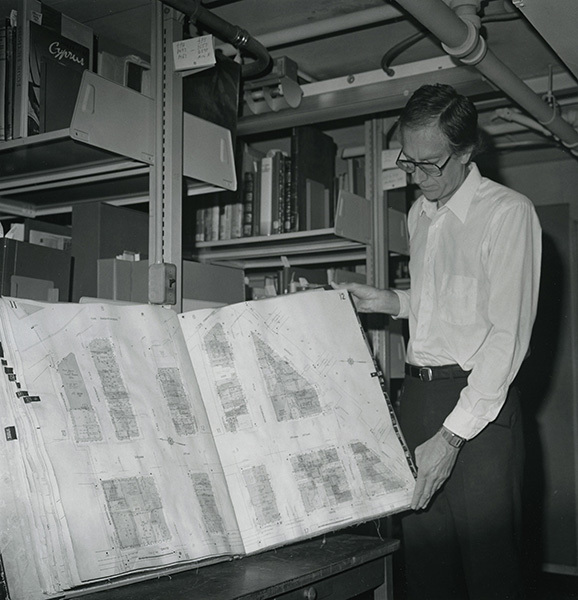
Phil Hoehn, with a Sanborn atlas, Bancroft Library, May 1990. Photograph: Mary-Ellen Jones (BANC PIC 19xx.349).

Longtime UC Berkeley Maps and Earth Sciences Librarian Phil Hoehn passed away on February 6, 2023, from complications of colon cancer. He was 81 years old.

Raymond Philip Hoehn, Jr. was born in Cape Girardeau, Missouri on October 23, 1941, the son of Raymond Philip Hoehn and Florentine Jeanne Hoehn. Following World War II, the Hoehn family moved west to southern California and Phil grew up in Pomona. Inheriting a love of maps from his grandfather, he majored in geography at UCLA. In 1967, Phil earned an MLS from UC Berkeley and began his career as the Map Librarian at UC Berkeley’s Bancroft Library in 1969. He was then asked to assume responsibility for the map collection of the General Library, and managed both collections for several years. When the Map Library was merged with the Earth Sciences map collection, Phil was tapped to lead the new combined unit, eventually known as the Earth Sciences and Map Library, and did so until his retirement in 1996.

Phil counted among his favorite accomplishments at Berkeley the development and management of the California Maps Project, an ambitious effort funded by a grant from the U.S. Department of Education to catalog and re-classify some 21,000 maps held in the collections of UC Berkeley and UCLA. Randal Brandt, currently Head of Cataloging at the Bancroft Library, was the project cataloger. “Phil hired me into my first professional position,” he recalled. “He mentored me, encouraged me, and supported me in the early years of my career. He also taught me how to catalog maps, which has been a part of nearly every job I’ve held since then. I can honestly say that I owe my professional career to Phil.” 

One of the innovative decisions that Phil made during the project was to include geographic location data in records that describe California Land Case Maps. These diseños, rough manuscript maps, were used as evidence in the court cases which determined the validity of Spanish and Mexican land grants once California was ceded to the United States. Without the online tools of today, determining correct longitude and latitude data for the ranchos represented on the land case maps was not a simple task in the early 1990s.  

Although this work was time-consuming, Phil’s decision paid huge dividends several years later when the Bancroft Library undertook the digitization of the maps. When discussing the significance of this metadata, Bancroft Interim Deputy Director Mary Elings, who directed the digitization project, noted the bridge that has been made between the handiwork of 19th century amateur cartographers and contemporary Geographic Information Systems in an important aspect of California history: “Adding the longitude and latitude to the Land Case Map records provided helpful information for researchers in geo-referencing the digitized historic maps, which in turn helps current researchers using GIS systems in their work.”

After he retired from Berkeley, Phil headed down the Peninsula and held the position of map bibliographer at Stanford University’s Branner Earth Sciences Library & Map Collections from 1996 to 2000. At Stanford he performed collection development and maintenance, provided reference assistance, and worked to promote university-wide awareness of the map collections and services. Subsequently, from 2000 until 2007 he served as consulting librarian at the David Rumsey Map Collection (now the David Rumsey Map Center at Stanford), where he created thousands of detailed catalog records for digitized maps. 

Never one to spend much time “retired,” Phil then launched a second career as a volunteer map cataloger, first at the California Genealogical Society and then at the California Historical Society. In 2020, a CHS blog post described Phil’s work: 

In June 2015, Phil Hoehn … took on the daunting task of organizing the California Historical Society’s vast map collection … over 45 drawers of flat sheet maps dating back to at least 1800 (including maps in atlases and books where cartographers depicted California as an island) as well as early mining, railroad, and irrigation maps, bound volumes of Sanborn Fire Insurance maps, and boxes of large rolled maps spanning all the counties in California. During the four years Phil worked reviewing, researching, cataloging, and rehousing the maps he discovered many unique titles, some that appear in only a few other collections in the world.  Many of the works, by such prominent surveyors and cartographers as William Eddy, Herman Ehrenberg, Jasper O’Farrell, and August Chevalier, document the birth and growth of the city of San Francisco … [Phil] leaves nearly 4,000 maps now accessible to researchers. From foldout ones in rare books to enormous rolled maps that practically took a village to bring up from the vaults, Phil has discovered, cataloged, preserved, and documented them all.

Frances Kaplan, until recently Director of Library & Collections at the California Historical Society, expanded on Phil’s impact, saying “It is due to his efforts that the entire map collection at CHS is now cataloged and searchable. Along the way he discovered some rare ones and his work inspired the [current] map exhibit.” The exhibit, “Mapping a Changing California: From the Seventeenth to the Twentieth Century,” is on view through March 11, 2023.

Phil joined the Western Association of Map Libraries (WAML) in 1969, which was just two years after its first meeting took place. Phil was an active member of WAML his entire career. He found that the benefits of WAML membership included getting good practical advice from friendly, experienced colleagues. Phil also emerged as a wheeler and dealer who obtained many great maps for the UC Berkeley Library by participating in WAML duplicate exchanges. He viewed membership as a form of therapy and described WAML meetings as good places to voice local problems and concerns among like-minded individuals. 

Phil had a direct hand in the founding of the California Map Society. Together with Diane M. T. North, who was then a Ph.D candidate at UC Davis, he co-convened a meeting at the Bancroft Library in May 1978, which was the inaugural gathering of the California Map Society. North recalled her long relationship with Phil: “Phil’s knowledge of and deep enthusiasm for maps, all maps, seemed boundless. Anyone privileged to have the opportunity to be guided by him and work alongside him benefited from his professionalism, patience, generosity, and quiet sense of humor.” 

Phil had a longstanding interest in fire insurance maps, including local California maps, produced by the Dakin Publishing Company and he published on the subject. His most important publication, compiled together with William S. Peterson-Hunt and Evelyn L. Woodruff, is a reference tool of enduring value to map librarians and researchers, the Union List of Sanborn Fire Insurance Maps Held by Institutions in the United States and Canada, originally published in 2 volumes by the Western Association of Map Libraries in 1976-1977. The Earth Sciences and Map Library maintains an updated online version on its website which documents Phil’s hard work. 

Together with UCSB map librarian Mary Larsgaard, Phil also co-authored a reference resource which historically has been useful to map librarians, the Dictionary of Abbreviations and Acronyms in Geographic Information Systems, Cartography, and Remote Sensing

Will Murdoch, a book cataloger at the California Historical Society, who worked with Phil from 2015 until 2019, shared his memories of Phil:

He was my mentor and work colleague in the CHS Library.   I cataloged books and Phil processed the maps in that collection.  We shared a lot of fun discoveries with each other and learned about the depth of the CHS archives.  It was an education for me as Phil’s background was extensive and he was so kind to share his knowledge with me.  I miss him and our work together there. 

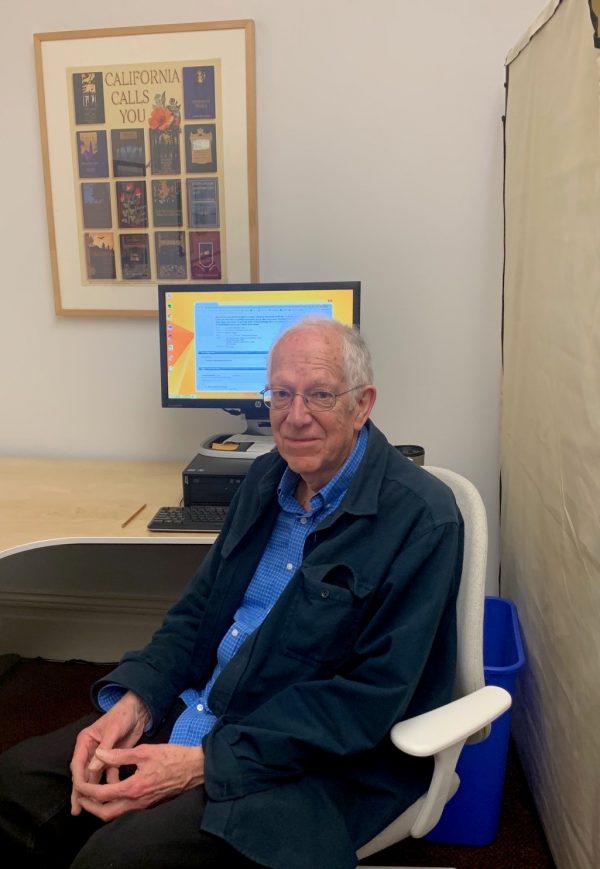
Phil Hoehn
Phil Hoehn at the California Historical Society, 2020. Photograph: Frances Kaplan.

Phil Hoehn played an important role in building the rich and diverse map collections on the Berkeley campus. As a map librarian, map bibliographer, metadata specialist Phil was instrumental in providing expert resource discovery for cartographic resources at many institutions throughout the Bay Area. More important than his professional qualities, however, Phil excelled as a colleague, mentor, and friend. Everyone who knew him and worked with him was made better for the experience. 


Randal S. Brandt, Bancroft Library

Heiko Mühr, Earth Sciences & Map Library

Susan Powell, Earth Sciences & Map Library


Celebrating Women’s History Month in Art History

Check out these online resources available through UC Library Search. Click on the titles to view them in the catalog, or visit the Art History/ Classics Library to view new publications of women artists on display.

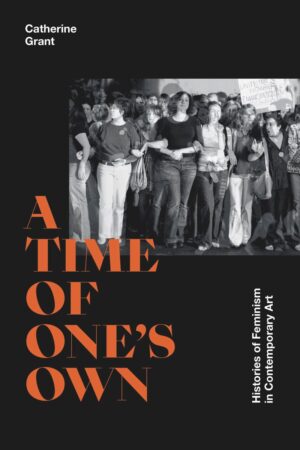
A time of one’s own : histories of feminism in contemporary art 

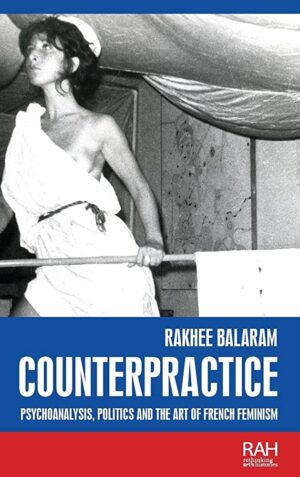
 Counterpractice : psychoanalysis, politics and the art of French feminism

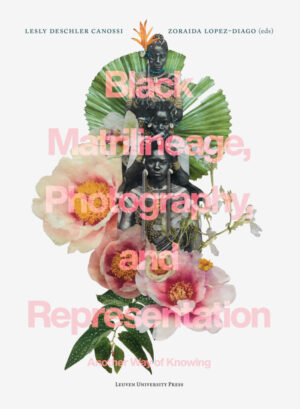
Black Matrilineage, Photography, and Representation: Another Way of Knowing


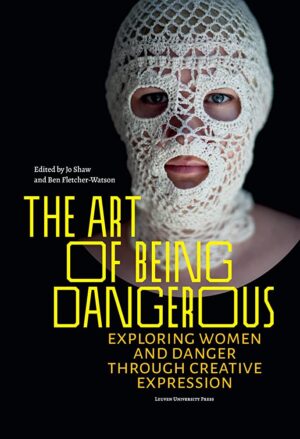
The Art of Being Dangerous Exploring Women and Danger through Creative Expression

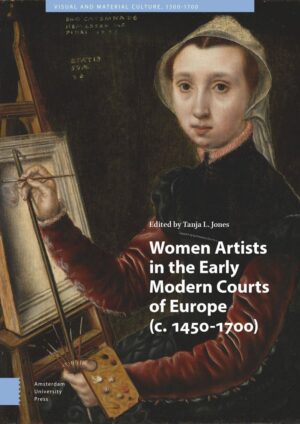
Women artists in the early modern courts of Europe (c. 1450-1700)

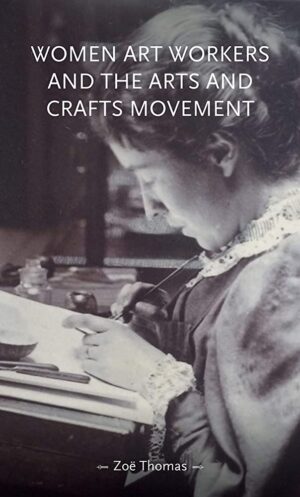
Women art workers and the Arts and Crafts movement

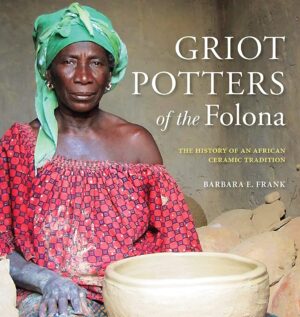
Griot Potters of the Folona : the History of an African Ceramic Tradition

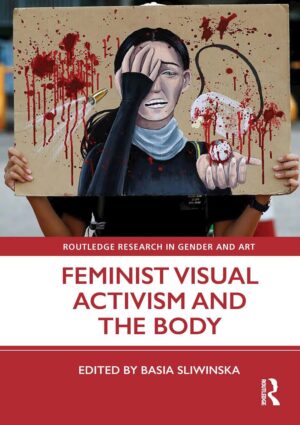
Feminist visual activism and the body

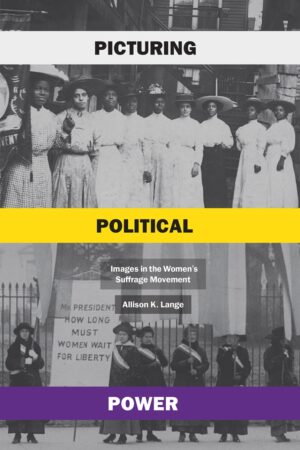
Picturing political power : images in the women’s suffrage movement