This week in Summer Reading

Book cover for The Swimmers

The Swimmers
Julie Otsuka

The Swimmers by Julie Otsuka rewrites the rules of novel-writing – if such rules exist. Hilarious at times, as the narrator assumes the first-person plural “we” from the POV of a diverse group of lap swimmers at a community pool, and poignantly heartbreaking later, as the voice shifts to the second-person “you” in the form of one of the swimmers’ daughters, a Japanese American novelist. Masterfully crafted, this novel delivers – in a slim 176 pages.

JOHN LEVINE
Lecturer
College Writing Programs


Book cover for Twenty Five Chickens

Twenty-Five Chickens and a Pig for a Bride
Evangeline Canonizado Buell

In Twenty-Five Chickens and a Pig for a Bride: Growing Up in a Filipino Immigrant Family, Buell recounts her experiences as one of the few Filipino families growing up in West Oakland during the 1930s and ’40s, detailing her and her family’s triumphant struggles over racial and gender discrimination in the Bay Area. This wonderfully written and engaging memoir gives us a firsthand window into Buell’s family life, starting in the early 1920s when her parents immigrated to the United States, into her adult life, two marriages, and numerous achievements, which include helping to co-found the East Bay Chapter of the Filipino American National Historical Society. In addition to the engaging narrative, Buell welcomes us into her story through a series of family photographs.

Buell was recently interviewed on East Bay Yesterday, a great accompaniment to the book, and the Bancroft Library has an oral history with her, which is part of the Rosie the Riveter World War II American Homefront Oral History Project.

KRIS KASIANOVITZ
UCB IGS Library Director


Vincent H. Resh: Water, Insects, and Friendships, oral history release

New oral history: Vincent H. Resh
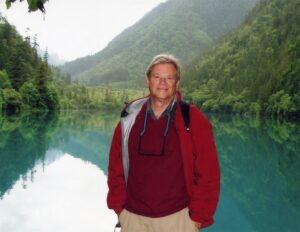
Vince Resh standing before a lake with mountains in the background
Vincent H. Resh in China, circa 2009.

Vincent H. Resh is a world-renowned Professor of Aquatic Ecology and Entomology and an award-winning teacher at UC Berkeley whose decades of humanitarian work, research, and leadership in the Onchocerciasis Control Programme helped protect tens of millions of people from the scourge of river blindness in sub-Saharan West Africa. Resh and I recorded over twenty-eight hours of his oral history over Zoom in the first months of 2021. His fascinating, world traveling, and enlightening oral history produced a transcript over 700 pages long, including a bibliography of his publications with over 400 entries, as well as an appendix of photographs with family, friends, and colleagues.

To me, Vince Resh embodies ubuntu, a Nguni Bantu term meaning “humanity” or “the quality of being human” that functions more extensively as “humanity towards others.” Ubuntu encapsulates ideas of community and interconnection with human kindness and mutual caring. It offers an African way of seeing self-identity formed in mutual relation to one another that sometimes is explained as “I am because we are.” The ubuntu theology of Archbishop Desmond Tutu popularized the concept, especially in the 1990s when he chaired South Africa’s Truth and Reconciliation Commission during their turbulent transition to democratic majority rule. Desmond Tutu described ubuntu as something that “refers to gentleness, to compassion, to hospitality, to openness to others, to vulnerability, to be available to others and to know that you are bound up with them in the bundle of life.” Coincidentally, Vince Resh began his own life-changing and life-giving work in West Africa around that same time.
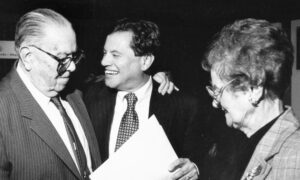
Vince Resh smiling and standing between his father and mother
Vince Resh with his parents after receiving UC Berkeley’s Distinguished Teaching Award, 1995.

I associate Vince Resh with ubuntu for several reasons. Certainly for his decades of self-sacrificing humanitarian and ecological work in West Africa and elsewhere, but perhaps foremost for his genuine love of people. Resh has an infectious joie de vivre that shines brightest while sharing his world-spanning adventures with beloved family, friends, and fellow travelers. His explorations as an entomologist and freshwater scientist took him across the planet to examine nature’s deep and delicate interconnections. On those adventures, Resh created community everywhere he went, forging new friendships or fortifying old ones. His teaching and research provided a means to deepen bonds with people he loved most, friends and science collaborators alike, and often in the service of others. As Resh explored ways that water enables ecological interconnections, he deepened his own human relations, grew into his best self, and lifted up others in the process.
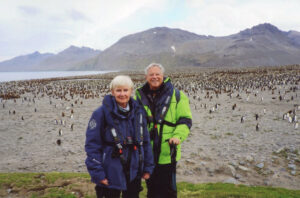
Two people in thick coats stand on a beach with thousands of penguins and mountains in the distance
Cheryl Resh and Vince Resh co-leading a Cal Discoveries trip along with over 500,000 penguins on South Georgia Island, Antarctica, 2021.

Vincent Resh was born September 1945, in Greenwich Village, New York City, and grew up in Westchester County, just north of the Bronx. He earned a B.S. from Georgetown University in 1967, a M.S. from Niagara University in 1969, and his Ph.D. in 1973 in the Water Resources Laboratory at the University of Louisville. His research examined the evolutionary ecology of aquatic insects, and he developed approaches for the biological monitoring of water quality and the control of water-borne disease vectors. Resh was an assistant professor at Ball State University from 1973 to 1975. He joined the faculty at UC Berkeley in 1975, mentored scores of graduate students, and taught over 20,000 Berkeley undergraduates from 1988 to 2011 in his General Biology course. From 1996 to 2001, Resh was Director of the Richard B. Gump South Pacific Biological Research Station on the island of Moorea in French Polynesia. From 1995 to 2009, he served on the Expert Advisory Committee and chaired the Ecological Group in the World Bank and World Health Organization’s Onchocerciasis (River Blindness) Control Programme in West Africa. From 2002 to 2012, he advised the Mekong River Commission on the effects of large Chinese dams by conducting studies throughout Southeast Asia. He was involved in many international aid projects, taught courses at universities throughout the world, lectured across all seven continents, and consulted on numerous science advisory boards and projects. Upon retiring in 2015, Resh received the Berkeley Citation, a high honor for those whose contributions to UC Berkeley go beyond the call of duty and whose achievements exceed the standards of excellence in their fields. His son Jon and stepson Jeff were born in 1970. He is married to Cheryl Resh, a former Vice Chancellor and Director of the Financial Aid and Scholarships Office at UC Berkeley who also earned the Berkeley Citation upon her retirement.

Several smiling or laughing people lift Vince Resh entirely off the ground and horizontally
Many of Vince Resh’s PhD students demonstrate how they “carried him” in research at a day-long symposium on research in Resh’s laboratory at the meeting of the Society of Freshwater Science, 2016.

Vincent Resh’s oral history recounts his rich personal life and his prolific academic and humanitarian career. The details of Resh’s education and academic career—especially his decades of ecological monitoring and teaching for international aid projects all around the world—highlights various ways that entomological science can be used to improve the human condition, while also creating historic records of human impacts on the natural world. Resh’s oral history also reveals how social connections play a fundamental role in the scientific process of creating new knowledge. Resh regularly developed deep friendships with his many academic collaborators around the planet. He shares numerous stories from his personal relationships with his academic mentors, as well as his own legions of graduate and undergraduate students during his forty years of teaching at UC Berkeley. Resh also taught courses all over the world on the process of scientific writing and publication, much of it drawn from his experiences as a prolific author and an academic editor. From 1976 to 1998, Resh was editor of the leading academic journal Annual Review of Entomology, and he co-edited the award-winning Encyclopedia of Insects in 2003, which was awarded the “Most Outstanding Single-Volume Reference in Science” by the Association of American Publishers and “Best of Reference” by the New York Public Library and Library Journal.
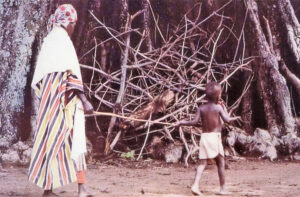
An adult holding the end of a long stick walks behind a small child who holds the front of the long stick
The iconic image of onchocerciasis or river blindness: a blind adult being led by a small child with a stick, here in Bouaké, Ivory Coast, 1995.

Resh’s oral history also provides details from his biomonitoring research and international service projects throughout Europe, India, Russia, Southeast Asia, the South Pacific, Central America, and North America. Resh discussed extensively his two decades of biological monitoring and decision-making as chair of the Ecological Control Group and member of the Expert Advisory Committee for the OCP, the World Health Organization’s Onchocerciasis (River Blindness) Control Programme in West Africa. The WHO and World Bank’s summary statistics of success for the OCP are astounding. Along with other program leaders, Resh’s decades of work helped protect 40 million of the poorest people on Earth from river blindness, including nearly 25 million children born in the area since the program’s start who are now free from risk of river blindness. Their work prevented an estimated 600,000 new cases of blindness across the eleven participating nations in West Africa, and some 1.5 million people who were once infected no longer experience symptoms. As a result, the OCP opened up 25 million hectares of arable land, which is enough to feed an additional 17 million people per year. Perhaps even more astounding, in order to achieve these successes, the Ecological Control Group that Resh oversaw sprayed carefully controlled pesticides on 30,000 miles of rivers over a geographic area covering over 476,000 square miles across eleven different nations in West Africa. This massive spraying was conducted nearly every week for 10-12 months each year for about 20 years, including while some of the West Africa nations were at war with each other! Resh’s participation in the OCP, or River Blindness Programme, had a profound effect on his life, his teaching, and his health—all of which he described throughout his detailed and moving oral history.
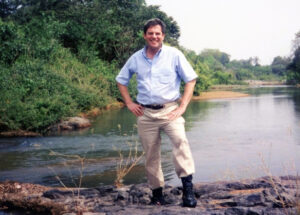
Vince Resh in wading boots stands before a river and forest
Vince Resh working in the Onchocerciasis Control Programme on Niger River near Segou, Mali, 1998.

For me, Vince Resh embodies ubuntu because his life journey and the choices he made throughout his career as a teacher and as a freshwater scientist continually fostered an ethic of mutual caring and community enrichment. Theologian Michael Battle, who was ordained by Archbishop Desmond Tutu, once described a person with ubuntu as open and available to others, affirming of others, not threatened that others are able and good, for he or she has a proper self-assurance that comes from knowing that he or she belongs in a greater whole and is diminished when others are humiliated or diminished, and is elevated when others are lifted up. I had the pleasure of learning about Vince Resh’s many years of incredible service to his many communities—of scholars and learners at Berkeley, of international scientists, of fellow international aid workers in humanitarian projects around the world, and of his friends and neighbors in California’s Bay Area. And now, with the publication of his extensive oral history, you too have the opportunity to learn from and revel in Vincent H. Resh’s adventures of living and sharing ubuntu.

Vincent H. Resh, “Vincent H. Resh: Water, Insects, and Friendships” conducted by Roger Eardley-Pryor in 2021, Oral History Center, The Bancroft Library, University of California, Berkeley, 2023.

About the Oral History Center

The Oral History Center of The Bancroft Library preserves voices of people from all walks of life, with varying political perspectives, national origins, and ethnic backgrounds. We are committed to open access and our oral histories and interpretive materials are available online at no cost to scholars and the public. You can find our oral histories from the search feature on our home page. Search by name, keyword, and several other criteria. Sign up for our monthly newsletter  featuring think pieces, new releases, podcasts, Q&As, and everything oral history. Access the most recent articles from our home page or go straight to our blog home.
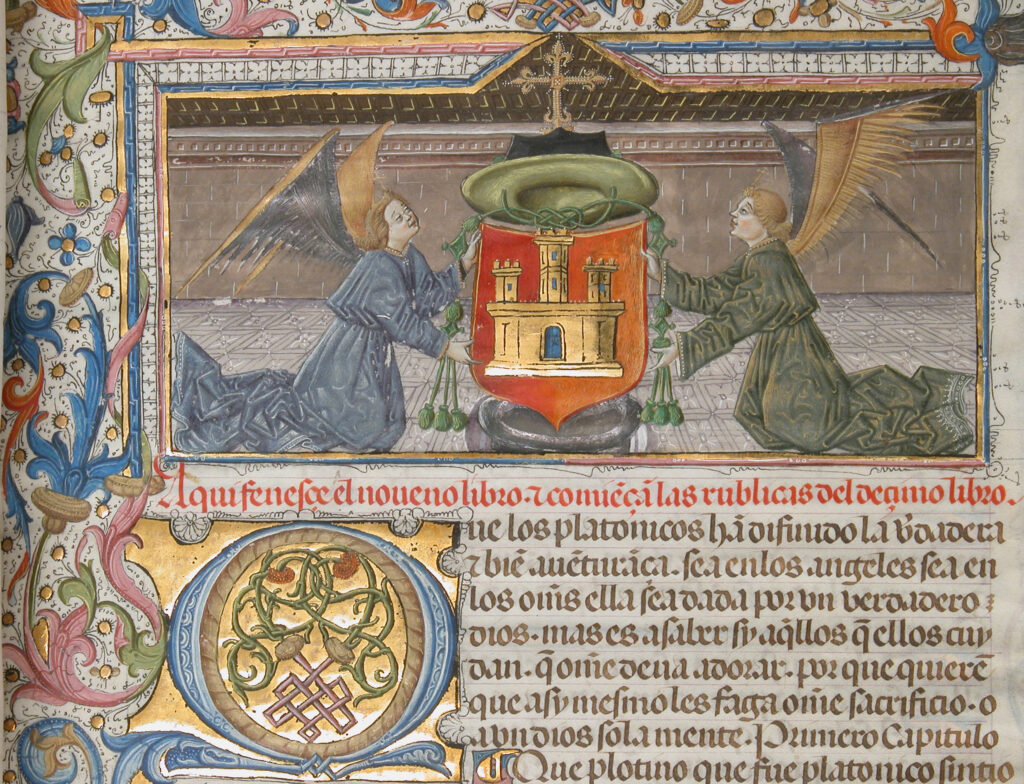

PhiloBiblon 2023 n. 3 (May): NEH support for PhiloBiblon and the Wikiworld

Metropolitan Museum X.430.1, f. 1r

We are delighted to announce that PhiloBiblon has received a two-year implementation grant from the Humanities Collections and Reference Resources program of the National Endowment for the Humanities to complete the mapping of PhiloBiblon from its almost forty-year-old relational database technology to the Wikibase technology that underlies Wikipedia and Wikidata. The project will start on the first of July and, Dios mediante, will finish successfully by the end of June 2025.

The fundamental problem is to map the 422,000+ records of PhiloBiblon’s bibliographies with their complexly interrelated relational tables to the triplestore structure of Wikibase.  A triplestore relates two Items by means of a Property. Thus a Work is linked to an Author by the Property “written by.”

We received an NEH Foundations grant for this project in 2021, as described in detail in PhiloBiblon 2021 (n. 3): PhiloBiblon y el mundo wiki: propuesta de una colaboración. Over the course of the last two years, the pilot project team, consisting of Charles Faulhaber (PI), Patricia García Sánchez-Migallón and Almudena Izquierdo Andreu (doctores por la UCM); Berkeley undergraduate Spanish and data science majors (Julieta Soto, Serena Bai, Tina Lin, Cassandra Calciano, Martín García Ángel); Max Ziff (data engineer); and Josep Formentí (user interface programmer), has analyzed the data structures of PhiloBiblon’s ten relational tables (using BETA for the test cases) and worked out the procedures needed to convert them into triplestore structures.

Almudena and Patricia manually mapped more than 125 BETA records to FactGrid: PhiloBiblon as models for the automated processing of the rest. See for example the records for Alfonso X, BNE MSS/10069 (Cantigas de Santa Maria), and the 1497 edition of the translation of Boccacio’s Fiammeta. These models have been key for establishing the semantic relations between PhiloBiblon’s data fields and the Properties and Items in FactGrid. In many cases appropriate properties did not exist and it was necessary to create them. For example, something as simple as the Watermark property was needed in order to identify the various watermark types set forth in PhiloBiblon’s controlled vocabulary.

Julieta Soto and Martín García Ángel attacked the problem of creating almost 900 FactGrid records for the controlled vocabulary terms in BETA. This meant in the first place a search in FactGrid to make sure that an equivalent term did not already exist, in order to avoid creating duplicate records. Then they had to situate the term in the FactGrid ontology by specifying it as a “basic object” (e.g., fruit) or identifying it as a subclass of an appropriate basic object, for example facsímil impreso as a subclass of facsímil. At the same time they had to link the record to the code in PhiloBiblon, BIBLIOGRAPHY*RELATED_BIBCLASS*FAP, identifying a record in the Bibliography table as a print facsimile, thereby making it possible to search for such items.

The default viewer used in FactGrid, the same as that used in Wikidata, is not user friendly. Therefore Josep has created a prototype user interface, using data from the BETA Institutions table. We encourage you to play with it and tell us what you like or—more usefully—don’t like.

This change to Wikibase technology is designed to allow PhiloBiblon not only to take advantage of the linked open data of the semantic web, but also, and most importantly, to decrease sustainability costs. Because Wikibase is open-source software maintained by WikiMedia Deutschland, the software development arm of the Wikimedia Foundation, software maintenance costs for PhiloBiblon will be minimal in the future. This means that it will no longer be necessary to seek major grant support every five to seven years merely to keep up with technology change.

While this work has been going on, we have not neglected the vital process of cleaning up PhiloBiblon data in order to facilitate the automated mapping nor the equally vital process of adding new information to PhiloBiblon. For example,  Pedro Pinto, a member of the BITAGAP team, has recently discovered a “folha desmembrada” (BITAGAP manid 7862) from the Livro 4 of the chancery records of king Fernando I (1345-1383) (BITAGAP manid 3255), separated from the manuscript in the Arquivo Nacional da Torre do Tombo. The newly discovered dismembered leaf contains five previously unknown royal documents. It was being used as the cover of the “Livro de Acordãos, 1620-24,” in the archive of the Santa Casa de Misericórdia in Coruche, a small city in the Santarem district on the Tagus river northeast of Lisbon.

The recycling of  parchment leaves from discarded medieval manuscripts, presumably for more socially beneficial purposes, such as the protection of administrative records, was common in both Spain and Portugal in the sixteenth and seventeenh centuries. Such leaves have been the source of many unknown or poorly documented medieval texts. Perhaps the most spectacular example was Harvey Sharrer’s discovery in 1990 of the eponymous Pergaminho Sharrer (BITAGAP manid 1817), with musical notation for seven poems of king Dinis of Portugal (1279-1325). This had been used as the binding of a collection of notarial documents (Lisboa: Arquivo Nacional da Torre do Tombo: Lisboa, Cartório Notarial de. N. 7-A, Caixa 1, Maça 1, livro 3).

Mariña Arbor Aldea
Arthur L-F. Askins
Vicenç Beltran Pepió
Álvaro Bustos Táuler
Antonio Cortijo Ocaña
Charles B. Faulhaber
Patricia García Sánchez-Migallón
Ángel Gómez Moreno
José Luis Gonzalo Sánchez-Molero
Almudena Izquierdo Andreu
Filipe Alves Moreira
María Morrás
Óscar Perea Rodríguez
Ricardo Pichel Gotérrez
Pedro Pinto
Maria de Lurdes Rosa
Nicasio Salvador Miguel
Martha E. Schaffer
Harvey L. Sharrer
Cristina Sobral
Lourdes Soriano Robles


Data Analysis Workshop Series: partnering with the CDSS Data Science Discovery Consultants

With the increase in data science across all disciplines, most undergraduates will encounter basic data science concepts and be expected to analyze data at some point during their time at UC Berkeley. To address this growing need, the Library Data Services Program began partnering with the Data Science Discovery Consultants in the Division of Computing, Data Science, and Society (CDSS) on the Introduction to Data Analysis Support workshop series in Fall 2020. The Data Science Discovery Consultants are a group of undergraduates majoring in computer science, math, data science, and related fields who are hired as student employees. They receive training to offer consultation services across a wide range of topics, including Python, R, SQL, and Tableau, and they have existing partnerships with other groups on campus to provide instruction around data as a part of their program. Through the partnership, Data Science Discovery Consultants work with librarians to develop as instructors and gain experience constructing workshops and teaching technical skills. The end result is the creation of a peer-to-peer learning environment for novice undergraduate learners who want to begin working with data. The peer-to-peer learning model lowers the barrier to learning for other undergraduates and enhances motivation and understanding.

The Data Science Discovery Consultants enthusiastically embraced the core values of the Carpentries, through which they empower each other and the audience, collaborate with their community, and create inclusive spaces that welcome and extend empathy and kindness to all learners. In Fall 2022, attendance for the workshop series was opened up to local community college students who may be interested in transferring to UC Berkeley. One of the workshops was taught in Spanish, to provide an environment in which native Spanish speakers could better connect with one another and the content. 

Diego Sotomayor, a former UC Berkeley Library student employee and current Data Science Discovery Consultant, taught the inaugural Introduction to Python in Spanish: Introducción al análisis de datos con Python. Diego comments that: 

“Languages at events are no longer just a necessity but have gone to the next level of being essential to transmit any relevant information to the interested public. There are many people who only speak Spanish or another language other than English and intend to learn new topics through various platforms including workshops. However, because they are limited by only speaking a language that is not very popular, they get stuck in this desire to progress and learn. Implementing the workshop in different languages, not only in English but in Spanish and even others, is important to give the same opportunities and equal resources to people looking for opportunities.”

The UC Berkeley Library and the Division of Computing, Data Science, and Society hope to further provide these offerings for prospective transfer students in Fall 2023. Many thanks to Elliott Smith, Lisa Ngo, Kristina Bush (now at Tufts University), and Misha Coleman in the Library. Anthony Suen is the Library’s staff partner in the Data Science Discovery Program and Kseniya Usovich assists with outreach. 


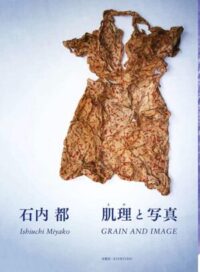
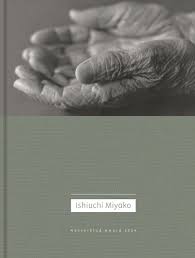
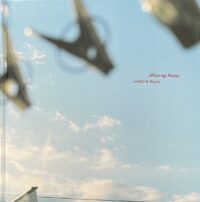
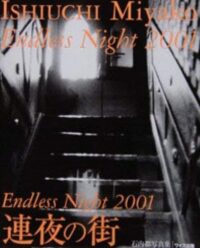
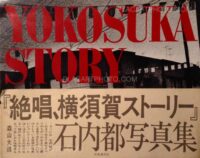
Ishiuchi Miyako Photobooks From Richard Sun Donation

Come see the photography books of Ishiuchi Miyako on display in the Art History/ Classics Library.  Follow the link to read a brief biography of the artist from the SFMOMA website.  These books are part of Richard Sun’s generous donation of photography books.  Click the links below to view their records in UC Library Search.

Grain and Image                 Hasselblad Award                Moving Away                   Endless Night               Yokosuka Story


The Oldest Trick in the Book: Rediscovering the Novel in the Routine

By Lily Garcia, Undergraduate Library Fellow (2022-23)

The start of each semester brings a new weekly routine. Classes and extracurricular activities structure your days and influence where you spend your time on campus. Gradually, you become accustomed to your schedule, going to the same place, sitting in the same seat, and doing the same activity on repeat week after week. Novelty becomes easy to forget. During my time as a Research Fellow, I learned how to look at routine experiences and recollect that novelty to help others navigate academic spaces. 

One project I was involved in over the spring semester was completing UC Berkeley Library (Hub) Profiles. As a former Main Stacks student library employee and frequent visitor to Heyns Reading Room, these two libraries had long been cloaked by familiarity for me. The project of visiting Main Stacks and Doe Library while imagining I was entering them for the first time again, thus proved to be an enlightening exercise. Using the “I Like, I Wish, I Wonder” and “One thing to know before…” frameworks, I navigated through these spaces I had visited consistently for the past two years and asked myself, what did I enjoy about that library when I first saw it? How did I figure out where to go initially? I became aware again of how confusing, yet exciting, everything is in the beginning. Once I had reflected, I recorded my ideas into our online profile templates, which is data that can be used to improve the wayfinding experience for future visitors to the UC Berkeley libraries.  

As I prepare to graduate next week, I am practicing this skill of remembrance. I have been (re)visiting my Berkeley haunts for the last time and thinking about how I have grown throughout my journey. In particular, Doe Library has been a place I have thought a lot about. Not only was it the first place I went to on campus, but it acted as the home of my community at Cal. It is where I went weekly to meet with my ULF peers and mentors. Being a Research Fellow in the ULF program has been an invaluable experience that I will treasure well into the future and has helped me see the novelty again in the routine. 


Wayfinding with Direction

By Timothy Kim, Undergraduate Library Fellow (2022-23)

Looking back on the efforts of the Undergraduate Library Fellows, I’ve come to realize and appreciate how much the program has matured. A theme I noticed this semester had been on wayfinding, or the ways in which people navigate unexplored places and orient themselves. 

We started off in January optimistic but a little unguided. The fellows and I knew what our main goal was–to help bridge the gap between library resources and students–but we didn’t have a clear path on how to do this. Great ideas were conceived, from developing our social media presence to creating library profiles and grouping them in hubs for easier access, but I felt there were too many avenues and not enough time to properly explore each one. Each fellow pursued projects they were most interested in and developed frameworks for how they could best accomplish their goals. 

As the semester progressed and students began to navigate their research projects, however, I think the other fellows and I were reoriented to really focusing on the student experience. We had peer-to-peer consultations and were given the opportunity to lead a Research 101 Workshop, which encouraged us to develop frameworks on how to approach individual and group learning and forced us to look at the path to research from different perspectives. Some students had no experience with research but needed to complete their assignments while others were very experienced but had reached a dead end. We had to look at how students approached their projects and create a map that they could use to help them with their needs. 

Leading the workshop in front of my fellow undergrads and guiding students through consultations was very rewarding, and with each experience I learned to rely less on a rigid framework and instead cater to where each student was at on their journeys. I believe this allowed me to be more useful as a fellow and grounded the other fellows and I to our main goal. 

Our final project, the Bancroft User Experience, was a culmination of the skills and experiences we had throughout the semester. In this project all of the fellows concentrated on how users would navigate archival research from the Bancroft collection and any roadblocks they might encounter while doing so. Now that we had a framework and more importantly, experience and perspective, we could ask ourselves where students and researchers might encounter obstacles when using Bancroft library resources. We were able to identify and present our findings to the librarians of the Bancroft library.

As I reflect on the past semester and past year overall, I can see how much the other fellows and I have grown. I can see where we have gained perspective on what research is and the path it takes to help students benefit from the library’s vast wealth of knowledge. More importantly though, I’ve thoroughly enjoyed the experiences I’ve had and the interactions with so many wonderful people that taught me the ability to find this direction.


The Not-so-Scary Library

By Avery Klauke, Undergraduate Library Fellow (2022-23)

When I tell people I work in Doe Library, it is sometimes followed by, “Is that the big building people take grad photos in front of?” Although true, it has previously amazed me that some students don’t know more about Doe (or many other libraries). But as I was reflecting on this year, this didn’t come as much of a surprise…

When you enter Berkeley in your first year, there’s often a stigma around the libraries. They’re big, quiet, and intimidating. Their sole purpose is to be a place where students can cram for finals or get in a quick nap between classes. And most of the time, this stigma doesn’t go away in the years you’re here. That was the goal for the library fellows this year. To make strides in painting the libraries as a place of collaboration, creativity, and fun.

The first thing the research fellows got to do this semester was teach a Research 101 Workshop. This workshop was our way of merging our 1-1 research consultations with the ways Research 101 is traditionally taught. And between presenting all of the material well to trying to keep everyone engaged and collaborative, it was no easy feat. But we thought that if students could see their peers presenting, it would help our goal of making the library less menacing of a place. Personally, being able to field questions and work together with the rest of the research fellows made this experience my personal favorite. 

Another project we did this semester was coined the “Bancroft User Experience Project”. Unlike the other projects this year, I didn’t have to put myself into the shoes of a new student because I too had almost no experience with the Bancroft Library. Our goal was to identify advantages and “pain points” when requesting a special collection item. One of my conclusions from this project was that despite the employees and librarians in Bancroft being so helpful and understanding, there’s still an intimidation factor that turns away most undergraduates before they even enter the front door. If you’re a new student reading this- don’t believe what people say about Bancroft being an exclusive library! If you can get over this hurdle, you’ll be exposed to some of the most extensive collections on campus!

Although the goal for this year was to give back to the Berkeley student body, I cannot say that I didn’t experience any personal gain. This year’s fellows and mentors provided me with the most enjoyable space to spend my afternoons. I hope to continue our goal of making the library more welcoming to students, and I can’t wait to see what we accomplish next year!


Research 101

By Sofia Hernandez, Undergraduate Library Fellow (2022-23)

A highlight of my ULF experience this semester was being able to bring our peer-to-peer consultation experience outside of Doe 190 and into a different setting: Doe 223! Last semester, I learned a lot about hosting peer-to-peer consultations and meeting the needs of a wide variety of learners. Assuming the role of a “mentor” to my peers while simultaneously being an undergraduate student myself gave me unique insight into the research consultation experience: it is daunting to ask for help, but that fear slowly dissipates as you work alongside someone who looks just like you and is on the same educational journey as you are! I loved getting to know our consultees and the wide-ranged string of research ideas they brought us to untangle together, therefore, I was delighted to learn that this semester would bring in the opportunity for the Research fellows to host a “Research 101” workshop of our own in the library classroom (infamous and aforementioned Doe 223) on the second floor–talk about moving up in the world!

As a returning fellow, I’ve attended a couple of Research 101’s in my time; all of them uniquely wonderful and engaging. The rotating teams of librarians who host these workshops have a seemingly natural “synergy” to their presentations and teaching styles, a quality I greatly admire as an aspiring librarian myself, so the idea of hosting a workshop for students, by students, made me feel equal parts nervous and excited. 

After some tentative scheduling and planning, a date was set: March 16. The lead up to that Thursday was short lived (as was the rest of the spring semester…where did the time go?!). Alongside two of the three other Research fellows, our consultation-free days were spent going over changes we’d like to see in the current workshop module. We played around with the order of information, reworded text-heavy slides with student-friendly language, and most importantly: bonded and got to know one another the more time we spent together tinkering with our Google slides. 

The day of our presentation rapidly crept up on us, and though I was nervous beforehand (and admittedly during), our workshop ran quite smoothly. Hosting a research workshop was no different than hosting a consultation, plus, I had the support of two awesome Research fellows beside me who I could rely on to take the reins and fill in for spots or details I missed. Everything did not fall solely on one person–a feat unknown to many who have experienced college group projects. Hosting Research 101 allowed me to exercise the skills I have been learning in our consultations (for instance, how to be flexible and open to throwing “the rule book” out when things don’t go as planned) and apply them to a larger and more collaborative scale.

As I close out my junior year at Cal, I am excited and eagerly anticipating returning to the fellowship in the Fall and seeing what new opportunities and doors the fellows and I can open together.


Oral History Center Releases Documentary on Famed Yale Social Scientist James C. Scott

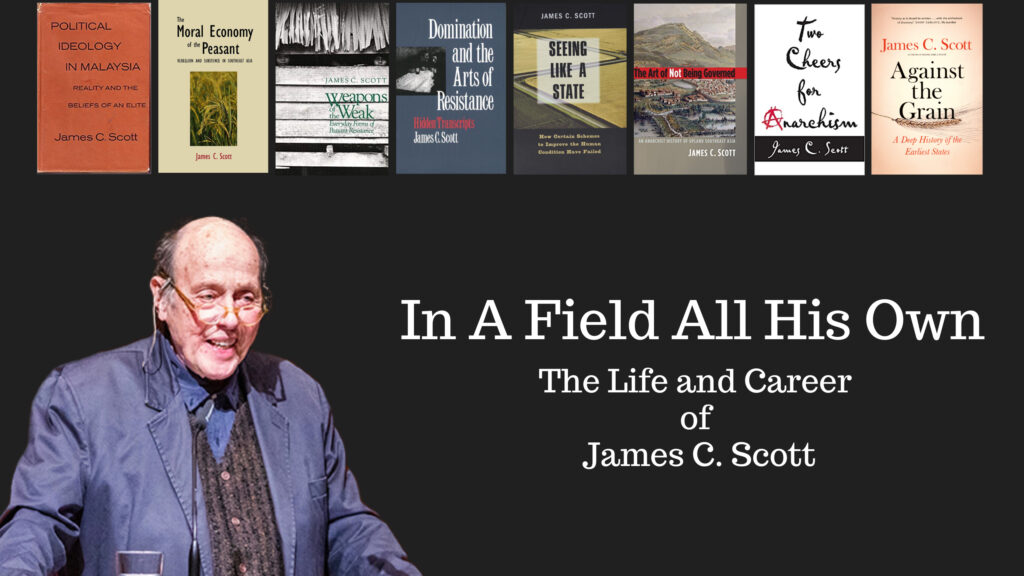
In A Field All His Own: The Life and Career of James C. Scott

 “James C. Scott is regarded by many as one of the most influential thinkers of our time.” 

The Oral History Center at UC Berkeley is proud to release, In A Field All His Own: The Life and Career of James C. Scott, a documentary that offers an unprecedented look at the famed Yale political scientist. Created and produced by UC Berkeley Oral History Center (OHC) historian Todd Holmes, the film draws from nearly thirty hours of oral history interviews with Scott and affiliated scholars at Yale and UC Berkeley to trace the intellectual journey of the award-winning social scientist from his childhood in New Jersey through each of the ground-breaking works he produced throughout his accomplished career. Overall, the film presents an intellectual biography of one of the world’s preeminent academics, a feature that will serve as a treasured resource for students and scholars around the globe.

Graphic of James C. Scott and his books

While intellectual biographies may not be a typical genre, Scott is far from a typical academic. Over the last fifty years, few scholars have achieved such prominence within the American academy as James C. Scott. The Sterling Professor of Political Science at Yale University, with appointments in anthropology and the school of forestry and environmental studies, he is regarded by many as one of the most influential thinkers of our time. Throughout his career, his scholarship became a series of major interventions that impacted dozens of disciplines across the humanities and social sciences. From the strategic rhythms of peasant life to notions of resistance and the functioning of the modern state, his work continually shaped and reshaped research agendas and discourses in the academy. By his retirement in 2022, Scott stood as one the most widely read social scientists in the world – an influence and distinction that placed him, as the film title suggests, “in a field all his own.”

The idea for the documentary developed out of the Yale Agrarian Studies Oral History Project, which Holmes conducted between 2018 and 2020. The focus of that project was to document the career of James C. Scott, as well as the thirty-year history of the renowned Yale Agrarian Studies Program he founded. Those oral history interviews, which the OHC released in 2021, served as the basis for the film. Holmes had worked for both Scott and the Agrarian Studies Program during his graduate studies at Yale. His motivation for both the project and documentary was to capture Scott’s story—in his own words—for future generations. As Holmes recalls, “I had the privilege of meeting and working with Jim Scott before ever reading Jim Scott, a unique vantage point that allowed me to develop a deep appreciation for the brilliant scholar behind the books—his limitless curiosity, his wit and humor, and the welcoming nature of his intellect. I wanted to capture these qualities in telling his story. His books will be read for generations to come; it was my hope that this film could serve as a companion and allow students and scholars to get to know James C. Scott and the inspiration behind his work.” 

The film was made possible through the generous support of Yale University’s Program in Agrarian Studies, InterAsia Initiative, and Council on Southeast Asia Studies. It was produced by Todd Holmes in association with the UC Berkeley Oral History Center and Teidi Productions, a digital creations label he operates with his partner Heidi Holmes. The film is available to the public via YouTube.

About the Oral History Center

The Oral History Center of The Bancroft Library preserves voices of people from all walks of life, with varying political perspectives, national origins, and ethnic backgrounds. We are committed to open access and our oral histories and interpretive materials are available online at no cost to scholars and the public. You can find our oral histories from the search feature on our home page. Search by name, keyword, and several other criteria. Sign up for our monthly newsletter  featuring think pieces, new releases, podcasts, Q&As, and everything oral history. Access the most recent articles from our home page or go straight to our blog home.