This week in Summer Reading

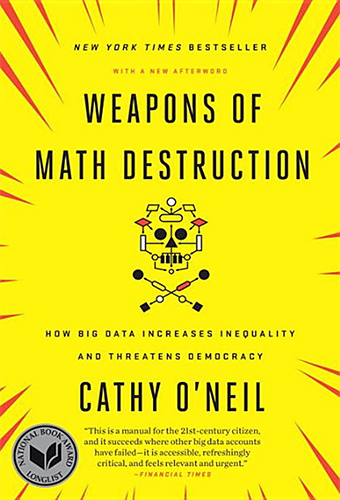
Book cover for Weapons of Math Destruction

Weapons of Math Destruction: How Big Data Increases Inequality and Threatens Democracy
Cathy O’Neil

An examination of different algorithmic systems and how they structure our education, finances, career opportunities, and more, often amplifying biases or creating unintended consequences. O’Neil gives us insight into the semi-opaque rules that define our lives in an era where statistical principles are (mis)used to shape our world, and what we can/should do to understand, revise, or fight those rules. This book will keep you reading because you’ll get madder and madder, but you’ll appreciate the insight into things we don’t always know about.

CATHERINE CRONQUIST BROWNING
Assistant Dean
Academic Programs, Equity & Inclusion
School of Information


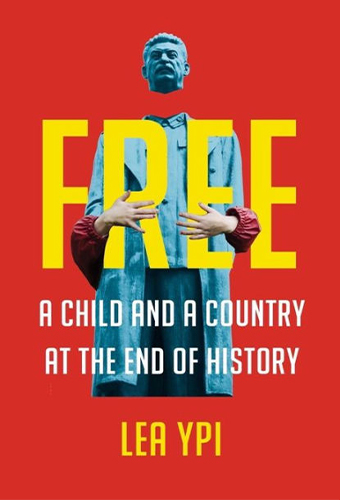
Book cover for Free

Free: A Child and a Country at the End of History
Lea Ypi

This memoir by an Albanian political scientist who now lives and works in Britain is a very interesting personal window into a little-studied country that had a very closed, Soviet-style socialist government until much later than its neighbors. Ypi discovers the rules that structured her life as she was growing up and has the opportunity to contrast them with different kinds of rules and social structures later in life. Ypi’s book is compelling and HIGHLY readable; I could not put it down. It’s also a book that doesn’t shy away from difficult things, but it’s not so heavy that it’s hard to get through.

CATHERINE CRONQUIST BROWNING
Assistant Dean
Academic Programs, Equity & Inclusion
School of Information


National Science Foundation Public Access Plan 2.0

Many of you may have already seen, or even read, the NSF Public Access Plan 2.0. This document, disseminated last week, is the National Science Foundation’s response to the OSTP Public Access Memo from August 2022, which requires all federal grant funding agencies to make research publications and their supporting data freely available and accessible, without embargo, no later than December 31, 2025. The public access plan is not the agency’s new policies, but rather the framework for how they will improve public access and address the new requirements. The agency states they will accomplish this prior to the December deadline, on January 31, 2025. I have highlighted just a few points from the report below.
  • The agency will leverage the existing  NSF Public Access Repository (NSF-PAR) to make research papers, either the author’s accepted manuscript (AAM) or the publisher’s version of record (VOR), available immediately. All papers will be available in machine-readable XML, which will make additional research through text and data mining (TDM) possible.
  • The agency will continue to leverage relationships with long-standing disciplinary and generalist data repositories, like Dryad.
  • All data and publications will have permanent identifiers (PIDS). Data PIDS will be included with the article metadata.
  • The agency acknowledges the complexity in size, type, and quality of documentation with data. Publishing a dataset has far greater technical variability than publishing a manuscript. The agency will continue to explore how to best address data in the next two years.
  • The NSF has long required data management plans (DMPs). DMPs will be renamed to “data management and sharing plans,” or DMSPs, to better describe the required documentation and align with other agencies, like the NIH.

The above bullets are a mere 5 items in the lengthy report. Most importantly, over this next year, the Data Collaboration Team will develop an inreach plan to ensure all librarians and staff know how the OSTP memo and resulting policy will impact them and their researchers. Following awareness within the library, we will work on developing a coordinated outreach approach to support our researchers as they adapt to new requirements. This work will be in coordination with the Office of Scholarly Communication Services, the Research Data Management Program, and other longstanding LDSP partners.

Please let us know if you have any questions by sending them to librarydataservices@berkeley.edu.

This week in Summer Reading

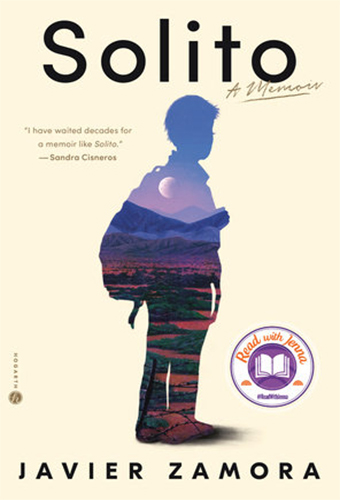
Book cover for Solito

Solito
Javier Zamora

In this book, Javier Zamora tells his story as an undocumented child emigrating from El Salvador to the U.S. He captures his view of the world as a 9-year-old and takes you with him as he leaves his grandparents, is led by coyotes, and meets fellow migrants on the journey. I was so immersed in the book and his experiences that by the time he reaches the U.S. border, I was shocked by the starkness and strangeness of this new country and its people. An agua fresca and chilaquiles will never taste the same.

NANCY H. LIU
Director, UC Berkeley Psychology Clinic & Center for Assessment
Associate Clinical Professor
Department of Psychology


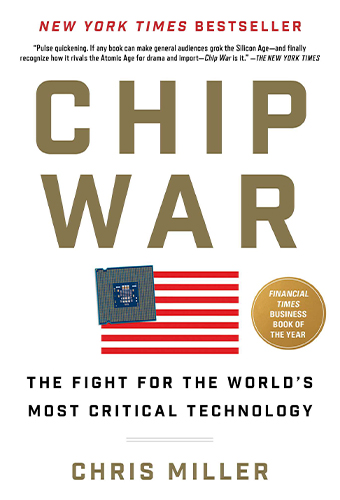
Book cover for Chip War

Chip War
Chris Miller

What do old graphing calculators, a small island nation, and the fight for global dominance have in common? Semiconductor chips. In Chip War, Chris Miller, history faculty member at Tufts, tells the gripping account of the rise of this technology over the past few decades and the new global arms race. Elegantly weaving the stories of early Silicon Valley personalities with Texas technology (rather than oil) tycoons and ultimately landing in Taiwan, this book will make you understand current geopolitics (like the war in Ukraine) in a new light – I now cannot unsee the importance of these chips.

NANCY H. LIU
Director, UC Berkeley Psychology Clinic & Center for Assessment
Associate Clinical Professor
Department of Psychology


This week in Summer Reading

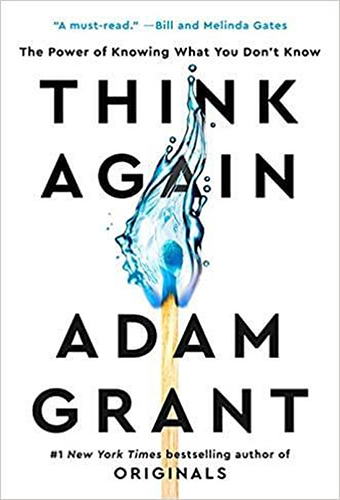
Book cover for Think Again

Think Again: The Power of Knowing What You Don’t Know
Adam Grant

Grant’s book discusses how we can go about defining ourselves by values which could give us the flexibility to rethink and update our plans and practices based on ongoing new evidence. It encourages you to reexamine and challenge your own beliefs and assumptions.

LOIS WAREHAM
Manager
IT Client Services
Special Operations and Security Response


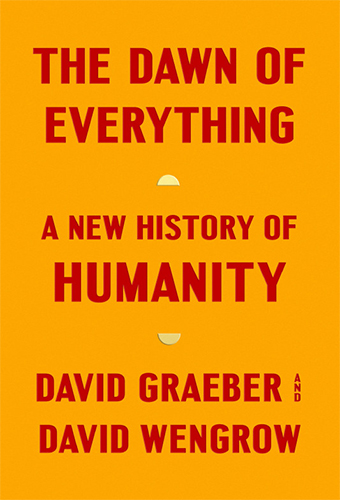
Book cover for The Dawn of Everything

The Dawn of Everything
David Graeber and David Wengrow

The Dawn of Everything: A New History of Humanity is a 2021 book by anthropologist David Graeber and archaeologist David Wengrow. It puts forth a dramatically new understanding of human history, challenging our most fundamental assumptions about social evolution — from the development of agriculture and cities to the origins of the state, democracy, and inequality — and revealing new possibilities for human emancipation. I recommend this book because it causes us to reevaluate the “rules” of human society, and gives us a more hopeful vision of the creativity that characterizes our species.

CAROLINE M. WILLIAMS
Associate Professor
Department of Integrative Biology


PhiloBiblon 2023 n. 4 (June): The Bancroft Library’s Fernán Núñez Collection

I am delighted to announce that thanks to the efforts of Randy Brandt, Head Cataloguer of The Bancroft Library, it is now possible to find all of the volumes in Bancroft’s Fernán Núñez Collection.

You can now search by call number and retrieve the records for the volumes that have been individually cataloged. (If you don’t see the volume number you’re looking for, that means it is still only part of the larger set; no individual record yet).
 
To see which ones have been cataloged  in volume number order, use the University of California Library Search catalog:
 
1) Click on Browse Search in the top menu bar.
2) Open the pop-up menu and scroll down to “Other call numbers.”
3) Type in “BANC MS UCB 143” and click the Search icon (or press Enter).
 
The first result is the record for the collection itself, followed by several hits for microfilm, many with the title “Host bibliographic record for boundwith item….” Near the bottom of the first screen you will see the record for v. 1-2, Epitome de la vida del Marques de la Mina, Conde de Pezuela …. To see the rest of the call numbers, use the scroll tab at the lower right of the screen.
 
Note that even with this project, there are still some volumes that have “Host bibliographic record…” as the title (see v. 17 for the first one). However, when you click on that record, you will have access to the individual titles bound within that volume.

This collection of 224 manuscripts comes from the library of the counts and then dukes of Fernán Núnez, a town near Córdoba, principally from that of  the 6th count of Fernán Núñez, Carlos José Gutiérrez de los Ríos y Córdoba (1742-1795), although the nucleus of the collection probably goes back to Juan Fernández de Velasco (1550-1613), 5th  duke of Frías and viceroy of Milan. According to the Diccionario Biográfico electrónico of the Real Academia de la Historia, Gutiérrez de los Ríos was a man of broad culture who wrote a biography of King Carlos III and was an honorary member of the Real Academia de Bellas Artes de San Fernando in Madrid and the Real Academia Sevillana de Buenas Letras.
 
Bancroft bought the collection in 1984 from the legendary New York bookseller H.P. Kraus, thanks in part to the happy instance that at the time I was in New York working on the catalog of medieval manuscripts of the Hispanic Society of America. Kraus recruited me to write an initial description of the collection prior to putting it on the market. I alerted my colleagues in Berkeley of its importance, and they in turn convinced James D. Hart, Bancroft’s director, to find the funds for its purchase.
 
Among the interesting volumes is the most important manuscript of the Crónica sarracina de Pedro del Corral (BETA manid 3602), from the library of Bernardo de Alderete,  author of Del origen y principio de la lengua castellana o romance que  hoy se usa en España (1606), and a late 16th-c or early 17th-c. copy of the  Cancioneiro da Vaticana (BITAGAP manid 1666), one of the three major collections of medieval Galician-Portuguese lyric poetry.
 
We are fortunate to have descriptions of the collection from Ignacio Díez Fernández and Antonio Cortijo. Cortijo also studied the Crónica sarracina, while Arthur Askins identified the Cancioneiro da Bancroft Library. More recently Pablo Saracino has studied the Antigüedades de España of Lorenzo Padilla.
Charles B. Faulhaber
University of California, Berkeley
References

Askins, Arthur L-F. “The Cancioneiro da Bancroft Library (previously, the Cancioneiro de um Grande d’Hespanha): a copy, ca. 1600, of the Cancioneiro da Vaticana.” Actas do IV Congresso da Associação Hispânica de Literatura Medieval. Lisboa: Edições Cosmos, 1991: I:43-47 (BITAGAP bibid 2595)

Cortijo Ocaña, Antonio. “La Crónica del Moro Rasis y la Crónica Sarracina: dos testimonios desconocidos (University of California at Berkeley, Bancroft Library, MS UCB 143, Vol. 124).” La Corónica 25.2 (1997): 5-30 (BETA bibid 3946)
 
—–. La Fernán Núñez Collection de la Bancroft Library, Berkeley: estudio y catálogo de los fondos castellanos (parte histórica). London: Dept. of Hispanic Studies, Queen Mary and Westfield College, 2000 (BETA bibid 7111)
 
 
—–. Viviendo yo esta desorden del mundo. Textos literarios españoles de los Siglos de Oro en la Colección Fernán Núnez. Burgos : Fundación Instituto Castellano y Leonés de la Lengua, 2003 (BITAGAP bibid 17216)
 

This week in Summer Reading

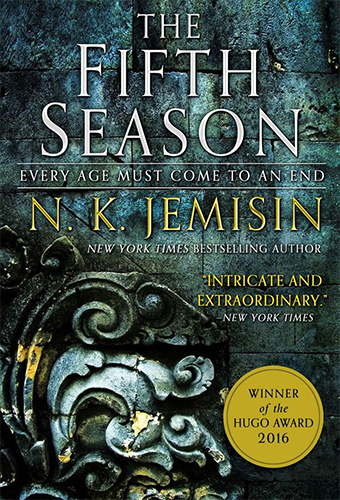
Book cover for The Fifth Season

The Fifth Season
N.K. Jemisin

The Broken Earth Series by N. K. Jemisin fits the theme, is an engaging and thought-provoking piece of fantasy, and has incredible world building that I constantly envy. I think incoming students would enjoy it and I’d recommend starting with the first in the series, The Fifth Season.

JACK ESPINOZA
Film and Media Studies Major
Class of 2023


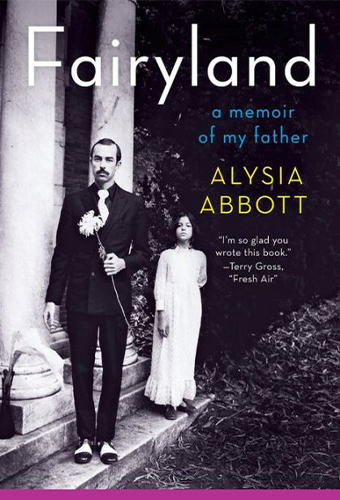
Book cover for Fairyland

Fairyland: A Memoir of My Father
Alysia Abbott

Two decades after her father’s death from AIDS-related complications, Alysia Abbott wrote Fairyland, a memoir of her father in San Francisco in the 1970s and ’80s. She recounts their lives together as her father raises her as a single, gay parent after Abbott’s mother suddenly dies in a car accident. They move from apartment to apartment in Haight Ashbury, surrounded by a community of people including poets, drag queens, boyfriends, and roommates. Her father’s parenting skills are unconventional and imperfect, their community eccentric and chaotic; but through this instability and loneliness, her life is interspersed with abiding love, creativity, and responsibility. By reading her father’s journals after his death, and in the process of writing this book, she learns of unexpected truths, one that has helped her to reconstruct her own truth and “rules” of what family, parenting, and love should look like.

CHISAKO COLE
Lecturer
College Writing Programs


Happy Pride Month 2023

Happy Pride Month

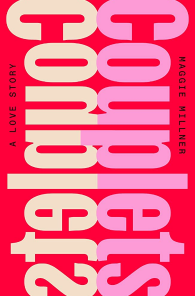
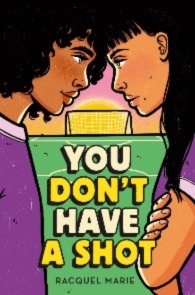
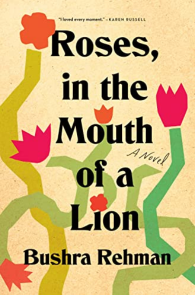
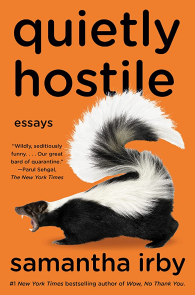
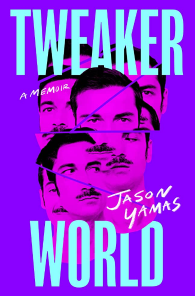
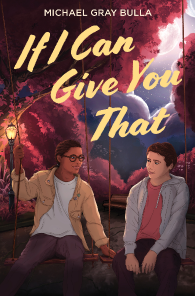
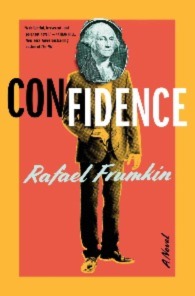
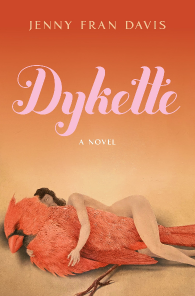
Celebrate Pride Month this June with novels, essays, romances, and humor by LGBTQIA writers. Browse through our Overdrive collection for even more great picks this month.