New Book by Henrike Christiane Lange

Giotto's Arena Chapel and the Triumph of Humility [book cover]

In this book, Henrike Lange takes the reader on a tour through one of the most beloved and celebrated monuments in the world – Giotto’s Arena Chapel. Paying close attention to previously overlooked details, Lange offers an entirely new reading of the stunning frescoes in their spatial configuration. The author also asks fundamental questions that define the chapel’s place in Western art history. Why did Giotto choose an ancient Roman architectural frame for his vision of Salvation? What is the role of painted reliefs in the representation of personal integrity, passion, and the human struggle between pride and humility familiar from Dante’s Divine Comedy? How can a new interpretation regarding the influence of ancient reliefs and architecture inform the famous “Assisi controversy” and cast new light on the debate around Giotto’s authorship of the Saint Francis cycle?

Illustrated with almost 200 color plates, including individual images of each scene in the narrative cycle, this volume invites scholars and students to rediscover a key monument of art and architecture history and to see it with fresh eyes.

“Henrike Lange’s book on Giotto’s Arena Chapel changes our view of this key work of painting in Italy around 1300.” – Ulrich Pfisterer, Director of the Zentralinstitut für Kunstgeschichte; LMU, Munich

“Dr. Lange’s discovery is so all-encompassing and so to the point… It is now possible to bridge the Anglo-Saxon and Italian views of Giotto where once they were thought to be irreconcilable: a great step forward for the field.” – Laurence B. Kanter, Chief Curator, Yale University Art Gallery

“Lange shows how the theme of triumph is at once central and inexhaustible in the Arena Chapel – its structure, imagery, physical presence, context. The book is itself a vivid triumphal procession of ways of seeing, scholarship, discovery, and critical thinking.” – Randolph Starn, UC Berkeley History

“Lange’s discovery is completely new and original: an entirely convincing case built on the foundations of history, literature, philosophy, political iconography, and theology.” – Andrew Stewart, UC Berkeley History of Art and Classics

“Lange has the rare ability to build bridges for the reader with her command of European languages that allow her to translate and integrate the vast libraries of research on Giotto written in different linguistic and scholarly traditions. The very elegance and clarity of her writing suggest that Lange’s will be a contribution of real significance and will have quite an impact on medieval and Renaissance studies.” – Giuseppe Mazzotta, Sterling Professor of Italian, Yale University

“At its heart Lange’s impressive book relays an intensely visual argument. It is a scholarly triumph in itself to explicate the intimate relation – architectural, political, theological – between the Arena Chapel and a famous Roman prototype, the Arch of Titus. All scholars and students of the period will need to engage this powerful historical proposition and its implications for Italian Trecento visual culture. But Lange also finds the full measure of Giotto’s triumph as a painter.” – Whitney Davis, UC Berkeley History of Art

[from publisher’s site]

Henrike Christiane Lange is Associate Professor in History of Art and Italian Studies at the University of California, Berkeley. Lange completed her Magister Artium at Universität Hamburg, Germany, before earning her PhD at Yale University. The present book is the culmination of two decades of research at sites, archives, and collections across Europe.

Giotto’s Arena Chapel and the Triumph of Humility.
Cambridge: Cambridge University Press, 2023.


Call for papers: Wisconsin Slavic Conference

Wisconsin Slavic Conference

March 24-25, 2023

University of Wisconsin-Madison

Abstracts for 20-minute papers on any aspect of Slavic literatures, cultures (including film, music, and the visual arts), linguistics, and history are invited for the annual Wisconsin Slavic Conference. Comparative topics and interdisciplinary approaches are welcome and encouraged. The conference will be held in person at the University of Wisconsin-Madison on Friday and Saturday, March 24 and 25, 2023. Recent conference programs are available on the Wisconsin Slavic Conference website at https://gns.wisc.edu/2022/04/19/wisconsin-slavic-conference-2022/

This year’s keynote lecture will be delivered by Professor Yuliya Ilchuk (Stanford University).

To present a paper at the Wisconsin Slavic Conference, please submit a proposal by February 19, 2023.

A complete proposal consists of the following:

1. Author’s contact information (name, affiliation, postal address, telephone, and email).

2. Paper title

3. 300-500 word abstract

4. Equipment request (if necessary)

Email to send proposals: Jesse Kruschke jlkruschke@wisc.edu and Isabella Palange palange@wisc.edu.

Organizers:
Jesse Kruschke, Co-Chair of Wisconsin Slavic Conference, University of Wisconsin-Madison
Isabella Palange, Co-Chair of Wisconsin Slavic Conference, University of Wisconsin-Madison
Yekaterina Pak, Secretary of Wisconsin Slavic Conference, University of Wisconsin-Madison

Sourcing the Past with the Dizionario Biografico degli Italiani

Dizionario Biografico degli Italiani
Photos and text by Claude Potts, CC BY 4.0

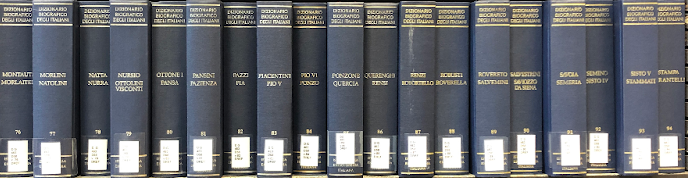
The publication of the hundredth (and final) volume of the Dizionario Biografico degli Italiani (Dbi, Biographical Dictionary of the Italians) last year by Istituto della Enciclopedia Italiana (Istituto Treccani) is a momentous occasion that may have been overshadowed by the global pandemic when libraries were shuttered and cataloging backlogs amassed. In the spirit of other European projects such as the Dictionary of National Biography (UK), the Diccionario biografIíco español (Spain), and the Allgemeine Deutsche Biographie (Germany), this ambitious biographical dictionary was conceived in 1925 with national-patriotic criteria in mind during the first phase of the National Fascist Party’s consolidation of power in Italy. Because of setbacks during and following World War II, the first volume did not appear in print until 1961 yet nearly every year thereafter, at least one or two volumes were added to the evolving reference set.

The enterprise endeavored to include the most illustrious figures in the history of Italy from the fall of the Western Roman Empire to the present day. Responding to the needs of the digital age, these 40,000 scholarly entries with sources and bibliographies have been made freely available online (but not free of ads) and integrated with other reference works they publish. While new entries are added to the online portal which also comprises Enciclopedia dell’Italiano, Dizionario di Filosofia, Enciclopedia Machiavelliana, Enciclopedia del Cinema, etc., entries in the print tomes are subject to the era in which they were authored. One of the conditions for inclusion in the Dbi is that of being deceased. According to its current director Raffaele Romanelli, the work is doomed to bear witness only to the past if worthy cultural figures are overlooked. He explains, “I have here a ready list of Italians who passed away this year: Alberto Arbasino, Franca Valeri, Rossana Rossanda. Will they all be destined for exclusion?”

The neo-Hegelian idealist philosopher, educator, and fascist politician Giovanni Gentile, who was also director of the Enciclopedia Italiana, referred to the work as “the golden book of the Italian stock.” In recent years, the notion of relevance has expanded to the world of business, technology, even of media and fashion, and includes previously unthinkable icons such as gay activist playwright Mario Mieli, notorious pornstar Moana Pozzi, and soccer heroes Enzo Bearzot and Dino Viola. According to Romanelli, there really never was a predefined canon. “To give an idea of ​​the criterion, I would have liked to have included Pinocchio and Don Abbondio, non-existent but fundamental,” he quipped. Naturalized citizens such as the Swiss botanist Daniel Bovet and the mezzo-soprano Cathy Berberian of Armenian-American descent are included but entries for women remain overall at an appalling four percent. There are entries for fiction writers Natalia Ginzburg and Elsa Morante but it could be a long time before we see one for famous living writers such as Elena Ferrante. In 2015, the influential feminist art critic Carla Lonzi was added to the online version. Fans of the late philosopher, writer, and linguist Umberto Eco who died in 2016 still awaits an entry in the Dbi.

UC Berkeley is one of three dozen libraries across the country with the complete print set of 100 volumes. Most research libraries canceled their standing orders somewhere along the way. But what does this mean now when updates are not possible in a standard reference work such as this? Does the whole work become a cultural relic forever frozen in the epoch in which it was created? The lack of a critical lens and blatant exclusion of worthy cultural, political, scientific, and historical figures is reason enough to keep updating the work, illuminating the overlooked both from Italy’s past and recent years. While promises of forthcoming appendices and the technological capability of Trecanni to insert new entries and revise old ones in the online edition, the fate of this national reference work and others like it remains unknown. Students continue to rely, as many of us do for quick look-ups, on Wikipedia as the golden age of cumbersome print reference works sunsets. The burning question we should be asking ourselves is not what we would do without Wikipedia but what would we do without these print reference treasures, or knowledge bases, that constitute its foundation?

Sources consulted

Dizionario Biografico degli Italiani. Istituto della Enciclopedia Italiana fondata da Giovanni Treccani, https://www.treccani.it/biografico. Accessed 31 March 2022.

“Dizionario biografico degli italiani – Immagini.” YouTube, 14 December 2010.
https://youtu.be/pul4bOZ7lAs. Accessed 31 March 2022.

Fiori, Simonetta. “L’ultimo degli italiani.” La Repubblica, 12 December 2020.  https://ricerca.repubblica.it/repubblica/archivio/repubblica/2020/12/12/lultimo-degli-italianiRobinson23.html. Accessed 31 March 2022.

“Istituto della Enciclopedia Italiana.” Enciclopedia on line. Istituto della Enciclopedia Italiana fondata da Giovanni, https://www.treccani.it/enciclopedia/istituto-della-enciclopedia-italiana. Accessed 31 March 2022.

Neveu, Bruno. “Biographie et historiographie: Le Dizionario biografico degli italiani.” Journal des Savants, vol. 1, no. 1, 1971, pp. 32–67, https://doi.org/10.3406/jds.1971.1240. Accessed 31 March 2022.

Sofri, Adriano. “Un monumento di civiltà: il centesimo volume del Dizionario biografico italiano.” Il Foglio, 23 December 2020. https://www.ilfoglio.it/piccola-posta/2020/12/23/news/un-monumento-di-civilta-il-centesimo-volume-del-dizionario-biografico-italiano-1588368. Accessed 31 March 2022.

Dizionario Biografico degli Italiani

Originally published in the European Studies Section Newsletter of the Association of College and Research Libraries.


Tepoztlán Institute 2023: fugitivity, marronage, abolition

TEPOZTLÁN, MORELOS, MÉXICO | July 19 – 26, 2023
Call for participants

2023 Application Form
DEADLINE TO APPLY: JANUARY 15, 2023
Systems of colonization, of exploitation, of citizenship, and of exclusivity produce responses that can be coded as fugitivity and marronage. Those practices of alterity and freedom seek to elude force and violence, but they also invite new forms of placemaking and inclusivity. Abolition – of policing, of carcerality, of national borders, of hierarchical or privileged forms of citizenship – challenges the entrenched forms of the state and opens possibilities for other imaginaries. The Tepoztlán Institute, in its eighteenth year, asks participants to reflect on fugitivity, marronage, and abolition in their many forms in the past, present, and future. How have these practices of freedom been imagined, lived, contested, extended, and reinvented, from the colonial period to the present, across the Americas?

There is a long history of fugitivity and marronage across the Americas. The first maroons in the Americas were Indigenous people fleeing from encomiendas, slavery, and related forms of violence and subjugation in early colonial Hispaniola, and Indigenous practices of flight and assertions of autonomy continued throughout the colonial and national periods. From the quilombos of Brazil and the palenques of Colombia, Panama, Mexico, Peru, and the Spanish-speaking Caribbean, to the maroon societies of Jamaica, Suriname, and the United States, enslaved Africans also engaged strategically in fugitivity and marronage. Though these movements are often siloed, they are not separate: the history of fugitivity and marronage is also one of relationality among Black and Indigenous peoples. Contemporary Black, Indigenous, Latinx, feminist, and queer organizing against state violence and policing and for aesthetic, social, political, and territorial self-determination across the Americas brings these concepts into the present in palpable ways. Fugitivity and marronage have also been central to envisioning past, present, and future liberation.

Like fugitivity and marronage, abolition goes beyond the dismantling of oppressive institutions—it is also the building of autonomy and alternatives that render those oppressive institutions obsolete. In recent years, varied movements and sequences of struggle have forced the politics of abolition into the political mainstream. Many activists, critics, and scholars have framed the abolition of prisons, police, borders, citizenship, and other oppressive institutions as an extension of the struggle that led to the uneven  abolition of slavery in the nineteenth century across the Americas. Others have drawn from the long history of fugitivity and marronage to consider the possibilities of escape from and resistance to systems of domination and extraction under racial capitalism, indigenous dispossession, and anti-Black racism. Abolition is one of several important concepts that have been employed within the Americas to imagine different forms of liberation. Taken together, fugitivity, marronage, abolition, and related ideas draw our attention to heterogeneous politics and practices by which another world is built out of and within the ruins of the present.

We invite reflections that address the concepts of, and links between, fugitivity, marronage, and abolition across disciplines, regions, communities, and temporalities. We foresee conversations across scholarly approaches that come from Indigenous studies, Black studies, slavery studies, Latinx studies, and borderlands studies, as well as queer theory and feminisms. Questions may include: Are fugitivity and marronage still applicable to our contemporary moment, or have new concepts supplanted them? What are the limits of bringing the idea of abolition to bear on the present? What is to be left behind or abolished, and what can be saved or repurposed? How have historical and cultural actors navigated the tensions between strategies of fugitivity or escape on the one hand, and inclusion or recognition on the other? How do the concepts of fugitivity, marronage, and abolition help us challenge or reimagine inherited notions of resistance, freedom, liberation, and so on? How can cultural production and representations of Black, Indigenous, and Latinx relationality in studies of fugitivity, marronage, and abolition escape the constrictions of disciplinary knowledge formation? What kinds of cultural production, speculative thought, and activism do fugitivity, marronage, and abolition enable and indeed require? How might movements benefit from more extensive cross-hemispheric dialogue about these issues?

Scholars, activists, and artists may address any historical period, and approaches may draw from a wide range of fields, including but not limited to, history, literature, cultural studies, media studies, art, art history, philosophy, race and ethnic studies, anthropology, and gender and sexuality studies.

IN ADDITION TO THE themes ABOVE, OTHER POTENTIAL THEMES MIGHT include:  

●       ​Enslavement and emancipation
​●       Indigenous, Black, and Latinx coalitions
●       Indigenous and Black politics, autonomy, sovereignty, flight, refusal, and recognition.
●       Incarceration and decarceration
●       Abolitionist feminism
●       Migration, detention, and deportation.
●       Border abolition
●       Asylum and sanctuary
●       Fugitivity and patriarchy
●       Anarchist theories and practices
●       Capture and flight in/from the archives
●       Law and legal history
●       Queer marronage
●       Marronage and sovereignty
●       Abolition practices
●       Abolitionist geographies
●       Speculation/imagination as abolitionist practice
●       The politics of policing and police abolition
●       Infrastructures for abolitionist practice
●       Fugitive thought/science/epistemologies
●       Slavery and primitive accumulation
●       Marronage and illicit, alternative, and informal economies
●       Autonomy and autonomous practices
●       Ecological and territorial struggles

The deadline for applications is January 15, 2023. For more information, please consult our website (www.tepoztlaninstitute.org) or write to us at tepoinstitute@gmail.com.

New Years

Happy New Year 2023

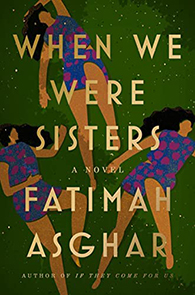
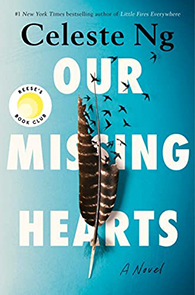
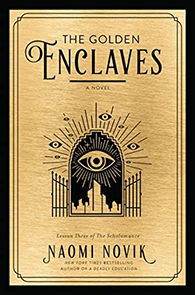
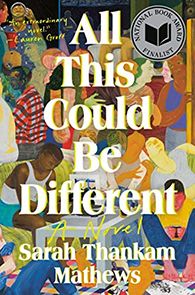
Happy New Year! Kick off the new year by revisiting some great reads from 2022. Stay tuned for more epic reads coming up this year.

Find even more new ebooks.