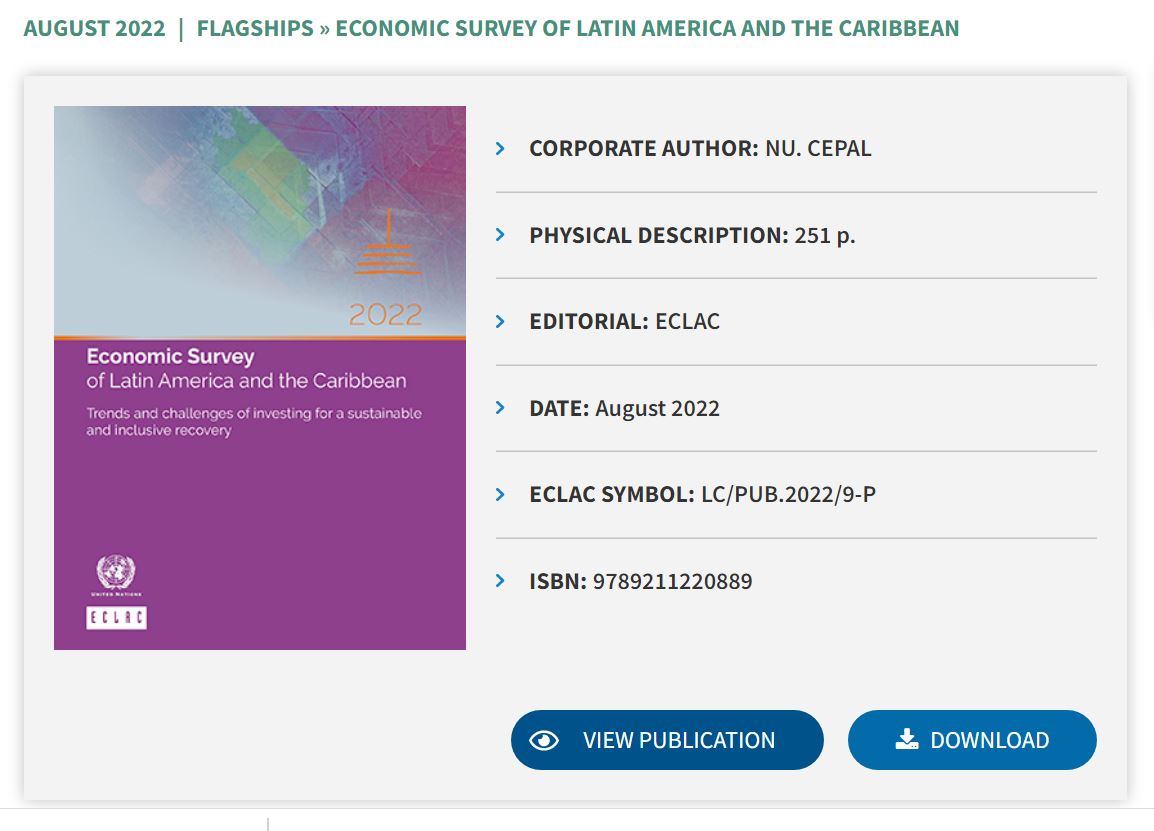
Economic Survey of Latin America and the Caribbean 2022: Trends and challenges of investing for a sustainable and inclusive recovery

The United Nation’s ECLAC has published a 2022 report on trends and challenges of investing for a sustainable recovery in Latin America and the Caribbean. Below is the self-description,  “The 2022 edition of the Economic Survey of Latin America and the Caribbean consists of three parts. Part I outlines the region’s economic performance in 2021, analyses trends in the early months of 2022, and the outlook for growth for the year. It examines the external and domestic factors that have influenced the region’s economic performance in 2021, trends for 2022, and how these factors will affect economic growth in the coming years.
Part II of this edition presents some region’s main challenges in investing for sustainable and inclusive economic growth. It analyses the trends in total investment over the last 70 years and highlights the profound change brought about by the 1980s debt crisis, with a slowdown in investment from the 1990s onwards.
Part III of this publication may be accessed on the Economic Commission for Latin America and the Caribbean (www.eclac.org). It contains the notes relating to the economic performance of Latin America and the Caribbean countries in 2021 and the first half of 2022, together with their respective statistical annexes. The date for updating this publication’s statistical information was 15 July 2022.”

Please click on the image to access this Open Access publication.


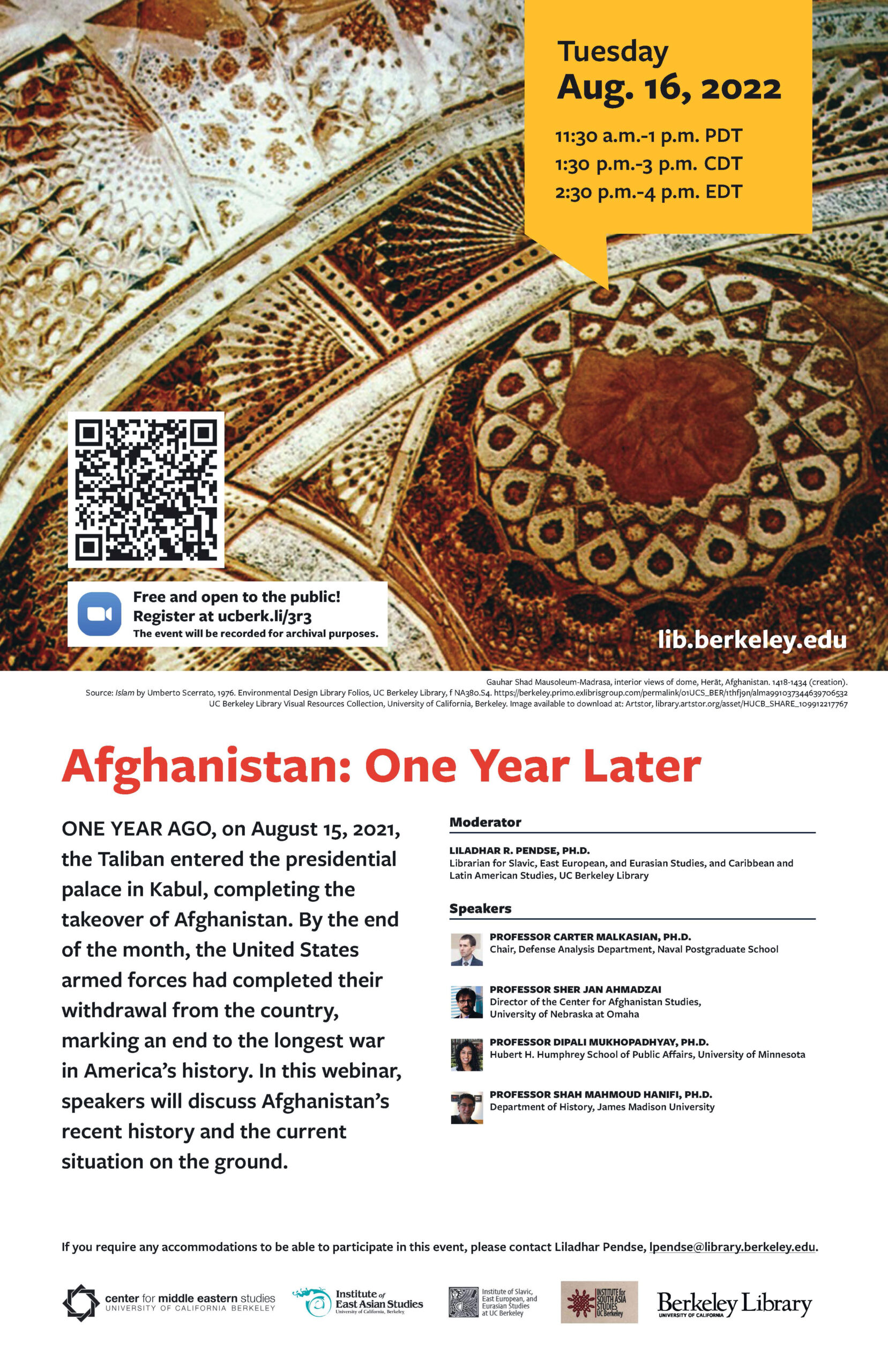
[Webinar-UC Berkeley Library] Afghanistan: One Year Later!

We invite you to attend a ninety-minute Afghanistan-related webinar sponsored by multiple Area and International Studies-related centers and  Institutes (CMES, ISAS, ISEEES, IEAS) and the library at UC Berkeley.

Title of the webinar: Afghanistan: One Year Later!

Date: August 16, 2022

Day: Tuesday
Time:
11:30 am to  1 pm PDT
1:30 pm to 3 pm CDT
2:30 pm to 4 pm EDT

——————————

7:30 pm to 9 pm UK time

11:00 to midnight Kabul time

————————-

Registration

The webinar is free and open to all with prior registration: http://ucberk.li/3r3

——————–

Speakers

  • PROFESSOR CARTER MALKASIAN, PH.D., Chair, Defense Analysis Department, Naval Postgraduate School
  • PROFESSOR SHER JAN AHMADZAI, Director of the Center for Afghanistan Studies, University of Nebraska at Omaha
  • PROFESSOR DIPALI MUKHOPADHYAY, PH.D., Hubert H. Humphrey School of Public Affairs, University of Minnesota
  • PROFESSOR SHAH MAHMOUD HANIFI, PH.D., Department of History, James Madison University
  • Moderator: Dr. Liladhar R. Pendse, Librarian, UC Berkeley

A special note of gratitude to the Library’s Communications Team, Professors Asad Q. Ahmed of Middle Eastern Languages & Cultures, Wali Ahmadi of Middle Eastern Languages & Cultures, and Munis Faruqui of Department of South and Southeast Asian Studies, Central Asia Working Group at the IEAS.


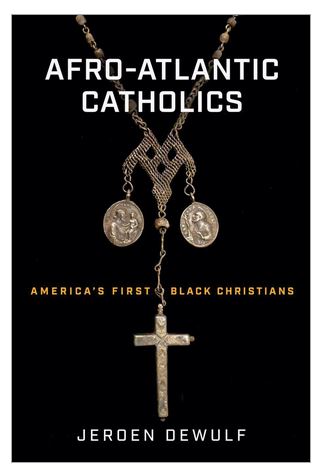
New book by faculty: Afro-Atlantic Catholics : America’s First Black Christians–by Professor Jeroen DeWulf

It is my great honor and privilege to introduce readers of this blog to a new book by Professor Jeroen DeWulf titled “Afro-Atlantic Catholics America’s First Black Christians.” The book will be out in early August. The book is long needed to provide a holistic view of the influence of African Catholics on the historical development of Black Christianity in America during the seventeenth century.
The publisher is the University of Notre Dame Press. The description reads, “Black Christianity in America has long been studied as a blend of indigenous African and Protestant elements. Jeroen Dewulf redirects the conversation by focusing on the enduring legacy of seventeenth-century Afro-Atlantic Catholics in the broader history of African American Christianity. With homelands in parts of Africa with historically strong Portuguese influence, such as the Cape Verde Islands, São Tomé, and Kongo, these Africans embraced variants of early modern Portuguese Catholicism that they would take with them to the Americas as part of the forced migration that was the transatlantic slave trade. Their impact on the development of Black religious, social, and political activity in North America would be felt from the southern states as far north as what would become New York.

Dewulf’s analysis focuses on the historical documentation of Afro-Atlantic Catholic rituals, devotions, and social structures. Of particular importance are brotherhood practices, which were critical in disseminating Afro-Atlantic Catholic culture among Black communities, a pre-Tridentine culture and wary of external influences. These fraternal Black mutual-aid and burial society structures were critically important to the development and resilience of Black Christianity in America through periods of changing social conditions. Afro-Atlantic Catholics show how a sizable minority of enslaved Africans actively transformed the American Christian landscape and would lay a distinctly Afro-Catholic foundation for African American religious traditions today. This book will appeal to scholars in the history of Christianity, African American and African diaspora studies, and Iberian studies.”

Professor Dewulf’s groundbreaking research on how one can reflect on early issues surrounding the conceptualization of diversity, faith, race, and belonging in the context of our continent today while not straying away from in-depth historiographical narrative serves as an archive of memory narrative.


Cinco de Mayo (El Día de la Batalla de Puebla) through books

Each year, Cinco de Mayo (El Día de la Batalla de Puebla)  is celebrated in the United States and Mexico to commemorate the victory of Mexico over the invading imperial French forces at the Battle of Puebla. While today, many “Western” powers adhere to the democratic principles of governance, in the 19th century, most of them practiced imperialism without much guilt. We all know that the self-ascribed civilizing missions of these Western European and Russian Imperial forces, including our democratic American expeditionary force in the Phillippines and other places, remain well-documented in the books and news media of the time. After all, David did overpower Goliath; such was the case for ill-equipped Mexican forces who triumphed over better-equipped French forces. The battle took place 160 years ago, on May 5, 1862, outside of Puebla. Here are some books that would refresh our memories about the significance of Cinco de Mayo.

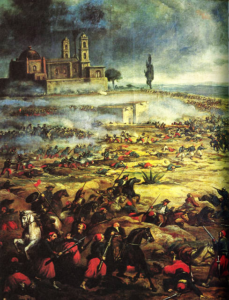
Image Source: 5th May 1862. Depictions of the battle showing Mexican cavalry overwhelming the French troops below the fort at Loreto. Scene recreated by Francisco P. Miranda. Oil on canvas, 1872.

Some subject designations like the one below will help us quickly locate the books from our collections.

European Intervention in Mexico (1861-1867)
Mexico — History — European intervention, 1861-1867
France — Foreign relations — Mexico
Mexico — Foreign relations — France
Mexico — Foreign relations — 1861-1867
France — History — Second Empire, 1852-1870

And below are a few books that might be of interest to our readers.

Payno, Manuel. México y sus cuestiones financieras con la Inglaterra, la España y la Francia : memoria. México: Secrétaria de Hacienda y Crédito Público, 1982. Print.

Bourdeille, Christian. “L’intervention française au Mexique (1862-1867) : un conflit inattendu, une amitié naissante : actes du colloque.” Paris: Les Éditions du Cerf, 2018. Print.

Carvajal, Jose M. de J., and Gaspar Sánchez Ochoa. Contratos hechos en los Estados Unidos por los comisionados del gobierno de Mexico durante los años de 1865 y 1866. Mexico: Imp. del Gobierno en Palacio, 1868. Print.

Cluseret, G. Mexico, and the Solidarity of Nations. New York: Blackwell, 1866. Print.

Chevalier, Michel. L’expédition du Mexique. Paris: E. Dentu, 1862. Print.

Chandler, Zachariah, and James Warren Nye. Mexico. Speeches of Hon. Z. Chandler, of Michigan, and Hon. James W. Nye, of Nevada, in the U.S. Senate, July 12, 1867, on Maximilian’s Decree Ordering the Execution of the Liberal Prisoners … Washington?: Great Republic Print, 1867. Print.

And here is a clip that one might watch to understand further the complex nature of European involvement in Mexican affairs.


New UN Archives Geneva Platform

The United Nations Library & Archives Geneva is pleased to announce the new UN Archives Geneva Platform launch. This new online platform makes it easier to navigate and search approximately ten linear kilometers of archives managed by the UN Library & Archives Geneva, including different fonds such as 19th-century peace movements, the League of Nations, UN Geneva, and additional UN entities based in Geneva.

Thanks to the LONTAD project, the platform provides access to over 10 million digitized pages of the League of Nations archives. By 2022, the entirety of the archives of the League of Nations will be available online (including photographs and maps).

The launch of the platform enables researchers to search exceptional primary sources. It also opens new ways of conducting research in the archives. More information is available here.

With the new platform, we are now offering free tailored online presentations and trainings for researchers and students to explain the structure of the UN archives in Geneva, how the platform works, the material available online and the documents which are still not digitized but available for consultation in site. These presentations can be provided for faculty meetings, seminars and courses, or whatever setting is desirable. Catering to your needs, our specialists can present the wealth of archival documents – digitized and physical – available at the UN Library & Archives Geneva, explain how to use the platform, and show the work of the Institutional Memory Section. For further information, do not hesitate to contact us: https://ask.unog.ch/archives

Contact Info:

Pierre-Etienne Bourneuf, UN Library & Archives Geneva

Palais des Nations, 8-14 Avenue de la Paix, 1211 Genève

Source: Email-Guy Burak-Mela-NYU 04/22/2022

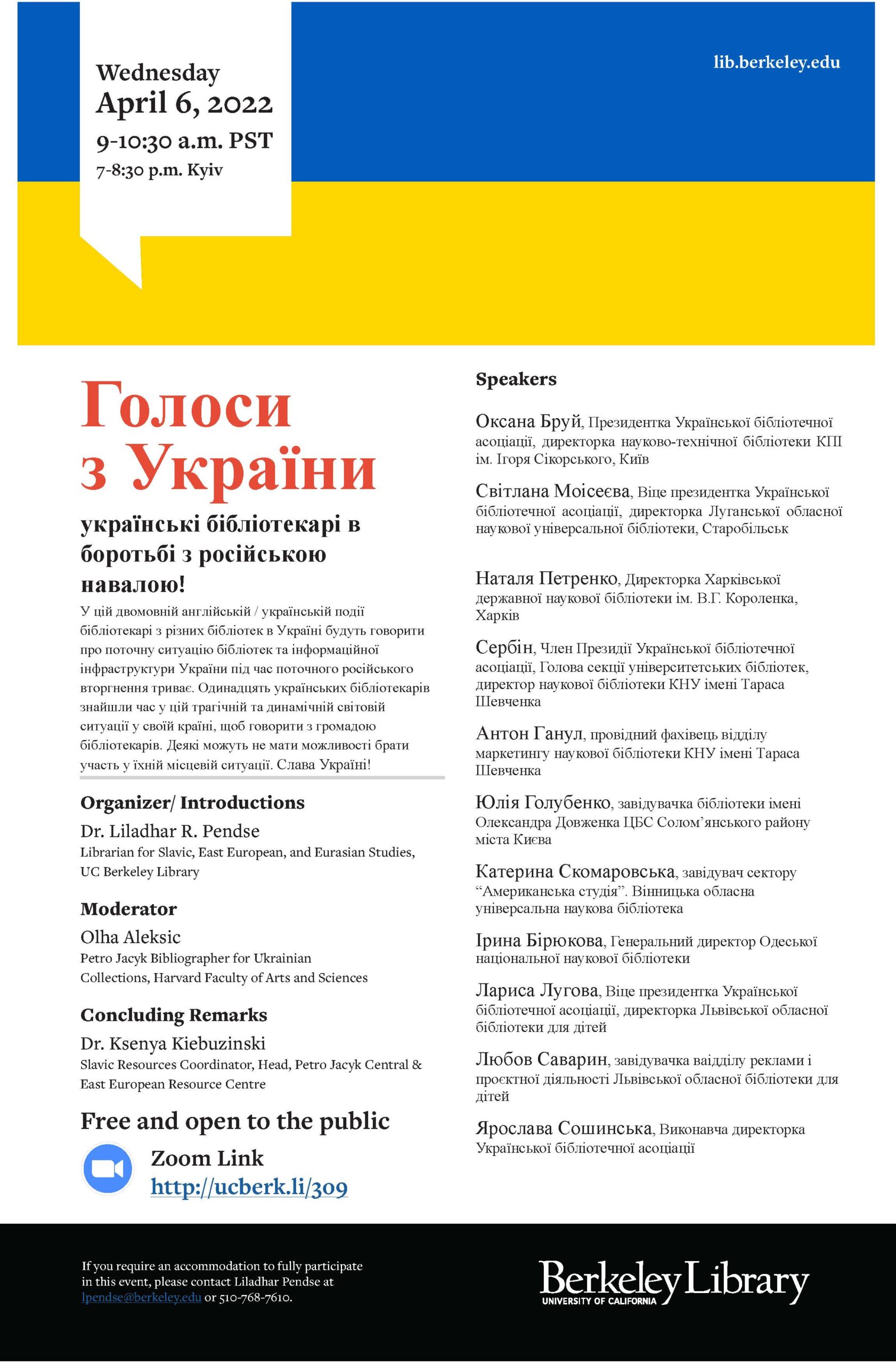
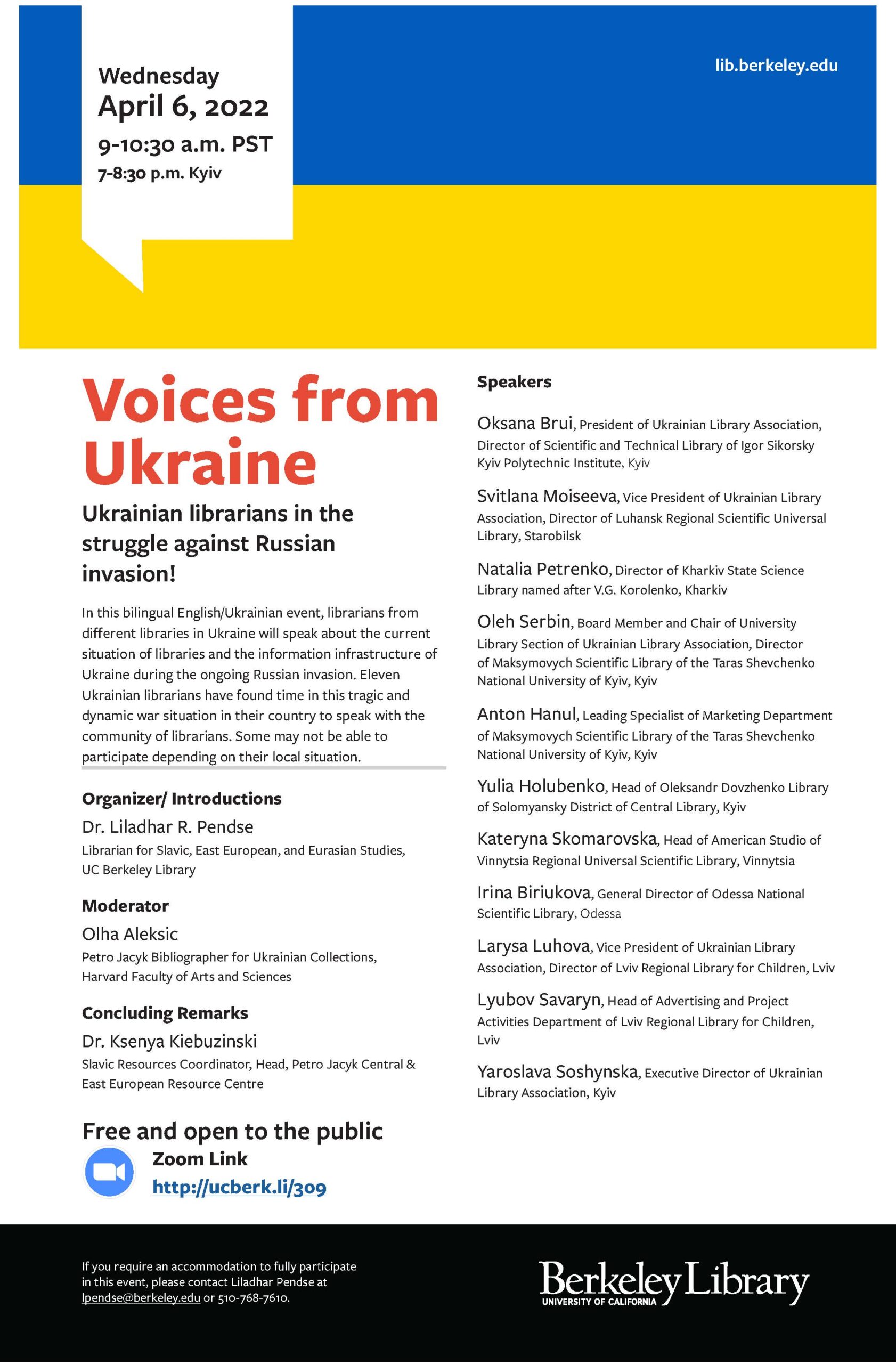
Voices from Ukraine: Ukrainian librarians in the struggle against Russian invasion!

We invite you to join us for a Zoom-based event where librarians across Ukraine will speak to us about their daily lives, work, and heroic efforts to preserve their collections and provide services during the war. Russia’s ongoing war against Ukraine is a tragedy of cultural and humanitarian dimensions. The organizing committee members think it is vital to hear from our brave colleagues in Ukraine.

Date: April 6, 2022

Time: 9 am PST/ 10 am MST/ 11 am CST/ 12 noon EST/ 7 pm Kyiv

Duration: 90 minutes

Registration Link: http://ucberk.li/3o9

Organizers: The Coalition of Slavic Librarians for Peace (CSLP): Olha Alkesic (Ukrainian Research Institute at Harvard University), Ksenya Kiebuzinski (University of Toronto), Liladhar R. Pendse (University of California-Berkeley) and George Andrew Spencer (University of Wisconsin-Madison)


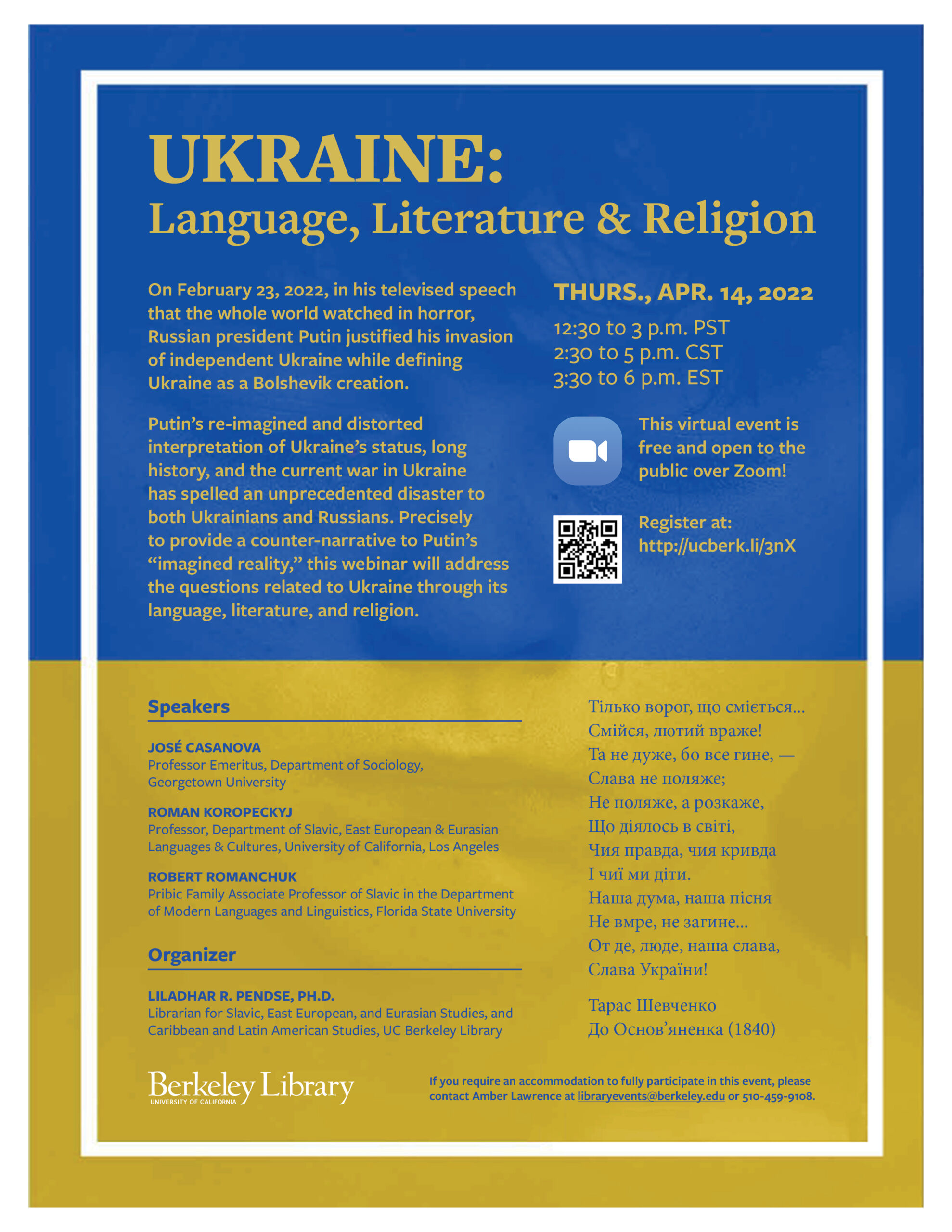
Ukraine: Language, Literature & Religion Virtual Event @UC Berkeley Library

Ukraine: Language, Literature & Religion
When: Thursday, April 14, 2022
Time is shown below:
12:30 pm to 2 pm PST
2:30 pm to 4 pm CST
3:30 pm to 5 pm EST
Registration: http://ucberk.li/3nX
First, log in to your institutional or personal zoom accounts and then register for the event.
This event is a non-political event, and all are welcome to attend with prior registration.


Latinx Research Center (LRC) Faculty-Mentored Undergraduate Research Fellowship


Latinx Research Center (LRC) Faculty-Mentored Undergraduate Research Fellowship

LRC is excited to launch the LRC Faculty-Mentored Undergraduate Research Fellowship program, pairing outstanding faculty with outstanding undergraduate students to advance research in US Latinx Studies.

The LRC has been awarded $550K by the Office of Financial Aid & Scholarships for the next 5 years to support this program. Every year, eleven $10K awards will be made in the liberal arts, and across the professional schools and the museum, to support faculty-mentored undergraduate research fellows throughout a full year: two semesters and a summer. The first round of awards will begin as early as Spring 2022. However, research can also begin in the summer of 2022. The application period has been extended to February 16th. Awards for applications that met the original January 31st deadline will be announced on Monday, February 7th; awards for applications received by February 16th will be announced on February 23rd. The award jury will consist of senior humanities and social sciences professors and will be distributed equitably across disciplines.

Applications should be submitted by faculty, who will nominate an outstanding undergraduate student that has agreed to work with them. Faculty in earlier stages of their career will be favored, however, all faculty are encouraged to apply. Selected student fellows will receive the $10K award throughout the course of a year, and will work closely with their faculty mentor, assisting in research, and developing their research skills, critical thinking, and intellectual creativity. Student fellows and mentors will be expected to meet weekly or biweekly, and to discuss their research at the LRC at the end of the award cycle. As an outcome of this mentored research fellowship, under the guidance of their faculty mentors, students will develop their own honors or capstone thesis, art practice, or other projects.

To apply, please visit https://forms.gle/H4hy1oRJhm39G1KT9.

For questions, email latinxresearch@berkeley.edu.


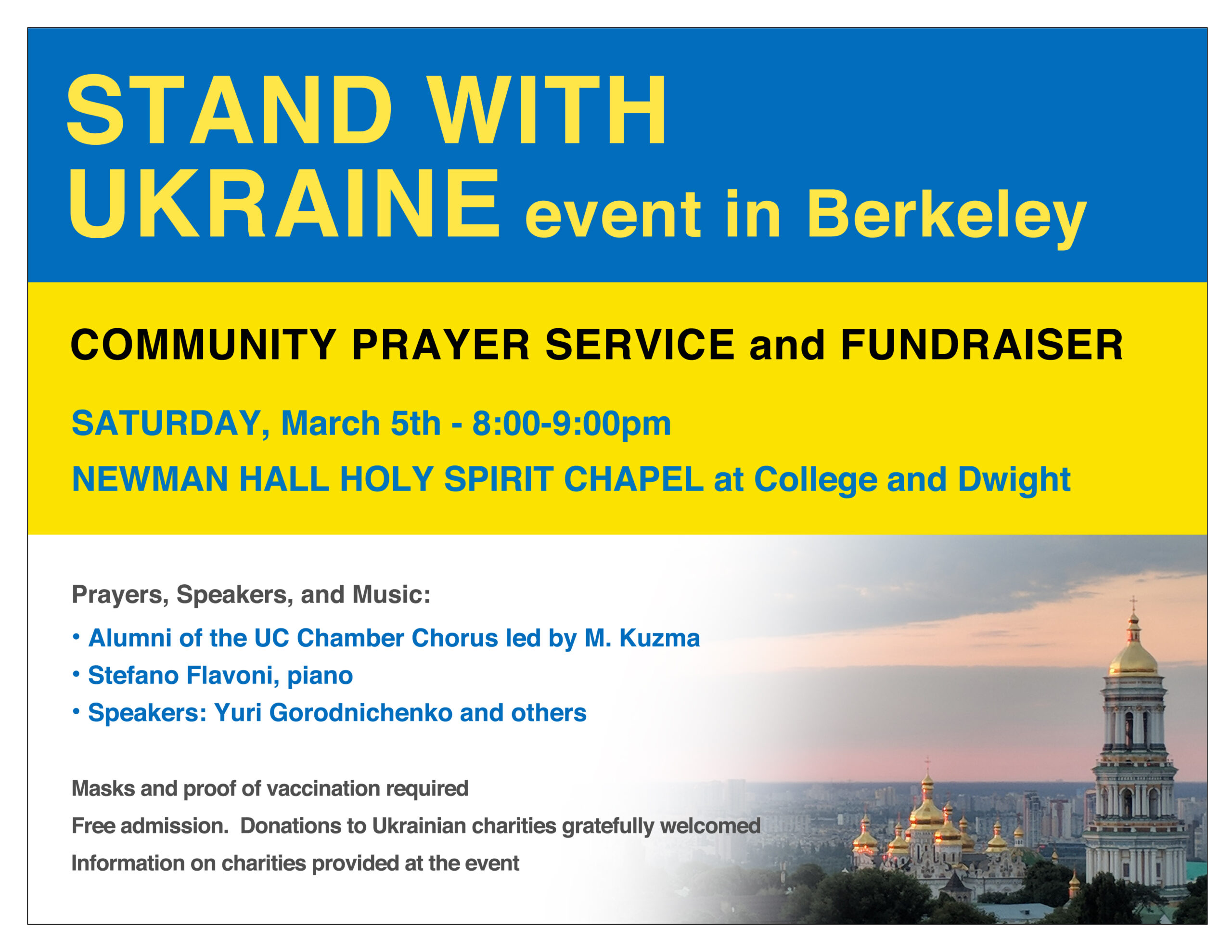
War is not an answer: Ukraine 2022

In the face of unfolding horrendous tragedy in Ukraine, I was remembering my “families and friends” in Kyiv, Minsk, and Moscow. There was this Soviet saying- Znanie Sila (Knowledge is power). In face of this tragedy, as a librarian, I was thinking of doing my part by presenting the readers of this blog with some choices on information sources.
I have been thinking about presenting some items from UC Berkeley Library’s collections that speak to Ukraine’s rich yet nuanced history. All histories are nuanced, and I am trying to avoid my implicit biases and opinions about the current tragedy unfolding in Ukraine. Ukraine was never a state until the Bolsheviks created the Ukrainian SSR is as problematic as cutting the long-standing intertwining of Russo-Ukrainian histories. However, the post-Soviet Ukraine is an independent modern European nation-state whose sovereignty and freedom to chart its destiny matter to humanity.

I remember today Gogol‘s Cтрашная месть or A Terrible Vengeance. This story is a part of a larger collection with the title: Vechera na khutori︠e︡ bliz Dikanʹki Mirgorod

Please think a minute about Ivane and Petro! And I refrain from discussing the modern-day Oligarchs from both sides.

History of UkraineRus

Hrushevsʹkyĭ, Mykhaĭlo, 1866-1934, author.; Грушевський, Михайло, 1866-1934, author.; Pasicznyk, Uliana M., editor.; Poppe, Andrzej, editor.; Sysyn, Frank E., editor.; Frost, Robert, editor.; Fedoruk, I︠A︡roslav, editor.; Raffensperger, Christian, editor.; Skorupsky, Marta, translator.; Wynnyckyj, Andriy, translator.; Press, Ian, 1947- translator.
1997-2021

Below are some subject-based links that will allow you to browse our catalog for additional resources on Ukraine.

Here is an article about some classics of Ukrainian Literature that might provide some cursory information about the rich literary tradition of Ukraine. Have you read Lesya Ukrainka‘s works or Serhii Plokhii’s contemporary works? War is not an answer!