New oral history: Cheryl Resh
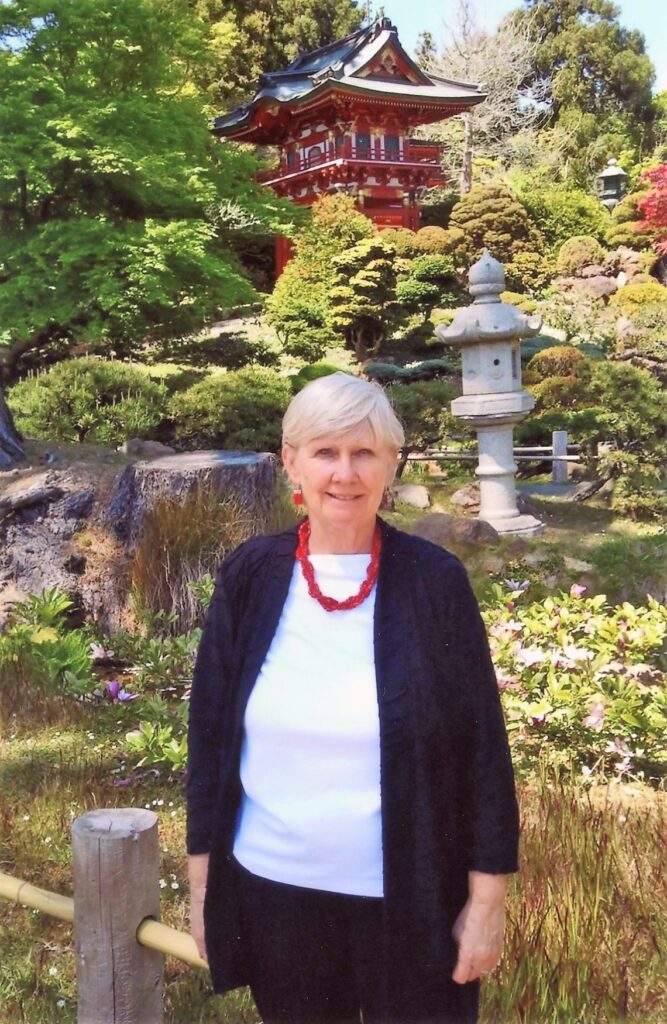
Cheryl Resh’s oral history paints an intimate portrait of family, of love, of world travel, and of her nearly four-decade career in university administration—from Resh’s first job in the early 1970s as a computer programmer at a community college in northern Illinois, to her eventually becoming Assistant Vice Chancellor and Director of the Financial Aid and Scholarships Office at UC Berkeley where she implemented new computerized financial-aid delivery systems and expanded student aid availability for low income and first-generation students. Resh also served on the Executive Council of the National Direct Student Loan Coalition from 2003 through 2011 to advocate in Washington DC for increased student aid and national expansion of the Direct Loan Program. The nation-wide transition to Direct Loans was enacted during the Obama administration in 2010, adding billions of dollars to the federal Pell Grant Program while also eliminating excessive fees for students and their families. Upon her retirement, Resh earned the Berkeley Citation, a high honor reserved for those whose contributions to UC Berkeley go beyond the call of duty and whose achievements exceed the standards of excellence in their fields.

Cheryl Resh and I recorded her oral history over Zoom from January to late March 2021. Our eighteen hours of recordings produced Resh’s reflective transcript of nearly 470 pages, including an appendix of photographs with family and friends and some of her world-spanning travels. In addition to discussing details from her outstanding service to the UC Berkeley community, Resh shared tales of her parents’ lives, her own memories of childhood, her experiences of becoming a mother in 1970 and eventually a grandmother, as well as sharing the tragedy of her son’s sudden death in 2020 just a few months before recording her oral history. Resh also discussed her deep involvement in competitive horse jumping, her ownership of two horses, and her tangential connections to horse-trading activities she later learned were linked to Chicagoland organized crime. And of course, Resh shared her deep love and many adventures with her husband, Vincent H. Resh, a Professor of Aquatic Ecology and Entomology at UC Berkeley with whom she has visited every continent on Earth, including several decades of visiting the island of Moorea in French Polynesia as well as their travels on rivers and railroads across Eurasia and Africa.
Cheryl Resh’s oral history also offers unprecedented detail on the operations, computerization, and evolution from 1978 through 2011 of UC Berkeley’s student services. Her career spanned Berkeley’s transition from hand-written student records that were then transferred to key-punched cards and inserted into a mainframe Tandem computer in the late 1970s, to the development and implementation of bespoke computerized financial aid delivery systems and web-based student services systems that allowed real-time access and updating to individual student information. By the time she retired as Vice Chancellor and Director of the Financial Aid and Scholarships Office at UC Berkeley, Resh managed seventy staff members in eleven units that were responsible for the programming, processing, and delivery of $250,000,000 of student financial aid that came from 700 federal, state, institutional, and other scholarship funds that were delivered in aid packages uniquely individualized for over 25,000 undergraduate and graduate students.

Receiving the Berkeley Citation in 2011 surprised Resh, but not her friends and colleagues, many of whom wrote letters celebrating her contributions to UC Berkeley and to students across the nation. Harry Le Grande, a Vice Chancellor at UC Berkeley’s Division of Student Affairs, reported that “Dr. Cheryl Haigh Resh has dramatically improved student aid service in an environment of rapidly escalating costs and shrinking operational resources to provide services.” Kate Jeffery, the Director of Student Financial Support in the University of California Office of the President, praised Resh for her “rare combination of technical ‘systems’ expertise together with a keen grasp of the policy and student equity implications of each feature and choice.” Jeffery noted how “Cheryl has always been particularly compassionate on a personal level with students for whom the challenge of coming to UC Berkeley was possibly the hardest.” And Roberta Johnson, the Director of Financial Aid at Iowa State University and a fellow past chair of the National Direct Student Loan Coalition, shared how Resh’s leadership on their national executive committee guided “a movement that has changed financial aid for students for the better and hopefully forever!”

Throughout her oral history, Cheryl Resh wove together stories about her family, her personal life, and her professional life. Resh was born in September 1947, in Dubuque, Iowa, as the eldest of six siblings to their father, a Lutheran minister who spent his entire life not knowing that he was actually adopted from an orphanage by his own birth mother. In the late 1960s, Resh attended Northern Illinois University, got married, and followed her recently drafted husband to the Panama Canal Zone, where she spent a transformative year amid Panama’s military coups. In 1970, Resh’s son Jeffrey Haigh was born, and that same year, she earned her B.S. in Mathematics from Northern Illinois University. In 1972, Resh began her career in university administration as a computer programmer and soon became Assistant Director of Admissions and Records at Rock Valley College in Rockford, Illinois. In 1978, upon earning her M.S. in Higher Education Administration from the School of Business Management at Northern Illinois University, Resh bravely moved with her son from the Midwest to California as a single mother to begin work as an administrative analyst in the Office of Admissions and Records at UC Berkeley. She soon became Associate Director of Records, helped convert Berkeley from quarters to semesters, and at one point was even burned in effigy on the steps of Sproul Hall during a staff union protest over her efforts to automate the Records Office. By 1985, she and her colleagues successfully ended the era of hand-written student records by automating all major processes in Berkeley’s Admissions and Records Office. In 1986, Resh began work in Berkeley’s Financial Aid and Scholarships Office where she worked for the next twenty-five years.
From her Financial Aid office in Sproul Hall, Resh had a front-row seat on historic UC Berkeley activities, from student demonstrations against South African apartheid in the mid-1980s, to the campus controversy in the 1990s over declining Asian American admissions that re-shuffled campus policies as well as the careers of several leaders in university administration. In 1991, Resh earned her Ph.D. in Educational Administration from UC Berkeley, with emphasis in Finance, Economics, and Operations Research. At the Financial Aid Office, she helped implement computer system upgrades to the SAMS (Student Aid Management System) software from Sigma Systems, and from 2007-2010, she managed the new ProSAM computer system implementation to greatly enhance Berkeley’s financial aid delivery system and its web-based student service systems.

Resh remains rightfully proud of her many years working to implement Federal Direct Loans for students, first at UC Berkeley, and then for all students across the nation. She implemented the Direct Loan program at UC Berkeley in 1995, which greatly improved the delivery of over $100 million per year in financial aid along with long-term savings on the total cost of their loans, all while enabling enormous administrative savings for the campus. Resh also shared stories of serving from 2003 through 2011 on the Executive Council of the National Direct Student Loan Coalition. Through the National Direct Student Loan Coalition, Resh and her fellow Financial Aid Directors from universities across the nation successfully lobbied US Congressmembers to protect and expand the Direct Loan Program. The Health Care and Education Reconciliation Act of 2010 then mandated that all federal student loans be Direct Loans, which also increased student grant aid for needy American students by over $60 billion while saving significant taxpayer dollars over time.
Over Cheryl Resh’s thirty-three year career at UC Berkeley, she substantially enhanced student aid services while reducing costs, and she did this work while maintaining Berkeley’s commitment to supporting students from all economic backgrounds, especially students from the lowest income groups. Her dedication to equity of opportunity included her development of the Berkeley Cares program, which provided needed financial aid outreach and support to newly admitted low-income students, many of whom were first generation college students.
Cheryl Resh defied norms to achieve success both with and for others, all while carving a unique and adventurous path through life. I hope you enjoy reading Cheryl Resh’s oral history as much as I enjoyed working on it with her.
About the Oral History Center
The Oral History Center of The Bancroft Library preserves voices of people from all walks of life, with varying political perspectives, national origins, and ethnic backgrounds. We are committed to open access and our oral histories and interpretive materials are available online at no cost to scholars and the public. You can find our oral histories from the search feature on our home page. Search by name, keyword, and several other criteria. Sign up for our monthly newsletter featuring think pieces, new releases, podcasts, Q&As, and everything oral history. Access the most recent articles from our home page or go straight to our blog home.