Making it easier to reuse and share Thérèse Bonney photography

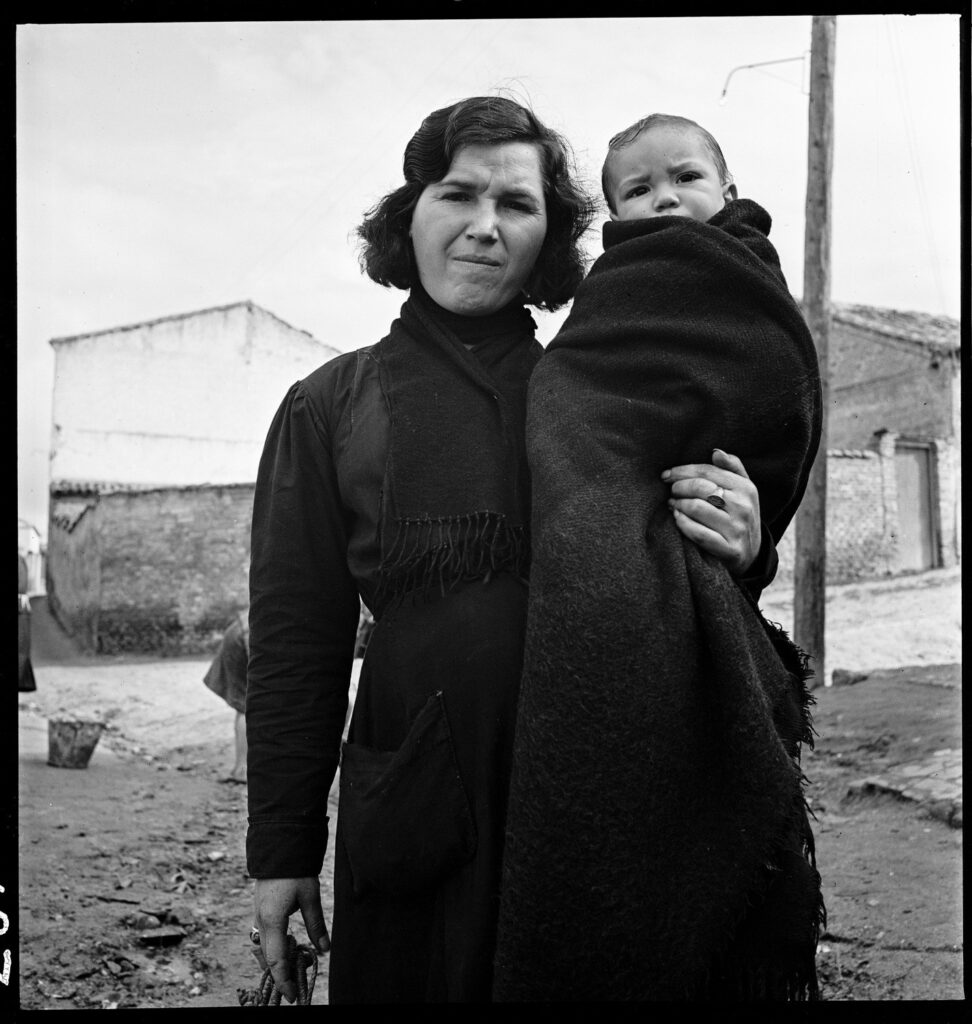
Woman holding a child wrapped in a blanket at Parroquia Del Dulce Nombre de Maria in Donna Carlotta, Madrid
Spain: Parroquia Del Dulce Nombre de Maria in Doña Carlota, Madrid.
BANC PIC 1982.111.03.0287–NNEG
Thérèse Bonney, © The Regents of the University of California, The Bancroft Library, University of California, Berkeley. This work is made available under a Creative Commons Attribution 4.0 license.

As part of UC Berkeley Library’s trend-setting efforts to make all our collections easier to use, reuse, and publish from, we are excited to announce that: 

We’ve just eliminated hurdles to the reuse of renowned photographer Thérèse Bonney’s photographs. Every photograph ever taken by Bonney is licensed under a Creative Commons Attribution 4.0 license (CC BY 4.0). This means anyone around the world can incorporate Bonney’s photos into papers, projects, and productions—even commercial ones—without ever getting further permission or another license from us.

Thérèse Bonney Copyright

Thérèse Bonney (1894-1978) was a documentary photographer and war correspondent. She concentrated much of her work on documenting conditions in Europe during World War II. Prior to her work as a war correspondent, Bonney extensively photographed French architecture and design, as well as writers and artists such as Joan Miró, Fernand Léger, and Gertrude Stein. Her photographs have been exhibited at the Museum of Modern Art, the Library of Congress, and Carnegie Hall. 

Bonney transferred copyright to all of her work to the UC Regents to be managed by UC Berkeley Library. This includes Bonney materials at the UC Berkeley Library and any Bonney-authored or Bonney-created materials held by other institutions. 

Although people did not previously need the UC Regents’ permission (sometimes called a “license”) to make fair uses of Bonney’s because of the progressive permissions policy we created, prior to July 2022 people did need a license to reuse Bonney’s works if their intended use exceeded fair use. As a result, hundreds of book publishers, journals, and film-makers sought licenses from the Library each year to publish Bonney’s photos. 

The UC Berkeley Library recognized this as an unnecessary barrier for research and scholarship, and has now exercised its authority on behalf of the UC Regents to freely license Bonney’s entire corpus under CC-BY. This license is designed for maximum dissemination and use of the materials. 

How to use Bonney’s works going forward

Now that all Bonney photographs have a CC-BY license applied to them, no additional permission or license from the UC Regents or anyone else is needed to use Bonney’s work, even if you are using the work for commercial purposes. No fees will be charged, and no paperwork is necessary.

The CC-BY license does require attribution to the copyright owner, which in this case is the UC Regents. The Library suggests the following attribution:

Thérèse Bonney, © The Regents of the University of California, The Bancroft Library, University of California, Berkeley. This work is made available under a Creative Commons Attribution 4.0 license.

What’s ahead for the Library

The Library now has some work to do to make our catalog and other information sources about the Bonney photos reflect this application of the CC-BY licenses. This means we have to update things like the Bonney collection finding aid and the metadata for individual photos in the digital versions of the Bonney photos that we make available online. In the meantime, you can rely on written confirmation that we’ve applied the CC-BY license by consulting the Easy to Use Collections page of our permissions guide.

In the coming year, we hope to add many more collections to that Easy to Use Collections page, too. We’ll be spending some time reviewing materials for which the UC Regents own copyright, and seeing what we can “open up” with other CC BY licenses. Stay tuned.

— — — — —

This post was written by the Library’s Office of Scholarly Communication Services


Changes ahead for sharing open access articles on eScholarship

leaves changing color
Photo by Chris Lawton on Unsplash

Note from October 21, 2022: this post has been updated with new rollout dates. Please see below. 

If you are a University of California academic author who is employed at the UC but not part of the Faculty Senate, you will soon have a new way to post copies of scholarly articles you’ve written into eScholarship.org, the UC’s open access repository. 

This blog post answers questions and provides assistance to those authors affected by this change.

What is happening?

There will be a procedural change to how certain UC authors upload copies of their scholarly articles to the UC’s institutional repository to make these articles available “open access.” 

Publishing scholarship “open access” means making it available to be read online by anyone at no cost to the reader. Within the UC, there are many ways to publish “open access”, including by “depositing” or uploading a copy of your “author accepted manuscript” into the UC’s institutional repository. Author accepted manuscripts (or AAMs) are the final textual version of your article without publisher formatting and final copy edits.

What’s happening now are changes to how some of you may be doing the uploading of AAMs to eScholarship. Some UC Berkeley scholars (i.e. faculty senate authors) already use a special software system for the uploading process, whereas other scholars (i.e. anyone else employed within the UC who creates academic scholarship) instead upload AAMs directly to escholarship.org through the eScholarship website. Soon, everyone (that is both faculty and all other employees who create scholarly works) will begin using the special software system for uploading. 

The software system is called UC’s Publication Management System. In addition to streamlining how you undertake the uploading of your AAMs, the software also proactively searches published literature for articles that it thinks you authored and should deposit. If the system identifies an article that it thinks you’ve published, you will receive an e-mail notification (on a bi-monthly basis) requesting that you upload your AAMs through the Publication Management System platform.

So, nothing is changing for you if you’re a faculty author who already has access to and uses the Publication Management System. But for all other academic authors within the University of California, you’re soon going to get a new way to deposit your AAMs to eScholarship, and will receive periodic e-mails letting you know when to do it.

Why is this happening?

The University of California has two open access policies addressing the deposit of AAMs into the eScholarship repository. One such policy pertains to Academic Senate faculty and has been in place since 2013. The other, called the Presidential Open Access Policy (because it was issued by the UC President in 2015), covers non-faculty authors. Specifically, the Presidential Open Access Policy includes non-senate researchers, lecturers, post-doctoral scholars, administrative staff, librarians, and graduate student employees.

California Digital Library, which oversees and manages the eScholarship repository, had already added everyone covered by the Academic Senate open access policy to the UC Publication Management System, making it easier for Academic Senate faculty to get their articles into eScholarship.. 

To date, however, authors covered by the Presidential Open Access Policy have only been able to upload their articles directly via the eScholarship website, and have not yet had access to the facilitation software. California Digital Library is now adding these “Presidential” policy authors to the Publication Management System, too.

Who is affected?

Scholarly authors who are employed by the UC and who are not part of the Faculty Senate. 

Faculty Senate authors already use the UC Publication Management System software to upload their articles to eScholarship. Soon, non-Faculty Senate authors will also begin using the software to make their uploads, rather than uploading their AAMs directly via the eScholarship.org website.

How does the software work? 

UC’s Publication Management System software searches multiple publication databases (such as Scopus, Web of Science, and others) to automatically locate scholarly articles written by UC authors, and sends them a periodic e-mail alert (about twice a month) to review the publications identified under their name, and upload a policy-compliant version of the article. The UC’s Open Access Policies grants covered authors the right to share their author accepted manuscript (the final, peer-reviewed, but not yet publisher-formatted version) immediately upon publication in a journal. 

In addition to using the Publication Management System to claim and upload open access versions of articles, authors can also integrate scholarly profiles (such as ORCID), generate individual publishing reports, and get up-to-date statistics on the work they’ve authored while at the UC. 

When is this happening?

The California Digital Library is rolling out the change over the course of a few months. This means that after the date outlined below, affected authors will begin to claim and upload their articles using the Publication Management System, and they’ll be notified via e-mail when there is an action they need to take. 

If you are a non-Faculty Senate author in one of the following departments or units, you can expect California Digital Library to add you to the Publication Management System according to the following schedule: 

June 2022
UC Berkeley libraries

July 2022 [New date: November 30, 2022]
Letters & Sciences – Arts & Humanities
Letters & Sciences – Biological Sciences
Letters & Sciences – Math & Physical Sciences
Letters & Sciences – Social Sciences

August 2022 [New date: January 18, 2023]
College of Chemistry
College of Environmental Design
College of Natural Resources
College of Engineering

September 2022 [New date: February 1, 2023]
UC Berkeley School of Law
Goldman School of Public Policy
Haas School of Business
School of Education
School of Information
School of Journalism
School of Optometry
School of Public Health
School of Social Welfare

March 1, 2023: All other academic units not situated under a college, school, or department classification mentioned above.

Where can authors get assistance?

Authors covered under the Presidential Open Access Policy can explore the UC Publication Management System now by logging in at https://oapolicy.universityofcalifornia.edu/. However, the Publication Management System will not begin sending e-mail notifications until the approximate rollout date indicated above.  

California Digital Library maintains documentation and FAQs on how to navigate and use the Publication Management System, including helpful articles about how to get started with claiming and depositing your OA-compliant articles

UC Berkeley Library staff are here to provide additional assistance. Please send your questions to oapolicy@lists.berkeley.edu and we’ll be in touch. 


What you need to know about copyright “small claims”

Today the U.S. Copyright Office released the Copyright Claims Board website. The site provides information about the copyright small claims process, and will eventually include an electronic case management system once the Office begins to accept claims. This blog post explains what the copyright small claims is, what UC Berkeley community members should know if they receive a copyright small claims notice, and where you can get help or additional information.

— — — — —

In 2020, Congress passed a law called the “Copyright Alternative in Small-Claims Enforcement Act of 2020,” known as the “CASE Act.” The CASE Act mandated the formation of the Copyright Claims Board (“CCB”), a tribunal operating through the U.S. Copyright Office instead of the federal judicial branch, for the purpose of deciding “small claims” copyright infringement actions via a quicker, less expensive process—that is, without all of the procedural requirements of a normal federal court case. Damages are capped at $30,000 for CCB cases.

This page is for UC Berkeley faculty, staff, students, and scholars who might one day find themselves in receipt of a notice that a CCB action has been filed against them. The University of California also has a systemwide information page for UC-affiliated scholars, students, and employees.

Please note that the U.S. Copyright Office is still creating the rules that implement this new law, so the information on this page will evolve. And as with all information on this Office of Scholarly Communication Services website, our office cannot provide you with legal advice. However, we can help you understand how the law works. If you have further questions, contact us at schol-comm@berkeley.edu.

If you receive a claim notice

What will a notice look like?

If you live in California, then a genuine CCB claim notice is required to be “served” to you either in-person (i.e., handed to you) or by U.S. mail. If you have received only an email, you should be wary of its contents because email is not considered valid “service of process” in California.

A genuine CCB case notice will include a docket number and other information yet to be determined. The notice will have a link to the CCB website, where you can enter the docket number on your notice, view information about the particular claim filed against you, and take various actions.

What does it mean?

A claim filed against you in the CCB means that a purported copyright owner is asserting that you have infringed their copyright through something you have uploaded, reproduced, published, created, distributed, performed, or displayed.

The notice you receive signifies that the claimant has alleged copyright infringement, but the notice does not mean you have actually infringed or that the CCB will ultimately determine you have infringed.

Indeed, there are many reasons why your use of a copyrighted work may not be an infringement. For instance, there are key exceptions to copyright law that support teaching, scholarship, and research—most notably, fair use. These exceptions provide complete defenses to claims of infringement or, in some instances, permit a significant reduction of damages. Further, not everything is actually protected by copyright. Claimants may believe they hold copyright in materials that are not subject to copyright (e.g., because the materials reflect only facts or ideas) or are no longer protected by copyright (e.g., because the copyright in the materials has expired). Claimants may also believe that they hold copyright to materials for which copyright is actually held by a third party.

If you believe one of these situations applies to you—that is, that your use of the material is protected by an exception or that the allegations in the claim are not valid—you may wish to dispute the claim or opt out of the CCB proceeding entirely. We explain your options below. Regardless, we recommend you seek legal counsel as soon as possible after receipt of a CCB case notice.

What are your options?

If you receive a properly-served notice, do not ignore it. If you ignore it and do nothing, the case will proceed in the CCB, and a default judgment can be entered against you. This means that the CCB can enter a judgment holding you responsible for all the damages claimed in the notice (up to $30,000), regardless of whether the assertions are true or whether you could have claimed any defenses.

To avoid a default judgment, you will need to respond in the time prescribed by the notice. You can choose to respond in one of two ways:

  • Proceed within the CCB tribunal. If you proceed, the case will be heard by the CCB. The CCB predicts that most cases will be handled completely online, so you will not need to travel to Washington D.C. (where the U.S. Copyright Office is physically located). You will be bound by the CCB’s decision. If the claimant wins, you may have to pay up to $15,000 for each infringed work, with a maximum cap of $30,000. CCB determinations are final. There are only limited circumstances—such as fraud, corruption, and misrepresentation—when a CCB determination can be reviewed by a federal court or the Copyright Office.
  • Opt out of the CCB proceeding. It’s important to understand that, if you opt out, the copyright claimant cannot restart the same claim against you in front of the CCB. So, if you opt out of the CCB, the claimant can either stop pursuing the matter entirely or decide to file suit against you in federal court (assuming they meet all of the federal court filing requirements). Federal court is more expensive and complex than the CCB’s small claims process, so many small claimants may not want to incur the expense or may feel that their allegations will not survive scrutiny in federal court. Also, UC employees likely have broader protections in federal court than in the CCB, so a timely opt-out may be a good option.

If you decide to opt out, you must mail the paper opt-out form provided with your notice, or complete an online opt-out form on the CCB website, within 60 days of service. Note that in California, additional time may be added to the deadline for your response if service of the notice to you was made by mail, pursuant to California rules for service of process.

Note that if you decide to opt out, your decision applies only in response to that particular claim you received. As an individual (as opposed to certain organizations), you cannot opt out prospectively from all future CCB claims.

Where can you get help or more information?

If you’re a UC Berkeley student, staff, or faculty member, and the claim is related to what you do at UC, contact the UC Berkeley Office of Legal Affairs or UC’s Office of General Counsel promptly.

The UC Berkeley Office of Scholarly Communication Services can also answer questions about how the law works, but cannot dispense legal advice to you. You can contact us with questions at schol-comm@berkeley.edu.

The U.S. Copyright Office provides additional information on their Copyright Claims Board Frequently Asked Questions page.


Getting your book published open access: a panel discussion with Springer Nature and UC Berkeley

image of library bookshelf with books

Photo by Haneen Krimly on Unsplash

Are you a scholarly author interested in publishing a book, but unfamiliar with how to find an editor or press? Have you considered publishing that book open access and want to understand your open access book publishing options?

Springer Nature and UC Berkeley invite you to join us for a virtual panel discussion.

Hear from a panel of Springer Nature Open Access Books Editors in both STM and the Humanities, and a recent author about the process of getting your manuscript published. 

You’ll come away from this discussion with practical advice about opportunities at UC Berkeley to publish open access books with Springer Nature, and guidance for submitting and revising your work, writing a book proposal, approaching editors, signing your first contract, and navigating the peer review and publication process.

While the event is focused on supporting UC Berkeley authors, it is open to all, as other institutions may be interested in entering into open access book agreements with publishers. 

When: Monday, 14th March 2022; 11am-12:15pm PDT
Where: https://us06web.zoom.us/webinar/register/WN_VhjMRxIhQ3CmhYuPDv0nGw
RSVP: Please click on the link above to register and you’ll receive a Zoom link to join on the day.


Upcoming digital publishing workshops with the Office of Scholarly Communication Services

computer keyboard and mouse with title of the Digital publishing Workshop Series
Photo by Damian Zaleski on Unsplash

It’s 2022, and we’re right back at it with supporting your scholarship and publishing. This Spring, the Office of Scholarly Communication Services has some practical workshops for you as part of the Library’s Digital Publishing Series. Here’s what’s coming up over the next few months.

Workshops

Publish Digital Books and Open Educational Resources with Pressbooks

February 8, 2022
11:00am–12:30pm
Online: Register to receive the Zoom link

If you’re looking to self-publish work of any length and want an easy-to-use tool that offers a high degree of customization, allows flexibility with publishing formats (EPUB, PDF), and provides web-hosting options, Pressbooks may be great for you. Pressbooks is often the tool of choice for academics creating digital books, open textbooks, and open educational resources, since you can license your materials for reuse however you desire. Learn why and how to use Pressbooks for publishing your original books or course materials. You’ll leave the workshop with a project already under way! Signup at the link above and the Zoom login details will be emailed to you.

Can I Mine That? Should I Mine That?: A Clinic for Copyright, Ethics & More in TDM Research

March 9, 2022
11:00am–12:30pm
Online: Register to receive the Zoom link

If you are working on a computational text analysis project and have wondered how to legally acquire, use, and publish text and data, this workshop is for you! We will teach you 5 legal literacies (copyright, contracts, privacy, ethics, and special use cases) that will empower you to make well-informed decisions about compiling, using, and sharing your corpus. By the end of this workshop, and with a useful checklist in hand, you will be able to confidently design lawful text analysis projects or be well positioned to help others design such projects. Signup at the link above and the Zoom login details will be emailed to you.

Other ways we can help

In addition to the workshops, we’re here to help answer a variety of questions you might have on intellectual property, digital publishing, and information policy. 

Want help or more information? Send us an email. We can provide individualized support and personal consultations, online class instruction, presentations and workshops for small or large groups & classes, and customized support and training for departments and disciplines.