The Berkeley Remix Season 7, Episode 2: “Save Mount Diablo’s Present”

episode 2
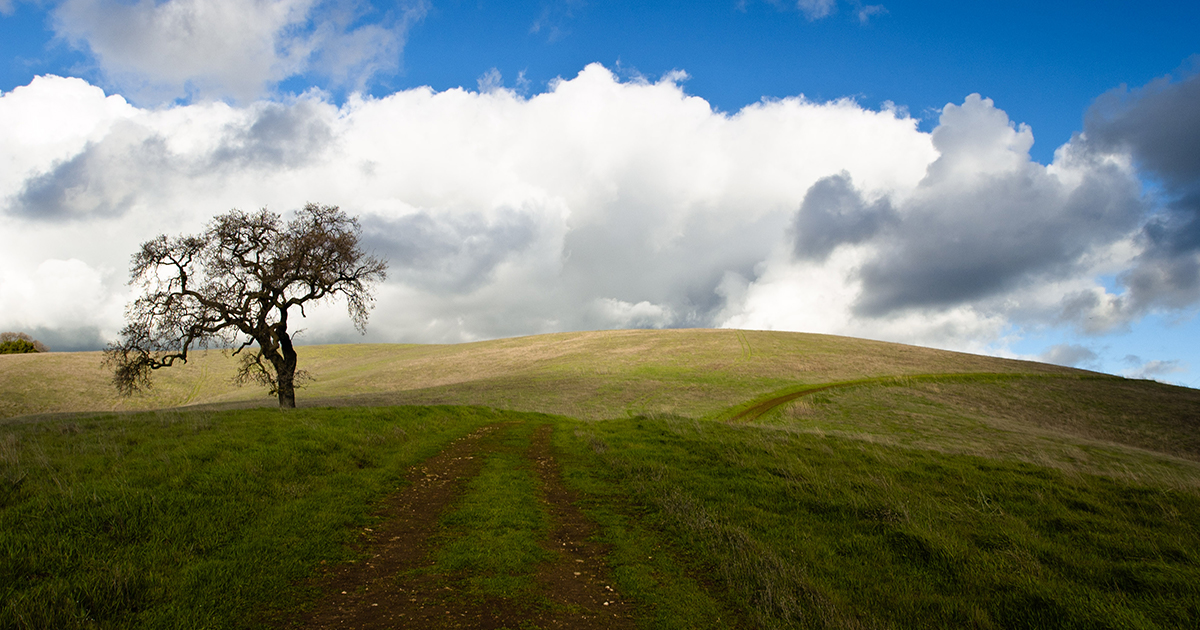
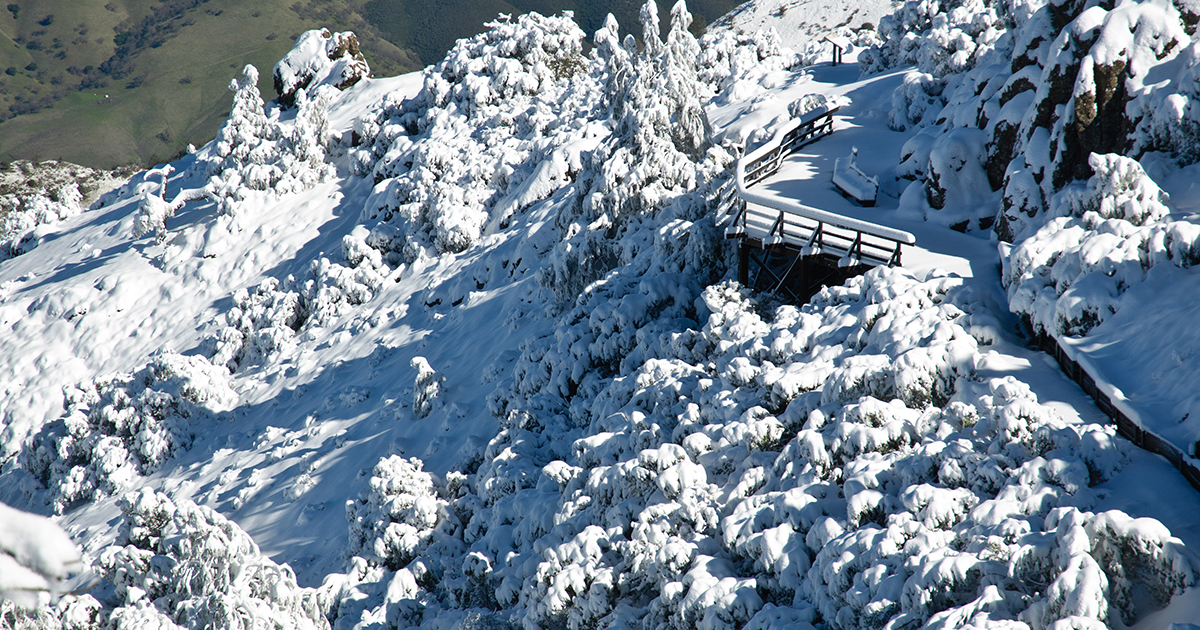
Lime Ridge Open Space. Photograph courtesy of Scott Hein. For more information about this image, visit Hein Natural History Photography.

In Episode 2, we explore Save Mount Diablo’s present. From supporting ballot measures and fundraising efforts to cultivating relationships with nature enthusiasts and artists to collaborating with outside partners, Save Mount Diablo continues to “punch above its weight.” This episode asks: now that Save Mount Diablo has conserved the land, how does it take care of it? How does Save Mount Diablo continue to build a community?  How are artists activists, and how do they help support Save Mount Diablo? How does Save Mount Diablo sustain partnerships to conserve land? 

In season 7 of The Berkeley Remix, a podcast of the Oral History Center at UC Berkeley, we head to Mount Diablo in Contra Costa County. In the three-part series, “Fifty Years of Save Mount Diablo,” we look at land conservation in the East Bay through the lens of Save Mount Diablo, a local grassroots organization. It’s been doing this work since December 1971—that’s fifty years. This season focuses on the organization’s past, present, and future. Join us as we celebrate this anniversary and the impact that Save Mount Diablo has had on land conservation in the Bay Area and beyond.

This season features interview clips from the Save Mount Diablo Oral History Project. A special thanks to Save Mount Diablo for supporting this project!

LISTEN TO EPISODE 2 ON SOUNDCLOUD:


PODCAST SHOW NOTES:

This episode features interviews from our Save Mount Diablo Oral History Project and includes clips from: Seth Adams, Bob Doyle, Ted Clement, Abby Fateman, Jim Felton, John Gallagher, Scott Hein, John Kiefer, Shirley Nootbaar, Malcolm Sproul, and Jeanne Thomas. To learn more about these interviews, visit the Oral History Center’s website.

This episode was produced by Shanna Farrell and Amanda Tewes, and edited by Shanna Farrell. Thanks to Andrew Deakin and Anjali George for production assistance. 

Original music by Paul Burnett.

Album image North Peak from Clayton Ranch. Episode 2 image Lime Ridge Open Space. All photographs courtesy of Scott Hein. For more information about these images, visit Hein Natural History Photography.

PODCAST TRANSCRIPT:

Amanda Tewes: EPISODE 2: Save Mount Diablo’s Present

[Theme music]

Shanna Farrell: Welcome to The Berkeley Remix, a podcast from the Oral History Center at the University of California, Berkeley. You’re listening to our seventh season, “Fifty Years of Save Mount Diablo.”

Farrell: I’m Shanna Farrell. 

Tewes: And I’m Amanda Tewes. We’re interviewers at the Center and the leads for the Save Mount Diablo Oral History Project.

Tewes: This season we’re heading east of San Francisco to Mount Diablo in Contra Costa County. In this three-part mini-series, we look at land conservation through the lens of Save Mount Diablo, a local grassroots organization. 

Farrell: It’s been doing this work since December 1971—that’s fifty years. This season focuses on the organization’s past, present, and future. Join us as we celebrate this anniversary and the impact that Save Mount Diablo has had on land conservation in the Bay Area and beyond.

Farrell: In this episode, we explore Save Mount Diablo’s present.

Tewes: ACT 1: Now that Save Mount Diablo has conserved the land, how does it take care of it?

[Soundbed- nature noises]

Tewes: As we heard in our last episode, Save Mount Diablo was successful in accomplishing its original goal of expanding the Mount Diablo State Park from 6,788 acres to 20,000. It was also able to protect 90,000 acres of land that surrounded the mountain. These dreams were hard fought. Now that the organization had saved this land, how did it care for it? As we know, at first it relied on volunteers and supporters. Some of the volunteers who wanted to help beyond giving money found their way to different committees, like Stewardship and Land Acquisition.

Jim Felton: When I first started, we used to get together maybe four times a year, all the stewards, and talk about the problems and things that needed fixing. And of course, I’d go to a site that wasn’t mine to watch and help with the fence or help with some problem that needed fixing. Near Curry Canyon, there’s another property out there where the culvert got full of trees, and we all just had to climb in there and pull them out. 

Farrell: That’s Jim Felton, who was a member of the Stewardship Committee before becoming president of Save Mount Diablo’s board. Each member of the Stewardship Committee is responsible for maintaining a parcel of land. 

Felton: Well, it was once a month to check it out. So most of the time it was checking things out, but then there were jobs to do. We found bamboo or Arundo it’s called, Arundo in the creek in our property, and we wanted to get it out of there because it tends to spread, and it’s a very invasive species. So I spent quite a few hours digging and using a pick just getting that out of the river, and it hasn’t come back. 

[Soundbed- river rushing]

Tewes: Some of the land hadn’t been maintained in some time, so it required a fair amount of cleanup. John Gallagher got involved with Save Mount Diablo in the year 2000. He started on the Land Committee and then moved to the Stewardship Committee. Here he is talking about the work he put in to care for neglected properties. 

John Gallagher: I can’t tell you the number of trailers full of old car tires that we had hauled off, for example. Piles of pipe, barbed wire, and so forth that we’ve hauled off to the recycle center or whatever.

[Soundbed- construction, truck hauling garbage]

Farrell: There was no cost to being involved with Save Mount Diablo in this way. Jim Felton remembers it was just “gas and time.” 

Felton: For old guys, it was pretty messy projects, but no, no cost but just gas, but time, really, and a sore back. 

Tewes: But there was joy in this hard work. John Gallagher says:

Gallagher: And of course it’s all outdoors. You know, we get to go places where other people don’t get to go, and I like that. 

Farrell: As Save Mount Diablo moved beyond its original function as an advocate for land conservation, it realized it needed to build relationships with people who owned property near its land parcels. Here’s land conservation director Seth Adams.

Seth Adams: Well, the unusual thing about Save Mount Diablo is that we started as an advocacy organization and then added acquisition functions. 

[Soundbed- door knocking]

Adams: If we buy a piece of property, we’re going to be in contact with the neighbors, and more likely than not, we’re going to protect land next door to that property because they get to know us, and they see that we’re upfront and responsible and do what we say we’re going to do and we’re nice and we’re not confrontational. And buying a property is always a gateway to the surrounding properties. 

Tewes: These relationships mattered, especially when it came to land acquisition. Here’s board member and former president Scott Hein.

Scott Hein: The idea is to try to develop relationships with long-time landowners who may have property that you would like to acquire at some time, so that when they’re ready to sell they’ll think about you. You know, they might not give you a bargain, but at least they won’t be opposed to thinking about doing a deal with you, and so that’s the sort of general idea. And so it takes developing relationships and maintaining those relationships over time and communicating. It’s something you have to be proactive about. The landowners aren’t going to come and find you; in most cases, you have to go find them, and then figure out what kind of relationship they want to have. 

Adams: When a landowner is going to sell their property, they typically want the highest value. There are some that are really enlightened, and they have come to you because they want to see their properties protected, and that’s growing, but it wasn’t the norm in the early years. There’s a lot of land-rich, cash-poor landowners around Mount Diablo. 

Farrell: That was Seth again. The organization has to prioritize which properties it wants to acquire. Here’s Seth talking about how to consider those decisions.

Adams: Let’s say we know that our priority list has 180 properties on it, and we have a Landowner Outreach Subcommittee that meets monthly, and we go over to the top twenty of those priorities.

Tewes: The volunteers in the Land Committee still play a big role in acquiring land. Here’s John Gallagher again.

Gallagher: We keep a list about that and then try to decide if the cost of the property is worth it. Just as you and I might decide to buy a new couch or something like that, you just have to make that calculation. Well, I really like it, but is it worth it, do I need it that badly? And the Land Committee makes those decisions and recommendations. “Hey, listen, there’s a nice piece of property, but it’s totally surrounded by houses, and even though it adjoins a state park, it will never be a place for access or anything else, it would just be another parcel. If it’s really cheap, let’s go for it.” Or we say, “We need this one, this is something we’ve looked at, it’s been on our list for twenty-five years.” 

Farrell: Here’s Seth again. 

Adams: And then you wait for those times in people’s lives when they either put it up on the market or you know something is going to happen. This landowner’s husband died and so that’s a life change, which probably is going to result in opportunity. It’s the four D’s: death, divorce, disaster, disease, [laughs] and those are the times when conservation is most likely to happen. 

Farrell: Jim Felton also explains that building relationships with neighbors is part of Save Mount Diablo’s stewardship model.

Felton: We’ve had events for neighbors, some of our sites, and barbecues and things. And some people really like Save Mount Diablo in the neighborhood and some people just don’t like them at all, and they were really nasty. It’s too bad because, I mean, what we’re doing is preventing somebody from building ten houses next door to them, but they didn’t like it. They saw it almost as government intrusion, that type of behavior. 

Tewes: The organization knows how to strike when the iron is hot. In the late 2000s, during the recession, it saw an opportunity. John Gallagher remembers:

Gallagher: We didn’t have very many properties anyway, and then during the recession, we acquired a whole bunch of them, bang, bang, bang, bang. And they were often distressed properties that had junk on them or gates that didn’t work or fire abatement that wasn’t being done.

Farrell: Save Mount Diablo doesn’t just acquire new lands, it supports political action as a way to conserve open space. This means it also backs local ballot measures that limit growth of new development in Contra Costa County. Here’s Scott Hein.

Hein: Prior to the establishment of the urban limit line, there was a lot of speculative development going on around the County in all the cities in the County, and it was really difficult for Save Mount Diablo or anyone interested in protecting that land to get their hand around it.

[Soundbed- construction]

Tewes: Urban limit lines are important. They stop development from happening, which can in turn, protect plants and animals. 

[Soundbed- bird noises]

Tewes: In 1990, County voters approved Measure C, the 65/35 Ordinance, which required at least 65 percent of land be preserved for agriculture, parks, and other open space. In 2006, Contra Costa County residents voted to extend this limit for up to another 30 years.

Farrell: As Save Mount Diablo got more involved with local politics, it became more visible. As a result, it drew more people to the organization.

[Theme music]

Farrell: ACT 2: How did Save Mount Diablo continue to build a community?

John Kiefer: I love the mountain, but in reality, it’s more accurate to say I love the people that love the mountain.

Tewes: That’s longtime Save Mount Diablo supporter John Kiefer. It takes a whole community to rally around the organization, and this includes those with varying interests in the natural space. One group that loves the mountain include those who support wildlife like falcons. 

[Soundbed- peregrine falcons]

Farrell: The chemical DDT had been a commonly-used insecticide since the 1940s. It was sprayed all over, mainly to kill mosquitoes. But DDT caused a lot of damage, including around Mount Diablo. It destroyed bird populations because it thinned the eggshells of baby birds like peregrine falcons, killing them before they could hatch. By 1950, peregrines had disappeared from Mount Diablo. And in 1970, they were listed as an endangered species in California. DDT was nationally banned in 1972 after the publication of Silent Spring by Rachel Carson brought its dangers to light. That same year, there were only 2 nesting pairs of peregrine falcons left in the entire state of California. 

[Soundbed- sad sounds of birds]

Tewes: Over a decade later, in 1989, peregrine falcons were reintroduced to Mount Diablo by wildlife biologist Gary A. Beeman. Seth Adams and Save Mount Diablo played a key role in this work by gathering volunteer supporters and helping to fund it. Here’s Shirley Nootbaar, who lives near the mountain and loves peregrines. 

Shirley Nootbaar: [laughs] The Peregrines, you know, were first started back on the mountain back in the end of the eighties. They tried to encourage nesting. They would have prairie falcons incubate the vital eggs of peregrines that they had produced in probably zoos, and that was the way they finally got the wild peregrines to start in Pine Canyon, which is right near where I live.

Farrell: These falcons have an ardent group of supporters, including the Peregrine Team in Pine Canyon, which was founded in 2015. This is a natural history group that assists park rangers during nesting season. Thanks to its efforts, there are now about 400 pairs of peregrine falcons in California, which matches estimates from pre-DDT levels. Shirley is actively involved with this group.

Nootbaar: Last year, they did not produce any chicks. This year, they did, and it was exciting. The Peregrine Team was overjoyed. The pair of peregrines had four eggs that blossomed into chicks, and everybody was so excited, but a great horned owl came along and ate them.

[Soundbed- peregrine falcons]

Malcolm Sproul: Everybody loves peregrine falcons; you know, it’s a sexy, you know, dynamic bird.

Tewes: That was Malcolm Sproul, who works in environmental planning. He was also Save Mount Diablo’s board president when the organization started to participate in BioBlitz. BioBlitz is a day-long event where naturalists and citizen scientists inventory all species of plants and animals living in a designated area. Malcolm plays a big role in Save Mount Diablo’s BioBlitz.

Sproul: I’m a participant, a very willing participant. You go out to an identified area, and you’re trying to document as many species as you possibly can in a twenty-four-hour period. And my expertise is birds and mammals, you know, a little bit of plants. If I see something interesting, I can record it and tell people. But primarily, I’m out there because of wildlife, and it’s just fun to get out in the field. And it’s a chance to get together with other people with similar backgrounds and interests, and share that. Then the organization loves to use it as a way to say how valuable properties are. 

[Soundbed- birds and frogs]

Farrell: During BioBlitz, the group often identifies over 700 species that live in the Diablo Range. 

Sproul: To me, that’s the real value of it. It’s when you find something that you didn’t know was there, and you can find maybe why it’s there, but that’s a little piece of information that we didn’t have before. 

Tewes: BioBlitz brings new people to the mountain. They also act as a gateway to another Save Mount Diablo educational event: Four Days Diablo. Here’s Scott Hein talking about this.  

[Soundbed- gravel crunching, people walking through dirt]

Hein: So it’s, you know, thirty to forty miles, depending on the side trips we take. Three nights we hike entirely on public lands the whole way, except for in more recent years we’ve detoured onto our Curry Canyon Ranch Property, and we get permission to hike out through a private ranch on that day. You can hike from Walnut Creek to Brentwood and immerse people in the work that we and our partners have done for, you know, the last fifty years. There’s no better way to expose people to the work we do and the importance than getting them out on the land. 

Tewes: John Gallagher says:

Gallagher: At the time, Seth was leading every hike, so he was able to brag and brag and brag about what Save Mount Diablo had done with this property and that property.

Sproul: We take people out for four days. They get spoiled—I mean, they have to hike. It’s hot sun and things like that, and you get blisters, and some people can’t make it. It’s some work. But it’s taking people out into the areas that have been protected, and showing them what they have helped protect.

Tewes: That was Malcolm Sproul.

[Soundbed- people walking]

Farrell: Indeed, this event also helps develop relationships with potential donors. Another event that brings these donors back to the land is Moonlight on the Mountain. This fundraising dinner every September takes place at an area called China Wall. And it takes effort to get out there.

Felton: So it’s on a flat mesa area on this ridge right next to what’s called China Wall, which is a geological formation that’s pretty unique, a lot of just outcroppings. We’d light that up with spotlights, so as the sun goes down, it is all beautifully lit, and the visuals are really amazing. And of course some years, you get the moon, some years, it doesn’t always work out that way.

Tewes: That’s Jim Felton. Here’s Scott Hein again.

Hein: So the idea with Moonlight on the Mountain is: bring 500 of our closest friends up onto the mountain and have a white tablecloth sit-down dinner, sitting outside, not under tents or anything like that, and have an evening of, you know, learning about the organization and making contributions and bidding on artwork and experiences and things like that. So it’s completely unique, right? I don’t know of any other events like it in the Bay Area, where you bring that many people outside in the environment, sitting in front of the mountain.

Tewes: This is a beloved event. It draws volunteer support from many. For instance, John Gallagher helps set up for the event. The night before, he sleeps in his truck on the mountain. 

Gallagher: Once in a while, the cows will come around and stick their nose in my nose while I’m asleep, you know, in the bed of my truck.

[Soundbed- cow noise]

Gallagher: [laughs] And of course I hear the coyotes calling, which is always a delight. But you know, the wind comes up and the fog comes in or something like that, and it’s just nice and quiet and serene. 

Farrell: While some of these events bring in money, they all build community around Save Mount Diablo. Another way the organization does this is through educational efforts. If you don’t know about the land, you can’t love it enough to preserve it. Here’s executive director Ted Clement talking about the program on Mangini Ranch Educational Preserve, where community groups and schools can explore the land.

Ted Clement: I started to hear more and more from teachers that were doing our Conservation Collaboration Agreement Program that it was powerful for the students. And they really liked that students were out on our properties having these intimate experiences in nature and there was no one else there, not like a state park with lots of outsiders and other people wandering around. The teachers said it just felt very safe and intimate. And we want to make it as easy as possible and as affordable as possible for all these different groups of people to get out there and have a really special, intimate experience in nature. It’s their property for the day.

[Theme music]

Tewes: ACT 3: How are artists activists, and how do they help support Save Mount Diablo?

[Soundbed- river flowing]

Tewes: Mount Diablo is a beautiful place, with its sprawling vistas and rolling hills, where grasslands give way to wooded areas. It’s been a source of inspiration over the years for many artists. And Save Mount Diablo has been lucky to attract a community of these artists, like Shirley Nootbaar, Scott Hein, Stephen Joseph, and Bob Walker, who care about the mountain enough to capture it in their paintings and photographs. 

[Soundbed- camera clicking]

Tewes: These pieces illustrate the beauty of the range, and why it’s worth preserving. 

Farrell: Shirley Nootbaar, who lives in Walnut Creek, started painting the mountain in the 1970s. She sees the landscape through an artist’s eyes.

Nootbaar: The trees are a rich green and right now the grasses are golden and the sky is blue, I mean those colors, green, kind of a raw umber or raw sienna kind of color, and the beautiful blue of the sky. So as far as the colors of painting the mountain, it kind of depends on what your mood or your idea at the time is, and it changes all the time. 

Tewes: Shirley taught watercolor classes and brought her students to the mountain to paint what they saw. She also got involved with the Mount Diablo Interpretive Association. 

Nootbaar: In 1983, I think it was, they were able to open up the museum at the top of the mountain after it was closed for a number of years. We formed an art committee through the Mount Diablo Interpretive Association, and the art committee created these various shows, probably four times a year, and hung work of the various people that would submit work, and it was different themes of either a particular area or maybe it was a high school group or whatever; could be photography, as well, of course. Yeah, I thought it was very successful. 

Farrell: Photographs are also an important part of Save Mount Diablo’s advocacy. Scott Hein is a nature photographer and takes photos for the organization. Seth Adams even sends him out on assignment to photograph land around the mountain.

[Soundbed- more camera clicking]

Hein: Not all the lands we protect are easily accessible, and not every person has the time or the ability to get out on the land, and so photographs are the next best thing. They’re the way that we can communicate that beauty to people who can’t experience it in person, and conservation photography has been a critical tool going almost all the way back to the beginning of land conservation.

Tewes: Scott’s work has many admirers, like Shirley. 

Nootbaar: Scott Hein in the Save Mount Diablo organization does a beautiful job with photographs. 

Farrell: Before Scott was Bob Walker. Remember him from episode one? 

Hein: Bob Walker was involved with the organization and doing nature photography and conservation photography from 1982 to 1992, when he passed away. He was a real environmental advocate, who was also a fantastic photographer. He was just relentless in photographing, and taking people out there to hike and learn about it. 

Jeanne Thomas: His photography told a story. And the mountain, you looked down and could see development coming up and say, “Oh, if it weren’t for the park, the development wouldn’t stop.” 

Tewes: That’s longtime volunteer and donor Jeanne Thomas. She also loves to take photographs on the mountain, including of local wildflowers. There’s a strong connection between Mount Diablo and these artists. Here’s Shirley Nootbaar again, talking about what the land has meant to her. 

[Soundbed- bird and animal noises]

Nootbaar: I love where I live, I love to hear the birds, and I love the animals, and when I go up into the park, I’m always aware of that. I’m not a botanist, I’m not a biologist, I’m not a zoologist, I’m not a geologist, but I do appreciate all of those things. It’s much my therapy and my love.

[Theme music]

Farrell: ACT 4: How does Save Mount Diablo sustain partnerships to conserve land? 

Farrell: From the beginning, Save Mount Diablo has been an organization that’s worked collaboratively with outside partners. This has become an even more important part of its model. The organization works with the California State Park system, as Mount Diablo is a state park. It also collaborates with the East Bay Regional Park District and the East Contra Costa Habitat Conservancy to accomplish its goals. 

Tewes: In 1988, Save Mount Diablo original member Bob Doyle started working for the East Bay Regional Park District. Though he was working for the Park District, which was founded in 1934, he never forgot about his roots with Save Mount Diablo. Bob and Seth Adams worked together to pass a local bond measure that would provide funding to both entities. Here’s Bob discussing the impact of that measure and the longevity of that relationship. 

Bob Doyle: As the state got less and less money for expanding the state park system, the Park District was getting more. In 1988 was the big change, and Bob Walker and along with Seth and everybody else, really worked to pass the first bond measure in the history of the Park District, and I co-wrote it and wrote the acquisition section. And you don’t invent it, you create it with people who are going to fight for it. And so I made sure that there were money for those regional parks surrounding Mount Diablo and for new ones. And I think we need every environmental group, every land trust to be walking in the same direction to get more money not just for their cause, but for everybody’s cause, which is called saving this planet.

[Soundbed- nature and animal noises]

Farrell: Another of Save Mount Diablo’s significant partners is the East Contra Costa County Habitat Conservancy. The Conservancy was formed in 2007 and grew out of the Habitat Conservation Plan, or the HCP. Planning for the HCP began in the late 1990s. It was written as a way to satisfy the federal Endangered Species Act, with a lot of help from John Kopchik, director of conservation and development for Contra Costa County. 

Tewes: The nuanced goals of the HCP are to protect open space, enhance over 30,000 acres of habitats and natural systems, and to streamline wetland and regulatory compliance. The Conservancy was formed to help make these goals a reality. The way it accomplishes these goals is by buying, restoring, and protecting large parcels of land in East Contra Costa County that are home to hotspots for biodiversity. It issues permits for the land it owns and reinvests the money in buying even more land to protect. Often, the Conservancy will buy land in the Diablo Range and work with Save Mount Diablo to manage and preserve it. 

Farrell: Abby Fateman, who is now the executive director of the Conservancy, works closely with Save Mount Diablo. She was hired by John Kopchik in 2002 to help with the next steps of writing the HCP and forming the Conservancy. Here she is talking about how instrumental John Kopchik was in forming those partnerships. 

Abby Fateman: I think one of the reasons why the HCP worked or was adopted was really because he was able to build trust with all these different groups. He had relationships with the private landowners, with the developers, with Save Mount Diablo and other groups, and they were genuine.

Tewes: One of the ways that Save Mount Diablo and the Conservancy work together is by looking at maps and assessing which parcels of land are most critical to preserve. They start small and build from that foundation. 

Fateman: We like to bite things off in smaller pieces and understand them and work on them and then that’s an achievable goal. And then when that’s sort of handled, then we can expand our understanding of our goals. And “Save Mount Diablo” as a slogan was something that people could relate to. They could see the mountain, they could see development, they could see people trying to develop on the mountain, and they could rally around that. 

Farrell: The partnership between Save Mount Diablo, the East Bay Regional Park District, and the Conservancy is crucial. All three entities bring different strengths to the table to accomplish a common goal.

Fateman: Properties become available once a generation, and if somebody wants to sell it to you, if you have a willing seller or you’re able to compete for it, then you should go for it. Save Mount Diablo plays a huge role in actually executing on those things, making land acquisition happen, as does the East Bay Regional Park District. And they move very differently. You know, Save Mount Diablo is a nonprofit organization that can move very quickly and they’re much more nimble than my agency or East Bay Regional Park District. We might have more money available in the longer term, but we can’t show up at a land auction and bid on something. We can’t, there’s no way that that could happen, but Save Mount Diablo can.

Tewes: These strengths benefit all three partners, though sometimes with differing points of view.

Fateman: Save Mount Diablo fights certain development projects that they think are bad, and just because we have an HCP and just because they are our stakeholder doesn’t mean that they don’t fight those. We still provide permits for projects that they don’t agree with, and that’s okay, they don’t give that up, there are people fighting that fight. What we’re saying is we’re removing this one place, which is in compliance with the Endangered Species Act and how people mitigate for that from that battle. 

Farrell: Here’s Bob Doyle again, talking about it from the Park District’s perspective.

Doyle: Even though I was in charge of the Land Acquisition Program for the District, and it had money at that time, there were things that I just couldn’t do as the manager or the public agency side. Save Mount Diablo and Greenbelt Alliance and People for Open Space were all doing those things. The landowners always accused us of a grand conspiracy, and to some degree, there was an effort to work together, absolutely, to preserve as much property as possible. 

[Soundbed- nature noises]

Tewes: The partnership between these three entities benefit the cause of land conservation in Contra Costa County. 

Doyle: You can’t do these things, no matter how great the effort is and the talent is in an institution, without activism and public support. 

[Soundbed- nature noises]

Fateman: We have a successful, active, engaged nonprofit like Save Mount Diablo that is well funded and positioned; and we have this larger, regional agency, East Bay Regional Park District; and then the Habitat Conservancy. And I think we have managed to be able to work together in a way where we really thrive on each other’s strengths. You know, we don’t coordinate on every single action or movement we make, but we know when we can tap each other’s superpower and use it, and I think that separates us from other regions, it really does. And that’s why we see so much conservation happening in Contra Costa County versus other regions is that we sort of have it dialed in. It’s not perfect, but it’s way better than not having each other to work with. 

Doyle: That collaboration is the only way that we can take on such a difficult, difficult task politically and economically of climate change.

Fateman: We haven’t finished that goal of saving the mountain, but gosh, we’re so much closer than we were fifty years ago when all this started. It’s kind of amazing. 

Tewes: Save Mount Diablo also appreciates these relationships. Here’s executive director Ted Clement thinking about the importance of working in teams, even within the organization. 

Clement: Ultimately, good land conservation is good teamwork, and it’s only going to last long term if it is about a team, and a strong team that can carry the work on going forward. 

Farrell: Join us next time as we learn about the future of Save Mount Diablo.

[Theme music]

Farrell: Thanks for listening to “Fifty Years of Save Mount Diablo” and The Berkeley Remix, a podcast from the Oral History Center of The Bancroft Library at the University of California, Berkeley. Founded in 1953, the Center records and preserves the history of California, the nation, and our interconnected world. This episode was produced by Shanna Farrell and Amanda Tewes. 

Tewes: This episode features interviews from our Save Mount Diablo Oral History Project and includes clips from: Seth Adams, Bob Doyle, Ted Clement, Abby Fateman, Jim Felton, John Gallagher, Scott Hein, John Kiefer, Shirley Nootbaar, Malcolm Sproul, and Jeanne Thomas. A special thanks to Save Mount Diablo for supporting this project. Thank you to Andrew Deakin and Anjali George for production assistance. To learn more about these interviews, visit our website listed in the show notes. Thanks for listening and join us next time!


The Berkeley Remix Season 7, Episode 1: “Save Mount Diablo’s Past”

episode 1 photo
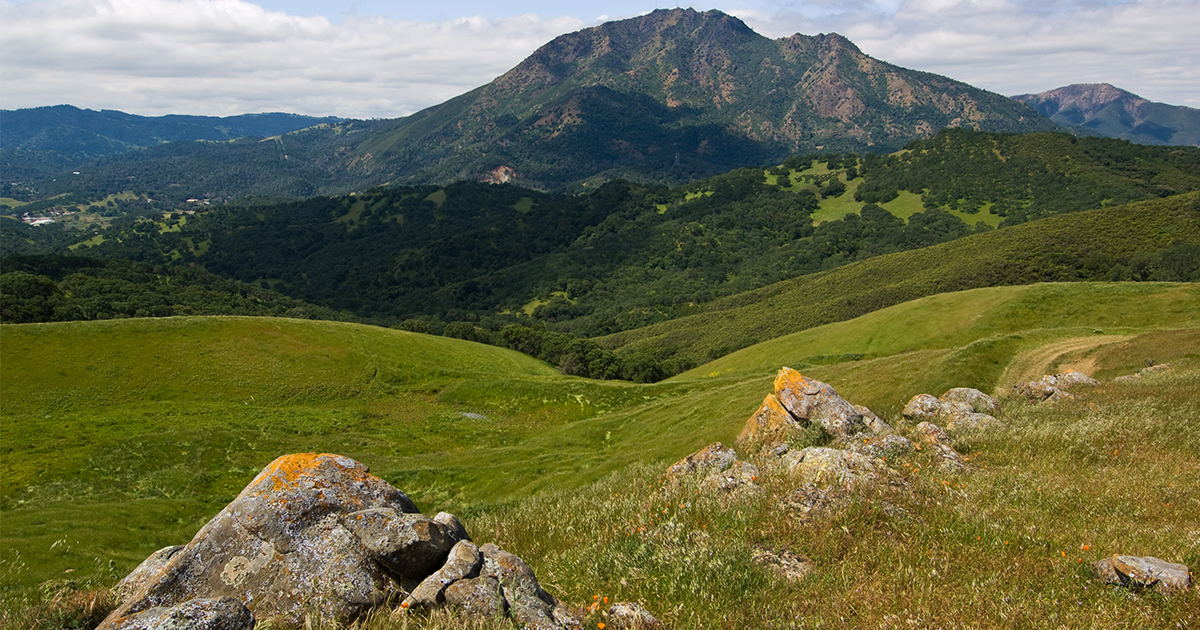
Mary Bowerman Trail. Photograph courtesy of Scott Hein. For more information about this image, visit Hein Natural History Photography.

In Episode 1, we explore Save Mount Diablo’s past. From its origins in the environmental movement to its successful political activism to its incorporation as a nonprofit, Save Mount Diablo built a solid foundation for fifty years of land conservation. This episode asks: why save Mount Diablo? What did it take to save Mount Diablo? What sustained Save Mount Diablo?

In season 7 of The Berkeley Remix, a podcast of the Oral History Center at UC Berkeley, we head to Mount Diablo in Contra Costa County. In the three-part series, “Fifty Years of Save Mount Diablo,” we look at land conservation in the East Bay through the lens of Save Mount Diablo, a local grassroots organization. It’s been doing this work since December 1971—that’s fifty years. This season focuses on the organization’s past, present, and future. Join us as we celebrate this anniversary and the impact that Save Mount Diablo has had on land conservation in the Bay Area and beyond.

This season features interview clips from the Save Mount Diablo Oral History Project. A special thanks to Save Mount Diablo for supporting this project!


LISTEN TO EPISODE 1 ON SOUNDCLOUD:

PODCAST SHOW NOTES:

This episode features interviews from our Save Mount Diablo Oral History Project and includes clips from: Seth Adams, Ted Clement, Bob Doyle, Scott Hein, Egon Pedersen, and Malcolm Sproul. To learn more about these interviews, visit the Oral History Center’s website.

This episode was produced by Shanna Farrell and Amanda Tewes, and edited by Shanna Farrell. Thanks to Andrew Deakin and Anjali George for production assistance. 

Original music by Paul Burnett.

Album image North Peak from Clayton Ranch. Episode 1 image Mary Bowerman Trail. All photographs courtesy of Scott Hein. For more information about these images, visit Hein Natural History Photography.


PODCAST TRANSCRIPT:

Amanda Tewes: EPISODE 1: Save Mount Diablo’s Past

[Theme music]

Shanna Farrell: Welcome to The Berkeley Remix, a podcast from the Oral History Center at the University of California, Berkeley. You’re listening to our seventh season, “Fifty Years of Save Mount Diablo.”

Farrell: I’m Shanna Farrell. 

Tewes: And I’m Amanda Tewes. We’re interviewers at the Center and the leads for the Save Mount Diablo Oral History Project.

Tewes: This season we’re headed east of San Francisco to Mount Diablo in Contra Costa County. In this three-part mini-series, we look at land conservation through the lens of Save Mount Diablo, a local grassroots organization. 

Farrell: It’s been doing this work since December 1971—that’s fifty years. This season focuses on the organization’s past, present, and future. Join us as we celebrate this anniversary and the impact that Save Mount Diablo has had on land conservation in the Bay Area and beyond.

Farrell: In this episode, we explore Save Mount Diablo’s past.

Farrell: ACT 1: Why Save Mount Diablo?

[Soundbed- bird noises]

Tewes: Mount Diablo looms large in the landscape of the East Bay. It’s vast, with an elevation of  3,849 feet. It’s home to coyotes, bobcats, black-tailed deer, gray foxes, and peregrine falcons who live among bright, colorful flora like manzanita trees and fairy-lantern flowers. Snow blankets the mountaintop in the winter. Mount Diablo covers 20,000 acres, which make up a California State Park. It is surrounded by 90,000 acres of protected land, where Alameda whipsnakes and red-legged frogs and California poppies scatter. It’s located in Contra Costa County in The East Bay, which is about forty miles east of San Francisco.

[Soundbed- traffic noises]

Farrell: Mount Diablo almost didn’t look this way. In fact, here’s Malcolm Sproul describing the surrounding area in the mid century:

Malcolm Sproul:  It was exploding. I mean, this was a period of very rapid residential development, freeways being built. I mean, I remember as a kid going out to Walnut Creek, and a two-lane road to go out through Lafayette and Orinda, for example. 

Farrell: Population in the East Bay boomed during WWII, attracting people with wartime jobs. While not everyone stayed when the war ended, those who did were joined by family members. In fact, from 1950 to 1970, the population of the Bay Area grew from 2.6 million to 4.6 million. That’s a 173 percent increase. This meant that housing and infrastructure had to keep up. 

[Soundbed- traffic noises]

Farrell: In the 1950s, the region built highways and freeways, and began construction on BART, the Bay Area’s metro commuter system, to take East Bay residents to their jobs in San Francisco. 

Sproul: The sixties and the seventies, in particular, saw a tremendous amount of this growth. Just conversions of thousands and thousands of acres of land.

Tewes: This could have meant that the East Bay sacrificed open space to development. But this didn’t happen, and we can thank conservation activists for that.

Farrell: As a response to these pressures, a group of six people got together to take action. Save Mount Diablo held its first meeting on December 7, 1971 at Heather Farms Garden Center in Walnut Creek, California. Their goals were simple: save the land, support the state park, and prevent further development in the East Bay. 

Egon Pedersen: There was just one day my wife said, “Hey, I see here in the paper there’s a, there’s a group called Save Mount Diablo. They want to save the mountain.” And I said, “No, how could that be?” Whenever we drove into Diablo, down on the stone poles at the road it said, “Mount Diablo State Park.” 

[Soundbed- birds]

Tewes: That was Egon Pedersen. A Danish immigrant who fell in love with the natural beauty of his adoptive home in the East Bay, Egon served as Save Mount Diablo’s first vice president, and then as president from 1974 to 1977. And Egon is right. The existence of the state park was definitely a challenge in conserving Mount Diablo lands. At that first meeting on December seventh, the group addressed this. Here’s how Bob Doyle, one of those first six activists, remembers this:

Bob Doyle: And I really thought that was a hurdle because most people look at it and go, “Look, there’s no threat there, it’s all state park.” From the very beginning, the discussions at the formal meetings was really focused on these discussions of, you know, what do we do, what’s this, what’s this property, there’s no money, how do we get some money? So it was very, very clear that it was to be 100 percent focused on expanding the state park. It was really focused on the fact that Mount Diablo State Park had not been receiving its fair share, as we looked at it, of statewide money. 

Farrell: But Mary Bowerman and Arthur Bonwell, the two co-founders of Save Mount Diablo, were ready to take on this challenge. Mary was a botanist and wrote her dissertation on the flora of the mountain. Art was active in both the Contra Costa Park Council and the Sierra Club, where his involvement with Mount Diablo started. Here’s Bob again, talking about his first impressions of Mary.

Doyle: I remember being very nervous of meeting this prestigious PhD and pioneer botanist from Mount Diablo. Well, she had a British accent. She was very quiet, and she had these eyes that would penetrate you, and just very curious and very, I would say, cautious in her conversations. 

Tewes: Bob also worked closely with Art Bonwell. They met at the first meeting of Save Mount Diablo. 

Doyle: Art was, you know, an active bicyclist, Diablo Wheelman, and was an engineer by trade, by vocation, and just very interesting, probing, strong, asking questions.

[Soundbed- noises of protest]

Farrell: The early 1970s was a moment of activism in politics, social justice, and inspired a burgeoning environmental movement. Young people played important roles in all of this.

Doyle: We’re talking about Vietnam War, we’re talking about Nixon, we’re talking about assassinations of presidents. It was very tumultuous. 

Tewes: There were a lot of grassroots environmental organizations popping up all over the country, many of which of were in the Bay Area. Think Save the Bay, Save the Redwoods League, Sierra Club, and more. This moment also saw the publishing of foundational books, like Silent Spring by Rachel Carson, A Sand County Almanc by Aldo Leopold, and Population Bomb by Paul Erhlich. 

Farrell: This, on top of major environmental disasters like the Cuyahoga River repeatedly catching on fire and the Santa Barbara oil spill—both in 1969—all set the stage for a strong environmental movement in California and beyond.

[Soundbed- noises of protest]

Doyle: It was just a very heady time in the late sixties and early seventies. The first Earth Day happened, it was the environmental movement, so I think a lot of young people were looking for something positive to do, and you couldn’t be more positive than to try to save the earth. And because of the guidance of these other people, we really focused on the local things. 

Tewes: Mostly, though, it was people from the area who cared about the fate of the mountain. 

Doyle: It was really focused on our immediate area. Well, if you look at the early membership, the majority was from Concord, of the members. Peg Kovar, that was Walnut Creek, and Egon Pedersen was Danville. But most of them were from the area, so we cared about our area and Mount Diablo being the center point of that. 

Farrell: The group had their work cut out for them. In 1971, the state park was confined to only the top of the mountain, just 6,788 acres of the summit. None of the low-elevation trails that exist today were around then. Also, none of the city or regional open spaces had been created yet, but the threat of real estate development was closing in on the mountain.

[Theme music]

Tewes: ACT 2: What did it take to save Mount Diablo?

Tewes: It took a mixture of youthful energy and experienced activists, a reliance on political goodwill, and money. 

[Soundbed- cash register ]

Tewes: These things always require money. 

Pedersen: We were just trying to be a little, peaceful group getting money from contributions, buy a piece of land. 

Farrell: People had a strong desire to take action. In this vein, Egon wrote to Gov. Ronald Reagan—yes, that one—to try to secure funding for the fledgling organization. 

Pedersen: Well, I just wrote to him that Mount Diablo was a very important recreational area, and I said if he could consider buying some land that I really, really, really would appreciate it. And lo and behold, a couple of months after, he actually allocated money for buying land around Mount Diablo. Yeah, he wrote me a nice letter and said he really appreciated I was telling him about how important it was to expand the land in such an area with such a big population, it was important to have a place for recreation that people could go and enjoy their life; also for the wildlife on the mountain, it needed more space so it could survive. 

Tewes: Bob Doyle remembers the contributions of East Bay representatives in Sacramento like John Nejedly and Daniel Boatwright.

Doyle: You know, it was all about Sacramento money, very little was raised by Save Mount Diablo in the early years, but it was really about getting bond measures on the ballot and getting them passed and getting the appropriations through the state budget. And we had champions in Sacramento to do that; Boatwright and Nejedly being the foremost at that time. 

Farrell: Save Mount Diablo needed this money to buy land and to expand the state park beyond those initial 7,000 acres. But state funds weren’t the only way to support the organization. In order to raise the money, Save Mount Diablo had to raise awareness of the organization’s mission to get people to donate to its cause. 

Doyle: So we really started trying to get articles in the paper about what’s threatened and how beautiful Mount Diablo is, and really started picking off environmental writers in the newspaper. 

Tewes: Not to mention, Save Mount Diablo had bumper stickers. Group members could drive around Contra Costa County with their cars as moving billboards for the organization. Even teenage Malcolm Sproul had one! Here’s Bob and Egon Pedersen again, talking about another mechanism for raising both money and awareness.

Doyle: One of the early things we did was there were a lot of walkathons and hike-a-thons. I guess that’d be comparable to GoFundMe now. That was the mechanism for people to raise money. 

Pedersen:  We made between 2 and $3,000 every time we had a walkathon, so at that time, that was pretty good.

[Soundbed – cash register]

Doyle: That really got more people and kids involved because they were doing the hike. 

Farrell: Indeed, one of the strengths of Save Mount Diablo was that it attracted people of all ages. This fostered intergenerational communication, with a younger crowd learning from their elders, and the older activists drawing inspiration from youth. People like Mary Bowerman had lessons to impart to the younger members. As to what Malcolm Sproul learned from Mary? 

Sproul: I think it’s focus. Mary had properties she knew to be important. She had a picture, a big picture. She had the vision of wanting to see it protected. She wasn’t a big political advocacy person, but she was big on wanting other people to buy the property. And if we could, if we had the money, to also protect property. So she was very, very much focused on people like the State acquiring land, on getting bonds passed and the money could be used for acquisition. She knew the land and she knew the things she felt needed to be protected. 

Tewes: Here’s Bob Doyle again.

Doyle: When you’re young and you have these kind of older wizards, it’s interesting because if you’d say anything, they’d say, “Are you sure, how do you know that?” I mean, it’s kind of the testing of facts to be careful. 

Tewes: Another generational difference in their approach to saving Mount Diablo had to do with their comfort in participating in the democratic process.

Doyle: Who wants to go to a meeting for three hours, four hours? And I think that generation of people was really used to sitting at a board meeting for four hours. Another very wonderful environmental activist was Jean Siri, who was an urban activist in west Contra Costa. But she would be famous for sitting at a board of supervisors meeting knitting the whole time, you know, hours and hours sitting there and then finally got up, and basically she probably yelled at the board of supervisors. She was very, very strong and wonderful. And people were willing to put in that time, and a lot of that time, you’re fidgeting.

[Soundbed – applause, gavel noise]

Farrell: This may have been a new strategy for Bob and his generation, but there was space for young people, too.

Doyle: The emphasis there, although most people in Save Mount Diablo were, you know, in their fifties and sixties at the time, they really wanted a voice for youth at the time and so they really encouraged me to speak. 

Tewes: By fostering the connection between different generations of activists, everyone felt like they had buy-in, everyone felt like they had a role in saving Mount Diablo. This made the group special and helped build a membership base. Members used this approach to reach the larger community—they went out and talked to people, meeting them where they were. As president, Egon Pedersen did just that. 

Pedersen: And I figured the only way I can do it [is] to offer something for them. I can’t just go and knock on doors and everything. I called all the libraries, for one thing, and asked if they’d like a talk on Mount Diablo. And of course, all the libraries wanted that. 

Farrell: Egon took a people-centered approach in understanding the cultural history of the mountain, so the community understood the significance of saving it. 

Pedersen: Then after that, it got to be a lot of word of mouth. There was always somebody that said, “Hey, can you come and talk in my school? Can you come and talk to my class? Can you come and talk to the garden society? Can you talk to the women’s club in Berkeley?” I loved to do that. So I thought it was a good way to spread the word.

Tewes: Another approach that supporters used to convince people of the value of the mountain was photographs. One such photographer was Bob Walker. Bob was well-known for taking beautiful pictures of the sweeping landscape of Mount Diablo and its surroundings. He would often show up to someone’s house unannounced and ask if he could walk on their property to take the photos. 

[Soundbed- camera shutter clicks] 

Tewes: He got to know a lot of people—and potential supporters—this way. Bob Doyle remembers the value of this to Save Mount Diablo.

[Soundbed- camera shutter clicks] 

Doyle: Bob had a knack of educating people with incredible enthusiasm without being confrontational. It was more of always promoting and educating the beauty of something through his pictures rather than being in a fight. That was Bob’s skill, he could really convince people. And he went around doing slideshows at libraries and schools and in chambers of commerce and all over to show the beauty of the parks we had and why these areas need to be preserved. 

[Theme music]

Farrell: ACT 3: What sustained Save Mount Diablo?

Scott Hein: When the organization was first founded, Art and Mary thought that their work would be done in five years. They had no intention of the organization being around in perpetuity. They figured they’d protect the lands around the mountain and be done with it, and they’d be able to go on to other pursuits. Now of course, that didn’t happen. [laughs] And it obviously wasn’t realistic. 

Farrell: That was Scott Hein. He and his wife, Claudia, are longtime supporters of Save Mount Diablo. Scott served as board president from 2013 to 2019, and as a conservation photographer for the organization. Scott remembered that despite what the founders thought, the organization was not able to accomplish all its goals in the first five years. In fact, it took much longer than that. 

Tewes: In order to create longevity and continue to work towards its mission to conserve lands, Save Mount Diablo members realized they needed to formalize their grassroots organization. They established a non-profit in 1980.

Doyle: To get more broader donations from people, we needed the legal status of donations and nonprofit status. There were some concerns about that, but we hired this incredible lawyer, Robert Jasperson, who was a longtime lawyer for Save the Redwoods League and was the Sierra Club lawyer. I knew him from Save the Redwoods League and so I asked him when he was in more private practice if he’d help, so he did the incorporation stuff for us and just said, “It’s just much better for your IRS designation and stuff to get the donations, and it’s a formality that we needed to do.” 

[Theme music]

Farrell: This set Save Mount Diablo up for the long term.

[Theme music]

Farrell: In 1988, Save Mount Diablo was 16 years old. And it was a big year for the group. It protected several parcels of land on the mountain, including Castle Rock and the Boy Scout Camp Force in Lower Rock City. It helped pass a couple of critical measures, like the State Park Bond and Measure AA, which provided $225 million to the East Bay Regional Park District, one of Save Mount Diablo’s allies, which was also dedicated to preserving open space. It also grew its network from 400 supporters to 1,500. But yet, there was still more work to do.

Tewes: Up until that year, the organization was entirely run by volunteers. Though there was a core group of volunteers who had been faithfully active for more than a decade, others would come and go. Save Mount Diablo knew it needed to hire someone to keep working towards its goal of expanding the state park and protecting the surrounding lands. Here’s Bob Doyle talking about the events that led up to hiring the organization’s first staff member. 

Doyle: I had gotten a grant and we hired a college student out of St. Mary’s College to do a nonprofit organizational study for what Save Mount Diablo should do and what the options were. John Steere did the study, saying, you know, “If we really want to do x, y, and z, you need to hire somebody, and here are your opportunities to do that.” So that was the step to say, “Okay, we could hire somebody part time.” 

Farrell: The first person that Save Mount Diablo hired was Seth Adams, a young environmentalist who had moved to the Bay Area a few years earlier from the East Coast. This was also in 1988.

Doyle: We interviewed a bunch of people, and we weren’t paying much. And Seth came out as the most committed and articulate. He got the job and has continued to do that. He had the courage and the knowledge to get through stuff that was really difficult. There was just so much development being proposed, and he got very good. We did some initiatives and referendums because that’s what we had to do at the time.

Tewes: Hiring Seth gave Save Mount Diablo the ability to keep going. 

Seth Adams: When I was hired at Save Mount Diablo, I didn’t try to just focus on getting two things done. I threw fifty things up in the air and wanted to work on all fifty. [laughs] That’s sort of the structure of an entire organization, which is what I helped create, in terms of going from all volunteer to professional. It turns out that starting things, for me, I think is the most important thing, and scaling up just happened through a lot of work through a lot of people, but if you get things rolling, they take on a life of their own.

Tewes: After Seth was hired, the volunteer base only grew larger. Save Mount Diablo was even able to add more staff in following years. Together, they were able to accomplish a lot. In 1989, the organization acquired the 631-acre Morgan Ranch, protected 330 acres of open space on Crystyl Ranch and a portion of Round Valley, and fought three Contra Costa landfill proposals that would have encroached on the area that they were trying to save. From 1991 to 1993, they stopped development at Chaparral Spring and Clayton Ranch. And from 1993 to 2004, they expanded Lime Ridge Open Space, Round Valley, Riggs Canyon, a part of Black Diamond Mines, and Cowell Ranch.

Farrell: By 2007, Save Mount Diablo had expanded the state park to 20,000 acres. Now, the park encompassed the entirety of Mount Diablo. The founders’ original mission had finally come to fruition. What’s more, around the mountain, the group protected 90,000 acres of land, and counting. Here’s Scott Hein again talking about these accomplishments. 

Hein: When we were founded in 1971, there were just under 6,000 acres of protected parkland in our area of interest, and well over 110,000 acres today. That’s success, by any way you measure it. 

[Soundbed- animal noises]

Tewes: Saving Mount Diablo has truly been a team effort. 

Hein: Save Mount Diablo, even now, but even more so back then, has been an organization that really punches above its weight, so to speak. We accomplished far more than an organization our size should, and that’s because of the hard-working staff, but also the board members and other volunteers that made it happen. 

Farrell: This effort to save the mountain is emblematic of a time and a place. It’s part of the Bay Area’s DNA. Save Mount Diablo could only have grown out of this burgeoning environmental movement when there were a lot of eager activists in the Bay Area. And in the early seventies, there was still time to save Mount Diablo. Here’s Ted Clement, the organization’s current executive director. 

Ted Clement: The San Francisco Bay Area is known for advocacy. And Save Mount Diablo is a leader in using advocacy so effectively to help with land conservation, and that’s a proud part of our history.

[Theme music]

Tewes: Join us next time as we learn about Save Mount Diablo’s current work.

Farrell: Thanks for listening to “Fifty Years of Save Mount Diablo” and The Berkeley Remix, a podcast from the Oral History Center of The Bancroft Library at the University of California, Berkeley. Founded in 1953, the Center records and preserves the history of California, the nation, and our interconnected world. This episode was produced by Shanna Farrell and Amanda Tewes. 

Tewes: This episode features interviews from our Save Mount Diablo Oral History Project and includes clips from: Seth Adams, Ted Clement, Bob Doyle, Scott Hein, Egon Pedersen, and Malcolm Sproul. A special thanks to Save Mount Diablo for supporting this project. Thanks to Andrew Deakin and Anjali George for production assistance. To learn more about these interviews, visit our website listed in the show notes. Thanks for listening, and join us next time!


The Oral History Center Presents The Berkeley Remix Season 7: “Fifty Years of Save Mount Diablo”

album photo
North Peak from Clayton Ranch. Photograph courtesy of Scott Hein. For more information about this image, visit Hein Natural History Photography.

Set in sprawling Contra Costa County, forty miles east of San Francisco, the “Fifty Years of Save Mount Diablo” podcast season celebrates fifty years of environmental activism and land conservation around Mount Diablo through the consequential work of a local grassroots organization—Save Mount Diablo.

In season 7 of The Berkeley Remix, a podcast of the Oral History Center at UC Berkeley, we head to Mount Diablo in Contra Costa County. In the three-part series, “Fifty Years of Save Mount Diablo,” we look at land conservation in the East Bay through the lens of Save Mount Diablo, a local grassroots organization. It’s been doing this work since December 1971—that’s fifty years. This season focuses on the organization’s past, present, and future. Join us as we celebrate this anniversary and the impact that Save Mount Diablo has had on land conservation in the Bay Area and beyond.

This season features interview clips from the Save Mount Diablo Oral History Project.

A special thanks to Save Mount Diablo for supporting this project. 

Episode 1: “Save Mount Diablo’s Past.” In this episode, we explore Save Mount Diablo’s past. From its origins in the environmental movement to its successful political activism to its incorporation as a nonprofit, Save Mount Diablo built a solid foundation for fifty years of land conservation. This episode asks: why save Mount Diablo? What did it take to save Mount Diablo? What sustained Save Mount Diablo?

This episode features interviews from our Save Mount Diablo Oral History Project and includes clips from: Seth Adams, Ted Clement, Bob Doyle, Scott Hein, Egon Pedersen, and Malcolm Sproul. To learn more about these interviews, visit the Oral History Center’s website.

Episode 2: “Save Mount Diablo’s Present.” In this episode, we explore Save Mount Diablo’s present. From supporting ballot measures and fundraising efforts to cultivating relationships with nature enthusiasts and artists to collaborating with outside partners, Save Mount Diablo continues to “punch above its weight.” This episode asks: now that Save Mount Diablo has conserved the land, how does it take care of it? How does Save Mount Diablo continue to build a community?  How are artists activists, and how do they help support Save Mount Diablo? How does Save Mount Diablo sustain partnerships to conserve land? 

This episode features interviews from our Save Mount Diablo Oral History Project and includes clips from: Seth Adams, Bob Doyle, Ted Clement, Abby Fateman, Jim Felton, John Gallagher, Scott Hein, John Kiefer, Shirley Nootbaar, Malcolm Sproul, and Jeanne Thomas. To learn more about these interviews, visit the Oral History Center’s website.

Episode 3: “Save Mount Diablo’s Future.” In this episode, we explore Save Mount Diablo’s future. From addressing the challenges of COVID-19 to fundraising efforts to protecting land and biodiversity in the entire Diablo Range to mitigating the impacts of climate change to expanding membership and partnerships, Save Mount Diablo still has a lot of good work ahead. This episode asks: what challenges does Save Mount Diablo face today? What can Save Mount Diablo do about climate change? What does the future of Save Mount Diablo look like?

This episode features interviews from our Save Mount Diablo Oral History Project and includes clips from: Seth Adams, Burt Bassler, Ted Clement, Bob Doyle, Abby Fateman, Jim Felton, John Gallagher, Scott Hein, and Egon Pedersen. To learn more about these interviews, visit the Oral History Center’s website.


Changing My Perspective: Save Mount Diablo and the Study of Oral History

Andrew Deakin is a sophomore at UC Berkeley majoring in political science. He enjoys backpacking, reading, and tending to his vegetable garden. He was an Undergraduate Research Apprentice Program intern with the Oral History Center in spring 2022, during which time he worked on a podcast for the Save Mount Diablo Oral History Project.

Andrew
Andrew Deakin, OHC URAP intern

Last fall, combing through undergraduate research positions, a post caught my eye. The Oral History Center was looking for undergraduates to work on a podcast documenting the history of the conservation organization Save Mount Diablo. Finally! I was astounded that a research opportunity could indulge so many of my interests: journalism, history, podcasts, public policy, and, of course, my love for the outdoors. After reading the project description, I knew I would apply. Funnily enough, it wasn’t until I had my interview for the position that I learned exactly what oral history is. Since working on this project, I’ve developed an appreciation for a discipline that, frankly, I didn’t even know existed until recently. I found oral history to be an exciting, unadulterated way to engage with the past. Instead of reading from a dry, unappealing textbook, I learned to experience history through the recorded lives of individual people. Although one person’s perspective doesn’t always offer a complete historical picture, it’s invigorating to witness lived history through the personal experience, and sometimes life story, of another person.

One interview in the Save Mount Diablo Oral History Project that I made a deep personal connection with was with long-time supporter of Save Mount Diablo, John Kiefer. Like most of the interviews I reviewed, John’s began with his childhood. John was born in 1934 in Menlo Park. He was raised in a rural environment. For John, Menlo Park was “Pure, pure country. Try to grasp a vision of not very many homes, and most of the homes that were there were built in the late 1800s. There were some newer ones that had been built in the thirties and forties and fifties—that was new.” Maybe I have a romantic view of a rural childhood, but I couldn’t help but envy this aspect of John’s upbringing. I grew up in suburban Orange County, California. Try to grasp a vision of many identical homes, most built in the last 30 years, that are spread evenly like butter over what once must have been pristine Southern California chaparral.

Later in John’s interview, he put my experience into words. John said, “The average person, unique and marvelous, [isn’t] connected to nature.” John calls this modern experience of feeling disconnected with nature “Nature Deficit Disorder,” which he thinks “is a serious problem among our youth.” I’m thankful that as I grew up, I was a member of my local Boy Scout troop where I garnered my love for the outdoors. We often went camping in Caspers Regional Park, and I had the chance to spend time camping and backpacking in the Anza-Borrego Desert, Zion National Park in Utah, and Catalina Island. These experiences were especially transformative for me, and I fostered some of my strongest friendships while in the outdoors. John’s interview gave me a historical perspective to realize that the way I and many people of my generation are raised is novel, and perhaps not healthy either. John does amazing work combatting this issue, and I found his tenacity to get youth involved in the outdoors inspiring.

After a stint in the military, John decided he wanted to travel. For John, his decision was simple. He remarks, “I had a yearning to travel, and so I had gone to school with a few good friends from Central and South America, and I said, ‘Well, that’s the place for me.’” John’s retelling of his early adulthood was informative of my own experience. I, too, yearned to travel and, much like John, set my eyes on a foreign country somewhat arbitrarily and decided I would spend this summer there. I’ve been taking French courses and enrolled in the French Department’s summer abroad program in Paris. It was heartwarming to hear John recollect so aptly what the archetype of young adulthood is. John reminisces, “So what was that period of my life about? Well, it was, in fact, like the fable…where one leaves home with a bag of clothes…in search of the holy grail, which simply means…to start to experience who you are beyond your family.” John’s retelling of his young adulthood relieved some doubts I had about treating this period of my life so whimsically. John’s interview taught me it’s okay to take risks and to find myself while I’m still young. John’s existentialist philosophy really stuck with me, and I thank him and the process of oral history for leaving me with that. In the end, John applied his love of nature to his work with Save Mount Diablo. I hope that, given John’s experience, I will be able to apply my own love of the outdoors in my future work.

I’m honored to have partaken in the production of the Save Mount Diablo podcast for its fiftieth anniversary. It’s a historical practice I never considered, and I’m left with new tools to better understand history going forward. It was refreshing to do work on a tangible product, something that has real value and will be consumed by a wider audience. Learning about the lives of all the wonderful people who work for Save Mount Diablo gave me both a historical framework to understand the land conservation in the East Bay and the personal wisdom from these peoples’ life stories. This project informed me about the process of podcast production and storytelling, something I thought I might enjoy, but never had the chance to pursue. Although John’s interview impacted me the most, we did not use much of his material for the podcast. Deciding which quotes neatly weaved into the narrative we were telling taught me how to tell a compelling story and when to cut content when necessary. Now, as the semester is ending, I understand the processes, some difficult and some exhilarating, but all satisfying, to produce this kind of media. It has given me the experience to determine where I might go from here and if I have a future working in the media. I thank the Oral History Center and my URAP mentors, Shanna Farrell and Amanda Tewes, for this fulfilling and incredible opportunity, and I hope this research opportunity continues for future undergraduates to discover the joys of oral history.

Find the interview mentioned here and all our oral histories from the search feature on our home page. You can search by name, key word, and several other criteria.


Growth and (Re)connection: My Experience with the Save Mount Diablo Oral History Project

Anjali George is a junior at UC Berkeley majoring in Sociology. She enjoys reading, dancing and being in nature. She was an Undergraduate Research Apprentice Program intern with the Oral History Center in spring 2022, during which time she worked on a podcast for the Save Mount Diablo Oral History Project.

Anjali
Anjali George, OHC URAP intern

When I joined the Save Mount Diablo Oral History Project offered through The Oral History Center’s Berkeley Remix podcast, I really did not have any idea what I was doing—I had no experience in oral history, very little knowledge of Save Mount Diablo and no understanding of podcasts beyond the fact that I enjoy listening to them. Yet, I knew immediately that this was something I deeply wanted to do. Despite my lack of experience, I have always been fascinated by the practice of oral history and the importance of documenting and sharing history in a way that is accessible to the public. From what little I knew of Save Mount Diablo at the time (a land trust and conservation organization in the East Bay), I felt drawn to its mission and values, and I knew I wanted to be part of this effort to celebrate and preserve its history through the podcast.

 As I worked through the Save Mount Diablo interviews that had been compiled for this oral history project, I learned so much more about the organization and environmental conservation in general, as well as about myself and my own relationship with the environment. I think what I initially found compelling about the organization was its focus on fostering education and community in order to sustain its more physical goals, like fundraising and land conservation. Ted Clement, who has been Save Mount Diablo’s executive director since 2015, had so many insightful thoughts and experiences that he shared in his interview. Hearing him speak about how the climate crisis, at its core, is “a materialization of our very poor relationship with nature,” very clearly put the organization’s education branch into perspective. Ted explained that the widespread disconnect between people and nature calls for an entire cultural realignment, which is where education comes into play. After stepping into his role in the organization, Ted immediately prioritized education as a primary goal, so that the broader community can start to transform its cultural values and develop a healthier, more meaningful relationship with nature. He spoke of earth-centered cultures, in which nature is considered sacred, placed “at the center of the value system.” Listening to Ted’s interview, it became clear that Save Mount Diablo is more than just a land trust and conservation organization—its efforts to spread awareness and educate the public, coupled with its desire to connect people to nature and to one another, make its work so much more impactful in creating sustainable change.

 Even with my lack of oral history experience prior to this project, I have always found it so crucial to understand history in general, not only to learn from the past, but also to preserve it. And in that sense, I have a deep admiration for the practice of oral history and the way it preserves and passes along different histories, especially regarding topics and perspectives that often get overshadowed or overlooked. Working with Ted’s interview—as well as all of the other interviews that had been conducted—really reinforced the importance of oral history for me, in the sense that hearing the history from those who actually experienced it adds so much more depth and understanding to the story. On the more technical side, I hadn’t previously understood the complexities of creating a podcast—or more broadly, even taking primary sources and turning them into a developed, cohesive story. By listening to the interviews and reading through the transcripts, I quickly began to recognize what pieces of information were important to get across to the audience. From there, I learned how to develop a narrative that conveys the relevant information while also speaking to the audience and making them care about the story. Even the thought process that goes into crafting a compelling story—drawing on charismatic speakers, finding quotes that are both significant to the story and also entertaining to hear, summarizing information that might be too dense or nuanced for an audience to bother sitting through—there are so many small details to take into consideration to be able to turn those initial interviews into a finished product. 

I learned so much more than I could have expected from working on this project—about working with primary sources and creating a story, about environmental conservation, about myself and how I want to move through this world—and I’ll continue to carry this experience with me and apply it in other aspects of my life and my learning. I’ve learned how to look at any given information and pull out the important themes, how to string different stories together to paint a broader picture, how to think about what appeals to an audience and how to make them care. Even outside of a storytelling framework, these skills easily transfer over to different parts of my life, from critically analyzing academic content to carrying conversations in my daily life. Moreso, hearing Save Mount Diablo’s history and accomplishments, even hearing how its relationship with nature and conservation efforts has changed over the years, has genuinely inspired me to rethink my own relationship with nature and what I can do in my own life to reconnect with the natural world around me. In this tumultuous time, with the pandemic and the increasing severity of the climate crisis, I think it is very easy for people to feel hopeless or to feel like the damage done is irreversible. However, I believe documenting Save Mount Diablo’s history and its accomplishments is an important reminder that there are people on the ground putting in the effort, doing the work that needs to be done, creating change and making a real impact on the climate crisis. I think this podcast can be not only a celebration of Save Mount Diablo’s work, but also a source of hope and motivation for the listening audience to persevere and to keep doing our part—no matter how big or small—and I am beyond grateful for the opportunity to have taken part in this project.

Find the interview mentioned here and all our oral histories from the search feature on our home page. You can search by name, key word, and several other criteria.


Beyond Democracy as Mechanism: Director’s Column, Oral History Center

By Paul Burnett
Interim Director, Oral History Center

There has long been a tendency to describe democratic institutions as industrial machines: Congress as the engine of democracy; American industry, military power, or institutions associated with international development as the arsenal of democracy; California’s Master Plan for higher education as a democratic conveyor belt of educational opportunity; and even UC Berkeley student activist Mario Savio’s call to lay down protestors’ bodies upon the gears of the machine of the university. In our newsletter this month, we are exploring how human beings have engaged with the problem of democracy as mechanism. 

Gears

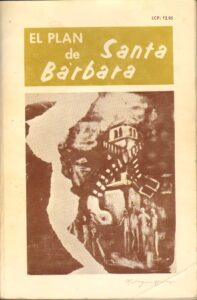
Todd Holmes’ new, massive project on the history of Chicana/o Studies features the voices of scholars and activists who helped redefine the university as a democratic institution: the student body, the composition of the faculty, the nature and function of the university, and even what counts as formal academic knowledge and practice. He writes of the Chicana/o movement’s own “El Plan” to answer UC President Clark Kerr’s Master Plan for higher education and their efforts to make a more human, representative, and just university.

For the Getty Trust’s African American Art History Initiative, Amanda Tewes interviewed artist and educator Richard Mayhew, who spoke of his experience with the founding of Spiral in the 1960s, an African American artists organization in which members explored connections between their art and the Civil Rights movement of the time. She also interviewed Merritt Price, longtime head of the Design Department for the Getty Trust. Tapping into her public history expertise, Tewes explores the construction and redesign of the Getty Center and the Getty Villa around the experience and needs of the visiting public.  

UC Berkeley undergraduate Shannon White taps into our current anxieties about nuclear escalation (speaking of institutions as mechanism) by exploring oral histories that deal with the plans and negotiations around nuclear disarmament during the Cold War. In this case, too, though we are accustomed to thinking about nuclear strategy in mechanical, theoretical terms, we learn how individuals and groups struggled with the threat of annihilation in human terms.  

Ultimately, we can see that the mechanical metaphor for democracy itself functions poorly. Mechanism connotes automation, strict, narrow paths of navigation, and the regulated transfer of effort. Democratic institutions function to the extent that they do by being open, porous, flexible, accretive, experimental, and planned to maximize the spontaneity and chance discoveries of their participants.   

In partial service to this end, the Oral History Center is hosting the symposium “Assessing the Role of Race and Power in Oral History Theory and Practice” on Zoom from June 27–29, 2022.  This follows the efforts of a number of members of the oral history community to think through challenges of inclusion and justice in our work.

Finally, enrollment in our Oral History Summer Institute for August 2022 is full and closed, though we look forward to offering more educational offerings in 2023! 

Sign up for our monthly newsletter featuring think pieces, new releases, podcasts, Q&As, and everything oral history. Access this month’s articles from our home page.


Oral History Center Releases Project Documenting Founding Generation of Chicana/o Studies

Montage of four photos, which are described in the caption, except the 4th photo which has a double line of people on a road with signs in English and Spanish that say things like “From Calexico to Sacramento.”
Clockwise: Chicano activists rally in front of Campbell Hall on the UC Santa Barbara campus (courtesy of UC Santa Barbara). Vicki Ruiz (R) as a junior scholar interviewing Rosa Guerrero, choreographer of ballet folklorico (courtesy of Vicki Ruiz). Rudy Acuňa at Cal State University Northridge (courtesy of CSUN). Participants in the Chicano Movement march in Los Angeles (courtesy of UC Santa Barbara).

                                                                                           By Todd Holmes                                                                                                         Project Director, Chicana/o Studies Oral History Project

El Plan de Santa Bárbara
Published 1969

In April 1969, over a hundred students, faculty, and staff from California’s colleges descended on the campus of UC Santa Barbara. For an era known for campus activism, the event was anything but uncommon. Its focus, however, certainly was. The aim of the gathering was to develop a master plan for the inclusion of the Chicano community within the curriculum and infrastructure of higher education. Ultimately, the 155-page document that resulted, titled El Plan de Santa Bárbara, proved one of the most important works of the civil rights era.

El Plan demanded the inclusion of the Chicano community within the state’s education system, and provided a roadmap for its incorporation within college teaching and research. Above all, it forged a bridge between civil rights activism and classroom curricula, creating the foundation for the academic field known as Chicana/o studies.  As Mario T. García, who later became a professor at UC Santa Barbara, remembered it, “That year, I would say ’69, ’70, I became Chicano. The movement created Chicano studies. Without the movement, we wouldn’t be around. It wasn’t that the Chancellor here all of a sudden woke up one morning and said ‘Oh, it would be great to have Chicano studies.’ That came as a result of protests and demonstrations.”  

In commemoration of the 54th anniversary of this historic event, the UC Berkeley Oral History Center is releasing the Chicana/o Studies Oral History Project, which examines the formation and evolution of this academic discipline through in-depth oral histories with the first generation of scholars who shaped it. These interviews offer a rare, firsthand look at the development of Chicana/o studies over the last fifty years, as well as unique insight into the lives and careers of the pioneering scholars involved. To be sure, that journey was marked by struggle, which makes the stature enjoyed today by both the discipline and its scholars even more noteworthy.

These interviews go beyond the “published” history of the field, as the scholars themselves discuss their experiences in the academy, the institutional challenges they confronted over their career, the works that inspired them, and the discipline’s struggle to attain academic legitimacy. 

Photo montage of Antonia Castañeda, Rudy Acuňa, Emma Pérez, Mario T. García, and Vicki Ruiz.
Left to right: Antonia Castañeda (Photo by Luz Maria Gordillo), Rudy Acuňa (Photo by Harry Gamboa Jr.), Emma Pérez (Photo by Alma López), Mario T. García (Photo courtesy of Mario T. García), and Vicki Ruiz (Photo by Ralph Alswang, courtesy National Endowment for the Humanities).

Most of the founding faculty entered the halls of academia in similar fashion. They were first generation students drawn to the developing field of Chicana/o Studies out of the desire to know their history and make sense of the gap between the stories told at home and those taught in the classroom. 

Albert Camarillo, Stanford University

“My family was the first family out of the barrio to send someone to college. There were 44 Mexican-Americans out of, I think 28,000 students at that time. . . Chicano Studies has allowed us to see a diversity in the American experience, where my generation growing up in public schools, had no inkling of whatsoever.” – Albert Camarillo, Stanford University

“I’m a Tejana, I was born in Texas. There was history that we learned sitting around the table, but there was no reflection of it in the books, at all. . . . It was a lifeline to finally put together my experiences.” – Antonia Castañeda, St. Mary’s University

To simply say their academic path was a rough climb could be deemed an understatement. Support was in short supply; barriers and naysayers certainly were not. From the start, racial stereotypes had them automatically placed in vocational classes by administrators, just as teachers often met their academic achievements with more surprise than praise. As Vicki Ruiz remembered, “I went to community college, for many reasons, but one of the reasons was, I was told by a counselor Mrs. Callahan that I was probably not college material.” Decades later, Ruiz would become the first Latina historian to be inducted into the American Academy of Arts and Sciences.

The graduate experience did not prove any easier. Older faculty, firmly situated within the orthodoxy of their respective disciplines, afforded little latitude for the research agendas of the new Chicana and Chicano students. Patience and understanding was offered even less. In such an environment, many struggled with feelings of homesickness, resentment, and an isolation that blurred the lines between graduate student and outsider. To cope, they built networks and interdisciplinary groups such as El Comité at Yale, the Chicano Political Economy Collective (ChPEC) and Chicana Colectiva at Berkeley, and Mujeres Activas en Letras y Cambio Social (MALCS).

“At Berkeley, Winthrop Jordan (of Mayflower lineage) asked me how long my family had been in the country. I told him, ‘My dad’s family has been here since 1598. My mother’s, I don’t know 25,000 years, whatever the anthropologists finally determined.’” – Deena González, Gonzaga University

David Montejano, UC Berkeley

“​​On campus itself, we had a graduate student group. We called ourselves The Committee, or El Comité, because there were only ten of us. This included the law school. This is across the board.” – David Montejano, UC Berkeley

Even as university professors, the founding generation of Chicana/o Studies continued to struggle for legitimacy. Many stepped into faculty positions only to find their programs underfunded and facilities relegated to outskirts of campus – a not-so-subtle reminder that while a PhD may open the door, it did not guarantee an equal seat at the table. Undeterred, they developed the Chicana/o Studies curriculum from scratch, with material so scant as to hardly fill a single bookshelf in the early days. They organized student events, fostered community partnerships, founded innovative teaching and research programs, and created collaborative networks with universities throughout the West, all under the skeptical eye of university administrators and rival departments anxious to protect their academic turf. Moreover, they worked diligently to expand the selection of published works in the field from one bookshelf to many. Most academic careers are spent in the pursuit of contributing to a respective discipline. This generation did not merely contribute to Chicana/o Studies, they built it.

“Oh yeah, there was an awful lot of resentment… [They thought] the students were disrespectful. They were bringing in a lot of color, you see. And so consequently, yeah, they were very resentful.” – Rudy Acuña, CSU Northridge

Deena González
Deena González, Gonzaga University

“It was hard to put together a reading list because there was so little…today, the challenge is, what do I use, because there’s so much that has been produced since I first had to deal with that challenge in the fall of 1969.” – Mario T. García, UC Santa Barbara

“For a long time, the idea was, you know, Chicana history, why is that important? Why are Chicanas important? Why are these women important? I just feel very privileged, because I’ve  had the opportunity to interview so many people, so many women whose quiet courage made  a difference, not just in their lives, in their families’ lives, but in their communities.” – Vicki Ruiz, UC Irvine

Much has certainly changed since those early decades. What began a half-century ago as a fledgling academic field now stands as a vibrant mainstay on college campuses across the United States, just as the young professors who built the field came to be celebrated as some of the most distinguished scholars in the humanities and social sciences. University presidents and National Humanities Medal winners are listed within their ranks, as are Guggenheim Fellows, award-winning authors, and nationally recognized educators. They came to head national organizations, create innovative programs, conduct groundbreaking research, and take their place within the American Academy of Arts and Sciences. In short, their teaching and scholarship fulfilled the very mission espoused in the 1969 El Plan: the creation of an American curriculum that includes all its people.

In this respect, the Chicana/o Studies Oral History Project serves as a model for the distinctive contributions oral history can make to the documentation and study of intellectual history. The interviews, which are ongoing, will take center stage in the two main products of this project. First, each interview is transcribed and made available with other relevant material on the project’s dedicated website. To date, the project features well over 100 hours of recordings with 22 of the most distinguished scholars in the field; sixteen of these interviews are available now; the others are forthcoming. Second, the oral histories form the heart of a short film series, tentatively titled, Chicana/o Studies: The Legacy of a Movement and the Forging of a Discipline. Here a series of short edited videos will put the interviews into conversation around selected themes for use in high school and college classrooms. A short trailer for the film series is below.

Today, we commemorate over 50 years of Chicana/o Studies and the pioneering scholars who built it. It is hoped, however, that this project gives as much a nod to the future as it does the past. For as each scholar makes clear in their interview, the development of Chicana/o Studies has just begun. 

“I think that there’s still so much to do….I believe in the young generation. I watch them. I really think they can teach us so much, because they come with freshness and eagerness and new ideas. And I just want them to know their history.” – Emma Pérez, University of Arizona

For more information on the project and forthcoming film series, please visit the project webpage and/or email Todd Holmes todd.holmes@berkeley.edu.

About the Oral History Center

The Oral History Center of The Bancroft Library has interviews on just about every topic imaginable. You can find the interviews mentioned here and all our oral histories from the search feature on our home page. Search by name, keyword, and several other criteria. We preserve voices of people from all walks of life, with varying political perspectives, national origins, and ethnic backgrounds. We are committed to open access and our oral histories and interpretive materials are available online at no cost to scholars and the public


Richard Mayhew: Painting Mindscapes and Searching for Sensitivity

In March 2019, Dr. Bridget Cooks and I had the pleasure of conducting a series of oral history interviews with artist and educator Richard Mayhew for the Getty Research Institute’s African American Art History Initiative. Mayhew’s most recognizable work includes paintings of abstract and brightly-colored landscapes—what he calls mindscapes. 

mayhew
Richard Mayhew

Richard Mayhew is a painter, as well as a retired professor of art. He was born on Long Island, New York, and displayed an early interest in art. He studied at the Brooklyn Museum Art School, the Art Students League of New York, the Pratt Institute, and Columbia University. Mayhew received a John Hay Whitney Fellowship in 1958 to live and study in Europe in the early 1960s. He joined Spiral in 1963 and was a member of the Black Emergency Cultural Coalition (BECC). Mayhew has taught at many universities and art institutions, including Hunter College, Pennsylvania State University, San José State University, Sonoma State University, and University of California Santa Cruz. 

Find this interview and all our oral histories from the search feature on our home page. You can search by name, key word, and several other criteria.

Mayhew’s interview detailed his incredible life and inventive work, as well as his deep connections to communities of artists across the country, and indeed across generations. For instance, Mayhew was a member of a group of Black artists called Spiral, which met to discuss both their work and their connection to the Civil Rights Movement. Spiral started in 1963 at the urging of A. Philip Randolph of the Brotherhood of Sleeping Car Porters to “form a contingent of artists for the March on Washington” that same year. 

Mayhew recalls that “the original group of elders” in Spiral included Charles Alson, Romare Bearden, Norman Lewis, Felrath Hines, and Hale Woodruff. But this soon became an intergenerational group. In speaking about the formation of Spiral, Mayhew also remembers its network of visual and performing artists across the country: 

“But also, [A.] Philip Randolph wanted not just the visual artists, he wanted all African American artists that wouldn’t be in the New York area. So we called the artists in Missouri and Chicago and also Los Angeles about this idea that Philip Randolph wanted a contingent of artists. So they made contact with them over there. We didn’t have all the people together, so Ralph Ellison came there and he was talking about—I don’t remember all the names now of the composers, and also directors of the theaters in New York which were Afro-American. That was part of the idea, the contingent not just be the visual artists, but all the areas of arts in that area.”

Another unique aspect of this interview was Mayhew’s reflection on his African American and Indigenous backgrounds, and how they influenced his relationship to art and nature. In thinking about how his identity connected to his artistic vision, Mayhew explained,

“Mine was more out of the African American and Native American heritage, in terms of the love of nature and also the respect for nature, because nature’s involved in reinventing itself. That was what’s going on, in terms of African American and Native American sensibility. They constant[ly] reinvented themsel[ves] and constantly grew and matured and survived. That was my connection to nature and the fascination, almost until today. I’m still trying to paint that feeling.”

To learn more about Richard Mayhew’s life and work, read his oral history transcript here. Find this interview and all our oral histories from the search feature on our home page. You can search by name, key word, and several other criteria.


Merritt Price: Building the Design Department at the Getty

Merritt and Teddy
Merritt Price and Teddy Getty at the opening of the “J. Paul Getty Life and Legacy” exhibition, September 24, 2016. Courtesy of the J. Paul Getty Museum.

I’ve been interviewing for the J. Paul Getty Trust Oral History Project for several years, and it is a continual pleasure to learn about employees and operations across this large organization. But rarely do I come across a longtime employee whose work for the Getty Trust has taken them across departments, programs, and even physical sites. This is what made my interview with Merritt Price so unique. In fall 2020, I conducted a series of oral history interviews with Merritt Price, the former head of the Design Department (now Museum Design Department, 1995-2020).

Merritt Price is the former head of the Design Department (now Museum Design Department) at the J. Paul Getty Trust, which he ran from 1995-2020. Price grew up in Belleville, Ontario, Canada, and moved to Toronto in 1980 to attend the Ontario College of Art (now Ontario College of Art and Design). Price worked for several design firms in Toronto, including starting his own practice called Tangram, before accepting a position with the Art Gallery of Ontario in 1990. He began his work with the J. Paul Getty Trust in 1995, founding what was then the Exhibition Design Department. 

Find this interview and all our oral histories from the search feature on our home page. You can search by name, key word, and several other criteria.

When Merritt Price joined the Getty in 1995, he needed to build the then-Exhibition Design Department from the ground up. This involved defining the Department’s work as not only about aesthetic concerns like text labels and display cases, but also about a larger visitor experience—where museum goers walk and sit, and how they interact with the space. As such, Price assembled a multidisciplinary team to create “one-stop shopping” for design at the Getty Trust. 

In thinking about why it was important for the Getty to establish the Design Department, rather than rely on design consultants, Price explained, 

“I think it’s also noteworthy that working in-house at a museum, as opposed to being in a consulting office that might be doing design for museums or galleries, that you have a different perspective, because you’re right in it and you’re in it all the time. It’s a little bit more laboratory-like where your work product is right there outside the door in the gallery. You can walk through it, you can see visitors using it.”

Over the twenty-five years he worked at the Getty, Price and his team handled designs for major projects in the organization’s history. Indeed, Price’s first task included design work for the Getty Center, which opened to the public in 1997. In addition to addressing gallery spaces, Price also created a wayfinding system with signposts to orient visitors on the large Getty Center campus. He later worked on the redesigns at the Getty Villa. 

Price and his team also designed for exhibitions across the Getty Trust, including Devices of Wonder: From the World in a Box to Images on a Screen, Foundry to Finish: The Making of a Bronze Sculpture, and Michelangelo: Mind of the Master. However, Price was particularly involved in the exhibition J. Paul Getty Life and Legacy, for which he pitched the concept and led a team of curators in creating content. Listen as he explains the idea behind the show:

I have a background in museum work, and I felt confident speaking with Mr. Price about his vision for museum spaces and the practical necessities like spacing around pedestals. However, I still learned a great deal about technical innovations, as well as the impact of design both on exhibitions and on the other spaces in which visitors use—from trams to gift shops to restaurants. This interview was both personally enjoyable and is a great source of information about the construction and redesign of the Getty Center and the Getty Villa.

To learn more about Merritt Price’s life and work, read his oral history transcript here. Find this interview and all our oral histories from the search feature on our home page. You can search by name, key word, and several other criteria.


“Let Us Not Be Deceived:” Recalling the 75th Anniversary of the Cold War

By Shannon White

This month marks the seventy-fifth anniversary of the term “Cold War” being used to describe the relationship between the United States and the Soviet Union. On April 16, 1947, Bernard Baruch gave a speech in the South Carolina House of Representatives, telling his audience, “Let us not be deceived—we are today in the midst of a cold war.”

Baruch, a financier and presidential advisor during the Wilson, Roosevelt, and Truman administrations, was privy to the international tensions surrounding nuclear arms as a representative to the United Nations (UN) Atomic Energy Commission. 

Bernard Baruch
Bernard Baruch (Courtesy of CalTech Archives via Calisphere)

The UC Berkeley Oral History Center (OHC) has several interviews related to Bernard Baruch and the Cold War, including oral histories from Philip Read Bradley Jr., a mining engineer and family friend of Baruch; Charles Easton Rothwell, a State Department employee who contributed to the founding of the UN; and Roger Randall Dougan Revelle, a scientist and the former director of the Scripps Institute of Oceanography. Rothwell and Revelle in particular are concerned with discussing the Cold War in general, including issues related to international relations and atomic energy regulation and testing.  

In his interview Philip Read Bradley Jr.: A Mining Engineer in Alaska, Canada, the Western United States, Latin American, and Southeast Asia, Bradley says of Baruch’s character:

Afterwards I saw a good deal of Baruch, and came to enjoy him, and admire him very, very much. I was talking to him one day, and he said: “Back in my time, when things were good, I could look at the economy and make a prediction that I regarded as reliable, about what would happen next, or in a few years, and I could act on that. And that made me a good deal of money.” He said, “It makes a little difference who’s in the White House.” And I said, ‘What do you think of Truman?’ And he said, ‘He’s a nincompoop.” He says, “We’ve got a nincompoop in the White House now.” But anyhow, Baruch had lots of rules; my dad used to quote them. One of the rules was, “No use doing business unless it’s good business.”

Roger Revelle
Roger Revelle (Courtesy of Special Collections & Archives, UC San Diego, via Calisphere)

In the first of his four interviews (Roger Randall Dougan Revelle: Oceanography, Population Resources and the World, Volume 1: Preparation for a Scientific Career), Revelle discusses the early nuclear arms race, including fears about the control of nuclear weapons. Bernard Baruch himself was instrumental in the creation of the Baruch Plan, a proposal by the US government for decommissioning nuclear weapons and internationalizing and regulating atomic energy. Revelle mentions the Baruch Plan, and the related Acheson-Lilienthal Report on international control of nuclear weaponry, in his discussion of early nuclear testing at Bikini Atoll:

“The Russians didn’t have any atomic bombs at that time, and there were some people out at Bikini, Admiral Solberg was one, who suggested that— [brief discussion about a whale visible off the coast] —that we should tell the Russians that we would use our atomic weapons against them if they developed them. That we ought to decide right now to abolish the things on both sides. There was one famous Baruch plan, Bernard Baruch and [David E. ] Lilienthal, I guess, who was by that time the chairman of the Atomic Energy Commission, which had tried to reach an agreement with the Russians about atomic weapons, to not develop them, not have them. But this never got anywhere.”

When asked about the UN Atomic Energy Commission, of which Baruch was a part, Charles Rothwell said in his oral history Charles Easton Rothwell: From Mines to Minds, “I was aware of some of the problems. And I got to know Bernie Baruch, because I had to staff his operations too.”

Rothwell describes Baruch as dedicated to his work, claiming that, “He was very serious about wanting controls placed on the development of the capacity to produce nuclear weapons, and would have preferred that it not even stretch nearly as far as it did in Europe. We’re the real culprits in the use of nuclear energy for war purposes because we did it.”

The mentions of Bernard Baruch in the Oral History Center are quite interesting to look back on as a marker of such an important period of world history. In particular, Rothwell’s and Revelle’s interviews discuss not just Baruch’s involvement in the quest for nuclear regulation, but the general climate of the United States and the UN in the period following World War II. 

Shannon White
Shannon White

You can find the interviews mentioned here and all our oral histories from the search feature on our home page. Search by name, keyword, and several other criteria.

Shannon White is currently a third-year student at UC Berkeley studying Ancient Greek and Latin. They are an undergraduate research apprentice in the Nemea Center under Professor Kim Shelton and a member of the editing staff for the Berkeley Undergraduate Journal of Classics. Shannon works as a student editor for the Oral History Center.

Related Resources from the OHC and The Bancroft Library

The Bancroft Library contains hundreds of materials related to the Cold War, including illustrations, interviews, books, and speeches. For some items in the collection related to Bernard Baruch specifically, see:

Baruch, Bernard M., Freedom for Man: – a world safer for mankind. An address delivered … at a meeting held at the Woodrow Wilson Foundation, May 25, 1955. Bancroft Pamphlet
p E767.1.B3.

Baruch, Bernard M., The making of the reparation and economic sections of the Treaty. Bancroft (NRLF) D648 .B3

The Oral History Center also has many interviews that discuss the Cold War, including several from the Free Speech Movement Oral History Project, the Oakland Army Base Oral History Project, and the Rosie the Riveter World War II American Home Front Oral History Project. From our home page, go to “Oral Histories” > “Projects.” For a look through some of the oral histories concerning the Nixon administration, check out “The Week that Changed the World: Nixon Visits China,” by Shannon White. See also, “‘I take this obligation freely:’ Recalling UC Berkeley’s loyalty oath,” by Shannon White with research by Adam Hagen.  

About the Oral History Center

The Oral History Center of The Bancroft Library has interviews on just about every topic imaginable. You can find the interviews mentioned here and all our oral histories from the search feature on our home page. Search by name, keyword, and several other criteria. We preserve voices of people from all walks of life, with varying political perspectives, national origins, and ethnic backgrounds. We are committed to open access and our oral histories and interpretive materials are available online at no cost to scholars and the public.